Giving Up Everything: The Grace of Natalie Merchant

A review of Natalie Merchant, NATALIE MERCHANT (Nonesuch, 2014).  Songs: Ladybird; Maggie Said; Texas; Go Down, Moses; Seven Deadly Sins; Giving Up Everything; Black Sheep; It’s a Coming; Lulu (intro and full song); and The End.

HIGHLY RECOMMENDED.
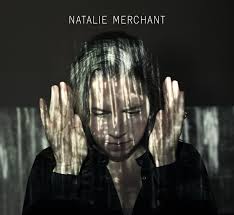
Natalie Merchant, self titled (Nonesuch, 2014).  Highly recommended.
Natalie Merchant, self titled (Nonesuch, 2014). Highly recommended.

Natalie Merchant’s 2010 album, LEAVE YOUR SLEEP, was a masterpiece, pure and simple.  Taking her favorite poems and putting them to music was a stroke of genius.  Merchant’s firm but ethereal voice gave a cinemagraphic feel to some of the finest writings of the last several centuries.  While the poems already had a life of their own, the New York artist proved just how alive they really are by offering each a soundtrack.

Ranging over two disks and including a gorgeous detailed book about the poems and why she chose them, LEAVE YOUR SLEEP is a must-own for any music and poetry lover.

Prior to this, Merchant had released THE HOUSE CARPENTER’S DAUGHTER (2003), a reworking and rearranging of traditional American (and some British) folk and labor songs.  Also stunning, but in a very different way than LEAVE YOUR SLEEP, THE HOUSE CARPENTER’S DAUGHTER came out on Merchant’s own label, Myth America.

Little news from Merchant emerged between 2010 and now.  The last significant interviews she gave—most importantly to the New York Times in 2010—the American revealed that she and her daughter were living in a nunnery in Spain.  Having returned to her childhood faith of Roman Catholicism, Merchant was exploring the possibilities of writing liturgical music and, as hopeful speculation had it, a Mass.

In May of this year, Merchant released a new solo album, self-titled, that is not liturgical in setting, but it is intensely religious, confessional, and pro-fessional, at least in its lyrics.

As an artist who made her fame in the 1980s as one of the lead singer and songwriter of one of America’s favorite alternative rock bands, 10,000 Maniacs, Merchant is often remembered for her poppier music.

Her solo career, however, has revealed several different aspects of this musician.  Her albums have ranged from vaudeville to operatic to folk.  Not surprisingly, she covered a Richard Thompson song on THE HOUSE CARPENTER’S DAUGHTER.  While many in the music industry label her as a “female pop” singer, usually associating her with other North Americans such as Suzanne Vega, Tori Amos, and Sarah McLachlan, she really has far more in common with Van Morrison, Fairport Convention, and Traffic.

Like the three bands/acts just mentioned, Merchant at her best always produces soulful, deep, melancholic songs touched not with irony but with intrigue and regret.
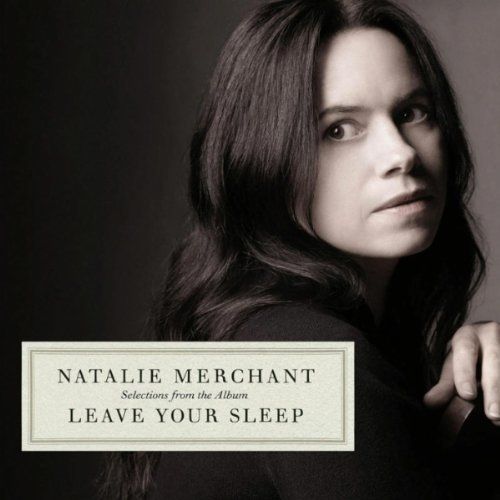
Leave Your Sleep (2 disk, NONESUCH, 2010).  Highest recommendation.  A must own.
Leave Your Sleep, (2 disk, Nonesuch, 2010). Highest recommendation. A must own.

The latest album, NATALIE MERCHANT, has every key aspect of her non-pop song writing in spades, but it is still a step removed—on terms of creativity—from her other work.  It’s not nearly as profound, unfortunately, as LEAVE YOUR SLEEP, but then, how could she really compete with the words of Gerard Manley Hopkins.  As a lyricist, though, Merchant is quite good.

Yet, NATALIE MERCHANT is a truly satisfying affair.  From the opening song to the last note, this album pleases the soul as much as it pleases the aural senses.  Though the lyrics aren’t political, they are full of social justice and charity.  They are also moving as well as haunting.

Tellingly, the photo inside the cd package shows a gracefully graying Natalie (she’s 50), holding a dove.  She holds the bird of peace closely and sincerely.  It’s quite the contrast to The The’s  bayonetted dove of MIND BOMB.  Merchant’s holding of the dove is not sarcastic but hopeful and longing.

Songs such as “Go Down, Moses,” offer a pleading for grace, while the song “Seven Deadly Sins”  scathingly attacks the culture of war.

The most difficult song, lyrically, is “Giving Up Everything.”  Many will no doubt attempt to interpret this as some form of nihilism.  Given Merchant’s faith journey, however, the reality of the meaning is probably quite the opposite. What Merchant is giving up is not life and meaning but the belief that she herself can discover her purpose alone.  “Giving up everything, the big to-do, the hullabaloo, the tug-of-war for some twisted truth.  For the everlasting ache of it, no longer slave, not chained to it, no gate, no guard, no keeper, no guru, master, teaching.”  “Black Sheep” is a retelling of the parable of the prodigal son, and “It’s a coming” and “The End” are apocalyptic.

That’ll be the end of arms stretched wide, of begging for bread, of emptiness inside.  And the sea, so wide and treacherous, and the land, so dark and dangerous, so far left behind.  That’ll be the end of the war, when we finally lay down the barrel and the blade and go home.– Natalie Merchant, ‘The End’

Essential Metal Releases Still To Come In 2014 – Part 1

manofmuchmetal's avatar

Welcome to my quick run-down of those albums I’m looking forward to being released in the latter half of 2014. I’ve already gone into some detail about the album that I’m most looking forward to, Evergrey’s ‘Hymns For The Broken’, but there are plenty more albums that are high on my radar. Want to know what they are? Then read on!

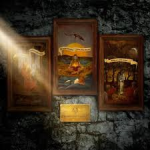
opeth pcOpeth – Pale Communion

I have to confess that this is an album that I have already heard and reviewed for Powerplay magazine. Nevertheless, I’m looking forward to holding the finished article in my hands. It isn’t an album I had held out great hope for having failed to be enthralled by any of the Opeth back catalogue up to now. However, this is the album that means that I finally ‘get’ Opeth and understand why so many people hold them in high regard. Stylistically similar to ‘Heritage’

View original post 414 more words

Happy Bastille Day . . . And Here’s Rush’s Classic Piece

rvkeeper's avatarrush vault

stormingThe French peasantry stormed the Bastille in Paris on this day, July 14, in 1789, signaling the revolt of the people against the monarchy. Revolution was a favorite topic of Rush’s in the early days. In “Bastille Day,” Alex, Geddy, and Neil took on the good, the bad, and the ugly of the French Revolution, and in “Beneath, Between and Behind,” they took on the good, the bad, and the ugly of the American Revolution. “A Farewell to Kings” is all about revolution, too.

To help celebrate Bastille Day 2014, here’s a live version of Rush’s progressive metal classic from 1976. YouTube has inserted a commercial at the start of it, but if you watch it here on this site, without going to YouTube, the commercial doesn’t play.

 More This and That.

Background and Commentary

The French Revolution imagery was “inspired by Charles Dickens’ A Tale of Two Cities,

View original post 662 more words

What do Kansas, Nebraska, and Colorado Have In Common with The Tangent and Big Big Train?

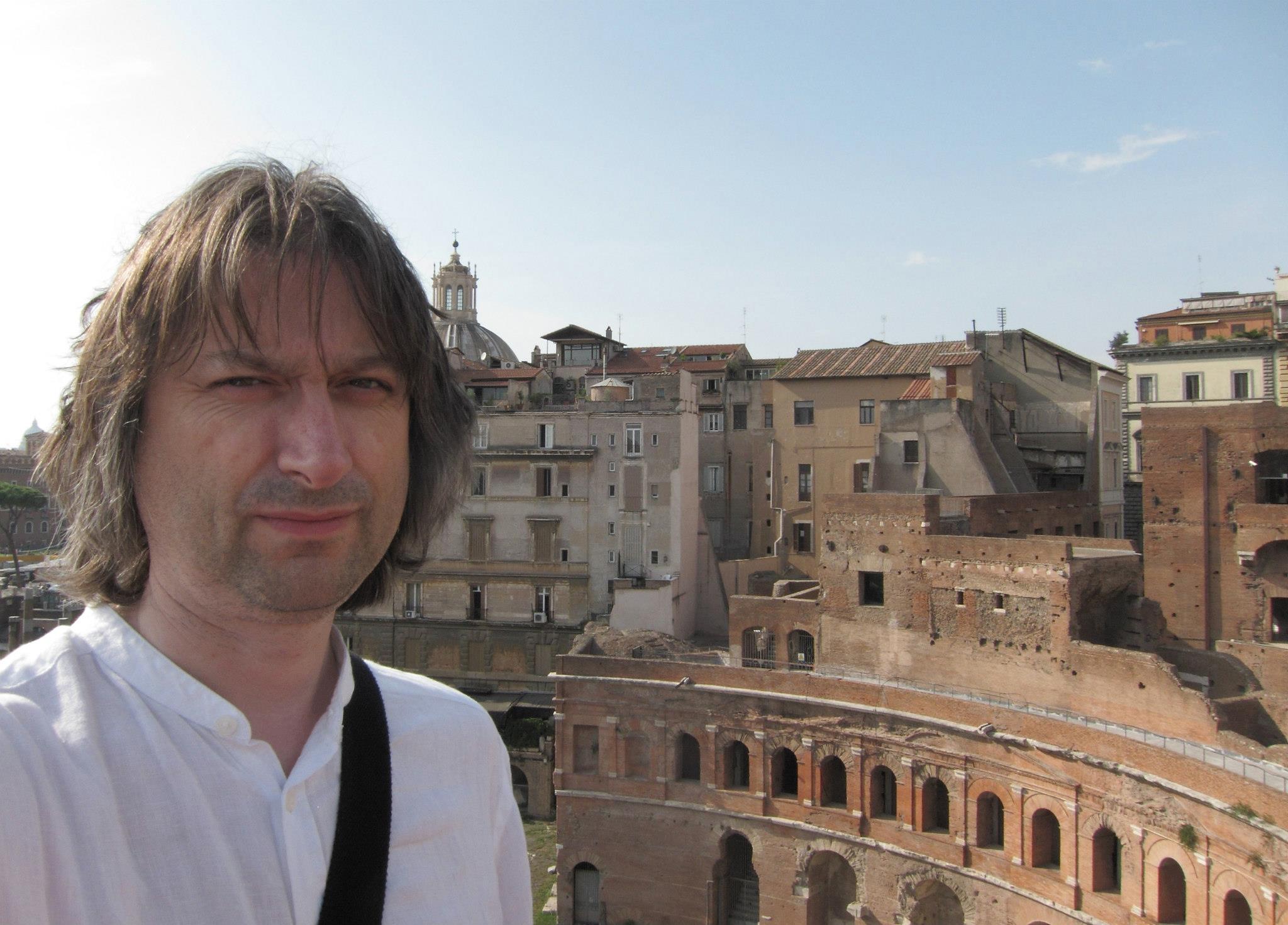
It's hard to tell, but I'm wearing my "Got Peart?" t-shirt.  And, there's a big, big train in the background.  Andy's motorcycle is missing, however.
It’s hard to tell, but I’m wearing my “Got Peart?” t-shirt. And, there’s a big, big train in the background. Andy’s motorcycle is missing, however.


Driving across the grass seas of western Nebraska and eastern Colorado this past week, I made sure my listening list was quite specific and quite orderly.  Across the western parts of Nebraska, traversing the mighty and winding Platte several times, I listened to Big Big Train, ENGLISH ELECTRIC PART ONE.  Not FULL POWER, but the original PART ONE.  Back to this in a moment.

Greg Marcus Aurelius Spawton

Once the Platte split into north and south, I took the south fork, and I went for The Tangent’s THE MUSIC THAT DIED ALONE.  Andy always inspires me.  But, the combination of Andy and Roine Stolt as my car flew (legally, of course) through such nearly forgotten towns as Julesburg, Ovid, and Sedgwick proved perfect.  Andy never fails to find the beauty in lost hope.

Andy Tillison.  Master of Hope and Keytarism. (Picture - Martin Reijman)
Andy Tillison. Master of Hope and Keytarism.
(Picture – Martin Reijman)

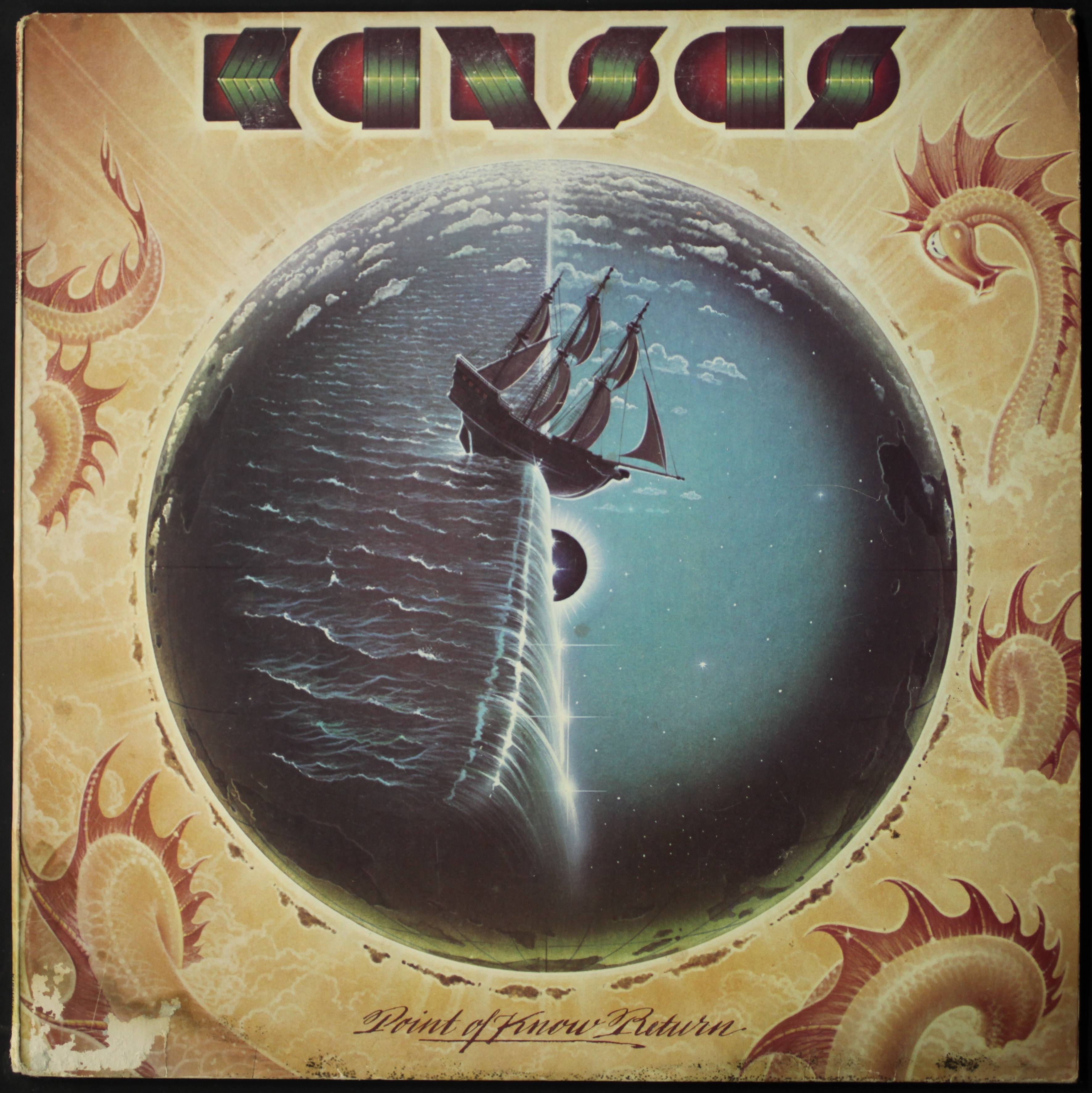
A bit of patriotism hit me after The Tangent finished, so I went for Kansas’s THE POINT OF NO RETURN.  Amazingly enough, the entire album took me from the ending of THE MUSIC THAT DIED ALONE to our brand new house in Colorado.  Truly, as we driving up to the house in Longmont, the final notes of “Hopelessly Human” played.

As promised, back to BBT, ENGLISH ELECTRIC PART ONE (EEP1).  First, its pastoral tone fit the Nebraska countryside beautifully.  The skies, not surprisingly, were as broad as were deeply blue—the kind of blue one finds only in the Great Plains on a summer day.  But, the grasses were a treat as well—variations of greens and golds, generally quite tall and swaying under the pressure of the continental winds.

Second, I’ve not listened to EEP1 for at least a year.  Indeed, once ENGLISH ELECTRIC FULL POWER (EEFP) came out, I considered it the definitive edition, putting away PART ONE.

I won’t in any way, shape, or form suggest I had any thing at all to do with the final ordering of EEFP.  Such a claim would be nothing but hubris.  And, it would be completely false.  This was not, however, for want of trying.  I bugged Greg openly on the internet and privately through emails about this.  I interviewed him about it, and, as a friend, tried to put him in a corner.  Greg, the quintessential English Stoic gentleman, quietly (though not in quiet desperation, I pray) took the suggestions of this overly eager and earnest American (overly eager and earnestness are two of our defining traits as a people) with kindness.  Thank you, Greg.

I know there was some debate among the progarchists whether or not Greg and Co. were messing with a work of art unnecessarily by re-arranging the order of things and filling in the corners with EEFP.  But, from the beginning, I was on Greg’s side.  It’s his creation, and he can do with it as he will (and the rest of the members of the band, of course).

Listening to EEP1 this week only confirmed my thoughts.  It is a stunningly beautiful, calming, and mesmerizing work.  Like all great works of art, it demands full immersion by the participant.  Pastoral, it is also equally humane and cinematic.  It is a part of the English bardic tradition at its very best.  A community of minds and talents produced this album, and we are blessed indeed to exist in a world that allows such works of art to emerge and flourish.

But, for me, especially as a historian, EEP1 is now an incomplete yet intriguing part of a puzzle.  It belongs in the archives now, a glorious blueprint, but not quite the complete thing.

This discussion, I think, is not mere mental wrestling.  BBT is not just another band, and EEP1, EEP2, and EEFP are not just mere new releases.  BBT is a definitive band of prog’s third wave, and EEFP is possibly the finest statement of music over the last two and a half decades.  It is the legitimate successor to Talk Talk’s SPIRIT OF EDEN.

How the album came together, how it evolved, and how it is received is not merely academic.  It’s now a critical part of our history as lovers of music, art, and human genius.  It is now an integral part of the western tradition.  Long may it continue.

***

COL_00016_00022

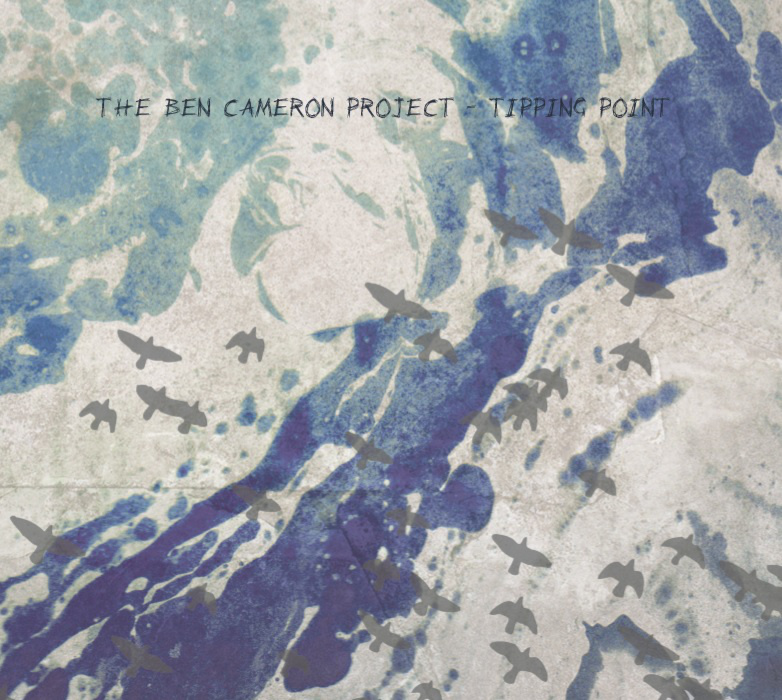
TIPPING POINT–The Excellence of The Ben Cameron Project

A review of The Ben Cameron Project, TIPPING POINT (independently released, 2014).

Two long tracks: “Part One” (21:02); “Part 2” (17:49).  Only two members: Ben Cameron (vocals, guitars, bass, keyboards) and Chris Cameron (all drums and percussion)

0002788885_10


Let me just state this at the beginning of this review—this is a beauty of an album.  Pure prog; unabashedly a concept album that takes you on a serious musical journey throughout its entirety.

The album opens with a very post-Gabriel/Hackett-era Genesis feel.  It is truly an aural treat, and TIPPING POINT easily moves from one mood and one style to another.  From Genesis to Neal Morse to Pink Floyd (in an Airbag kind of way) to Big Big Train to Dream Theater to Cosmograf.  The overall effect is one of intense drama and cinema.  Indeed, if you’re looking for an album in which to immerse yourself, this is it.

It’s also clear that the Camerons have given everything imaginable to the writing, recording, and production of this album.

Two things really stand out after several listens.  First, the vocals.  Though the only vocalist, Ben Cameron does some really amazing things with his voice.  I was quite stunned to look at the notes to the album and find that he was the only vocalist.  Second, the drumming.  Wow, can Chris Cameron drum or what?!?!?  An excellent cross between the prog style of NVD and the harder style of Mike Portnoy.

As mentioned above, TIPPING POINT is a concept, dealing very humanely but also gut-wrenchingly at points with the struggle with depression.  Not surprisingly given the topic, there exists lots of existential angst—“I didn’t choose to be this way” and “I only see a world of pain” are typical lyrics.

The Ben Cameron Project is a critical new band in the prog realm.  I have no doubt that the follow-up album will be extraordinarily good musically.  I am especially interested to see where Ben Cameron goes lyrically.

To support The Ben Cameron Project (and progarchy.com requests that you do!), go to the band’s official website: www.thebencameronproject.com.

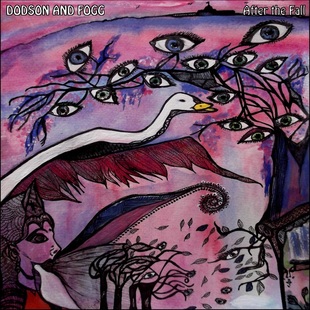
Dodson and Fogg – After the Fall

790809Dodson and Fogg defies easy contextualization.  While Chris Wade’s psychfolk project, now five albums deep, owes much to an alchemical mix of Syd Barrett, the British folk revival, and early English glam, the conditions under which Wade produces his music bear little resemblance to any notion of modern music industry norms.  He works quickly, much as his musical heroes did in the 1960s and 70s, and contrary to the common thinking that a working band needs to tour, Dodson and Fogg is primarily a studio project, conducted by Wade and a handful of musicians whose roots go back to such luminously legendary groups like Trees, Mellow Candle, and Hawkwind.  Surrounding himself with icons does little to change the flavor of his music, which collectively may constitute the most singular and consistent demo tape ever produced, and begs the questions:  Where is this man’s Joe Boyd, and why not a record deal? The songs are without fail melodically rich, top out at midtempo, and possess a kind of walls-are-closing-in textured darkness that is part songwriting, part production value.  Wade’s penchant for doubling or chorusing his vocal, which I’ve criticized before on Progarchy, admittedly creates a cohesion among the songs, and coupled with tasteful instrumentation and no-nonsense lyrics, makes Dodson and Fogg’s first album almost interchangeable with its fifth.  I’ve struggled some with this, and recognize that the artistic development I want from Wade is keyed almost entirely on expectations Wade should have no interest in meeting.  The music industry has blown up, touring behind an album presumes that the artist wants — and has the audience — to materially survive on his music (rather than just make music) and LIKES to play live, and… how often do we get to witness the kind of woodshedding a songwriter like Wade is doing with Dodson and Fogg? So while I continue to think a seasoned producer would be a positive challenge for Wade, without one he has managed to create a rather stunning catalog in a mere two years.

After the Fall continues Wade’s exploration of a mood music combining mostly acoustic backing for voice and the occasional big electric guitar.  Where before this has taken his music in the direction of the Kinks and T. Rex, his passion for early Black Sabbath, of which he has written in his other gig as a rock author, takes shape here on the satisfyingly sludgy “Lord Above” and “Hiding from the Light,” with its whacked-out Scheherezade-style guitar break.  The skiffle-ish “Life’s Life” is the album’s standout, a twist on Zeppelin’s folk excursions, while “Careless Man” has an Electric Warrior vibe that Wade excels at capturing while avoiding mere Bolan worship.  The balance of the record shares with its predecessors that 1970-soaked British singer-songwriter drift, complete with sitar, that generally succeeds at extending rather than imitating a period where musicians of Wade’s talent were afforded greater commercial reach (despite and because of the lack of an internet).  I think the question remains of where Wade’s Dodson and Fogg goes from here, if its end will continue to so closely resemble its beginning, and how Chris Wade sees himself developing as an artist.  In the meantime, though, it’s hard to argue with a music that so definitively succeeds on its own terms.

Order After the Fall here: http://wisdomtwinsbooks.weebly.com/dodson-and-fogg-cds.html

Free Dodson and Fogg sampler: http://wisdomtwinsbooks.weebly.com/dodson-and-fogg-vinyl.html

Towards the Edge — @ForeverStillDK

Rock Revolt named Forever Still their Indie Band of the Week and did an interview:

You have been compared with bands like Evanescence and Lacuna Coil. How does this make you feel?

I mean, these are huge bands to be compared to, so we can only be proud! It’s humbling that fans see our music being just as good or better than their idols. At the same time I think we have something very different to offer than those bands, which is probably why people usually like it instead of labeling it as a copy.

What are your musical influences?

We both listen to a lot of different music, so our inspiration comes from everywhere, and often out of our own genre! What music we feel like listening to also depends a lot on our moods. These days I’m listening to Queen Adreena because I just bought their “Drink Me” album. It’s super gritty and imperfect which makes it absolutely perfect.

We Don’t Need No Education

“Are Universities Going the Way of Record Labels?” asks The Atlantic:

If you spent the 1990s plucking songs from a stack of cassettes to make the perfect mixtape, you probably welcomed innovations of the next decade that served your favorite albums up as individual songs, often for free. The internet’s power to unbundle content sparked a rapid transformation of the music industry, which today generates just over half of the $14 billion it did in 2000—and it’s doing the same thing to higher education.

Covering Steven Wilson

A review of Steven Wilson, COVER VERSION (Kscope, 2014).  12 Songs total: Thank You; Moment I Lost; The Day Before You Came; Please Come Home; A Forest; The Guitar Lesson; The Unquiet Grave; Sign ‘O’ The Times; Well You’re Wrong; Lord of the Reedy River; An End to End

large4203

Steven Wilson is nothing if not interesting. Vitally so. Everything he does matters in some way to the contemporary world of music. He’s even made it somewhat big, at least by alternative and prog standards.

This brand new release from Wilson is a compilation—slightly redone—of cover versions (not surprisingly) of some of his favorite songs over the past two decades. Several of the songs he recorded in professional studios, he notes. Others, he recorded in hotel rooms as a form of music diary. I am exactly two months older than Wilson. Though I lived in Kansas and he in England in the 1980s, it’s pretty clear that we grew up with the same music in the same era. He, himself, notes this in his choices. Songs covered come from Donovan, Abba, and The Cure, to name just a few. Some of the songs, such as Wilson’s version of The Cure’s A Forest are deeply electronic, while others very much feel like the acid folk he produced with Storm Corrosion.

In many cases, Wilson’s versions are superior to the originals. In all cases, they are worth listening to.

Wilson has never been shy about borrowing from others in his music—Pink Floyd in early Porcupine Tree, U2 on his first solo album, and Andy Tillison (to the “nth” degree) on his most recent solo album (THE RAVEN THAT REFUSED TO SING sounds very much like a The Tangent album from roughly 5 or so years ago).

It’s great to see Wilson openly name his sources and proclaim his heroes with COVER VERSION. In particular, his take on A Forest makes the entire album worth purchasing. But, then again, this is a Steven Wilson release. No matter what he does, we need to pay attention.