From Albums to Selfies

Taylor Swift in the WSJ on progress:

Music is art, and art is important and rare. Important, rare things are valuable. Valuable things should be paid for. It’s my opinion that music should not be free, and my prediction is that individual artists and their labels will someday decide what an album’s price point is. I hope they don’t underestimate themselves or undervalue their art.

In mentioning album sales, I’d like to point out that people are still buying albums, but now they’re buying just a few of them. They are buying only the ones that hit them like an arrow through the heart or have made them feel strong or allowed them to feel like they really aren’t alone in feeling so alone. It isn’t as easy today as it was 20 years ago to have a multiplatinum-selling album, and as artists, that should challenge and motivate us.

There are always going to be those artists who break through on an emotional level and end up in people’s lives forever. The way I see it, fans view music the way they view their relationships. Some music is just for fun, a passing fling (the ones they dance to at clubs and parties for a month while the song is a huge radio hit, that they will soon forget they ever danced to). Some songs and albums represent seasons of our lives, like relationships that we hold dear in our memories but had their time and place in the past.

I think forming a bond with fans in the future will come in the form of constantly providing them with the element of surprise. No, I did not say “shock”; I said “surprise.” I believe couples can stay in love for decades if they just continue to surprise each other, so why can’t this love affair exist between an artist and their fans?

There are a few things I have witnessed becoming obsolete in the past few years, the first being autographs. I haven’t been asked for an autograph since the invention of the iPhone with a front-facing camera. The only memento “kids these days” want is a selfie. It’s part of the new currency, which seems to be “how many followers you have on Instagram.”

In the future, artists will get record deals because they have fans—not the other way around.

Another theme I see fading into the gray is genre distinction. These days, nothing great you hear on the radio seems to come from just one musical influence. The wild, unpredictable fun in making music today is that anything goes. Pop sounds like hip hop; country sounds like rock; rock sounds like soul; and folk sounds like country—and to me, that’s incredible progress. I want to make music that reflects all of my influences, and I think that in the coming decades the idea of genres will become less of a career-defining path and more of an organizational tool.

Cynic — Kindly Bent to Free Us ★★★★★

CYNIC

This is the third album in my “Four for the Fourth of July” series. I have selected four star-spangled five-star albums that already have a lock on my year-end Top Ten for 2014. Vanden Plas and Voyager have already been reviewed. Today I commend to you this nifty new prog rock release from Cynic.

Cynic is famous for their infrequent but innovative and influential contributions to the prog cause: Focus (1993) and Traced in Air (2008), plus the EPs Re-Traced (2010) and Carbon-Based Anatomy (2011). On this new release, they have entirely eliminated any trace of death-metal vocals and taken a new direction to boot. The style not so much metal as it is groovy, jazz fusion-ey rock.

It sounds totally classic to me. I love the retro vibe on this album. It is kind of like discovering a hidden gem from the 70s in a time capsule. The disc is 42 minutes long and is thus reminiscent of a vinyl-length listening experience. And the album even divides nicely into a “Side A” and a “Side B”, with four tracks on each side.

“True Hallucination Speak” (6:03) is the first track and it locks us in with a solid groove. When the guitar solo comes, it transports us to amazingly ecstatic musical heights. But then, suddenly, just when we expect it to escalate further into an even wilder guitar freak-out, the rug is pulled out from under us as, after a moment of silence, we experience a calm and mellow meditation, which is all the more effective because of where it is inserted. And then we get to groove again.

“The Lion’s Roar” (4:35) is track two and it is a real beauty of a song. The songwriting and instrumental virtuosity fit together perfectly as the musical journey unfolds wonderfully. Here we have a model of what a chorus can be and of what makes a great song a great song. The title phrase hits us with such exquisite fittingness every time it is uttered, we don’t want this chorus to ever end. But when it does eventually come to an end, the song surprises us then in a very satisfying way. Listening to the conclusion, you would not want this to end any other way. It is just right.

“Kindly Bent to Free Us” (6:27) is track three and it is like the band has been saving up the most exceptional experience for third. We have already been won over by the ultra-groovy first two tracks. But now we get some super-awesome riffing and jazzy group dynamics that, unbelievably, take the album to even more exciting places not yet heard. I can understand why this is the title track. There’s something special about it. It’s an epic jazzy prog rock track that clocks in at six and a half minutes and so only track seven, “Holy Fallout” (6:36) is longer — by nine seconds. The band really shines when stretching out on this sort of scale. There’s a lot of tension and excitement built up by the trio’s energetic instrumental interactions. We’re dealing with absolutely upper-echelon prog here. I especially love the classic bass guitar sound.

“Infinite Shapes” (4:57) as track four feels like a bit of a chill-out after the steadily accelerating upwards trajectory of the first three tracks on “Side A”. The wall of sound is still heavily rocking out, but it feels more straightforward than the preceding tracks. So we can gather ourselves to do it all over again — because “Side B” follows the same escalating pattern of “Side A”.

“Moon Heart Sun Head” (5:21) as track five just might be my favorite track — it is so hard to pick — because just like track one on “Side A” we get an usually powerful and highly effective guitar solo that functions to transport us to spiritual heights. Here, the singing guitar solo blasts off after a spoken-word set-up from some kind of guru voice. If that sounds on paper like it could be gimmicky, rest assured that no, it works amazingly well. Prog rock theurgy doesn’t get better than this.

“Gitanjali” (3:59) as track six continues the devotional voyage. Apparently the title word can be translated as “a prayer offering of song”. As with “Side A”, we are ascending once again as the tracks progress sequentially. Some cool sonic layering here will impress you. And the pauses and pacing work amazing things, pulling you in to the inner thinking of the riffs.

“Holy Fallout” (6:36) as track seven is a mind-blowing experience. Even though it is the longest track, we wish it could go longer. There are so many moods and feelings that it runs through. It has nifty rock-out sections with nimble dances of virtuosity and yet also atmospheric washes of contemplation. The guitar work here is incredible and highly impressive. What a great sound. The trio dynamics are spectacular and the drumming is especially graceful and delicately fierce.

“Endlessly Bountiful” (3:56) is the chill-out for the “Side B” trajectory and it ends the album on a suitably meditative note. If Plotinus had had a prog rock band, I imagine this would have been one of his favorite contemplative jams. Here we have a unique sonic experience that unfolds in layers and draws us in to the heart of this band’s musical beauty. There’s a nice Sigur Ros-like vibe here but with a unique twist. The mellow guitar outro that ends the whole thing is beyond perfect. What a sweet way to end such a stunning album.

Cynic — Kindly Bent to Free Us

Progarchist Rating: ★★★★★

Voyager — V ★★★★★

Before I devoted a lot of listening time to this disc, I was warned that the back half of it wasn’t as good as the front. But the odd thing is that as I got to know the album better, it was actually the back half of it that I liked the best! The songs that made the best early impression on me began with “Embrace the Limitless” (track 6) and went on to the end (“Seasons of Age”, track 13).

The dopey repetition in the chorus of the first track (I instantly hated the repetition of the word “Hyperventilating”) and the almost-grating second track annoyed me in the beginning (“Breaking Down” seemed too slogan-ey as a chorus phrase to me: an undeveloped idea, not a full lyric). Only as I warmed to the whole album did I eventually come to enjoy the first five tracks maximally. It just took awhile. After all, the guitar solo break in “Hyperventilating” is awesome and the musicianship was stellar, as it is everywhere on this disc.

I came to think of the album in three sections: the first five tracks (which it took the longest for me to warm up to, due to their seemingly too-commercial sound); the middle three tracks; and the last five tracks.

“Embrace the Limitless” (track 6) is a refreshing burst of loopy synth metal energy. Where none of the first five tracks grabbed me, this one actually made me sit up and take notice. Then track 7 (“Orpheus”) gets all dark and cool and interesting with even a bit of guttural vocals to match its mythological underworld theme. And finally track 8 was able to get me totally enthused with its cool riffing action and intelligent lyrics (“The Domination Game”). For a while, I would just skip the first five tracks and begin listening at track 6 to the album — with the first five appended to my playlist at the end (to hear if I had time). Eventually, I came to love the whole album and I now just listen to it sequentially as released, with no more playlist shenanigans.

Despite the advance word on the album, for me the finest moments come in the last block of five songs. Track 8 (“Peacekeeper”) is borderline dopey with its almost too-cute lyrical conceit, but it actually maintains its perfect metal balance and never crosses the line for me. In fact, it became one of my early favorites (and remains so) because the music is so darn good. Okay, confession: I love the guitar work on this album. The guitar sounds are just so excellent and well produced. And this track is a prime example.

But the best is yet to come: Track 9 (“It’s a Wonder”) has a strong claim for totally favorite track, especially because of its out-of-left-field uber-cool outro, which I absolutely love; it makes me want to listen to the track on repeat, every time!

But then, instead of hitting the replay button, we get the treat of the epic-scale last three tracks. “The Morning Light” (track 11) is a glorious sonic marvel. It clocks in as the longest track (5:58) with metal riffs and keyboards taking us to the prog places we all want to go. Whew! What a ride! Can it get any better? Well, we actually get to catch our breath with track 12 (“Summer Always Comes Again”), a stunningly beautiful song that is completely unexpected as a ballad-ey break. It’s only 2:21 long, but we end up wishing the beauty could go on forever.

The album could have ended there, leaving us with a sweet sense of infinite beauty and infinite longing. Instead, we get total appetitive gratification with the amazing album-closer: Track 13, “Seasons of Age”. This song has a magical sound and it totally rocks its way out to a jaw-dropping, drum-whacking finale.

This is proggy metal at its most melodic and accessible. Don’t be a hater; embrace the excellence. Superb musicianship, luminous production, and superstar vocal stylings; this disc is the second one of my “Four for the Fourth of July“, star-spangled five-star album picks at the midpoint of 2014. (Or should I say… “V” stars?)

Voyager — V

Progarchist Rating: ★★★★★

Happy Birthday, USA!

Dear Progarchists,

As some of you might know, I’m in the middle of moving to Colorado.  We begin our cross-country odyssey this Monday.  By Tuesday night, I hope, the Birzers will be in their Longmont residence.  So, as you might guess, today has been very hectic.  So hectic, in fact, that we almost skipped celebrating Independence Day all together.  Not an easy thing for someone who spends his professional life studying the founding of the American republic.

Suffice it to say, the Birzers simply couldn’t let the holiday pass without notice.  So, we raised the flag, blew up lots and lots of stuff, and spontaneously belted out a full-throated version of the Star-Spangled Banner in the front yard.  The Birzers are nothing if not full of noise.  And, thank the good Lord that my 13-year old, Gretchen, possesses a marvelous voice.

So, in the spirit of the day–a few songs, not all uncritical.  Happy Birthday, America.  May you attain the moral excellence of which you are capable.  Someday, if not today.

Yours, Brad

Yes Special- Interview with Geoff Downes and Heaven and Earth Review

Legendary progressive rock band Yes, one of the most influential and respected bands in the genre have outlasted many of their contemporaries, crossing from West Coast psychedelia into epic traditional progressive rock symphonies, new wave FM rock, back to progressive epics and beloved anthems over the course of their 46 years, evolving band line-ups and 21 studio albums.
Their latest opus, Heaven and Earth (released in the UK on 21st July, and in the States in July 22nd) marks the first studio release with Jon Davison (who replaced Benoit David back in 2012) on vocals, and Geoff Downes third studio album, firmly consolidating his place as their keyboard player with the classic line up of Steve Howe, Chris Squire and Alan White.
I was lucky enough to grab a brief chat with Geoff recently to talk all things Heaven and Earth, and the impact that Jon Davison has had on the band,
‘It’s a bit different from other Yes albums, Jon has been given a freer run, and it very much reflects his style. It’s a different album from Fly From Here, and the stuff we did with Trevor (Horn), working with Roy Thomas Baker has another style, something that a diverse band like Yes can bear.’
I asked Geoff about the writing process of the album,
‘It’s all new material; we had a clean slate that enabled us to take it in a direction that felt natural to all of us. Yes is fantastic music, and it’s nice to be able to make a contribution even at this stage in the bands career, Benoit wasn’t so much of a writer, whereas Jon has really contributed to the album’
I think Geoff was being overly modest, as he and Trevor Horn had a massive impact on one of my favourite Yes albums, 1980’s Drama,
‘Drama, that came together in the studio, I’m very proud of it still, it sounds very fresh, and its what Yes needed at that point to move into a different arena for this type of music’
Of course with Geoff back on keyboard duties it’s nice to hear some of the Drama songs performed live,
‘Its good to play tracks like Tempus Fugit and Machine Messiah as they fit nicely into the set, we performed a few on the Fly From Here tour, and hopefully we’ll do more going forward’
I did wonder, which tracks from the new album would make it into the live arena?
‘We start rehearsals next week, we’ve practiced some of the songs so we have an idea which ones will work, we may only do a few from the album, certainly Believe Again, maybe one of the shorter songs and move them around in the set.
We’re playing classic albums in full, we’ve toured with that show for a while, so we’re changing it a bit, dropping Going for the One, focusing on Fragile, Relayer and lots of the Yes album.’
Heaven and Earth is a very different Yes album,
‘It’s very fresh, some fans don’t see beyond the 1970’s, but Yes were different in the 80’s and as different again in the 90’s, each different period of the band were interesting musical chapters, and this is another piece in the jigsaw. Hopefully it will bring in new fans to Yes’
Roger Deans striking artwork, with his black and white Yes logo (which to mind recalls the original Time and a Word album cover) is another Yes mainstay,
‘Roger Dean is very much synonymous with Yes, apart from that period in the 80’s where the very hi-tech album sleeves represented the albums, he’s very much a part of the scenery’
As Yes have only recently brought their show to the UK, I asked Geoff when he thought they might return,
‘We more likely to come back to the UK towards the start of next year, we are rehearsing for the US tour, then we tour the Pacific Rim, which will take up the rest of the year’
How did Geoff feel about returning to the Yes fold for Fly From Here?
‘It felt very natural, we started working on Fly From Here and it turned the clock back 30 years, the reunion of the 5 Drama guys, and it came together very easily the guys were all very helpful, it’s a great band. Jon coming in was not an easy job for him performing Jon Anderson’s songs and producing an authentic sound of Yes is a difficult role. My role as the keyboard player isn’t as critical as the vocal sound, and when we do the vintage albums the fans really like it, and Jon (Davison) has really worked’.
Of course Geoff has been the driving force behind Asia for over 30 years as well,
‘We’ve just done some Asia dates in Japan, and we had the new album Gravitas out at the start of the year, I think I’m busier now than I have been for a long time. Its great that in the past few years I am still involved in the bands that I was working with 30 years ago, it’s like my career has come full circle. We did Fly From Here, Asia still tour and of course we reunited the Buggles for some gigs a few years ago’
Buggles, the most misunderstood and underrated new wave band of the late 70’s/early 80’s, would Geoff ever consider a new Buggles album?
‘I still see Trevor and speak to him, and if the planets align, our diaries match up and we get the time it could well happen, never say never. The old stuff (from Buggles) still gets played a lot, and it’s nice to be involved with a timeless song (Video Killed the Radio Star), the same applies to Drama. I am really proud of that album; a lot of people were sceptical about these two pop guys joining Yes. In hindsight fans view Drama in a different light. I think it paved the way for Yes in the 80’s, my style of synths was techno, samples and it formed a bridge between Yes of the 1970’s and the work they did on 90125. Those changes helped sustain the bands longevity and shows it musical legacy could outlive the 1970’s when so many other bands folded’
There’s been a lot of interest in the Yes back catalogue recently with the 5.1 remixes
‘A lot of the progheads are into the 5.1 sound, like with Genesis fans some don’t like the pop Genesis. You have to look on each band as a whole, each album and each line up has a valid contribution to the bands history. I would like to hear Drama in 5.1, the album was heavily overdubbed at the time, and so it would reveal a lot of detail’.
Thanks to Geoff Downes for his time.

Heaven and Earth by Yes – the verdict!
1) Believe Again (Jon Davison, Steve Howe) 8.18
2) The Game (Chris Squire, Jon Davison, Steve Howe) 7.07
3) Step Beyond (Steve Howe, Jon Davison) 5.45
4) To Ascend (Jon Davison, Alan White) 4.53
5) In a World of Our Own (Jon Davison, Chris Squire) 5.31
6) Light of Ages (Jon Davison) 7.57
7) It was All we Knew (Steve Howe) 4.21
8) Subway Walls (Jon Davison, Geoff Downes) 9.21

So, I don’t think a Yes album has been as eagerly anticipated as this one since the last one! Fly From Here, Yes’ first studio album in 10 years, and the only one to feature Benoit David on vocals. Musically and spiritually it was the sequel to Drama, only 30 years out of sequence, and with Trevor Horn on production duties, Geoff Downes on keyboards and the music made of Buggles demos (interesting alternative versions exist on Adventures in Modern Recordings 2010 remaster, which shows a different version again) received a mixed reception, which was seen by some as very much a holding pattern it can now be seen very much as Drama can be seen now. A bookend on a previous era, and a bridge to a new Yes. With Downes firmly ensconced in the keyboard position, and Roy Thomas Baker finally getting to finish a Yes album, the band is as stable as Yes can ever be. However the attention isn’t on the new old boy in the band, or the established Squire/White/Howe axis who have been the mainstay of this Yes era since 1996’s Keys to Ascension, the attention is always going to be on the vocals, and the fact that the vocalist isn’t Jon Anderson.
Much has been written, and will no doubt continue to be written about whether Yes are Yes if Jon Anderson isn’t on the record. To my mind if it says Yes on the album sleeve, and sounds like Yes on the record, then it’s a Yes album.
Jon Davison is the Yes singer, and he also writes a fair bit to, which can be seen in the credits above. Jon Davison has put his stamp on the Yes sound as firmly as his illustrious predecessors and his vocals add to the unmistakably Yes sound on display.
As Geoff Downes states in the interview above, each member of Yes adds something to the chapter they are writing, and this is as true on Heaven and Earth as of its 20 brethren.
There’s plenty of continuity here with former Yesman Billy Sherwood involved in mixing the harmony vocals, and Roy Thomas Baker (producer of abortive sessions in the late 1970’s) adding his considerable experience to the mix.
So what does the album actually sound like? And more to the point is it any good?
Well, if you can imagine the leap between the sound of the distinctly average Open Your Eyes, compared to the amazing beauty contained in its follow up The Ladder, then this is that leap from Fly From Here.
First of all if you’re looking for a quick hit, look elsewhere, this album is a slow burner. A grower, one that teases you and tempts you, revealing its secrets slowly and seductively, listen after beguiling listen. You’ll find songs slowly sneaking into your subconscious, humming tunes, singing along as you play the album.
Opening with one of the longer tracks Believe Again, which has been trailed as the teaser track for the album, you can tell instantly that its Yes, but that the goal posts have moved. Downes synths are to the fore, and then in come the vocals, similar enough to Jon Andersons to keep an element of continuity. Lets face it, if you’re Yes and you are hiring a new vocalist you need someone who can handle the older material and hit the heights Olias of Sunhillow used to hit at his peak. You wouldn’t hire Lemmy would you?
Jon D is different enough from Jon A to put his own stamp on this album, and Believe Again comes across to me anyway as a message to the fans saying believe in us, we are still the Yes you know and love. Maybe I’m reading too much into it, but with Davison’s work making an impact straight away, and the band working in symphony from the get go, this is a Yes line up with chemistry, bouncing off each other, and whilst Believe Again is at the more commercial end of the spectrum, it’s still a powerful piece, with the vocal harmonies and musical counter play working really well. Howe’s guitar and Downes synth interplay is to the fore, and is something that really stands out throughout the album.
Geoff Downes isn’t the new keyboard player, he is the keyboard player. It’s hard to imagine anyone else playing with this Yes line up, and to be honest I wouldn’t want anyone else in.
The Game has some fantastic work from Howe and some wonderfully direct lyrics. The themes are the same, but the vocal and lyrical approach is different throughout. Jon Davison isn’t trying to be Jon Anderson or Benoit David. He doesn’t need to be. He is the Yes frontman and lyricist and his identity is all over this album. His performance throughout is assured, confident and fits. If you liked his earlier work with Glass Hammer, this is right up your alley. The Game is taut, sharp, direct and punchy, a classy piece of rock.
Step Beyond, with its funky keyboard sound, its powerfully insistent vocal work, and the taut chorus, with some fantastic guitar work from Steve Howe, and with Downes nagging keyboard riff, combined with some truly classic Yes vocal harmonies, and a great instrumental interlude, only clocks in at under 6 minutes, yet it’s got a funky drive, some great drum and bass work from Squire and White and some catchy lyrical moments, it might be brief, but there’s so much going on here, both musically and lyrically, it could well be a new classic Yes anthem, and seems destined as a live staple.
That’s one thing that is really noticeable throughout the album, the sharpness of the harmonies, the work Billy Sherwood has done with Howe, Squire and Davison has brought all the classic harmony power that is a hallmark of Yes to the fore, and with Thomas Bakers production, the vocals have some real power.
To Ascend, has some beautifully direct lyrics, more of those gorgeous harmonies, and some beautiful acoustic guitar work from Davison, that mingles with Howes exquisite performance, whilst Downes majestic piano and keyboard work soar, all the while underpinned by the rock steady Squire and White, its glorious chorus, it’s musical crescendos and Davison’s performance is sublime, a true classic Yes track amongst all the adventure on this album.
In a World of Our Own, with some great musical work by Yes, Downes keyboards shining throughout, White kicking back with a funky dirty blues beat, Howes guitar cutting through the sound left, right and centre, with some languid blues and Davison’s honestly direct lyrics, as different as his predecessors as possible, with it’s tale of love gone sour, this is Yes gone film noir, meant to be listened to in a seedy underground blues club, black and white, smoky atmosphere, Davison as the blues singer, a lazy swing underpinning the whole track. Its Yes Jim, but not as we know it.
Light of the Ages is a suitably cosmic traditional Yes title, with some beautifully gloriously languid slide guitar work from Mr Howe, that stretches out throughout the track, whilst the synth work from Geoff Downes is amazing, however this is Jon Davisons track, and ironically the closest he comes to sounding like Jon Anderson at any point, with it’s spiritual lyrics, and it’s slow build to a majestic finale, this is one new Yes track that could have snuck onto to anything from Fragile to Tormato, and enhanced any album it sat on, here it is a highlight amongst highlights. Just when you think Heaven and Earth can’t get better it throws you another curve ball, and musically the band is reaching higher and higher, pushing further and further, and pull you along. Whilst Davisons vocal performance is the marzipan on top of this particular cake, and the Light of the Ages really shines with some glorious soloing from both Howe and Downes.
The only thing that’s a touch disposable is It Was all we knew, which is a bit of a weak link in the album, the musical performance is great as ever, however the track itself is a bit anonymous, despite the great harmonies, the lyrics are a tad clichéd and the track does tend to sound a bit nursery rhyme in places, even Howes spirited solo doesn’t lift the tone. I guess that’s my one complaint about this track, whilst the rest of the album is full of musical mood swings and counterparts, this just meanders on, almost Yes by numbers, which is a shame as if there were more going on, it could be great.
Now speaking of greatness we come to the finale, the epic, the closing 9 minutes plus Subway Walls, a Downes/Davison track, one crafted by the (relatively) new boys, and boy is this a statement of intent.
From Downes symphonic and dramatic synth work that opens the track, with its powerful riffs and it’s orchestral overtones you know you are in for a treat, and it doesn’t disappoint. A meditation on the meaning of life,

‘Is the meaning in the stars or does graffiti on the subway walls hold the secrets to it all’

That is the new Yes right there, encapsulated in that wonderful lyrical couplet, not just astral travellers any more, but also earthbound voyagers.
Heaven and Earth encapsulated in a nutshell, the answers aren’t just beyond and before, they are also here and now, for us all to see if we open our eyes.
The performance on Subway Walls, with some fantastic work from White and Squire, the lynchpin that holds Yes together, allows Downes and Howe the freedom to fly, and climb as they spar from about 4 minutes in, building and pushing each other, and taking the band with them, as they go from the subway to the stars and back again in 9 sublime minutes. Davisons vocals again are superb throughout, and the harmonies again majestic.
Heaven and Earth is probably my favourite Yes album of the past 20 years, more organic than any of the Keys to Ascension studio work, more fun than Magnification. This is the sound of a band working in harmony unlike Fly From Here. Yes haven’t sounded this good since the Ladder back in 1999, or Talk back in 1994.
It could have been so easy for Yes to return to what they did best in the 1970’s on this album, but that is not why Yes are still here. Nearly 50 years into a musical adventure that shows no sign of ending, they are still pushing themselves to make the best music they can, like the superb musicians they are. Managing that difficult balancing act of staying true to the Yes name, with all its attendant history, both good and bad, and yet managing to make new, interesting, and exciting music for them and us.
This my friends is the true meaning of progressive rock, something pushing forward, ever moving, ever evolving. Yes, once again have shown us what progressive rock means, and I thank them for it.


***

Readers: You might also like Nick Efford’s take on Yes in Concert: https://progarchy.com/2014/05/10/yes-sheffield/

Aa well as Erik Heter’s retrospective on 90125 (30 years later): https://progarchy.com/2013/10/27/90125-at-30-a-retrospective/

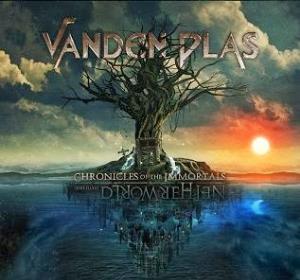
Vanden Plas — Chronicles Of The Immortals: Netherworld (Path 1) ★★★★★

Thanks, Gianna! You have saved me a bit of time by introducing the new Vanden Plas. Allow me to add my track-by-track impressions to your superb set-up.

I really like this disc a lot and have selected it as one of my star-spangled picks for this July 4. Chronicles Of The Immortals is an excellent album, destined for the year-end Top Ten. It’s definitely one of my mid-year five-star picks.

Track one (3:52) starts off with a spoken-word introduction that together with the background music and a bit of singing builds a sense of anticipation. Then track two “The Black Knight” (8:29) lets us know we are unquestionably in excellently epic prog-metal territory. By the time track three “Godmaker” (5:24) kicks in, any doubts about whether or not the listener is in the presence of something extraordinary will have been removed. Clearly, this is an organically coherent compositional tour-de-force.

Track four (1:39) is a bit of a prelude that lets us catch our breath. But then track five “A Ghost’s Requiem” (3:56) is a completely surprising and unexpected transmogrification of sacred music tropes. This brilliant track cements the disc’s five-star status and forms a musical launch pad for the mind-blowing tracks that follow. Track six “New Vampyre” (6:16) and track seven “The King and the Children of Lost World” (7:52) continue to elevate the disc to new heights, which is quite astonishing, because standard practice is to lead an album with your finest material but here we have an unfolding organic whole and its accelerating excellence becomes more and more manifest.

Track eight “Misery Affection” (5:08) mellows out a bit and displays another side of the band’s remarkable skills. But just when we have been soothed by the stunning beauty of that brief pause in the intense metallic action, we are overwhelmed by track nine “Soul Alliance” (6:39), which together with its successor, track ten “Inside” (6:42), are my favorite parts the album, because their instrumentation and composition is sheer perfection. Together they tie together the entire album and bring things to conclusion in a brilliant way.

The final track, in fact, is absolutely the most satisfying conclusion to an epic concept album whole that I have heard in a long time. Really, I can’t recall feeling such excitement, other than with the similar way it feels to listen to the end of “2112” by Rush. The last two minutes of Chronicles Of The Immortals are pure dopamine-infused prog bliss. As those gigantic concluding waves of chords wash over us in the last two minutes, I am even reminded of some Rush tropes from the first half of the eighties.

Thanks, Vanden Plas. You have given us one of the greatest, most essential prog albums I have ever heard. What an amazing gift you have shared with us.

Vanden Plas — Chronicles Of The Immortals: Netherworld (Path 1)

Progarchist Rating: ★★★★★

Discovering Vanden Plas

A progarchy confession: I’m not a big fan of progressive metal. I think bands like Dream Theater and Opeth are downright impressive musically, but their albums aren’t ones I often return to. I rarely find myself “brought home” by prog metal, the way that the best (more recent) offerings of Anathema seem to place everything around (and within) me in perfect balance. Give me the sonic and soulful perfection that is Marillion’s Brave over the collected virtuosity of Dream Theater any day.


But as I’m quickly discovering, exposure to excellent bands and new prog genres is one of the great benefits of citizenship in the Republic of Progarchy. So far, I’ve fallen for The Reasoning, a band that rightly gets a lot of love on these pages. And more recently, Chronicles of the Immortals: Netherworld (Path 1) by the underrated German prog metal band Vanden Plas, a concept album where the virtuosity of Dream Theater meets the storytelling of Marillion — compelling, personal, and one of the best prog offerings of the past year.


 397022


Vanden Plas features Stephan Lill (guitars), Torsten Reichert (bass), Andy Kuntz (vocals), Andreas Lill (drums), and Gunter Werno (keyboards), a lineup unchanged since 1986. For Chronicles, the band teamed up with German author Wolfgang Hohlbein (a self proclaimed fan) to interpret his Netherworld novels for the stage. The concept is perfect for prog: a mortal protagonist caught in the apocalyptic battle between heaven and hell, each track revealing one of his “visions.” Its themes are at once cosmic and human, haunting and hopeful. The perennial themes of darkness versus light, good versus evil never seem tired. They get reimagined track after track, complimented and heightened by dynamic musicianship. Between heavy guitar riffs, spoken word, and stunning vocals, the album perfectly balances the intensity of prog metal and moments of deliberate – and startling – restraint. Everything in its rightful place. Listening to this album, you can’t help but feel that Vanden Plas has focused more on revealing, uncovering something true than creating anew.


Dissecting Chronicles track-by-track seems all wrong; this is truly a narrative album. Chronicles displays the unique power of prog music to pull the listener into its own horizon. By the album’s end, we stand on the precipice between blinding beauty and darkness, grateful to Vanden Plas for bringing us there.

RochaNews: New Engineers, September 16

ENGINEERS TO RELEASE NEW ALBUM “ALWAYS RETURNING” ON SEPTEMBER 16 VIA KSCOPE

Teaser video featuring track snippets posted on YouTube

ENGLAND – Engineers will release its upcoming fourth studio album, Always Returning, on September 16 via Kscope. The band has unveiled a teaser video containing snippets of the tracks “Fight or Flight,” “Searched for Answers” and “Always Returning” on YouTube at: http://www.youtube.com/watch?v=GswJTg4ykGw.
Written and recorded alone at home in York by multi-instrumentalist, Mark Peters, before being coated with deft brush strokes of ambient electronica by celebrated German artist/producer, Ulrich Schnauss, Always Returning is a record that unhurriedly drifts in and out of focus, hinting at themes without ever making them so explicit that the listener can’t map out their own personal interpretations. It delivers an overall emotional heft that’s impossible to pull away from.

1.  Bless the Painter

2.  Fight or Flight

3.  It Rings so True

4.  Drive Your Car

5.  Innsbruck

6.  Searched for Answers

7.  Smiling Back

8.  A Million Voices

9.  Smoke and Mirrors

10.  Always Returning

Engineers – with London based drummer and composer, Matthew Linley, rounding out the line-up – has been creating mesmerizing music with brilliantly shaded guitar textures and teasing lyrical ambiguities for over 10 years across three albums – 2005’s debut Engineers (“hypnotic lullabies from beautific Brit newcomers” **** Q), 2009’s Three Fact Fader (“a blistering statement of intent” **** The Sunday Times), and 2010’s swift follow-up In Praise Of More (“should be given to most UK bands as an example of in making an album that is a joy to behold” 8/10 Clash).


Stay tuned for more information on Engineers and Always Returning, out this September on Kscope.


UPDATE (July 10): 

The band is now offering a free download of the new track “Fight or Flight” via the Kscope website at:http://www.kscopemusic.com/2014/07/10/engineers-offer-free-download/. The song is also streaming on YouTube at: http://youtu.be/-MxRgFAWjMo.


Engineers online…https://www.facebook.com/engineersband

http://www.kscopemusic.com/artists/engineers


Fuzz Club Introduces The Underground Youth and Sadovaya

THE UNDERGROUND YOUTH

01d051f6-1460-400d-91b8-407eae96fc48TUY is the name under whichManchester’s underground poet, Craig Dyer, has produced his records since 2009. In 2011, Fuzz Club Records started putting out his prolific catalogue, bringing to light a number of LPs and singles that had only circulated virally on the Internet.

Since then, TUY, with Craig and Olya Dyer as the core of the band, have expanded to a four piece, gaining a solid international fan-base and touring all around the UK and Europe.Gideon Coe has spinned their single “Juliette” on BBC6 and they took part in the “Reverb Conspiracy – Volune One”, curated by Fuzz Club andAustin Psych Fest. In June, they rocked up the Eindhoven Psych Lab and they are set to headline Paris Psych Fest in July.

Drown In Sound said of their Eindhoven set:  “combining the mesmeric rhythms of The Velvet Underground – Olya Dyer’s driving beats make her the new psych generation’s Mo Tucker – with rippling feedback associated with Bad Moon Risingera Sonic Youth and a dash of the Mary Chain thrown in as well, they’re a captivating force”.

***

8f3d19f5-9b42-44e7-b8e6-b0e37a1f89d1Sadovaya” is the 4th lost gem of TUY. Entirely written in St. Petersburg, it takes its name from the street where Craig was living with Olya at that time. Most tracks are love songs inspired by Russian novelists and poets Craig was being introduced to, such as Lermontov, Dostoyevsky and Pushkin. The music was highly influenced by Soviet era Post-Punk bands like Kino and by Russian cinema. Craig said: “the sound of the album has a raw quality that I was never able to recreate. There’s a genuine naivety to the recordings that makes it my most visceral, personal record”.

The record will come out on limited 400 white vinyl copies and an additional special edition of 100 midnight blue copies with a gatefold cover and silkscreened artwork, which have already sold out on pre-sale. It will also be available digitally on I-Tunes and Spotify.


Progsphere Invites Submissions From Bands

Prog Sphere’s Progstravaganza progressive rock and metal compilation series have been around since August 2010, and during that time over 400 bands paraded through it. Prog Sphere is currently taking submissions for the jubilee, twentieth edition and bands from all around the world are welcome to take part.
psnewsl
Some of the bands that previously appeared on the Progstravaganza samplers include:AstraScale the SummitThe Wrong ObjectExivious, Blotted ScienceSoft MachineFughuGalahad, and many more. The twentieth edition will be calledLandmarks and besides new bands it will feature some of the artists that were featured on the previous samplers. Prog Sphere is also starting a mini-documentary series titledThe Story of Progstravaganza, where some of the artists that were featured in the past will be talking about progressive music today, their work and more. On top of that, every band is showcased with an interview on the Progstravaganza website and is also featured on Prog Sphere’s Progify streaming service.

Artists interested in the Progstravaganza feature should send an email toinfo@prog-sphere.com with short biography and links where their music can be previewed. The deadline for submissions is July 20th.

***

ced10710-7ecb-4546-8867-f3849f582ff0

Links:

www.prog-sphere.com
www.progstravaganza.com
www.facebook.com/ProgSphere