B.B. King Live in Joliet, IL

b-b-king

Saturday night (May 31), I had the great pleasure and honor to see the King of the Blues, Mr. B.B. King, live at the Rialto Square Theater in Joliet, Illinois. As soon as I found out that he was going to be doing a concert so close to my house, I knew I had to go and that this would be a once in a lifetime experience. Boy, was I right. At 88 years young, Mr. King still sings with such effortless power, it astounds me. His playing on the guitar is simply incredible. As my Dad described it, B.B. King doesn’t just play the guitar, he makes the guitar sing. He brings out the best that the guitar has in it, in a way that only a select few people, such as Eric Clapton or Buddy Guy, are able to do.

The concert itself was around two and half hours long, but the first hour of that was a sort of “warm-up” by Anthony Gomes and his band. Gomes, originally from Toronto, is a very skilled guitarist, but his style of playing created more “noise” than anything else. He did not have the finesse or style to make the guitar sing and come alive. It was clear that he was trying to show off. The best part of that segment was when he brought Ronnie Baker Brooks onstage to play. Brooks is a Blues musician local to Chicago, and he is the son of Lonnie Brooks, who was rather famous in Blues circles in his own right. Both Ronnie and his father were invited on the stage by Mr. King later on in the show.

After Anthony Gomes and his band were through, the stage hands came out to get everything ready for B.B. King and his band. His band came out first and each member demonstrated their technical skill in a very jazz-like fashion. The band had four guys on trumpets, horns, flutes, saxophones, etc., a drummer, a keyboardist, a guitarist, a bassist, and of course B.B. King. When he came onto the stage, supported and surrounded by rather large security guards, he received a well-deserved standing ovation. Mr. King made his way to his seat, and he was given his guitar and microphone, and the magic began. You could tell that he really enjoys what he does. At 88 years old, there is nothing keeping him touring other than sheer love of the music. He was very thankful to the adoring crowd for their applause and respect, and he made sure to introduce each member of his band.

Once he settled down and began to sing (both vocally and through his guitar), I was simply amazed. His voice had such power that was simply effortless for him. Once he began to play his guitar, it was pure pleasure to listen to. His ability to allow the clear sound of the guitar to take over is incredible. While Gomes was clearly using all sorts of effects and pedals for his guitar, Mr. King kept it simple and just let Lucille do all of the work. As he played his way through several of his hits, such as “Thrill is Gone,” “Rock Me Baby,” and “Why I Sing The Blues,” he continued to stop and share stories and interact with the audience. At one point, he claimed he forgot the lyrics to “Why I Sing the Blues” during the song. While some people in some places might be mad at that, it was clear that most of this crowd had nothing but respect for Mr. King. Just being there seeing him perform was enough. As the man who revolutionized the Blues, and rock and roll, he really is a legend, and he commands respect by his very presence, in a way unlike any other performer I have seen.

After several songs, Mr. King’s security guys came out and handed him stuff (like guitar picks and other trinkets) to throw out to the audience. As a crowd assembled down front, someone held up a poster. Mr. King glanced over at it and made eye contact with one of his security guards, who then went over, took the poster, and brought it to Mr. King for him to sign. I found that totally awesome, that he would take the time to do that at the end of his concert. As everything was winding down, B.B. King said several times how he wished he could stay and play all night, and I really wish he would have. When he got up and made his way off the stage, I realized that I was watching a legend and a living piece of history walk away. It was truly an honor and a privilege to see B.B. King play live, and if any of you ever have the opportunity to see him, I highly recommend doing so. You will not regret it.

th-3

HOME

Did Dave Grohl admit that Soundgarden was a far better band than Nirvana?

The former drummer of Nirvana (#3 on my personal list of Most Overrated Rock Bands of Alltime), recently spoke with Rolling Stone magazine about Soundgarden’s album, Superunknown, released twenty years ago. Superunknown, in my completely objective opinion (ha!), is the greatest album to come out of the Nineties grunge scene in Seattle. And, frankly, it sounds as if Grohl, now frontman for Foo Fighters—a group I far, far prefer to Nirvana—seems to agree:

Superunknown is, in my book, right up there with ’90s classics such as Radiohead’s OK Computer, Jeff Buckley’s Grace and U2’s Achtung Baby. I always found Nirvana to be rather boring, just as I found Pearl Jam to be rather boring and rather pretentious (I don’t usually care for bands who try to constantly make Big Statements); it doesn’t help that I cannot stand Eddie Vetter’s weird, warbling voice. But, hey, let’s focus on the good stuff. Soundgarden is coming out with various deluxe packages of the remastered Superunknown (my copy should arrive this week), and Chris Cornell—who was good friends with Buckley—spoke recently to Radio.com about the album’s anniversary:

Cornell, I should remind readers, once said, “I was a nerdy shut-in who listened to prog-rock.” And while Soundgarden is constantly compared to Led Zeppelin, the group was more influenced by Black Sabbath, the Beatles (Cornell’s favorite group), Kraut rock, the Stooges, the Clash and other punk-ish groups.

Speaking of the hit song, “Black Hole Sun,” Grohl remarks, “It was so much more melodically sophisticated than anything any of the other bands in Seattle were doing. It was a big deal.” The same could be said for the entire album, which is, musically and lyrically, one of most eclectic and sophisticated hard rock albums ever produced. Billboard.com has a really good piece about the album that gives a track-by-track tour of the entire 70 minutes. Apparently the making of Superunknown pushed the limits of the technology involved:

Michael Beinhorn, who produced the album with the band at Seattle’s Bad Animals studio in the summer of 1993, told Billboard in 1994 of how he’d overload “tape to the point of distortion, using massive EQ, massive compression. We experimented with chains of four equalizers and four compressors in one signal chain, on one instrument. The end result is a record that is both incredibly dense and overwhelmingly present. There is a tangible sense of air being moved.”

Another interesting note, new to me: the final song, “Like Suicide,” was inspired by a dead bird. Death and mortality, of course, figure heavily in the album; there is a sense of apocalyptic foreboding that is equally chilling and compelling, in large part because the songs are so, well, singable (beware, however, trying to match Cornell’s high notes). My favorite track, “Limo Wreck,” features all sorts of weird tunings and time signatures at the service of a haunting, dirge-ish cut that swells in intensity as Cornell wails: “Under the shelf/The shelf of the sky/Two eyes, two suns/Too heavenly blinds/Swallowing rivers/Belongs to the sea/When the whole thing washes away/Don’t run to me.”

Once I’ve had a chance to listen to the remastered album, I’ll share some more thoughts.

Believe Again – new material from Yes

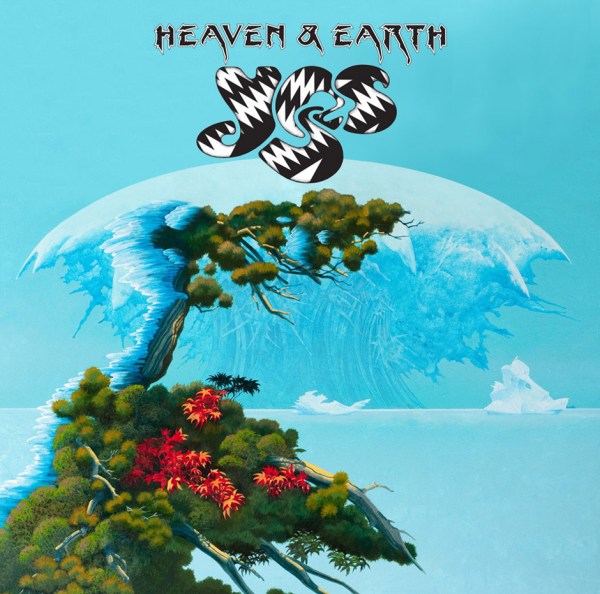
A track from the forthcoming Yes album, ‘Heaven & Earth’ has appeared on Soundcloud. I think it sounds interesting, and it’s growing on me with each listen.

Find it here: https://soundcloud.com/thecheezmusic/01-believe-again-radio-rip

[UPDATE: It looks as though Yes management removed the song.  Apparently, it wasn’t supposed to be uploaded yet.–ed., Brad Birzer]

[UPDATE: Yes management has now created this page for providing audio excerpts: http://yesheavenandearth.com –ed., The Dr.]

[UPDATE: Excerpt of Believe Again and full lyrics now available at http://yesheavenandearth.com –ed., John Simms 6/13/14]

“Carpe Diem” — Within Temptation

Within Temptation looks back on the Hydra tour to date … and the crowd participation is truly something wonderful to behold …

An Edwardian Trip through Hades: CAPACITOR by COSMOGRAF

Stunning album cover.  A progged-out version of Dolby's GOLDEN AGE OF WIRELESS.  Brilliant.
Stunning album cover by the wonderful Graeme Bell. A progged-out version of Dolby’s GOLDEN AGE OF WIRELESS. Brilliant.

Cosmograf’s CAPACITOR is everything a rock album should be.  And, I do mean EVERYTHING.  EVERY.  SINGLE. THING.  It is wholesome, fractured, creepy, uplifting, contemplative, mythic, existentialist, moving, intense, wired, dramatic, contemplative, Stoic, mystifying, weird, satisfying, honed, nuanced, dark, and light.


The Meaning of It All

If I could capture the album in one sentence, comparing it to other forms of art, I would and will put it this way: CAPACITOR is an Edwardian journey into the Hades of the Ancient Greeks but emerging in BIOSHOCK.

Then, think about the artists involved.  Andy Tillison plays keyboards on it.  Matt Stevens plays guitar on it.  Nick Beggs and Colin Edwin play bass on it. NVD plays all of the drums. Our modern master of sound, Rob Aubrey, the Phill Brown of our day, engineered it.

[Correction: from Rob Aubrey.  My apologies for getting the credits and terms mixed up.  “Hi All, Actually I didn’t ENGINEER it as such…. I recorded the Drums with NDV and then everything else was Produced and Engineered by Robin… He Mixed the album at home and I was here in an advisory role, just giving a hand when he ran into problems or I felt things needed more work. Robin and I mastered the album together just a few Months ago on my studio system here (Pro Tools) using all of his original sessions so Robin could make adjustments to the overall dynamic and “tweak” individual sounds if necessary. I cannot take credit for much as Robin really is the genius here!”]

Then, of course, there’s the artist supreme, the writer, director, and producer of it all, Robin Armstrong. English wit, critic, musician, lyricist, father, husband, entrepreneur, and demigod of chronometry, Armstrong is one of the most interesting persons of our day and age. He’s already proven everything an artist should in his previous albums, especially in The Man Left in Space.

Armstrong is a driven man, and it’s impossible to think of him without thinking not only of perfectionism, but also of his insatiable desire to perfect a thing even more so. In terms of constitution, he is probably incapable of doing otherwise. We all benefit from his unrelenting drive.

On the latest album, CAPACITOR, Armstrong explores the Edwardian fascination with spiritualism, giving us not “steam punk” but what should be called “vacuum tube punk,” something quite different from that of either H.G. Wells or Bruce Sterling.

The statement “energy cannot be created or destroyed” appears in print, in word, and in song multiple times on CAPACITOR. If this is true, Armstrong asks through his characters and story, where does our energy—our soul—go after the body fails us? We are everywhere and in every time, he notes, surrounded by the ghosts of the dead. Even if we don’t personally believe in an afterlife, we see “what they left with us.”

Ghosts appear frequently on the album, as does a vaudevillian preacher and a spiritual medium. In the end, though, especially by the final two tracks, Armstrong is critiquing the rise and predominance of “the machine,” any gadget that mechanizes us, makes us less than human, and distracts or captures our very soul and very essence, thus diminishing our humanity.

The person, it seems, can never be fully an individual without body and soul, not in war with one another, but in healthy tension.


The Meaning of It All, Continued

Musically, CAPACITOR immerses us into perfection itself. See above for the musicians Armstrong has brought together. He’s obviously a creator of community and a leavenor of talent. He’s also within the prog tradition, with musical passages inspired by, indirectly, Porcupine Tree, Pink Floyd, Big Big Train, and The Tangent and, directly, The Beatles. Indeed, one of the most rousing moments musically comes in “The Reaper’s Song,” a song that, in large part, pays homage to THE MAGICAL MYSTERY TOUR by the Beatles (1967).

The white car.  Original photography by Dan Armstrong.  Booklet art by Robin Armstrong.
The white car. Original photography by Dan Armstrong. Booklet art by Robin Armstrong.

Sitting in a station, waiting for a train to come

Frighten all the people, standing on the platform

Trying not to push them over

Trains are gonna crush them

Stupid little people

Stupid little people

Another track, “White Car,” has absolutely nothing to do with the unfinished fragment of the Yes song from DRAMA (1980). Yes’s song will have to continue in my soul as an unresolved enigma until the end of time.


A Masterpiece

It goes without stating (though, I will state it anyway!), the last several years have been not only amazing when it comes to rock, but they have also been, probably, the best years in the history of progressive rock.

2014 has been no different.

Please, however, don’t think of Cosmograf’s CAPACITOR as merely another Cosmograf release or as merely another prog rock release.

Of course, there is no such thing as “just another Cosmograf release,” though we might become a bit jaded when it comes to another “prog rock release.” There’s so much coming out at the moment, it would be understandable—if not forgivable—to take the historic moment for granted. Even with the somewhat overwhelming number of music cds appearing over the last several years, CAPACITOR is truly something special and, dare I use a word overused and misused for its sappiness, precious.

From my way of thinking, CAPACITOR is the best cd of 2014 and one of the best prog rock releases of all time. It is, at least this year, the one for all others to surpass. I very much look forward to those who embrace the challenge.


To pre-order for the June 2, 2014, release, please go here.

Progarchist and quasi-Kiwi Russell Clarke receives his copy and is quite elated.

Anubis Gate — Horizons (2014)

The new album from Anubis Gate is out and it is amazing.

I guess Denmark is making a serious bid for world musical dominance…

…because Horizons will blow away the competition and blow your mind!

I won’t waste any words right now, but rather simply say…

…you have to go hear this upper-echelon album to believe it. It’s incredible!

Well, okay, let me at least introduce it to you with the words of the band:

Finally the eagerly anticipated sixth album of Danish Prog-Metallers Anubis Gate is on the Horizon. Their new album “Horizons” is unquestionably the bands most mature work to date. Combining their signature epic songwriting with the brilliant production team of Kim Olesen and Jacob Hansen yet again. Being released on Nightmare Records distributed by Sony/RED, release date is April 15th, 2014.

Anubis Gate hit the studio the summer of 2013 recording their new opus “Horizons” which is unmistakably Anubis Gate’s sound yet goes again to new places. Places perhaps one would call daring.  From the liquid grooves to uneven time signatures, trademark soundscapes and heavy, sometimes even thrash metal riffing you will know this is both in the tradition of the band yet breaks new ground. Anubis Gate blend 80’s melodic heavy rock, epic ambience and a contemporary dark layered progressive metal. Inspired by the likes of Savatage, Genesis, Iron Maiden, Queensryche, King Crimson, Iced Earth, Crimson Glory, Fates Warning, Lord Bane & Tad Morose yet always sounding completely unique.  New guitarist Michael Bodin’s heavy riffing works exceptionally well in a duel with long time guitarist Kim Olesen.  The forward driving drums, courtesy of new drummer Morten Gade Sørensen, are a treat in themselves. Henrik Fevres melodic vocals are even more amazing and heartfelt than ever before. “Horizons” showcases the band on its highest peak. Anubis Gate 2014 is: Henrik Fevre, Kim Olesen, Michael Bodin and Morten Gade Sørensen.

By the way, if you need any convincing about the towering talent of this band, you can still download three awesome tracks, 21 minutes of creative metal from last year, for free. Here is the band explaining their generosity:

Hi everybody. As most of you know we have been working on our next effort called HORIZONS for the last two years. But, as some of you also know, we are insane perfectionists, so we didn’t quite meet the deadline for a 2013 release, which was our plan otherwise. When we recorded HORIZONS we had these three tracks that we didn’t quite know what to do with. A slightly different version of DESTINED TO REMEMBER (the other version will be on the HORIZONS album), A cover of the epic PINK FLOYD track SHEEP (from their magnificent Animals album) and a cover of BROKEN WINGS originally by Mr. Mister. BROKEN WINGS was actually a fan request, which we thought “oh, that’s a great idea”. So while you are all waiting patiently until early 2014 for the HORIZONS album to be released, this is a little present from us to you. We hope you enjoy it.

Burn the audio to a cd, print the cover, or put it on your mp3 player/ipods. Share it with your friends, spread the word.

Crank it up boys and girls.

All the best from ANUBIS GATE, Jethro Tull, Yes, ELP and 70’s style classic Rock/Hard Rock and Prog in general …

Wow, you’ve never heard Pink Floyd and Mr. Mister like this! Thank you, Anubis Gate, for your devotion to prog perfection. Your music is a joy to listen to!

P.S. You can’t beat free, but if you like deals, be sure to also pick up 2011’s eponymous Anubis Gate at the currently discounted price.

The Bunnymen’s METEORITES Streaming Now

echo-and-the-bunnymen-meteoritesFor some one of my age (46), it’s very hard not to trap Echo and the Bunnymen in the best memories of my youth.

From 1980 to 1984, the band produced four classic albums in a row, the best of which was HEAVEN UP HERE.  Their self-titled album of 1987 was ok, but nothing spectacular.  In 1990, with a new singer, Echo released an album that has stood the test of time rather well.  Though it’s simply not Echo and the Bunnymen, REVERBERATION is a really catchy pop-rock album with a lot of neo-psychadelia.  REVERBERATION, still, is better than anything else Echo has released post-OCEAN RAIN.

In 1997, Echo reformed with Ian McCulloch once again taking lead vocals.  Everything Echo has produced since 1997 has been unsatisfying, an Echo of an Echo with momentary flashes of brilliance.

The new album, METEORITES, slated to come out in four days, is good but not astounding.  Maybe this is simply my fault, my failure to appreciate all that is currently Echo.  I very much want the Echo of my youth–angry, hard edged, nasty, lush, claustrophobic, and angular.

METERORITES is, as I just noted, good but not astounding.  It’s a safe and nice return to the late 1980s without causing any problems and without taking any serious chances.  What saddens me, though, is that the album is on the edge of astounding.  A different producer, a different engineer, a different some one (as Rush has down with their last several albums) might have made METEORITES spectacular.

As McCulloch has recently said, METEORITES is a concept album.  And, so it seems to be.  There’s a lot of discussion of religion, especially historical religion.  I’m just not sure what it all means.  Still, Echo was always best when combining elements of hard rock and prog with pop sensibilities.

McCulloch’s voice is excellent and the same can be said of Sargeant’s guitar work.  But, again, it’s all so safe.  The bass and the drums are bland, and, thus, an essential part of Echo seems missing.

The Guardian is streaming the entire album, and you can judge for yourself before buying it.  After listening, I’ve decided not to purchase it.  I know I would only listen to it a few times, but then I would forget about it, relegating it to mere un-accessed space on my hard drive.

http://www.theguardian.com/music/2014/may/19/echo-and-the-bunnymen-meteorites-exclusive-album-stream

If you’re looking for the best of Echo, you must return to the band’s past: CROCODILES (1980); HEAVEN UP HERE (1981); PORCUPINE (1983); and OCEAN RAIN (1984).  These four albums rank as four of the best in the rock era.  Additionally, as Pete Blum has recently argued, the best modern Echo is to be found in Sergeant and Patterson’s prog band, Poltergeist.

20 Looks at The Lamb, 12: On the Air

Air has long been understood as elementary, as an element, like earth, fire, or water. It’s what I breathe. Sometimes it’s all I need (and to love you).  It is closely tied to sky, to light, to height, to the heavens, to wind, to breath and to life.  I’m told that Hebrew for ‘spirit’ is also wind and breath.  Tied to wind, then?  To Spirit (to God?)  And “to air” (the verb) is to “put out there.”  Where?  On the air.

“On the Air” is one of my favorite Peter Gabriel songs (from Peter Gabriel 2, aka “Scratch”).  Wondering how next to look at The Lamb, I remembered it today, and then found myself thinking about air, aware of the air.  I hope that I can air my awareness.  “I’m putting the aerial up.”

scratchEveryone I meet on the street
Acts as if I wasn’t there,
But they’re all going to know who I am
‘Cos I can go out on the air.

The air is atmosphere that hangs around me without ever announcing its presence, except by way either of what’s in it, or of how it changes.  The air, for Rael, is often thick with content and change.  Broadway is a place where “there’s always magic in the air.”  But when the Lamb lies down there, it “brings a stillness to the air.”

Caryl Chessman (1921-1960)

Air is the non-solid.  When the wall of death appears, it is “something solid forming in the air”  Rael waits for impact, not standing, but “hovering like a fly.”  Hovering in the air.

Caryl Chessman [controversially capital criminal] sniffs the air.

Two golden globes float into the room And a blaze of white light fills the air.

[Rael] writes Death off as an illusion, but notices a thick musky scent hanging in the air.

As the brothers talk themselves through their new predicament, a big black raven flies into the cave, swoops down, grabs Rael’s tube right out of his hands and carries it up into the air in his beak.

The air is foreboding.  It is where there is foreshadowing of change, and where there is change.  But perhaps, more subtly, the air is where there is ascent, and perhaps some kind of liberation.  If that is so, it must be a liberation that is indifferent to death, if not opposed to it.  In “The Light Dies Down on Broadway,” a skylight appears in the rock, through which Rael can see and hear New York City (“my home”), a window through which he may presumably step back.  But is that step “back” an escape, or is it just a step into another dream?  We really already know the answer if we’re paying attention.  Rael’s perspective, as he makes the decision to stay and save John, is from outside the window, from above the skylight.  The decision amounts to a recognition that he is now “in the open air.”

Think about how this is not a matter of leaving anything “up in the air” as we often say.  Not in the air in that bad sense, anyway.

lambcoverdetailAnd what is it that is here being put on the air?  When Gabriel sings about going out on the air, “they” are going to know who he is.  “They,” who acted as if he wasn’t there.  Does Rael know who he is, in the end?  Do I know who he is?  Do I know who I am?

Ah, here is an unexpected knot that may be worth trying to untangle:  I want others to know who I am, and I put myself out on the air.  Do I want to know who I am, or is it more important somehow to know where I am.  Where I am could be on the air, or in the air, or maybe where I am just is what is meant by “air.”  I go out on the air here, and by implication boast that I understand the “who” and “where” of which I’m writing.  In the words of the Cowardly Lion in the film, The Wizard of Oz, I try to convey “that soitin air of savoir faire.”  I broadcast myself, I’d like to think.  Or….  Is my self, by its very nature, a broadcast?

Think about David Foster Wallace’s commencement address at Kenyon College in 2005, where he famously urged the graduating fish to keep reminding themselves:  “This is water.”  “This is water.”

But we could change it to: “This is air.”  “This is air.”

Or, if the air is what I am in, then maybe none of this is really a matter or knowing, of savoir.  Think about that (but hopefully in a way that’s not too much like wanting to know) and then listen again.

<—- Previous Look     Prologue     Next Look —->

Big Big Train: Preparation for Real World

Some of you may have detected that a few of us Progarchists have, shall I say, a smidgen of rabid adoration for a British beat combo calling themselves Big Big Train.

BBT (for that acronym is how they are known to us!) are preparing for a live recording at Real World Studios in August of this year, and the chaps have just started posting videos of their preparations.

If you have heard BBT’s music you’ll certainly know how complex and multi-layered it can be, which is a potential challenge to bring to the stage, so it’s going to be fascinating to see how they’re going about it.

The first video sees Danny Manners and Andy Poole talk about how their keyboard rehearsals are going.

It’s very, very cool 🙂

Within Temptation — Hydra (2014)

sharon-hydra

The funniest review to date that I have read of Within Temptation’s Hydra is over at Angry Metal Guy, written by the acerbic and pseudonymous Steel Druhm. As proof of how intoxicating it is to make fun of a band popular and successful, here’s a taste of the beginning and end of this well-written, laugh-out-loud funny review:

I’ll admit to liking the early Within Temptation output like Mother Earth and The Silent Force. Sure, they were a dime-a-dozen, female-fronted gothic metal act with more gloss and slickness than the complete works of Glee, but the song-writing was consistently sharp and catchy without sounding too commercialized or fake and Sharon den Adel had big, captivating… vocals. Things started to drift for me by the time The Heart of Everything came along and though it had some good songs, it also felt more forced and AOR. I paid scant attention to 2011s The Unforgiven and didn’t really want to review this one, but hey, somebody had to do it and I wanna be somebody!

Hydra is more or less a continuation of the career path these Dutch goth-mongers have set for themselves and it’s full of slick, commercialized, gothic puffery with an increasingly minimal underpinning of metal. It also features a dizzying and often puzzling selection of guest vocalists, few of which actually help and one really hurts. The above average writing that once kept the band aloft in a sea of clones is still evident on some songs, but like their metal roots, it’s getting more thin, threadbare and elusive. In a nutshell, Hydra is a collection of shiny, vocal-driven goth-rock tunes with simplistic, underwhelming and essentially irrelevant guitars placed far in the back. Sometimes it works, more often it’s boring and as substantial as plastic dining ware. Naturally, it’ll sell a zillion albums.

Though Sharon always sounds great and impresses with her power and range, the backing music is so flat and nondescript they might as well not even credit the band. It’s just a wash of simple, uninspired riffs, generic solos and dull back line play. Add to that an ever-increasing tendency to repeat a chorus until it hurts and make nonsensical guest selections and you have a band that sounds out of ideas, frantically trying to latch onto several trends at once, some of which have been over for years and are best left in the grave …

When diminishing returns clash with transparent attempts at crass commercialism, the metal fan feels the sads. If you love goth-rock and don’t care how unmetal it sounds, I suppose bits and pieces of this may hit the spot, but a lot of it is too dull to leave much of an impression. Shambolic album aside, I still love you, Sharon.

LOL!

symphonic-metal

Now, don’t get me wrong, the Hydra album is actually pretty great. I like it a lot. You just have to be in the right mood for it, and you have to listen to it at the right time.

Nonetheless, I do think it is very important to hear the “Devil’s Advocate” case against whatever metallic guilty pleasure you may be enjoying. You yourself can weigh the pros against the cons. If you can hear what the Devil’s Advocate has to enumerate as the cons, then you can have a good laugh and, at the same time, enjoy everything that’s nevertheless still right with the music. If the Devil’s Advocate can’t kill off your enjoyment, then you know there is indeed something special to the album all the same.

For example, the Devil’s Advocate is quite right that Sharon can beat a chorus to death. (Take “Dog Days” on the new disc as a prime example; I think it’s the worst track.) But, then there are the many moments that simply work. For example, “Covered by Roses” is really terrific. And the bonus track covers are brilliant as well, like Sharon’s marvelous version of Lana Del Rey’s “Summertime Sadness”. As for the controversial inclusion of rapper Xzibit on “And We Run,” well, I’m sorry folks, but the rap nonsense is not any more stupid for me than the Cookie Monster vocals sprinkled here and there. Don’t take this metal too seriously and you can still have a bit of fun — pun intended.

So, bottom line, listen to the haters. Read what they might have to say, especially if it is funny.

But, be open to the music winning you over anyway. Turn it loud. Does it make you smile? Well then… I guess you’ll be able to be a Happy Metal Person.

sharon-smilesharon-horns