Haken – English Music’s Finest Hour?

manofmuchmetal's avatar

A while back now, I posted a blog whereby I listed my favourite 5 albums of all time. If you are interested, it can be found here. In that post, I found it impossible to keep my list to 5 and therefore rather autonomously added a sixth. The sixth album was the newest of the list having only been released in 2011. However, such is the impact that it has made on me and the wider progressive music community, it had to make my list.

Enough of being cryptic, I am of course referring to ‘Visions’, the sophomore album by UK-based progressive rock/metal band Haken.

Haken band

In the last few days, Haken have announced full details of their impending third album, entitled ‘The Mountain’, due out on one of my favourite record labels, Inside Out. In light of this and the fact that my excitement and anticipation has reached fever…

View original post 1,109 more words

Neil Peart: The Most Endangered Species

Some songs just scream “let me reach perfection.”  

Every note, every pause, every ebb, every swell, every silence, and every word just gravitates towards its right place.  It’s as though the cardinal and Platonic virtue of Justice becomes manifest, real, and tangible in this world.

There probably are very few perfect tracks—tracks that never grow old and never cease to cause wonder.  From the 70s and 80s the following immediately spring to mind as candidates: The Battle of Evermore, In Memory of Elizabeth Reed, Close to the Edge, In Your Eyes, Thick as a Brick, Cinema Show, Take a Chance with Me, Echoes, and The Killing Moon.

Of all of these great possibilities from those two wild and wholly decades, the one song that comes closest to attaining perfection, such as perfection is understood in this rather bent world, is Natural Science, the final track on Rush’s Permanent Waves.

Well, at least in my humble opinion.  Ok, not so humble of an opinion.

Rush PW cover

Unobjectively Rushed

In a number of previous posts here at progarchy and elsewhere, I’ve talked about my love for all things Rush, perhaps even putting myself in a position in which I simply can’t be objective about them.  Frankly, at age 46, I’m tired of trying to be objective about the things I love.  In fact, I want to be subjective.  Really, really subjective.  I want to spend the rest of my life promoting things of excellence and beauty, and not wasting my time analyzing what I don’t like.  I want to explore how various forms of art have shaped my own life, how they’ve guided me, how they’ve given me strength and comfort, and how best to pass on such nuggets of insight to my children and my students.

So, purely subjectively: I’ve always thought of Neil Peart as the older brother I never had—the cool kid with all the great ideas and, equally important, the guy with all of the good friends.  Most importantly, however, Peart has always had the courage of his convictions.  What an appealing combination of qualities.  Creativity, intelligence, integrity and perserverance.

As much as any person in my life I’ve never met (from Plato to St. Augustine to Friedrich Hayek to T.S. Eliot to J.R.R. Tolkien), Peart has profoundly shaped my view of the world.  I’ve known this since the spring of 1981, when, as a seventh grader, I first encountered Moving Pictures.

And, coming from a very (happily) nerdy and intellectual family which encouraged a love of music as much as it encouraged a love of reading and writing, I started writing my own first little essays on Rush while still in high school.

Perhaps my professors in college shouldn’t have allowed me to do this or encouraged me, but I did get to help lead a discussion on the Adventures of Huckleberry Finn, using the song “Tom Sawyer” to explain the significance of the end of Twain’s novel.  The end of that complex novel tries to examine the motivations of Huck and Tom as they decided whether or not to free Jim from his enslavement.  Their humanity tells them one thing, but their cultural upbringing tells them another.

I also, as I’ve mentioned before, wrote my major paper for my sophomore liberal-arts core course examining the philosophy of Neil Peart, using nothing but the lyrics of Grace Under Pressure.  Sadly, I don’t have a copy of that paper any longer, though I might attempt to reconstruct it at some point.

Rush 1980 by Todd Caudle

Natural Science

I can identify almost every single moment in my post-1980 life with a Rush album—noting when I first encountered that album, how it shaped my own thoughts, life, and actions, and what else was going on in my life at the same time.  Certainly, Rush has served as the soundtrack of my own existence for over three decades.  Strangely, the one album in Rush’s entire catalogue I can’t place perfectly—at least when I first encountered it—is Permanent Waves.  I’m guessing that I first heard it shortly after Spring 1981, but I’m not positive.  It just seems to have always been “there.”  There, meaning my life.  This is impossible, of course, as I was 11 when the album first came out, but it does seem to have an uncertain yet certain position in my memory.

I still regard the entire album as a work of artistic intensity and creative genius.  There’s a confidence that exists in every note of this album that had not yet appeared in Rush’s music.  Don’t get me wrong—up to Permanent Waves, Rush had always possessed audacity and integrity.  But, they’d not possessed this level of confidence before.  Songs such as Anthem—so openly declaring confidence—reveal youthful anxiety.  But, the personal aspects of Permanent Waves, such as in “Free Will,” carry with them a rather clear maturity.

To my mind, none of the songs carry as much confidence, however, as does Natural Science.  Originally, as is well known by Rush fans, Peart had hoped to write a saga, epic, or edda about the Court of King Arthur and especially about the character of Sir Gawain.

I had also been working on making a song out of a medieval epic from King Arthur’s time, called ‘Sir Gawain and the Green Knight’. It was a real story written around the 14th century, and I was trying to transform it while retaining it’s original form and style. Eventually it came to seem too awkwardly out of place with the other material we were working on, so we decided to shelve that project for the time being…with the departure of ‘Gawain’ we had left ourselves nothing with which to replace him!…something new began to take shape. It was the product of a whole host of unconnected experiences, books, images, thoughts, feelings, observations, and confirmed principles, that somehow took the form of ‘Natural Science’…forged from some bits from ‘Gawain’, some instrumental ideas that were still unused, and some parts newly-written. – Neil Peart, “Personal Waves, The Story Of An Album” [taken from: http://www.2112.net/powerwindows/main/RushInspirations.htm]

Though I don’t know this for certain, I assume that Peart was still in a bit of a myth/fantasy/Tolkien stage as he considered the lyrics for this song.  Best known by the world for his fiction, J.R.R. Tolkien was in his professional life the leading scholar of the medieval literature of Beowulf, Sir Gawain, and others.  In the late 1970s, Tolkien’s publisher attempted to capitalize on success of The Silmarillion by re-publishing almost everything Tolkien had ever written, including his academic work, repackaged for a popular audience.

Many of the ideas in Natural Science, at least musically, also came from a “mass of ideas called Uncle Tounouse” [Popoff, CONTENTS UNDER PRESSURE, 76; http://rushvault.com/2011/02/05/natural-science/; and http://www.2112.net/powerwindows/main/PeWlyrics.htm%5D

At 9 minutes, 17 seconds, “Natural Science” consists of three parts: Tide Pools; Hyperspace; and Permanent Waves.  These might have also have been titled, less poetically, Nature; Science; and Integrity.

In Part I, “Tide Pools,” Peart offers a vision of community.  Each person is born into a myriad of factors.  As the great Irishman, Edmund Burke, once said before Parliament: “Dark and inscrutable are the ways in which we come into the world.”  Each person is born into a family, an environment, a language, a set of morality, a religious system (even if atheist), etc.  Each of these factors shapes and delimits our very beings, and we must—from our earliest infancy—learn to move from one realm into another.  From, for example, our family to our school.  We must transition, we must bridge, we must understand, and we must integrate our experiences.  Such a world of communities brings us security, but it might also allow for an insular kind of inbreeding and sloth.  Looking at all of the connections and interactions, though, overwhelms us.

Wheels within wheels in a spiral array,

A pattern so grand and complex,

Time after time we lose sight of the way,

Our causes can’t see their effects.

Part II, “Hyperspace,” reveals how insane an integrated, uniform culture might before.  Peart’s vision of conformity here is not of a communist or fascist variety, but instead of a capitalist, consumerist variety.  It might metastasize uncontrollably.

A mechanized world out of hand.

Computerized clinic

For superior cynics

Who dance to a synthetic band.

In their own image,

Their world is fashion.

No wonder they don’t understand.

Part III, “Permanent Waves,” brings the story and listener to a stoic resignation, a realization that one must somehow and in some way recognize the limits as well as the advantages of an insular natural community and a hyper collectivist consumerism, brought together by (I presume) colossal bureaucracies of corporations, educational systems, and governments.

The true man, whatever the odds against him, will survive.

The most endangered species,

The honest man,

Will still survive annihilation.

Forming a world

State of integrity,

Sensitive, open and strong.

These are quintessentially Peartian themes, and he will return to them again and again in his lyrics.  “Subdivisions,” for example, offers almost all of the same sentiments, but it does so in lyrics that are much more direct.  The lyrics for Natural Science remain far more poetic than intellectual, far more artistic than philosophical.  And yet, they are poetic, intellectual, artistic, and philosophical all at once.

They are. . . well, Peartian. Very Peartian.
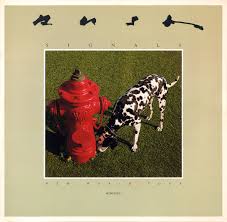
Signals Cover

Words of Friendship and Wisdom

In the summer of 1987, having completed my first year of college, I returned back to my hometown of Hutchinson, Kansas.  It was one of the best summers of my life, as all of my high school friends were home, and I had the best job possible—I was the overnight DJ at a local radio station.  In my mind, this really was the last year of my youth.  I didn’t realize that at the time, but I do now.  It was also, though, a summer of immense upheaval.  The following school year, I wouldn’t be returning to the University of Notre Dame.  Instead, I moved to Innsbruck, Austria, for a year.  At home, a number of domestic crises would lead to a divorce.  As much as I loved my mom, I needed to get away from the home front quickly.  All of this added up to a summer of craziness, me being a little more wild than I should have been.

Trying to get me back on track, one of my two closest college friends sent me a letter toward the end of that summer.  Inside, written on rice paper, neatly folded, were the lyrics to Natural Science, with a note of encouragement.

I carried that piece of folded rice paper with me—tucked in my wallet—for about two decades. It’s very hard to put into words what Peart’s thoughts in “Natural Science” did for me.  “Natural Science” did for me in my 20s and 30s, what “Subdivisions” had done for me at 14.  They gave me no easy answers or platitudes, but honesty and courage.  They got me through many, many tough times, never failing to remind me that right has absolutely nothing to do with winning or losing.  Right, instead, has to do with being right.  Nothing more, nothing less.  We do the right thing not for advantage, but merely and simply because it’s right.  It’s not subjective.  It’s either right, or it’s not.  It’s not partially right or almost right.  It’s either right, or it’s not.

Sometimes, we just need a big brother or a friend to remind us of these things.

Neil Peart, moral philosopher, “sensitive, open, and strong.”


*******

For more from Progarchy on Rush

The first Rush album reviewed by Craig Breaden

https://progarchy.com/2014/02/22/rushs-first/

A review of A Farewell to Kings by Kevin McCormick

https://progarchy.com/2013/01/21/rush-a-farewell-to-hemispheres-part-i/

A review of Power Windows by Brad Birzer

https://progarchy.com/2013/12/14/power-windows-rush-and-excellence-against-conformity/

Kevin Williams on Clockwork Angels Tour

https://progarchy.com/2013/11/24/rushs-clockwork-angels-tour-straddles-the-80s-and-the-now/

Brad Birzer on Clockwork Angels Tour

https://progarchy.com/2013/11/27/rush-2-0-clockwork-angels-tour-2013-review/

Erik Heter on Clockwork Angels Tour Concert in Texas

https://progarchy.com/2013/04/24/you-can-do-a-lot-in-a-lifetime-if-you-dont-burn-out-too-fast-rush-april-23-2013-at-the-frank-erwin-center-austin-texas/

A review of Vapor Trails Remixed by Birzer

https://progarchy.com/2013/10/05/resignated-joy-rush-and-vapor-trails-2013/

A review of Grace Under Pressure by Birzer

https://progarchy.com/2013/02/21/wind-blown-notes-rush-and-grace-under-pressure/

RETRORUSHgallery

Lego Ayreon

Arjen: Into the Electric Castle.  After an evening of Legos with my five year old, John.

Ayreon Arjen

My Wave: Soundgarden and Superunknown

.@soundgarden performed at #itunesfestival at SXSW. Watch the free show http://itunes.com/festival.

Rolling Stone reports:

Things got super-heavy on night three of the inaugural iTunes Festival at SXSW in Austin last night, as Soundgarden dove back into the thundering grooves of 1994’s Superunknown, performing the career-defining album in full for the first time. It was a lesson in grunge at its prime, delivered with swagger and Chris Cornell’s perfectly unhinged wail, still as piercing and musical as ever.

The sound was dark and slippery, and in 2014 seemed as tough and timeless as key hard rock influences Black Sabbath and Led Zeppelin.

Here’s the video for “My Wave.”

The Masterpiece Before Breakfast: Supertramp’s Crime of the Century (1974)

Hurtling along the Ohio Turnpike earlier this week (a day before the nasty nasty weather hit again), I was listening to some old friends.  One of them, in particular, exploded into my car with an unexpected revelatory force.

Supertramp+-+Crime+Of+The+Century+-+SHM+CD-464717Crime of the Century is an album that I procured when it was newly released, when “Bloody Well Right” was reverberating across the airwaves in the U.S.  I liked it, and listened to it a lot.  It always struck me as enigmatically light-hearted, though I did  get it, even then, that it was very dark.  (Liking light-hearted darkness was probably a prerequisite for being a prog fan.)  All along, I think I’ve classified it as “a great album,” but probably would not have placed it in my top five, or (a bit less sure on this part) even my top ten.  Until now.
Supertramp went on to become huge, especially with Breakfast in America.  Their output from that point on always struck me as mixed, and this was partly a function of many of the songs being over-played.  I’ve always been aware that Crime is considered by many (including members of the band) as the peak of their career in terms of creativity and quality.

But I just was not prepared for the near-shock of listening through the entire album on Tuesday.  During the opening lines of “School,” it suddenly occurred to me:  This album was released half a decade before Pink Floyd released The Wall!  That thought set the tone for my experience of the album that day.  I was an enthusiastic admirer of The Wall when  it came out, but I have since generally thought even more highly of Wish You Were Here and Animals as albums.  But it had never hit me so hard before how much more of a borderline-psychotic edge there is to the dark alienation of Crime.  Perhaps I was in just the right mood.  The experience reminded me a bit of the first time I ever heard Keith Jarrett’s Köln Concert.  That was in a college radio station in about 1978, over nice JBL studio monitors, and I was basically blown to emotional bits that splattered across the opposite wall of the studio.  Hearing Supertramp’s magnum opus again was measurable on that same scale, though perhaps with not quite as high a reading, intensity-wise.

I hope that my attention was still sufficiently on my driving, but I couldn’t tell you for sure.

Ken Scott’s amazing production is a key player here, of course.  I was very aware of producers, and knew this even back in the 7o’s.  But I think some kind of blockage was jarred loose as I drove and let this latest listening wash over me.  It had to do with my ambivalence about the band’s subsequent output, but I suspect there may have been even more to it than this.  It was as if the blockage had an indeterminate number of tendrils, reaching out into my soul and anchoring the blockage at various angles, making it not only difficult to dislodge, but so much a part of my listening apparatus that it had never even presented itself as a blockage.  Apparently, enough of those tendrils had been broken or loosened, and the blast had enough force that day, that the blockage just snapped away.  It was as if I was really listening to the album for the first time on the one hand, though I already knew every sound, every aural nook and cranny of what I was hearing on the other hand.  Everything old was new again.

Despite some of the edges actually being sharper (to my ear, anyway) than those we find in The Wall, they are deployed with an amazing subtlety and restraint, especially lyrically.  “School” does in one song what The Wall takes most of its first side (of four) to accomplish.  And it does it with a more deeply disturbing Hitchcock-like minimalism.  When heard in its proper context, between “School” and “Hide in Your Shell,” one can hear the peppiness of “Bloody Well Right” with a more clear awareness of the droplets of darkness that fall from its edges.  And then “Hide in Your Shell,” which otherwise might strike n0n-proggers as typically bombastic, is at just the right intensity.  “Hide” has always been my favorite track.  But perhaps you know that feeling of discovering even more depth and richness in a favorite.

“Asylum” comes across best in context, as does “Bloody Well Right.”  Again, the Floyd comparison intrudes.  Its positioning between “Hide in Your Shell” and “Dreamer” allowed me to notice, as I had not before, how similar is its austere power to the title track of Wish You Were Here.

Another aspect of the revelation came when I realized with some dismay that my interest on prior listens had always tapered off, at least a bit, after “Dreamer.”  This is not too unusual in my experience of entire albums.  I could name a bunch of them for which my interest begins to lag on the final side (whether a single or a double album).  This is even true of my listenings to The Lamb Lies Down on Broadway.  I’ve already noted elsewhere that the final track is my least favorite on the latter, and my recent efforts at listening with disciplined differences each time have not yet brought significant change there.

But this time, with Crime, it was different.  “Dreamer,” more than on any previous listen, truly announced the opening of the second act.  The familiarity was still there for the final three tracks, but it was a familiarity brought before judgment.  It was a familiarity challenged, asked to show its papers, please.  And its papers were not fully in order.  It was as if both Roger Hodgson and Rick Davies knew that I had always shirked in my listening on these tunes; I could hear it in their voices.  I still had demons in my closet, and these guys had the number of those demons.

If I’m going to make further progress in coming out of my shell, in overcoming the tendency to hide, if I’m to discern how well I’m doing at not being complicit in the crime, then more listening (and more work, more soul-work) is required.  That’s what I heard them saying to me this week.

They’re bloody well right, you know.  And I will listen more (as opposed to simply listening again).

.

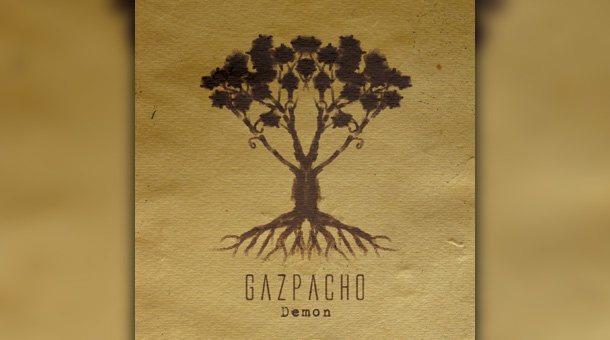
Listen to Gazpacho’s “Demon”, streaming…

on the ProgRockMag.com site.

It states that it is available to UK readers only, but here I am, in Oregon, listening to it. It’s too early to make any judgments, but it is both distinctly Gazpacho and also a bit different. Very acoustic; lots of piano; some operatic female vocals; etc.

gazpacho_demon_2014

Yes is Still Epic

It seems to me the headline (“Yes: ‘No Epics’ on New Album“) gets the story wrong:

Drummer Alan White shed a little light on the new music during a recent interview, sharing his satisfaction with producer Roy Thomas Baker’s work behind the boards. Looking back on a botched attempt to record with Baker in the ’70s, White called it “A blessing in disguise, because it wasn’t turning out like we wanted it, but this one is. Roy’s doing fine. He’s doing a great job. He’s getting some great sounds on the instruments.”

Baker’s getting those sounds the old-fashioned way, too. As White put it, “We spent quite a while getting the drum sound right. Roy is quite meticulous about which microphones get the right sound. We were using about $50,000 worth of microphones on the drums alone.”

As for the songs, White added, “It’s all fresh music. Everything on the album was conceived within the last year or so. No epics on this album. There are some longer pieces with intricate parts to them, but there are some shorter tracks too which are right to the point.”

Well, that just sounds like it is more 90125 and less Topographic Oceans. So what!

90125 is one of their best albums. So… no reason to panic, Yes fans!

By the way, I find it annoying that the sensationalist headline makes White into the official spokesman for Yes.

How misleading.

At least the original story has a less misleading (although equally sensational) headline.

Speculation mode:

Perhaps the songs from the 70s’ Baker sessions may give us something of a taste of what is in store?

All of the songs associated with the Paris sessions have eventually surfaced, in one form or another. Two (“Tango” and a song once known as “Flower Girl” that was retitled “Never Done Before”) found a home on the 2002 In a Word box set. Four others — including “Dancing with the Light” and “In the Tower” — were part of an expanded remaster of Drama, the 1980 follow up to Tormato. “Everybody Loves You” was later reworked for Anderson’s 1980 solo album Song of Seven.

Additional material from the subsequent Drama sessions also made up the lengthy title track for Yes’ 2011 project Fly From Here, though White says this Yes new album will include all new songs. Don’t look for a similar suite of songs, either.

“It’s all fresh music,” White confirms. “Everything on the album was conceived within the last year or so. No epics on this album. There are some longer pieces with intricate parts to them, but there are some shorter tracks too which are right to the point.”

The title of that one song is actually “Dancing Through the Light.” There is also “Golden Age” and “Friend of a Friend.” These are all great bonus tracks on the Drama reissue.

A tip of the Progarchy hat to our friends in Lobate Scarp for the heads up about this news! (Follow them on Twitter.)

Don’t forget… Yes visits Canada starting next week!

Interview with newspaperflyhunting

ImageOver the weekend I had the pleasure of having my mind blown by a record, something that seems to happen less and less as I get older.  newspaperflyhunting is a Polish group with two full length albums, and their latest, Iceberg Soul, is a stone cold classic already (forget future prognostications, it already just is).  I reviewed it here, but felt compelled to know more beyond just what my ears were telling me, to get to know the artists.  So I contacted Michal Pawłowski, one of newspaperflyhunting’s guitarists and vocalists — he’d lent us the album for review — and he graciously agreed to present the following questions to the group.  They have responded generously.  Note that an email and twenty bucks will yield you one stone-cold-already-a-classic rock and roll record, and the one preceding as well, which, measured by the tracks I’ve heard, may also be well on its way to Proghalla.

How did the band get together? How did it find its name?

The band started in the summer of 2006 as two teachers (Michał Pawłowski and Krzysztof Gryc, both guitarists) and a student (Krzysztof Sarna – drums) from the same language school decided to improvise together a bit. Gradually, it all began to take shape, Gosia Sutuła came in on bass, later Krzysztof Gryc left to be replaced with Jacek Bezubik. Beata appeared and here we are – a brief history of newspaperflyhunting! It is also worth mentioning that earlier, in late 2004-early 2006, Michał and Jacek had had an acoustic project named we! wtorek, whose repertoire regularly finds its place with npfh. And the name? First official version: we wanted something simple and straightforward! Second official version: why, this was the first word that came to our minds! The truth: we don’t really remember. There were many ideas for a name, most of them probably better than newspaperflyhunting, but somehow this one was chosen.

Are you full time musicians (this question could also be interpreted as, who are all of you, anyway?)

None of us are full time musicians. Michał and Jacek are English Philology graduates, Gosia is a medicine student, Krzysiek and Beata are architects. Krzysiek is a painter, too. So as you can see, our backgrounds are quite diverse. We all love music, books, cinema, and art.

Who are some of your influences?

We could write a book on that *laughs*. Let’s keep it short. Pink Floyd, we have to mention them first. Pearl Jam and the grunge movement. Post rock. Post-black metal and drone (yes, we’re glad you noticed it in your review). Classical music. Modern classical (Philip Glass). Jazz. Literature (Vonnegut, Dukaj, Bret Easton Ellis, and many many others plus SF/fantasy in general). Cinema (Fellini, Kubrick). Art (Vermeer, Dali, Beksiński). Life. Failures. Successes. Stupidity. Serendipity. Insanity. Quantum Physics. Dreams. Anything that is able to play with your mind. Music comes from various sources and it’s great not to know how it really works, how the sources blend together in the form of a song, or an album.

Your arrangements are startling dynamic, in the way light cuts through dark. Like chiaroscuro. Is this the kind of music that just comes out of the group, or are you following a particular aesthetic to make it happen?

We do not follow any aesthetic, that’s for sure. The sound comes naturally, we never consciously think “this should sound like this and that”. Maybe the only ‘rule’ we follow is trying not to repeat ourselves. Some members work really hard to prevent that;) It’s a mix of the aesthetics we are naturally inclined to as both listeners and musicians. This light and darkness thing is a very important matter for us. As are dynamics and contrast, like chiaroscuro indeed. (We could go on for hours – or pages – on how compression kills dynamics and music in general.) We are rather minor-key people, but not one hundred percent, and this contrast is crucial to our sound. This also comes from the simple need to vary things, not to sound monotonous. In other words, we play what we feel and the aesthetics appears as if by accident, because well, there’s no other choice, is there? It’s probably impossible to play ‘outside’ an aesthetics of one kind or another. But still, it’s completely secondary.

Why sing in English?

It’s a tough question. It might be mainly because it’s difficult to write good lyrics in Polish. We have fewer adjectives/adverbs, the rhymes are often cliché-sounding, there are many unpleasant-sounding consonants. Most importantly, it’s difficult to strike the perfect balance between sounding too lofty and too trite. Also, Michał and Jacek are English Philology graduates, so they are used to literary English maybe even more than to literary Polish. So we ended up with English lyrics. However, as Krzysiek writes good lyrics in Polish, it’s possible that future projects will include lyrics in Polish. Well, we only hope the English lyrics do not offend native speakers;)

Is everybody in the group writing, or is there a primary songwriter?

Although Michał and Jacek are the primary songwriters, the arrangements are worked out by the whole group. Michał says that when he comes up with song ideas they usually have the verse/chorus structure, then, in rehearsals the band turns them upside down and inside out. This is basically how it works, whoever comes up with the main idea, the end product is always the band’s creation, the input of an individual member depending on the song.

Where and how do you record? Are you doing your own producing/engineering?

The two full-length albums were recorded by Wojtek Bura, our friend, in his studio. The difference between “no12listen” and “Iceberg Soul” is that we pretty much produced the latter ourselves, with Wojtek acting more as an engineer. Generally, we want to have as much influence on our sound as possible and when making an album we learn new things about the production process, so you can expect the tendency to have more control over the recording process to continue.

What is Bialystok like as a music town?

Very metal *laughs*. There is a burgeoning metal scene and although there are many other bands, there is no other ‘scene’ to speak of. This is why we find it quite hard to organize gigs. There are some bands that we are friendly with, such as Obywatel NIP, Tempelhof, Rock Minotaur, Divine Weep, Pokrak or Ikebana but their music is not very similar to ours, or totally different. Well, we probably also have to mention disco polo, the truly awful genre of dance music that Białystok is infamous for;) However, if you are interested to hear impressive music from Poland, we recommend Riverside and Hipgnosis, two truly excellent bands. The former is quite well know worldwide, by the way, so you might have heard it.

How do you think Iceberg Soul differs from no12listen?

The main difference is that “Iceberg Soul” is a more conscious effort. “no12listen” was a snapshot of a transitional period in the band. This was the first record Jacek played on, and he still had to find his footing in the group. The songs themselves were written at different times, when the sound of the band was in the process of evolving. And, perhaps most importantly, we didn’t know what we wanted it to sound like. There are many overdubs on “no12listen”, you know – a band let into the studio trying out stuff. With “Iceberg Soul”, on the other hand, we had an idea of what we wanted it to be. We wanted it to sound as close to the band live as possible, to maintain a certain rawness, so there are very few overdubs, the guitars are much grittier, and the mood is darker and more melancholy. There is also a different approach to vocal arrangements. The ‘less is more’ philosophy is visible also in the decisions concerning when not to play. For example, on “Stop Flying” only three of us play, because this sounded just right. This approach is harder to grasp than one may think. There is also a difference in the lyrics, which are now more personal. Anyway, in the end, we are much more satisfied with “Iceberg Soul” than “no12listen” because it’s just us.

Fender Rhodes…Awesome…tell us about this and the genius process of bringing it to Iceberg Soul.

The idea appeared during the sessions for “no12listen”. Our producer and Gosia came up with the idea of adding keyboard parts to the album. Gosia played the keyboards, so to reproduce it live – as Gosia can’t play the bass, the keys, and sing at the same time… yet!;) – we decided to have a permanent keyboard player. We knew from the beginning that we wanted a Rhodes-type sound. Beata is Krzysiek’s colleague from work – she came in and stayed with us. The fact that a friend of ours had left his Fender Rhodes piano in our rehearsal space for some reason really helped. We just adopted it;)

Who do you consider your contemporaries in music, art, cinema?

A difficult question considering the band’s demographics *laughs*. Krzysiek was born in the 1950’s, Gosia in the 1990’s. Need I say more?:) But somehow this doesn’t affect us in any way. We all feel very much in tune with the late 1960’s-early 1970’s period, as well as the early 90’s. That is to say the periods in music that encouraged experimentation and self-expression. So our musical contemporaries are surely Pink Floyd and King Crimson. Beksiński as far as art goes. Cinema? Maybe Tarantino. We have to mention Vonnegut too, he is indeed our mental contemporary, if that makes sense;)

Do you think of yourselves as speaking to a certain audience?

Yes, to an audience that finds something for themselves in our music. We do not aim at any ‘genre’ audience. We categorize ourselves as ‘prog rock’ more for lack of a better term than any affinity with the genre. We would like to get to as many people as possible, but we don’t want to ‘force’ anyone to listen. If the listener feels connected with the music – we are happy people.

How do you feel about being heard online rather than on CD or vinyl or in front of an audience?

We are traditionalists in this matter – a physical release is crucial (be it a CD or vinyl, or tape). Of course there is nothing wrong with listening online, and it’s pointless to sail against the wind in this matter, but if an album is Internet-only, well, that’s not the same. So, we think that if somebody likes a band’s music, it’s a good idea to purchase the physical album to experience it in full (in addition to supporting the band). This is what artwork is for.

What are your thoughts on marketing your music? How do we get full copies of your records, and do we need to make our own newspaperflyhunting tshirts?

First of all, there are the Facebook and Bandcamp pages. There is also Myspace, but the site is almost dead, isn’t it? For the time being, we wish to get some feedback/reviews of the album and make people interested in it. We will also have a track featured on a sampler issued by an American indie label Custom Made Records. There is some minimal airplay, too. Well, promotion is easier abroad than in Poland. Here it seems that reviewers/journalists expect you to fit into a certain genre or category. For example, if you play prog rock you should sound like early Genesis. Or Pendragon. If you don’t, then they don’t know what to make of your music. Also, it’s more difficult to get people to just sit down and listen to stuff here, it seems that people abroad (especially Americans) are more open to new experiences. In any case, our aim is to be heard by people who might like us.

You can get physical copies of our album directly from us. We sell it for 10.00 USD (including postage). Just write an e-mail to npfh@op.pl. “no12listen” is still available for the same price too, and soon there will be another special limited release for our greatest fans only;) T-shirts? Yes, we will have them too, we just have to get down to it. As you can see, we are a very DIY band.

What’s next for you?

More music, that’s for sure. There’s no shortage of ideas with us. There is an idea for a concept album based on a novel by the excellent Polish SF writer Jacek Dukaj, and other stuff too. Generally, we will continue the direction set out by “Iceberg Soul”. 

War Pigs: Black Sabbath and Rise of an Empire

Reflections on why Black’s Sabbath’s “War Pigs” is the music of choice for 300: Rise of an Empire (over at CWR):

It is odd to hear this song’s denunciation of the demonic evils of war paired together with the film’s nauseating spectacle of cruel violence, which even includes graphic sexual violence. But the song’s prominent placement reveals a strange form of magical thinking. Apparently audiences want both to take pleasure in the most perverse displays of torture and murder, and yet at the same time to adopt a pose of moral superiority towards it all, as if their delight in the spectacle is not a real delight.

Neil Young Introduces High-Quality Music System

I just came across this article from the Los Angeles Times talking about Neil Young’s new high-quality music company, PonoMusic. The goal of the company is to create portable music that has a quality as good as the master recordings (meaning it is not compressed). The PonoPlayer will cost a hefty $399 and will be able to hold between 1,000 and 2,000 high-quality albums, which implies that this player will have a rather large hard drive, because high-quality songs are much larger files when compared to their compressed counterparts.

The debate over compressed file formats as a standard in the music industry has raged ever since Apple created iTunes over ten years ago. Prior to iTunes and the iPod, the only way you could listen to music on the go was through a Walkman cassette or CD player. Those had their obvious disadvantages, namely the inability to carry around a lot of music. Once Steve Jobs announced the introduction of the iPod, the music industry was changed forever. Suddenly, people could carry around thousands of songs in a tiny little device that could fit in their pockets. However, the technology of the time did not allow for very large storage in small packages, which led to the need for the compression of songs. The article by Randy Lewis on the LA Times claims that MP3 files contain a mere 5% of the digital information originally supplied by the master recordings. While that may have been true in the 1990s, it is not nearly that bad today. Originally, the bit rate for MP3s was around 190 kbps. iTunes now sells their music at 256 kbps, and CD quality is 320 kbps. (iTunes does not use MP3, they use Apple lossless compression, or m4a, which is much better than MP3.) There are also several other sites online where you can acquire digital downloads of 320 kbps. I assume iTunes is heading in that direction now that the technology is available for larger capacity i-devices. The problem with higher kbps recordings is they take up an enormous amount of valuable space, and technology can only allow so much space in so small a space. According to Matt Komorowski, who has compiled a data table of prices per gigabyte over at his website, 1 gigabyte effectively cost $193,000 back in 1980. The price of 1 gigabyte in 2000 was around $19, and by 2009 was down $0.07. As technology has advanced, the price of storage has dropped dramatically.

Anyways, my point with all this yammering about the history of digital music and storage is to point out that there has been a large debate over the past few years between digital media and physical media. There are many people who claim that vinyl is as close as you can get to live because a vinyl record is an actual analog copy of the sound waves created during the recording. But we must remember that the vinyl records of the 1970, 80s, 90s, and up to today are of a much better quality than the first record made by Thomas Edison in 1878. It only makes sense that the future of digital records will be superior to that first introduced in the late 1990s, and it will be better than what is being offered today. Neil Young is merely trying to bring good audio quality back to the music industry. There is now a whole generation of people (my generation) that has grown up with headphones jammed in their ears, and they know very little about what a high quality recording sounds like (much less high quality music, but that’s a different problem). I think we will begin to see a move towards higher quality digital downloads, but only as the capacity of the portable music players increases. As the price per gigabyte continues to drop, it will be much easier to fit thousands of high quality songs and albums onto a smartphone that fits into your pocket. Neil Young is just trying to speed that process up a bit (don’t laugh too hard over that one).

Here is the link for the LA Times article by Randy Lewis:

http://www.latimes.com/entertainment/music/posts/la-et-ms-neil-young-pono-music-20140310,0,328753.story#axzz2vbTkDz9V