Coming in the #9 slot (in alphabetical order) on my Best of 2013 list is the masterpiece from:
Steven Wilson
Also known as “Mr. Prog” — but that title for Mr. Wilson is currently up for debate here at Progarchy.com.
My two cents: A title like “Mr. Prog” should only be bestowed based on an objective standard of measurement: e.g., the sheer quantity of artistic output in a year; i.e., count up all the releases, the remixes, the live gigs, the collaborations, etc. Then, whoever has the biggest total, is “Mr. Prog” — whether you like his stuff the best or not.
Well, I haven’t done the math, so somebody else can tell me who the winner of the title is. (Maybe we will have to make a shortlist: Steven, Neal, Mike, et al.)
By the way, the winner of the math for each year should be called “Mr. Prog” for that year. So it should be an annual award, and not a one-time decision.
And then, if a long-term pattern does emerge (e.g., we have the same “Mr. Prog” year-after-year), that individual can be designated (after years of distinguished service to prog) as “The Godfather of Prog.”
Now that we have that out of the way, let me talk about “The Raven That Refused to Sing and other stories.”
I don’t get it when people talk about this album as “cold,” or whatever. Go put on a sweater!
I don’t know what you’re talking about! Because this is the first album by Steven Wilson that has really elicited a deep emotional response from me.
All his previous work has received intellectual engagement from me, and I have noted and admired it all. But this magnificent Wilson disc is the first one that causes my heart to leap at the musical excitement that it generates.
Right from the beginning, “Luminol” elicits a response of joy. As in: Omigosh! Is that Chris Squire running around my living room playing bass? It sure sounds like it! Woo-hoo. We’re having a prog party! Hey, here he comes again…
And the album does not let up from there. It’s just layer after layer of beauty and complexity. For me, this album stands out from all of Wilson’s other work as going above and beyond, as a truly distinguished musical masterpiece.
After all, it ends with the title track, “The Raven That Refused to Sing,” which is simply the most gorgeous and moving song on the album. It possesses a rare quality of unusual beauty that transcends mere musical virtuosity (which is the usual stock-in-trade of prog), and rightly marks this album with the distinction of being an inspired, otherworldly product. How fitting that this gift of the Muses is memorialized in the album title!
Let me end on a controversial note. Brad has slagged this album as “The Tangent lite,” a remark which I shall myself reinterpret as a compliment: i.e., where The Tangent’s “Le Sacre du Travail” may err with the defect of pretentious satirical excess, Steven Wilson’s “The Raven That Refused to Sing” achieves the right aesthetic balance of the golden mean (a sober restraint that some may mistake for “coldness”).
Perhaps the comparison is also apt in other ways. Wilson’s “sad sack” vocals in the past have prevented me from placing his releases in the annual Top Ten upper echelons. I have a similar obstacle with The Tangent presently; the vocals are too histrionic, à la Roger Waters, for my taste. But now, with “The Raven That Refused to Sing,” I find that Wilson’s vocals have been honed to work to perfection, especially on the haunting final track of this distinguished work.
In conclusion, then, because The Tangent is Big Big Train’s evil twin, I must place The Tangent on my Best of 2013 list… but only in the mirror universe.
In this universe, the award goes to Steven Wilson’s “The Raven That Refused to Sing.”
Postscript:
Hey, I may be wrong about all this. I will have to keep listening to all these fine 2013 albums for years to come! Perhaps minds will change. In any event, the conversation at Progarchy will continue. After all, de gustibus est disputandum:
Perhaps the most persistent error in aesthetics is that contained in the Latin tag that de gustibus non est disputandum— that there is no disputing tastes. On the contrary, tastes are the things that are most vigorously disputed, precisely because this is the one area of human life where dispute is the whole point of it. As Kant argued, in matters of aesthetic judgement we are “suitors for agreement” with our fellows; we are inviting others to endorse our preferences and also exposing those preferences to criticism. And when we debate the point we do not merely rest our judgement in a bare “I like it” or “It looks fine to me”; we search our moral horizons for the considerations that can be brought to judgement’s aid. Just consider the debates over modernism in architecture. When Le Corbusier proposed his solution to the problem of Paris, which was to demolish the city and replace it with a park of scattered glass towers and raised walkways, with the proletariat neatly stacked in their boxes and encouraged to take restorative walks from time to time on the trampled grass below, he was expressing a judgement of taste. But he was not just saying, “I like it that way.” He was telling us that that is how it ought to be: he was conveying a vision of human life and its fulfilment, and proposing the forms that gave the best and most lucid expression to that vision. And it is because the city council of Paris was rightly repelled by that vision, on grounds as much moral and spiritual as purely formal, that Le Corbusier’s aesthetic was rejected and Paris saved.
Likewise, when I dispute with my leftist friends about the Dutch and Danish windmills— windmills whose blank and spectral faces are now beginning to stare across my native English woods and fields—we don’t just exchange likes and dislikes, as though discussing the rival merits of Cuban and Dominican cigars. We discuss the visual transformation of the countryside, the disruption, as I see it, of a long established experience of home, and what this means in the life of the farmer, and the presence, as my leftist friends see it, of the real symbols of modern life, which now stand on the horizon of the farmer’s world, summoning him to the realities which he has avoided for far too long. By disputing tastes in this way we are not just striving for agreement. We are working our way towards a consensual solution to long term problems of settlement: we are discovering the terms on which we might live side by side in a shared environment, and how that environment should look in order that we can put down roots in it. Conceived in this way aesthetic judgement is the primary form of environmental reasoning: it is the way in which human beings incorporate into their present decisions the long-term environmental impact of what they do.
Coming in the #8 slot (in alphabetical order) on my Best of 2013 list is this year’s perfect slice of prog from:
Spock’s Beard
This one completely caught me by surprise. I was not prepared for how awesome it is!
I was not expecting “Brief Nocturnes and Dreamless Sleep” to be soooooogood. I was not expecting to like it so much!
No Neal? No Nick? Wow, I was not expecting this to be one of the year’s best.
But holy smokes! I feel like this is the Beard’s best album ever!!
(Time will tell if I persist in that judgment. But so far my enthusiasm has not waned!)
I really love this disc a lot. Everything works here! All the tracks are amazing.
(And I have seen this album on a lot of Top Ten lists, so I know I am not alone in the republic of Progarchy with my enjoyment of this fantastic album.)
Congratulations, gentlemen! You have gone above and beyond, showing us all what true excellence in prog is.
Every once in a while, an album from my past jumps out at me. How much thought, perspective, and perception went into it, I wonder? What did these folks think as they were making it? Did they think of it as a job? Did they think of some abstraction such as Art, Beauty, Truth, Goodness, hoping against hope for the approval of the gods? Did they make it to satisfy themselves or their friends or their families or their producers or their record label or their fans or some combination of all of these things?
Did they know it would still be touching the lives of others thirty-four years later?
Thank you so much, Phil, Tony, and Mike. Whatever your intentions, Duke still speaks to me. In volumes. Yours, Brad
The ever-wonderful David Longdon, lead singer of Big Big Train, looks back at his life, 2013. A fine reflection.
Here we are at the end of another year and what a fantastic year it has been, not only for Big Big Train but also for Progressive Rock Music in general. There have been some tremendous releases in our genre this year.
This post is intended to be a brief overview of our year, from my ‘behind the mic’ viewpoint.
On the 2nd of January 2 2013, we found ourselves on location at theEastleigh Railway Works in Southampton. As you would expect, it was cold despite the addition of an industrial heater. The works were in use by the railway carriage engineers and we were in awe of the sheer scale of the work that these men carry out, as if it was nothing. It felt most strange performing along to our track in the midst of all this dramatic industrial scenery. Eventually though, after a few runs through, we began to get used to the absurdity of it and we adjusted to the weirdness of it. The video was made to give those who are interested in us, a glimpse of what it might be like, when we perform live. The video was directed by Peter Callow and upon it’s release in September this year, it has helped to opened up new possibilities for us.
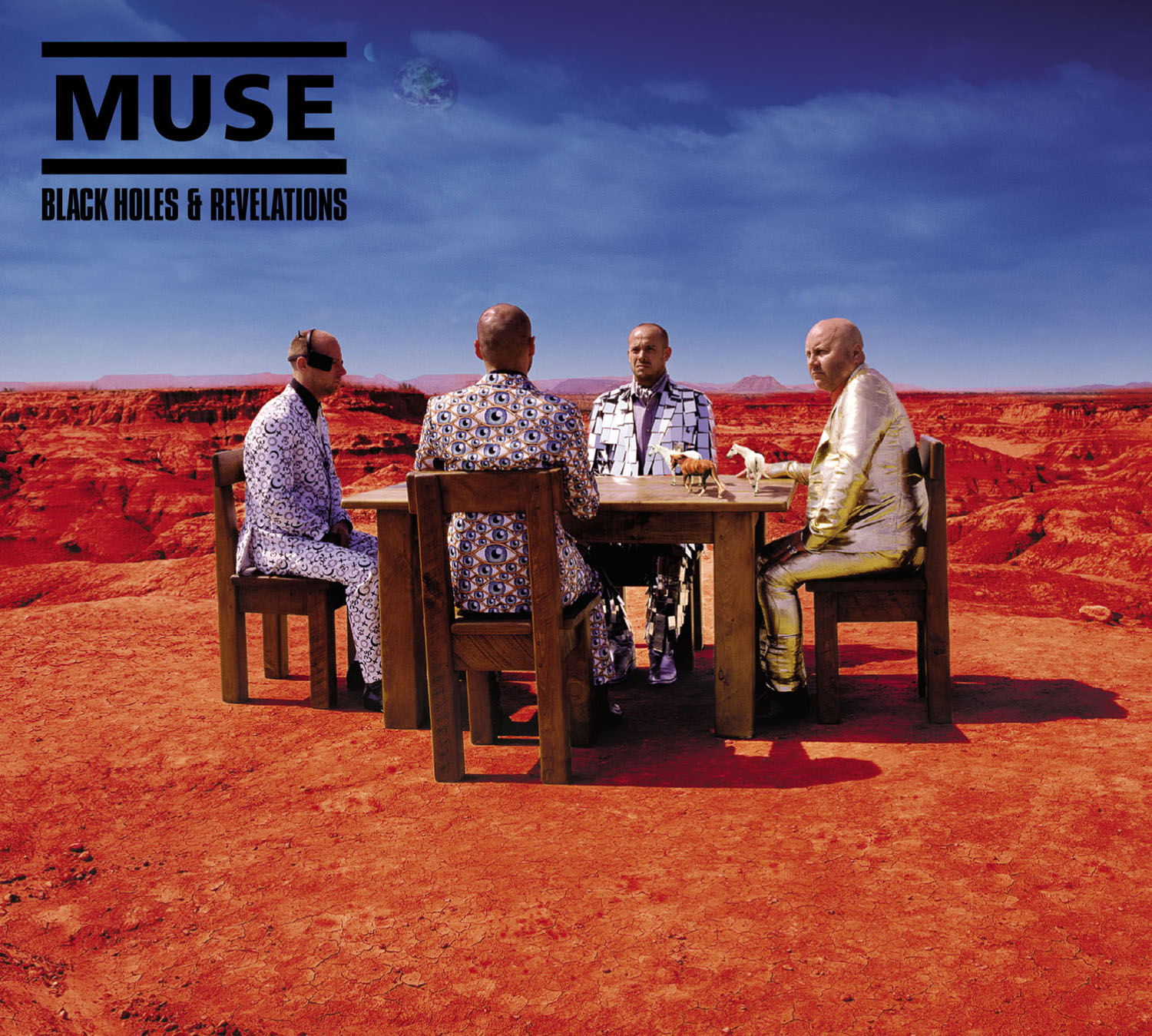
Muse has been one of my favorite bands for a while now. In fact, they were probably one of my first introductions to the progressive genre, although I didn’t know it at the time. (My first real introduction to prog was through Rush when I was in sixth grade.) Over the years, Muse has been called many different things, including progressive rock, space rock, alternative rock (but what isn’t called that these days? Mumford and Sons is even called alternative rock. Ok.), and symphonic rock. Ok, so that all sounds like it fits nicely into prog. But there is one strange thing about Muse that does not quite add up. They are popular. Very popular, in fact. These days, it seems that if a band is popular across wide audiences and continents, they are making pretty bad music (there are obviously exceptions, and I am probably being too pessimistic), but Muse has been making excellent music for over ten years now.
Muse’s best albums are Origin of Symmetry (2001), Absolution (2003, with cover art by the great Storm Thorgerson- Dark Side of the Moon), Black Holes and Revelations (2006), and The Resistance (2009). Their first album, Showbiz (1999), and their most recent album, The 2nd Law (2012), did not thrill me, but maybe I should give them another go around. Their sound is defined by singer/guitarist/studio keyboardist Matthew Bellamy’s magnificent voice. Bellamy is also an artist on the guitar, able to manipulate it to make almost any sound he wants. Often times, what sounds like synthesizer on the album is actually guitar in concert. Christopher Wolstenholme is no slouch on bass either. Many of their songs feature bass as the melody driving the song (ex. Starlight off of Black Holes and Revelations). Dominic Howard on drums is also an excellent percussionist, able to deliver both hard rocking drum riffs along with quieter, more technical drumming. Their use of keyboards and piano, along with a symphony on The Resistance, showcases their ability to explore different areas of the musical realm. They are more than willing to experiment with many different sounds, and more often than not it is breathtaking. Their technical, musical skill is some of the best in the modern, popular rock world.
Muse’s lyrics tend to deal with vague political ideas. They can be described as libertarian/anarchist, much like Rush. Origin of Symmetry deals with the dangers of new technology and what can happen when it is misused. Absolution is apocalyptic in nature, with songs ranging from the urgency of “Time is Running Out” to the symphonic beauty of “Blackout.” Black Holes and Revelations, probably their most popular album,deals with themes of science fiction and oppressive governments (Ayn Rand?). The Resistance discusses ideas of resisting governmental overreach, along with what the world would be like under a one world government. They end the album with a stunning three part symphonic piece that is very relaxing. All in all, Muse’s lyrics make the listener think, like all good prog should.
Going back to Muse’s popularity, this is a band that can sell out arenas anywhere. From the 02 in London, to Lollapalooza in Chicago, Muse sells out venues to people who cannot get enough of their music. Is this a sign from God that the people are hungry for prog?! I certainly hope so. Deep down inside, every educated, thinking individual loves prog, and if Muse is a path by which millions of young people can be introduced to this wonderful genre, then more power to them. Here is to hoping that people listen to their Muse and are directed toward the beauty found in the genre of progressive rock.
In almost every way, Steven Wilson is widely regarded as the current leader of progressive rock music. It’s a title he claims he did not seek, does not want, and, in fact, fought against time and time again.
Press photo, February 2013.
And yet, he is, for all intents and purposes, “Mr. Prog.” “No discussion on progressive rock is complete without mentioning Steven Wilson,” Tushar Menon has recently and rightly claimed at Rolling Stone (June 24, 2012).
Having turned 46 this year [I’m just two months older than Wilson], Wilson has been writing and producing music for over two decades. Best known in North America for his leadership of the band, Porcupine Tree, Wilson came to the attention of the American and Canadian public through the appreciation offered by North American prog acts, Spock’s Beard, Rush, and, most especially, Dream Theater.
In addition to the thirteen studio albums released under the name of Porcupine Tree, Wilson also has played in No-man, Bass Communion, and, most recently, has released three well-received solo album. Last year, he and Swedish progressive metal legend, Mikael Akerfelt, wrote a brooding folk-prog album under the name of “Storm Corrosion.”
He has also leant his talents–for he is one of the finest audiophiles alive [though, I much prefer the talents of a Rob Aubrey]–to re-mixing a number of classic but often forgotten or misunderstood progressive albums from the 1970s and 1980s, including works by Jethro Tull, Yes, XTC, and King Crimson.
Porcupine Tree music is very very simple. There’s nothing complex about it at all. The complexity is in the production. The complexity is in the way the albums are constructed . . . . And that really is why I have to take issue when people describe us as progressive rock. I don’t think we are a progressive rock band.–Steven Wilson, 1999 interview with dprp.net.
Porcupine Tree albums probably cannot be classified, at least not easily. Beginning as somewhat of a satire on psychedelic music, not too far removed from the fake history of XTC’s alternative ego, The Dukes of Stratosphear, Porcupine Tree invented its own history when Wilson first released music under the name. Since then, Porcupine Tree albums have crossed and fused a number of genres, including space rock, impressionist jazz, hard rock, AOR, New Wave, pop, and metal. Wilson has been open about his influences, and he has prominently noted the work of Talk Talk, Tangerine Dream, Pink Floyd, Rush, The Cure, and a whole slew of others.
What Wilson claims to like most is the creating and maintaining of the “album as an art form, [to] treat the album as a musical journey that tells the story,” rejecting the importance of an individual song. “That’s what I’m all about,” he told a reporter for the Chicago Tribune (April 26, 2010).
In hindsight, he believes that his fear of being labeled “progressive” was simply a fear of being associated with those he considers the wrong type of people (interview with Dave Baird, dprp.net, June 2012)
And, yet, almost and anyone connected in any way with the progressive rock world would immediately identify Wilson as its most prominent face and voice. One insightful English fan of the genre, Lisa Mallen, stated unequivocally, “Steven Wilson is THE most highly regarded person working in the prog industry right now.” Though a long time devotee of progressive rock, Mallen has only recently started listening to Wilson’s music. Wilson is also shaping and defining music in a way that probably only Neil Peart could and did for a generation coming of age in the late 1970s and 1980s. A graduate student in the geographic sciences in Belgium as well as a musician, Nicolas Dewulf, writes, “Steven made me appreciate music in a totally different way, as an art form.” Another long-time prog aficionado, serious thinker, and prolific reader, Swede Tobbe Janson (and fellow progarchist) writes, “I respect SW for being very serious about this wonderful thing called music.” Still, with a mischievous Scandinavian twinkle in his eye, Janson asks, Wilson “is fascinating but sometimes I can wonder: where’s the humour?”
Most recently, Wilson has claimed the golden age of rock music to be 1967 to 1977, the years during which rock realized it could be an art form as high as jazz and classical but before the reactionaries of punk gained an audience through their simple, untrained, and unrestrained anger. “I was born in ’67/The year of Sergeant Pepper and Are You Experienced? It was a suburb of heaven,” Wilson sings in 2009’s “Time Flies.” Wilson’s dates are probably more symbolic than literal. For example, he cites “Pet Sounds” (1966) and “Hemispheres” (1978) as essential albums in rock.
For his part, Wilson believes it critical to maintain his independence as much as possible. “The moment you have a fan base, is the moment you start to lose a little bit of your freedom. The greatest thing of all is to make music without having a fan base because [it’s] the most pure form of creation.” (interview with Menon, Rolling Stone India, June 24, 2102) Reading Wilson’s words, it’s difficult not to think of a younger Neil Peart writing the lyrics of Anthem (1975). As Wilson recently told Menon, “For me, it’s still about being very selfish and doing what I want to do.”
Wilson even refuses to read reviews of his music, and he asks those around him (including his manager) not even to hint to him what been written, good or bad. Wilson admits to becoming just as upset by good reviews as by bad, as he thinks even the good reviewers rarely understand him. With the good reviews, Wilson especially despises when the reviewer “compare[s] you to somebody that you don’t like.” Further, Wilson claims, he’s a “kind of idiot-savant” and “I think I’m incapable of making records [ ] for anyone else than myself.” (interview with Dave Baird, dprp.net, June 2012).
Wilson has proclaimed repeatedly that he is a “control freak,” and, frankly, it would be difficult for anyone to listen to any of his music without realizing the perfectionist side of him immediately. It’s one of the greatest joys of listening to his music. It’s never flawed in anyway. Indeed, if there is a flaw in Wilson’s music, it comes with fatigue of immersing oneself in such perfection.
As Canadian classical philosopher and fellow progarchist, Chris Morrissey, has so aptly described it, “His use of 5.1 mixes perhaps shows us the way forward for prog’s future. The beauty and complexity of prog music seems to demand the sort of treatment that Steven Wilson has shown us it deserves.”
None of this, however, should suggest that Wilson is without his critics. An American mathematician and highly-skilled artist of wood and glass, Thaddeus Wert (another progarchist!), offers an appreciative but equally objective appraisal of Wilson’s works: he “seduces the listener with beautiful music, but there is often an undercurrent of menace and despair in his lyrics that can be disturbing.”
Wert is correct. One of the most jarring aspects of any Steven Wilson song is its gorgeous construction on top of very dark subjects and lyrics. In interviews, he claims to give as much attention and detail to his lyrics as he does to the beauty and perfection of the music. “I try to make the lyrics have some depth, yes, I mean I don’t want the lyrics to be trivial” (interview with Brent Mital, Facebook Exclusive, April 28, 2010). His lyrics deal with drug (illicit and prescription) use, cults, the banality of modernity, commercialism (Wilson believes “Thatcherism” accelerated the western drive toward hollow materialism), serial killing, death in an automobile, and mass conformity.
Porcupine Tree, Fear of a Blank Planet (2007). One of the best prog rock albums ever made.
Widely regarded as his best work, Porcupine Tree’s 2007 “Fear of a Blank Planet” offers one of the most interesting critiques of modern and post-modern culture in the world of art today. Based on Bret Easton Ellis’s novel, Lunar Park, the album explores the banal world of the “terminally bored” and features the disturbing front cover of a teenager, zombified by the glow of the T.V. Screen. Wilson’s album is effective and artful social criticism of the best kind. Even the EP released shortly after Fear of a Blank Planet, “Nil Recurring” offers some of the most interesting rock music ever produced.
Outside of being labeled and “forced” to conform to the expectations of fans, Wilson’s greatest fear comes from the irrationality and demands of religious belief, as he sees it. In his lyrics and in interviews, Wilson speaks at length about his opposition to religion. “Anything to do with organized religion really makes me really f***in’ angry.” Even non-cultish ones are “living a lie, but, you know, ok, if it makes them happy, that’s fine” (Interview with Mital, FB Exclusive, April 28, 2010). One can probably safely assume that Wilson has never read Augustine, Aquinas, More, Bellermine, or Chesterton. Would they still appear so bloody stupid if he had?
Usually far more articulate than this, Wilson expresses his greatest Bono-esque opposition to televangelists who use faith to create power and promote self-aggrandizement. In the same interview, Wilson states that Christians of all kinds must find the need to divorce his lyrics from his music if they’re to appreciate his work. “I’m sure we have fans that are Christians and . . . . [in original] I know we do, you know. That’s not something lyrically I think they could ever find sympathy with or I could, but musically they must love the music” (Interview with Mital, FB Exclusive, April 28, 2010).
An “artsy” scene from a Storm Corrosion video.
Wilson’s most blatant statement of skepticism comes from the video for a single from his Storm Corrosion album, “Drag Ropes.” Stunningly beautiful and haunting gothic folk prog–akin to some of the earliest work of The Cure–drones, while stained glass images of Tim Burton-eque creatures defy the Catholic Church and embrace some form of paganism. A Catholic priest, under the bloody image of a Crucifix, laughs diabolically as a pagan is dragged to the gallows. Paradoxically, not only is the art and animation of the video utterly dependent upon the iconography of the Christian tradition, but the music also carries with it an intense if elegiac and funerary high-church quality.
Whether Wilson recognizes this explicitly or not, he’s correct about what a Christian might find appealing about his music. Whether he’s writing a solo work or working in Porcupine Tree, No-man, or Storm Corrosion, his music exudes the liturgical despite what genre he employs on any given song or album. Consciously or not, it’s almost certainly one of the qualities that most draws listeners to Wilson’s vast corpus of work. Liturgy predates Christianity, of course. It dates back to the public performances of the polis of ancient Greece, a way to incorporate all through art and performance into a community. Every person–no matter his or her race, ethnicity, or religious (or lack thereof)–desires to be a part of such a thing. It’s worth remembering that we define a sociopath precisely as this because he or she refuses to be a part of community.
As is clear from the Storm Corrosion video, Wilson does not understand the mass of Christians (at least Catholic and Eastern Orthodox ones) and their desires or their serious failings. In this, he’s not much different from the rest of the modern world, and probably few serious Christians will get upset with the attempt to upset them. Christians have endured far, far worse than Wilson’s video, and, of course, sadly, they’ve dealt out far worse than the priest of Storm Corrosion’s imagination.
Theology aside, if there’s one essential thing missing in Wilson’s art, it’s his inability to present something in a truly organic form. One sees this most readily when comparing his work to that of other progressive greats (though, to be fair (well, honest) to Wilson, he’s claimed that there really is no competition within progressive rock; of course, he’s completely wrong). His most Talk Talk-eque song, for example, is his two-minute “The Yellow Windows of the Evening Train” (2009). In almost every way, with one vital exception, it could have appeared on Talk Talk’s 1991 masterpiece, “Laughing Stock.” Porcupine Tree’s most Rush-eque song is the 17-minute masterpiece, “Anestheize” (2007). Each song, though, remains an abstraction, a stunning mimicry. As great as each song is, each is missing the very soul that made Talk Talk and makes Rush so good. And, this despite the fact that Rush’s Alex Lifeson performs the guitar solo on “Anethetize.” It might, interestingly enough, be Lifeson’s best solo, ever.
Compared to other prog greats of this generation, Wilson’s music seems impoverished. Not because it’s not great, but because it lacks a sense of the human and of the humane. Even at his best, Wilson remains abstract and disconnected. When one hears the music of much of the last two decades, one feels the very depth of the soul and being that each of these groups/artists brings to the art. Five minutes of listening to Big Big Train, Matt Stevens, The Tangent, or Cosmograf makes me realize how human and humane these artists are. They give their very selves to their art. Listening to Wilson, as much as I appreciate the precision put into the music, the lyrics, and, especially, the audio quality, I can’t help but think he’s reading a treatise from the most rational person of the 18th century. Where are the kids? Where are the relationships? Where are the foibles? Where is the greatness?
What hit me hardest came not with Storm Corrosion, with its blatant anti-Christian posturing, but with Wilson’s third solo album, The Raven That Refused to Sing, released this year.
“Steven Wilson” by the very talented Anne-Catherine de Froidmont.
From Jerry Ewing to Greg Spawton to Harry Blackburn to Richard Thresh to Anne-Catherine de Froidmont to a number of other folks I respect immensely, The Raven has received almost nothing but praise.
For me, though, it’s almost 55 minutes of parody—cold, perfect, distant, abstract. From the opening few lines and minutes of the album, I thought, “This is simply Andy Tillison’s work without the humor, the warmth, the depth, the breadth, or the sharp-witted intelligence.” I thought this on my first listen, and I thought this on my most recent listen (today). I certainly don’t want to put Tillison in a bad spot, and I don’t want to praise one while knocking down the other. But, the comparison between Wilson and Tillison, I think, is a fair one. Listen to the 55 minutes of The Raven (2013) and the 60 minutes of The World That We Drive Through (2004). While it’s not a note for note similarity, it’s clear that Wilson has found his style (compare The Raven to his first two solo albums) in what Tillison has so wonderfully cultivated over the last decade.
I have absolutely nothing against honoring or borrowing from the greats. But, it does rankle a bit thinking about the genius who has spent most of his career separating himself from his brethren while the thinking of the other genius who has struggled so seriously in the very name of his brethren.
Honor should go where honor should go. Really, who deserves to be Mr. Prog?
Please don’t get me wrong. I’m a fan of Steven Wilson. I own everything he’s produced (even the more obscure stuff from early in his career), and I almost certainly will continue to do so. But, his own self-admitted quirks will always keep me at a distance. And, from what I’ve read from him, he’s perfectly fine with this. In fact, he’ll almost certainly never even know this article existed.
“The World That We Drive Through” by The Tangent, 2004. Cover art by Ed Unitsky.













 Progarchy