A Perfect Introduction to Prog: 2003. Or, was it 2002?

fk fpWell, not quite perfect, but I probably got your attention.  I’m becoming a marketer!  Dear Lord.  Help us all.

For much of my life, friends have asked me to explain progressive rock to them.  A decade ago (Or so.  It might have been more than a decade ago–probably sometime around 2002, now that I think about it), I decided to start burning CDs as a way of introducing the genre.  This morning, as I was cleaning an area that should’ve been cleaned a while ago, I came across a copy of the CD.

For whatever reason, I entitled it “Regressive Rock, Part I.”  I must’ve thought that was pretty funny at the time, though I don’t remember exactly why.  I assume that I didn’t want my friends thinking that “progressive” had something to do with crazy right-wing nationalists (such as Teddy Roosevelt and Woodrow Wilson from a century ago; or President Bush of 2002).  In the United States, “progressive” often recalls horrifically embarrassing memories of slaughtering Indians, interning Japanese Americans, and treating African-Americans inhumanely.

Well, regardless.

As I was making Sunday brunch, I popped the CD in and found myself quite happy with the selections.  Here they are.  Let me know what you think.


***

1.  Flower Kings, “Deaf, Numb, and Blind”

Here’s my own appreciation of this song: https://progarchy.com/2012/11/17/mini-review-deaf-numb-and-blind/

2.   Genesis, “Squonk”

3.  Rush, “Natural Science”

4.  Pat Methany, “The Roots of Coincidence”

5.  Pink Floyd, “Echoes”

6.  Spock’s Beard, “At the End of the Day”

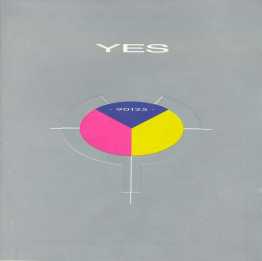
90125 at 30 – A Retrospective

149178_f_1Thirty years ago this month, after being presumed dead in the wake of the ‘Drama’ album, Yes came roaring back into the music scene with ‘90125’.  Commercially, ‘90125’ was a spectacular success, yielding their only #1 single as well as several other staples for that era of rock radio.  ‘90125’ also brought in scores of new Yes fans, and became a gateway to progressive rock for many who were previously unaware.  However, with established Yes fans, ‘90125’ proved to be a lighting rod of controversy.

For some established fans, myself included, it was a joy to have Yes back as an active band, even if their new album wasn’t a full-blown prog album.  But to many established fans, this music simply wasn’t Yes.

At the center of the controversy was the new guitarist,  Trevor Rabin, who was the only Yes rookie on the album.  Rabin, while a fantastic talent in his own right, had significant stylistic differences with his predecessor, Steve Howe.  As a co-writer of every song on the new album, his imprint on the new music was larger than that of any other member.  And this music was a sharp departure from anything Yes had previously done.  Thus, with the membership change and the change in musical direction, many older fans declared “this is not Yes”.

So was it Yes?  Was it Yes save for the new guitarist?  And what to make of this strange new music (in Yes terms, anyway)?

Yes, it was definitely Yes

 A cursory examination of the membership makes it hard to declare the band that created ‘90125’ anything other than Yes.  Four of the five members on the album were Yes veterans.  Three of them – Jon Anderson, Chris Squire, and Tony Kaye – were original members of Yes.  The fourth, Alan White, had originally joined Yes more than a decade prior, and was firmly established in the band.  Calling the band Cinema, as they were before Anderson’s return, would have been odd, to say the least.  In fact, I’m willing to bet most of the “it’s not Yes” crowd would have said “well, it’s really just Yes” had they tried to get away with calling the band Cinema.  Four established Yes veterans with Jon Anderson on vocals is, for all intents and purposes, Yes.  And thus an album created by such a band is, for all intents and purposes, a Yes album.  When Anderson reconnected with Rick Wakeman, Steve Howe, and Bill Bruford in 1989, they may have called themselves Anderson, Bruford, Wakeman, and Howe for legal reasons, but everybody knew is was really just another incarnation of Yes.  Otherwise, why call the shows on your tour ‘An Evening of Yes Music Plus’?

One person who was decidedly a fan of the new band – Rabin himself – was also against calling it Yes.  I have sympathy for Rabin’s position, given that he took the brunt of the criticism from the established Yes fans.  Still, there was nothing else you could call this band, with four veterans in the lineup including Anderson on vocals.  It simply would not have been credible to call it anything else but Yes.  With a different vocalist – or with the pre-Anderson lineup, the Cinema name would have worked.  Once Anderson came on board, Yes was the only name that would do.  The band that did ‘90125’ was not Cinema.  It was Yes.  Yes with a new guitarist? Sure.  A Yes wherein the newest member had the most impact on his first recorded output with the band?  Undoubtedly.  But still Yes.  There is simply no other credible band name for the lineup that recorded ‘90125’.

 Musically?

Even with as radical a departure as this album was from its predecessors, it’s hard to think musically of ‘90125’ as anything other than a Yes album.  Certainly, it had a heaviness that was rarely heard on previous Yes albums.  The intro to ‘Owner of a Lonely Heart’ telegraphed early on that this was going to be a different kind of Yes music.  ‘Hold On’, ‘City of Love’, and ‘Changes’ produced more power chords than had been heard in any previous Yes album.  The music also had much more of a 80’s feel to it, and Tony Kaye’s description of it as sometimes being dimensionally sparse was fitting.

Still, there were more than a few common threads with previous Yes works.  And despite Anderson’s late entry into the project, there is no doubt that his creative impact on the final product was second only to Rabin’s.  No other song exemplifies this more than ‘It Can Happen’, in particular when the Cinema version is compared to the final Yes version.  The Cinema version of ‘It Can Happen’ appears, among other places, on disc 4 of the YesYears box set.  The lyrics on that version were those of a rather sappy love song.  Even keeping in mind that this is more or less a demo version, the music was relatively mundane.  In contrast, it is clear that Anderson had completely rewritten the lyrics by the time the final version was recorded. The rewritten lyrics have much more of the trademark cosmic mysticism that infuses so much of Anderson’s output.  Moreover, the music has much more in terms of ‘Yessy’ touches to it, beginning with the sitar intro.  If a Yes fan had entered a cave in 1979 and emerged in early 1984 to hear ‘It Can Happen’ on the radio, he or she might have concluded that Yes had never broken up or had gone through the turmoil of the intervening years.  The final version of ‘It Can Happen’ clearly sounds like a Yes song, and, 80’s production values notwithstanding.  It would not be out of place in the earlier Yes catalog.

Various vocal arrangements on the album also tie in nicely with Yes music past.  In ‘Hold On’, a multi-part harmony is sung on the verse that begins with “Talk the simple smile, such platonic eyes …”.  This bears a lot of similarity to the final chorus of “Does It Really Happen” (“time is the measure, before it’s begun …”) from ‘Drama’.  And of course, ‘Leave It’ is a vocal tour de force that begins with a huge five-part harmony that is unmistakably Yes (this was the second song I heard off of this album, and the one that told me “Yes is back!”).  In the previously mentioned ‘It Can Happen’, Anderson and Squire alternate on lead vocals, with Squire singing lead on those portions that serve as a transition from the verses to the chorus.  And finally, Anderson’s delivery on the album’s finale, ‘Hearts’, is not something that sounds unusual to the experienced Yes listener.

Other notable connections to previous Yes music includes the ebb and flow of ‘Hearts’, Squire’s bass work on ‘Our Song’ and ‘Cinema’, and the keyboard intro to ‘Changes.’  Had this lineup of musicians released these same songs under the guise of Cinema, I would have scratched my head and asked “why didn’t they just call themselves Yes?”, and I doubt I’m alone in that aspect.

What Rabin Brought to the Table

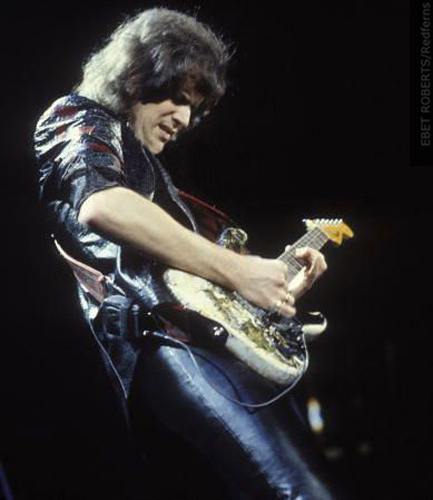
As we’ve already noted, ‘90125’ represented a significant shift in direction for the band, possibly more so than any other shift in their history.   And there is little doubt that much of that shift is due to the presence of Rabin.  It’s one thing to bring a new member into a band.  It’s quite another that the new member has such an outsized creative contribution to the finished product, and this was certainly the case on ‘90125’.Trevor+Rabin+rabin
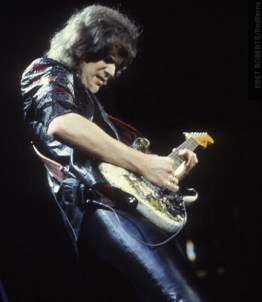
I’ll start out by saying that I like Howe’s guitar work better than Rabin’s.  In his book ‘Music of Yes’, Bill Martin described this difference perfectly, noting that Rabin divided his lead and rhythm guitar work in a fairly conventional manner, as opposed to Howe, who most decidedly did not.  As a prog fan, it shouldn’t be surprising that I prefer the unconventional to the conventional.  But that does not change the fact that Trevor Rabin is an exceptional guitarist in his own right.  Nor does it change the fact that Rabin brought certain things to the table that Howe did not.

One thing Rabin brought through his guitar playing was a much harder edge (or heaviness, if you prefer) than Howe ever did.  Much of ‘90125’ flat out rocks, as Rabin had a knack for delivering a bone-crushing power chord at precisely the right moment.  There were occasions on previous Yes releases where I wish Howe would have unleashed, one notable example being ‘Release, Release’ from the ‘Tormato’ album.  Listen to Shadow Gallery’s version of this song on the tribute album ‘Tales from Yesterday’, and you’ll probably understand what I mean.  Comparing live versions of ‘Owner of a Lonely Heart’ with Rabin to those done with Howe (sans Rabin) provide another demonstration of what I mean here.

The heaviness of Rabin’s guitar in Yes music was a good fit for its time and place.  Yes was not going to survive as a band by doing the epics of the 70’s.  They were going to survive by other means.  And while this did pull them closer to the mainstream, they never fully jumped into it the way their prog-rock peers Genesis did in the 80’s.  While Genesis largely ditched their progressive past to pursue top-40 hits, Yes under Rabin merely dipped their toes into the water a few times (with ‘Owner’ being the prime example on ‘91025’) while otherwise producing album-oriented rock that was just outside the mainstream.

Another of Rabin’s strengths was his capability as a multi-instrumentalist.  Although not known by many, Rabin did most of the keyboard work for the three albums that featured what we call the Yes-West lineup.  While he was no Rick Wakeman (but who is?), I am comfortable saying he was actually a better keyboard player than Kaye.  This stood out to me while listening to Rabin’s piano solo on the ‘Talk’ tour, in which he demonstrated a dexterity that Kaye never did during his time in Yes.  While ‘90125’ is more of a guitar-driven album to be sure, it does feature some interesting keyboard work, and the most interesting parts thereof were almost certainly played by Rabin.

However, where Rabin’s contribution to Yes really shines in comparison to Howe is in his abilities as a vocalist.  Rabin was much more than a merely capable lead vocalist.  With a rather smooth voice, he was indeed quite a good one.  This gave Yes a previously unknown vocal versatility which was used to great affect on songs like ‘Leave It’ and ‘Changes’, where he and Anderson take turns singing lead.  Rabin’s backing vocals on other songs like ‘It Can Happen’ added to the overall vocal picture in a synergistic manner.  And on harmony vocals?  Wow.  Rabin’s voice fit with those of Anderson and Squire so perfectly it’s almost frightening.  While I have no qualms saying Howe was a better guitarist, I similarly have no qualms saying that Rabin’s voice was a much better fit than Howe’s in harmonies with the voices of Anderson and Squire.  From a vocal standpoint, the version of ‘I’ve Seen All Good People’ that appears on ‘9012Live’ is far and away my favorite, as the harmonies of Rabin, Anderson, and Squire are very powerful.  Overall, the vocal dimension brought to Yes by Rabin infused the songs, both old and new, with an energy previously unknown to them.

When I look at the above and assess Rabin as a member of Yes, I can say two things for certain.  Number one, he fit into Yes in a manner much different than that of his predecessor.  Number two – he did so with virtual perfection given the time of his joining the band.

 The Final Verdict

 I’ll close out here by discussing two points that are seemingly contradictory.  The first is that ‘90125’ is not a progressive rock album, the second being that ‘90125’ is a very important album to the overall history of progressive rock.

I described ‘90125’ earlier in this piece as a work of album-oriented rock that was just outside the mainstream.  Indeed it’s hard to imagine any work which includes the creative imprint of Anderson being within the mainstream, and even the band’s big hit from this album was unconventional compared to other #1 singles.  The common threads with Yes music past as noted above also keep this album out of the mainstream of rock music.  In contrast, the hard rock playing of Rabin and simplification of the other instruments in the band (most notably, Squire’s bass on several songs) push ‘90125’ closer to the mainstream – and further away from prog – than any previous Yes album.

jjhODespite the direction of the music, ‘90125’ nevertheless earned its place as being an important album in prog history.  Due to its popularity, ‘90125’ literally brought millions of new fans to Yes.  Not all of these fans became progressive rockers, but many did.  It is not by any means uncommon to come across a prog rock fan who first came to the genre through Yes and ‘90125’.  I’ve met more than one fan who first became aware of Yes through this album, and subsequently took a liking to their back catalog.  The connections to the old music within ‘90125’ certainly helped in this aspect.  So too did their willingness to respect their past during their live shows by playing many of their 70’s classics, such as ‘Roundabout’, ‘Starship Trooper’, and the previously mentioned ‘I’ve Seen All Good People’, among others.  Contrast this with Genesis, whose 80’s music bore virtually no resemblance to their 70’s output, and who almost dismissively reduced their progressive past to nothing more than a medley during their live shows.

It is undeniable that ‘90125’ served as a catalyst for introducing a new generation of fans to progressive rock, even if it was not itself full-blown prog.  Moreover, it gave Yes a new (and rather long) lease on life.  Love it, hate it, or feel somewhere in between, ‘90125’ and the Yes lineup that created it are both owed a debt of gratitude for doing their part – no small one at that – in keeping the prog flame alive.  And therein lies the true, lasting impact of this controversial album.

The Big Big Weekend 2013 – Day 2 in Video

The moment you’ve all been waiting for!

Day 2 of The Big Big Weekend saw us head South of Winchester to Southampton to visit Rob Aubrey’s Aubitt Studios. There we met Andy Poole and Rob for a fascinating couple of hours learning how the astonishingly splendid track ‘Judas Unrepentant’ was crafted.

With a guest appearance from Steve Thorne, a sneak preview of the Make Some Noise video a week before it was released, and a sample of the Big Big Train Beer, this was the perfect way to end an amazing weekend among friends.

You can find video of Day 1 here… https://progarchy.com/2013/09/25/the-big-big-weekend-2013-day-1-in-video/

A Guitar Zero: Steve Hillage and System 7

Image
The Gong tribe having “tea” — Hillage and Giraudy at left.

Gong was one of prog’s dark horses — too droney for the shredders, too silly for the serious, too jazz for the rockers and too rock for the jazzers.  A moving target, their sound sprung mostly from self-styled pothead pixie Daevid Allen, a founding member of Soft Machine who, abandoned by that band in France due to a bum visa (it was 1967, how bad could it’ve been?), created a web of musical partnerships and produced a set of jazz-driven psych records, culminating in the trance-soaked Radio Gnome Trilogy (1973’s Flying Teapot, 1974’s Angel’s Egg, and 1975’s You).  Evaporating into its disparate parts shortly thereafter, Gong and its many members to this day hover like clouds, appearing and disappearing with their seasons.

But that trilogy of albums remains a grail of sorts, a kind of rebuke to prog either as bacchanal for sci-fi bikers on the one hand or as outpost for conservatory-trained longhairs on the other.  They indeed smell like early Soft Machine, but way more fragrant.  The knotty songs sing like bop, but usually, around mid-point, lift off into breathy, woman-moaning space jams that have a lot in common with contemporaries like Cosmic Couriers/Jokers, Amon Duul II, and like-minded European bands that came late to the acid party but then stayed long past last call.

If Gong made any money at all it had to have gone right back into the drugs, but for at least one of their members Gong was less a destination than an early stop on the journey.  Steve Hillage, a Canterbury regular, jumped ship from Khan and landed on planet Gong long enough to stamp the Trilogy with his signature fluidity and tone, driving the songs into a direction that would later, with the rise of trance electronica, appear prescient.  With his partner, Miquette Giraudy, who along with Gilli Smyth provided Gong with its siren cooing — for how else to describe it? — Hillage split from Gong soon after Allen did, and made a bunch of records in the late 70s, not altogether unlike the Gong records he contributed to, that ended up having a big impact on British beat mechanics like The Orb.  With such recognition, he and Giraudy put together System 7 in the early 90s, producing both beat-heavy and ambient records featuring Hillage’s guitar textures and Giraudy’s burbling synths.  While it wouldn’t be fair to say these records — Gong, Hillage solo, System 7 — don’t have any wasted notes, they all have way more to recommend them than not. “Master Builder” (from You) remains a favorite, a far-reaching and future-seeing ommm drone that morphs into a breathtaking jazz jam with Hillage, on fire, heaving the whole mess past the summit.  The influence of Miles Davis’s electric bands is palpable.  Hillage never lost sight of that kind of funk, and saw the relationships between the deeply groovy and the deeply abstract.

Two recent albums, featuring Hillage then and now, go a long way towards making this point.  Live in England 1979 finds Hillage at University of Kent, playing a well-chosen selection of some of his better known songs.  Taped for broadcast, the sound is good, and the playing is energetic, the killer rhythm section giving Hillage plenty of room to showcase his always tasteful, melodic soloing.  At its best, such as on “Salmon Song” and the clutch of other driving, George Clinton-filtered-through-Frank Zappa funky tracks, Hillage has no peer except perhaps Adrian Belew in the King Crimson of that same era.  The guitar is angular, the singing gonzo, the funk is there. (Hearing this, I think it would have been fascinating had Brian Eno or Robert Fripp gotten ahold of Hillage in one of their productions at the time.)  Contrary to how you might imagine an ex-Gong sounding in the wake of punk, the music is surprisingly fresh, with “1988 Activator” even admitting Johnny Rotten happened.  The only dinosaur-betraying moment is a cover of Donovan’s “Hurdy Gurdy” Man, which had been a minor hit for Hillage several years earlier and which he was probably obliged to play.  It’s a drag on the set, and when in the midst of the solo he breaks into the main riff of “Master Builder” it makes Hillage sound like he’s out of ideas, which he clearly wasn’t.  The CD adds a couple of studio tracks, what sound like demos from his 1977 album “L,” so as a whole the album’s pieced together and not without flaws, but a fun listen and, in its live moments, has some booty-shaking space power.

You can watch the entire show here — it’s really worth a look:

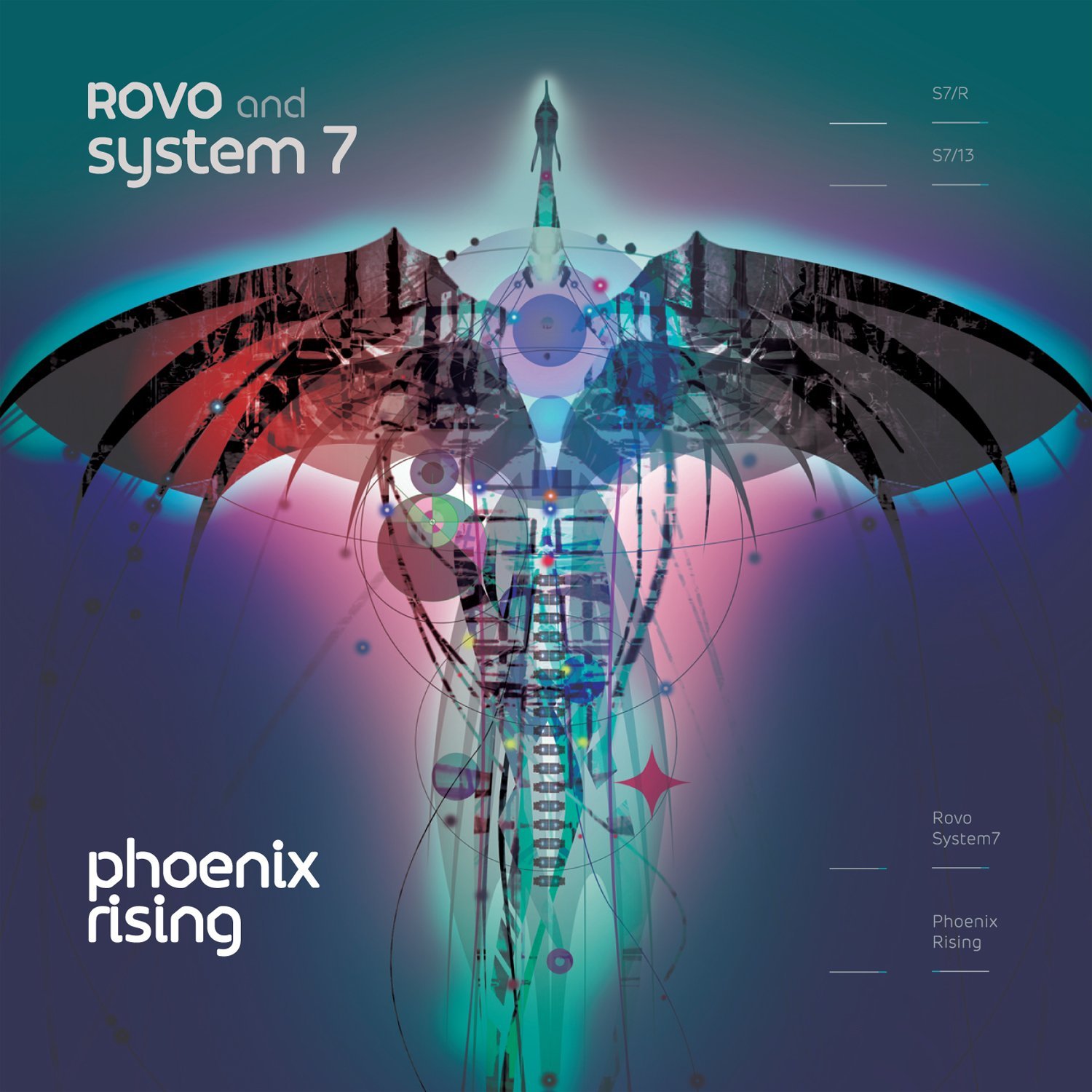
More coherent in its conception and execution, Phoenix Rising finds Hillage and Giraudy, as Sysem 7, paired with Japanese post-rock/electronica/space outfit Rovo, and is a nice example of electronic/analog jazz fusion.  The opening track, “Hinotori,” lays it all out.  Two drummers, two guitarists, violinist, bass, keyboards, lots of processing.

Image

If this suggests a Mahavishnu Orchestra obsession, you’d be right on.  John McLaughlin’s fabled band and its Inner Mounting Flame is directly quoted, as Hillage and Rovo cover “Meeting of the Spirits.”  Now, the problem with covering McLaughlin is similar to the problem of covering the Beatles — how to do it and make something else out of it that’s your own while also reminding all of us why the song’s so great in the first place?  While I’m not certain this is achieved, and have been on the fence about whether the track belongs on Phoenix Rising given the strong writing in the other compositions here, it does fit the spirit of the record, which mostly makes me think of what a Santana album would sound like if Carlos decided to make a smooth electronica record but keep half his band in analog mode.  Are barriers being broken? No.  Am I going to put this in my McLaughlin mix? Sure.  Does it work? Absolutely, and it’s an enjoyable listen all the way through.

What impresses me about Steve Hillage is his journeyman’s approach to his music.  He’s a gifted musician with that most cherished of attributes, an identifiable sound, but I have a feeling he’s never been terribly happy resting on his laurels or going for a money grab.  He participates in the occasional Gong one-offs, but I think is more at home in the kind of environment Rovo provides on Phoenix Rising.  Not the star, not the solo soloist, but an integral part of a larger group.  In “Unzipping the Zype,” on Live in England 1979, Hillage sings “I ain’t no guitar hero, I just want to be a guitar zero.”  I doubt that wish will ever come true for him, but his drive to find a level stage has been a benefit to those of us listening.

In a Spirit of Gratitude: Andy Tillison offers even more. . . .

andy PO90

***

Andy writes the following at Facebook (here’s hoping he doesn’t mind me reposting here. . . .)

Pleased to announce number 2 in our Tangent Historical Artefacts Download Series. This time it’s a Po90 album – the very first one recorded in 1994-6. Apart from 30 home burned copies sold via the newly discovered “Information Super Highway” the album was subsequently released for a 500 copy limited run by Cyclops records AFTER the release of our Second album (Afterlifecycle). Like Porcupine Tree of the first couple of albums, Po90 was largely just one person.. in this case me. The album always included a 20 minute long BONUS track from the last days of GFDD which is the second version of the song “A Gap In The Night”. A Third version appeared on the Tangent’s album “The World We Drive Through”. This second version includes contributions from Guy Manning and Hugh Banton (VDGG) who recorded some organ for it (well actually there’s a story there.. he recorded it for ANOTHER song that we incorporated into this one) during rehearsals for a gig in Peterborough in the early 90s.

The album also includes a recording of the track we claim to have been the First Mp3 promotional file available for net download – “The Third Person”. The album is lyrical, very Tangent related and highly seminal to the rest of the dynasty’s output.

For the first time we’ve published a full set of lyrics with this album, the original 4 page cover plus all the new lyrics are included as a PDF virtual CD booklet and there’s a tray jpg if you wanna make the thing up. I’ve annotated the songs and written acouple of pages giving more info about the album. Hope some of you will go and see where what I’ve always seen as Chapter TWO started…

All funds we get from this are being ploughed into future projects (which includes tonight’s tea  ) and I hope those of you who get it enjoy it. Hint… Put the PDF onto a tablet/pad/phoney thing and browse it with the album! A nostalgic look back at the early days of the Third Wave…. And of course you get it at www.thetangent.org

‘And I’ll Scratch Yours’ – (2013) – Peter Gabriel – Tough Love required!

In the history of Peter Gabriel’s solo career there are glittering moments of genius and other times where the ideas fell short of success or backfired.
The Womad festival of ’82, the ‘Realworld’ theme park and the development of world music through Real World have either struggled or remained unfinished.

This is probably the truth for any artist who pushes the boundaries and tries to innovate. So with a couple of albums of cover versions, first by Gabriel himself and then by celebrated international artists, singing essentially the greatest hits on both sides, this should be a moment of playing safe. The last three years from 2010’s ‘Scratch My Back’ and the release of ‘And I’ll Scratch Yours’’ (2013) have been far from straight forward and the latest release has proved that Gabriel has once again bitten off more than he could chew.

2010 release was hard to digest.

It was likely the latest release was always going to be a tough call. Gabriel’s first solo release for eight years (‘Scratch’) was a series of reinvented versions of songs by Bowie, Neil Young and Radiohead. However innovation appeared to give way to deconstruction and the results seemed to alienate a number of the participating artists. Radiohead’s reaction in particular to the minimalist, almost spoken word version of ‘Street Spirit’ was predictable. Overall it was deemed by many of Radiohead’s fans to be one of the worst pieces of music anywhere, with Shatner like comparisons. The band declined to follow up with ‘Wallflower’ on the return to new album and this was the view of Bowie, Young, and Ray Davies in regard to return participation.

The impact to the project was worsened by the slow response from bands such as Arcane Fire who remained on-board for the follow up. To lessen the delay, some of the tracks have been released via iTunes during the three year gap between albums and so this new release actually represents only half an album of new material.

With Gabriel now reliant on the artists to interpret the songs rather than his own bleak, stripped back formula there was hope that ‘And I’ll scratch yours’ would be more accessible and enjoyable. However there are areas where the production has been managed to the point where expression and looseness are lost to an inflexible rigidity. In effect Gabriel is not allowing his own back to be scratched.

David Byrne’s opening track, ‘I don’t remember’ is a difficult proposition to begin with. His overtly high vocal sounds Scissor sister like, with no real heart or commitment in the tone, even when it settles to a lower key for the chorus.

The lack of spark from the artists concerned seems to continue throughout the rest of the album, with some input feeling almost unwilling, rather like it it’s going through the motions. Bon Iver’s cover of ‘Come talk to me’ has a similar lack of drive to it and loses the focus of the song in the progress.

Laboured and clunky
Laboured and clunky

‘Shock the monkey’ comes at you like a slow distorted dirge, barely half the speed of the original. The effect of the slow pace is the loss of the quirky spirit of the original.

The pattern continues throughout, Arcade Fire seem to miss the potency of ‘Games without frontiers’ with a faithful but ultimately fainthearted showing.

It’s probably the Feist cover of ‘Don’t give up’ that shows us how empty the covers appear on this album. Drafted in as a ‘replacement’ band for the sequel, they deliver a bland version of the original that strips away all the emotional charge that made the 1986 version so powerful. An attempt at an interesting take on the Gabriel/Bush duet sees Feist, feat Timber Timbre using a reversal of roles. However the delicate vocal of Bush that offers tenderness and hope is eradicated in a performance which is a low, almost monophonic response in tone by Timber Timbre. It’s not a convincing reply to the desperation felt by Gabriel in the original, and hard to see how this would inspire anyone to keep going.

In fairness there are moments that shine briefly on the album, Randy Newman’s, ‘Big Time’ has a great delivery to it as does the cover of ‘Solsbury Hill’ by Lou Reed. The Reed version is a paradox in it alienates in a positive way. Destroying the sweetness of the original, the typical Reed trademark voice sits on top of a slow, distorted guitar that results in a grimy, low grade alternative that works. The track is bound to polarise opinion with many people unable to accept the style.

Overall it’s hard to believe that Gabriel’s ambitions for this record have been met. Describing the process of pulling the bands together for the project as similar to “Herding cats” this has been a tough process that feels laboured and clunky. His own covers on the first outing did not do him any favours when it came to completion and the lack of mutual interpretation on the albums has led to dissolved partnerships which were not filled adequately. The ideology behind the projects was sound and could have resulted in some excellent covers had things been managed better.

It does needs to be approached with open eyes as you might expect and if you felt alarm at the extent of variation in the recent Steve Hackett release -‘Genesis Revisited 2’ then you will no doubt feel a resentment to the handling of classic material on this outing. What many fans would hope for after this album is for Gabriel to return to the studio and produce a solo effort that matches the heights of the late 70’s and early 80’s, rather than a 90’s style experiment.

Track Listing:

1. “I Don’t Remember” David Byrne 3:38
2. “Come Talk to Me” Bon Iver 6:20
3. “Blood of Eden” Regina Spektor 4:39
4. “Not One of Us” Stephin Merritt 3:49
5. “Shock the Monkey” Joseph Arthur 5:49
6. “Big Time” Randy Newman 3:29
7. “Games Without Frontiers” Arcade Fire 3:22
8. “Mercy Street” Peter Gabriel feat. Elbow 5:28
9. “Mother of Violence” Brian Eno 3:00
10. “Don’t Give Up” Feist feat. Timber Timbre 5:28
11. “Solsbury Hill” Lou Reed 5:24
12. “Biko” Paul Simon 4:19

Review: Chris Cornell at The Shedd (Eugene, Oregon) on October 19, 2013:

chriscornell_progarchy

No “Black Hole Sun”? No “Billie Jean”? No electric guitars or drums? No ten-minute versions of “Slaves and Bulldozers”?

No problem.

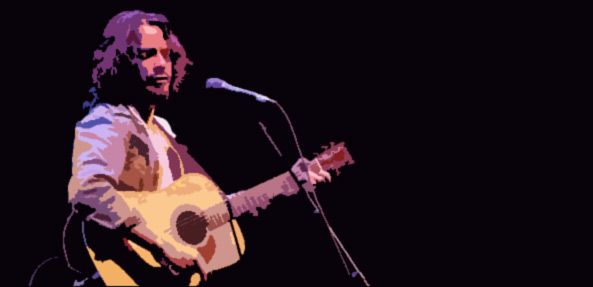
Chris Cornell, the once-again front man of Seattle’s legendary Soundgarden (see my review of King Animal) and one-time front man of super group Audioslave, walked onto the stage without any introduction at 9:00 pm promptly, setting off an eruption of applause and whistles from the sold-out crowd. The Shedd is an intimate (and somewhat cramped) venue that seats around 700 or so, and my wife and I had excellent seats: dead center, front of the balcony. The lanky Cornell is fit and relaxed; he acknowledged the crowd with a warm grin, placed the needle on the record player set up in front of seven guitars, and launched into “Scar On the Sky,” from his second solo album, Carry On (2007), which happens to be the first full Cornell album I ever heard.

Although Soundgarden achieved fame while I was in college, I didn’t pay attention to Cornell until years later, having mostly ignored the entire grunge movement during the 1990s, mostly because of a dislike for the music of Nirvana—a dislike I maintain to this day, without apology. Nirvana may have sold more albums, and Kurt Cobain may have attained a semi-mythical status because of his suicide at the age of 27, but Cornell, who is now nearly 50 years old, has earned respect the old-fashioned way: by staying alive, writing songs about suicide rather than committing suicide, producing a steady stream of good to great albums and songs, and by touring often in recent years in support of the same.

Some rock stars burst onto the scene as bright stars and then become fading, falling stars—or drug-addled recluses, muttering nut-cases, or sad shells of their former selves. But others, such as Cornell, start slowly, build steadily, hesitate for a while (oddly enough, I think of Sinatra going silent in his late 30s before embarking on his stunning albums for Capitol in the ’50s), and then find their footing at a decisive point in mid-career, and demonstrate that they are, in fact, real musicians and not just brands and products.

Cornell’s two-hour-plus long set this past Saturday was a case in point, for it highlighted both the legendary voice—which was in exceptional form—and the stellar and varied songwriting. The former is the immediate draw, for there is nothing quite like Cornell’s multi-octave, raw, amazingly textured voice, which can move from face-melting howl to falsetto sweetness to blurred darkness to startling, clear heights—often all in the course of a single song. But the acoustic show brought out facets of Cornell’s songs not always obvious in full studio dress: the unusual chords and progressions, the subtle shifts in tempo and tone, and the masterful balance of melody and rhythm. “Sunshower”, for example, is a ballad-like number that slowly builds and morphs into a series of gospel-ish chords full of longing and a sense of rhapsody.

Conversely, the rocker, “You Know My Name” (from the 007 film, “Casino Royale”) is one of Cornell’s most straight forward (and popular) tunes, albeit with some sly humor: “I’ve seen angels fall from blinding heights/But you yourself are nothing so divine/Just next in line…” While he is not a finger-picking virtuoso, Cornell is a more than capable guitarist, energetically wringing out walls of sound at one moment and then playing delicate, swirling lines the next.

Between songs, Cornell’s banter was often quite funny and self-deprecating, as when he recalled that he had only played in Eugene once before, with Soundgarden in the late 1980s, “in somebody’s basement, with two people in the crowd: the guy who booked the show and the janitor. No one even bothered showing up just to get drunk!” He noted that his first solo acoustic show, so to speak, was a small event in Sweden while touring with Audioslave; although it was “nerve wracking,” it was also surprisingly enjoyable, like walking a tightrope without a net: “If you screw up, everyone knows!” While the younger Cornell sometimes seemed intent on playing rock god—and unleashing his aggressive, freakish wail on audiences—the middle-aged Cornell seems to truly enjoy digging into the songs and revealing their more subtle riches.

Crowd favorites included the beautiful “Seasons,” the Temple of the Dog classic, “Hunger Strike” (with opening act, Bhi Bhiman, performing the vocal part originally performed by a certain Eddie Vetter), and Soundgarden’s “Fell on Black Days,” which featured the full range of Cornell’s vocal powers.

Somewhat surprisingly, the huge hit, “Black Hole Sun” did not make the evening’s set list, despite plenty of screamed requests. Nor did Cornell’s cover of Michael Jackson’s “Billie Jean,” although he did joke of how one reviewer thought it was an “ill-advised” song to record. But it was a delight to hear under-appreciated gems such as “The Day I Tried to Live” (one of my favorite Soundgarden songs, from the classic album, Superunknown), the Audioslave tune, “Like a Stone”, and the piano-driven, gospel-ly “When I’m Down” (from Euphoria Morning, Cornell’s first solo album). An unusual twist came when Cornell played U2’s “One”—but using the lyrics from Metallica’s “One,” a mash-up that proved the value of combining musical talent and a wry sense of humor.

For an encore, Cornell played a new song, the blue-inflected “Misery Chain,” written for the upcoming film, “12 Years of Slavery,” and concluded the show with an extended version of “Blow Up the Outside World,” the dreamy-to-screamy, controversial hit from the 1996 Soundgarden album, Down On the Upside.

Here is video of Cornell singing “Fell On Black Days” at The Shedd:

Arrived at Progarchy HQ Today

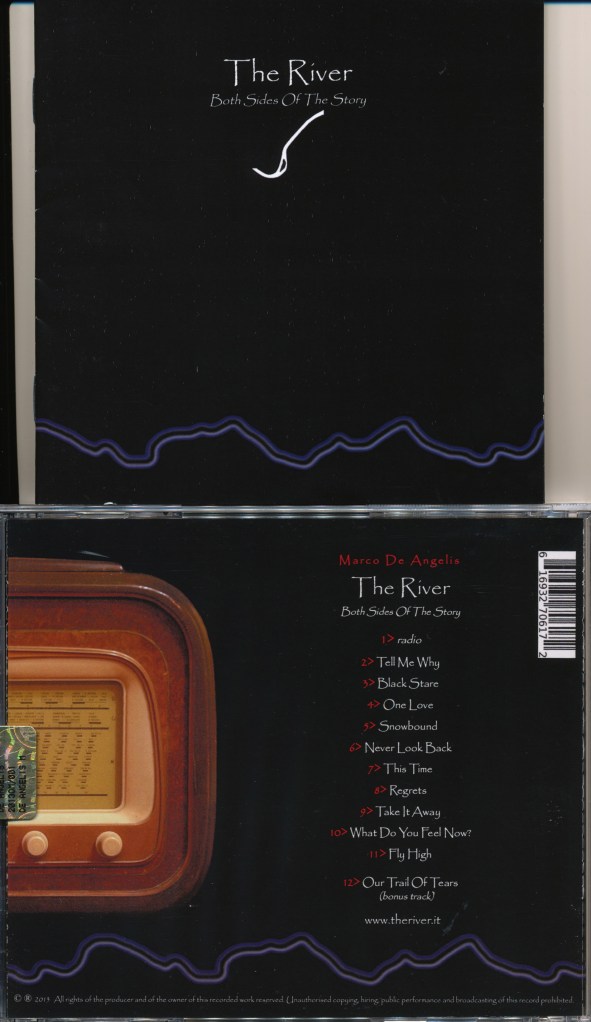
Two things arrived today, much to my happiness.  First, via post from Roma, Marco De Angelis, The River: Both Sides of the Story.  For more info on de Angelis, go here: http://www.marcodeangelis.com.

IMG
Marco De Angelis, The River (2013).


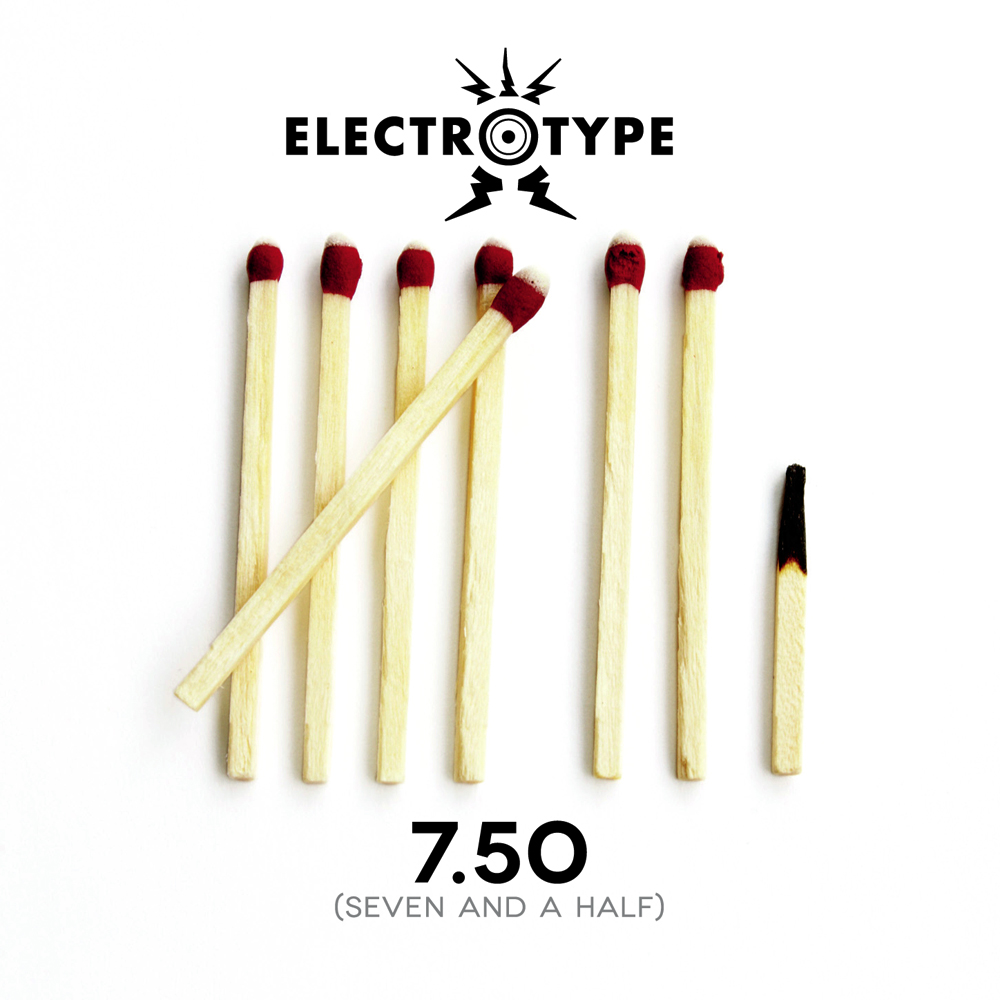
And, via the web, Electrotype, a one-person prog act.  That one person is Beth Maplesden.  She describes Electrotype as: “an independent art/prog rock uno based in the Philadelphia, PA area. The latest Electrotype EP, 7.50 (Seven and a Half), fuses art rock and alternative rock—New Prog and “old” prog with touches of garage, punk, metal, and grunge.”

The new album from Electrotype, 7.50.

Her website can be found here: http://www.electrotype.us/#top

The Battle of Epping Forest: Story of the Song

One of the things I love about prog is that there’s very often an interesting story lurking behind a song.

Classic Genesis track The Battle Of Epping Forest is no exception to this, and I would imagine most Genesis fans have some idea of its origins, but Rob Webb has delved a little deeper to uncover more of the history.

Well worth a read.

Full Power Drumming

Over at The Prog Report, “Nick D’Virgilio, drummer for Big Big Train, talks to The Prog Report about his time as Spock’s Beard frontman, his work with Genesis and Tears For Fears and his love for golf”, in what Greg Spawton calls a “prog-length interview (25 minutes)”: