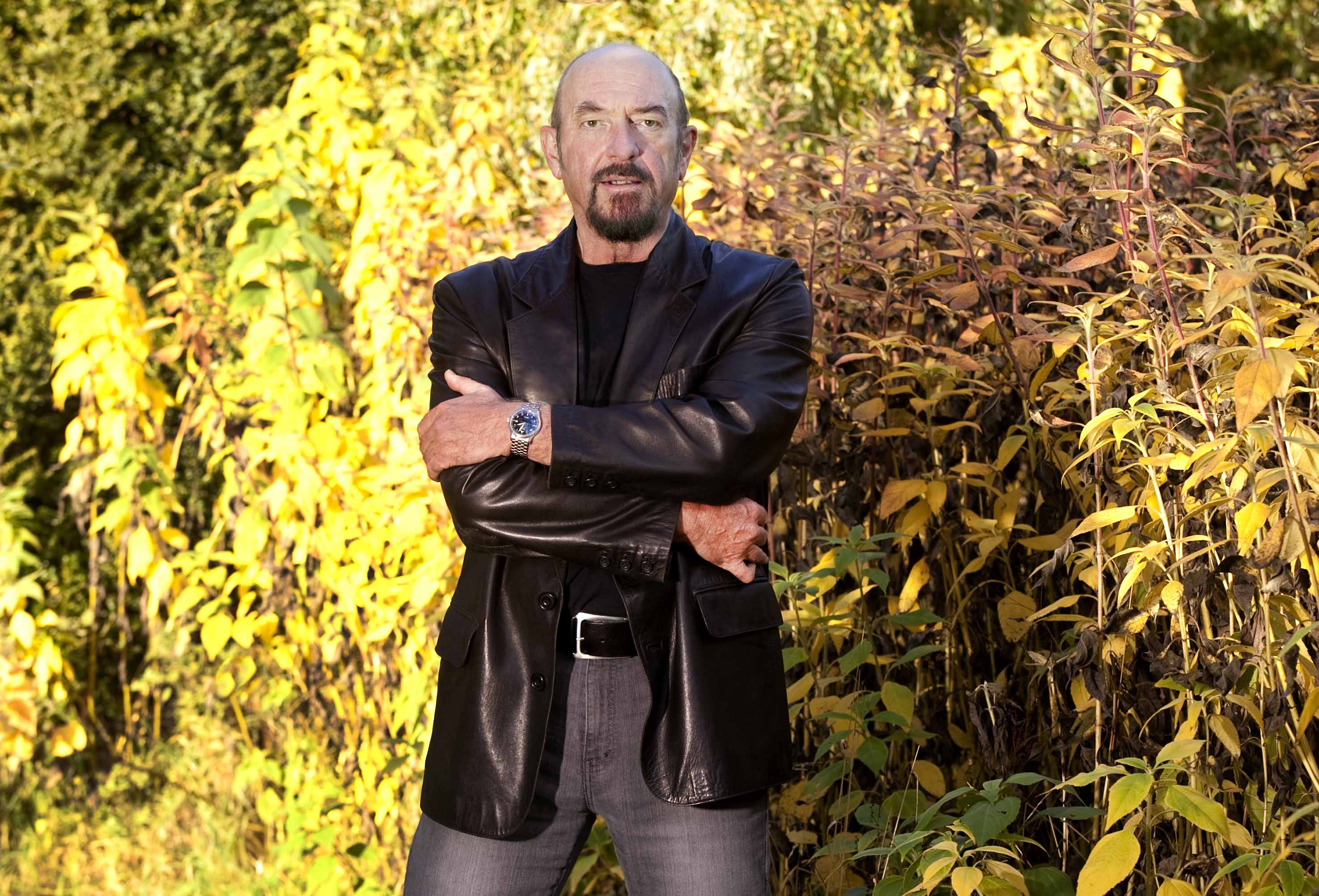
For my first foray into Progarchy, I would like to talk about the prog god of the year, Jethro Tull’s Ian Anderson, who thankfully is not too old to rock and roll and is definitely too young to die. More specifically, I would like to talk about Ian Anderson’s Thick as a Brick 1 & 2 tour, which I saw at Ravinia, in Highland Park, Illinois, in July of this year. This concert was simply amazing. From the first notes of Thick as a Brick to the final bow, Ian Anderson and co. never cease to amaze. They do not bill themselves as Jethro Tull because Martin Barre is currently not a part of the band. Instead, Florian Opahle fills in as a more than capable guitarist. In fact, every musician in the band is excellent. The lineup is Ian Anderson on flute, acoustic guitar, and vocals, David Goodier on bass, John O’Hara on keyboards and accordion (yes! accordion), Florian Opahle on guitar, Scott Hammond on drums, and Ryan O’Donnell on vocals and stage antics. The latter is an excellent move on Ian Anderson’s part, as O’Donnell can reach the high notes that Anderson can no longer reach. He also has a remarkably similar voice to Ian Anderson of the ’70s, but never fear, for Ian Anderson still does the majority of the singing.
For the concert itself, the band plays Thick as a Brick 1 & 2 in their entirety, as well as Locomotive Breath as an encore. Ian Anderson’s ability to play the flute is unequaled, and he has only gotten better with age. Ian Anderson’s voice has changed considerably over the years, but he still sounds good. Thick as a Brick 2, however, sounds better in concert than it does on the album. I can only attribute that to the fact that the band has been touring for over a year, and knows the music to a tee. Ian Anderson’s flute playing draws the viewer into the concert and captivates their full attention. Thematically, Thick as a Brick 2 makes the listener ponder what life might have been like if they had made different decisions in life, all through relaying several possible career choices for our beloved Gerald Bostock. The final song of the concert, Locomotive Breath, brings the audience to its feet in a finale worthy of Jethro Tull. Throughout the concert, Ian Anderson proves that the music of Jethro Tull really does stand the test of time and that he will never be too old to rock and roll.
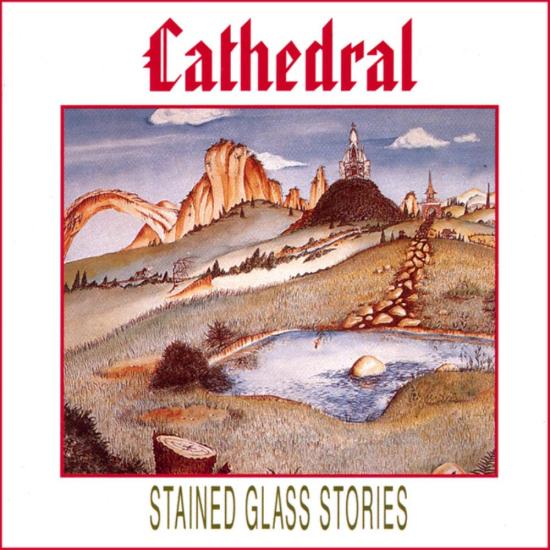
Hello Progarchy! As a new member, I’d like to start off with a series that focuses on underappreciated prog rock groups, and Cathedral will be the first. In 1978, this quintet released one of the better American prog albums, Stained Glass Stories, which took elements of Yes, Genesis, and Gentle Giant, and combined them into one beautiful symphony. The album consists of five songs, two of which (Introspect and The Search) are wonderful epic pieces reminiscent of some of Yes’s finest music. Gong is a shorter instrumental piece that hearkens back to Peter Gabriel-era Genesis. The other two songs (The Crossing and Days & Changes) also have a captivating symphonic sound that will remind listeners of Relayer-era Yes or King Crimson’s In the Court of the Crimson King.
Overall, Cathedral did a superb job creating symphonic music inspired by their more popular British contemporaries while also maintaining their own distinct sound. The musicianship is top notch (listen to the crisp sound of Fred Callan’s Rickenbacker bass and Rudy Perrone’s dexterous handling of lead guitar) and let’s not forget the great cover art. The beautiful pastoral setting (dare I say Tolkienian?) arouses a sense of awe and suits the music perfectly. I hope you enjoy this album as much as I did.
“The song is definitely a tip of the hat to Rush. We’re such fans – they’ve been a huge influence on us, and we continue to admire and look up to them. One of the great things about them is how they write really uplifting songs with positive messages, but they always sound cool.
“It’s really interesting. The Spirit Of Radio, Limelight – those are big, big songs with big arena-rock riffs in a major key. Even Free Will has that. The songs aren’t dark, but they’re tough. It’s really hard to write something that can cut both ways like that, but that was my goal.
“The Looking Glass has a few different stylistic changes: There’s the Rush arena-rock major riff, but the verses are tricky as far as time signatures, and the style is a little darker. The pre-choruses are very pretty and flowing – they’re in half-time – and the choruses open up and get really hooky. From verse to pre-chorus to chorus to riff, you’ve got a lot of musical styles, and that helps to keep things interesting.”
“This was the first song that we wrote together for the album, so it’s really special to us. You know, we had our discussions, and we even had a meeting in the studio, but then it finally came down to us standing there with our instruments and looking at one another: ‘OK, let’s go!’
“I had the idea for an acoustic in the opener, but on the initial scratch versions I played a clean-sounding electric. Rich was a big fan of the electric, but I told him, ‘I really hear a 12-string there. Trust me, it’ll be cool.’ It almost went the other way, but in the end I put a Taylor 12-string on it.
“It has one of my favorite moments on the album, where John digs into a bass part. He has so much attitude and aggression – it’s great. Once the guitar solo starts, we’re back to trio land – again, harkening back to Rush. It reminds me of something like Working Man off their first album, just that raw bass, drums and guitar, with everybody going for it. The guitar has no delay and no reverb – it’s just dry, in your face, with a flanger on it. It’s one of the more aggressive, fun moments on the album.”
Mike Portnoy comments on the new Flying Colors cover to Prog:
“I’ve been a Dregs fan since the mid-80s, and Odyssey was always one of my favorites. I even chose it for Dream Theater to cover on the Black Clouds & Silver Linings bonus disc in 2009. Playing this incredible instrumental each night with Steve and Dave was an honour — I hope I did it justice!”
Technically, it may not count as prog, but how can you — or anybody, for that matter — not love it?
Tom Breihan has a superb review over at Stereogum:
It can be tough to describe the music on Days Are Gone because it doesn’t fit neatly into any pre-ordained template, and it doesn’t have much to do with any internet micro-trend that’s currently grubbing attention for itself. There’s nothing remotely indie rock about HAIM. They absolutely leapfrogged the whole crusty-clubs circuit, and they’ll probably be playing near the top of festival bills by next summer. And their sound is lush and incandescent; it sounds expensive. In a less enlightened time, they’d be written off as corporate-pop anointed ones and dismissed accordingly. And they are corporate-pop anointed ones; their debut album is, after all, a major-label affair. But they also seem loose and unguarded and unforced in ways that would’ve made them look like complete aliens at, say, this year’s VMAs.
The one comparison that HAIM keep drawing is Fleetwood Mac, and that one makes sense; there’s plenty of that band’s sweeping studio-rat elegance in what they do. But there’s other stuff at work, too. “The Wire” and “Don’t Save Me” some of the oldies-radio glam-rock shuffle of T. Rex. In Este Haim’s full and rubbery basslines and in the widescreen shuffle of their beats, there’s more than a hint of Off The Wall-era Michael Jackson. The entire history of ’80s soft-rock radio lives in the emotive synth-dissolve of “Go Slow.” And plenty of the influences are newer, too. The sisters love to talk about R&B girl groups like TLC and Destiny’s Child, and when newer bands talk about those groups, they’re usually using the name-checks as a shorthand to describe a sort of lush digital sensuality. But with HAIM, what matters is the vocals themselves — the way one will take the lead and the other two will answer her parts back, or the ways that the voices will rhythmically push the music around into some unexpected places. And then there’s “My Song 5,” which is built on a gut-scraping computerized dubstep fuzz-bass but which never does anything obvious with it. And even when those more recent sounds aren’t apparent, they never sound like hacky ’70s-rock revivalists. Those older sounds, for them, are just a means, never an end unto themselves.
Their sound might be a hard thing to pin down, but it’s just impossibly easy to enjoy. Consider “Falling,” which sounded great at first and which has now grown on me to the point where I think it’s one of the year’s fullest and most accomplished pop songs. It’s an intricate song: The primly snappy backing vocals, the liquid rhythm section, the expertly-placed wafts of keyboard, the bluesily tossed-off guitar leads. But if you aren’t paying close attention, you aren’t noticing all the small and minute decisions that go into a song like this. You’re letting it wash over you, breathing it in, feeling the way it sighs and flutters. It’s a product of countless hours of tinkering and arrangement and studio work, and yet it sounds effortless. So does the rest of the album. It’s not an album that tries to push pop music forward or to carve out new subgenre space of its own. Instead, it’s an album that uses the entire history of pop music as a playground where none of the equipment is off-limits.
It’s almost impossible to go wrong when quoting Bernard of Chartres. It’s also nearly impossible to go wrong when you’re Robin Armstrong. A moving piece of gratitude.
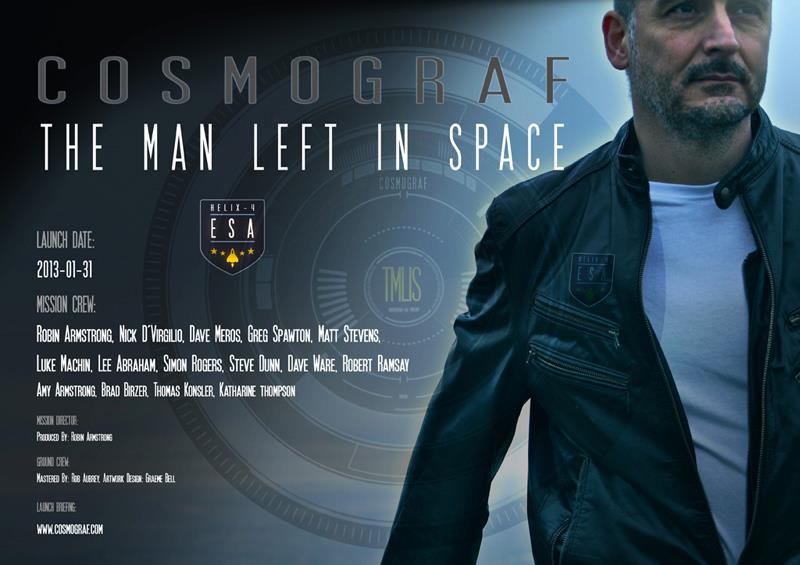
This is turning out to be quite a year for Cosmograf. February saw the release of TMLIS which has exceeded all my expectations in terms of critical acclaim. I was even nominated for a PROG award, as well as the album getting great reviews in the progressive rock press.
The new album scheduled for release in Spring 2014 is now all written and about to go through the exciting phase where I start asking guests to bring the whole thing to life. Once again I’ve been blessed to be able to add Nick D’Virgilio to the cast, and the gods of prog have aligned, allowing his incredibly busy schedule to afford me a tiny window to add his talent on the drum throne.
Set in stone. Chiseled, carved, done. Or, at the very least, set in digital stone.
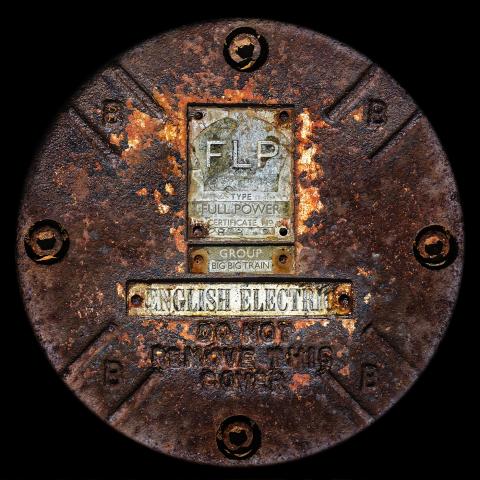
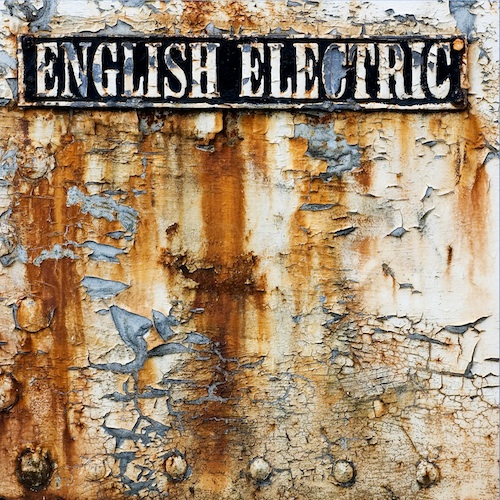
For the ever-growing number of Big Big Train devotees (now, called “Passengers” at the official Facebook BBT page, administered by everyone’s most huggable rugged handsome non-axe wielding, non-berserker Viking, Tobbe Janson), questions have been raised and discussed as to how BBT might successfully combine and meld English Electric 1 with 2 plus add 4 new songs.
How would they do it with what they’re calling English Electric Full Power? Would they make it all more of a story? Would the album become a full-blown concept with this final version? Where might Uncle Jack, his dog, or the curator stand at the end of the album? Actually, where do they stand in eternity?
The members of BBT have already stated that EE as a whole calls to mind–at least with a minimum of interpretation–the dignity of labor. Would the new ordering and the four new songs augment or detract from this noble theme?
Somewhat presumptuously, many of us Passengers proposed what we believed should be the track order, and I even took it upon myself to email Greg last spring with a list. Well, I am from Kansas, and we’re not known for being timid–look at that freak, Carrie Nation, who dedicated her life to hacking kegs and stills to bits, or to that well-intentioned but dehumanizing terrorist, John Brown, who cut the heads off of unsuspecting German immigrants.
And, then, there’s the fact, for those who know me, that I can produce track lists like I can produce kids. No planning and lots and lots of results.
Or, that other pesky fact, that I’m so far into BBT that I could never even pretend objectivity. [Or, as one angry young man wrote to me after I praised The Tangent, “your head is so far up Andy’s @ss, you can’t even see sunlight.” Cool!; who wants to spend tons of time writing and thinking about things one doesn’t like? Not me! As Plato said, love what you love and hate what you hate, and be willing to state both. Guess what? I love BBT and The Tangent! And, just for the record, I’ve never even met Andy in person, so what was suggested is simply physically impossible.]
Admittedly, maybe I’m such such a fanboy that I’ve gone past subjective and into some kind of bizarre objectivity. You know, in the way Coleridge was so heretical that he approached orthodoxy. Or, maybe I’m just hoping that Greg and Co. will ask me to write the retrospective liner notes for the 20th anniversary release of EE Full Power. I’ll only be 66 then. Who knows? Even if I’m in the happy hunting grounds (I’m REALLY presuming now), I could ask the leader for some earth time. . . .
If you’ve read my bloviations this far, and you’re still interested in my thoughts on English Electric Full Volume, well, God bless you. A real editor would have removed the above rather quickly.
The members of Big Big Train with Dutch photographer, Willem Klopper.
Back from the Blessed Isles of soulful prog realms. . . .
In my reviews of English Electric 1 and 2, I stated that these albums were the height of prog music perfection, the Selling England By the Pound of our day. I wouldn’t hesitate to proclaim this again and, perhaps, even more vocally and with more descriptives.
At the risk of turning off some of my friends, I would say that EEFP is even superior to its 1973 counterpart. How could it not be, really? Selling England is now an intimate and vital part of the prog and the rock music traditions, and it has been for forty years. Add that album and hundreds of others to the integrity, dedication,and purposeful intelligence, imagination, and talents of Greg Spawton, David Longdon, Andy Poole, Dave Gregory, Nick d’Virgilio, Danny Manners, and Rob Aubrey. Putting all of this together, well, of course, you’d demand genius.
You’d expect genius.
And, you’d be correct.
It’s the height of justice that Jerry Ewing of PROG awarded Big Big Train with the Prog Magazine Breakthrough Award.
That breakthrough started with that meaningful paean to British and western patriotism in Gathering Speed, reached toward sublime spheres in The Difference Machine, found a form of edenic Edenic perfection in The Underfall Yard and Far Skies (it’s hard for me to separate these two albums for some reason), and then embraced transcendent perfection in English Electric 1 and 2. Each member who has joined the original Greg and Andy has only added to the latest albums. Nick, the perfectionist drummer; Dave, the perfectionist guitarist; Danny, the perfectionist keyboardist; Rob, the audiophile. And by perfectionist, I don’t mean it in its modern usage, as without flaw, but rather as each having reached his purpose.
I don’t think this point can be stressed enough: these guys are perfectionist NOT against each other but with, around, near, above, and below each other. They are a unit of playful perfectionist individuals who become MORE individual, not less, in their community.
Looking at the history of art from even a quasi-detached and objective viewpoint, I think we all have to admit, this is more than a bit unusual.
Breakthrough, indeed, Mr. Ewing. Breakthrough, indeed.
Greg and Andy don’t become less Greg and Andy as the band grows beyond what they have founded, they become more Greg and more Andy. In the first and second wave of prog, how many bands are known for only getting better and better with each album? Those that did are certainly the exceptions. One of the most important differences of this third wave of prog is that the best only get better, even after twenty years of playing. Exhaustion and writers-block seem to be of another era.
BBT exemplifies this trend of improvement in this movement we now call the third wave of prog. And, not surprisingly, when BBT asks artists to guest with them, they invite those with similar trajectories–Andy Tillison and Robin Armstrong to name the most obvious.
David Longdon. Photo by the Willem Klopper.
Longdon
Again, if you’ve made it this far in this review, you should be asking–hey, Birzer left out David Longdon above, what the schnikees?
Yes, I did. So, let me now praise famous Davids (with apologies to Sirach). I’ve not been shy in past writings (well, over the last four years) to note that I believe David is the finest singer in the rock world at the moment. He has some rather stiff competition, of course, and I reject the notion that he sounds just like “Phil Collins.”
No, David is his own man and his own singer. I do love and appreciate the quality of David’s tone and voice. He possesses a beautiful and talented natural one, to be sure. Nature or God (pick your theology) gave this to David in abundance, and he’s used his own drive and tenacity to bring his voice to the height of his profession.
But, what I love most about David is that he means every single thing he sings. These aren’t “Yeah, baby, let’s do it” lyrics. These are the lyrics of a bard (Greg’s lyrics are just as excellent, of course, as I’ve noted in a number of other articles; these are two of my favorite lyricists of the rock era–rivaling even Mark Hollis).
Longdon can make me as happy as one of my kids running to the playground on the first day the snow thaws (“Let’s Make Some Noise”); he can make me want to beat the living snot out of a child abuser (“ABoy in Darkness”); and he can make me want to start a novena for a butterfly curator.
In no small part, Longdon has a voice that makes me want to trust and follow him.
Put David and Greg together, and their lyrical abilities really knows no known bounds. They are the best writing team, to me, in the last fifty years. I know most would pick Lennon/McCartney, but I’m a firm believer that “electrical storms moving out to sea” trump “I am the walrus.”
Master of many things, Greg Mark Aurelius Spawton. Photo by Willem Klopper.
EEFP
So, what about this third manifestation of English Electric, English Electric Full Power? Well, all I can state with some paradoxical certainty, Spawton, Longdon, and five others, have now shown it is possible to perfect perfection. I’ll use perfect here in its proper sense: not as without flaw (though that would apply as well) but as having reached its ultimate purpose, as I noted above.
EEFP is still very much about the dignity of labor, and, as such, it has to deal with the dignity of the laborer, that is, the fundamental character of the human person in all of his or her stages.
The song order of EEFP, consequently, follows this natural logic.
The opening track, a new one penned by Longdon, celebrates the joys of innocence. David has said it was his goal to invoke the glam rock of his childhood. For me, it invokes the rock of my mother’s college days. A shimmering, pre-Rolling Stones rock.
The video that the band released just makes me smile every time I watch it. The video also confirms my belief that these six (and Rob, the seventh member) really, really like each other.
Rather gloriously, “Make Some Noise” fades into one of the heroic of BBT tracks, “The First Rebreather.” This makes “The First Rebreather” even better, especially when contrasted with the innocence of track one. After all, in The First Rebreather, the hero encounters beings from Dante’s Fifth Circle of Hell (wrath).
The second new song, “Seen Better Days,” begins with a strong post-rock (read: Colour of Spring) feel, before breaking into a gorgeous jazz (more Brubeck than Davis) rock song. All of the instruments blend together rather intimately, and David sings about the founders and maintainers of early to mid 20th century British laboring towns, while lamenting the lost “power and the glory” as that old world as faded almost beyond memory. The interplay of the piano and flute is especially effective.
The third track, “Edgelands,” begins immediately upon the end of “Seen Better Days,” but it’s short. Only 86 seconds long and purely a Manner’s piano tune, it connects “Seen Better Days” with “Summoned by the Bells.” If at the end of those 86 seconds the listener doesn’t realize the creative talents of Mr. Manners, he’s not thinking correctly.
The fourth new track, “The Lovers,” appears on disk two, after “Winchester” and before “Leopards.” The most traditionally romantic and folkish song of the four new ones, Longdon’s voice has a very “Canterbury” feel on this tune, and the tune provides a number of surprises in the various directions it takes.
What’s next for BBT?
Thanks to the delights of social networking, we know that Danny’s kids are concerned that he doesn’t look “rock” enough (he needs to show them some Peter Gabriel videos from Gabriel’s last studio album), and we know that Greg’s middle name is Mark.
Ok, yes, I’m being silly (though all of the above is true).
We do know that Big Big Train is working on a retrospective of their history, but with the current lineup. I don’t think any of us need worry that this (Station Masters) will be some kind of EMI Picasso-esque deconstruction of Talk Talk with a “History Revisited: The Remixes.” Station Masters will be as tasteful, elegant, and becoming as we would expect from Greg and Co.
After that, we know that BBT is writing a full-fledged concept album, their first since The Difference Machine. We know that the boys are in the studio at the very moment that I’m typing this (NDV included).
Perhaps most importantly, though, we trust and have faith that Greg and Co. are leading progressive rock in every way, shape, or form. EEFP is the final version of EE. At least for now. But, BBT is not just breaking through, it’s bringing a vast audience, sensibility, and leadership to the entire third movement of prog. And, for this, I give thanks. Immense thanks.
When it comes to BBT, perfection only gets more interesting.
Manning, is the self-titled band name of the ridiculously talented and very modest Guy Manning, the singer, composer and multi-instrumentalist and former member of The Tangent, very ably backed by a large assembled cast of musicians.
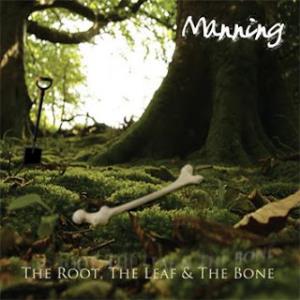
It’s the eve of Manning’s latest album release, the mysteriously book sounding “The Root, the leaf and the Bone” a collection of stories and ideas which predominately centre round the concept of ‘Change’.
For those unfamiliar with his work, this is the fourteenth (!) release in a very impressive and diverse catalogue of albums, that started with the 1999 debut of “Tall stories for small children”.
Over a very prolific decade and a half where he shared his creative time and energy with The Tangent, Manning has crafted his art and production skills and worked as many modern musicians do, on a minuscule budget and with limited time and resources. It’s one of the many things that are to be admired about him and his work.
Key to Manning’s charm and appeal are the ingredients that have not changed much since his first solo outing. Guy is a storyteller and a damn good one at that. From tragic tales of doomed ships to World War one nurses shot for treason, we have a rich library of characters and tales to enthrall the listener.
“Root” is no exception. Several of the tracks on this release are from an original conceived idea of a English village and the stories that centre around that. During the writing phase of the album it was clear that the concept was too limiting for Guy and the village theme was side-lined for a larger overarching theme instead. That said the village stories are there such as the Huntsman and the Poacher, a tale of the hunter becoming the hunted and the Old School which deals with the oppressive systems in the old English boarding school and the desire to overthrow them.
It’s the title song, the album’s 12 minute epic opener that detracts from the village theme and sets the stall for the wider theme. ‘The root, the leaf and the bone’ is key to the whole and deals with the ideas of what is lost in the midst of time, and more importantly, the perceived progress of mankind in the pursuit of improvement. Guy questions, as we all do, perhaps more so as we age, if things are actually better now with our gleaming clean lines of glass and concrete instead of what was before. The charms and the individuality of what came before us has been buried over time, and yet he points us to the truth that eventually the circle comes round and we again look for what was lost and dig it up. Philosophically it looks at our need to keep revisiting our timeline. Where are we going and where have we been? A potent idea that reoccurs again and again throughout the album, finishing spectacularly with the monumental ‘Amongst the Sleepers’. A slow building song which ends in true elevated and grand fashion, similar to the ‘The Southern waves’ from the 2011 release, ‘ Margaret’s Children’.
Capturing the beauty of change as well as the loss.
Musically this album is true to the sound of Manning, in so far as it is anything but clear cut and unafraid to entertain the listener with a vast breadth of influence and style. From Prog to pop to folk, Guy draws on his expansive musical taste and ability and crafts it effortlessly together. A great example of this can be found in the track ‘Decon(struction) Blues’; Guy’s –“Paved paradise and put up a parking lot” – “moment. “Don’t tear it down.” pleads Guy. Ranging from a Tull-esq opening riff to a feeling of Northern soul with pop single sensibilities to a storming rock out moment and a brilliant brass section which evokes lost classic TV theme tunes from a sixties detective series. Guy throws so many elements into the air and seamlessly stitches them together. From the off, this track appeals and has you tapping your foot enthusiastically.
The following track ‘Autumn song’ is a brilliant piece that continues with the theme of change. Less story and more poetry, the lyrics explore the beauty of the change of season which draws the writer into a moment of self-reflection, a feeling we all get from time to time as we ask “So…Is this all there is?” And yet Guy doesn’t want to wallow in melancholy, instead he points us back to the appreciation of the beauty that is all around. Rich in brassy sounds and in particular a lovely bassoon which provides a woody, dark tone this track stands out for its richness. It’s the whiskey liqueur in a box of dark chocolates, a delightful melting quality which feels like something that should be enjoyed in front of an open log fire. Credit goes to the superb Chlöe Herrington for providing this new addition to the Manning palate. The song in some way defines the differences in this release in that Guy has used the wind instruments to a greater extent this time around.
The oak like flavour of Autumn song gives way to the industrial clanging of ‘The Forge’ which revisits an industrious time of craft and manufacture in the heat of the furnace and the chime of an anvil. A view of the lost art of making in the modern times of automation and mass production.
The forge is constructed in a way that other songs on the album follow, it embraces the listener in the golden glow of nostalgia.
Palace of Delights is a prime example of this as Guy takes us into his past through the treats found in a packed village shop, a cornucopia of toys and collector’s items from our youth, all packed into the tight space of an independent local shop. It serves to remind us that our past is easily traced through a series of objects we owned or desired through the years. A truism of the late 20th century, that our lives are mapped out through commercialism.
Old School is part nostalgia and part lesson. (pardon the pun). Whilst it seems interesting to revisit the corridors and classrooms of the past we learn the ugly side of old school, of the overbearing authoritarian practice which bordered on abuse “Make a stand today against draconian violence.”
It’s another Manning bit of story telling, this time we see the pupils rise up in a Grange Hill style siege on the establishment.
‘Mists of Morning calling to the day’ is another outstanding song with its ghostly goings on, it’s a story within a story. Guy’s tale of haunting tales from the village’s past. Its opening folkier riff is pure Manning and something the long-time fans will saviour. This track grows on the listener and opens its beauty with repeated listens.
The Huntsman and the Poacher completes the set of songs that were part of the original village concept along with ‘Mists’ which has found its way into this release. It’s a good track but seems to cling to the edge of the theme rather than fit within it. However it is clear that Guy never intended the listener to see this album as a concept piece and so its place provides an important reminder of this fact.
A final part of this album that needs to be mentioned is the important contribution from the large cast of gifted musicians that have contributed. Not least the regular members, Kris Hudson-Lee on Bass, Julie King’s lovely vocals and Rick Henry on Percussion and David Albone on drums. Completing the main line-up is a return for David Million who is a returning member to the Manning fold. Steve Dundon’s distinctive Flute playing, a feature of so many of Manning’s albums and Marek Arnold on Sax are essential to the band as are so many others involved. The full cast is available on the Manning page under the new release section.
Sometimes overlooked, Manning have produced another gem of an album that is enjoyable from the first listen. After 14 releases it could be easy to assume that this is just another release but that isn’t the case and there is much here for the fans as well as the newcomers. Grab a copy from the Manning website and see what you’re missing. Maybe it’s time for a change?





 Progarchy