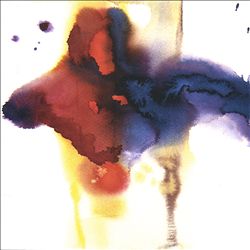
With the Coming of Evening by Kevin McCormick: A Celebration

Twenty years ago, exactly, the best album you’ve never heard appeared, Kevin McCormick’s With the Coming of Evening.  Over the next several days, we’ll be celebrating the release of what should be regarded as a post-rock/post-prog classic.  “Impressionist prog” might be a good label, if we didn’t despise labels so much.

Our first reviewer, Progarchist Extraordinaire, John Deasey.–ed.
with the coming

John Deasey: I’d heard the name, Kevin McCormick before, mentioned on various websites, as being akin to Talk Talk circa “Spirit of Eden” so it wasn’t a huge surprise to find subtle percussion, carefully phrased vocals, hushed, calm mixtures of woodwind, jazz, folk and prog.

What was a surprise is to find this album wasn’t a great success when it was released in 1993 and somehow flew under the radar.

Ahead of its time ? Well, if “Spirit of Eden” is anything to go by I’d say yes, this is the case.  Maybe the music world wasn’t quite ready for such an esoteric mix of styles, textures and atmosphere.

The Talk Talk influence is well to the fore, but rather than sounding like a Mark Hollis clone, McCormick sounds more like Nine Horse-era David Sylvain. Sonorous, tender, melodic and understated.

This really is an album to play in its entirety, save for a couple of tracks which could quietly be nudged onto someone else’s playlist perhaps. For example ‘Looks Like Rain’ really doesn’t belong here, with its bluesy, roots feel and good safely be culled on any personal re-mastering !

There are two Japanese inspired instrumentals.  The first – ‘Sho Song’ – is utterly fantastic for a minute or so, but then becomes tiring and a bit jarring.  The second – ‘Rokudan’ – is a wonderful piece worthy of any Craig Armstrong album with a definite cinematic atmosphere. This track also brings to mind the beautiful Sigur Ros EP ‘Ba Ba Ti Ki Di Do’ with droplets of sound, texture and light forming a sonically wonderful vibe.

McCormick is a classically trained guitarist and it shows.  Tracks such as ‘Uncovered’ and ‘Summoned’ have a lovely understated style where his skill as a guitarist shine through.

What I like about this album is the generally un-structured feel to many of the songs.  They meander. They explore. They are given space to develop and nothing feels rushed.

kevin 1There is a very organic feel, as though the tracks are streams running over a rocky river bed, or paths gently traversing a grassy moorland.

I’ve mentioned in other reviews about my fondness for Scandinavian bands and their ease at creating space and breadth in their music.  This same feel is here and the end result is a spiritual, thoughtful, impressive album that grows with each listen.

It’s is also worth mentioning it sounds as though it could have been released yesterday, such is its relevance.
Pre-Order the new Edison’s Children now

A note from Eric and Pete:

If you pre-ordered the new EP-Single “In The Last Waking Moments…” featuring an all new song “Through The Ages” as well as two live tracks, “Spiraling” and “A Million Miles Away (I Wish I Had A Time Machine)” then we have a question for you…

(and if you’ve answered this question on the thread we have in http://www.facebook.com/edisonschildren, you don’t need to respond)

It is looking more and more like the EP will arrive before Pete leaves for the U.K. (Since we  greased a few pockets to make this happen for you…)

So the question is… If these new EPs come in on Thursday and are able to be shipped this weekend,..

Do you want your EP AUTOGRAPHED BY PETE TREWAVAS AND ERIC BLACKWOOD … OR UN-SIGNED AND SHRINKWRAPPED?

Your EP will come Shrinkwrapped as the standardif we don’t hear from you.

Artist Wendy Farrell-Pastore’s signature is also available on request in this email.

If you didn’t order yet, it’s not too late! In fact… anything else you order from the store can come autographed by Pete and Eric (and Wendy upon request) for the next 2 days, if you order and let us know now!

Order via Visa, Amex, Mastercard, JCB, Discover, etc..

http://edisonschildren.com/shop/English.html/

If you would rather use Paypal, go here…

http://edisonschildren.com/shop/Paypal.html/

Thanks guys. The new album is nearly done. We’re putting the finishing touches on now. Be on alert for the Pre-Order of the new CD coming soon!…

—

You are now officially… “switched on”

New Kingbathmat Video–just out.

Enjoy this brand new video from Kingbathmat.  Excellent graphics, and the song has a wonderful hard, prog sound.

Tomorrow’s Harvest by Boards of Canada

ImageSay what you will about the actual music contained in it, “Tomorrow’s Harvest” is the perfect title for a Boards of Canada record, any Boards of Canada record, really.  And that “tomorrow” is not a pretty one, reflected in a music that is somberly electronic, accompanied by visuals — scant as they are — suggesting you’ve found a fourth generation copy of a lost, lyric-less music from an uncle long dead: a polaroid of a TV screen showing a video of a film.

Nearly but not quite anonymous, Boards of Canada have made a career of hipster stand-offishness, which would make them precious, not to mention enormous risk takers in a genre not exactly known for its lack of anonymity, if the music that brothers Michael Sandison and Marcus Eoin create wasn’t so distinctive, so darkly humorous, so consistent. Their currency among their champions has lasted decades now, across four proper albums and a clutch of EPs, weakening the knees and strengthening the fingers of cube farm keyboard jockeys the world over.

ImageThe new record picks up where The Campfire Headphase (2006) left off.  That album, a more melodic, less creepy, and mellower version of their landmark Music Has a Right to Children (1998) and its follow-up Geogaddi (2002), saw their star dip a bit among the worshippers, though I thought it quite respectable, their version of Manual’s Ascend or Aphex Twin’s Selected Ambient Works.  Tomorrow Harvest’s tone is set, like other BOC albums, with the cover photo, a faded urban skyline overlaid on a scrubby western sea of test-site hardpan, post-apocalytpic in its desert-ed-ness. The ghosting of the transparencies has a lot to say not only about the message in the title, but also about BOC’s music, where disappearing is as key to the song as the introduction of the next melody, beat, or bass line.  The shifts evoke 70s-era Cluster or 90s-era Tortoise, where tunes can seem to be made out of nothing yet go on for 6 or 7 minutes, and be utterly transfixing, mesmerizing.

This album was long awaited by the band’s fans, a seven-year gap unusual even for BOC.  The stir of mysterious hype that accompanied the album’s release was even more unusual, an odd mix of coded messages issued by the band and its label, that I found curious coming from a group that prizes its own silence.  I also think the plan was fairly quickly abandoned after the only people who got it were the people who perpetrated it.  Perhaps Warp Records demanded BOC do something, anything, to tart up a new release, but I guarantee the band’s fan’s don’t care about such tactics:  given that the messages were relayed via blinkered hipster hubs like All Songs Considered, Amoeba Records, and Other Music, they were only preaching to the choir anyway.  Such hype also, inevitably, raises expectations.

To say that Boards of Canada is doing something new on Tomorrow’s Harvest would be misleading.  Their style is what they are, and it hasn’t changed substantially across records (for this let us be thankful).  Their (often beautiful) melodies have their own dark taxonomy, their approach — warbling, occasionally souring, vintage synths, beats that fade in and out, treated human and machine voices murmuring incantations that in their repetition can take on cracked, dark angles — should be a patent.  BOC’s debut signalled a music different from anything else out there, and to this day the band can really only be compared to themselves.  On Tomorrow’s Harvest, Boards of Canada continues to create inspired, original music that has matured as it’s maintained an imprint of disciplined creative achievement.

News re: Leah

leahOur favorite metal maiden, Leah McHenry, appeared twice this past weekend–in an interview and a profile.  Enjoy.

Interview:

http://www.rocktopia.co.uk/index.php?option=com_content&view=article&id=3676%3Afireworks-magazine-online-58-interview-with-leah&catid=903%3Afireworksmagazine&Itemid=474

Profile:

http://metaldivas.wordpress.com/2013/06/22/artist-profile-leah-mchenry/

Let’s bring the prog back!

Dimo-Eye-Planet

“Let’s bring the prog back!”

That’s the rallying cry at the end of the new Sound of Contact email newsletter.

If you sign up for their mailing list, you will get a link to a free download of the instrumental version of “All Worlds, All Times.”

Here’s the close of the newsletter, with the rallying cry:

We’ve been promising you something good for free and now it’s here. The first of many cool things you’ll be able to hear about and receive just by being part of SOC’s mailing list. Previously unreleased, this instrumental version of part 4 of the song Mobius Slip is more like its original state when it was improvised in the studio and recorded in just a few takes. The band was jamming on the part 2 and 3 sections of the song when they just kept going and part 4 “All Worlds All Times” was created spontaneously. Dave Kerzner’s 2 minute+ keyboard solo at the end was also done in one take. This is SOC “in the zone” exploding with raw emotion and their progressive rock influences shining through. You can hear the intricate interplay between the guitar, keys and Simon’s distinct drumming. Lyrics were later written to this section to wrap up the story of the album. But the instrumental version has a life all its own. This is a gift to Sound of Contact fans and a big thank you for your support!
Note: Please don’t share the song with others or upload it to YouTube or anywhere on line. We ask you to simply tell anyone you know who might like it to sign up for our newsletter and they will be able to receive this song and more in the future. A big thanks from the band! Let’s bring the prog back!

Cottonwoodhill by Brainticket

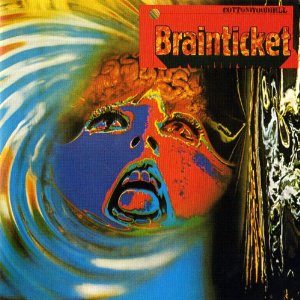
ImageBrainticket’s Cottonwoodhill (1971) has been re-released again, this time by Cleopatra, that venerable house of psych and goth back-catalogues.  Roughly lumped in with German rock of the period, Cottonwoodhill was one of the many ambitious brainchildren of Joel Vandroogenbroeck, the Swiss musical polymath behind Brainticket who later went on to create music libraries for TV and film. (Knowing this, Cottonwoodhill makes a lot of sense, its jazz-funk amalgam suggesting less the communal freakouts of its European contemporaries as the soundtrack to Bullitt or Dirty Harry, where Hollywood finally caught on that something weird was happening in San Francisco but couldn’t bring itself to actually use a ballroom jam to back up the car chases or bar scenes.)

When I first heard Cottonwoodhill in the mid-90s, it struck me then as it does again now:  a very pleasant, well-produced, rhythmically cohesive psychedelic jam, heavy on the organ, with some trippy spoken word passages by Dawn Muir, who intones in a posh English accent, suggestive to me of the White Witch out of C.S. Lewis, the impressions of a woman seriously stoned out and orgasming.  So where Brainticket’s contemporaries, like Amon Duul and Tangerine Dream, pushed their music to live outside of their own era, Brainticket’s music solidly inhabits early 70s European psychedelia, more akin to Out of Focus or Krokodil.  With some interesting polyrhythms running underneath and a kitchen-sink approach to layering found sounds and treated tracks, there is an argument here for seeing Vandroogenbroeck as divining a thread or two of Eno/Byrne’s My Life in the Bush of Ghosts.  But that’s perhaps a bit optimistic and trying too hard to bring a different respectability to what is, in the end, a really fine example of art gallery soundtracking of the late 60s and early 70s (something documented most effectively on Virgin Records three-CD Unknown Deutschland/Krautrock Archive), which is where Brainticket probably really belongs.  Still, I think it’s appropriate to think of Vandroogenbroeck as being in the same group of individualists, including Chris Karrer, Christian Burchard, Hans Joachim Roedelius, Florian Fricke, and Klaus Schulze,  who drove “krautrock” forward with no consideration of worldly reward.

Get thee to an excellent 2012 interview with Joel Vandroogenbroeck:

http://www.redbullmusicacademy.com/magazine/joel-vandroogenbroeck-interview

Prog-Bluegrass

ChessBoxer’s jazz/rock/bluegrass rocks the Belcourte Theater: