Yes Is The Answer

Yesterday’s Los Angeles Times has an interesting review of Yes Is The Answer, a collection of twenty essays on prog and art rock.

The book is available from Amazon in the US and in the UK, as a hardback and as a super-cheap Kindle download.

Looks intriguing. I’ll admit, I’m tempted!

Alison Henderson, Uber Cool Human

the-ageless-generation-campaign-linda-barker-and-playtex-120613-de-lgOur own beloved Alison Henderson (well, we can’t lay claim to her, but we do love the fact that she likes us), first Lady of Prog, has been named a member of the “Ageless Generation.”

http://www.goodhousekeeping.co.uk/news/are-you-fabulous-at-50-linda-barker-is-looking-for-you?click=main_sr

Wonderful, Alison.  We’re extremely proud of you!

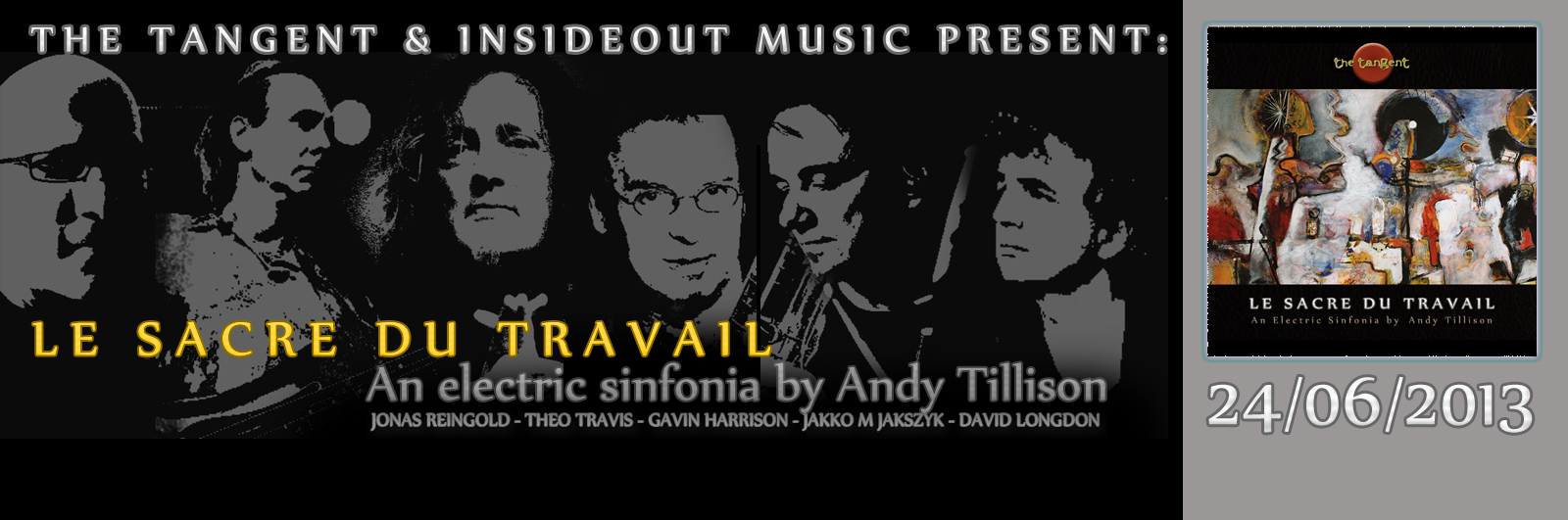
The Genius Rages: The Tangent’s Le Sacre Du Travail (2013)

group ANNOUNCEMENT

Genius

Andy Tillison is a genius.  It must stated as bluntly as possible.  Tillison is a genius.  He’s a musical genius and a lyrical genius, but he’s also just a genius genius.  Actually, this might seem redundant, but it’s not.  Only genius could properly modify genius when it comes to Tillison’s art.

As I mentioned in a previous post on our beloved site, Progarchy, anything Tillison releases is not just an event, but a moment.  A real moment, not a fleeting one.  A moment of seriousness and reflection.

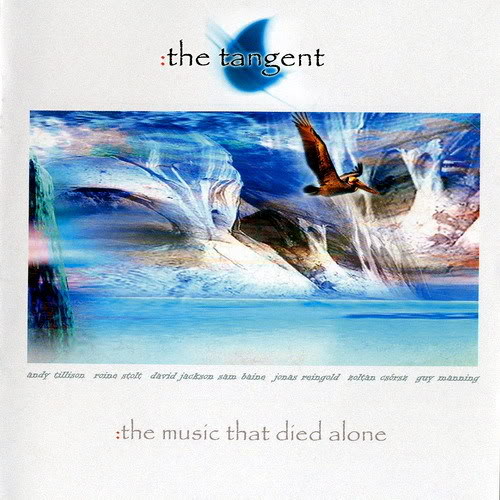
From the first I listened to The Tangent’s The Music That Died Alone, a full decade ago, I knew there was something special going on.  Not only did the cover art entrance me,  but the very depth and seriousness of the music captured my then 35-year old imagination.  I felt as though Tillison was speaking directly to me, asking me to remember the greatness of the musicians who came before 2003, but also inviting me–in a very meaningful fashion–to move forward with him.
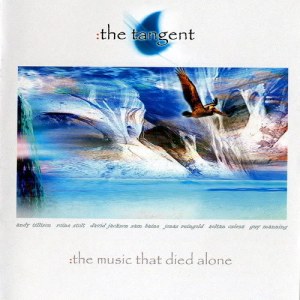
cover_2458173122009The Music That Died Alone really serves as a powerful nexus between past and present, present and future, up and down, and every which way.  Only the evocative power of the lyrics match the classiness and free flow (though, we all know what makes something seem free is often a highly disciplined mind and soul) of the music.

At the time I first heard them, I mentally labeled The Tangent a “neo-Canterbury band,” but I was too limited in my imagination, and I would discover this very quickly.  Indeed, each subsequent The Tangent album offers new pleasures and paths for adventure, but always with that power of that Tillison nexus, connecting the past and the future with beauty.

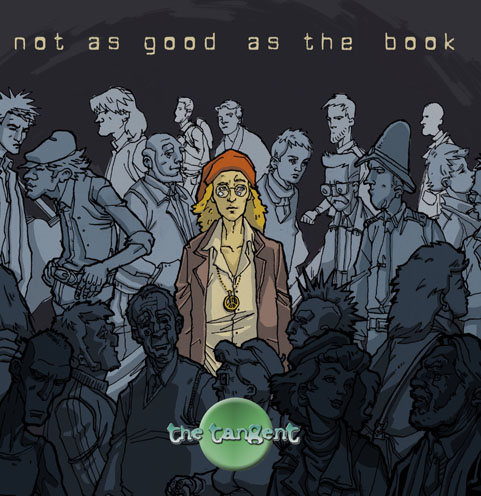
Tillison makes this connection literal in his very fine novella, “Not as Good as the Book: A Midlife Crisis in a Minor.”  The dedication lists close to 100 names, including numerous members (first names only) of the members of various bands from Yes to ELP to The Flower Kings to Spock’s Beard to XTC and to authors such as Arthur C. Clarke and J.R.R. Tolkien.  None of this is contrived.  Just pure Tillison expressions of gratitude.not as good
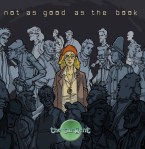
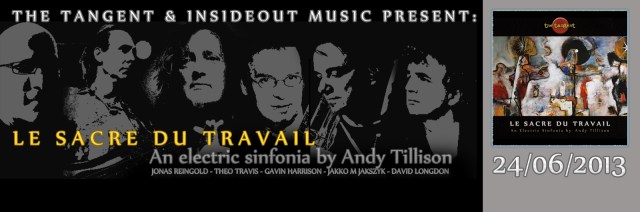
Privileged (well, blessed, frankly, if you’ll pardon a blatant religious term) to receive a review copy of the new album, Le Sacre Du Travail (Out officially June 24, 2013 from InsideOut Music), I dove right into the music.  Full immersion.  With every album, Tillison has only improved.  Each album has bettered the already previous excellent album with even more classiness, more intensity, and more meaning.  Not an easy feat in this modern world of chaos and consumerist fetishes.

With this album, though, Tillison has moved forward the equivalent of several The Tangent albums.  Again, to be blunt, the album is mind-boggingly good.

Easy listening?  No.  Of course not.  It’s Tillison, it’s prog, and it’s excellent.  What part of those three things suggests easy.  No excellent thing is easy.  Can’t be.  It wouldn’t and couldn’t be excellent if easy.

Satisfying listening?  Oh, yes.  A thousand times, yes.

For one thing, Tillison has brought together some of the finest artists in the business.  I was convinced of the potential greatness of this new album when I first heard David Longdon (in my not so humble opinion, the finest voice in rock today) would appear on the album.  But, add a number of others in: Jonas Reingold (The Flower Kings), Jakko Jakszyk (Level 42), Theo Travis (Soft Machine), and Gavin Harrison (Porcupine Tree).  And, it doesn’t stop here.  Add Brian Watson (DPRP.net)’s spectacular art work and the cool dj voice of Geoff Banks (Prog Dog show).  Ok, this is one very, very solid lineup of the best of the best.

1913

Ten years ago, Tillison released the first The Tangent album.  100 years ago, Igor Stravinsky released what was arguably his masterpiece and certainly one of the finest pieces of music of the twentieth-century, The Rite of Spring.  While The Rite of Spring hasn’t pervaded our culture in the way the fourth movement of Beethoven’s 9th Symphony has, it’s a close second.  Every person, an appreciator of music or not, knows at least part of The Rite of Spring.

Imagine for a moment 1913.  It was, by almost every standard, the last great year of the optimism of western civilization.  Technology upon technology had produced innumerable advancements, almost everyone in the western world believed in unlimited progress, and even devout Christian artists (such as Stravinsky) had no problems embracing the greatest elements of paganism and folk culture.

In almost every way, Stravinsky explored not only the folk traditions of his era, but he embraced and, really, transcended the modernist movement in music.  He bested it.  His Rite is full of tensions and dissonance, but each of these is overruled and corrected by harmony and emergent joy.  The Rite, no matter how pagan, also has deep roots in the Judeo-Christian and Greco-Roman traditions.  The Rite–the ritual, the liturgy–has been a part of western civilization since the pre-Socratics debated about the origins of the cycles of the world and history: earth, water, air, or fire.
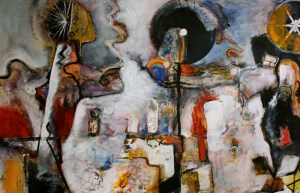
MARTIN STEPHEN COVER PIC2013

Imagine for a moment 2013.  Well, ok, just look around.  Technology remains exponential in its growth, but few would praise the development of the Atomic Bomb, the gas chamber, or the aerial bomber.  But, then, there’s the iPod.  And, unless you’re Steven Wilson, you probably think your iPod is ok.  Certainly better than an Atomic Bomb.

Optimism?  No.  I don’t need to go into detail, but, suffice it state, T.S. Eliot might very well have been correct when in the late 1940s he claimed the western world in an advancing stage of darkness:

the tower overthrown, the bells upturned, what have we to do

But stand with empty hands and palms turned upwards

In an age which advances progressively backwards?

The U.S. and the U.K. are currently waging numerous wars, and there seems to be no end in sight.

The Rite of Work

As with the Stravinsky of 1913, the Tillison of 2013 surveys the cultural landscape.  Unlike his Russian counterpart, the Yorkshire man finds little to celebrate in this whirligig of modernity.

The “good guy anarchist,” as he described himself in a recent interview (and, not to be too political, but more than one progarchist would be in great sympathy with Tillison on this point), Tillison observes not the Rite of Spring, but the liturgy of work.  We get up, we commute, we sit in our cubicle, we commute again, we eat, we drink, we have sex, we watch a little t.v., and we sleep.  The cycle beings again every Monday, Tuesday, Wednesday, Thursday, and Friday.  Who made this deal, Tillison wisely asks.

Throughout it all–pure prog interspersed with very modernist musical elements from time to time–Tillison references much in our modern folk and popular culture, including The Sound of Music and Rush (2112):

In a Rush T-shirt, pony tail, 2112 tatooed on his hands

He’s a star through thick & thin

But he still gets that data in

A modern day warrior, today’s Tom Sawyer is a clerk

He’s a meta for disillusion

He’s a metaphor for life

But, interestingly enough, Tillison does all of this as a modern-day St. Thomas the Doubter.

But I don’t believe them, not ’til I see it

Until I put my finger in the holes

In every word, the lyrics rage against the conformity demanded in 2013–demanded by our corporations, our neighbors, and our governments.  What have we become. . . mere ants, living in a world of bird dung.  Certainly, whatever humanity remains has been given over to some institution radiating power.

And, yet, still somewhat in the persona of St. Thomas, Tillison asks us to reconsider our day-to-day rituals and liturgies.  Is it worth it that we squander what little time we have in the name of the mindless and soulless cycles of modern life?  By far the most powerful moment of an album of immense power (power in the good sense; not in the domineering sense):

‘Cos you can’t take it with you

There’s no luggage allowed

No you can’t take it with you

No matter how rich or proud

Your kids will sell it off on Ebay

For god’s sake don’t waste their time

‘Cos you can’t take it with you

You can leave just a little bit behind.

Summa

Well, what an album.  What an artist.  What a group of artists.  If any one ever again complains about the superficiality of rock music, consider handing them a copy of this CD.  No superficiality here.  Only beautiful–if at times gut wrenching–meaning.

Keep raging, Mr. Diskdrive.  Rage on.

To order the album (and you should, several times!), go here: http://www.thetangent.org/

The Spiritual Vision of Dimensionaut

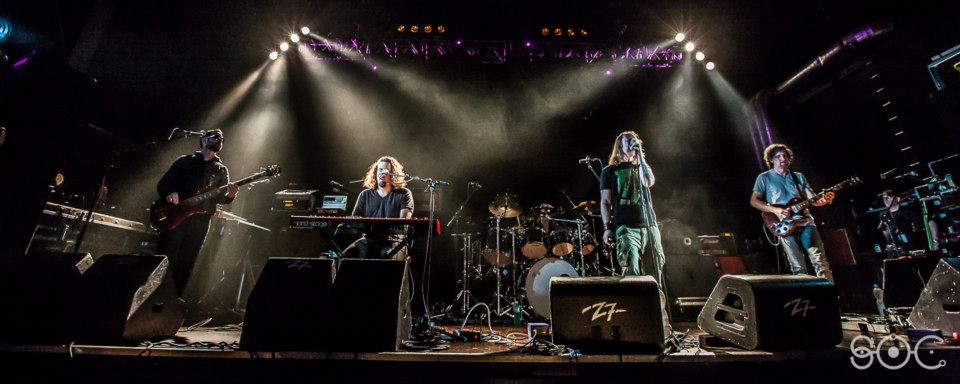
Sound of Contact LIVE at Z7 in Switzerland—Photo by Andy Wright

I have been contemplating the spiritual riches of Dimensionaut, the truly awesome prog masterpiece from Sound of Contact.

For me, the album does what prog does best, with that characteristically proggy ability to immerse the listener in a cosmic philosophical meditation.

To give another example: One of my absolutely favorite tracks from Big Big Train, “The Wide Open Sea,” does this sort of musical meditation stunningly well.

So, to encounter in Dimensionaut an album-length, equally successful exercise in that kind of philosophical and spiritual meditation, is a real thrill. And it’s an even more remarkable achievement if we consider that Dimensionaut is the equivalent of a vinyl double album.

Here is how I would slice it up for a deluxe vinyl gatefold edition:

SIDE 1:
01. Sound Of Contact (02:05)
02. Cosmic Distance Ladder (04:43)
03. Pale Blue Dot (04:44)
04. I Am Dimensionaut (06:25)

SIDE 2:
05. Not Coming Down (06:01)
06. Remote View (03:54)
07. Beyond Illumination (05:53)
[featuring Hannah Stobart]

SIDE 3:
08. Only Breathing Out (05:57)
09. Realm Of In-Organic Beings (02:52)
10. Closer To You (05:05)
11. Omega Point (06:30)

SIDE 4:
12. Möbius Slip (19:36)
I – In The Difference Engine
II – Perihelion Continuum
III – Salvation Found
IV – All Worlds All Times

If people approach Dimensionaut with an open mind, they will have to admit that this double album is an incredible achievement. Amazingly, it is prog that is accessible to everyone, and yet it does not shatter its integrity with any compromises.

All the negative reviews that I have read, and any reservations that I have heard expressed, stem simply from invidious comparisons, which are completely unfair.

Rather, if you clear your headspace of all preconceptions and genealogical obsessions, and just enter into the spirit of the music, the musical conclusion is inescapable:

With Dimensionaut, the Spirit ever lingers… undemanding contact in your happy solitude!

(I append below an interesting video in which Simon Collins and Dave Kerzner talk about the album’s story concept. They affirm that the musical journey explores not just dimensions of science fiction and romance, but most especially a serious spiritual dimension.)

20 Looks at The Lamb, 4: Thing Type Sex

I’m counting out time,
Got the whole thing down by numbers…
Got my finger on the button…

Sure, I’ll do this first person, as if speaking for a “we.”  By doing so, I open it to an intractable vulnerability.  You may not identify with it.  You may think it foreign or strange.  You may think it objectionable, disgusting, sexist, or whatever.  But I’m betting some of you won’t.  I’m betting some of you will recognize bits and pieces of yourselves, or maybe even more than that.

Sexuality was a topic that wasn’t really broached directly in my youth.  We imagined that our parents had no idea how much we knew and did.  We certainly didn’t imagine what our parents actually had known and done, even before we were born, which was, like, before creation.  There were books to be read, if parents or nineteen sixties librarians allowed it, or if we managed to read them anyway, as we often did.  There was that polite near-silence among the “adults,” to be filled with contraband Playboy and Penthouse magazines.  There was that huge freaking mess of an ethical minefield where religious and moral expectations and performances made a strange shadow within which all sorts of things happened anyway, sometimes not reflected upon, or sometimes endlessly analyzed in a language that many of us would later recognize when Bill Clinton got caught in public (as my mother used to say, “in front of God and everybody!”) apparently trying to make out what ‘is’ is.

Sometimes when you hear a song, it’s as if you already know it very well.  That was me and “Counting Out Time.”  By the time I was initiated into the symbolic world of The Lamb, I was definitely a boy who was resting for his testing.  I knew what was meant by “digesting every word the experts say.”  I knew what Gabriel meant by “mankind handkinds.”  I’m strongly inclined to say that it was the first song on The Lamb that I REALLY understood.  I certainly felt like I understood it.  As adolescence progressed, it felt more and more like a chapter in my own story, including the disappointment and questioning.
It’s worth remembering how much it felt like my own story, precisely because of its just-so blend of a happy, upbeat sense of discovery with a dark, foreboding sense of objectification and abuse of women.  It’s worth pausing to study on its unapologetic privileging of male libido and its frankly expressed hope for an algorithm with which to elicit desired female response.   Hegel’s ideas regarding the importance of “lordship and bondage” find a musical conduit here, more subtle and deep than the more famous take by Cheap Trick: “I want you to want me.”  There was an uncanny waffling in that desire between the hope of dominance and forced (“automatic”?) submission on the one hand, and the hope of voluntary giving of self on the other.  “Just lie there still, and I’ll get you turned on just fine.”

genesis-counting-out-time-charisma-3The song is a profoundly deep meditation on a profoundly shallow gaze (regard) of a middle twentieth century pubescent male and his object, in precisely the Freudian sense of “object.”  Ah yes, I already did suggest that we might make a visit to Dr. Freud, but in this look I am only making an initial entry into the space of sexuality, and sexuality (like religion, evoked last time) will from now on be a constant companion.  But the point of this entry is the uncanniness, the discomfort, the vacillation between desire and disgust.  In my own case, I know that a twisted and destructive savor of sexuality haunted my adolescence, like an abusive partner that I would not leave, but would return to again and again.

In order to understand the comical but revelatory character of the other sexual images in The Lamb, even more important than a predictable Freudward nod, I would argue, is that we have a feel for the current running through it that is palpably misogynist on its face, and perhaps deeply misanthropic at its core.  It should remind us of the discomfort that arises when we realize that Nine Inch Nails’ “Closer” both is and is not about sex (and, for that matter, religion as well).

Some of you may have some other route to the sort of discomfort that I am calling for here, but I suspect that something like the route I have traced here is familiar to many.  The allusion above to Hegel suggests the notion that there is something painfully paradoxical at the center of human desire, made most palpable in its sexual manifestations.  The suggestion that arises here is that a desire with no possible fulfillment, an incoherent desire, might be a part of what I am.

There is more to come, but listen from there for a while if you can stand it.

<—- Previous Look     Prologue     Next Look —->

Ticking and Tocking Through a Back Catalog: Gazpacho’s ‘Tick Tock’

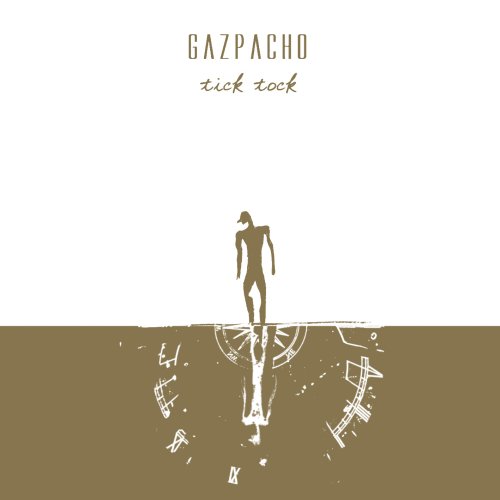
ImageOne of the great things about getting to know some of the other contributors to this site is the discovery of bands that were previously missed.  One such band that I had missed out on was Gazpacho, of whom I did not learn of until 2011.  At that time, I took mental notes that I would check them out one day.  After reading this fantastic review of their 2007 album ‘Night’, I knew it was time.  Literally within minutes of finishing my reading of that review, I had purchased the album and was giving it a first of many listens.  I was not disappointed, and will definitely vouch for all the good things written about ‘Night’. It is truly is one incredible album.


After such an excellent and absorbing introduction to Gazpacho, I knew I would have to explore some of their other works.  I read a few reviews and asked around a little bit, and finally settled on the follow-up to ‘Night’, ‘Tick Tock’ from 2009, as my next foray into the world of Gazpacho.  I knew this album would be a big challenge for the band, as is any follow-up to such a masterpiece.  And once a again, I can say I was not disappointed.  In fact, I can and will say a whole lot more, as ‘Tick Tock’ is an incredibly brilliant work in its own right and most certainly belongs on the shelf right next to ‘Night’, not just for being from the same band, but for being an album of the same level of artistry.  In other words, ‘Tick Tock’ is an absolutely fantastic album, and could end up being the tipping point that turns me into a Gazpacho junkie.


A short summary of Gazpacho’s music is in order (at least as I know it from the two albums I have heard thus far).  Unlike a lot of progressive rock, and certainly unlike most 70’s prog, you won’t hear a lot of instrumental fireworks in their music.  If you are looking for self-indulgent soloing, Gazpacho is not your band.  On the other hand, much like one particularly popular 70’s prog band – Pink Floyd – Gazpacho’s music give the listener a lot of room for contemplation (this is not to say they sound like Pink Floyd – they most certainly do not).  ‘Spacious’ is one adjective I would use to describe their music.  Two other adjectives I would use are ‘subtle’ and ‘meticulous’.  Because Gazpacho relies on subtlety instead of flashy instrumentals pushed to the forefront of the mix, their music often requires more work from the listener to fully ‘get’ it.  Ah, but what rewarding work it is!  Repeated listens with undivided attention reveals the meticulous attention to detail in their arrangements. 


One final adjective I would use to describe Gazpacho music is synergistic – the whole is much, much greater than the sum of its individual parts.


Getting back to the subject of this review, ‘Tick Tock’ is a concept album based on the story of the airplane crash of Antoine de Saint-Exupéry and his navigator during a Paris-to-Saigon air race, and their subsequent walk through the desert.  The walk nearly ended in tragedy, but both were saved by Bedouins in the nick of time.  The album is divided into four separate compositions (in order), ‘Desert Flight’, ‘The Walk’, ‘Tick Tock’ and ‘Winter is Never’.  The middle two compositions are relatively lengthy, with the first being divided into two tracks, the second being divided into three. 


Taking into account my basic summary of Gazpacho music above, ‘Desert Flight’ goes and makes a liar out of me. It begins as a straight ahead rocker.  Musically and lyrically, it conveys an adventurous spirit:


We can be the first

Tie a ribbon all ‘round the world

We’ll make it a gift to us

From the start with a wind-flapped officer’s scarf

Like a ghost in the wind


Eventually, the mood of the music shifts a bit to give the listener a sense of trouble.  Toward the end of the song, the pace picks up again in the same manner the ground would appear to move by faster as the airplane loses altitude.  And suddenly, the pace grinds to a halt, with the mood of the violin and piano letting us know that we are now on the ground – but alive nonetheless.


The trek across the Sahara then starts in earnest with ‘The Walk’.  Our heroes are lost, but nonetheless confident that they will get out of their predicament relatively unscathed.  Musically, the acoustic guitar and drums dominate, with other instruments making brief appearances before stepping back into the shadows (a classic example of the meticulous arranging I discussed above).  Midway through Part I, the violin steps to the forefront with a Middle Eastern motif, with the other instruments carrying this motif through the end of Part I.   As the music segues into Part II of ‘The Walk’ we can feel the doubts creeping into the minds of our heroes, and maybe a little loss of coherency of their thought processes.  We’ve now transitioned from adventure mode to survival mode. Image


Part I of the title track begins with the percussion indicating the ticking of a clock, and this ticking carries on throughout the entirety of the piece.  The lyrics in Part I of ‘Tick Tock’ begin to really bring home the predicament our heroes are in as they trek through the sands of the Sahara:


You beg for time

She’s china white

There’s no cure

Nowhere to hide


A Gregorian-sounding chant appears near the end of Part I, and the mood becomes even darker as Part II begins.  The sheer drudgery of walking through the hot desert is conveyed through the music, while the lyrics have one of our heroes (probably the pilot) beginning to question his own life.  In Part III, the trek is taking its toll on our pilot and our navigator, as they apparently begin hallucinating as their survival hangs by a thread:


And what do you think they’ll do?

The ground is a pendulum

The continent is gravel

Humming in your shoe

A pendulum.


The final track is ‘Winter is Never’, which occurs chronologically after the rescue in the desert.  It is a reflective track, appreciative of the present and hopeful for the future in light of the recent past in the desert.  It’s a fitting conclusion for a fantastic album.


Like its predecessor ‘Night’, ‘Tick Tock’ is a must-own masterpiece.  I won’t go so far as to say this album is better than ‘Night’, but in this reviewer’s opinion, it is every bit as good.  The number of bands out there that can put out an album of the artistry of ‘Night’ and ‘Tick Tock’ is small; the number of bands that can do it on two consecutive albums is even smaller.  Everything about the music of ‘Tick Tock’ is utterly flawless, as is the delivery of the lyrics by Jan Henrik Ohme.  It’s the kind of album you want to listen to eyes shut through headphones as you get lost and absorbed into it. 


If you had previously missed out on Gazpacho, as did I, now is the time to go back and explore some of their back catalog.  Start with either one of ‘Tick Tock’ or ‘Night’.  Drink it in fully, and then move on to the other one.  You will quickly find that what they have done as a band is to create a sound like no other.  While you may hear an influence here or there, those influences have been amalgamated into something completely unique.  Like the best progressive rock bands, they have pushed the boundaries back to create something new.  As ‘Tick Tock’ indicates,, along with its predecessor, these guys need to be in any conversation regarding the best progressive rock bands, not only for the present revival, but for the entire history of the genre. 

Now, onward to ‘Missa Atropos’!


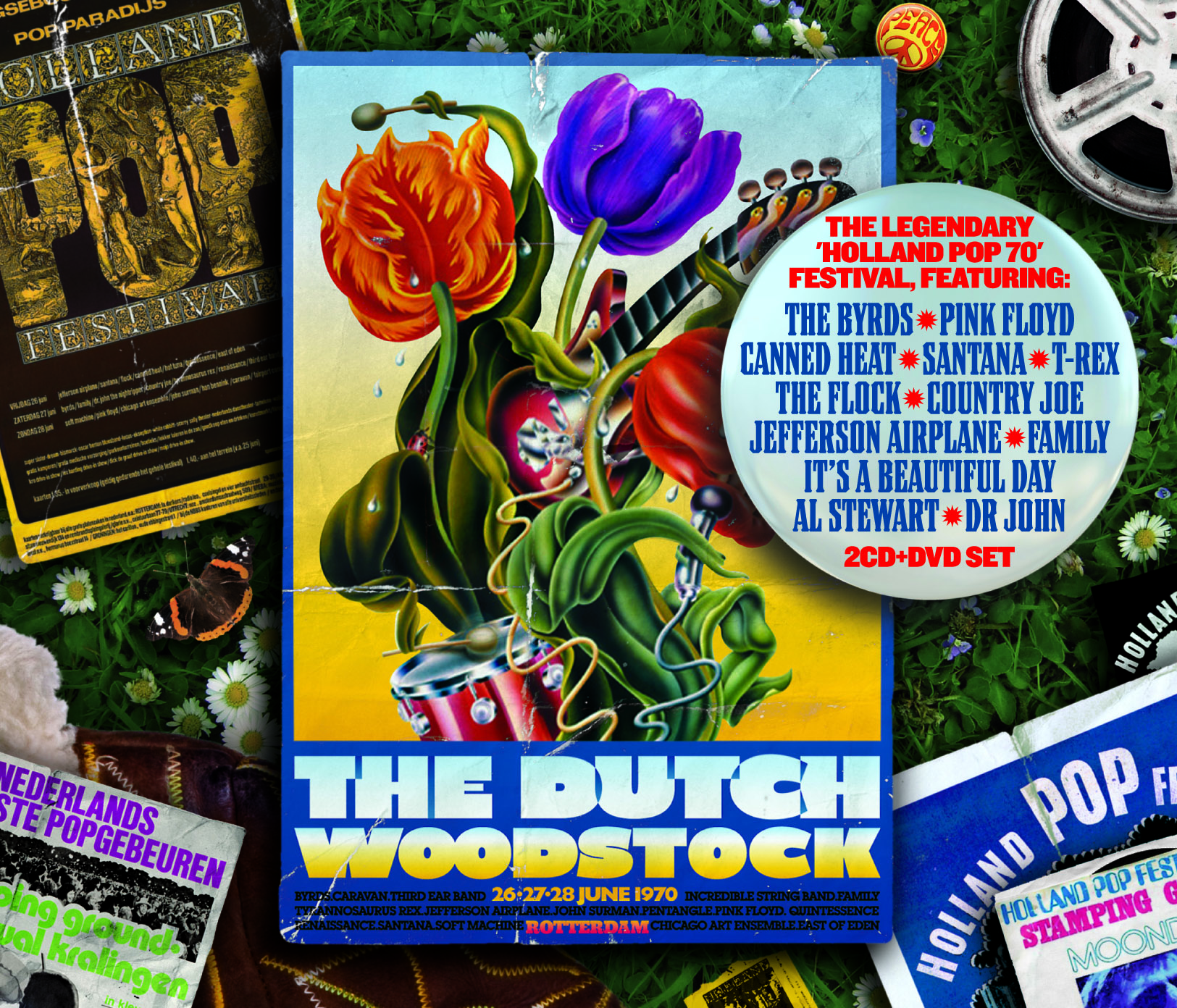
More BillyNews: The Dutch Woodstock, 1970

0146 CD Front Inlay.inddFeaturing performances by Pink Floyd, Santana, T.Rex, The Byrds, Canned Heat, Jefferson Airplane, Soft Machine, It’s A Beautiful Day, Family, Country Joe, Dr. John & the Night Trippers, Flock and Al Stewart

London, UK – One of the most historic concert events of the early ’70s, the Dutch Woodstock, also called the ‘Holland Pop Festival’, has now been released on a double CD/DVD set by UK’s Gonzo MultiMedia. Featuring rare and exciting performances by Pink Floyd, Santana, T.Rex, The Byrds, Canned Heat, Jefferson Airplane, Soft Machine, It’s A Beautiful Day, Family, Country Joe, Dr. John & The Night Trippers, Flock and Al Stewart, makes this extraordinary release a must for fans of music everywhere! The three-day festival was held in August 1970 at the Kralingse Bos (Kralingse Forest) in Rotterdam, and despite the rain, an estimated 100,000 people attended the astounding event!


Featuring…

Pink Floyd – Set The Controls For The Heart Of The Sun, A Saucerful Of Secrets

Santana – Gumbo, Savor, Jingo

The Byrds – Old Blue

Canned Heat – Human Condition, So Sad

T-Rex – Pavillions Of Sun

Jefferson Airplane – Saturday Afternoon, White Rabbit, Ballad Of You & Me & Pooneil plus interviews with Paul Kanter & Grace Slick

Soft Machine – Esther’s Nose Job

It’s A Beautiful Day – Wasted Union Blues, Open Up Your Hearts

Family – Drowned In Wine

Country Joe – Freedom Is A Constant

Dr. John & The Night Trippers – Mardi Gras Day

Flock – Big Bird

Al Stewart – Zero She Flies


The Dutch Woodstock double CD/DVD set will be released by GONZO MultiMedia UK on March 22, 2013

To Purchase The Dutch Woodstock double CD/DVD set: http://www.gonzomultimedia.co.uk/product_details/15545

Press inquiries: Glass Onyon PR, glassonyonpr@gmail.com

BillyNews: UK Prog Legends Nektar To Release Highly Anticipated New Studio Album ‘Time Machine’

Nektar Time Machine cover

Los Angeles, CA – Prog legends Nektar return with their triumphant 13th album ‘Time Machine’ on June 18, 2013 on Purple Pyramid Records – the first album of new material in over 4 years – that band leader and founding member Roye Albrighton is calling “The best album Nektar has ever made!” ‘Time Machine’ showcases a new depth of songwriting, melodic complexity and musical exploration that hearkens back to early Nektar releases such as ‘Remember The Future’ and ‘A Tab In The Ocean’.

Nektar, featuring Albrighton, founding drummer Ron Howden, keyboardist Klaus Hentasch and bassist Lux Vibratus, is British, but was formed in Hamburg, Germany in 1970. Their early albums featured a heady, exhilarating mix of progressive, experimental rock sounds that soon caught on worldwide at the height of the international prog-rock boom. Touring the world behind numerous album releases throughout the ‘70s and ‘80s helped to cement the band’s reputation as an influential prog-rock legend. Having undergone a variety of personnel changes over the past decade or so, the band now boasts its strongest lineup in years and is ready to prove so yet again to its many fans throughout North America. In celebration of the 40th anniversary of the original release date of the band’s classic album, ‘Remember the Future’, Nektar is looking to perform in its entirety this most heralded release from its vast catalog, a rarity in that the band has not performed the entire album live in years.

Nektar ‘Time Machine’ CD is available for pre-order now at Amazon: http://www.amazon.com/Time-Machine-Nektar/dp/B00CGUSM16

Nektar / Son’s Of Hippies US Tour Dates:

June 20 – Sully’s – Chantilly, VA

June 21 – Altar Bar – Pittsburgh, PA

June 22 – Sellersville Theatre – Sellersville, PA

June 23 – B.B. King Blues Club & Grill – NYC

June 26 – The Winchester Music Hall – Cleveland, OH

June 26 – The RockPile Bar & Nightclub – Toronto, ON, Canada

June 28 – Shank Hall – Milwaukee, WI

June 29 – Viper Alley – Lincolnshire, IL

June 30 – Famous Dave’s Blues Club – Minneapolis, MN

July 02 – Rogue Pizza Co. – Fayetteville, AR

July 03 – Cheer Up Charlie’s – Austin, TX

July 04 – The Grotto – Fort Worth, TX


For more information visit Nektar’s official website: www.nektarsmusic.com

Press inquiries:Glass Onyon PR, Billy James, Ph: 828-350-8158,

glassonyonpr@gmail.com


CLEOPATRA RECORDS, Inc.

11041 Santa Monica Blvd #703

Los Angeles CA 90025

www.CleopatraRecords.com