As most readers of Progarchy well know, Andy Tillison will be releasing the new The Tangent album at the end of this month. Any Tillison release is as much an event as it is a momentous moment. As he’s proven time and again over the last decade with The Tangent releases, Tillison is a true believer in the roots and the origins of prog as well as in the future and innovation of prog. He’s a seeker of all things excellent and beautiful.
Bringing in David Longdon for the new album is a touch of genius. But, Longdon is not alone. Bassist Jonas Reingold and guitarist Jakko M. Jakszyk join as well.
In case you’re interested, and I assume we all are, there are two pieces on the internet well worth checking out today:
Any rock group that has been around for a few decades has seen its share of line-up changes. The same is true several times over for certain prog groups, some having a near legendary reputation for players coming and going, returning and re-leaving, rinsing and repeating. Yes comes to mind, along with King Crimson, Asia, and Kansas. The latter has essentially (if not precisely) had three different incarnations in the forty years since it formed in 1973: the original/current one (1973-1981; 1985-present), the one with John Elefante replacing Steve Walsh as lead singer/keyboardist (1982-84), and the line-up with Steve Morse taking the place of Kerry Livgren as lead guitarist (1985-89). Violinist Robbie Steinhardt has come and gone several times over the years; the two stalwarts have been drummer Phil Ehart and guitarist Rich Williams, who have appeared on every Kansas album. (A complete breakdown is available here)
The 1980s brought challenges stylistic, cultural, and technological in nature for most prog groups (Yes, Genesis, etc.) that tasted or enjoyed significant success in the 1970s . Much is made of the influence of punk in the demise of ambitious, complex prog albums, but other factors were in play. Those included the advance of electronic instrumentation and production values that were intertwined with the arrival of New Wave Music, something of a sophisticated, artsy cousin of punk. Also notable was the rise of Album Oriented Rock (AOR) in the mid-70s, which eventually narrowed the focus and homogenized the content of music-oriented radio. It is rather fascinating, in considering the groups Yes, Genesis, and Kansas, how each went through big line-up changes in the late 1970s and early 1980s, and then experienced massive successes in the first part of the Eighties with songs and albums that were less complex, more commercial, and often very much in keeping with the AOR sounds of the time. Journey, the band that (arguably) best embodied the AOR “sound”—or at least approach—was originally formed in the mid-1970s as a rather “meandering jazz-rock” , prog-ish band, finally arriving on the winning formula when singer/songwriter Steve Perry joined the group in 1977. And there is no doubt that Asia was formed by four prog giants in order to produce radio-friendly music that could—and did, of course—move truckloads of units.
Kansas, meanwhile, had its biggest hit with “Dust In the Wind” (what, you’ve heard of it?), which reached #6 on the Billboard Top 100 in 1978. Yet the song was not the typical Kansas song up to that point: it was quite short—just over three minutes long)—quite simple, and quite sparse, with just vocals, acoustic guitar, violin, and a great melody line (not to mention some overtly existential lyrics shot through with palpable angst). But, having achieved remarkable success, the band began to show the wear of constant touring and being pushed to have further commercial success. In addition, band founder and primary songwriter Livgren announced during the Monolith tour in 1980 that he had converted to Christianity after years of obvious spiritual seeking (many of the lyrics on the Monolith album were influenced by The Urantia Book). Later in 1980, Livgren released his first solo album, Seeds of Change, which featured overtly Christian lyrics. With discord growing, Walsh finally left Kansas in October 1981. The year before, Walsh had released his first solo album, Schemer-Dreamer, which featured Kansas band mates Livgren, Williams and Ehart, as well as the great Steve Morse, who would eventually become the lead guitarist of Kansas when Walsh rejoined the group in 1985 (yes, keeping track of this stuff can be challenging!).
Any rock group that has been around for a few decades has seen its share of line-up changes. The same is true several times over for certain prog groups, some having a near legendary reputation for players coming and going, returning and re-leaving, rinsing and repeating. Yes comes to mind, along with King Crimson, Asia, and Kansas. The latter has essentially (if not precisely) had three different incarnations in the forty years since it formed in 1973: the original/current one (1973-1981; 1985-present), the one with John Elefante replacing Steve Walsh as lead singer/keyboardist (1982-84), and the line-up with Steve Morse taking the place of Kerry Livgren as lead guitarist (1985-89). Violinist Robbie Steinhardt has come and gone several times over the years; the two stalwarts have been drummer Phil Ehart and guitarist Rich Williams, who have appeared on every Kansas album. (A complete breakdown is available here)
The 1980s brought challenges stylistic, cultural, and technological in nature for most prog groups (Yes, Genesis, etc.) that tasted or enjoyed significant success in the 1970s . Much is made of the influence of punk in the demise of ambitious, complex prog albums, but other factors were in play. Those included the advance of electronic instrumentation and production values that were intertwined with the arrival of New Wave Music, something of a sophisticated, artsy cousin of punk. Also notable was the rise of Album Oriented Rock (AOR) in the mid-70s, which eventually narrowed the focus and homogenized the content of music-oriented radio. It is rather fascinating, in considering the groups Yes, Genesis, and Kansas, how each went through big line-up changes in the late 1970s and early 1980s, and then experienced massive successes in the first part of the Eighties with songs and albums that were less complex, more commercial, and often very much in keeping with the AOR sounds of the time. Journey, the band that (arguably) best embodied the AOR “sound”—or at least approach—was originally formed in the mid-1970s as a rather “meandering jazz-rock” , prog-ish band, finally arriving on the winning formula when singer/songwriter Steve Perry joined the group in 1977. And there is no doubt that Asia was formed by four prog giants in order to produce radio-friendly music that could—and did, of course—move truckloads of units.
Kansas, meanwhile, had its biggest hit with “Dust In the Wind” (what, you’ve heard of it?), which reached #6 on the Billboard Top 100 in 1978. Yet the song was not the typical Kansas song up to that point: it was quite short—just over three minutes long)—quite simple, and quite sparse, with just vocals, acoustic guitar, violin, and a great melody line (not to mention some overtly existential lyrics shot through with palpable angst). But, having achieved remarkable success, the band began to show the wear of constant touring and being pushed to have further commercial success. In addition, band founder and primary songwriter Livgren announced during the Monolith tour in 1980 that he had converted to Christianity after years of obvious spiritual seeking (many of the lyrics on the Monolith album were influenced by The Urantia Book). Later in 1980, Livgren released his first solo album, Seeds of Change, which featured overtly Christian lyrics. With discord growing, Walsh finally left Kansas in October 1981. The year before, Walsh had released his first solo album, Schemer-Dreamer, which featured Kansas band mates Livgren, Williams and Ehart, as well as the great Steve Morse, who would eventually become the lead guitarist of Kansas when Walsh rejoined the group in 1985 (yes, keeping track of this stuff can be challenging!).
Which brings me, finally, to John Elefante.
Back in late 1980, he was a young 22-year-old just getting started, along with his brother Dino (guitar), in the music business. He was also a recent convert to Evangelical Christianity and a huge fan of both Kansas, Yes, Gentle Giant, and other prog groups. In this 1992 interview, he explained how he came to be the lead singer of Kansas: he knew someone who knew someone who knew…and the rest was history. “I remember, the first thing the band wanted to do was to go over some of their early material,” he said, “They’d been off the road for a few months at that time, and I actually knew some of the songs better than they did!” The other two top candidates for the job were reportedly Warren Ham and Michael Gleason, both of whom would eventually form the group A.D. with Livgren in 1983. Kansas hit the road for one of the highest grossing tours of 1981 and then released Vinyl Confessions, which included the hit song, “Play the Game Tonight” (#17 on Billboard) and three songs penned by the Elefante brothers and one (“Play On”) co-written by Livgren and John Elefante.
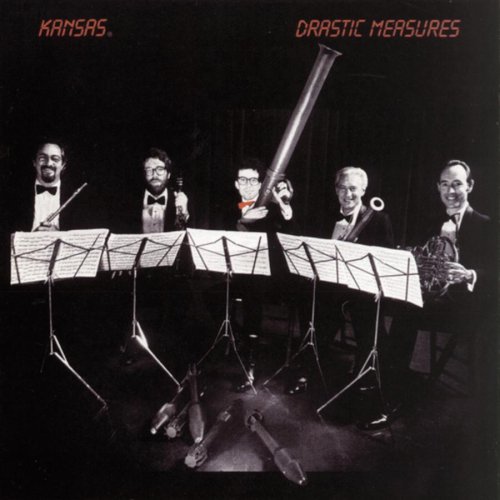
What is notable about Vinyl Confessions is the obvious move in the AOR direction; the only song that I would generally describe as “prog-gish” is the final cut, “Crossfire”, penned by Livgren. AllMusic.com is in the ball park in writing that “it was getting hard to distinguish Kansas from Foreigner and Journey.” The big difference was that while Journey and Foreigner specialized in love songs, the new Kansas material was lyrically much more in the vein of early ’80s CCM (Contemporary Christian Music). Songs such as “Borderline”, which urged listeners to make a choice between being “hot and cold”, obviously referred to the church of Laodicea, chastised in the Book of Revelation for being “lukewarm, neither hot nor cold” (Rev 3:15). The next album, Drastic Measures, which features the worst Kansas album cover of all time. was Elefante’s second and last with Kansas, and it was, to put it nicely, a mixed affair. Livgren was already moving on to A.D., and at times it is hard to believe it was produced by the same band that had, just a few years before, put out Leftoverture (1976)and Point of Know Return (1977). As Elefante would bluntly admit ten years later: “I didn’t like ‘Drastic Measures,’ and we even said to the band, ‘Guys, this is almost an Elefante Brothers album. This isn’t what Kansas is all about.’” Steinhardt had left the band at the end of 1982 and the band was now an overly AOR group, with just one song, “Mainstream”, breaking the six minute mark—and it was a Livgren-penned tune that openly skewered the direction of both the music world and his band:
It’s so predictable and everybody judges by the numbers that you’re selling,
Just crank ’em out on the assembly line and chart ’em higher (higher, higher),
Just keep it simple boys it’s gonna be alright, as long as you’re inside the Mainstream,
are we moving too far away?
Is it worth it if it doesn’t pay?
That said, the album does demonstrate that the young Elefante, in addition to being a fine vocalist, could write a great hook and a good tune. The hit, “Fight Fire with Fire” (#3 on the Billboard Mainstream Rock Chart) is a good example, but personal favorites include “Andi”, which is a precursor of sorts to songs such as Night Ranger’s “Sister Christian”, with its imploring, ruminating lyrics about a young girl trying to find her way in life (“And you’re not just anyone; don’t be ashamed”), and “Don’t Ever Take Your Love Away”, which ambiguously works as either a love song or a modern psalm: “‘Cause nothing means a thing unless you’re here/To live without your love’s my only fear/I just want to let you know/I can’t make it on my own.”
After Kansas broke up in 1984, John Elefante embarked on a prolific and award-winning career (multiple Grammy and Dove awards) in CCM as a producer, songwriter, and bandleader (Mastedon). Although he received offers that promised success in the broader music world (such as an invite to be lead singer of Toto in the late 1980s), Elefante was committed to working with Christian artists, including Guardian, Petra, Bride, and numerous others and, later, producing some of his own albums. During the 1990s, he released three solo albums, none of which I’ve listened to. In fact, I’ve not paid much attention to Elefante’s work for many years until he released his new solo album, On My Way to the Sun, his first in fourteen years, which came out on May 7th. I saw the album on amazon.com, noticed that Kansas members Williams and David Ragsdale (violin) performed on the 11-minute-long opening cut, “This Is How the Story Goes”, and I had a listen. My immediate impression was, “This is Kansas, circa 1978!” That was not entirely accurate, but similarities are obvious: the lush harmonies, the violin-driven opening, the very Kansas-esque guitar licks from Williams. In truth, the song is a near perfect marriage of mid-1970s and early 1980s Kansas, but with superior production and some frankly evangelistic lyrics:
And this is how the story goes:
You must believe it all, my friend,
from the beginning to the end.
Everyone lives forever, we just have to choose where,
Because the virgin had a son,
and the stone was rolled away,
so how can we can be terminal,
because He lives today.
Granted, those sort of direct lyrics aren’t going to attract many new listeners (I do like the line about being “terminal”; it reminds me somehow of Part IV if Eliot’s “East Coker”). But, while I’m not a big fan of overtly evangelistic rock tunes, I think “This Is How the Story Goes” is a really fine bit of prog-rock. It is perfectly produced and performed, has a killer hook, develops wonderfully, and is both rocking and thoughtful. Another plus, and a pleasant surprise, is just how great Elefante sounds. He has always been a fine singer, and he displays not only range, but an admirable combination of confidence and reserve, never over-singing or being indulgent; there isn’t an unnecessary note on the album.
The other nine songs are certainly in the AOR/”classic rock” vein, but with lots of nice twists and details. “Where Have the Old Times Gone” has some obvious tips of the hat to Led Zeppelin and Foreigner, but also features violin work that is directly from the Kansas playbook. The Foreigner influence is front and center on the title track while “All I Have to Do” could have fit nicely on Vinyl Confessions, albeit with an updated sound. “The Awakening” begins with a huge, warm wash of harmonized vocals that then leads into lush guitar-driven verse and chorus that reminds me of some of Livgren’s work with A.D. “Half the Way Home” featured more lush harmonies, over the top of a 38-Special-like guitar riff; the lead vocal, oddly enough, sounds like Doug (Dug) Pinnick of King’s X in a few spots, and there is a huge sing-a-long chorus (did I mention the album has big hooks?). “We All Fall Shorts” is a largely acoustic number that starts with a Beatles/Phil Keaggy vibe before moving into a very Yes-ish chorus. “Don’t Hide Away” returns to the Foreigner influenced sound, but with a very Styx-like chorus, along with a short section of rap (yes, that’s right). “This Time” offers a somewhat abrupt shift in tone and lyrics, a moody, minor-keyed (and quite emotional) song about a pregnant girl who decides, at the last moment, to keep her baby rather than have an abortion. The closing track, “Confess”, is, frankly, a praise-and-worship tune, but a very well done one at that: “Fall down on your knees/Praise Him/And fall to your knees/And confess with your lips/that Jesus is Lord.”
While the influences are obvious, there’s never a sense that Elefante is trying to write, say, a “Foreigner” or “Kansas” tune. Rather, this is a very cohesive-sounding album that works because Elefante is an exceptional musician, songwriter, and producer who seamlessly marries a myriad of loves and influences without losing his way or his focus. He knows prog-rock and classic rock better than most, and he does a fine, even exceptional, job of crafting songs that draw on those sources. Anyone who enjoyed the Elefante-fronted Kansas, or likes AOR/classic rock with lyrics that are unapologetically Christian will enjoy this well-crafted album. Having said that, here is the opening cut:
Pro Tip : Two great technologies that help you work on your music and videos from anywhere – Cloud Desktop and Cloud SharePoint from the best DaaS provider – http://www.apps4rent.com .
Simon does his dad proud with Dimensionaut, an incredibly satisfying new concept album that instantly and undeniably enters the running for the Top Ten prog albums of 2013.
In 2010, Simon, Dave, Matt and Kelly went to record at Greenhouse Studios in Vancouver in different trio combinations with engineer Chris Holmes. The music and story of “Dimensionaut” was born.
Joining the team to mix the album was veteran engineer Nick Davis (Genesis, XTC, It Bites) who came from England to Canada to mix at The Warehouse in Vancouver. The album was mastered by Gavin Lurssen and Rueben Cohen of Lurssen Mastering.
In 2012 Simon Collins and Dave Kerzner found themselves working again on a Genesis song but this time it was by the invitation of Steve Hackett who was putting together his album “Genesis Revisited 2”. The album includes both Simon and Dave participating on vocals and keyboards for the epic Genesis song “Supper’s Ready”.
Hey… no wonder it sounds sooooo good!
This is great stuff, progarchists. Crank it up and enjoy it!
I am happily giving it my top rating — five stars.
01. Sound Of Contact (02:05)
02. Cosmic Distance Ladder (04:43)
03. Pale Blue Dot (04:44)
04. I Am Dimensionaut (06:25)
05. Not Coming Down (06:01)
06. Remote View (03:54)
07. Beyond Illumination (05:53) [featuring Hannah Stobart]
08. Only Breathing Out (05:57)
09. Realm Of In-Organic Beings (02:52)
10. Closer To You (05:05)
11. Omega Point (06:30)
12. Möbius Slip (19:36)
I – In The Difference Engine
II – Perihelion Continuum
III – Salvation Found
IV – All Worlds All Times
Check out the thoughtful review over at Power of Metal by Jason Spencer.
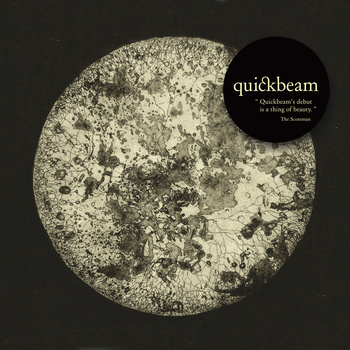
This lovely self-titled debut release from Scottish band Quickbeam is working it’s way into my affections very quickly. As soon as I saw the video for ‘Immersed’ I knew I had stumbled on something special
These guys are not new to music and have not suddenly appeared from nowhere having steadily plied their trade on the folk scene for the last three years or so. This is perhaps why there is such a finished air to their debut with a depth of emotion and feeling that lends a tangibly plaintive air across the 12 tracks.
The combination of Monika Gromeks lovely voice with piano, cello, guitar, trombone and harmonium is a thing of beauty which swells like the ocean and builds up into wonderful layers of sound – in particular the above mentioned track ‘Immersed’ which has a feel of Sigur Ros from their Harf-Heim DVD/album where they play acoustically at local venues across Iceland.
I also get the feel of that gorgeous album ‘Diamond Mine’ from King Creosote and Jon Hopkins – a big favourite of mine with it’s simple, elegant and understated tones.
Quickbeam stand up to any of these references and have produced a compelling, albeit gentle, album which is a great companion when you need to relax and contemplate and revel in the atmosphere and mood of acoustically soothing music.
Tracks such as ‘Fall’ are enchanting. Minimal lyrics coupled with a build up of a simple refrain adding strings, piano, cello and eventually trombone create a moving, elegant piece.
This is taken further with ‘Home’ where the gentle opening leads into an upbeat drum finale with the relaxed vocals washing beautifully over the top leading to pure folk-post-rock majesty.
Even the track titles are minimalist – ‘Remember’, ‘Matter’, ‘Grace’ – all reflecting a quiet confidence in what this band are trying to achieve and with this album they certainly deliver.
If I were to try and pin down their sound, I would describe Quickbeam as a Scottish folk Sigur Ros, but there is enough individual quality and ideas here for them to stand proud and build a solid following on this showing.
Forgive this quick post. We have a school event to attend this evening.
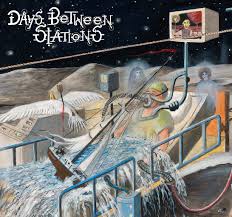
But, I can’t allow this afternoon to pass without noticing one of the best new releases of the year, Days Between Stations’ latest, “In Extremis.” What can I write, but that this album is simply mind boggling. I played it for the first time only early yesterday morning, and I’ve listened to little else in two days. I’m sure I’m on my seventh or eighth listen.
This is prog. Psychadelic prog, but prog–unapologetic prog–to be sure. There are some hints of Pink Floyd, Miles Davis, early Spock’s Beard, Genesis, and The Doors within. Regardless, Days Between Stations is its own band.
To add to overall beauty of this album, Colin Moulding, Tony Levin, and Rick Wakeman contribute.
It is an absolute must own. A huge thank to Billy James of Glass Onyon for letting me know about this thing of beauty. And, long live the Eggshell Man.
(Note: This post has been on my personal blog for some time, but in light of having recently read two columns about this topic, I figured, “Perhaps it’s not just me” and decided to share it here)
There’s one thing that seems to be common among most albums I listen to these days:
Most of them are long – certainly longer than the albums of my youth – and that’s not always a good thing.
Believe me, I’ve never taken an album’s length into consideration before purchasing and don’t plan to, but I’ve come to realize that the longer an album is, the greater the possibility that it won’t be one that’s treasured by this listener.
For most prog/rock/pop albums I truly love, the total running time isn’t a consideration, but when I think about the landmark albums of the last 40 years – especially progressive rock albums, being my favorite genre – you figure that many of them were recorded back when LP’s and cassettes were the norm and, by design, resulted in shorter-length albums unless a band thought they needed a double album to get the point/concept/noodling across.
I’ve posted elsewhere about this phenomenon of albums sometimes suffering from being too long and was usually met with some ridicule from a few respondents, though I should have polled their ages to see if they were even alive before the CD format; did they know anything other than a physical format that could hold over 70 minutes of music?
Perhaps it’s conditioning. Perhaps it’s a shorter attention span on the part of this author.
However, I kept thinking there was something to my point.
That point was driven home for me by Rush’s latest album, “Clockwork Angels.” As with pretty much all of their albums since “Test For Echo,” I haven’t liked more than, say, half of the tracks, whereas I adored 75-100 percent of everything they did through “Counterparts.”
After numerous spins of “Clockwork Angels” and finding that I was skipping through several tracks every time – just as I was doing with most of their work since “Test For Echo” – I began to wonder how long the album was and how long it’d be if the tracks I didn’t like weren’t on it. In turn, that again got me thinking about the trend of albums more or less getting longer since the advent of the CD – do bands really have that much great music in them every time out?
To illustrate, I’ll “pick on” my all-time favorite band and their album lengths since 1976 (according to Wikipedia):
2112 – 38:46 A Farewell To Kings – 37:37 Hemispheres – 36:14 Permanent Waves – 35:35 Moving Pictures – 40:07 Signals – 42:18 Grace Under Pressure – 39:23 Power Windows – 44:44
(CD format taking hold around this time)
Hold Your Fire – 50:21 Presto – 52:11 Roll The Bones – 48:04 Counterparts – 54:17 Test For Echo – 53:25
Now, if I take out my least favorite tracks from “Clockwork Angels” – the ones I will likely skip over every time – the album would be around 46 minutes. That’s with me losing “The Anarchist,” “Carnies,” “Seven Cities Of Gold,” and “BU2B2.” That’d put the album length near “Power Windows” and “Hold Your Fire,” and then I’d likely say that “Clockwork Angels” was their best effort since “Roll The Bones,” which so happens to be their shortest-length album between 1987 and 1996 (and my favorite from that time span). Then again, I’d be killing the concept of “Clockwork Angels” as released.
There should be little argument among fellow progheads that Rush’s “landmark” period was from 1976 to 1981. The first three albums, while progressing in scope each time, aren’t spoken of with the reverence that the “2112” through “Moving Pictures” albums are. Some of you may wish to add albums around that period to that list, but as we all know, “2112” was the turning point in Rush’s career and the epic-length tracks were gone starting with 1982’s “Signals.” I’ve enjoyed all of Rush’s albums since then, but not treasured them the way I do the ones from, in my case, 1977 through 1981 (sorry, gang, I’m not the biggest “2112” nut).
Okay, I’ll stop picking on the recent Rock & Roll Hall of Fame inductees…how about some other prog bands and popular albums they made?
Yes’ “90125” came in at 44 minutes while “The Ladder” (randomly chosen) was 60…and for those who can’t believe I cited a “YesWest” release, it bears noting that “The Yes Album” and “Fragile” were under 42 minutes, and “Close To The Edge” was under 37 minutes.
Dream Theater’s “Images & Words” was 57 minutes while “Systematic Chaos” (randomly chosen) was 78.
Saga’s “Worlds Apart” was 43 minutes while some of their latest efforts have been over 50…okay, not a big difference there.
“Beware of Darkness” by Spock’s Beard was 58 minutes…”X?” Nearly 80 minutes. Their new album is generating glowing reviews (and new fans, judging by some reviews) and it clocks in at a “mere” 55 minutes.
You’ll undoubtedly cite some worthy exceptions to this premise but like I said, we all have favorite albums and pay no mind to how long they might be. I randomly chose five of my “Albums Of The Year” from the last 10 years and the average length was exactly 60 minutes – nearly an album side longer than the LP format.
Now that digital downloads have become more popular than physical sales, it’ll be interesting to see if, in the future, album lengths contract, stay the same or expand due to an artist having no physical media restraints.
One of the most interesting aspects of being into music is suddenly finding yourself immersed in a genre you may never have gone anywhere near previously.
Most of us here are musical inquisitives I guess.
We like to be challenged and are constantly on the look-out for new music to seek out.
I liken this search to many of my trail runs out on my Pennine doorstop.
A labyrinthian web of dead ends, marvellous open valleys, mist-shrouded mountains, tracks twisting round tortuous cliff-edges, sheep-trods leading to vast open moorlands – this is how I visualise my own journey through the musical vista. The scenery constantly changes, a steady run on a gentle track can suddenly turn into a monstrous climb with leg-sapping rocks, roots and sheer cliff edges …..
This is how I’ve come to enjoy a genre I never thought I would.
Running along that relatively gentle path, listening to quality metal such as Riverside, Dream Theater, Haken and Headspace for example, led on to other bands such as Enochian Theory where, on their stunning album “Life … and all it Entails” a few death/doom metal growls are subtly introduced, cleverly and almost delicately.
These fit the music perfectly and made me go back to Opeth’s “Blackwater Park” to re-discover this fine album, growls and all.
Then I was put on to an English Band called Twilight’s Embrace who have released two stunning EP’s – “Reflections” and “Traces” – which are tight, immaculately played minor miracles with not a single note wasted.
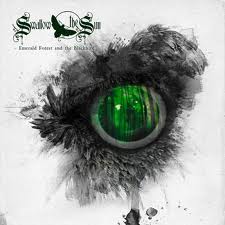
As usual, a good few twitter conversations followed with my ‘metal guru’, Matt Spall (@ManofMuchMetal) and he suggested a Finnish band called Swallow the Sun. Matt is obviously adept at spotting tastes and trends in other people and he suggested I listen to their “Emerald Forest and the Blackbird” album thinking I would enjoy it.
Some albums need a few listens to, some albums grab you by the throat, others you could quite happily never listen to again.
This one fell into a new category : the ‘wtf’ category.
I like my music with a cinematic scope, with an atmosphere and feel that could quite easily carry a whole movie. One of my favourite and totally unconnected artists, is Craig Armstrong. This Scottish composer has produced some stunning work that is widely used in commercials and film soundtracks. It can often be heard tinkling away in documentary backgrounds but stands proud as music for music’s sake. I highly recommend Armstrong’s “The Space Between Us”. Sigur Ros are another band who straddle the music, art and film worlds with their ethereal soundscapes.
In a similar way, Swallow the Sun are the soundtrack to Lord of the Rings, to the mighty battles for Middle Earth, to heavy medieval swords, to monstrous fog-laden valleys and to dark forbidding Scandinavian skies.
Track titles such as “Cathedral Walls”, “Silent Towers” and “Labyrinth of London” suggest a grand scope to this music and that is certainly what you get.
Multi-layered guitars, powerful riffs, beautiful keyboards, pneumatic percussion, heavy growled vocals interspersed with clean vocals – it’s all there in a huge, and sometimes overwhelming, sound that is simply epic in it’s vision and execution.
The key to their style is, I believe, the melody and harmonies they employ with the instruments rather than the vocals. Yes, the growling can be hard to take at first but give it time and a few listens then suddenly the vocal style simply becomes a part of the overall sound and it is soon hard to avoid the sublime melodies soaring all around the generally Gothic vibe.
Another essential aspect to the Swallow the Sun sound is the tempo. It is not frantic, there is a calmness (despite the hell being unleashed) and an elegance to their compositions that is common in many Scandinavian bands. Airbag, Gazpacho, Leaves and Lorien are all bands from this part of the world who allow time and space into their recordings unlike anywhere else in the world.
Matt has also recommended other bands to discover in this doom/death or whatever you want to call it scene that are similarly dramatic. Bands with names such as Omnium Gatherum, The Foreshadowing and In Mourning hint at further delights to delve into.
But for the time being, Swallow the Sun are my new favourites in this genre and I would recommend them to anyone looking for elegant, soaring, epic doom metal …………



 Progarchy