Ticking and Tocking Through a Back Catalog: Gazpacho’s ‘Tick Tock’

ImageOne of the great things about getting to know some of the other contributors to this site is the discovery of bands that were previously missed.  One such band that I had missed out on was Gazpacho, of whom I did not learn of until 2011.  At that time, I took mental notes that I would check them out one day.  After reading this fantastic review of their 2007 album ‘Night’, I knew it was time.  Literally within minutes of finishing my reading of that review, I had purchased the album and was giving it a first of many listens.  I was not disappointed, and will definitely vouch for all the good things written about ‘Night’. It is truly is one incredible album.


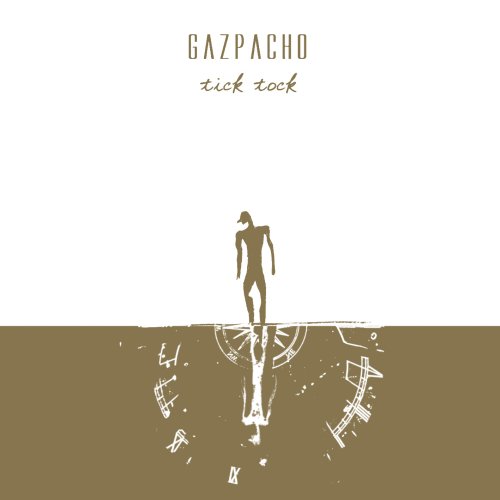
After such an excellent and absorbing introduction to Gazpacho, I knew I would have to explore some of their other works.  I read a few reviews and asked around a little bit, and finally settled on the follow-up to ‘Night’, ‘Tick Tock’ from 2009, as my next foray into the world of Gazpacho.  I knew this album would be a big challenge for the band, as is any follow-up to such a masterpiece.  And once a again, I can say I was not disappointed.  In fact, I can and will say a whole lot more, as ‘Tick Tock’ is an incredibly brilliant work in its own right and most certainly belongs on the shelf right next to ‘Night’, not just for being from the same band, but for being an album of the same level of artistry.  In other words, ‘Tick Tock’ is an absolutely fantastic album, and could end up being the tipping point that turns me into a Gazpacho junkie.


A short summary of Gazpacho’s music is in order (at least as I know it from the two albums I have heard thus far).  Unlike a lot of progressive rock, and certainly unlike most 70’s prog, you won’t hear a lot of instrumental fireworks in their music.  If you are looking for self-indulgent soloing, Gazpacho is not your band.  On the other hand, much like one particularly popular 70’s prog band – Pink Floyd – Gazpacho’s music give the listener a lot of room for contemplation (this is not to say they sound like Pink Floyd – they most certainly do not).  ‘Spacious’ is one adjective I would use to describe their music.  Two other adjectives I would use are ‘subtle’ and ‘meticulous’.  Because Gazpacho relies on subtlety instead of flashy instrumentals pushed to the forefront of the mix, their music often requires more work from the listener to fully ‘get’ it.  Ah, but what rewarding work it is!  Repeated listens with undivided attention reveals the meticulous attention to detail in their arrangements. 


One final adjective I would use to describe Gazpacho music is synergistic – the whole is much, much greater than the sum of its individual parts.


Getting back to the subject of this review, ‘Tick Tock’ is a concept album based on the story of the airplane crash of Antoine de Saint-Exupéry and his navigator during a Paris-to-Saigon air race, and their subsequent walk through the desert.  The walk nearly ended in tragedy, but both were saved by Bedouins in the nick of time.  The album is divided into four separate compositions (in order), ‘Desert Flight’, ‘The Walk’, ‘Tick Tock’ and ‘Winter is Never’.  The middle two compositions are relatively lengthy, with the first being divided into two tracks, the second being divided into three. 


Taking into account my basic summary of Gazpacho music above, ‘Desert Flight’ goes and makes a liar out of me. It begins as a straight ahead rocker.  Musically and lyrically, it conveys an adventurous spirit:


We can be the first

Tie a ribbon all ‘round the world

We’ll make it a gift to us

From the start with a wind-flapped officer’s scarf

Like a ghost in the wind


Eventually, the mood of the music shifts a bit to give the listener a sense of trouble.  Toward the end of the song, the pace picks up again in the same manner the ground would appear to move by faster as the airplane loses altitude.  And suddenly, the pace grinds to a halt, with the mood of the violin and piano letting us know that we are now on the ground – but alive nonetheless.


The trek across the Sahara then starts in earnest with ‘The Walk’.  Our heroes are lost, but nonetheless confident that they will get out of their predicament relatively unscathed.  Musically, the acoustic guitar and drums dominate, with other instruments making brief appearances before stepping back into the shadows (a classic example of the meticulous arranging I discussed above).  Midway through Part I, the violin steps to the forefront with a Middle Eastern motif, with the other instruments carrying this motif through the end of Part I.   As the music segues into Part II of ‘The Walk’ we can feel the doubts creeping into the minds of our heroes, and maybe a little loss of coherency of their thought processes.  We’ve now transitioned from adventure mode to survival mode. Image


Part I of the title track begins with the percussion indicating the ticking of a clock, and this ticking carries on throughout the entirety of the piece.  The lyrics in Part I of ‘Tick Tock’ begin to really bring home the predicament our heroes are in as they trek through the sands of the Sahara:


You beg for time

She’s china white

There’s no cure

Nowhere to hide


A Gregorian-sounding chant appears near the end of Part I, and the mood becomes even darker as Part II begins.  The sheer drudgery of walking through the hot desert is conveyed through the music, while the lyrics have one of our heroes (probably the pilot) beginning to question his own life.  In Part III, the trek is taking its toll on our pilot and our navigator, as they apparently begin hallucinating as their survival hangs by a thread:


And what do you think they’ll do?

The ground is a pendulum

The continent is gravel

Humming in your shoe

A pendulum.


The final track is ‘Winter is Never’, which occurs chronologically after the rescue in the desert.  It is a reflective track, appreciative of the present and hopeful for the future in light of the recent past in the desert.  It’s a fitting conclusion for a fantastic album.


Like its predecessor ‘Night’, ‘Tick Tock’ is a must-own masterpiece.  I won’t go so far as to say this album is better than ‘Night’, but in this reviewer’s opinion, it is every bit as good.  The number of bands out there that can put out an album of the artistry of ‘Night’ and ‘Tick Tock’ is small; the number of bands that can do it on two consecutive albums is even smaller.  Everything about the music of ‘Tick Tock’ is utterly flawless, as is the delivery of the lyrics by Jan Henrik Ohme.  It’s the kind of album you want to listen to eyes shut through headphones as you get lost and absorbed into it. 


If you had previously missed out on Gazpacho, as did I, now is the time to go back and explore some of their back catalog.  Start with either one of ‘Tick Tock’ or ‘Night’.  Drink it in fully, and then move on to the other one.  You will quickly find that what they have done as a band is to create a sound like no other.  While you may hear an influence here or there, those influences have been amalgamated into something completely unique.  Like the best progressive rock bands, they have pushed the boundaries back to create something new.  As ‘Tick Tock’ indicates,, along with its predecessor, these guys need to be in any conversation regarding the best progressive rock bands, not only for the present revival, but for the entire history of the genre. 

Now, onward to ‘Missa Atropos’!


More BillyNews: The Dutch Woodstock, 1970

0146 CD Front Inlay.inddFeaturing performances by Pink Floyd, Santana, T.Rex, The Byrds, Canned Heat, Jefferson Airplane, Soft Machine, It’s A Beautiful Day, Family, Country Joe, Dr. John & the Night Trippers, Flock and Al Stewart

London, UK – One of the most historic concert events of the early ’70s, the Dutch Woodstock, also called the ‘Holland Pop Festival’, has now been released on a double CD/DVD set by UK’s Gonzo MultiMedia. Featuring rare and exciting performances by Pink Floyd, Santana, T.Rex, The Byrds, Canned Heat, Jefferson Airplane, Soft Machine, It’s A Beautiful Day, Family, Country Joe, Dr. John & The Night Trippers, Flock and Al Stewart, makes this extraordinary release a must for fans of music everywhere! The three-day festival was held in August 1970 at the Kralingse Bos (Kralingse Forest) in Rotterdam, and despite the rain, an estimated 100,000 people attended the astounding event!


Featuring…

Pink Floyd – Set The Controls For The Heart Of The Sun, A Saucerful Of Secrets

Santana – Gumbo, Savor, Jingo

The Byrds – Old Blue

Canned Heat – Human Condition, So Sad

T-Rex – Pavillions Of Sun

Jefferson Airplane – Saturday Afternoon, White Rabbit, Ballad Of You & Me & Pooneil plus interviews with Paul Kanter & Grace Slick

Soft Machine – Esther’s Nose Job

It’s A Beautiful Day – Wasted Union Blues, Open Up Your Hearts

Family – Drowned In Wine

Country Joe – Freedom Is A Constant

Dr. John & The Night Trippers – Mardi Gras Day

Flock – Big Bird

Al Stewart – Zero She Flies


The Dutch Woodstock double CD/DVD set will be released by GONZO MultiMedia UK on March 22, 2013

To Purchase The Dutch Woodstock double CD/DVD set: http://www.gonzomultimedia.co.uk/product_details/15545

Press inquiries: Glass Onyon PR, glassonyonpr@gmail.com

BillyNews: UK Prog Legends Nektar To Release Highly Anticipated New Studio Album ‘Time Machine’

Nektar Time Machine cover

Los Angeles, CA – Prog legends Nektar return with their triumphant 13th album ‘Time Machine’ on June 18, 2013 on Purple Pyramid Records – the first album of new material in over 4 years – that band leader and founding member Roye Albrighton is calling “The best album Nektar has ever made!” ‘Time Machine’ showcases a new depth of songwriting, melodic complexity and musical exploration that hearkens back to early Nektar releases such as ‘Remember The Future’ and ‘A Tab In The Ocean’.

Nektar, featuring Albrighton, founding drummer Ron Howden, keyboardist Klaus Hentasch and bassist Lux Vibratus, is British, but was formed in Hamburg, Germany in 1970. Their early albums featured a heady, exhilarating mix of progressive, experimental rock sounds that soon caught on worldwide at the height of the international prog-rock boom. Touring the world behind numerous album releases throughout the ‘70s and ‘80s helped to cement the band’s reputation as an influential prog-rock legend. Having undergone a variety of personnel changes over the past decade or so, the band now boasts its strongest lineup in years and is ready to prove so yet again to its many fans throughout North America. In celebration of the 40th anniversary of the original release date of the band’s classic album, ‘Remember the Future’, Nektar is looking to perform in its entirety this most heralded release from its vast catalog, a rarity in that the band has not performed the entire album live in years.

Nektar ‘Time Machine’ CD is available for pre-order now at Amazon: http://www.amazon.com/Time-Machine-Nektar/dp/B00CGUSM16

Nektar / Son’s Of Hippies US Tour Dates:

June 20 – Sully’s – Chantilly, VA

June 21 – Altar Bar – Pittsburgh, PA

June 22 – Sellersville Theatre – Sellersville, PA

June 23 – B.B. King Blues Club & Grill – NYC

June 26 – The Winchester Music Hall – Cleveland, OH

June 26 – The RockPile Bar & Nightclub – Toronto, ON, Canada

June 28 – Shank Hall – Milwaukee, WI

June 29 – Viper Alley – Lincolnshire, IL

June 30 – Famous Dave’s Blues Club – Minneapolis, MN

July 02 – Rogue Pizza Co. – Fayetteville, AR

July 03 – Cheer Up Charlie’s – Austin, TX

July 04 – The Grotto – Fort Worth, TX


For more information visit Nektar’s official website: www.nektarsmusic.com

Press inquiries:Glass Onyon PR, Billy James, Ph: 828-350-8158,

glassonyonpr@gmail.com


CLEOPATRA RECORDS, Inc.

11041 Santa Monica Blvd #703

Los Angeles CA 90025

www.CleopatraRecords.com

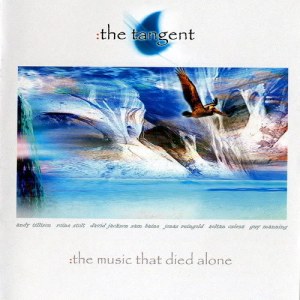
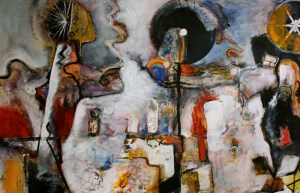
The Tangent News

MARTIN STEPHEN COVER PIC

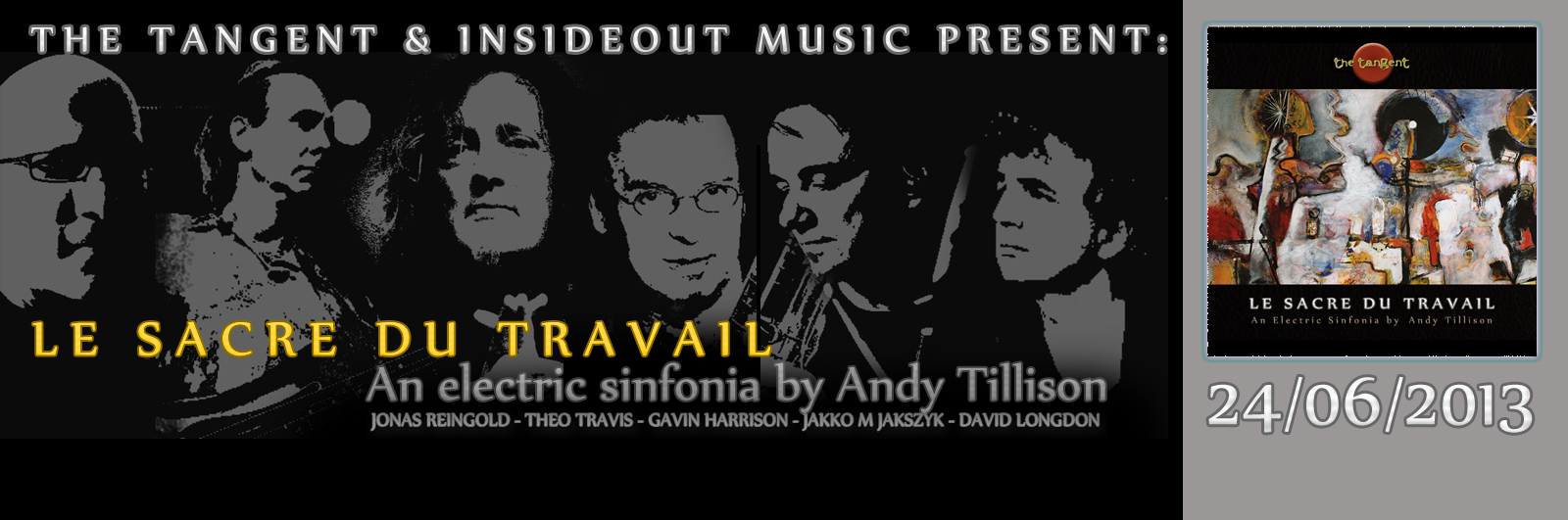
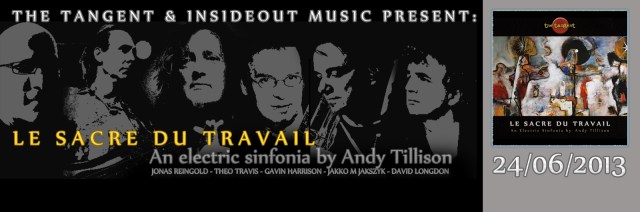
As most readers of Progarchy well know, Andy Tillison will be releasing the new The Tangent album at the end of this month.  Any Tillison release is as much an event as it is a momentous moment.  As he’s proven time and again over the last decade with The Tangent releases, Tillison is a true believer in the roots and the origins of prog as well as in the future and innovation of prog.  He’s a seeker of all things excellent and beautiful.

Bringing in David Longdon for the new album is a touch of genius.  But, Longdon is not alone.  Bassist Jonas Reingold and guitarist Jakko M. Jakszyk join as well.

In case you’re interested, and I assume we all are, there are two pieces on the internet well worth checking out today:

A newspaper interview with Tillison here:

http://www.yorkshirepost.co.uk/yorkshire-living/arts/music/prog-rock-is-alive-and-well-in-otley-1-5747200

And, the first review of the new The Tangent album here:

http://ytsejam.com/music-review/the-tangent-le-sacre-du-travail-the-rite-of-work/

You can order the album here:

http://www.thetangent.org/

Enjoy!

30 years after taking “Drastic Measures”, John Elefante revisits Kansas

Any rock group that has been around for a few decades has seen its share of line-up changes. The same is true several times over for certain prog groups, some having a near legendary reputation for players coming and going, returning and re-leaving, rinsing and repeating. Yes comes to mind, along with King Crimson, Asia, and Kansas. The latter has essentially (if not precisely) had three different incarnations in the forty years since it formed in 1973: the original/current one (1973-1981; 1985-present), the one with John Elefante replacing Steve Walsh as lead singer/keyboardist (1982-84), and the line-up with Steve Morse taking the place of Kerry Livgren as lead guitarist (1985-89). Violinist Robbie Steinhardt has come and gone several times over the years; the two stalwarts have been drummer Phil Ehart and guitarist Rich Williams, who have appeared on every Kansas album. (A complete breakdown is available here)

The 1980s brought challenges stylistic, cultural, and technological in nature for most prog groups (Yes, Genesis, etc.) that tasted or enjoyed significant success in the 1970s . Much is made of the influence of punk in the demise of ambitious, complex prog albums, but other factors were in play. Those included the advance of electronic instrumentation and production values that were intertwined with the arrival of New Wave Music, something of a sophisticated, artsy cousin of punk. Also notable was the rise of Album Oriented Rock (AOR) in the mid-70s, which johnelefante_neweventually narrowed the focus and homogenized the content of music-oriented radio. It is rather fascinating, in considering the groups Yes, Genesis, and Kansas, how each went through big line-up changes in the late 1970s and early 1980s, and then experienced massive successes in the first part of the Eighties with songs and albums that were less complex, more commercial, and often very much in keeping with the AOR sounds of the time. Journey, the band that (arguably) best embodied the AOR “sound”—or at least approach—was originally formed in the mid-1970s as a rather “meandering jazz-rock” , prog-ish band, finally arriving on the winning formula when singer/songwriter Steve Perry joined the group in 1977. And there is no doubt that Asia was formed by four prog giants in order to produce radio-friendly music that could—and did, of course—move truckloads of units. 

Kansas, meanwhile, had its biggest hit with “Dust In the Wind” (what, you’ve heard of it?), which reached #6 on the Billboard Top 100 in 1978. Yet the song was not the typical Kansas song up to that point: it was quite short—just over three minutes long)—quite simple, and quite sparse, with just vocals, acoustic guitar, violin, and a great melody line (not to mention some overtly existential lyrics shot through with palpable angst). But, having achieved remarkable success, the band began to show the wear of constant touring and being pushed to have further commercial success. In addition, band founder and primary songwriter Livgren announced during the Monolith tour in 1980 that he had converted to Christianity after years of obvious spiritual seeking (many of the lyrics on the Monolith album were influenced by The Urantia Book). Later in 1980, Livgren released his first solo album, Seeds of Change, which featured overtly Christian lyrics. With discord growing, Walsh finally left Kansas in October 1981. The year before, Walsh had released his first solo album, Schemer-Dreamer, which featured Kansas band mates Livgren, Williams and Ehart, as well as the great Steve Morse, who would eventually become the lead guitarist of Kansas when Walsh rejoined the group in 1985 (yes, keeping track of this stuff can be challenging!).

Which brings me, finally, to John Elefante.

Continue reading “30 years after taking “Drastic Measures”, John Elefante revisits Kansas”

30 years after taking “Drastic Measures”, John Elefante revisits Kansas

Any rock group that has been around for a few decades has seen its share of line-up changes. The same is true several times over for certain prog groups, some having a near legendary reputation for players coming and going, returning and re-leaving, rinsing and repeating. Yes comes to mind, along with King Crimson, Asia, and Kansas. The latter has essentially (if not precisely) had three different incarnations in the forty years since it formed in 1973: the original/current one (1973-1981; 1985-present), the one with John Elefante replacing Steve Walsh as lead singer/keyboardist (1982-84), and the line-up with Steve Morse taking the place of Kerry Livgren as lead guitarist (1985-89). Violinist Robbie Steinhardt has come and gone several times over the years; the two stalwarts have been drummer Phil Ehart and guitarist Rich Williams, who have appeared on every Kansas album. (A complete breakdown is available here)

The 1980s brought challenges stylistic, cultural, and technological in nature for most prog groups (Yes, Genesis, etc.) that tasted or enjoyed significant success in the 1970s . Much is made of the influence of punk in the demise of ambitious, complex prog albums, but other factors were in play. Those included the advance of electronic instrumentation and production values that were intertwined with the arrival of New Wave Music, something of a sophisticated, artsy cousin of punk. Also notable was the rise of Album Oriented Rock (AOR) in the mid-70s, which johnelefante_neweventually narrowed the focus and homogenized the content of music-oriented radio. It is rather fascinating, in considering the groups Yes, Genesis, and Kansas, how each went through big line-up changes in the late 1970s and early 1980s, and then experienced massive successes in the first part of the Eighties with songs and albums that were less complex, more commercial, and often very much in keeping with the AOR sounds of the time. Journey, the band that (arguably) best embodied the AOR “sound”—or at least approach—was originally formed in the mid-1970s as a rather “meandering jazz-rock” , prog-ish band, finally arriving on the winning formula when singer/songwriter Steve Perry joined the group in 1977. And there is no doubt that Asia was formed by four prog giants in order to produce radio-friendly music that could—and did, of course—move truckloads of units. 

Kansas, meanwhile, had its biggest hit with “Dust In the Wind” (what, you’ve heard of it?), which reached #6 on the Billboard Top 100 in 1978. Yet the song was not the typical Kansas song up to that point: it was quite short—just over three minutes long)—quite simple, and quite sparse, with just vocals, acoustic guitar, violin, and a great melody line (not to mention some overtly existential lyrics shot through with palpable angst). But, having achieved remarkable success, the band began to show the wear of constant touring and being pushed to have further commercial success. In addition, band founder and primary songwriter Livgren announced during the Monolith tour in 1980 that he had converted to Christianity after years of obvious spiritual seeking (many of the lyrics on the Monolith album were influenced by The Urantia Book). Later in 1980, Livgren released his first solo album, Seeds of Change, which featured overtly Christian lyrics. With discord growing, Walsh finally left Kansas in October 1981. The year before, Walsh had released his first solo album, Schemer-Dreamer, which featured Kansas band mates Livgren, Williams and Ehart, as well as the great Steve Morse, who would eventually become the lead guitarist of Kansas when Walsh rejoined the group in 1985 (yes, keeping track of this stuff can be challenging!).

Which brings me, finally, to John Elefante.

Back in late 1980, he was a young 22-year-old just getting started, along with his brother Dino (guitar), in the music business. He was also a recent convert to Evangelical Christianity and a huge fan of both Kansas, Yes, Gentle Giant, and other prog groups. In this 1992 interview, he explained how he came to be the lead singer of Kansas: he knew someone who knew someone who knew…and the rest was history. “I remember, the first thing the band wanted to do was to go over some of their early material,” he said, “They’d been off the road for a few months at that time, and I actually knew some of the songs better than they did!” The other two top candidates for the job were reportedly Warren Ham and Michael Gleason, both of whom would eventually form the group A.D. with Livgren in 1983. Kansas hit the road for one of the highest grossing tours of 1981 and then released Vinyl Confessions, which included the hit song, “Play the Game Tonight” (#17 on Billboard) and three songs penned by the Elefante brothers and one (“Play On”) co-written by Livgren and John Elefante. 

What is notable about Vinyl Confessions is the obvious move in the AOR direction; the only song that I would generally describe as “prog-gish” is the final cut, “Crossfire”, penned by Livgren. AllMusic.com is in the ball park in writing that “it was getting hard to distinguish Kansas from Foreigner and Journey.” The big difference was that while Journey and Foreigner specialized in love songs, the new Kansas material was lyrically much more in the vein of early ’80s CCM (Contemporary Christian Music). Songs such as “Borderline”, which urged listeners to make a choice between being “hot and cold”, obviously referred to the church of Laodicea, chastised in the Book of Revelation for being “lukewarm, neither hot nor cold” (Rev 3:15). The next album, Drastic Measures, which features the worst Kansas album cover of all time. was Elefante’s second and last with Kansas, and it was, to put it nicely, a mixed affair. Livgren was already moving on to A.D., and at times it is hard to believe it was produced by the same band that had, just a few years before, put out Leftoverture (1976)and Point of Know Return (1977). As Elefante would bluntly admit ten years later: “I didn’t like ‘Drastic Measures,’ and we even said to the band, ‘Guys, this is almost an Elefante Brothers album. This isn’t what Kansas is all about.’” Steinhardt had left the band at the end of 1982 and the band was now an overly AOR group, with just one song, “Mainstream”, breaking the six minute mark—and it was a Livgren-penned tune that openly skewered the direction of both the music world and his band:

It’s so predictable and everybody judges by the numbers that you’re selling,
Just crank ’em out on the assembly line and chart ’em higher (higher, higher),
Just keep it simple boys it’s gonna be alright, as long as you’re inside the Mainstream,
are we moving too far away?
Is it worth it if it doesn’t pay?

That said, the album does demonstrate that the young Elefante, in addition to being a fine vocalist, could write a great hook and a good tune. The hit, “Fight Fire with Fire” (#3 on the Billboard Mainstream Rock Chart) is a good example, but personal favorites include “Andi”, which is a precursor of sorts to songs such as Night Ranger’s “Sister Christian”, with its imploring, ruminating lyrics about a young girl trying to find her way in life (“And you’re not just anyone; don’t be ashamed”), and “Don’t Ever Take Your Love Away”, which ambiguously works as either a love song or a modern psalm: “‘Cause nothing means a thing unless you’re here/To live without your love’s my only fear/I just want to let you know/I can’t make it on my own.”

After Kansas broke up in 1984, John Elefante embarked on a prolific and award-winning career (multiple Grammy and Dove awards) in CCM as a producer, songwriter, and bandleader (Mastedon). Although he received offers that promised success in the broader music world (such as an invite to be lead singer of Toto in the late 1980s), Elefante was committed to working with Christian artists, including Guardian, Petra, Bride, and numerous others and, later, producing some of his own albums. During the 1990s, he released three solo albums, none of which I’ve listened to. In fact, I’ve not paid much attention to Elefante’s work for many years until he released his new solo album, On My Way to the Sun, his first in fourteen years, which came out on May 7th. I saw the album on amazon.com, noticed that Kansas members Williams and David Ragsdale (violin) performed on the 11-minute-long opening cut, “This Is How the Story Goes”, and I had a listen. My immediate impression was, “This is Kansas, circa 1978!” That was not entirely accurate, but similarities are obvious: the lush harmonies, the violin-driven opening, the very Kansas-esque guitar licks from Williams. In truth, the song is a near perfect marriage of mid-1970s and early 1980s Kansas, but with superior production and some frankly evangelistic lyrics:

And this is how the story goes:
You must believe it all, my friend,
from the beginning to the end.
Everyone lives forever, we just have to choose where,
Because the virgin had a son,
and the stone was rolled away,
so how can we can be terminal,
because He lives today.

Granted, those sort of direct lyrics aren’t going to attract many new listeners (I do like the line about being “terminal”; it reminds me somehow of Part IV if Eliot’s “East Coker”). But, while I’m not a big fan of overtly evangelistic rock tunes, I think “This Is How the Story Goes” is a really fine bit of prog-rock. It is perfectly produced and performed, has a killer hook, develops wonderfully, and is both rocking and thoughtful. Another plus, and a pleasant surprise, is just how great Elefante sounds. He has always been a fine singer, and he displays not only range, but an admirable combination of confidence and reserve, never over-singing or being indulgent; there isn’t an unnecessary note on the album.

The other nine songs are certainly in the AOR/”classic rock” vein, but with lots of nice twists and details. “Where Have the Old Times Gone” has some obvious tips of the hat to Led Zeppelin and Foreigner, but also features violin work that is directly from the Kansas playbook. The Foreigner influence is front and center on the title track while “All I Have to Do” could have fit nicely on Vinyl Confessions, albeit with an updated sound. “The Awakening” begins with a huge, warm wash of harmonized vocals that then leads into lush guitar-driven verse and chorus that reminds me of some of Livgren’s work with A.D. “Half the Way Home” featured more lush harmonies, over the top of a 38-Special-like guitar riff; the lead vocal, oddly enough, sounds like Doug (Dug) Pinnick of King’s X in a few spots, and there is a huge sing-a-long chorus (did I mention the album has big hooks?). “We All Fall Shorts” is a largely acoustic number that starts with a Beatles/Phil Keaggy vibe before moving into a very Yes-ish chorus. “Don’t Hide Away” returns to the Foreigner influenced sound, but with a very Styx-like chorus, along with a short section of rap (yes, that’s right). “This Time” offers a somewhat abrupt shift in tone and lyrics, a moody, minor-keyed (and quite emotional) song about a pregnant girl who decides, at the last moment, to keep her baby rather than have an abortion. The closing track, “Confess”, is, frankly, a praise-and-worship tune, but a very well done one at that: “Fall down on your knees/Praise Him/And fall to your knees/And confess with your lips/that Jesus is Lord.” 

While the influences are obvious, there’s never a sense that Elefante is trying to write, say, a “Foreigner” or “Kansas” tune. Rather, this is a very cohesive-sounding album that works because Elefante is an exceptional musician, songwriter, and producer who seamlessly marries a myriad of loves and influences without losing his way or his focus. He knows prog-rock and classic rock better than most, and he does a fine, even exceptional, job of crafting songs that draw on those sources. Anyone who enjoyed the Elefante-fronted Kansas, or likes AOR/classic rock with lyrics that are unapologetically Christian will enjoy this well-crafted album. Having said that, here is the opening cut:

Pro Tip : Two great technologies that help you work on your music and videos from anywhere – Cloud Desktop and Cloud SharePoint from the best DaaS provider http://www.apps4rent.com .

Dimensionaut: Carry On the Awesome Prog

No son of mine?”

No way!

Simon does his dad proud with Dimensionaut, an incredibly satisfying new concept album that instantly and undeniably enters the running for the Top Ten prog albums of 2013.

And I am happy to report that the disc was created in my corner of Canada:

In 2010, Simon, Dave, Matt and Kelly went to record at Greenhouse Studios in Vancouver in different trio combinations with engineer Chris Holmes. The music and story of “Dimensionaut” was born.

Joining the team to mix the album was veteran engineer Nick Davis (Genesis, XTC, It Bites) who came from England to Canada to mix at The Warehouse in Vancouver. The album was mastered by Gavin Lurssen and Rueben Cohen of Lurssen Mastering.

In 2012 Simon Collins and Dave Kerzner found themselves working again on a Genesis song but this time it was by the invitation of Steve Hackett who was putting together his album “Genesis Revisited 2”. The album includes both Simon and Dave participating on vocals and keyboards for the epic Genesis song “Supper’s Ready”.

Hey… no wonder it sounds sooooo good!

This is great stuff, progarchists. Crank it up and enjoy it!

I am happily giving it my top rating — five stars.

Carry on, my awesome son

… we will have prog when you are done!

SOUND OF CONTACT – ‘Dimensionaut’

01. Sound Of Contact (02:05)
02. Cosmic Distance Ladder (04:43)
03. Pale Blue Dot (04:44)
04. I Am Dimensionaut (06:25)
05. Not Coming Down (06:01)
06. Remote View (03:54)
07. Beyond Illumination (05:53)  [featuring Hannah Stobart]
08. Only Breathing Out (05:57)
09. Realm Of In-Organic Beings (02:52)
10. Closer To You (05:05)
11. Omega Point (06:30)
12. Möbius Slip (19:36)
I – In The Difference Engine
II – Perihelion Continuum
III – Salvation Found
IV – All Worlds All Times

Check out the thoughtful review over at Power of Metal by Jason Spencer.

Beautiful folk post-rock from Scotland

Image

‘Quickbeam’ by Quickbeam

This lovely self-titled debut release from Scottish band Quickbeam is working it’s way into my affections very quickly. As soon as I saw the video for ‘Immersed’ I knew I had stumbled on something special

These guys are not new to music and have not suddenly appeared from nowhere having steadily plied their trade on the folk scene for the last three years or so. This is perhaps why there is such a finished air to their debut with a depth of emotion and feeling that lends a tangibly plaintive air across the 12 tracks.

The combination of Monika Gromeks lovely voice with piano, cello, guitar, trombone and harmonium is a thing of beauty which swells like the ocean and builds up into wonderful layers of sound – in particular the above mentioned track ‘Immersed’ which has a feel of Sigur Ros from their Harf-Heim DVD/album where they play acoustically at local venues across Iceland.

I also get the feel of that gorgeous album ‘Diamond Mine’ from King Creosote and Jon Hopkins – a big favourite of mine with it’s simple, elegant and understated tones.

Quickbeam stand up to any of these references and have produced a compelling, albeit gentle, album which is a great companion when you need to relax and contemplate and revel in the atmosphere and mood of acoustically soothing music.

Tracks such as ‘Fall’ are enchanting. Minimal lyrics coupled with a build up of a simple refrain adding strings, piano, cello and eventually trombone create a moving, elegant piece.

This is taken further with ‘Home’ where the gentle opening leads into an upbeat drum finale with the relaxed vocals washing beautifully over the top leading to pure folk-post-rock majesty.

Even the track titles are minimalist – ‘Remember’, ‘Matter’, ‘Grace’ – all reflecting a quiet confidence in what this band are trying to achieve and with this album they certainly deliver.

If I were to try and pin down their sound, I  would describe Quickbeam as a Scottish folk Sigur Ros, but there is enough individual quality and ideas here for them to stand proud and build a solid following on this showing.

A super recording and highly recommended.