

The young pianist Eldar Djangirov (website) has already released several exceptional albums, featuring a wealth of stunning virtuosity and musicality. Dave Brubeck, who knew a thing or two about jazz piano, called him a “genius”, which gives you a sense of his talents. His early albums were sometimes criticized (and fairly so) for being heavy on flash and flair and light on interpretive depth and emotional resonance. But his work has matured with each release and I think his new album, “Breakthrough”, is his finest work yet. And I was pleasantly surprised to see that he took a page from the great Brad Mehldau and performs a Radiohead tune, the lovely “Morning Bell”. Here it is:
Bad Elephant Music Manifesto or BEMM!
Doing a little research on the new record label, BEM, I found this today. A manifesto. In the most emphatic but non-religious sense, I write the only Aramaic word I know: “Amen.” Thank you, David Elliott. Brilliant.
 The BEM Manifesto

Every record label needs a manifesto – here’s ours…
Bad Elephant Music (BEM) is a record label with a difference.
The music industry has changed immeasurably in the last ten years, a change which we at BEM see as good for everyone (with the possible exception of major record company executives!). It’s now possible for musicians and songwriters to make professional-quality recordings of their material for very little outlay, and the low costs of production of CDs together with high-quality digital distribution means that releasing an album no longer requires the backing of a Sony or an EMI.
But artists are in the business of creating. Releasing a recording involves a lot if work – getting tracks mastered, arranging for artwork to be produced, sorting out duplication of CDs, advertising, setting up mail order and digital distribution – the list goes on. Musicians want to be free to create, to have the space to make the very best music they can.
This is where BEM will help, Working in very close collaboration with musicians we bring the results of their creativity to the listener. Not only can we get CDs made and sort out the digital world, we’ll publicize and market the music with the enthusiasm of fans.
Because fans is what we are, first and foremost. We know that BEM isn’t going to make us rich, and that’s not how we measure success. We’ve got ‘day jobs’, just like most of the artists we work with, we’re not relying on BEM for our livelihood. If we can help bring some great music into the world, cover our costs, make a small profit for the ‘talent’ and maybe afford the occasional curry, then we’ll consider the job done.
What’s In It For Me?
The Music Lover
As fans ourselves we know the thrill of unwrapping a new CD, putting it into the player and hearing it come alive for the first time…the uncovering of new depths with repeated listens…the feeling of satisfaction when the artwork complements the sounds. The demise of the CD has been widely predicted over the last few years, but we think it’s a format that’s still in great health, and it’s the way we prefer to buy music ourselves.
So you will get CDs from us, professionally made and presented, and at a price that’s fair for everyone – for you, for the artists and for us. We offer a fast and friendly mail order service, with postage and packing charged at cost, to anywhere in the world. Our returns service is second to none – if you’re unlucky enough to get a disc that’s defective in any way at all, we’ll replace it at our expense, no questions asked.
If you prefer to buy your music as downloads then that’s fine by us, and we apply the same quality criteria in the digital realm. We’ve chosen CDBaby as our partner for downloads, providing high-bitrate (that’s good quality) MP3s of all our releases. We also recognize that with downloads you often miss out on the artwork you get with a CD, so we make special versions available on our own website.
Whichever way you like to buy your music, you can be sure of one thing – to BEM, quality music and quality service go hand-in-hand.
The Artist
To us it’s all about building relationships. If you sign with BEM you’re entering into a partnership with us. We’ll talk to you before anyone signs anything to find out what makes you tick, who your audience is, where you want your music to go. Only when both you and we are happy that we can work together will we put pen to paper.
There’s no such thing as a ‘typical’ BEM artist, so there’s no standard contract. We arrange things to work for you, tailoring the package to suit. Maybe all you need is someone to arrange for your latest album to be duplicated and distributed. Maybe you need help right from the start, finding a producer and a studio. Maybe you’re somewhere in between. We’ll work out the right deal for any situation.
We can’t promise to make you rich, but we do promise to give you a fair deal. Weasel words like “recoupage”, “breakage fees” and “container charges” don’t appear in your contract with us, which will be written in plain English, easily understandable by non-lawyers. We’ll be investing in your project, and we will expect to get our money back, but we will make sure you understand how that’s going to work.
You should expect to get a profit from you music…after all, we do! Our basic model is that once we’ve recovered our investment (the money we put into production, duplication and marketing) we’ll split the profits with you equally. We’ll also be absolutely transparent about what we’re paying out, so you can see precisely how the business end works. The contract we make with you will cover a specific album or project, with a fixed period of time during which we have sole rights to distribute it. We never own the music itself – you made that, and you deserve to keep it. At the end of the ‘distribution period’ you’ll have the option of staying with us (we hope you will) or being free to sell the music yourself, or through someone else.
Not all musicians perform live, but fortunately there are other ways to promote your music. If you do gigs, then we’ll be there, and we’ll make sure you have CDs to sell to the punters, but if you don’t then we’ll look at what we can do with video, internet marketing, the press, and so on. It’s in our interests to promote you as much as it’s in yours.
And that’s it, plain and simple. No hidden agenda.
BEM – music is our passion.
To read the statement as originally posted, please go to the BEM website.
The Incarnational Art of Van Morrison
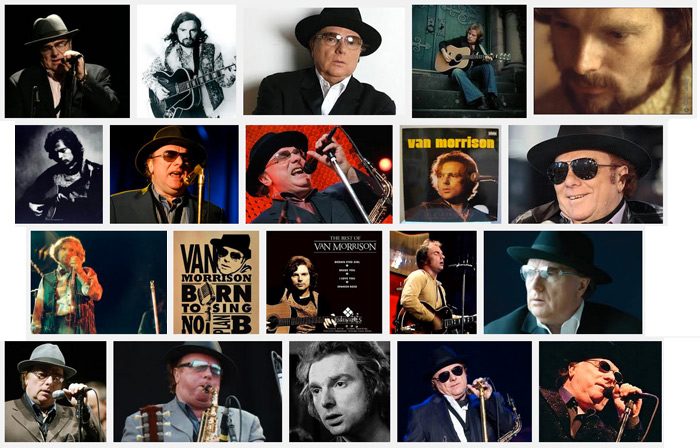
Note: No one will mistake Van Morrison as a “prog” rocker, but everyone acknowledges he is one of the most important popular musicians of the past fifty years. He has long been one of my five or six favorite musicians, ever since I first heard his music back in the summer of 1991. I wrote the following article in 2002 for Saint Austin Review, and since it has never been available online, I’ve decided to foist it onto Progarchy readers. I’ve made a couple of minor corrections, but otherwise it is unchanged and so it is, of course, somewhat dated. — Carl E. Olson
Ask most people (at least here in America) if they’ve heard of Van Morrison, and they will likely mention “Brown Eyed Girl,” the late 60s hit with a catchy chorus of sha-la-la-la-la-la-la’s. Although it’s a fine pop song, there is, fortunately, far more to Van Morrison than “Brown Eye Girl.” Since 1968 and the release of his classic album Astral Weeks, Morrison has created an impressive body of popular music that defies categorization. Using elements of folk, rock, jazz, soul, R&B, traditional Irish music, and even country music, the Belfast Cowboy molds songs that are earthly, emotional, spiritual, and, at times, transcendent.
Legendary for his difficult personality and his dislike for the press, Morrison has often sent confusing signals about his religious affections. Yet his finest work can rightly be called incarnational. This is not to say it is strictly “Christian,” but that it is rooted in reality (uncommon in much pop and rock music) and seeks to incarnate spiritual truth and meaning in concrete forms, themes, images, and narratives. Morrison is not interested in proselytizing, creating propaganda, or lecturing, flaws common in “contemporary Christian music” (mostly evangelical Protestant) and in the music of rock artists attempting serious statements about ecology, politics, and social ills. Such ends irritate Morrison, who seems to appreciate the power and limits of popular music. Once asked about fans looking to musicians for political guidance, he responded with irritation, “Why do people expect us to solve the world’s problems? It’s absurd. I mean, if politicians can’t do it, how . . . . can musicians?”
Although he has produced some mediocre albums and has occasionally alienated his fans and the press, Morrison has maintained a remarkably consistent artistic vision. His music is worth considering, I believe, for several reasons. As music, apart from message and lyrical themes, most of it is very good. Morrison’s mastery of styles and his ability to mesh seemingly divergent musical forms is impressive. The best of these stylistic marriages have a timeless quality, conveying a spiritual longing that is honest, vulnerable, and often moving. This mixture of earthy, cerebral, and spiritual is uniquely its own, providing Catholic musicians who work in popular music much to consider and appreciate.
The Childlike Vision
Born in Belfast in 1945, Morrison had an ordinary boyhood, with the notable exception of his father’s passion for American jazz, R&B, and early rock and roll. He spent hours listening to the records of legendary artists such as Jelly Roll Morton, Little Richard, and various blues singers. By the age of fifteen he was playing full-time in a skiffle band, eventually putting together the group Them in the early 60s. After releasing the hits “Here Comes the Night” and “Gloria,” Morrison went solo and eventually landed in New York City. Although “Brown Eyed Girl” was soon a hit, Morrison was miserable. Feeling trapped in his recording contract and misunderstood by everyone around him, he still managed to record Astral Weeks in two days – this despite not knowing the session musicians and (according to those musicians) not communicating with them.
Although it produced no hits and didn’t sell well, Astral Weeks soon became legendary within musical circles. The twenty-two year old Morrison had created a song cycle that was timeless, poignant, and spiritual, combining folk, rock, and jazz in open-ended compositions. Multi-layered and elusive, the lyrics describe people and places in Belfast, impressionistic sketches imbued with a mystical longing free of nostalgia and sentimentality. The songs are loosely structured around Morrison’s emotive vocals, the singer wrapping his voice around keenly detailed lyrics. In “Beside You”, he describes the approaching evening with minimalist precision, “Just before the Sunday six-bells chime, six-bells chime/And all the dogs are barkin’.” He then follows a mysterious woman as she moves down the roads and “way across the country”:
Past the brazen footsteps of the silence easy
You breathe in you breathe out you breathe in you breathe out . . .
And you’re high on your high-flyin’ cloud
Wrapped up in your magic shroud as ecstasy surrounds you
“Sweet Thing,” a more obvious love song, is also filled with images of walking the countryside, seeking and experiencing a timeless wonder: Continue reading “The Incarnational Art of Van Morrison”
TFATD (A Quick Altar-Call)
 There are a lot of things I’m not good at. One of them, in fact, is thinking of things that I AM good at. I’ve been accused of being some combination of Eeyore, Puddleglum, and Charlie Brown. More to the point I’m headed for here, I’m not very good at consistency, or at finishing things that I start. Oh, don’t worry (if you care); I’m NOT finished with either Spock’s Beard or Looking at the Lamb. And I guess I do have a SORT of good excuse because it’s the end of the semester, when academics are in even more danger of alcohol abuse than usual.
Anyway, I DID finish something that I started this week, and finished it the same day I started it. It was definitely, as the stereotypical smoker reclining on the pillow puts it with a smirk, very good for me!
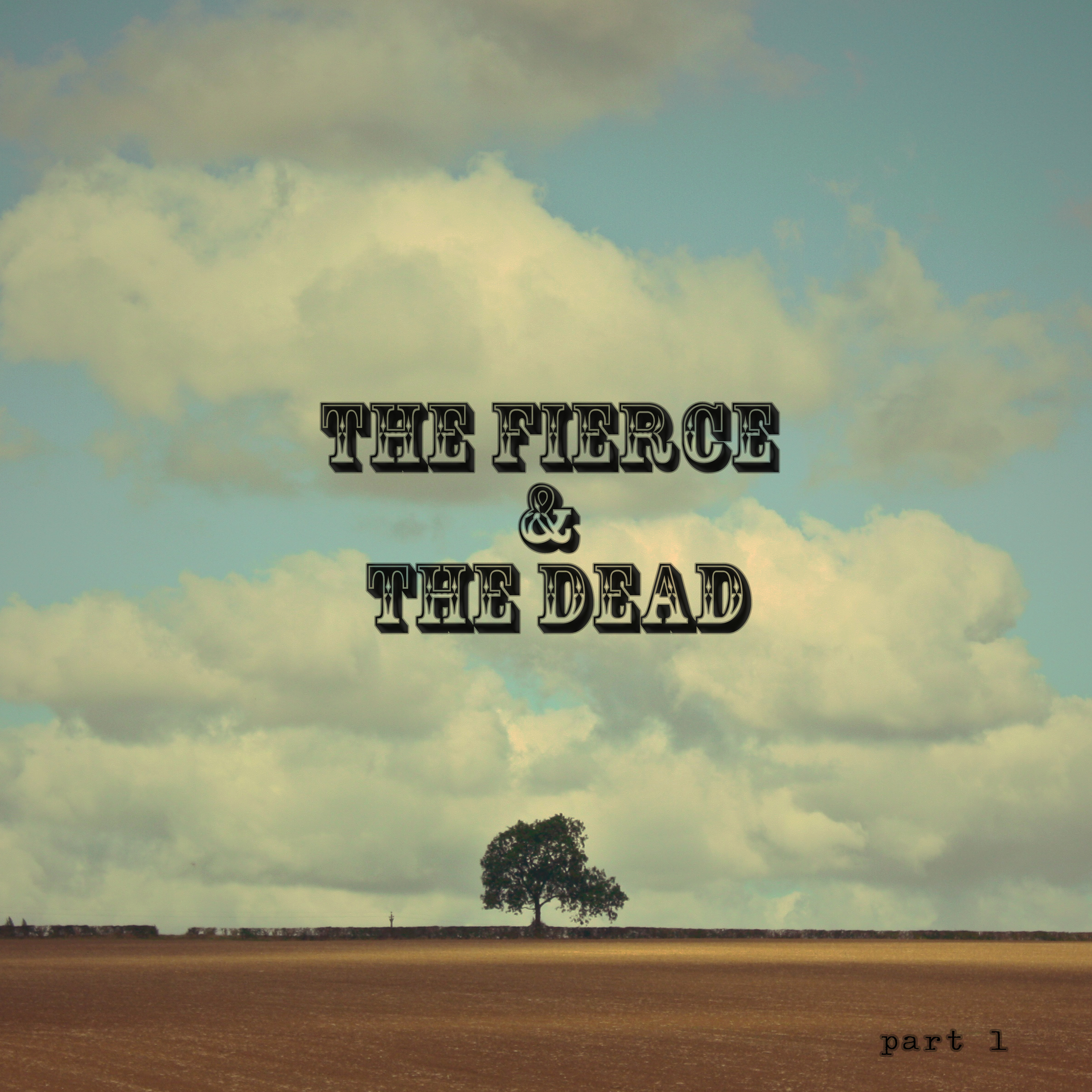
 What I both started and finished in the same day was listening to all I could access from The Fierce and the Dead.
Now granted, this is not of the same scope in listener-hours as my discovery a few years ago that I was liking everything I heard by Lou Reed, even the stuff Reed fans would say you shouldn’t like. Or, some will understand how difficult it is to respond to queries regarding what Zappa one should sample first. It’s nothing like that. Still, it’s the first time I’ve done that with an artist for a while. I mean, done it so voraciously.
I’ve complained here before about the “drinking from the fire hose” phenomenon. (Was it Erik who brought that up? Ian? I forget.) Lately, when it comes to the music to which I don’t seem to have time to pay attention, I’m tempted by the image of going for a drink at a huge waterfall with a disposable bathroom cup.
 But here, in the rich and deep sense, is something. It started with some ear-opening forays into Matt Stevens” breathtaking solo work, and now I’ve found the most wonderful dram of single-malt (neat). I’ve not been so suddenly and deeply struck by the textures, the moods, the goosebump-inducing wonder of a band’s recordings since King Crimson. I’ve confessed my newfound faith to my “current stuff guru” Birzer, who has bid me write. Hence, I write, though with much more rough effusion than thoughtful creativity (for the moment).
If I’m slowly beginning to build my own small pantheon of current “prog-related” (sorry, I just can’t leave off the scare-quotes) artists, I’m ready to affirm the divinity of TFATD. I gladly join those who look longingly toward autumn, and the promised Bad Elephant release.
.
New Tangent Ready for Pre-Order
As the Tangent posted this morning on Facebook:
 STATEMENT FROM INSIDEOUT/CENTURY MEDIA TUE 7/5/13
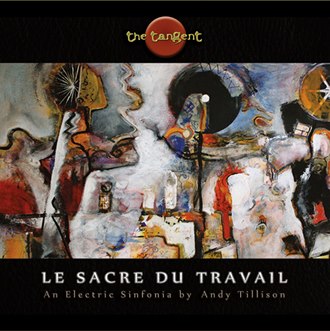
On the 24th June 2013, InsideOut Music is set to release the seventh studio album by The Tangent entitled Le Sacre Du Travail (The Rite Of Work). The album is the group’s first fully blown “concept album” but band-leader Andy Tillison is keen to point out that this concept is something that involves all of us now rather than a rambling fiction.
Formed from a single hour long piece of music in 5 movements and referred to by the band as “An Electric Sinfonia” based around a working day of a typical Western-world citizen, the album has a very personal feel. It’s highly orchestral and 20th century classical in tone, very much inspired by Stravinsky’s The Rite Of Spring. Described by INSIDEOUT CEO Thomas Waber as “A very mature album” with “Stellar Musicianship” – this album sees the lineup of The Tangent revert to an earlier formation, Andy Tillison (composer/keyboards/singer) again bringing on board Jonas Reingold on bass (The Flower Kings, Karmakanic), Jakko M Jakszyk on guitar & vocals (King Crimson, Level 42), Theo Travis on wind instruments (Soft Machine, Steve Wilson Band) with the new additions of Gavin Harrison on drums (Porcupine Tree) & David Longdon on vocal harmonies (Big Big Train). In addition there are cameo appearances by Rikard Sjoblom (Beardfish) and Guy Manning amongst others.
The Tangent add to the statement:
The artwork for the outside cover you see here, is by a remarkable gentleman named Martin Stephen. The interior artwork will be announced & featured extensively later.
Much more info on the Tangent Website updated today (please allow for bizarreness)www.thetangent.org And of course regular Pre-Ordering begins today!
Look out for more information on the album in the coming weeks!
The Fierce and the Dead Sign with Bad Elephant Music
The Fierce And The Dead
B.E.M. is delighted to announce partnering with The Fierce And The Dead for the production, release and worldwide distribution of the band’s second full-length album.
The Fierce And The Dead – guitarists Matt Stevens and Steve Cleaton, bassist and producer Kev Feazey and drummer Stuart Marshall – was originally born out of sonic experimentation when making Matt’s second solo album, Ghost, and they’ve developed into one of the most original bands in the UK rock scene. Their unique brand of instrumental rock music, fusing rock, post-rock, punk and progressive elements, has made a big impression through one full-length album and two EPs, and their incendiary live performances, most recently as part of the Stabbing a Dead Horse tour of the UK with Knifeworld and Trojan Horse.
David Elliott, founder and CEO of Bad Elephant Music said: “We’re proper made up to be working with The Fierce And The Dead. They’re absolutely our kind of band, and lovely guys too. I’m looking forward to hearing what Matt, Kev, Stuart and Steve are going to produce for us, and of course it will be an absolute monster. Collaborating with a band of TFATD’s calibre is a huge honour for us, and we welcome them with open arms to the B.E.M. family.”
Matt Stevens, on behalf of The Fierce And The Dead, said: “We are extremely pleased to partner with Bad Elephant on this album, they are true music lovers and believe in supporting the artist. This will allow us to make the music we want to make and have the support to help us gain a wider audience, without in anyway compromising our vision for our new album. And they like a good curry, which is nice.”
The as yet untitled album is scheduled for release in the Autumn of 2013.
The Best Album You Haven’t Heard Yet: Tim Morse’s Faithscience
 I’m a music addict. When I buy an album, it’s as much to get that rush of anticipation before I first hear the music as it is to actually listen to it. So, it’s wonderful to discover a new artist whose work more than justifies that initial hope of musical pleasure. Tim Morse is such an artist. His latest album, Faithscience, is an outstanding collection of progressive rock. I had never heard of him, but Faithscience showed up in the Progarchy Dropbox folder, I had a lot of yardwork to do, so I downloaded it onto the trusty iPod.
Four consecutive listens later, I’m still as excited about this guy’s music as I was the first time I discovered Spock’s Beard. (By the way, Tim is not related to Neal Morse.) My initial impression was of a definite Yes influence, and after I did a little research I found I wasn’t too far off-base; Tim is the author of Yesstories, a track-by-track history of that band. However, if you listen to Faithscience with the deliberate attention it deserves, you’ll notice a host of other influences; I hear Ty Tabor (King’s X), Roine Stolt (Flower Kings & Transatlantic), Toy Matinee (featuring the late, great Kevin Gilbert), some 70s Kansas and Genesis, and a lot of classic Todd Rundgren (think “A Wizard A True Star” era). Morse is a multi-instrumentalist who sings and plays keyboards, as well as acoustic & electric guitar.
That’s not to say Mr. Morse is merely an imitator of those influences. They serve as a springboard to create an incredibly beautiful work that is as individual and groundbreaking as any prog classic. On his website, Tim says the initial idea was to produce an album based on the life of Charles Lindbergh. However, the songs soon expanded to embrace a much larger concept. The first two-thirds explore different aspect of journeys, while the final third is about farewells.
The first highlight is “Voyager” which is about Lindbergh’s transatlantic flight. It features some very nice keyboard solos in the vein of classic Pink Floyd and Weather Report(!). Next is “Closer”, which features a beautiful piano motif that reappears throughout the song. At first, it seems to be a standard song about getting close to a romantic partner, but it ends up having a spiritual aspect to it. It also features a killer guitar solo (video below). This is followed by a classical guitar interlude accompanied by evening crickets that segues into “Numb”, which is inspired by the Lindbergh baby kidnapping and chronicles the emotional devastation that follows a personal tragedy. It’s an acoustic piece, and it is incredibly moving.
“Myth” is an Orwellian warning about the dangers of an all-powerful state.
It’s an iron fist inside a velvet glove
I despise everything we’ve come to love.
…And it’s no mystery how this myth
Becomes our history.
Let us help you.
Truth shall make you free.
Next up is “Found It”, which features some warm, 80’s-era synths before the guitars come crashing in. It’s about leaving behind old ways of life in the search for salvation. Morse’s collaborator, Mark Dean, lays down the best guitar solos of the album on this track.
In “Rome”, Morse laments the decadence and complacence of our times by comparing them to the end times of the Roman Empire. This might be my favorite track, with the lyrics
The empire is crumbling
Sending castles into the sea.
Opportunity dissolving
Still believing we are free.
“Rome” also features a terrific violin solo by Kansas’ David Ragsdale (video below).
“The Last Wave” is a mostly instrumental track that consists of various riffs and melodies thrown together La Villa Strangiato style. We’ve got jazz vibes and trumpet, metal guitar, prog keys, and some crazy time changes on this one.
Wrapping things up are two tracks that complement each other, “Afterword”, and “The Corners”. The former is a poignant farewell to a soul mate, while the latter is a heartbreaking song about the brevity of life on a beautiful world that few truly appreciate.
Self-produced, Faithscience is a triumph. It is amazing to me that a musician is able to put together an album of this quality without any major label support. Do yourself a favor and support his art by picking up this album now. You won’t be disappointed.
Here’s “Rome”:
Here’s “Closer”:
Existentialist Prog–John Galgano
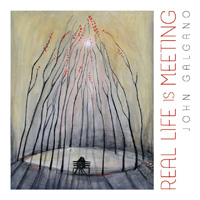 A review of John Galgano, “Real Life is Meeting,” (Doone Records, 2012).
You may not like what I say.
You may not like the way my eyes stay straight.
But I tell the truth.
–John Galgano, “Real Life is Meeting, Pt. 1”
Appearing amidst a whirligig of CDs in that prog annus mirabalis, 2012, John Galgano’s first solo album barely got noticed. And, this is to the great loss of all of us who love beautiful things. For Galgano’s art is of the highest quality, and this CD would be regarded by any sane person as a must-own, prog masterpiece.
From the beginning note to the last word, the CD breathes integrity and a real wholesomeness. It is, clearly, a labor of love. The lyrics, the performances, the packaging. Everything.
Each instrument performs spectacularly. None, though, stand out in terms of quality more than the bass. Indeed, the bass work is nothing less than extraordinary. If there is a failing to this album (and this would be the only one), however, it is that the bass is way too low/quiet in the mix. When I listen to the album, I have to strain to hear the bass–but it’s worth it, as the bass soars in both subtlety and craftsmanship.
But, the highest of the high–that which holds the entire album together–is the combination of the voices of Galgano and Laura Meade. Alone, each is stunning. Galgano has a distinctive voice, and it’s as clear on this solo CD as it is on IZZ albums. He possesses a warm, charismatic, and inviting voice. In part, this is just a gift of nature, but it’s also a result of his integrity. That is, it’s rather clear to any listener that Galgano believes in what he’s singing. But, Galgano is at his best when signing with, around, and next to Meade. Together, they sound like a chorus of the heavenly muses. If these voices are the ones I hear seconds after death, I’ll be confident I’m heading to the right place for eternity.
There are nine tracks, ranging from a minute and a half (bizarrely called “Galgano Bonus Track) to the full-blown epic, “1000.” Common themes–relationships, suffering, depression, redemption–predominate. When Galgano and Meade sing of love, it’s difficult to know if that love is transcendent of earthly. Regardless, it’s good. To be sure, it’s very good.
Nothing Added to nothing
Gives us lots of Nothing
The only thing
The only thing
The only thing
Is Love.
–John Galgano and Laura Meade, “The Only Thing”
Most readers of Progarchy know Galgano as one of the essential parts (and persons–let’s not be too uncouth here!) of the astounding American prog band, IZZ. In recent advertisements and billings, John Galgano solo is presented as “IZZ Lite.” From my listening of/to his excellent solo album, I can’t quite agree with the advertising, but I understand the meaning. Perhaps it might be better to state: Galgano solo is IZZ while the whole band is IZZ completed. Regardless, whether one might call this IZZ or IZZ Lite or IZZ completed, this solo album is an amazing and beautiful piece of art, radiating conviction in every one of its aspects.
Even Galgano’s CD package itself is a thing of beauty. The colors and fonts are tasteful, the image of the front cover, entitled “Cathedral” is quite stunning in a late-1950s Dave Brubeck-artful kind of way. [The title, the inside information reveals, comes from a line in Jewish humanist and existentialist Martin Buber’s, “I and Thou.”] Even the lettering of the lyrics is quite nice. While I love packaging in general, I rarely find anything beyond the actual artwork worth commenting on. Here, though, it’s worth praising. Overall, the packaging, the fonts–everything–is just, well, like the music itself, tasteful. The one thing I don’t get are the three dates subtly in the background: 1945, 1974, 1923. I’m sure these have some kind of meaning, but no explanation is offered.
It would be a crime to all art, all rock, and all prog should this release continue to be barely noticed by the music community. Sadly, I did not know about it until last December when I was playing around a bit at the IZZ website. As soon as I saw it (and the title captivated me, as it has great significance for many of my personal heroes, including T.S. Eliot, C.S. Lewis, and Christopher Dawson), I ordered it. Had I known about it earlier than the last month of the year, I would certainly have included it in my top CD picks of 2012.
I’ve been meaning to write this review for nearly five months now. Finally, here it is.
Order “Real Life is Meeting,” and cherish it. It’s a rare and precious thing, and it deserves every ounce of support we can offer.

Real life is meeting
I have known this house
There is copper in the soil
–John Galgano, “Real Life is Meeting, Pt. II”
 Progarchy