Review: Time and Space, by Lobate Scarp

From Soundcloud:

Over 50 musicians were involved in this progressive space-opera rock extravaganza. Guitars, Drums, Synths, Organs, Trumpets, Saxophone, Viola, Violin, Cello, Theremin, Glockenspiel, and a Latin singing choir were all recorded on this one. Peru Percussionist Alex Acuña (Weather Report) appears as a special guest percussionist and Rich Mouser (Spock’s Beard, Transatlantic, Tears For Fears) mixed and mastered the album.

Imagine having that many people involved and managing to keep things together! There sure is a lot going on in this album but whether that’s for better or worse is in the ear of the beholder. I think the decision to use so many instruments worked some of the time, but sometimes not so much.

The eponymous 15-minute opening track is a great example of a surfeit of variety. It opens with a moody cello, which adds some nice gravity (hur hur, space rock, geddit?) and eventually leaps, Latin-esque into what reminds me of V-era Spocks Beard. Brass, congas, funky! Soon the instrument tally is rapidly increasing, and past the 9 minute mark I actually lose count. Most of it works well but a few choices are somewhat jarring to my delicate ear. Sometimes less is more and…well…more is too much. But it’s still a great opening track. Could it have been a bit shorter? Yes, they could have brought things to a close at the 9-ish minute mark after the wonderful soaring synths, and as most of the instrumentation super-sizing seems to be post-9 minutes I’m not sure the track would have lost much if they had chopped it off then. Anyway it’s still a very strong opener.

And this is where things get a little disappointing. Between tracks 2 and 6 the album has too much of a recurring “Ooh baby I love you and miss you” theme, disguised with some proggy flourishes. Granted, many of those flourishes are pretty nice – symphonic, melodic, blood-pumping (you name it, they have it – and of course they certainly have the instrument inventory to pull it off…) but it leaves me with an overall feeling that there is nothing lyrical I could enjoy. Lyrics-wise, I’m of the opinion that too much of the same thing soon becomes stale, especially when it comes to the ‘L’ word. As I am sure William Holden would tell you, were he able to speak any more, “Love is a many-splendoured thing,” (although he would omit the ‘u’ but I am English I so will spell it properly,) and maybe I’m sounding like a 9-year-old, but when every song is about luuuurve things get a bit…well…icky. This sort of thing (at least this sort of thing when repeated 5 tracks in a row) doesn’t float my boat. I look for higher themes in my prog, or at least lower themes dressed in frills. Or subtle clothing. The raiment on display here is neither spandex-clad and expensive-looking nor sufficiently-subtle and heartstring-tugging for my personal adulation. It has pop music lyrics. The astronaut (assuming that’s what he is) sounds like he should have failed his NASA psych evaluation.

So that’s quite disappointing for an album that started off pretty well.

And then the last track comes along, and I’m bemused once again. It has a great, atmospheric opening, and is really interesting to listen to. There’s some great guitar work, a full choir, and it nicely builds the momentum, eventually returning to some of the themes from the opening track. It’s a great way to end the album. It’s as if all of the banality of the middle 5 tracks didn’t happen. Damn!

In short, Time and Space is an album bookended by great tracks, but the middle is, for me at least, too weak to justify a purchase.

And if you are wondering about the band’s name:

Lobate scarps are widely distributed over Mercury and consist of sinuous to arcuate scarps that transect preexisting plains and craters. They are most convincingly interpreted as thrust faults, indicating a period of global compression. The lobate scarps typically transect smooth plains materials (early Calorian age) on the floors of craters, but post-Caloris craters are superposed on them. These observations suggest that lobate-scarp formation was confined to a relatively narrow interval of time, beginning in the late pre-Tolstojan period and ending in the middle to late Calorian Period. In addition to scarps, wrinkle ridges occur in the smooth plains materials. These ridges probably were formed by local to regional surface compression caused by lithospheric loading by dense stacks of volcanic lavas, as suggested for those of the lunar maria.

A Wonder Working Stone by Alasdair Roberts & Friends

ImageI’m not a churchgoing man.  Not to say I don’t very occasionally go; to keep the peace with the wife, yes, but also to partake of the fellowship in those rare moments when spiritual fellowship seems like a good idea to me.  It was on one such occasion recently that the church choir and orchestra, such as it was, made a distinct impression.  The roiling, echoing wave washing over the congregation from one of the chapel’s corners was weirdly ghost-like.  An acoustic guitar, a tambourine (and bodhran maybe?), a violin, the church organ.  There was some drifting off-key as they went through a selection of modern and traditional Christmas tunes.  These were not masters at work — but there was a percussive backbone and a feeling of possession over the music that was touching, spirited, and ultimately impressive.  It took an old rite, the Christmas service, and made it at once accessible, even primitively groovy, and yet kept a grounding in tradition.  Continuity and rebirth.

In listening to Alasdair Roberts’ new album, A Wonder Working Stone, I was reminded of this rare church moment, particularly on the tune “Fusion of Horizons,” penned by Roberts, like all the songs on the album, yet redolent of the hymnal.  Roberts, a Scot who sings in full accent, works a narrow channel of contemporary music.  With an eye to traditional Celtic and British folksong, which he masterfully reimagines across several of his records (witness “The Daemon Lover” from 2010’s Too Long In This Condition: http://www.youtube.com/watch?v=Y2soWDfwxNE), he fashions here lyrics and tunes that sound as if they have sprung full-grown from the head of the 18th and 19th centuries.  In “Fusion of Horizons,” a reflection on the nature of love, Roberts sings:

Love is a trellis of early roses
A shady arbor the soul encloses
Never jealously imposes
Fellowship on one who’d be alone
It’s a holy wand of gnosis
It’s a wonder working stone

While Roberts has few peers his own age, he’s working in a tradition that began a half century ago. The British and Celtic folk revival spawned composers who, like Woody Guthrie, Pete Seeger, Hedy West, and Bob Dylan in America, both interpreted folk songs and used folk templates to create songs reflecting their own time and thoughts.  Bert Jansch, Martin Carthy, Archie Fisher, Bob Pegg, the Watersons, Andy Irvine, Barry Dransfield, and Richard Thompson developed unique approaches to re-thinking traditional music, embellishing existing tunes and lyrics, as well as writing new narratives within the “folk” idiom.  Instrumentation, time shifts, and electricity were used elastically, and often to great and powerful effect, shrugging off the often-heavy yoke of tradition that spawned such legends as Pete Seeger’s pulling the plug on Dylan’s electric set at Newport (for there are few scenes more radically protective than the oldtime/traditional folk scene).  Roberts has absorbed this and his records reflect a strong recognition of those who came before, whether we’re talking 30 or 130 years.  He is a curator, in spirit and in fact.  In 2011, he put together a compilation of Scottish field recordings made by the venerable American collector of song, Alan Lomax.  He has worked with luminaries of the British folk revival and participated in a posthumous tribute to one of the great singers and writers to emerge from that period, Lal Waterson.  But while he is something of a documentarian and has a pedagogic streak, his music is a mix of wildness and restraint, electric and acoustic and brassy, a complex take on difficult times.  Folk-influenced contemporaries he’s often associated with, like James Yorkston and Will Oldham, paint warm canvases that lull and think and often swing, and are perhaps more indebted to indie rock, Nick Drake, and Belle and Sebastian than to the darker musings and ancient settings of Richard Thompson that more closely characterize the territory Roberts travels.  It is RT that Roberts might be most successfully compared to, because of his approach to song, his technical skill, and his ability to entertain rather than bat over the head with his scholar’s knowledge.  And, like Thompson’s, Roberts’ writing is decorated by mortality.

Death is alive, in The Wonder Working Stone, as it is in much of Roberts’ music, bloodied and a shame and inevitable, and not without its share of humor.  In the grand tradition of the darker streams of folk music, whether murder ballad or lament, his wizened voice possessing the sly vulnerability that colored Vic Chesnutt’s work, Roberts sings away the fear the way most reasonable souls, if unwittingly, do.  “The Merry Wake” begins this double album just so, and is a good example of his approach:

In hour of mayhem, in time of misgiving
Some turn to pastor, some turn to priest
Some would consort with the miserable living
But we’d rather sport with the gleeful deceased

Explaining each song in a note following his lyrics — for full effect I suggest pony-ing up for the LP, but the CD version should have these as well — Roberts resurrects a practice common to the folk revival, providing a thumbnail of his sources and inspirations.  These are mostly Scottish and Norse in origin, and Roberts masterfully uses religious, class, and national conflict from centuries past to create a mirror many of us might relate to.  In “Song Composed in December,” against a backdrop including a horn section (evoking Martin Carthy’s and John Kirkpatrick’s Brass Monkey project), he sings:

Woe to those who celebrate the taking up of violence
And woe to those who perpetrate delusions of their sirelands
Who’d fight for no reason with sword or with firebrand
Be they reiver in the border or raider in the highland

And joy to those who’d use their songs
as clues to find their clans
But woe to those who’d use them
to enslave their fellow man

His note on the song:

The title of this song is a nod to Robert Burns’ ‘Song Composed in August’, memorably recorded by Dick Gaughan on his 1981 Topic Records album Handful of Earth, under the title ‘Now Westin Winds’. The melody, like the sentiment, is international — the verse tune is extrapolated from that of the Irish song ‘The Bogs of Shanaheever’ as sung by the late Joe Heaney (1919-1984); the first instrumental break is the English Morris tune ‘Traveller’s Joy’ which was taught to me by the then Exeter-based fiddler and singer Jackie Oates; the second instrumental break is the Scottish tune ‘The Bluebell Polka’ which was made famous by the late accordinist and cellidh band leader Jimmy Shand (1908-2000). Rafe Fitzpatrick wrote the Welsh rap.

You get the idea. Alasdair Roberts is folk polymath.

Musically, the center of the album is Brother Seed, which Roberts describes as “the most recent addition to the canon of Scottish folk songs concerning the incest taboo.”  Anyone familiar with British and Celtic folk songs knows this is not unusual territory; between foxes running off with maidens, lairds skewering their wives’ teenage lovers, women disguising themselves as men to to go sea or seek revenge at court, and fiddle-playing fathers hanging their rapist sons, the field is rich with humanity’s darker impulses.  Roberts has been performing Brother Seed for a while, and when I first saw this video I searched for the song until I realized he hadn’t released it yet:

http://www.youtube.com/watch?v=XcMQ7VyIhIs

Divided into two sections, Roberts begins the song as Martin Carthy or Bert Jansch might, as a quickly fingerpicked, droning 9/8 (I think — I’m open to suggestion) fiddle tune with an unexpected melodic twist, a vocal bend between following the first refrain — “The greenwood waxes early” — that is matched on guitar by taking two half-steps up from the IV, achieving a tension that resolves in the second refrain — “Where the deer go running yearly.”  The whole picture is of a dark future, foretold by the girl’s mother, and in the second half of the song, where there is a down-tempo shift and the appearance of a dour and further darkening keyboard, “Brother Seed” turns fully to lament.  While the song is challenging thematically, it engages the listener in an ancient drama, the establishment of humanity’s rules and who is meant to suffer when those rules are broken.  This is the continuing appeal of “traditional” folk music, whether the text is old or, in Roberts’ case, newly wrought.

While there is no question that The Wonder Working Stone has a traditional feel, folk’s simplicity here is scored on a complex scale.  The variety of the instrumentation — 13 musicians worked on this record — and the arrangements offer a richness rewarding close and casual listeners alike.  Never overwhelming Roberts’ lyrics, which are epic and a joy to read (not something you can say about all songs), the cast here includes flutes, trumpets, trombones, goats feet(!), keyboards, and some very wonderful electric guitar by Ben Reynolds, whose contribution is akin to Jerry Donohue’s or Richard Thompson’s on Sandy Denny’s solo albums.

A Wonder Working Stone is the portrait of a musician at a summit of his musical and lyrical powers, working with finesse, restraint, and boldness a territory that continues to inspire interpretation.

Craig Breaden, February 3, 2013

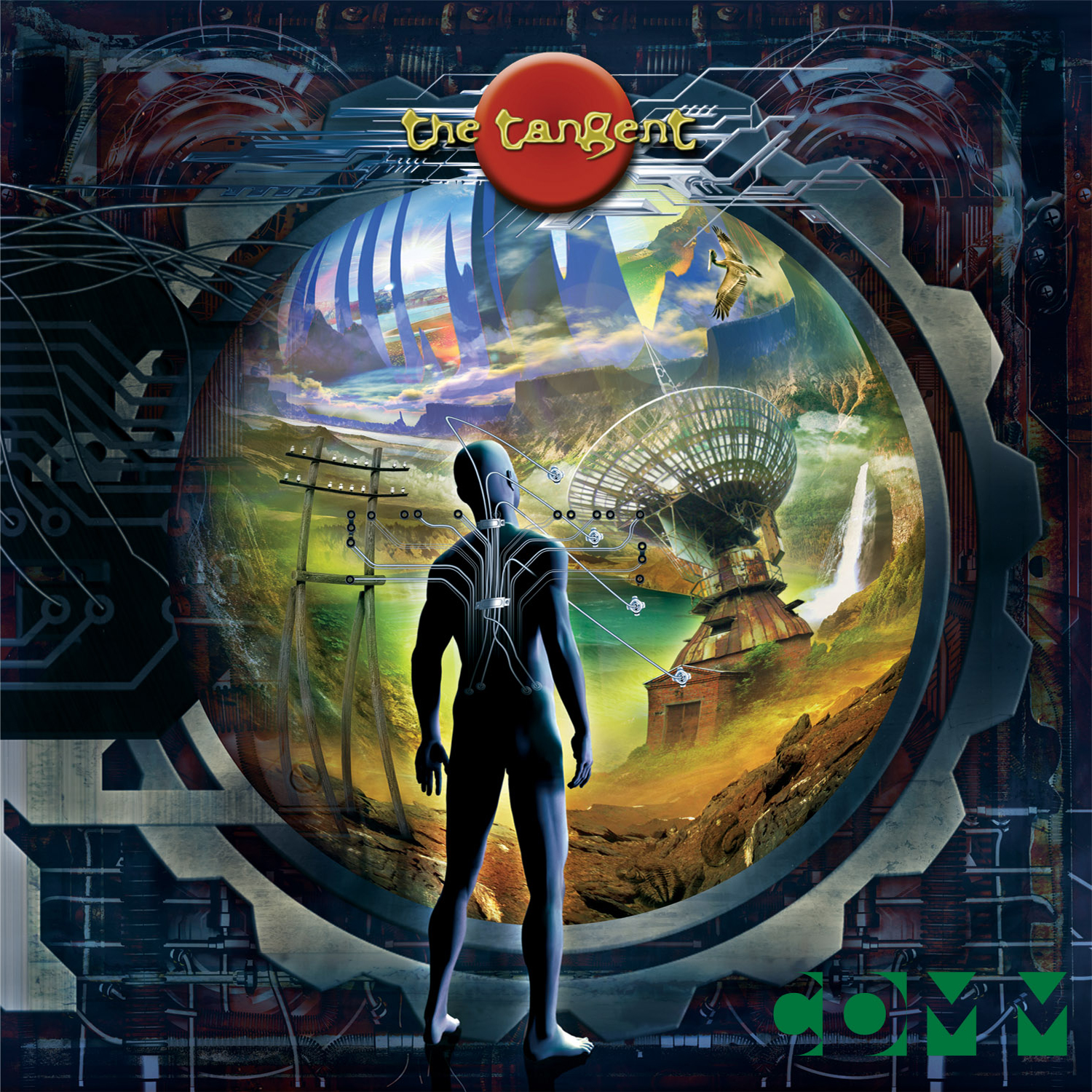
COMM, The Tangent

Image

The impact of technology on society seems to be a recurring theme in progressive rock releases of recent times.  Already in this young year, King Bathmat has released ‘The Truth Button’, reviewed by Ian below, which deals with some of the darker aspects of our technological world.  In 2012, Arjen Anthony Luccassen released ‘Lost In The New Real, reviewed earlier by Brad, which follows a protagonist awakened in a distant future as he navigates the reality of a world he does not recognize – while also inviting us to imagine what our world would look like to someone from the past.  And preceding those two, is The Tangent’s COMM from 2011, which explores aspects related to the communications enabled by our digital world. 


COMM opens with sounds that now seems ancient – the squawking of two modems making a connection over a phone line, perhaps for someone’s dialup internet connection or perhaps somebody preparing to send a fax.  This provides the opening for the 20-minute epic ‘The Wiki Man’, which explores both our dependence on the internet and some of the various ways we use it.  Full of witty and biting observations, the piece also includes some incredible keyboards, including a nice, jazzy piano interlude that starts at about the 7:00 minute mark. 


The next two tracks, ‘The Mind’s Eye’ and ‘Shoot Them Down’ are not part of the concept proper, according to this interview with Andy Tillison.  ‘The Minds Eye’ refers to how we see and think of ourselves, and I find this piece more interesting lyrically than musically.  With respect to ‘Shoot Them Down’, it’s the opposite, as it relates to internal British political matters with which I am not familiar, but it does have some excellent guitar work.


‘Tech Support Guy’ returns us to the theme of the album, chronicling a very bad day for the tech support guy Adam.  Adam, it seems, is to be blamed for everything that goes wrong with his company’s network, never mind the fact that he didn’t build the servers, or write the software while the source of the problem is an ocean away.  The lyrics illustrate one of the darker effects of all of the instantaneous communications technology that surrounds us today, mainly the virtual loss of even minimal patience when something goes wrong (as it most certainly will sooner or later) and the impulse to blame someone for the problem with out thinking things through.  ‘Tech Support Guy’ will leave you sympathetic for the thankless tasks performed by all of Adam’s real life counterparts – and might also leave you hoping that the marketing manager’s boss walks into his office during the early moments of the system outage (you’ll understand the reference after you read the lyrics).


It’s in ‘Titanic Calls Carpathia’ that the concept of this album is really driven home.  Clocking in at a bit over sixteen minutes, ‘Titanic Calls Carpathia’ is divided into six sections.  The first two sections deal with two of history’s most famous distress calls, the first being referenced by the title of the piece, the second being Jim Lovell’s call to Houston during the ill-fated Apollo 13.  These two sections lyrically set the theme for ‘Titanic Calls Carpathia’, which can be interpreted as a distress call to our modern culture and society, many members of which who become obsessed with their gadgets and gizmos without realizing or stopping to think that what that obsession is doing to them. 


And now we can all talk across oceans

If we get things sussed we don’t even have to pay!

We get “FREE iTunes songs” when we return an empty bottle

But there’s so much around

That we throw the damn thing away


                        …


Beyond the rusting pylons, beyond the looted homes

People scrabble around for batteries to get more talk time for their phones

We want so much without paying, we forget someone has to make

The things we want for ourselves so we just eat each other’s cake


I’ll leave it to the reader to interpret the meaning of those lyrics for themselves, and indeed they could have different meanings to different people.  Needless to say, that in ‘COMM’, Tillison chooses to look at the dark side of technological advance on everyday lives, focusing on our trivial uses thereof, our loss of perspective resulting from its use, and in general, and how much we have let it spoil us. 


I’m not a technophobe, far from it – I’m very pro-technology.  But the message here is nevertheless something worth pondering.  Technology is a tool, and as such is neither good nor bad.  The various uses and abuses of technology is what makes it one or the other.  It’s great that we can all communicate with one another through avenues such as this blog, Facebook, email, and so on.  And it is certainly incredible that we have access to so much information almost instantaneously.  At the same time, it’s not so good when the use of technology becomes the preoccupation of one’s life to the exclusion of almost everything else.  I guess the real message here is one that applies to much more than just the realms of technology – everything in moderation.

Dolby’s Flat Earth. Half Perfect.

A few days ago, I had the honor of remembering–in some admittedly rather nostalgic ways–the spring of 1982 and my first encounters with Thomas Dolby. Two years later, Dolby released his second album, The Flat Earth. I have no doubt that I was the first person in my hometown of Hutchinson, Kansas, to buy the album. Certainly, I bought it the day it came out; one of the anticipated magical Tuesdays when the new albums appeared on the shelves. Well, I suppose that maybe there was a secret Thomas Dolby fan club in my Kansas town, meeting randomly in the wheat fields under waning moons, but I suspect not.

I’m fairly certain I was the most die hard Thomas Dolby fan west of Kansas City and east of Denver.

I remember devouring The Flat Earth, wanting to understand and deconstruct every element of it, and cherishing the entire encounter. “Only a fool would blame the death of rock n roll. . . .”

I was fifteen, possessed a good vinyl collection, a solid stereo system, and some top-notch Sennheiser headphones. At that time–the kind of time and leisure that only a modern teenager of western civilization enjoys, before video games kidnapped our young–I would finish my school work, turn out all of the lights, start an album, and listen intently with the headphones.

This Thomas Dolby sounded nothing–and I mean nothing–like the Thomas Dolby of The Golden Age of Wireless. At least to my young ears. Where Golden Age was electronic, Flat Earth was organic. Where Golden Age was clever, Flat Earth was wise. Where Golden Age was curt, Flat Earth meandered. Where Golden Age told one Bradbury-esque story after another, Flat Earth offered images, doubts, and questions. Indeed, if Golden Age was more Ray Bradbury, Flat Earth was more Philip K. Dick.

Side one especially grabbed me. The images floated through my head, caught between the poles of the left and right phones. Stereo and yet more so. Anti-communists smuggling out information from within the Soviet Union as typewriters become sampled and drummed and sampled some more; a man limited by his own securities, his imaginative longings wanting to find liberation; a wistful love for some film noir Hollywood starlet.

Side two never held up quite as well as side one in my mind. The strings and wind chimes beg the listener to wonder and enter into a dark Southern California urbanscape for about 24 glorious seconds, but the bass and drums come in way too forced, shattering the mythic aura Dolby so expertly created on side one. It’s never fully absent on the first song, but “White City” goes quickly from being a thing of beauty to a pounding repetition. “Mulu the Rain Forest” manages to recapture some of the magic, as does the brilliant remake of “I Scare Myself.”

“Hyperactive,” while certainly clever, comes across as a song that should’ve have been made a b-side, breaking any coherent possibilities for The Flat Earth. The mad scientist of “She Blinded Me with Science” returns, and novelty, rather than beauty, defines the album as a whole.

Side one, though, even nearly 30 years later, holds up perfectly. It is sheer musical genius.

Through it all, Dolby’s utterly earnest (if not always beautiful) voice and Matt Seligman’s bass hold everything together.

While I’m probably being more harsh than I should about side two, I would highly recommend picking up a copy of the album. Side two only seems less than perfectly interesting precisely because side one is so perfect.

I would also forego buying the 2009 expanded edition, as the additional songs really do nothing except further demonstrate Dolby’s novelty side. There’s too much “Purple People Eater” in this music.

Cosmograf–only 3 days before release

Make sure you head over to http://www.cosmograf.com to order Robin’s latest album.  It will be released in three days.  So, make sure to order now.  Lots of our progarchy favorites–including Greg Spawton, Nick D’Virgilio, and Matt Stevens–contribute to the album.  Also, the web is buzzing about what a great album it is–Robin’s best.  So, order away!

Poltergeist

I wonder if any fellow Progarchists have been taking an interest in the Poltergeist project over at PledgeMusic?

This involves Will Sergeant and Les Pattinson, the original guitarist and bassist, respectively, of Echo & The Bunnymen. They’ve ‘gone prog’ (or prog/post-rock, from what I’ve heard) and are recording an album called Your Mind Is A Box (Let Us Fill It With Wonder).

Will has just posted some interesting reflections on his prog/punk roots – although you’ll need to pledge to read them, I’m afraid!

Album art for

Wintergatan – Sommarfågel

I don’t know anything about this band, except they’re from Sweden. I’ve got to admire anyone who wields an accordion with the panache this guy does, and they sure know how to put together an infectious tune. They have a new album coming out soon.


The Madness of Glass Hammer

The horror!  The horror!

Ok, it’s not yet the Feast of St. Valentine, so I won’t go into complete terror.

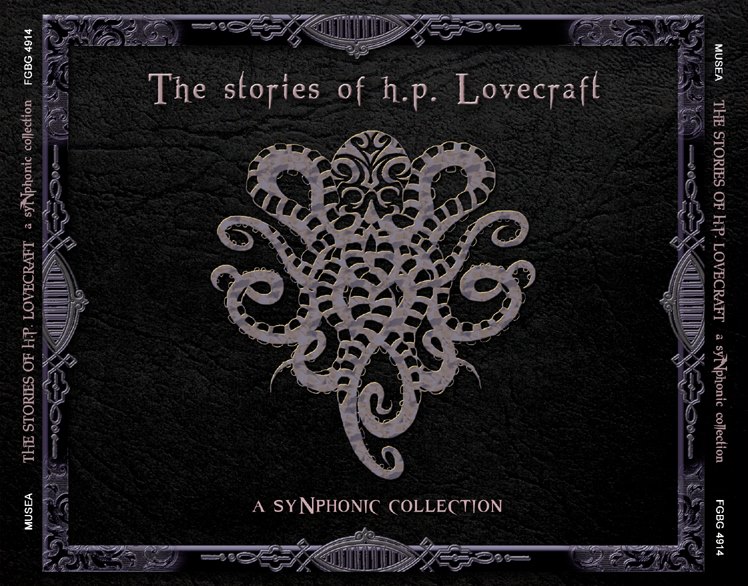
If you have a moment and if you (in the U.S. at least) possess $.99, there’s little better you can do with that money than purchase Glass Hammer’s latest single, “Cool Air.”stories synphonic

It’s their only contribution to a project exploring–through prog–the stories of H.P. Lovecraft.  It’s cleverly subtitled “A Synphonic Collection.”  Here’s the link at amazon.com:

http://www.amazon.com/Cool-Air/dp/B00ASHC30A/ref=sr_1_1?ie=UTF8&qid=1359585412&sr=8-1&keywords=glass+hammer+cool+air

Considering the typical Glass Hammer themes of nobility, whimsy (Steve and Fred can be hilarious), and struggle, the lyrics to “Cool Air” are a bit shocking.  I can’t quite piece the whole story together, but I think it’s about a man who tries to use science (and some kind of gnostic magic) to preserve and extend his life.  He, of course, fails, and the story of the song seems to take place 18 years after his death.

The horror, indeed.

The song has everything: brilliant Glass Hammer music; narration; and creepy lyrics.

I doubt if I’ll listen to the song over and over again, as I do with other Glass Hammer songs and albums, but only because I don’t think I want all of the lyrics running around my head or soul.  Still, it is pretty great, if unusual.

New Thieves’ Kitchen out today

thieves-kitchen-one-for-sorrow-two-for-joy-jan-2013The latest album from Thieves’ Kitchen is now available from a variety of sources.  Long live Anglo-Saxon-Celtic-Scandinavian prog!

http://thieveskitchen.wordpress.com/2013/01/29/14s24j-now-available/

Sha Na Na and the Invention of the Fifties

For my American colleagues..an old blog mailed to me by a friend, this may interest those who like music, myth and the invention of history.

http://www.college.columbia.edu/cct/sep_oct08/features1