Challenging Greed and Media Whoredom: 3rdegree’s “The Long Division”

“The Long Division” By 3rdegree (2012)

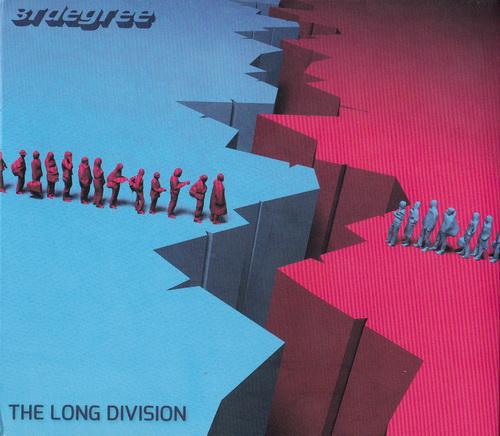
Sometime right after Christmas, I had the great joy of receiving a package addressed to Progarchy from New Jersey.  A nice note accompanied the very intriguingly-packaged CD, “The Long Division” by 3rdegree.  long division cover

Lots of great CDs have come in for review, but I’m always surprised when they’re not accompanied by some explanation.  Or, it would be better to write: I love getting notes from the artists themselves.  Even the short “Hey, let us know what you think” offers a personal connection.  Maybe it’s just my Kansas upbringing regarding such things as “thank you notes.”  But, I digress.

Suffice it to write, the note from Robert of 3rdegree said: love what you’re doing; please check us out when you have a moment.

Absolutely!

And, for the last month, I’ve been thoroughly enjoying my time with 3rdegree’s 2012 release, “The Long Division.”  Imagine Steely Dan, Echolyn, and Tears for Fears in the studio together.  Maybe throw in just a touch of the more complex aspects of some 70s harder rock.  Prog it all up and throw some New Jersey attitude in.  Finally, mix in some really bitter populist–true and righteous (in the best sense)–lyrics, and you start to approach the wonder that is 3rdegree.

And, I should mention, this is really, really American.  How can I state this?  I’m frankly not entirely sure.  But, the whole cd certainly feels very American.

As with much of prog, there’s a real perfectionism here, too.  The keyboards (especially the piano), the bass, the drums, and the guitars sound very sharp.  The mix is simply excellent, and the group feels tight.  My guess is they like each other very much.  I don’t think it would be possible to play like this without a real sense of perfectionism and sympathy with and respect for one another.

My favorite part, though, are the vocals.  The closest comparison I could make–in terms of vocals–is to the best of Spock’s Beard, Gentile Giant, and early Echolyn.  I can’t imagine the vocal arrangements here ever getting boring or rote in any way.  Outstanding.  Truly outstanding.

This leads me, naturally, to the lyrics.  When Carl, Chris, and I started Progarchy, we decided to make music the focus and avoid–wherever possible–the subject of religion and politics.  The three of us already do that fervently elsewhere on the web.  Progarchy is meant to be a music site, open to all.

That said, I don’t think it would be possible to review this cd without at least a mention of the politics presented here.  Never dumbed down (thank you, 3rdegree), the lyrics reflect a real anger at the state of American political culture.  Whether that anger stems from a Left or a Right–a liberal/Democratic or conservative/Republican–position, I just can’t tell, despite my numerous readings of the lyrics.  My guess is that these guys are simply too smart to be either left or right.  Clearly, they’re not fans of corporate welfare.  But, they don’t seem thrilled with eco-freaks either.  Here’s their own statement on their website:

“You’re Fooling Yourselves!”, wails 3RDegree lead singer/keyboardist George Dobbs on the band’s lead-off single from the new CD THE LONG DIVISION-their first since 2008.  This song-as well as a few others on the first half of the album-flesh out the band’s 2012 political treatise: that America’s political parties (and probably those in other countries) have long divided it’s populous on the basis of color, salary, sex, age and much else, have played on their fears, and have used their accumulated powers to build up largesse to keep their supporters in the fold.  Ok, it’s not always that heavy, but the album was penned in the shadow of the 2008 economic collapse that was happening right as 3RDegree were releasing their first album in 12 years:  NARROW-CASTER.  While that third album was a combination of fresh songs and resurrected ideas from the period just before the band’s original breakup in 1997, THE LONG DIVISION is in the shared vintage of Tea Parties, Occupy Movements, shovel-ready jobs and banks and car companies “too big to fail”.

Well, from whatever position, I like it.

I can’t give enough praise to this CD.  It’s the kind of cd that makes you increasingly enthusiastic with each new track.  One track is utterly brilliant, and just when you think there’s no way the band can top track one, track two starts, and you’re blown away.  Then, track three, four, five. . . .  It just keeps being increasingly mind boggling.

Whatever the state of civil liberties, the economy, or government in the U.S., 3rdegree dramatically affirms my belief that American prog is alive and well.

To learn more about 3rdegree, check out their outstanding website (the perfect model of a website for any band–a fan’s dream; lots and lots of information):  http://3rdegreeonline.com/3RDegree/Home.html.  I also want to note that one of our favorite American proggers, Mark Ptak of The Advent, plays on “The Long Division” as well.  Additionally, the band supports good beer.

Steamfolk – The Derring Do of Dodson and Fogg

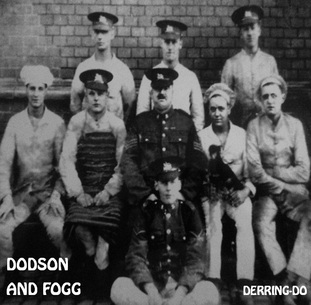
ImageThere was a fairly determinate point in the British folk rock movement of the late 1960s/early 1970s where a second string, following on the heels of Fairport Convention and Steeleye Span, made a bid for eternity.  Trees, Mellow Candle, Mr. Fox, and the chamber folk musicians, like Nick Drake or John Martyn or Roy Harper or Michael Chapman, bent their axes in a more idyllic, often trippily electric, singer-songwriter direction, creating everything from full-out jazz improv to fairly quaint hippy platitudes.  The rarity of some of the LPs these artists produced is legend — it took the internet to demystify them, and reconnect listeners to a wellspring of achieving, often remarkable, sometimes dated, music.

As a touchstone for inspiration these records are nearly without peer, independent and uncompromising.  But having a Vashti Bunyan album in your collection and making music that you make your own is another thing.  Chris Wade, who leads the project Dodson and Fogg — as well as being a rock writer in his own right — has done that with Derring Do, the group’s second album.  Derring Do elaborates on the first, self-titled Dodson and Fogg record, while taking a leap forward lyrically and musically — the limitations of a home studio have become strengths, the writing delivering songs that fit together.  Wade has achieved this by understanding the tools he’s working with, and by having a deep respect for his inspirations while retaining his artist’s eye and ear for what does justice to his songs.  So he’s able to coax graceful backing from two of British folk rock’s great singers — Celia Humphris (Trees), and Alison O’Donnell (Mellow Candle) — while maintaining a focus and direction of his own device.

There are traces on Derring Do that listeners might find familiar, the floating-down-a-river sound of Nick Drake or James Yorkston, the pop folk of Iron and Wine, the simple melodic invention of Syd Barrett, and the more pastoral forays of T. Rex and the Kinks.  The lyrics are simple and unfussy, straightforward, working with the melodies rather than overly concerned with poetics or narrative.  Unexpected touches appear, such as really tasteful, brief guitar solos that work — there’s an ebb and flow that occasionally needs breaking, and Wade has the feel and chops to put some crunch in the right places.  There are trumpets, spare percussion, flutes, and Wade’s voice, dwelling at times in the lower registers, can range from a kind of glam-punk bite to the breathy approach that’s come to be so associated with Nick Drake.  The remarkable thing about this album, though, is that no voice dominates within each composition.  The impulse to go long, as his folk and prog rock predecessors might have done, is also resisted — there are few wasted notes or words.  Less is more sometimes, and service here is done to Song.

“The Leaves They Fall” is a video Wade put together for Derring Do, which gives a good general idea of the album’s direction

http://www.youtube.com/watch?feature=player_embedded&v=diKQgjmnk0I

but I think most representative (and beautiful) is “To the Sea,” with its on-fire electric outro:

http://www.youtube.com/watch?v=fywm2bUM0D0

I caught up with Chris Wade the other day — after hearing the record, I wanted to ask him some questions, which he graciously consented to answer.  I think he tells Dodson and Fogg’s story best, plus he reminded me I need to read more Dickens.

I’ve read you spent a lot of time in your teens with a guitar and a 4-track.  That kind of intimate warmth is present on Derring Do.  It’s loose, not precise, something so tempting in our digital world.  Describe your recording process — are these home studio recordings?
Yeah, these are done in my home studio. I knew that with a simple set up, a microphone miking it all up like in the old days, it would make the record sound like it was perhaps from my favourite era of music, late 60s, early 70s. I basically start with an acoustic track, which I might double up, then do a bass track, then start on the vocals, then anything else comes in after that. On Derring Do I definitely got this down to a proper functioning way of doing it. You do need to have a plan when you’re recording and producing yourself. The great part is when other people send their things for the mix, that’s when it comes to life, especially when Celia [Humphris] sends some of her vocals over.

What’s the inspiration for the name Dodson and Fogg? (I can’t get out my head Lindisfarne’s Fog on the Tyne.)
Dodson and Fogg were two lawyers in Dickens’ Pickwick Papers. I thought it had a cool ring to it and I like the fact the name has caused a bit of confusion. Some people have gone in assuming it was a duo, but it’s me really with guest musicians. I love Lindisfarne as well, funny you should mention them. I just did a piece on them for my magazine Hound Dawg and all surviving members contributed text for it. Great band.

Anyone familiar with the history of the British folk revival will recognize some of Derring Do’s contributors.  How did you come to work with Judy Dyble, Celia Humphris and Alison O’Donnell? How about Nik Turner of Hawkwind? Is that his flute I hear?
Yeah, Nik is great on the flute, he did some amazing stuff on the first album. It was a matter of emailing them to ask if they’d be interested. I’ve always thought ‘you never know until you try’ and I have been a bit of a cheeky git in the past. But Nik and Judy did their bits and emailed them across to me. But Celia is very much more involved in the whole thing. She contributes a lot of vocals and puts in a lot of time to this, so I am really grateful of that. She’s done loads of good stuff on Derring Do, given the album a real nice touch. I still can’t believe they took the time out do it and as a big fan of trees and Celia’s voice, it’s amazing to have her on the songs. her voice is stronger than ever too, she really is very very talented.

I love how you use horns (thinking here of What Goes Around and Too Bright).  Can you talk about your approach to arranging your songs?
I’m glad you like the horns. Arranging a track, I like to record what I think is a decent simple acoustic and vocal track, and then think of an instrument or a sound that may make it a little bit different, unusual, but it has to fit just right. Colin Jones, the trumpet player, did some brilliant things on the Derring Do album. He’s a nice bloke as well. I see mixing a track like doing a painting, without sounding pretentious (which i probably just have sounded) because you lay sounds on, mix them around, put them in one speaker to balance it out, turn them up, turn them down, and sometimes delete them from the mix. I love that process, I could do it all day (sometimes I have been doing that actually).

Nice lead guitar and solos – is that you, or who’s responsible? Can you tell us something about choosing your tones?
Thanks, yeah that’s me on electric guitar. I love playing the guitar, it’s always my favourite part of doing a track, writing and playing the solo. I just play naturally really, whatever I feel should come out. I use a Tanglewood SG on the albums. I mike the amp up, make sure there’s a lot of treble on the guitar and that’s basically it. A reviewer said it was shredding and a sharp sound. I like to use the electric every now and then, and not necessarily on every track, because it has more power when it comes up then. I’ve been playing since I was a kid, but I don’t think i really started understanding that sometimes less is more and that a solo should be a properly structured piece of music in itself rather than a random improvised noodle, although i do like them, just not in my own songs because I’m crap at them.

Can you describe your vocal approach (I notice on the first record you double your vocal a lot, less so on Derring Do — which I like).
I like to sing within a range that is comfortable. One thing I don’t really like is loud, high singing, because I have a low voice and if I try and go higher i sound like my balls are in a vice or being chewed by a rabid hound. So I like to keep it comfortable and also easier to listen to. No one wants to hear someone struggling with high notes, not much of a pleasant experience really. But I like the voice to sound strong and loud in the mix, so you can hopefully hear all the lyrics. The cool thing is having proper singers with you on the songs who really can use their voices, when Celia’s voice comes into the mix I sometimes have to pinch myself. It’s brilliant.

I hear a musical leap between the debut and Derring Do, which seems, musically and lyrically, far more focused.  Am I hearing right, and would you elaborate if I am?
Yeah i think there is a leap. I’m not a seasoned pro with proper writing and recording so I guess i am still learning and developing a style, which is really exciting and I’m really glad you recognised the shift in styles. I started recording Derring Do before the first one was out and knew I felt like expanding the sound a bit. When I recorded the first one I was kind of testing what I could do on this set up and a lot of it is safer in a way. With Derring Do I wanted it to sound fuller, more elaborate at points and also more varied, like an album with lots of moods, styles and shades, which is quite a progressive approach. But a lot of the time anyone recording music is just doing what they feel like doing that day and going where the song is taking them.

There’s a lot going on in these songs, threads of past and present.  Who are some of your influences, and who of your contemporaries do you follow?
I mostly love music from the 60s and 70s, but wasn’t born until 1985. I always love listening to Donovan, Jethro Tull, The Kinks, Cat Stevens, Frank Zappa, King Crimson, Pink Floyd, Trees… I am not sure how they influence the music but some reviewers have heard bits of Trees, Tull, Barrett and Crimson in the music, but you never really know yourself do you? I don’t really follow modern music really, only bits and pieces, although I know I should.

How would you describe (I hate to say it, but “categorize”) your own music?
For the first album I just thought of it as a folk rock album, but found that a lot of folk sites and shows didn’t think it was pure folk enough, and then people started calling it ‘acid folk’ which was a term I didn’t know until then. I thought they were accusing me of being a spaced out acid head or something. The only thing I have in excess is malt loaf (mmm… malt loaf). But people have also called it ‘progressive folk’ which I like. it seems to work under that category i think.

You’re a busy man, a writer, musician, visual artist — what excites you most about what you do?
I’m most excited by the music now, it’s really took hold of me and I love putting the work into it. I love the fact I get to do the mix, sort out the artwork, royalties, promo, everything. If it’s your job then why not make it your proper job and put full time work into it. That’s what excites me, and also the thrill of creating something you’re really enjoying. I’ve done a mix of things, like the audiobook with the comedian Rik Mayall  but it doesn’t come near the enjoyment of making music. I don’t like having to deal with egos and awkward people who are more interested in their images than the work you’re creating. It isn’t the best way of spending your time. I have a working class ethic to it, it’s a job and you fund it and do it yourself, because no one else is going to do it for you.

On the pages of Progarchy we regularly (short-lived as we are) hear from artists who struggle to find reward for what they do.  What’s your perspective on this? Can a musician be just a musician anymore? What’s the easiest way for someone not familiar with Dodson and Fogg access your music?
Luckily for me I have quite a lot of projects that are out there, so the music is just one of my things available, if you like. I think it might be hard to survive on royalties alone these days, but then again I am really new to the “music biz” (business I mean, not poo) so I don’t really know too much about it. I’m still learning. The CDs are available from my website, where all my stuff is available, but you can also download from bandcamp and also Itunes, Amazon and all the digital stores. But the easiest way is to type in Dodson and Fogg to the Google search and the top result is my website. All the info is there.

What’s next for you?
I’ve got some promotion to do and sorting things out for the album, and also doing some articles for the next Hound Dawg magazine. After that i think I’ll start on album number three, which will be really fun!

Thanks to Chris Wade for such generous responses. Check out Dodson and Fogg’s website here:
http://wisdomtwinsbooks.weebly.com/dodson-and-fogg.html

and online back issues of Chris’s Hound Dawg: http://wisdomtwinsbooks.weebly.com/hound-dawg-magazine-online.html

Craig Breaden, February 2013

In Praise of Shoegaze

slowdive1
Rachel Goswell of Slowdive

And there in the square he lay alone 
without face without crown 
and the angel who looked upon 
never came down 

you never know what day could pick you baby 
out of the air, out of nowhere 

~ Sun Kil Moon, “Duk Koo Kim” (2003)

Was it excess, or a change in consumer preference?  Either or both, progressive rock music of the 1970’s ran afoul of the burgeoning punk rock scene.  Carefully constructed compositions ranging from eight to 25 minutes (or longer) gave way to three-minute outbursts of street angst resonating with a culture sick and tired of inflation and corruption and openly questioning the permanent things — things (classical, jazz, church music) that progressive rock had integrated (unwittingly, subconsciously) into its ethos.

Then, after a decade of new wave, new romanticism, and sundry forms of techno (music for the masses) there arose the Cocteau Twins and My Bloody Valentine.   Suddenly, pop song structure, melodic hooks, and outfront lead vocals were enveloped in a blizzard of distortion and dissonance.  Critics, ever wary of the latest “art” project, disparagingly labeled it “shoegazing,” noting the performers’ penchant for staring down (likely at their effects pedals) on stage.  Steve Sunderland (Melody Maker) went a step further, describing what he called “The Scene that Celebrates Itself” — in part, because the gazers attended each other’s gigs and drank together.  It was too much like rugby and less like football.  If the former is about gentlemen playing a hooligan’s game, then the press were quick to spot what they suspected were middle class values at play.  This could not end well.

At length did cross an Albatross / Thorough the fog it came…

But to back up a bit.  Whatever spirit inhabited the soundtrack of David Lynch’s Twin Peaks seems to have been carried aloft during that show’s run, falling out of the sky in the Thames Valley.  It descended upon a group of Reading teenagers who called themselves Slowdive.   Where to begin?  If one samples Slowdive’s output (three albums, six EP’s) there is no way to pin down the band’s idiom.   There are the ostensibly pop ballads (“Alison,” “Sleep”), Eno-induced trances (“Souvlaki Space Station,” “Changes”), pre-Kid A ambient exercises (“Option One,” “Sinewaves”), dark grunge (“So Tired”), ethereal raptures (“Catch the Breeze,” “Shine”), and others (“Albatross”) that defy categorization.

Like sorcerers they summoned other-worldly sounds from their guitars.  If there’s a common thread it is the drone — catching the breeze of an unorthodox riff, maybe two chords, and riding it in an ever-widening gyre.

Even a few of their loyal fans would say Slowdive spun out of control with 1995’s experimental Pygmalion.  By the time of its release British ears were drawn to Oasis and Blur, a Britpop North-South rivalry loaded to the hilt with working class ethos the press could celebrate.

“Revolution,” yes.  “Revolution 9,” no.  Within a year Slowdive had morphed into the country/folk Mojave 3.

I’ve Got a Gal… in Ypsilanti

While Slowdive was relinquishing the gazing muse, another obscure stateside band was taking it up.  Trey Many (pr. “may’-nee”), the drummer for Warn Defever’s His Name is Alive, was developing a side project at Eastern Michigan University.   Together with art student Amon Krist (daughter of folk singer Jan Krist) he formed Velour 100 and signed with Seattle’s alternative label, Tooth & Nail.

Velour+100
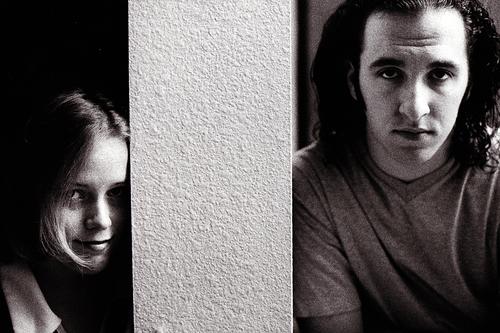
Amon Krist (left) and Trey Many

Velour 100’s first full-length recording was Fall Sounds (1996) with Many on all instruments and Krist on lead vocals (and occasional acoustic guitar).  Right away the listener finds the music here focused and thematically linked — a concept album based on the pair’s experiences of loss and renewal informed by their Christian faith.  The same dense, hypnotic atmospherics present with Slowdive are found here; but Many keeps the listening interesting with changes and unusual time signatures.  “Dub Space” is a sparkling eight and half minute tone poem that could have emerged from the waterfall at the end of “Close to the Edge.”  The strongest track on the album — and, in my view, among the best three and a half minutes of the ’90s — is “Flourish”:

http://grooveshark.com/s/Flourish/504rKT?src=5

Velour 100 never received a bad critical review.  As Krist departed to complete her studies and launch a teaching career, the duo’s first demo recording was re-recorded and released as Songs From the Rainwater EP to high praise.  Many produced one more LP, Of Color Bright (1997) that featured three female lead vocalists, including ex-Sixpence None the Richer guitarist Tess Wiley.  Wiley co-wrote “Dolphin Grey,” which showcases her distinctive alto against a splash of jangling guitars:

http://grooveshark.com/s/Dolphin+Grey/4FPo6B?src=5

Many recorded a final four-song EP, For An Open Sky (1999), with soon-to-breakout vocalist Rosie Thomas.  He now lends his formidable production skills to projects for other bands.

Ghosts of the Great Gaze

By the end of the ’90s “shoegazing” (or “dream pop”) was figured a dead letter.  Its artsy sensibilities (pretenses, to some) were destined to remain out of favor with an X Factor world.  But even into the 2000’s there remain artists who pay homage to the genre.   An excellent example is the expansive “Duk Koo Kim” by Mark Kozelek’s side project, Sun Kil Moon.  Aptly described by one listener as “magical sad tragic wonderful,” it is a meditation on mortality inspired by the Korean boxer who died from injuries suffered in a bout with Ray “Boom Boom” Mancini in 1982 (in fact, much of Sun Kil Moon’s Ghosts of the Great Highway is inspired by the stories of fighters).

In shoegazing fashion, the guitars ring and leave auras of reverb in their wake, Kozelek’s falsettos submerged in the melodies.  Unlike Slowdive’s binary pieces, “Duk Koo Kim” has three distinct sections, and (in prog rock proportion) sprawls over 14 minutes — each representing the number of rounds Kim lasted in the ring before succumbing.

Come to me once more my love 
show me love I’ve never known 
sing to me once more my love 
words from your younger years 
sing to me once more my love 
songs that I love to hear 

The Musical Biz

TheMusicalBox

Carlton Wilkinson reflects on the nature of music, arriving at a fundamental principle, which helps him think about the future of music:

Music is inherently live and therefore inherently local. The future of the music business is not in product sales, but in the service of that artist-listener relationship. Artists are thinking about tech. They’re embracing it and using it to reach their audiences directly.

He does this in “Pandora’s Box Is Open and the Music Biz Will Never Be the Same“, which develops a fascinating argument about how music is not a commodity:

It’s not a product that can be assembled in a production line or held in your hands. It’s something that comes naturally from every living person — some better than others — and can be enjoyed by every living person, for free as long as the musician is willing, with no other assistance needed.

The standard business model, perfected in the age of vinyl recordings, presented music as a tangible thing — a record — that a businessman could manufacture and sell like any other widget. But the music on those records is only a captured bit of the ephemeral, constantly changing musical experience.

A Bruce Springsteen song is never exactly the same two concerts in a row. A performance of Beethoven or Bach sounds different depending on who is playing, and were those composers themselves to play their most famous music for us, we would likely hear shocking differences from the versions we know — more radical than any modern interpreter would dare.

The experience of music is determined by its creators and by its listeners. By definition it is never completely recreated, but is created anew every time. It happens in the moment and will change in the next moment.

The traditional music business, built around the sale of fixed music recordings, handles manufacturing, packaging and distributing, middlemen selling something they didn’t make themselves, something never really theirs to begin with.

These days, though, tech is trashing that model, by fits and starts turning the business of music from a product-based market into something more like a social media service directly connecting artists and listeners.

Wilkinson earlier made his impassioned point that music is not a commodity in an insightful review of the music that Obama put on display for his second inaugural, “Obama’s Hit Parade“:

… I can overlook the lip-synching. What’s more disturbing, what I find harder to forgive, is the programming emphasis on pop music performers, including Beyonce and Kelly Clarkson, at the ceremony and elsewhere. …

The world of pop music has always revolved around money, the more the better. Money’s influence alters not just the way the music is presented, but the way it is created and the expectations of the creators and the audience. Success in this field is a dollar figure.

Classical and jazz don’t work that way. The musicians need to get paid, sure, and most aren’t above playing weddings or in some ways tailoring their music to suit their audience. Money pressures exist, but they don’t dominate the art form. Success here is rooted in technical accomplishment and in the musical experience itself.

When a classical artist verges on mass popularity, like Yo-Yo Ma, companies like Sony will maneuver themselves into a position to profit from it. But Ma didn’t get where he is by thinking about money — he got there by being a terrific cellist, and an inquisitive musician, constantly challenging himself, branching into new areas. His success was established long before big money entered the picture and continues largely because he is able to rely on his true artistic nature and ignore the role of money.

Pop musicians sometimes emulate that model, ignoring the financial rewards and following where talent and curiosity lead. Often they find themselves in a better place as a result, connecting more easily and honestly with audiences, developing a longer career trajectory.

They don’t let the money get in the way. …

Early in his first term, Obama made a commitment to present the U.S. cultural landscape in all its diversity. At that first inauguration, he shared the podium with Ma, Itzhak Perlman, Gabriela Montero and Anthony McGill playing a John Williams variation on the Shaker hymn “Simple Gifts.” He followed up on his promise by hosting workshops and concerts in various styles at the White House during the first year or two he was in office.

But at this year’s inaugural, that broader cultural perspective seems to have gone missing, narrowed to focus more fully on the most common commercial tendencies, music as a commodity.

Geddy Lee recently appeared on a TV sitcom in which the episode mocked Canadian culture as backwards, the fictional case in point being that its culture was transformed only much later by grunge. (In reality, of course, Rush’s prog metal had already allowed Canada to transform the musical world. Thus, Lee’s fake testimony on the sitcom imparts a delicious taste of irony to the self-deprecating joke being made at Canada’s expense.) Part of being able to get the joke was being able to comprehend the standard narrative that grunge changed the world of rock forever.

But Jason Notte, inspired by Wilkinson, debunks that standard narrative in “Nirvana’s ‘Nevermind’ and The Death of Guy Rock” by arguing that Nirvana in fact provided a negative example, by making clear only what rock cannot exclusively become—namely, grunge and grunge alone:

So where does Nirvana fit into all of this? Well, the familiar narrative says they did the world a big, huge favor by ridding it of hair bands and arena rock and making it safe for garage bands again. That’s not quite how it played out. The grunge and post-grunge era music world was filled with as much belabored growling, on-stage preening and aggro nonsense as ever, as evidenced by the lineup, fires and ensuing rioting and rapes that engulfed the ill-fated Woodstock ’99.

What Kurt Cobain and, later, Dave Grohl taught and most folks didn’t hear until Napster gave away much of the music and Woodstock ’99 made it very clear was that “rock” and, more importantly, pop music can’t be an exclusionary club filled with angry boys. …

Without making a concerted effort to do so, Cobain was being as inclusionary as he could within the confines of his genre. It’s something you hear echoes of in Jack White’s work and in his previous albums with the White Stripes and it’s something the Black Keys have reached for in their own blues-based fuzz rock and their collaborations with artists from various genres.

Inclusion is the common thread. …

That’s ultimately the key lesson from Nirvana and Smells Like Teen Spirit: It changed music and, more specifically, rock music by making “rock” sound nothing like Nirvana.

In other words, rock continues to progress. And it does so in its history by discovering innovative ways to facilitate inclusion and participation.

And that, arguably, is why progressive rock is the exemplary flower of the rock genre. Because, as is suggested by its lengthy songs and its display of musical virtuosity within the framework of group dynamics, it offers the greatest musical space for the flowering of inclusion and participation and a satisfying local experience.

Witness the relationship between the artists and the listeners of progressive rock. In our own time, Big Big Train is showing us how music, not as a commodity, but as a work of art that invites listeners to an immersive and unrepeatable experience, can bypass the music industry and allow rock to be what it is supposed to be according to its essence: namely, a musical experience of transcendence.

As Greg Spawton has observed:

In The Music’s All That Matters, Paul Stump makes some very interesting observations. Early on in the book, he correctly identifies that the main problem with progressive rock is its name (he calls it ‘the most self-consciously adjectival genre in all rock’). Another point that Paul Stump makes is about what unites the musicians of the genre. He says they have ‘a hankering after the transcendent’. I really like that phrase as it can take on a broader meaning than ‘progressive’. In Big Big Train, we combine our influences in a way, which is often original. But trying to do something different isn’t the be-all-and-end-all. What we are really trying to do is to make extraordinary music.

There’s only one way that prog rock can touch you.

And that is: in the present moment.

So why don’t you let it?

Now, now, now…

Nascent, Nascent: The Natural Order of Talk Talk

I’ve offered my “Talk Talk” testimony so many times, it’s probably getting a bit ridiculous.  To sum up, I really, really, really, really, really (well you get the idea) like Talk Talk, and I have since the spring of 1987, when I first encountered them by chance.  Further, I would have to rank “Spirit of Eden” as one of my two or three rock albums of all time.

Phew.

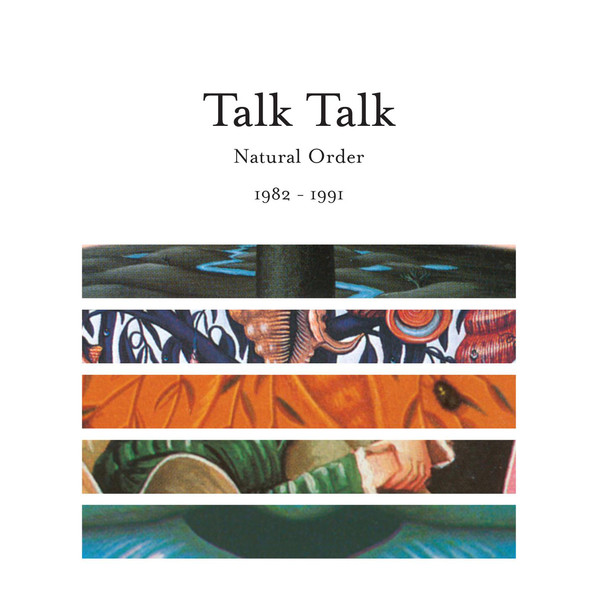
Talk-Talk-Natural-Order-1982-1991So, much to my surprise the other day, I saw that Mark Hollis had emerged from his seemingly J.D. Salinger like-life (may Salinger rest in peace) to release, under his official direction, a Talk Talk compilation.  It’s entitled “Natural Order,” and it just arrived.

Most of the others, frankly, from “Natural History” to the remixes to . . . . Well, let’s face it, Talk Talk just can’t be broken into parts.  The albums come as a whole.  I don’t just plop “Colour of Spring” or “Spirit of Eden” or “Laughing Stock” into the CD player when dropping the kids off at school or running to the supermarket to get milk.  No, these last three albums require attention and love.  Listening to them casually would like roller skating through the Field Museum in Chicago or jogging through the Nelson Museum of Art in Kansas City. Continue reading “Nascent, Nascent: The Natural Order of Talk Talk”

The Missing Link Between Thomas Dolby and Kurt Cobain

dissociativesA couple of recent posts on Progarchy regarding Thomas Dolby’s first two masterful albums brought to mind an album that fellow progsters may not be aware of: The Dissociatives. Probably my favorite album of the first decade of this century (What do we call that? The noughts?  The double-zeros?), The Dissociatives was a side project of Silverchair’s Daniel Johns and Paul Mac. Daniel Johns is an insanely talented songwriter and guitarist – Silverchair’s debut album, Frogstomp (1995), was recorded when he was at the ripe old age of 15. It’s basically a reiteration of Nirvana’s Nevermind sound, but by their fourth album, 2002’s Diorama, he had outgrown the limitations of grunge. It featured sweeping orchestration and complex compositions that were as far removed from Nirvana as King Crimson is from the Spice Girls.

In 2004, he released The Dissociatives, which is a wonderful blend of synthpop, progrock, and Beatlesque melodies. The first song, “We’re Much Preferred Customers”, marries absurdist lyrics – “welcome to planet pod/where insects sound like lasers/and men who wear abrasive hats/with eyeballs judge like juries/and skin that flakes like ancient paint/suffocate contentment/birds creep over tin roofs/like criminals with tap shoes” – to a dark melody that transforms into an irresistible pop confection that leaves the listener panting for more.

And more there is, as each song moves from one peak of pop/prog perfection (extra points for alliteration?) to the next. There are a couple of instrumentals that are impossible not to hum along with, and the whole thing closes with a gentle lullaby, “Sleep Well Tonight”. The big hit, in Johns’ Australia at least, is “Somewhere Down The Barrel”.  The official video for it is below. If your interest is piqued, trust me, you’ll love the entire album.

After The Dissociatives, Johns released another brilliant album with Silverchair, Young Modern. Recorded with Van Dyke Parks (who cowrote Smile with Brian Wilson), it is a masterpiece in its own right. But that’s a topic for another post!

Medium-sized Egos, The Seventh Train, Lush Soundscapes, and Big Big Train: The 2013 Interview, Part II

N.B. AP is Andy Poole, DG is Dave Gregory, DM is Danny Manners, GS is Greg Spawton.  Progarchy interview conducted by Brad.

***

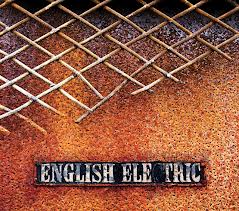
Progarchy (BB): When you put EE1 and EE2 together, how do you expect the listeners to see the whole EE? Say, 20 years from now, few will have had the experience of getting one, then the other. It will most likely be just EE. Do you expect your listeners–me, for example, or anyone else–interpreting EE1 differently in light of EE2? In particular, I think about a track like Hedgerow. As you probably know, Greg, I consider this the single finest conclusion to any album.  Ever. Period. Even better than Abbey Road, which had that position for me prior to hearing EE1. But, when I do get to hear EE2, I will now see Hedgerow as the middle song. BBT EE2

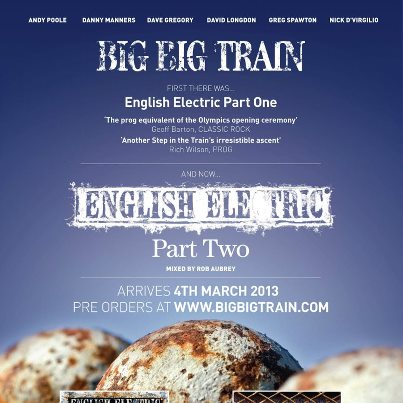
GS: You’ve put your finger on something that has caused us a fair bit of soul-searching Brad. At first, we had a fairly straightforward view on this which was simply: ‘it’s a double album, but we’ll split it into two separate releases’. Our reasoning was that 2 hours of music is a lot for the listener to get their head around which can initially cause under-appreciation of the double album in question. We were also aware that if you release so much music at one time, you get one round of publicity then the world moves on. If you split the release into two, the band is in the spotlight for a longer period of time. The only downside to this release strategy is that English Electric becomes seen as two separate pieces of work and so we always planned to release a special double edition bringing it all together. The thing is though, and as your question makes clear, it’s not as simple as we thought it would be. If you’re splitting an album into two you do have to try to make two satisfying separate halves, which is what we have tried to do. And that isn’t the same as sequencing a whole double album. So, the question we began to ask is: what do we do when we prepare the double Full Power edition? Do we simply stick Part One and Two together or do we start from scratch and re-sequence it as a double album? You mention Hedgerow as being a strong concluding track but we’ve also got Curator of Butterflies which is, we think, another strong end-piece. Which one of those takes precedence and gets to close the double album? And what happens with the three extra tracks we’re including? Where do they fit in? What we now think we’ll do is to start again from scratch and re-sequence Full Power as a double album without any reference to the orders on EE1 and EE2. It may be that we find some of the sequencing on EE1 and EE2 also works for EEFP and if it does, it does. Or it may be that the sequencing is completely different. In any case, the additional tracks will inevitably change the feel of things. The other question you raise is what happens when EEFP is released? Does that mean that EE1 and EE2 should go out of print? If not, will any new listeners buy them or will they go straight to EEFP? This is, I think, something we’ll have to keep under review. If EEFP turns out to feel like a very different listening experience to EE1 and EE2, then it makes sense to keep them all in print. Of course, the extra tracks will also be available on an EP and as downloads to make sure listeners don’t feel obligated to buy a double album just to hear three new songs. So, for many people their experience of English Electric will be as three separate releases.

Progarchy (BB):  Tell me about the additional songs added to the full package? Will there be much new artwork?

GS: There are three strong new songs. They are not leftovers from the original sessions but have been recorded specifically for EE Full Power. One of them is a sort of bookend love song to go with Leopards. Another builds on the main album themes of working communities and the English landscape. And the final one is something very different for us.

AP: As regards the artwork, I’m working on a lavish design with a comprehensive booklet telling the stories behind the songs and behind the album.

Progarchy (BB):  After EE2, you’ve announced plans to release Station Masters. Can you give us some details about this? Will it be reworked older tunes? Are there some new tunes?

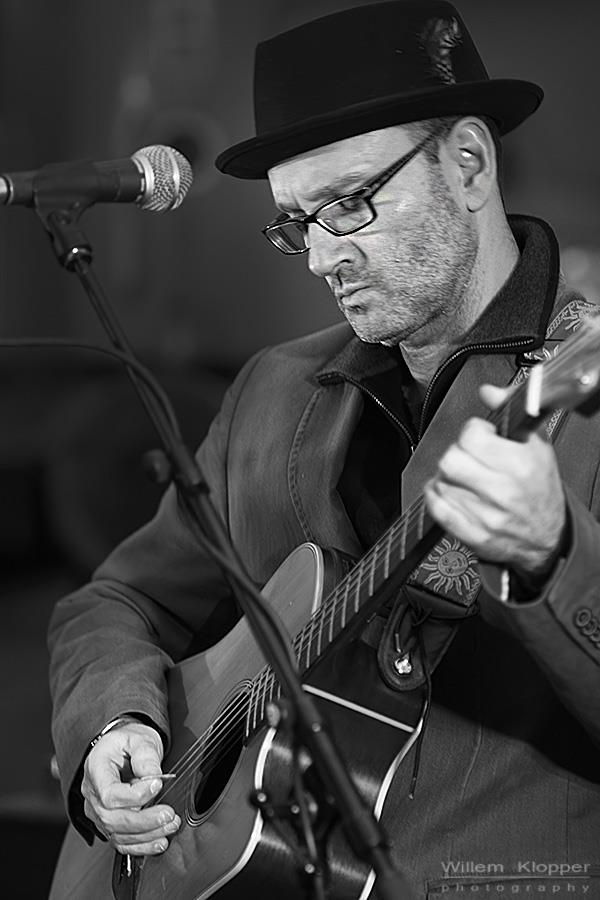
NDV by Willem Klopper.

GS: It’s a triple CD which aims to tell the story of the band. All recordings will be with the new line-up so songs from albums prior to The Underfall Yard will be entirely re-recorded. Some of these are radically re-worked, others are fairly close to the originals but with the strong performances that the current line-up is capable of. Even more recent material may be reworked to some extent. For example, I always wanted to feature violin in The Underfall Yard but we didn’t have a violinist at the time. Rachel Hall will feature on the updated version. Wherever we look back and think something could have been better, we’ll make it better.

Progarchy (BB):  Will anything else come with the CDs? Any kind of BBT timeline or a poster? Concert DVD?

AP: There may be some video or other visual material. We haven’t made any final decisions on that yet.

Progarchy (BB):  Where do you see BBT’s place the history of rock and the history of prog rock?

GS: I think it’s too early to make an assessment. There are many drafts of history. I hope we’ll find ourselves as more than just a footnote when later drafts are written. However, progressive rock is a fairly contained world and we’re a long way away from making any sort of breakthrough in the broader rock and pop worlds.

Progarchy (BB): You have an immensely large and loyal fanbase. How does this affect you or the band’s approach to music and the music world?

GS: We’re really lucky with our fanbase. They seem to us in all of our interactions to be a thoroughly decent and likeable bunch. The feedback we’ve had over the years has been really important. To hear that what we like to write about resonates with others and particularly that we’ve moved people with our music makes a huge difference.

Progarchy (BB):  What is your view on packaging the material? You sell lots of downloads, and we live in a download world (for better and worse), but you also put a lot into the packaging of your CDs. Which I love. As you might remember, after I downloaded all of your albums up to The Underfall Yard, I contacted you because I wanted to purchase physical copies. And, it was worth the investment. Why do you consider it so important for BBT to have such beautiful packaging, especially in day and age? And, would you say such quality packaging should be important for all bands?

AP BBT
Andy Poole by Willem Klopper.

AP: The ideal package for us is a presentation of the words, music & images. The artwork is integral and we have been very fortunate over the years to have teamed-up with Michael Griffiths, Jim Trainer and Matthew Sefton who have each provided inspiring works that both complement & advance the sensory delivery of our albums.

Growing up with vinyl in the 70’s, you had an ingrained sense of interacting physically with an album … the touch, feel & smell of a new gatefold release was savored and an essential part of the experience … quite apart from placing a stylus in the groove and being aurally transformed to a progressive world of music where none of the old rules applied.

The initial advent of hurriedly released compact discs in their horrid plastic jewel cases and Lilliputian inserts amounted to instantly inferior packaging largely forgiven by consumers for the promise of digital sound.

We migrated to digipaks for the enhanced tactile experience, albeit in miniature compared to vinyl, and greater flexibility to represent the visual artists who collaborate with Big Big Train.

Although it is tempting to suggest and hope that other bands disregard the importance of physical product packaging to our advantage, I actually believe that it behooves us all to raise the quality bar up high and to the reasonable limits of affordability.

DG: It was certainly a very important factor with XTC. Andy Partridge claimed that every time he finished writing a song, he’d design a sleeve for it just in case it was chosen as a single! But then, he’s a very talented artist and can’t help himself. I’m certain sales of many of our releases were multiplied as a result of the packaging, as well as boosting the band’s ‘arty’ credentials.

Progarchy (BB):  I’m always amazed at what a community BBT is. That is, it’s clear–from the music as well as things such as FB posts, etc.–that you each really like one another. There’s no sense of brilliant radical individuals working next to each other (such as in certain early Yes albums), but a true sense of group brilliance, an organic whole. What do you think accounts for this?

GS: From my point of view I come back to something I’ve said before – surround yourselves with talented people and things start to happen. There is something else as well though, and that is that the guys in the band are all thoroughly good chaps. We’ll all hold strong positions from time-to-time and we say what we think but good manners are important. Speaking of Manners, you’re the new boy, Danny, do you have any observations?

DM: Some of it is simply that there are no huge egos in the band, whether by luck or by conscious or unconscious choice. (Medium sized, maybe, but not huge!)  However, one musical thing that strikes me is that the band members aren’t over-specialized – BBT doesn’t consist of “the singer”, “the drummer”, “the guitarist”, etc., all vying for the spotlight.  Everyone is a multi-instrumentalist to at least some extent, and everyone also has writing and/or arranging experience, so there’s much more focus on making the music work as a whole.

DG: Don’t forget also that we’re grown men, not ambitious youngsters. We are focused on the music at all times, because we love it. Both Greg and David, as writers, are extremely accommodating in terms of accepting ideas and contributions from all of us; they have yet to display any serious proprietorial tendencies when it comes to protecting their original vision. Which is not to suggest that it’s an open free-for-all; we live with the songs for months, plenty of time to assimilate their essence, so we’re generally united in the common aim, ultimately.

Progarchy (BB):  And, how do you see the role of Rob as engineer or any guest musicians you bring in? That is, how integral are they to a BBT sound, if such a particular thing exists.

146BBT1
The Seventh Train and Phill Brown of our age: Rob Aubrey. Photo by Amy Mumford.

GS: It’s an evolving sound and it will continue to develop. We have some really important collaborators at the moment and I envisage we will continue to work with many of them in the long-term. Certainly, Dave Desmond (who plays trombone and arranges the brass band) and violinist Rachel Hall will have significant input into Station Masters. As for Rob, he’s the seventh Train and our dear friend.

Progarchy (BB):  Where do you see BBT after Station Masters?

GS: I’d like us to be playing some shows at some stage. It would be good to do something around the time of Station Masters and then something around each release after that. As mentioned earlier, we have another album well underway and have started recording it so that is likely to come out in 2015.

Progarchy (BB):  Any final thoughts on the current and future state of rock?

GS: In Britain, the last of the high-street record stores has gone into administration. I guess there are similar issues in other countries. The supermarkets have stepped into the breach and will only really sell music in the pop charts, so the route through traditional music-distribution is closing down to most progressive bands. However, online, the choice is very broad and the issue there is getting noticed amongst all of the competition. Making a living out of music is going to get harder still but it’s been a labour of love for most folk and jazz musicians for years and I don’t see why it should be different for rock bands.ee2

 English Electric Part 2 enters the world on March 4, 2013.  To order, go to Big Big Train’s online shop.

[Well, what does one say after such amazing interview, except—thank you.  Thank you to BBT for giving us so much time for this interview.  An even bigger thank you for making the world just a little bit brighter.—Ed.]

Brown M&Ms, Writing Grooves, Natural Historians, and Big Big Train: The 2013 Interview, Part I

I would love to give an elaborate introduction, but, really, I’ll be very honest with myself–you’re here to read the words of Andy, Dave, Danny, and Greg.  They very graciously gave us a significant amount of their time.  All Progarchists eagerly await the release of Big Big Train’s much anticipated conclusion to the highly successful English Electric Part One.  The first half released only last year represents, for me at least, the finest album in the rock world since Talk Talk’s 1988, “Spirit of Eden.”  No pressure, guys.

Ok, Brad, remember you promised to bloviate only very, very little. . . .

Progarchy proudly presents an exclusive interview with Big Big Train (though, feel free to make this less exclusive and repost anywhere and everywhere).

Spawton bass
Photo by Willem Klopper.

N.B. AP is Andy Poole, DG is Dave Gregory, DM is Danny Manners, GS is Greg Spawton.  Progarchy interview conducted by Brad.

***

Progarchy: Greg, EE1 did extremely well in terms of critical response. Did its success surprise you at all? If so, what part of it surprised you?

GS: We believed we had made a strong album but by the time the mix is finished, all objectivity goes out of the window so you never really know what will happen when others get to hear it. I think we were a little anxious about the number of other albums being released last year, and English Electric started shipping at around the same time as Sounds That Can’t Be Made, so we worried about whether it would get lost amongst all of the attention that CD was going to receive. A couple of weeks ago, Prog magazine published its readers’ polls for 2012. It only really hit home to us when we saw the results of those polls as to quite how much reach English Electric has achieved. It was surprising and very pleasing to be up there with Rush, Marillion, Porcupine Tree and Anathema.

Progarchy: Does its success change at all what you think about BBT?

GS: BBT is six chaps making music. However well we do, that’s all I think of it as.

DM: We haven’t reached the stage yet where our rider has a “no brown M&Ms” clause.

brown_mm_10703016
Photo not by Willem Klopper.

GS: I suspect it has changed how others view us. I read a couple of reviews recently where the album was described as being ‘hyped’ and I felt a little indignant as that misrepresents us. We’ve promoted it sure, but not in an excessive way. If other people write or talk about something, that isn’t hype.

Progarchy: How much of EE2 was written before EE1? That is, how much of this album is a response to the last? Or, are they really two parts of a whole?

GS: All of the songs were written and recorded as part of the same sessions. Any of the songs on Part Two could have been on Part One instead and we had mixes of all 15 tracks before EE1 was released. However, once we knew the track-listing for EE1, those eight songs on the first part got our maximum attention to make sure they were ready for release. As soon as EE1 was out we then went back to the EE2 tracks and continued to work on them.

AP: We wanted to take full advantage of the 6 month gap between the two albums to make sure all of the songs were at their best. That sometimes meant a bit of a rethink about the arrangements. East Coast Racer, in particular, benefitted from us being able to spend more time on it. We always thought it was a good track but now I think it’s one of our best.

Progarchy: Was the writing process much the same as the last album and previous albums? David clearly offered much in terms of lyrics and song ideas. It it the same with EE2?

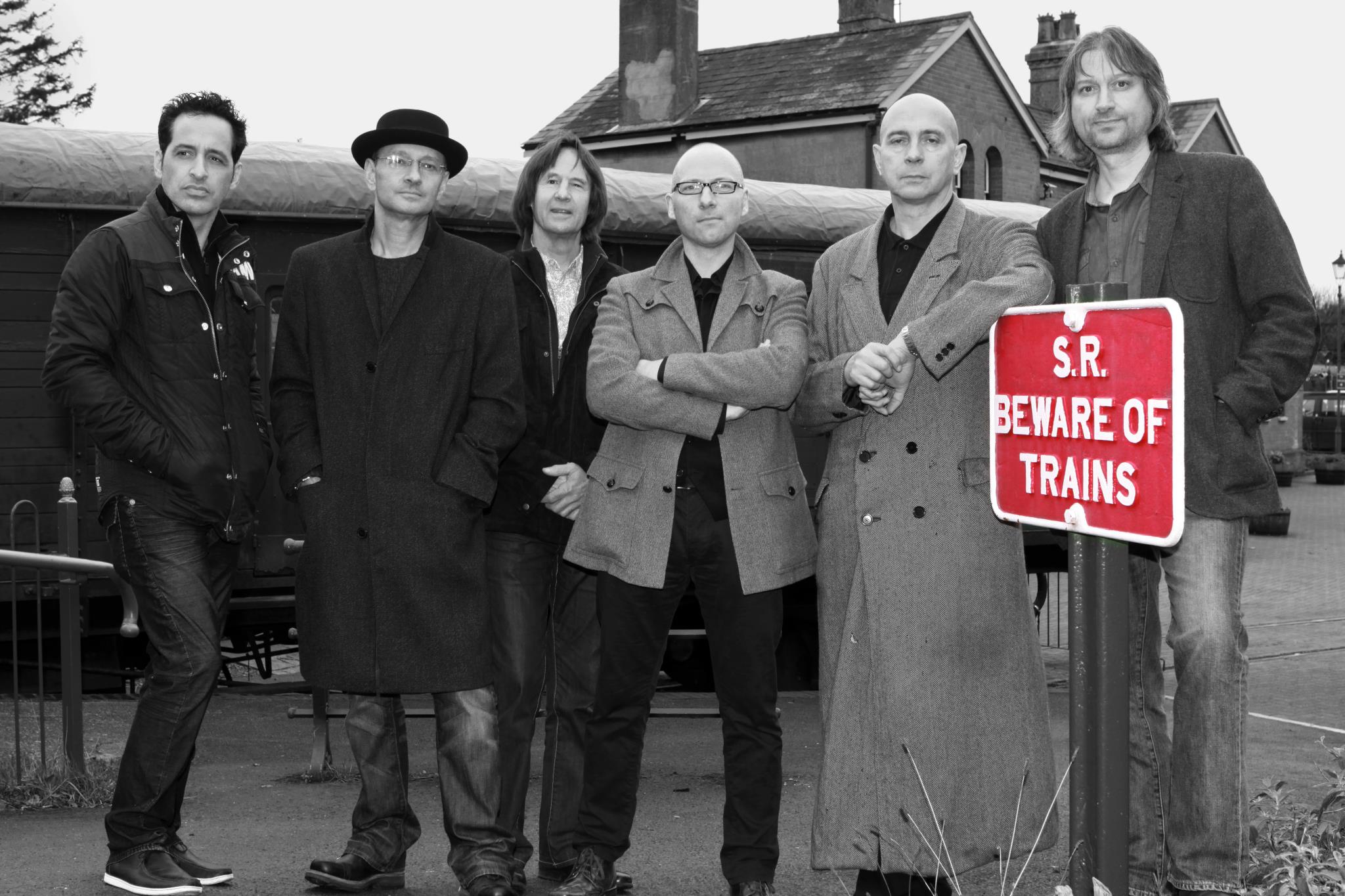
Nick, Andy, Dave, David, Danny, Greg.  Photo by Willem Klopper.
Nick, Andy, Dave, David, Danny, Greg. Photo by Willem Klopper.

GS: We’re really in a groove with the writing now and have very established way of working within the band. I’ve written more of EE2 than EE1, but that’s just to do with how the track-listing fell. In fact, David has already written a lot of material for our next studio album and we’ve recorded Nick’s drums for some of the songs. The other guys are heavily involved in arrangement and, in truth, there can be a blurry line between writing and arranging. The accepted practise is that the songwriter is the person that composes the chord sequence, the main melody and the words. However, sometimes the parts written by the musicians for those chord sequences and melodies can be as important as the underlying music. So, the songs evolve at the hands of all of us.

Progarchy: Can you tell us about some of the themes–musically and lyrically–of EE2. The titles are poetically enticing, and there’s, of course, a huge anticipation on the web as to what the titles mean. Curator of Butterflies? Worked Out? The Permanent Way? Keeper of Abbeys (my favourite title)? For better or worse, I have lots of James Marsh images floating around in my head as I visualize the possible meanings of the titles.

GS: English Electric isn’t a concept album but it is an album with a number of themes linking many of the songs. On EE2 some of the songs pick up on the subject matter of songs from EE1 whilst others head off in different directions. Swan Hunter and Worked Out are both about lost working communities (from the shipyards and the mines) so those follow on from songs like Summoned By Bells. East Coast Racer is set in the 1930’s when a group of people designed and built a steam train called Mallard which ran very fast indeed. It’s a great adventure story. Leopards is a love song and provides an important contrast with some of the more epic material. Keeper of Abbeys is about a chap I met at a ruined abbey in the north of England. This man worked from dawn until dusk every day, tending to the stones. I got to know him a little bit but used my imagination to join up the missing parts of his story. Curator of Butterflies is inspired by a woman called Blanca Huertas who is the Curator Lepidoptera at the Natural History Museum. I read an article about her where she said the study of butterflies can allow so many tales to be told. The song is about how narrow the line is between life and death. I was very anxious about it sounding trite and so I wove a character into it to make it a story and tempt me away from spouting platitudes. Finally, The Permanent Way is the pivotal track where we try to bring everything together.

Progarchy: There’s lots of excitement about you joining, Danny. Can you tell us a little bit about yourself and how you came to join BBT?

DM: Well, I started off learning classical piano from a young age, and later became very interested in twentieth century classical music – at one point I was fairly obsessed with Stravinsky and had serious ambitions to be a composer. In my teens I also took up double bass (and later bass guitar) and got heavily into modern jazz and jazz-rock. You could say I was always into “progressive” music in the broadest sense of the word. But also, I was at school in the mid-seventies when some of the classic prog rock albums were being released, or had recently been released, and handed round on vinyl. I remember really liking early Yes, and Gentle Giant – still a favourite band. After that, I was more interested in the Canterbury end of prog, probably because of the jazzier connections. At university, as the eighties started, I became fascinated with some of the new wave bands that were combining the more advanced musical ideas I was already into with the stripped-down aesthetic of punk, which I’d initially been completely affronted by! XTC became a particular favourite, and a big influence on a university band I played bass guitar in and wrote for. (It got nowhere, although the members all had interesting careers in music afterwards.)

After that I played a lot of jazz, and some free improvised music, on the London scene – on double bass.  I joined a big band, The Happy End, which mixed up Kurt Weill, Sun Ra, swing, and protest songs from around the globe into a joyful, ramshackle stew, and got heavily involved for a few years gigging and writing arrangements for them – a highlight was working with Robert Wyatt, who made a guest appearance on a Happy End album. Gradually, I also became involved with various alt, leftfield or indie rock/pop singer-songwriters. The notable ones were: Sandy Dillon – that’s a female Sandy – originally from the US, whose band mixed blues and roots with the avant-garde, with Tom Waits and Captain Beefheart as major influences; Cathal Coughlan, one of the best lyric writers I know, whose voice and songs can range from beautiful ballads to corruscating anger; and, most importantly, Louis Philippe, a Frenchman resident in London, whose music mixes influences from the great pop writers like Brian Wilson or Burt Bacharach, classical music, jazz, French chanson…. I’ve worked with Louis for 25 years now, initially as a bassist, but later also as keyboard player and arranger, and as a participant in some of his production work for other artists.

In 1995, I think, Louis showed me a letter he’d been sent by a fan, who turned out to be David Longdon. David had included some of his own music, and was obviously hugely talented as a singer, songwriter, instrumentalist and arranger. So Louis had no hesitation in asking him to do a gig with us, and then to participate in Louis’s next few albums. (Also featured on those was Dave Gregory, who Louis had met when arranging and producing an album for labelmate Martin Newell.) I stayed friends with David, and he kept us informed about the Genesis near-miss, but we didn’t see each other for a while after that as we were both busy with young families. I do remember him telling me he’d joined a prog band, although the name Big Big Train meant absolutely nothing to me at that point. (I hadn’t kept up with contemporary prog at all.) Then a couple of years ago, he asked if I’d put down some double bass for a song called British Racing Green…ee2

Happily, the band liked it. I think David had possibly recommended me for the keyboard chair earlier than this, but Greg and Andy may have been wary because I didn’t have any track record specifically in the prog field. However, when they started work in earnest on EE1 they asked me to see if I could do anything with the piano on a couple of songs. Again, it turned out to our mutual satisfaction, and in the end I contributed to almost every track, did a bit of arranging on Summoned By Bells, and stuck my nose in at the mixing stage as well.  By the time attention turned to finishing off EE2, I was pretty much fully involved, so it made sense to them to ask me to join the band officially. I really liked the fusion they’d arrived at on EE, blending folk  and acoustic instruments into the prog and other elements already there, and it was a great opportunity to work with fabulous players like Dave G and Nick, so I didn’t have any hesitation in accepting.

On EE2 I’m playing keyboards a bit more – including an honest-to-goodness, “I’m prog and I’m proud” synth solo – and it’s going to be quite exciting exploring further on future releases.

Part II tomorrow.–Ed.  To order English Electric Part II, please go here–BBT’s official shop.

Review: Time and Space, by Lobate Scarp

From Soundcloud:

Over 50 musicians were involved in this progressive space-opera rock extravaganza. Guitars, Drums, Synths, Organs, Trumpets, Saxophone, Viola, Violin, Cello, Theremin, Glockenspiel, and a Latin singing choir were all recorded on this one. Peru Percussionist Alex Acuña (Weather Report) appears as a special guest percussionist and Rich Mouser (Spock’s Beard, Transatlantic, Tears For Fears) mixed and mastered the album.

Imagine having that many people involved and managing to keep things together! There sure is a lot going on in this album but whether that’s for better or worse is in the ear of the beholder. I think the decision to use so many instruments worked some of the time, but sometimes not so much.

The eponymous 15-minute opening track is a great example of a surfeit of variety. It opens with a moody cello, which adds some nice gravity (hur hur, space rock, geddit?) and eventually leaps, Latin-esque into what reminds me of V-era Spocks Beard. Brass, congas, funky! Soon the instrument tally is rapidly increasing, and past the 9 minute mark I actually lose count. Most of it works well but a few choices are somewhat jarring to my delicate ear. Sometimes less is more and…well…more is too much. But it’s still a great opening track. Could it have been a bit shorter? Yes, they could have brought things to a close at the 9-ish minute mark after the wonderful soaring synths, and as most of the instrumentation super-sizing seems to be post-9 minutes I’m not sure the track would have lost much if they had chopped it off then. Anyway it’s still a very strong opener.

And this is where things get a little disappointing. Between tracks 2 and 6 the album has too much of a recurring “Ooh baby I love you and miss you” theme, disguised with some proggy flourishes. Granted, many of those flourishes are pretty nice – symphonic, melodic, blood-pumping (you name it, they have it – and of course they certainly have the instrument inventory to pull it off…) but it leaves me with an overall feeling that there is nothing lyrical I could enjoy. Lyrics-wise, I’m of the opinion that too much of the same thing soon becomes stale, especially when it comes to the ‘L’ word. As I am sure William Holden would tell you, were he able to speak any more, “Love is a many-splendoured thing,” (although he would omit the ‘u’ but I am English I so will spell it properly,) and maybe I’m sounding like a 9-year-old, but when every song is about luuuurve things get a bit…well…icky. This sort of thing (at least this sort of thing when repeated 5 tracks in a row) doesn’t float my boat. I look for higher themes in my prog, or at least lower themes dressed in frills. Or subtle clothing. The raiment on display here is neither spandex-clad and expensive-looking nor sufficiently-subtle and heartstring-tugging for my personal adulation. It has pop music lyrics. The astronaut (assuming that’s what he is) sounds like he should have failed his NASA psych evaluation.

So that’s quite disappointing for an album that started off pretty well.

And then the last track comes along, and I’m bemused once again. It has a great, atmospheric opening, and is really interesting to listen to. There’s some great guitar work, a full choir, and it nicely builds the momentum, eventually returning to some of the themes from the opening track. It’s a great way to end the album. It’s as if all of the banality of the middle 5 tracks didn’t happen. Damn!

In short, Time and Space is an album bookended by great tracks, but the middle is, for me at least, too weak to justify a purchase.

And if you are wondering about the band’s name:

Lobate scarps are widely distributed over Mercury and consist of sinuous to arcuate scarps that transect preexisting plains and craters. They are most convincingly interpreted as thrust faults, indicating a period of global compression. The lobate scarps typically transect smooth plains materials (early Calorian age) on the floors of craters, but post-Caloris craters are superposed on them. These observations suggest that lobate-scarp formation was confined to a relatively narrow interval of time, beginning in the late pre-Tolstojan period and ending in the middle to late Calorian Period. In addition to scarps, wrinkle ridges occur in the smooth plains materials. These ridges probably were formed by local to regional surface compression caused by lithospheric loading by dense stacks of volcanic lavas, as suggested for those of the lunar maria.

A Wonder Working Stone by Alasdair Roberts & Friends

ImageI’m not a churchgoing man.  Not to say I don’t very occasionally go; to keep the peace with the wife, yes, but also to partake of the fellowship in those rare moments when spiritual fellowship seems like a good idea to me.  It was on one such occasion recently that the church choir and orchestra, such as it was, made a distinct impression.  The roiling, echoing wave washing over the congregation from one of the chapel’s corners was weirdly ghost-like.  An acoustic guitar, a tambourine (and bodhran maybe?), a violin, the church organ.  There was some drifting off-key as they went through a selection of modern and traditional Christmas tunes.  These were not masters at work — but there was a percussive backbone and a feeling of possession over the music that was touching, spirited, and ultimately impressive.  It took an old rite, the Christmas service, and made it at once accessible, even primitively groovy, and yet kept a grounding in tradition.  Continuity and rebirth.

In listening to Alasdair Roberts’ new album, A Wonder Working Stone, I was reminded of this rare church moment, particularly on the tune “Fusion of Horizons,” penned by Roberts, like all the songs on the album, yet redolent of the hymnal.  Roberts, a Scot who sings in full accent, works a narrow channel of contemporary music.  With an eye to traditional Celtic and British folksong, which he masterfully reimagines across several of his records (witness “The Daemon Lover” from 2010’s Too Long In This Condition: http://www.youtube.com/watch?v=Y2soWDfwxNE), he fashions here lyrics and tunes that sound as if they have sprung full-grown from the head of the 18th and 19th centuries.  In “Fusion of Horizons,” a reflection on the nature of love, Roberts sings:

Love is a trellis of early roses
A shady arbor the soul encloses
Never jealously imposes
Fellowship on one who’d be alone
It’s a holy wand of gnosis
It’s a wonder working stone

While Roberts has few peers his own age, he’s working in a tradition that began a half century ago. The British and Celtic folk revival spawned composers who, like Woody Guthrie, Pete Seeger, Hedy West, and Bob Dylan in America, both interpreted folk songs and used folk templates to create songs reflecting their own time and thoughts.  Bert Jansch, Martin Carthy, Archie Fisher, Bob Pegg, the Watersons, Andy Irvine, Barry Dransfield, and Richard Thompson developed unique approaches to re-thinking traditional music, embellishing existing tunes and lyrics, as well as writing new narratives within the “folk” idiom.  Instrumentation, time shifts, and electricity were used elastically, and often to great and powerful effect, shrugging off the often-heavy yoke of tradition that spawned such legends as Pete Seeger’s pulling the plug on Dylan’s electric set at Newport (for there are few scenes more radically protective than the oldtime/traditional folk scene).  Roberts has absorbed this and his records reflect a strong recognition of those who came before, whether we’re talking 30 or 130 years.  He is a curator, in spirit and in fact.  In 2011, he put together a compilation of Scottish field recordings made by the venerable American collector of song, Alan Lomax.  He has worked with luminaries of the British folk revival and participated in a posthumous tribute to one of the great singers and writers to emerge from that period, Lal Waterson.  But while he is something of a documentarian and has a pedagogic streak, his music is a mix of wildness and restraint, electric and acoustic and brassy, a complex take on difficult times.  Folk-influenced contemporaries he’s often associated with, like James Yorkston and Will Oldham, paint warm canvases that lull and think and often swing, and are perhaps more indebted to indie rock, Nick Drake, and Belle and Sebastian than to the darker musings and ancient settings of Richard Thompson that more closely characterize the territory Roberts travels.  It is RT that Roberts might be most successfully compared to, because of his approach to song, his technical skill, and his ability to entertain rather than bat over the head with his scholar’s knowledge.  And, like Thompson’s, Roberts’ writing is decorated by mortality.

Death is alive, in The Wonder Working Stone, as it is in much of Roberts’ music, bloodied and a shame and inevitable, and not without its share of humor.  In the grand tradition of the darker streams of folk music, whether murder ballad or lament, his wizened voice possessing the sly vulnerability that colored Vic Chesnutt’s work, Roberts sings away the fear the way most reasonable souls, if unwittingly, do.  “The Merry Wake” begins this double album just so, and is a good example of his approach:

In hour of mayhem, in time of misgiving
Some turn to pastor, some turn to priest
Some would consort with the miserable living
But we’d rather sport with the gleeful deceased

Explaining each song in a note following his lyrics — for full effect I suggest pony-ing up for the LP, but the CD version should have these as well — Roberts resurrects a practice common to the folk revival, providing a thumbnail of his sources and inspirations.  These are mostly Scottish and Norse in origin, and Roberts masterfully uses religious, class, and national conflict from centuries past to create a mirror many of us might relate to.  In “Song Composed in December,” against a backdrop including a horn section (evoking Martin Carthy’s and John Kirkpatrick’s Brass Monkey project), he sings:

Woe to those who celebrate the taking up of violence
And woe to those who perpetrate delusions of their sirelands
Who’d fight for no reason with sword or with firebrand
Be they reiver in the border or raider in the highland

And joy to those who’d use their songs
as clues to find their clans
But woe to those who’d use them
to enslave their fellow man

His note on the song:

The title of this song is a nod to Robert Burns’ ‘Song Composed in August’, memorably recorded by Dick Gaughan on his 1981 Topic Records album Handful of Earth, under the title ‘Now Westin Winds’. The melody, like the sentiment, is international — the verse tune is extrapolated from that of the Irish song ‘The Bogs of Shanaheever’ as sung by the late Joe Heaney (1919-1984); the first instrumental break is the English Morris tune ‘Traveller’s Joy’ which was taught to me by the then Exeter-based fiddler and singer Jackie Oates; the second instrumental break is the Scottish tune ‘The Bluebell Polka’ which was made famous by the late accordinist and cellidh band leader Jimmy Shand (1908-2000). Rafe Fitzpatrick wrote the Welsh rap.

You get the idea. Alasdair Roberts is folk polymath.

Musically, the center of the album is Brother Seed, which Roberts describes as “the most recent addition to the canon of Scottish folk songs concerning the incest taboo.”  Anyone familiar with British and Celtic folk songs knows this is not unusual territory; between foxes running off with maidens, lairds skewering their wives’ teenage lovers, women disguising themselves as men to to go sea or seek revenge at court, and fiddle-playing fathers hanging their rapist sons, the field is rich with humanity’s darker impulses.  Roberts has been performing Brother Seed for a while, and when I first saw this video I searched for the song until I realized he hadn’t released it yet:

http://www.youtube.com/watch?v=XcMQ7VyIhIs

Divided into two sections, Roberts begins the song as Martin Carthy or Bert Jansch might, as a quickly fingerpicked, droning 9/8 (I think — I’m open to suggestion) fiddle tune with an unexpected melodic twist, a vocal bend between following the first refrain — “The greenwood waxes early” — that is matched on guitar by taking two half-steps up from the IV, achieving a tension that resolves in the second refrain — “Where the deer go running yearly.”  The whole picture is of a dark future, foretold by the girl’s mother, and in the second half of the song, where there is a down-tempo shift and the appearance of a dour and further darkening keyboard, “Brother Seed” turns fully to lament.  While the song is challenging thematically, it engages the listener in an ancient drama, the establishment of humanity’s rules and who is meant to suffer when those rules are broken.  This is the continuing appeal of “traditional” folk music, whether the text is old or, in Roberts’ case, newly wrought.

While there is no question that The Wonder Working Stone has a traditional feel, folk’s simplicity here is scored on a complex scale.  The variety of the instrumentation — 13 musicians worked on this record — and the arrangements offer a richness rewarding close and casual listeners alike.  Never overwhelming Roberts’ lyrics, which are epic and a joy to read (not something you can say about all songs), the cast here includes flutes, trumpets, trombones, goats feet(!), keyboards, and some very wonderful electric guitar by Ben Reynolds, whose contribution is akin to Jerry Donohue’s or Richard Thompson’s on Sandy Denny’s solo albums.

A Wonder Working Stone is the portrait of a musician at a summit of his musical and lyrical powers, working with finesse, restraint, and boldness a territory that continues to inspire interpretation.

Craig Breaden, February 3, 2013