Poltergeist

I wonder if any fellow Progarchists have been taking an interest in the Poltergeist project over at PledgeMusic?

This involves Will Sergeant and Les Pattinson, the original guitarist and bassist, respectively, of Echo & The Bunnymen. They’ve ‘gone prog’ (or prog/post-rock, from what I’ve heard) and are recording an album called Your Mind Is A Box (Let Us Fill It With Wonder).

Will has just posted some interesting reflections on his prog/punk roots – although you’ll need to pledge to read them, I’m afraid!

Album art for

Wintergatan – Sommarfågel

I don’t know anything about this band, except they’re from Sweden. I’ve got to admire anyone who wields an accordion with the panache this guy does, and they sure know how to put together an infectious tune. They have a new album coming out soon.


The Madness of Glass Hammer

The horror!  The horror!

Ok, it’s not yet the Feast of St. Valentine, so I won’t go into complete terror.

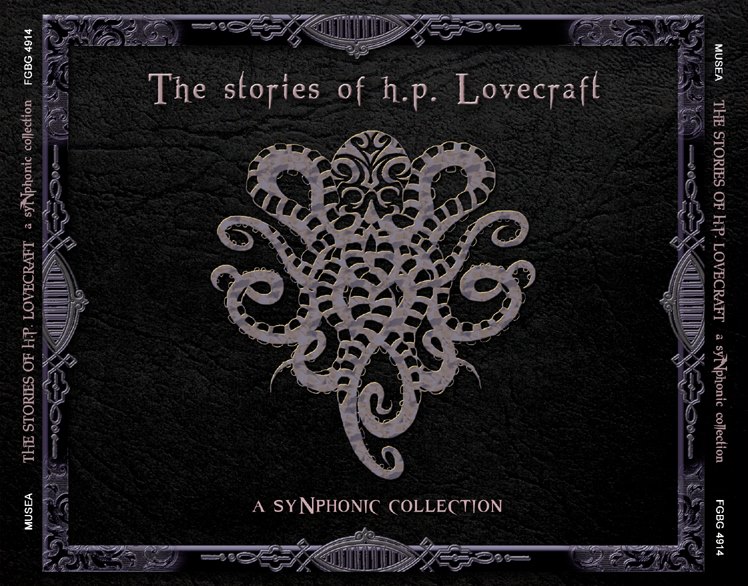
If you have a moment and if you (in the U.S. at least) possess $.99, there’s little better you can do with that money than purchase Glass Hammer’s latest single, “Cool Air.”stories synphonic

It’s their only contribution to a project exploring–through prog–the stories of H.P. Lovecraft.  It’s cleverly subtitled “A Synphonic Collection.”  Here’s the link at amazon.com:

http://www.amazon.com/Cool-Air/dp/B00ASHC30A/ref=sr_1_1?ie=UTF8&qid=1359585412&sr=8-1&keywords=glass+hammer+cool+air

Considering the typical Glass Hammer themes of nobility, whimsy (Steve and Fred can be hilarious), and struggle, the lyrics to “Cool Air” are a bit shocking.  I can’t quite piece the whole story together, but I think it’s about a man who tries to use science (and some kind of gnostic magic) to preserve and extend his life.  He, of course, fails, and the story of the song seems to take place 18 years after his death.

The horror, indeed.

The song has everything: brilliant Glass Hammer music; narration; and creepy lyrics.

I doubt if I’ll listen to the song over and over again, as I do with other Glass Hammer songs and albums, but only because I don’t think I want all of the lyrics running around my head or soul.  Still, it is pretty great, if unusual.

New Thieves’ Kitchen out today

thieves-kitchen-one-for-sorrow-two-for-joy-jan-2013The latest album from Thieves’ Kitchen is now available from a variety of sources.  Long live Anglo-Saxon-Celtic-Scandinavian prog!

http://thieveskitchen.wordpress.com/2013/01/29/14s24j-now-available/

Sha Na Na and the Invention of the Fifties

For my American colleagues..an old blog mailed to me by a friend, this may interest those who like music, myth and the invention of history.

http://www.college.columbia.edu/cct/sep_oct08/features1

The Amazing Wilf’s Great Big Wonderful Day

david elliott amazing wilfOne of our favorite English proggers, David Elliott, aka The Amazing Wilf, is enjoying a birthday today.  He has not attained that really all-important half century mark, but he’s getting really, really close.

If you’re interested in checking out David’s views on prog (and you should!), please go to his renowned radio  show/podcast, The European Perspective.

http://www.thedividingline.com/podcasts/european-perspective/

Happy Birthday, David–from all of us at Progarchy.

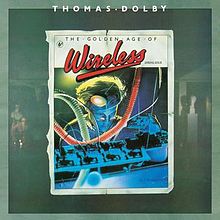
Thomas Dolby’s Golden Age

In the late spring of 1982, as I completed 8th grade, I met one of those kids who is always at the height of cool.  But, it was a calm, somewhat cynical, real cool, not the show-off cool of the wealthy socialite kids.  It was the Bohemian cool of the Beatnik not contrived cool of the Hippie or the Yuppie.

Ritchie.

ThomasDolbyTheGoldenAgeOfWirelessOnly a few of us belonged to his circle.

Except for moments of ecstatic outbursts about an idea here or there, he radiated coolness.  He read the Great Books and knew lots of poetry, he worked out in his room (he had the whole upstairs of a late 19th century house to himself) and studied Japanese martial arts, he knew everything about men such as Bill Buckley and Jack Kerouac, he owned the best stereo system of anyone our age, and he possessed an amazing record collection.  He was the youngest of a large family, and his parents were much older, pretty much leaving Ritchie to raise himself.

It was Ritchie who introduced so many of us–in a medium-sized town in the wheat belt of the Great Plains–to English New Wave.  Growing up a progger–addicted from an early age to Yes, Genesis, and Kansas–New Wave was a bit eye opening for me.  It seemed to hold much of the complexity of prog, but it did so with computers and keyboards, often one or two musicians, where prog might have included eight or nine.  Ritchie introduced me to ABC, Kate Bush, The Smiths, Oingo Boingo, Tears For Fears, and, most importantly for me, Thomas Dolby.

Not only was I a prog guy, but I was also very much a sci-fi and computer guy.  All of this appealed to me. Continue reading “Thomas Dolby’s Golden Age”

Porcupine Tree Comes Together – A Fresh Look at “Signify”

Signify Cover

Signify is an important album in the long and varied history of Steven Wilson and Porcupine Tree. The first PT album, On the Sunday of Life (1991), is a tongue-in-cheek solo Wilson tribute to British psychedelic rock in the vein of XTC’s Dukes of Stratosphear. Up the Downstair (1993) and Voyage 34  (1993) were also done primarily by Wilson alone, and are literal acid-rock albums.

The Sky Moves Sideways  (1994) introduces the first real band that operated under the moniker of Porcupine Tree: Wilson on guitars and keyboards, Richard Barbieri on synthesizers, Colin Edwin on bass, and Chris Maitland on percussion. Stylistically, the album is heavily indebted to classic Pink Floyd. While an enjoyable listen, it doesn’t break any new ground. It’s also easy to forget that the group Wilson had formed with Tim Bowness, No-Man, was actually more popular than PT during this period.

Which brings us to 1996, and Signify. Musically, it is a giant leap. Wilson, Barbieri, Edwin, and Maitland are working together as a seamless unit. There are lots of instrumental passages, and Barbieri’s electronic atmospheres are integral to the overall feel of the music. Beginning with the first track “Bornlivedie” and continuing throughout the album, Wilson juxtaposes samples of happy-sounding radio announcers, televangelists, and other snippets of spoken word with beautiful yet foreboding music.

It’s a device Wilson has become the master of: seduce the listener with gorgeous melodies, and insert dark lyrics. Personally, I think Steven Wilson is indulging a sly sense of humor. Continue reading “Porcupine Tree Comes Together – A Fresh Look at “Signify””

Riverside – Shrine Of New Generation Slaves

They like their prog in Poland.

Europe’s ninth largest country is an essential touring destination for the likes of Anathema, Marillion, Pendragon and many other well-established acts, and it is the source of much home-grown talent, chief amongst which must surely be the excellent Riverside.

If you want to know just how good these accomplished purveyors of heavy prog are, perhaps a die-hard Rush fan like me can simply point out that I saw them play live in the same week as Rush on the Time Machine tour in 2011 and was hard-pressed to pick the better of the two gigs!

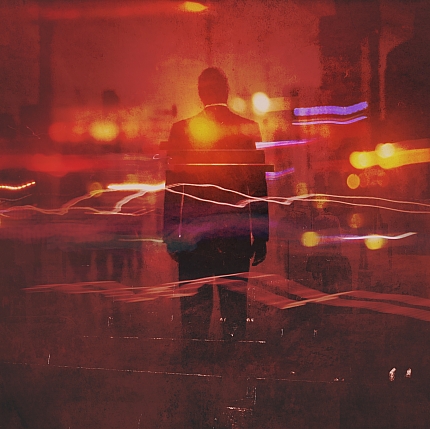
Starting with 2003’s Out Of Myself, the band have released a new album every couple of years to ever-increasing acclaim, culminating in the highly successful Anno Domini High Definition back in 2009. Since then, though, things have been comparatively quiet. A three-track EP, Memories In My Head, appeared in June 2011, but we’ve had to wait until the start of 2013 for a new full-length work. It’s here now, it’s called Shrine Of New Generation Slaves, and it’s absolutely stunning.

SONGSShrine builds on its predecessor and develops the Riverside sound in a number of respects. Its carefully-chosen title is a coded signal of the band’s intent to produce better crafted songs (look at the initial letters!) and in this respect, they have largely succeeded. The band have historically been more prog than metal whilst embracing elements of both traditions, but this release sees them flirting with more straightforward hard rock and blues-tinged sounds in places. There is even a certain jazzy looseness to parts of the album. They wear these new influences well. Above all, what they’ve produced here is something that is more cohesive conceptually and more interesting musically than any of their previous work.

The variations of pace and atmosphere on display here are a delight. Fans of the harder, heavier aspects of the Riverside sound will particularly enjoy opener New Generation Slave, which turns into a real up-tempo rocker after a slow-burn beginning of plucked acoustic guitar, ponderous power chords and treated vocals. Celebrity Touch is equally powerful and even more straightforward in its approach but is marred slightly for me by overuse of distortion effects on Mariusz Duda’s voice. Lyrically, though, it’s an effective stab at the absurdities of celebrity culture: “What matters is to be in view / I am seen therefore I am”. A similar urgency pervades Feel Like Falling thanks to its pulsing synthesiser and staccato rhythm. It’s an undoubted earworm, almost a pop song, and an obvious choice for another single.

The rockier tracks are interleaved with quieter, more reflective pieces, as is common on Riverside albums. The melancholic, piano-driven We Got Used To Us mourns a failing relationship in which the participants “started to keep ourselves at a distance we could control, not too close, not too far” and “pretend we’re OK by filling up our inner space with little hates and so-called love”.  Longer tracks The Depth Of Self-Delusion and Deprived (Irretrievably Lost Imagination) are typical of the melodic, effortlessly flowing songs that this band do so well. The former boasts a very Opeth-like minor key acoustic guitar motif and the latter’s 8 minutes and 26 seconds give ample time for some understated but excellent keyboard work by Michał Łapaj and a wonderful jazz-infused closing section featuring Marcin Odyniec on saxophone. Deprived is, in fact, one of the album’s highlights, with a vibe not dissimilar from recent solo material by Steven Wilson.

Penultimate track Escalator Shrine is the longest on the album and can reasonably claim to be its musical climax. It starts in low-key fashion with a melody picked out by Duda’s bass guitar and some bluesy electric piano, before building to a crescendo just before the five-minute mark with Hammond organ that recalls first Floyd’s Echoes and then the late Jon Lord’s work with Deep Purple. The frenetic pace lets up half way through and the last few minutes are more measured but no less epic in feel. The lyrics denounce the superficiality of a modern consumerist lifestyle: “Buying reduced price illusions / Floating into another light / Melting into another lonely crowd”.

Despite its brevity, final track Coda is anything but an afterthought; rather, this delicate acoustic piece lends conceptual integrity to the whole album by reprising the verses of Feel Like Falling – although this time the tone is more hopeful, the “Day outside grows black … Squeeze my eyes shut” lyric changing to “Night outside grows white … Open my eyes, don’t feel like falling into blank space”.

By the way, if you are planning to buy this, let me recommend to you the two-disc limited edition. Disc 2 of the set, entitled Night Sessions, consists of over 22 minutes of instrumental music, split into two parts. Part 1 is reminiscent of Mariusz Duda’s solo project, Lunatic Soul, and features sequencer patterns that bring to mind early 80s Tangerine Dream; Part 2 is more minimalist and boasts some haunting saxophone playing. It’s very different in tone from Disc 1, but it’s very good!

Riverside, ADHD (2009)

As I prepare to give the new Riverside a spin (it is arriving much later in the U.S. than in other parts of the world), I thought it would be worth offering my thoughts on the previous work of Riverside, in particular the last full album, ADHD.Image
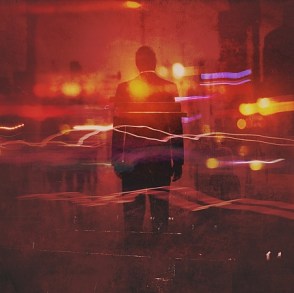
Five songs at 44 minutes and 42 seconds.  The intrepid Carl Olson (of Ignatius Insight fame and now fellow Progarchist) first introduced me to this post-Communist Polish band, and I’ve been more than a little fond of them since our first encounter.

Brilliantly, their first three studio albums–collectively known as “Reality Dream”–form one story.  Though I’ve listened to the albums too many times to count, I’m still not exactly sure what that story is about.  It follows a man who is either a saint and having endless mystical visions, or else he’s insane and trapped in an asylum.

Either way, I like the story.

ADHD appeared at an important moment for me, musically speaking.  Compared to some of the other “big” releases of 2009, ADHD towered.

Dream Theater’s album that year, “Black Clouds and Silver Linings,” served as an incoherent exercise in notes chasing notes and embarrassingly written lyrics.

Even more disappointing, Pure Reason Revolution’s “Amor Vincit Omnia” offered nothing but miserable sexual decadence and ridiculous Euro dance-type music.  The title should’ve been Lust Conquers All, not Love Conquers All.  How this could have been the same band that released the captivating “The Dark Third,” I have no idea.

Riverside’s ADHD redeems them all.  Labeled “harder” and “heavier” by several reviewers, ADHD is nothing if not insanely intense.  Is it hard?  Yes.  Do notes chase notes?  Yes.  Is there sexual deviance in the lyrics?  Yes.  But, unlike the music of Dream Theater’s most recent cd, or the lyrics of Pure Reason Revolution’s new album, Riverside’s heaviness, notes chasing notes, and lyrics all have a purpose; they each serve the entirety of the album.  Indeed, nothing in this short 44plus minutes is in vein; every aspect of the album has its purpose and knows its place.

Indeed, Riverside expresses intense anger and frustration about the state of the world—the “liquid modernity” identified in the first track, “Hyperactive.”

Modernity destroys real community. “In the mass of different runners/Different lies/We can’t make time to realize/How the same we are.”  And, modernity results in isolated, insecure (“hatred for my inner chaos”), and self-centered individuality.

We’ve lost the flow of generations, and we wallow in our subjective realities.  “I used to be one of you/With the same spark in my eyes/And now I don’t belong to this place/It’s a matter of merciless time/I wholly vanish.”  So far gone are we as a people, that we obsess about our own created gadgets, the products of our will and ingenuity, and our immediate fame, here and now.  “Come to me now/I will cure your soul/I’m the savior of our times/I know exactly what it needs/You’ve let yourself go/You’ve felt so down/So my hi-tech salvation is just for you.”

Properly, progressive rock reviewers love their tradition and the heritage of the music.  Reviewers always compare releases of Riverside to Porcupine Tree, Pink Floyd, and Tool.  These are fine comparisons, but Riverside–from the opening note on their first album to the ending note on this most recent release–are very much their own band.  Frankly, while building on what Pink Floyd offered, Riverside has topped Pink Floyd in terms of musical ability and atmosphere.  More than anything else, Riverside has confidence its in its own abilities and direction, it understands the parts each member of the band plays in the band as a whole, and it recognizes the importance of voice (human and instrumental) in its music.

While each member plays exceedingly well here, the keyboardist, Michal Lapaz, stands out the most.  From the opening note to the end of the album, his work defines ADHD.  No keyboardist has played this well since Steve Winwood on “Blind Faith,” Greg Allman on “Fillmore East,” Rick Wakeman on “Close to the Edge,” or Mark Hollis on “Spirit of Eden.”  I can’t even put my admiration in words.  Every time I listen to him play on ADHD, I can only provide a rather sincere but inarticulate “phew.”

I give Riverside’s ADHD one of the highest rankings I can.  This album is simply exemplary.  Thank you, Riverside.  Thank you, Poland.