Remembering: Peter Gabriel (“Scratch”) (1978)

After leaving Genesis, Peter Gabriel released four solo albums (1977, 1978, 1980, and 1982), all originally simply entitled Peter Gabriel.  The first three earned nicknames based on their covers, and the fourth was dubbed Security when it was released in the U. S.  (I remember thinking at the time that this album-titling strategy, surely frustrating to marketers, was one of the coolest things imaginable.)
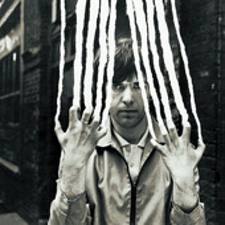
scratchEver since its release in 1978, the second Peter Gabriel (“Scratch”) has been one of my very favorite albums.  It would make my top 25 list not only of “prog” albums, but of any albums of any genre.  I’ve often been strongly tempted to think that this was due to those idiosyncratic associations we all have with some of the albums from youth.  But I’ve both listened to and thought about it again lately, and I’ve decided that I will still boldly proclaim that it is, as an album, the best of the four.

This feels like a strange judgment to make.  While about as critically successful as its companions at the time, generally speaking, it now sometimes seems to be the least enduringly “visible” of the four.  I have certainly run into a lot of folks who know Gabriel’s work generally but who do not remember “Scratch” well.  (Perhaps this is different across the pond?)  And my judgement does not negate the high points of the other three, arguably higher in some ways than any particular moment on “Scratch.”  But “Scratch” is not about high points as much as it is about a compelling sort of quasi-operatic profundity, sustained with remarkable consistency all the way through both sides of the original vinyl.

Now, putting it that way, in terms of the “operatic,” may make it sound “over-the-top,” but that is precisely what “Scratch” is not.  The profundity has always sounded, and still does sound, wholly genuine to me.  It has a remarkable textural subtlety that, as far as I can tell, has a lot to do with the way in which Robert Fripp’s production places just the right amount of restraint on Gabriel’s 70’s envelope-pushing ethos.  (If you know the album, but haven’t done it recently, listen to it again alongside the other two albums in the Fripp “trilogy,” Fripp’s Exposure and Daryl Hall’s Sacred Songs.)

With Fripp’s production and the marvelous synergy of the musicians (yes, I have to use that word, and not just because of Larry Fast), Gabriel’s voice on this album (sometimes treated, sometimes multiplied, sometimes fragile, sometimes exquisitely abrasive) is at its most Genesis-glory-days “Gabrielesque.”  I tend to see it as the last truly great whole-album surge of the “early” Gabriel.  Again, this is not to cast particular aspersions upon the “later” Gabriel.  (I think the last single-song surge may have been “Shock the Monkey,” but that judgment may be clouded by its delightful music video.)  So (1986) is amazing in completely different ways.

I haven’t yet been able to bring myself to discuss the individual songs.  Do you remember them?  If so, I’m guessing you remember some more than others, but I’ll surrender to the impulse and not go there.  I’ll stick with my focus on the album as album.  Listen again to the whole thing.  Listen to it as a sustained, single work.

To my ears, it holds up as well as anything Gabriel has ever done.

Open Your Eyes — and Ears — to Leslie Hunt

The unstoppably awesome Leslie Hunt is giving away downloads of her last two albums at her online store.

This is amazing music by a rare talent, so grab it while you can!

If you like prog phenom District 97, you’ll really enjoy comparing Leslie’s 2009 version of “Open Your Eyes” (track #13 on Your Hair is On Fire) with District 97‘s 2012 version.

If you’re like me, you can’t get enough of both!

Thanks, Leslie, for the gift of your superb music.

leslie-hunt-live

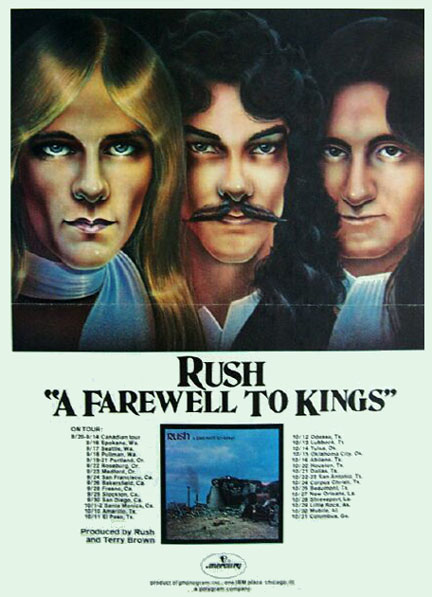
RUSH: A Farewell to Hemispheres, Part I

by Kevin McCormick

Rush appears to be a band without a retirement plan.  This past year saw the release of the highly acclaimed studio album Clockwork Angels, the subsequent world tour promoting the album and the fourth remastered re-release of the 35-year old classic album 2112.   With the re-release of that epic work and the renewed attention it has garnered, it is worth noting that the recording and the subsequent live shows were really, as the liner notes say, “The end of the beginning, a milestone to mark the close of chapter one in the annals of Rush.”

From Rushvault.
From Rushvault.

Neil Peart hardly could have known how accurate that statement would be.  Today the band is approaching its 40th year since its first full-length album.  Most artists of their age lucky enough to be still performing spend most of their time coasting on the tails of decades-old hits and playing as shadows of their former glory.  Rush seems to continually push itself into new territory creating an ever-changing sound yet with ever constant sensibility.  Something about Rush feels contemporary but remains rooted in the sound of three guys from Toronto four decades past.

Rock artists worked more quickly back then. By 1976, a banner year for Rush, the band had produced four studio albums.  Having resurrected themselves from the brink of extinction (or at least from being dropped by their label) with the inexplicable popularity of their futuristic totalitarian opera “2112,” the band toured extensively throughout the US and Canada.  Their “brief” stretch promoting the new album ran from February to August and included opening for Blue Oyster Cult and Aerosmith.  Somehow the band found time to put together a double-live album of those recent shows and, with but a week in-between, again headed out on the road from August and into the new year promoting that record, All the World’s a Stage. By the time they wrapped up in England in June of 1977, Rush had been touring for nearly two years without a lengthy break and receiving accolades not only for their recorded work but for the power, skill and intensity they brought to the stage.

Continue reading “RUSH: A Farewell to Hemispheres, Part I”

Progarchy Presto: Jennyanykind’s Mythic Re-released

jennylibrary
Michael Holland (center) and Mark Holland (right)

Thanks no doubt in part to Craig Breaden’s rousing review on Friday (1/18/13), the Holland Brothers have made the Jennyanykind album Mythic (1995) available again at their band page.

http://euramericansoul.com/album/mythic

Take a look at Craig’s write-up and give this hidden gem a spin.

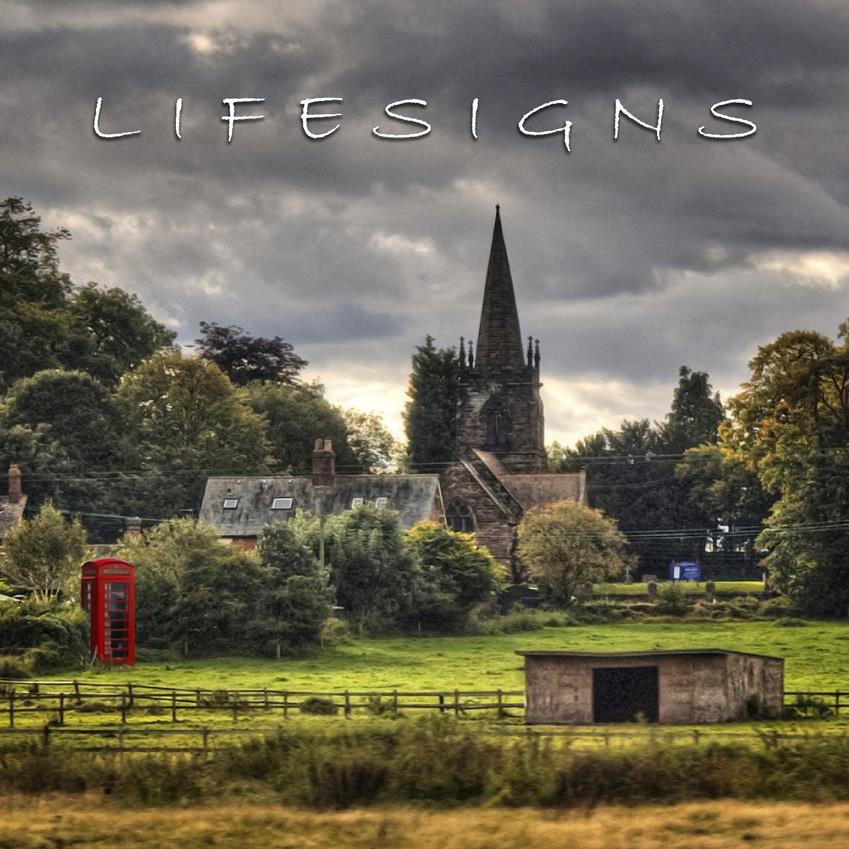
Lifesigns: the first wave in the new British prog tsunami

Lifesigns CD (2)It is going to be another vintage year for prog and if you do not know when or where it is going to start, then may I suggest you put Monday January 28 2013 into your diary?

Why? Because on that day, the first wave in the tsunami of brilliant new British prog rock will be available to the discerning listening community in the form of Lifesigns.

Let me tell you a little bit about it. First, it is another prog-ject following on from Kompendium’s Beneath the Waves and Genesis Revisited II that both had guest lists straight out of prog central casting. Also, three of the main players from those albums, Steve Hackett, Nick Beggs and Jakko Jakszyk will be appearing on Lifesigns.

Heading up this album is John Young, the classically trained composer, keyboards player and vocalist whose CV includes stints with Asia, the Strawbs, Greenslade, Fish, Uli Jon Roth and his own John Young Band. He also tours with Bonnie “Total Eclipse of the Heart” Tyler.

After such an illustrious career, John decided six years ago he ought to write a prog album which would draw together all the musical influences in his life including classic bands of the 70s such as Yes and Focus.

To cut a long story short, John moved to the delightfully named town of Leighton Buzzard in the Home Counties of England where his next door neighbour was music producer Steve Rispin to whom he started playing some of his musical ideas, usually late at night. Nick Beggs is also resident in this town and John invited him to be a central collaborator to Lifesigns. Frosty Beedle, drummer with Cutting Crew, who had a huge hit with (I Just) Died In Your Arms Tonight, became the third musical member of the core Lifesigns group with John and Nick.

So where is this all leading? Well last January, John and Nick invited Martin Reijman, my prog partner in crime, and me to come and hear an early version of the album.

By way of explanation, Nick and I go back a long long way – over 30 years – back to when I was working as a reporter on the local paper in Leighton Buzzard, but that’s a story for another time.

We had also met John both via Facebook and at a gig so it was an real honor to be among the first to hear the genesis of Lifesigns. Eighty five per cent of the album had been completed then and we were both struck by its classic British prog style, full of uplifting melodies, harmonies and instrumentation. By then, Steve Hackett had also added a couple of his signature flourishes to the arrangements.

After that, John also secured the services of one of his heroes, the legendary Thijs Van Leer of Focus who provided some lovely flutelines, then guitarists Jakko from King Crimson and Robin Boult, who has played with Fish.

The months passed and John got back in contact to say the album had been completed and Esoteric Records would be releasing it.  He invited us back to hear the finished article but unfortunately Martin was unwell on the day in question and is still to hear it.  So I returned alone to Steve Rispin’s studio in a beautiful part of rural Buckinghamshire to hear the album and meet Frosty, and John of course.

Well, the finished article was sensational. It was quite mind-blowing to think of the various processes and mixes the music had been through to achieve the final sound. Lifesigns is one of those quintessentially classic British prog albums (with a dash of Dutch artistry) which takes you on a long and memorable journey through some very special sonic landscapes.

The opener Lighthouse nearly knocked me off my chair with its wall of sound that conjured up crashing waves. As John is keen to point out, the theme of the album is life itself and is open to any interpretation the listener may want to put on it.

The three of us ended up at the local bar in the neighboring village where John recounted an extraordinary story of a meeting he had with another of his heroes, the brilliant Patrick Moraz of  Refugee, Yes and the Moody Blues in the bar of the Los Angeles’ Hilton Hotel. Maybe one day, I will take a verbatim note from John of the story and share it with you here.

Anyway, that’s the background to Lifesigns which I hope you will all  hear and adore, made by a group of incredibly charming guys who genuinely love making the music. It was a real privilege to have been a party to its progress last year.

http://www.facebook.com/Signslife?fref=ts


10-minute James Marsh Video Tribute to Talk Talk

If you have 10 extra minutes today or tomorrow or any day from here until the end of times, make sure you check out this stunning video tribute to the music of Talk Talk.  James Marsh, master artist of all things Talk Talk, made the video.  I’m finding the entire thing quite inspiring.

Here’s the link (sorry, I still don’t know how to embed videos):

http://www.youtube.com/watch?feature=player_embedded&v=kSwgHxMLX_c#!

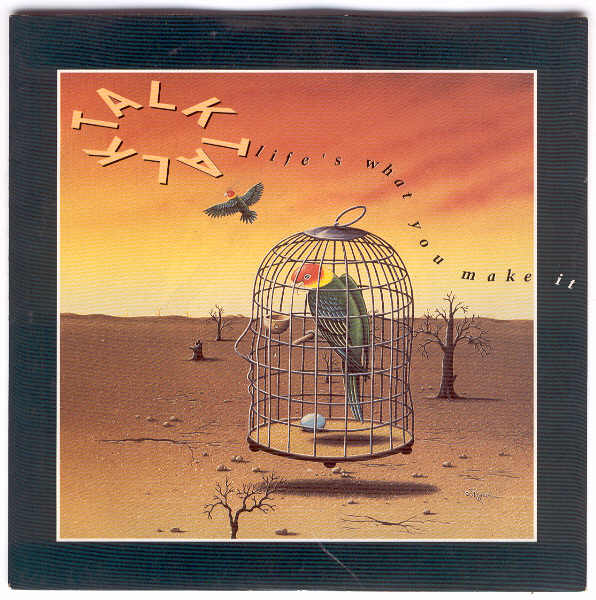
Art by James Marsh.
Art by James Marsh.

The information below the video at Youtube reads:

Published on 19 Jan 2013

Animation promo for the album ‘Spirit of Talk Talk’, available from Fierce panda Records.
All net profits going to the ‘Rare Bird Club’ of ‘BirdLife International’ for Conservation, UK Reg. Charity.
Sample tracks include music by – Nils Frahm, Jack Northover, Zero 7, Sean Carey, Lone Wolf, King Creosote, The Lovetones, Turin Brakes and more…

As some readers of Progarchy might know, I consider Talk Talk one of the greatest musical acts of all time with The Spirit of Eden ranking as one of the best–if not THE best–post-classical albums of all time.

The Cautionary Barrett

This is an important month for admirers of the late Syd Barrett.  The artist’s birthday falls on January 6, and his first solo album The Madcap Laughs was released January 3, 1970.  These anniversaries occasion an opportunity to ponder what Barrett left in the cautionaryvery short slice of time that shattered musical conventions.

What Barrett accomplished on guitar is legendary in itself, taking the lowly Danelectro 59-DC and, with a Zippo lighter or a ball bearing for a slide, creating entirely surreal soundscapes scarcely resembling anything on the blues records he enjoyed as a youth.   But it was Barrett’s lyrics that gave substance to his melodic adventures.  As we might expect from a native Cantabrigian, Barrett’s verse was informed by sundry literary figures.  One Russian fan site conjectures  influences ranging from C.S. Lewis (“Flaming” and “Scarecrow”) to Tolkien (“The Gnome” and “Dark Globe”).  Known references include James Joyce’s verse for “Golden Hair” and Hilaire Belloc’s Cautionary Tales for Children on “Matilda Mother.”  I would like to expand upon the latter, as Syd Barrett’s oeuvre seems to be one large cautionary tale, reflected both in his artistry and later, after his crack-up and expulsion from the Pink Floyd, in his personal life.

Cautionary tales are written or recited for young audiences.  Syd Barrett’s music clearly displays infectiously playful, childlike elements.   The Piper At the Gates of Dawn has been characterized as consisting of two main features: extended pieces that included free-from passages (“Interstellar Overdrive”) and shorter, whimsical pop songs.

Of the latter it has been suggested that these include certain dark elements.  A good example is “Flaming.”  The melody and the vocals pack the giddy spontaneity of adolescence — a sense of being swept up in infatuation for the first time.  Listening to this song is to be transported back to age 13 or 14.  The subject to whom the song is directed can neither see nor hear Barrett, but he can see and hear her.  Using buttercups and dandelions to heighten a sense of euphoria, Barrett sings

Too much? I won’t touch you — but then I might.

Later we discover this conversation involves “travelling by telephone” — the preferred medium of exchange for adolescents for the past 60 years (the only difference today being wireless texting).  But the notion of Barrett inserting himself as the agent of sensory overload, of shattering the playful possibilities with a very direct and perhaps unwelcome advance — this is the tension that drives “Flaming.” Continue reading “The Cautionary Barrett”

Cosmograf – The Man Left In Space (Album Sampler)

I pre-ordered my copy this week. You should too. It sounds terrific!

The Myth of Jennyanykind

Rapture.  Mythic is playing through the headphones on full blast.  Mythic, from 1995.  Arrived today in the mail, $4 off Amazon Marketplace.  It’s been out of print for years, naturally, and my copy was lost long ago. [Note: Mythic was re-released on the band’s BandCamp page one day after this article was originally published.  See link below. — CB]

Living in NYC in 1995, I was visiting North Carolina (a former and future home) when I found Mythic.  I really liked their first record, “Etc.,” a minor local mind blower, but Mythic was all the best part of “Etc.” amped and twisted and cranked.  It dropped into a Chapel Hill scene that was undergoing some serious transformation as Jimbo Mathus’s Squirrel Nut Zippers, which arose out of the ashes of Metal Flake Mother, were getting national attention, and weird rock purveyors Zen Frisbee soldiered on, having been solidly ignored for their brilliant album, I’m as Mad as Faust. Continue reading “The Myth of Jennyanykind”

Interview with Greg Spawton of Big Big Train (June 2012)

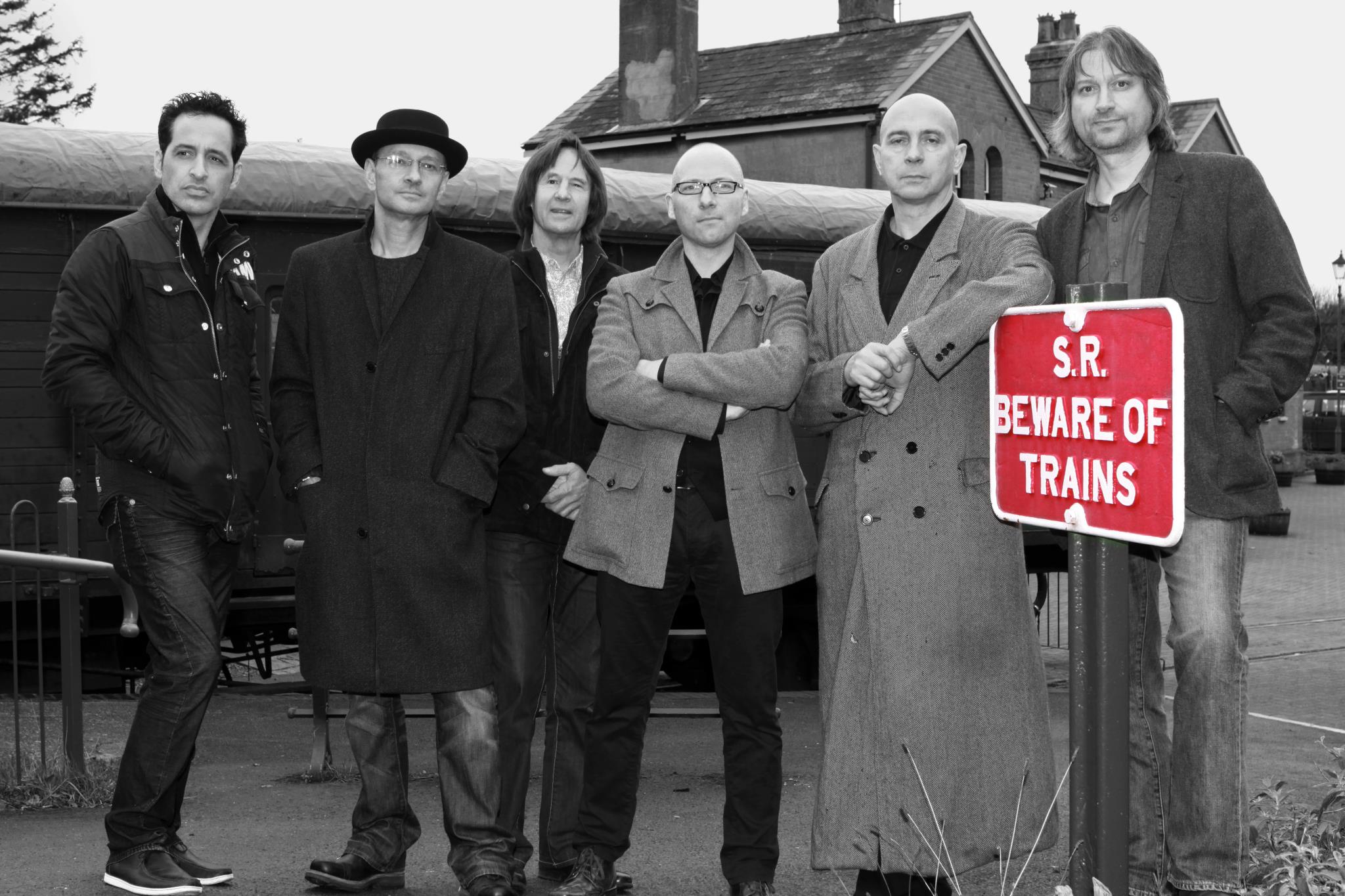
Nick, Andy, Dave, David, Danny, Greg.  Photo by Willem Klopper.
Nick, Andy, Dave, David, Danny, Greg. Photo by Willem Klopper.

[This interview appeared at TIC, June 27, 2012.  A gracious thanks to Winston Elliott, editor of TIC.  I’m reposting it here because 1) it might find a new audience; and 2) Big Big Train just today began pre-sales for English Electric Volume 2–out March 4, 2013]

An Interview with Greg Spawton 
by Brad Birzer

We’re in the middle of perhaps the largest revival of progressive rock—that form of rock music which pursues the artistic and the mythic—since the genre became somewhat suspect as overblown and over-the-top in the second half of the 1970s with the rise of punk. Almost any American over the age of forty can remember the time when long songs such as Yes’s “Roundabout,” Jethro Tull’s “Aqualung,” Kansas’s “Song for America,” and Emerson, Lake, and Palmer’s “Karn Evil 9” dominated FM radio.

The music of these groups, unlike much rock produced in America, originates not as much from jazz and blues as it does from European forms of classical, symphonic, and operatic music.

In this way, the genre of progressive rock has sought to preserve and extend the best of the western tradition while also being willing to incorporate non-western instruments and rhythms.

Those days of FM dominance are long gone, but the emergence of internet sales and music downloading has allowed accessibility to a number of excellent bands and artists that would have been bypassed by corporate labels over the past three decades as not marketable enough for the immediate fashions of the moment.

Numerous forums exist online for the discussion of progressive rock in all of its nuances, complexities, and manifestations. On Twitter, one can turn to @progrocktweets, @alisonscolumn, @mattstevensloop, @thesidsmith, and the accounts of any number of musicians and bands.

On the web itself, sites such as www.2112.net/powerwindowsdprp.netrushisaband.comprogarchives.com, and deliciousagony.com offer all kinds of progressive rock news.

Continue reading “Interview with Greg Spawton of Big Big Train (June 2012)”