A Progressive Rock Lexicon (or: How to Talk to a Prog Rocker)

In any field of endeavor, there is a certain language used.  One working in the legal field speaks of briefs, appeals, affidavits, and so on.  A football coach may speak of blocking schemes, blitzes, and pass routes.  And one who flies airplanes may speak of instrument flight rules, crosswind landings, air speed, and fuel mixture.


Alas, those that make and listen to music have their own language.  Of course, those of us involved with progressive rock, as listeners, musicians, producers, etc., usually look at the world a little bit differently.  As such, an alternate language has developed.


Thinking about this, I have come up with a list of a few terms to aid conversation between prog rockers, as well as to help those who would like to speak to us on our terms.  Of course, this list is by no means considered to be complete.  Fellow Progarchists and readers of this site, in the interest of smooth communications, you are not only welcome, but are encouraged to suggest additions.  So, without further adieu, and with tongue firmly planted in cheek, I present to you a brief glossary of progressive rock terms. 


Short song – a song under 10:00 minutes in length.


Unusual time signature – 4/4


Normal Time Signature – 7/4, 5/8, 7/8, etc.


Brick – a unit of measurement for determining thickness.


String Section – a group of musicians in an orchestra whose function it is to emulate a Mellotron.


Dancing – ??????


Pretentious (1) – a word used to describe the critics who accuse prog rockers of being pretentious.


Pretentious (2) – the lyrics from this guy:


Excess – ??????


Air Guitar – what rock fans play.


Air Keyboards – what progressive rock fans play.


Air Bass – Well, a lot of us play this too, especially those of us that are into Geddy Lee and Chris Squire.


Bass Guitar – a stringed instrument typically used in the melodic discourse of a progressive rock composition.  Occasionally used as part of the rhythm section.


Robert Moog – the greatest electrical engineer of all time.


Aaron Copland – a guy who used to write music for Emerson, Lake and Palmer.


Alberto Ginastera – See Copland, Aaron.


Female Prog Rocker – a woman that participates in progressive rock, either through listening or performing.  Most frequently found in Continental Europe, the U.K. and Scandinavian countries.  A North American variant of the species exists but is extremely rare.  Another related variant of the species is the prog rock spouse, defined as a wife dragged into the prog rock scene by an overzealous prog-rock loving husband. 


Consuming alcoholic beverages – rearranging your liver to the solid mental grace.


Seed drill – a tool for precisely positioning seeds in the soil, refined by a man who was preemptively named after the band Jethro Tull.


Composing – the art of multiple musicians in a band sitting around arguing for hours, sometimes very intensely, over whether the next bar is to be in F or F#.


Corporate Attorney – see video:


(it is rumored that they also did some prog rock in the 70’s)


Änglagård — Viljans Öga


Ken DiTomaso from the prog rock band Paper House nails it in his review of Änglagård’s Viljans Öga over at The Daily Vault, where the album made his 2012 End-of-Year List:

Returning after a twenty year break, Änglagård doesn’t skip a beat. This is an album of lengthy instrumental progressive rock that refuses to be modern in any way. Flute, mellotron, hammond organ, and more make this feel like it came straight out of a bygone era. The mood is dark and chilly, but less in a creepy Halloween way and more in a long winter’s night way. It sounds almost exactly like their original output twenty years ago, to the extent that I’d bet some people probably wouldn’t be able to guess which songs were produced then and now if they were all shuffled up. That lack of originality might be a downside to some but it was never what the band was about in the first place, and when it comes to recreating ‘70s prog bliss, they still can’t be beat.

Guitarist Jonas Engdegård tells you how to pronounce the track names here.

1. Ur Vilande
2. Sorgmantel
3. Snårdom
4. Längtans Klocka

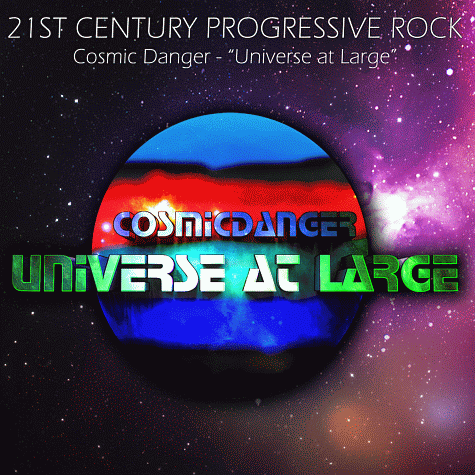
Review: Cosmic Danger, “Universe at Large”

Cosmic Danger - Universe At Largeby Frank Urbaniak

I have listened to Cosmic Danger’s “Universe at Large” several times and I have had mixed reactions on each pass.  The music demonstrates hints of both early Yes and the Rabin /Sherwood years, Camel, Klaatu and Asia and is an interesting but somewhat frustrating listening experience.

There are nine tracks on Universe at Large logging in at about 50 minutes, with a mix of instrumental and vocal tracks.  There is little information online about the band or this album including lyrics or story line.  The quality of musicianship is excellent, but in both lyrics and music the album doesn’t flow well to these ears and the storyline escapes me.

First the good –these guys are exceptional musicians: the guitarist can rip like Howe during The Yes Album days, the drummer is tight, crisp, fast and well-mixed and the keys are always interesting.

The not so good-the name, the cover, the concept of the CD and the lyrics seem a bit too ‘space’ oriented, suitable as a soundtrack for Enders Game but less relevant than other progressive music being released today (BBT, Echolyn).  This isn’t cosmic as in Jon Anderson/Yes, but cosmic as in “we are journeying into space and won’t be back” but the story doesn’t seem very developed.  The bass seems a bit muted.

The mix is puzzling, with excellent drum/keys/guitars, but the heavy reverb and echo on the choruses and effects remind me of a late 80s release like Marc Jordan C. O. W or Yes’s Big Generator.

The first five tracks have vocals with big choruses, giving Universe at Large a strong AOR feel initially. “Champions” starts off the album with a heavy Argent sounding organ and a feel -good chorus suitable for the Olympics, although the words sound a bit hokey: “Champions give all they have, all along”.  “Freedom Flier” also begins with a nice organ riff (Tony Kaye style), and the vocals remind me of Flash/early Yes.  “Skydiving” sounds like a Moody Blues tune with strumming guitars and another heavily reverbed chorus and builds to a frantic conclusion where you can see how proficient these guys are as musicians. “Blue Sky”, the best track on the album, retains the Kim Bullard/Paul DeVilliers (Big Generator) feel with brassy keys and vocals reminiscent of Alan Parsons/Chris Squire.  An excellent guitar solo leads to a nice counterpoint vocal chant of “Blue Sky dawning, Red Sky at night.”

With “Bug in the Wire” the vocals are a bit clearer and ‘grittier’ , sounding a bit like Kevin Moore/Chromakey, with music by Klaatu.  At this point the album shifts to mainly instrumental focus, with “Endless Voyage” one of the most tasteful tracks on the album. “Moon Base Gamma” , the longest track on the album at 7 minutes, loses some of the momentum with some overdone synthesizer effects and cumbersome words about survival at Moon Base Gamma , with the repeating chorus of ‘where is home’ making this sound more like a space opera (think Intergalactic Touring Band).    “Five Year Mission” has a frantic bass/guitar riff and the powerful drumming again demonstrates the proficiency of the musicians.  “Moon Dusk” loses the momentum by concluding this ‘space’ journey with an overlong intro of heavy keyboard effects. Finally the band introduces some  tablas and percussion, but just when the track gets going it abruptly ends with a heavily reverbed chorus briefly chanting the theme from the opening track “Champions”.

In summary, these excellent musicians have produced an interesting but not very original release.  I am unclear as to the message and I am left with an ambivalent feeling about the full album.  While the instrumental tracks are interesting, I think the album would be better paced if some the instrumentals broke up the early vocal tracks to help build the ‘story’.   Certainly worth a listen and because of the obvious talent of the band, I look forward to future releases.

My rating: (out of 10):

Musicianship-8

Production-6.

Pacing-5.

Originality-5

Overall-6.

Sending Art Downstream

Sending Art Downstream

I’m sharing a link here to a wonderful Pitchfork essay by Galaxie 500′s (and Damon and Naomi’s) Damon Krukowski, on streaming and the economics of sonic art.  One high point: Damon’s observation that Galaxie 500’s first record was first released only as an LP, and his next will mostly likely be released only as an LP, because streaming music services like Pandora and Spotify have made the idea of selling one’s art for a profit obsolete.  For all the bands we love on Progarchy, my guess is they face the same economic hurdles, something David Longdon of Big Big Train shared with me at any rate: they make no money, it’s a labor of love they’re lucky they’re not losing their shirts on.  On a somewhat unrelated note, I love the convenience of digital, streamed music, but I also am skeptical of it satisfying the same benefits many of us (I think) got from the LP.  Rewarded patience, a linear experience as imagined by the artist, the tactile and visual experience of the sleeve…. If streamed music also means a watering down of the artist’s reward, my skepticism grows.

Craig Breaden, January 5, 2013

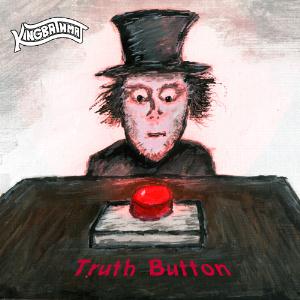
Truth Button by KingBathmat

Truth Button

Sometimes a band comes along that defies categorisation. KBm are such an animal. From the first listen the album aroused my curiosity and I strived in vain to ‘place’ it in my comfortable world of musical genres. That I failed to do so after repeated attempts is a testament to the diversity within Truth Button. As a result it’s taken me a long time to write this review (I’ve thought of little else for the last week!)

KBm are the brainchild of John Bassett, based in the UK. Truth Button is the band’s sixth album since 2003. I will be honest enough to say I had never heard of KBm before, so this was my first experience of their quite unique sound.

Truth Button has a loose concept and in the band’s words:

“…deals with an underlying theme of technophobia and social disconnection due to the ever-growing trivial use of modern technology”.

The frequent pressing of computer buttons has led to the creation of an illusory world but through the ‘Truth Button’ we can, if we wish, attempt to connect with the real world.

This theme is clearly referred to in some of the song titles and accompanying lyrics.

The mix of musical styles is eclectic and melded into an original sound. There’s a bit of Queen here and maybe Black Sabbath there and smatterings of indie and alternative rock (Queens of the Stone Age). At times the lead and bass guitar riffs are very grungy (Tool/Nirvana).  And they throw in a bit of Radiohead and Muse. The vocals however are generally light and punctuated with some nice harmonies.

Continue reading “Truth Button by KingBathmat”

Does Fun Belong in Music? Frank Zappa – Finer Moments

zappa-finer-momentsFiner Moments is a new release from the seemingly bottomless vaults of Frank Zappa’s music.  It’s been very interesting watching some of the early response to this release, as available detailed information regarding the recordings included on this 2-CD compilation has been sparse.  The hard-core fans are adulatory, of course, but I’ve also seen those predictable lukewarm comments to the effect that this is a release that is “only for the most serious fan.”  Translation:  “I think this is crap, but hey, I understand that if you’re a serious fan of X, then you will even want X’s crap.”

If you see responses like that, do not be fooled!  They come from folks who may appreciate some of Zappa’s work, but who do not really have the patience to plumb the sort of aggressively transgressive creativity that Zappa represented.  The recordings on Finer Moments, mostly (but not all) recorded live, are from the years of the original Mothers of Invention, between 1967 and 1972.  As with most of the best of Zappa’s output, they dance deftly along a fine line between composed and improvised.  They display very effectively, to my ear, the way in which Zappa flourished as a composer (which was primarily the way he understood himself) and as a serious artist (with a sense of humor rivaling that of Erik Satie) within the (in those days) strange and evolving framework of the popular “rock band.”

Indeed, though there are no “funny songs” (read: off-color and/or politically incorrect ditties) here, my most profound impression on listening is that this music is “in your face” in simultaneously wholly serious and wholly fun ways.  Listeners who love Frank’s orchestral and chamber works, and his work with synclavier, will be best prepared for what stirs in these early recordings.  There is an ethos of music-making here which insists upon the compatibility of an aesthetic gravity with a philosophical levity.  The enthusiastic involvement of the early members of the Mothers ensures that what Zappa called “the eyebrows” (what he noted was missing when he used the synclavier rather than live musicians) is amply manifested.

I’ve seen Zappa categorized as “Avant-Prog,” and whoever might want to argue in favor of that classification will find plenty of support on Finer Moments.  But I’m inclined to say that what it shares with all of the best so-called “prog” is its humor-laced and fun-filled but rigorous refusal of categorization.  Even if you don’t consider yourself a Zappa fan — perhaps especially if you don’t — give this a listen and see what you think.


Not Yet Knowing The Words (Part Two)

Songs have lyrics.  Unless they don’t.  And music doesn’t have to have lyrics.  Unless it does.

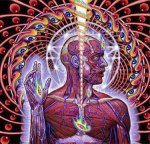
tool_lateralusWhat I’m thinking about again today is words (words, between the lines of age, as Neil Young sang).  “Beyond words” or “I can’t put it into words” are ways of calling attention to the wordiness of words, to the way in which words only word (sure, let’s verbify it too) when they waft and waver, when they have a warp and woof with those tiny spaces where something can dwell that’s not words but more like fervent wishes.  Tool’s Lateralus had words that arrested me on first exposure.  My rights were read to me by the first three songs I heard from that album (“The Grudge,” “The Patient,” and “Schism”), first passing by me like strangers that ignored me (and I them) but then they frisked me, cuffed me, and shoved me into the back of a completely unexpected and soundless squad car.  Wondering about the words, I went to the web.  There they were, all wordy and flat and what the hell is this anyway and it’s not like it strikes you as poetry when you read it there,  so there must have been some mistake.  But back to the music and there were the words again, but in the music Maynard made love to them.  Keenan keened them, you might say, and they writhed with a painpleasure that no “PARENTAL ADVISORY” sticker would ever cover.  It was the singer and the song locked in a tense embrace that made the meaning manifest.

All of this is about that clearing that I mentioned before, and it’s really about Spock’s Beard that I was talking before, and not about Tool at all.  It’s about the way in which the meaning that I want remains aloof, remains Other.  It’s about the way in which Nick D’Virgilio’s voice does the same sort of work with words that I encountered a while back in Maynard James Keenan.  A work with words in which the words are emphatically not tools.  They’re not simply “used” or “employed” in order to bring forth something else.  That’s the way we tend to think of words when we’re doing our everyday-saying, when we’re not singing but talking (hear Adrian Belew now?  It’s oooooooooonly TALK!), as if talking were something infinitely distant from singing.  (It’s really not, but we need the supposed contrast as a provisional intuition pump.)

SpocksBeardFeelEuphoria (1)

I’m listening today to Feel Euphoria, and the comparison to my first encounter with Tool (not tools) is like an insistent throbbing.  Throbbing, pulsing, thumping.  The drumming!  Of course!  The drumming and the singing are on especially intimate terms here.  That was going on in Tool in amazing ways, but here it’s amazing while also being much more subtle, a sumptuous sort of subtle.  And I would say even more tensely intimate, in a wondrous, meaning-making sense.  The artfully restrained but deeply athletic sonic synthesis of Alan’s Guitars, Dave’s bass and Ryo’s keys are a luxurious garden through which Nick’s percussion and vocalization can dance together, hand in hand.

And TENSIONS.  Such richly meaningful tensions arise here:  “Onomatopoeia” is blissful tension, because what “sounds alike” never truly sounds alike.  “The Bottom Line” is tension because the singer who looks for it is himself found by it.  “East of Eden, West of Memphis” is a glorious geographical tension.  And then there’s that guy named Sid.  Of course he’s an enigmatic tension (if I insert a Y and allude to Syd, can you Barrett?).  Nick sings in the first person, but at least part of the tension here is with that “first” designation.  It’s him, or it’s someone else I know or remember, or perhaps it’s even me, myself (an I).  Or it’s all of us.  Or maybe not any one of us in particular.  And the closing call to “Carry On”:

When your whole world comes apart
There’s a place for you to start

This was my place to start with Spock’s Beard, my place to go back and pick up on the words that, in my prior post, I did not yet know.  Today Tool provided a tool, but only a tool.  It was really about SB.  And another tension, too:  It was really about how we might listen to any words when they are words to a song.  But that’s not to say that such listening will always be rewarded, which is why it was really about SB, and (not to elevate unduly, but) about NdV.

So, those of you who’ve known all along:  Does this all sound right?  Or does it sound just wrong enough to make a tension that might be right?  Does it help to talk of the tension that emerges when one sings rather than talking?

The Royal Concept (2012) EP

The Royal Concept (2012) EP

My favorite EP of 2012 came from Sweden’s The Royal Concept. They hail from Stockholm.

You can download almost all of the EP for free from their page at SoundCloud.

Five great songs:

1. Gimme Twice

2. Goldrushed

3. Knocked Up

4. D-D-Dance (you can listen at SoundCloud but download from iTunes)

5. In the End

You can also check out the song “World on Fire” and a 3:32 remix of “Gimme Twice.”

File under: New Wave Prog?

Your move, Phoenix!

Kevin McCormick’s Squall (1999)

kcmccKevin McCormick, Squall (1999).  To my mind, this is some of the best rock music ever written—but tempered with very serious classical sensibilities and lacking the over-the-top bombast present in even some the best of 1970s progressive rock.

If one had to label his music, it would most likely be a post-prog, post-rock, or, simply put post-Talk Talk.  In the current realm of music, one might think of a mixture of Matt Stevens, Gazpacho, and Nosound.

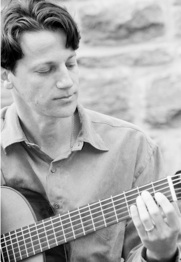
McCormick incorporates his profound poetry as lyrics.  Each word—and the way Kevin sings it—seems utterly filled with grace and conviction.  This is part two of a rock/post-rock trilogy (he’s currently working on number three).  And, it’s hard to listen to Squall without listening to its equally fine predecessor, With the Coming of Evening (1993).  Kevin really has it all: a great voice, the ability to write poetry as lyrics, and the training of a classical guitarist.

Before I write any more, let me admit my bias.  Kevin is one of my closest friends, and he has been since we first met in the fall of 1986 as freshman at the University of Notre Dame.  We still talk and correspond frequently.  Kevin is the godfather of my oldest son, and I of his second daughter.

We bonded immediately on matters of music back in 1986.

Kevin and his two brothers had a well-known Texas band in the mid 1980s, and Kevin formed the finest band at Notre Dame, St. Paul and the Martyrs, during our years there.  Toward the end of our senior year, St. Paul and the Martyrs opened for the-then unknown progressive jam band, Phish.

During our years in college, Kevin and I traveled throughout the U.S. and England together (making sure to visit Trident studios as well as EMI (hoping to catch a glimpse of Mark Hollis) while journeying through the mother land of prog and New Wave), co-produced a “Dark Side of the Moon” charity show, complete with an angsty-movie backing a full performance of the album by the Marytrs, talked music and lyrics until late into the nights, and even co-hosted a prog rock radio show on Friday nights.

Not surprisingly, one of my greatest memories of Kevin in college was listening to the entirety of Talk Talk’s Spirit of Eden in 1988.  We remained completely silent for a very long time after its completion, stunned by the immensity of its beauty.

Kevin is extremely talented in a number of ways.  Not only is he the father of our beautiful daughters, but he has won national poetry as well as classical guitar composition awards.  In addition to the two post-prog albums (With the Coming of Evening and Squall) already mentioned, Kevin has also released several albums of solo classical guitar as well as an album of Americana, all recorded on an 1840s Martin.

His music has been praised publicly by many (see, for example, his entry at Allmusic) and privately by such luminaries as Phill Brown and Greg Spawton.

As of this afternoon, Kevin has finished mixing a Christmas CD, recorded with his oldest daughter on vocals, to be released next Christmas season.  And, as mentioned above, he is currently working on the completion of his post-rock trilogy.

Here’s Kevin’s music at CD Baby:  http://www.cdbaby.com/Artist/KevinMcCormick

Here’s Kevin’s official site: http://www.kevin-mccormick.com/KM/index.html

I know we at Progarchy have offered lots and lots of suggestions for worthwhile purchases over the last three months.  But, as we begin this near year, I can state unequivocally that it’s worth supporting Kevin, especially as he prepares to record his new post-prog album.  I’ve only heard bits and pieces, but Kevin is a man of absolute integrity.  He is, like so many of us who either play prog or simply listen to prog, a perfectionist.  He also possesses one of the finest senses of beauty I’ve ever encountered in another.  So, while 2013 will probably NOT be the year of Kevin McCormick in the prog world, 2014 almost certainly will be.

Certainly, Kevin’s album should be one of the most anticipated releases of the next two years.  It’s worth beginning to anticipate today, January 1, 2013.


***


Some video links:

http://www.youtube.com/watch?v=umMMJ4B-D6k

http://www.youtube.com/watch?v=Kewac1nhue8

http://www.youtube.com/watch?v=fqsAcTs8KN0

The Strange Case of … (Best of 2012 — Part 10)

Halestorm

The final album in my Top Ten for 2012 is Halestorm’s The Strange Case of …, on which Lzzy Hale showcases her stadium-calibre rock voice and her split personality (“Mz. Hyde“): just as the album title alludes to Robert Louis Stevenson’s novella The Strange Case of Dr Jekyll and Mr Hyde, the theme here is how a jaded maneater’s tough outer shell (tracks 1-4 and tracks 8-12) encases a true romantic hidden inside (tracks 5-7: the thermonuclear love ballads “Beautiful With You”, “In Your Room”, and “Break In”). This meta-concept album thereby allows Lzzy to showcase her softer side and reveal how her well-rounded, multifaceted rock talent has her destined for mega-stardom.

It’s been a massive year for Halestorm and they’re ending 2012 with a bang! It was just announced that the group and their song ‘Love Bites (So Do I)’ off of their latest album ‘The Strange Case Of…’ were nominated in the Best Hard Rock/Metal Performance category for the upcoming 55th annual Grammy Awards, taking place Feb. 10, 2013, in Los Angeles.

The accolades for Lzzy and her band are well-deserved. Her talent even registered on (my fave) Mike Portnoy‘s radar, as this year Lzzy sang with Adrenaline Mob on their impressive Omertà album, doing guest vocals on the track, “Come Undone” (which is a hilariously deadly reworking of the Duran Duran song).

I had reserved the last slot on my 2012 Top Ten list for Soundgarden’s new album, King Animal. But in the end, the album just didn’t make the cut. Carl has a great review of the album, and his analysis of the lyrics (through the lens of T.S. Eliot!) will no doubt have me revisiting the album in the months to come and reconsidering, since I pretty much paid attention only to the music and not to the lyrics. Hence it was the absence of killer guitar solos on King Animal that led me to give it the boot. That whole anti-guitar solo grunge mentality is too anti-prog in my books, and therefore a fatal flaw.

Don’t get me wrong, I am a huge Chris Cornell fan, but I like his Audioslave oeuvre the best, as well as his solo work. (Where does Soundgarden ever have the left-field magical moments of Audioslave’s Tom Morello guitar solos?) And I note that Carl’s review of King Animal spends way more time referencing great Audioslave moments than it does King Animal! For me, that was just confirmation that I was right to give Soundgarden the boot from my Top Ten.

For a while, The Cult’s unexpectedly amazing 2012 disc, Choice of Weapon (be sure to buy the bonus track version at the same price), was a strong contender for my Top Ten, thanks to standout tracks like “Lucifer”, “A Pale Horse”, “The Wolf”, and “For the Animals”. Only because The Cult is the band from the past and Halestorm is the band from the future do I give the nod to Lzzy over Ian. But both albums are solid, upper-echelon material.

I also toyed with the idea of putting Adrenaline Mob’s Omertà in the last slot of my Top Ten, because it has some tremendously accomplished metal. Mike Orlando’s guitar solos are astonishing, especially when combined with Mike Portnoy’s drumming. But the album is also a mixed bag. I found that I would carve it up into an EP for my playlists, because the only tracks that could consistently hold my musical interest were “Indifferent”, “All on the Line”, “Feelin’ Me”, “Come Undone”, and “Believe Me”.

So Omertà had to get the boot because it wasn’t solid from front to back. Yet by giving the final slot in my Top Ten to Halestorm, I get the best of both worlds — because Adrenaline Mob still gets paid an indirect tribute by way of my choice, thanks to their own recognition of Lzzy’s amazing talent (via “Come Undone”).

Halestorm

2012 has been a great year for music! A big thank you to all my fellow Progarchists for sharing their musical experiences here, thereby expanding my own.

I’ll see you back here on New Year’s Day, when I will reveal the name of my fave EP from 2012 — since EPs do not count towards the Top Ten list, which (in good prog fashion) I always dedicate to the recognition of the best contributions towards the keeping alive of The Art of the Album (and we all know who wins the top title for 2012 in that regard — Best Album of the Year).