
The Tangent and ‘The Adulthood Lie’

ProxyHeader.jpg

‘Rekindle the fire in my heart…’

Music is something that should speak to the soul. It can lift you through hard times and soothe when stressed. It can light the way and enlighten and can make for a great night of intimacy if Barry White’s deep timbre is your thing. (thang?)

The Tangent’s most outstanding moments in a ten album career have been consistent and frequent, and the best of those have been where the music and words speak to the soul in a way that is tangible and personable. Songs resonate with fans from all corners of the earth, from Japan to Peru and the U.S and Manchester. It’s the soul in the music that links everyone, as the words and emotions speak on a higher level. The politics of recent times can voice anger and frustrations but the universal messages of love, joy, fear and doubt (to name a few) speak loudest and to the most.

 As complex and thought provoking as the songs have been over the years, a few have been taken to the fans’ hearts because of the simplest themes such as the loneliness of old age ‘In Earnest’ or the sadness felt at the hidden homeless of ‘Perdu Dans Paris’. We’ve been taken on American road trips and been stuck in traffic in the daily rush hour but the passion comes from core moments of the human condition that we all feel.

The newest of albums – ‘Proxy’ has many songs that will stand out as worthy additions to the canon. The political overhang of Slow Rust is there in the title track and the return of Supper’s Off serves to highlight the frustration of struggling bands against the glossy marketed bands of old that consume the market presence. Yet where Andy and the rest of the band really succeed in their latest release is the joyful, layered spirit in ‘The Adulthood Lie’.

Quite simply the track shines and should prove to be one that stands out as a key moment in the band’s career.

The Adulthood Lie is Andy Tillison’s EDM fused look at Ibiza and the dance culture therein. Controversially the sound itself may ruffle feathers but in truth the mix of beats and synth is truly progressive and holds true to the outline of what progressive music should be. It’s not a new concept in this fusion of sounds, Frost* and Galahad have mixed dance elements with rock over recent years.

dance.jpg

Fans of The Tangent know well that the band do not stick to conventional progressive rock formats and The Adulthood Lie is no exception. Michael Akerfeldt of Opeth remarked in an interview that fans who were outraged at the musical change in direction ‘weren’t paying attention’ and the same can be said of the latest from The Tangent.

This isn’t to say that there is total reinvention. If anything there is plenty of the definable Tangent sound in the piece particularly the tones from the ‘A place in the queue’ period with hints of ‘GPS culture’ that playfully add colour.

The sonic landscape of the Adulthood Lie perfectly compliments the feeling of passion for music and dance. It’s about love and excitement for what music is all about and its pulsating backbone is inspiring and uplifting. There is an addictive quality to the beat that leaves the listener wishing for more.

‘Don’t tell me to act my age…’

The narrative behind the music is paradoxically simple and complex at the same time as Tillison paints a pretty picture of bliss in a warm evening in Ibiza and the way the music ignites the fire within. Deeper into the song we find a melancholic centre which deals with ageing and regret. It’s an often explored topic for Tillison’s lyrics and here the sense is that he wishes that he had done things differently in his 30’s and 40’s “I blinked and I missed it”.

The regret spills over into frustration at the loss of youthful opportunity and “pissing away the day” and some of the conceptions that he had then about the dance sound. “That’s not music”.

The beauty of the lyric “as I got older I let those dreams die”, is both profound and cutting.

As usual for the Tangent the long form songs take the listener on a journey. The resolution to The Adulthood Lie is that it’s not too late, “there’s still time…” The closing segment of the song brings back a sense of optimism and perhaps this life grabbing opportunism is borne of the return to health after heart problems seriously affected Tillison in the recent past. tangent-proxy-tillison-740x480.png

We all feel some sense of regret of places we turned left and should have turned right, of how we took dogged viewpoints that in hindsight deprived us of opportunity. There’s truth in the saying ‘Youth is wasted on the young’ and this speaks to us all deep down of how we might do things differently if somehow we could return to our past and talk to our younger selves. Perhaps the lasting message should be that of the Red Hot Chilli Pepper’s track – ‘Deep Kick’ poached from the Butthole Surfers ‘Sweet Loaf’ – “It’s better to regret something you did than something you didn’t do.”

There’s magic in Proxy which will set the album apart from many of their previous releases and should put it into many fans favourite album shortlist. The quality of superb musicianship is ever present throughout from the groovy, funky bass of Reingold to the effortless fretboard skipping of Machin on guitar. They always augment the writing and raise it to a higher level of excellence. Crucially though, Tillison has bottled something this time around which is truly sublime.

The new album from The Tangent – Proxy is released on Inside Out records on the 16th November 2018. Available from the website: https://www.thetangent.org
Review: Project Sapiens – Here We Are

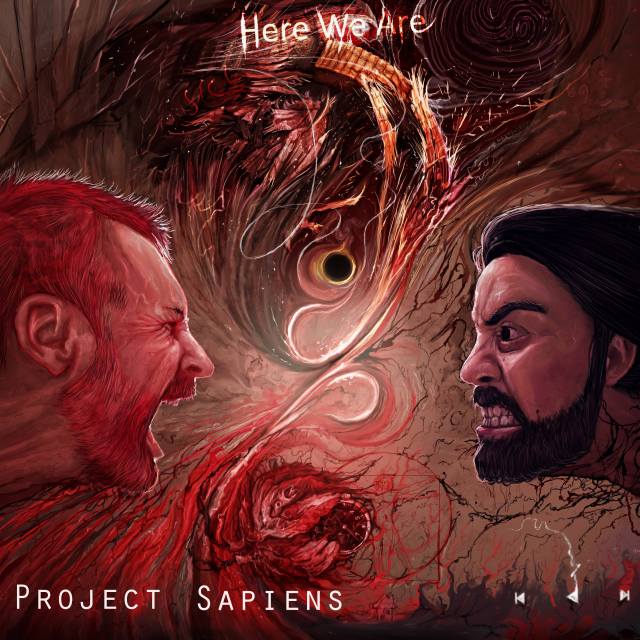
Project Sapiens - Here We Are album art

“Here We Are” is a debut EP release from a Copenhagen-based alternative/progressive metal act Project Sapiens, comprised of five songs.

Kicking off with the title track, “Here We Are” hints its diversity. Elements ranging from hard rock, heavy metal to Opeth-influenced Prog Metal and alternative motifs are included. 

There is definitely potential here, and “Uprising” and “My Prison Cell” prove that. The transition between different parts is rather smooth. “Anger” starts with a very nice melody provided by a clean guitar of Poul Jakobsen and clean vocals by Mads Rahbaek. The guitar riffs that can be heard on this one, and throughout the record, are another highlight and an element that makes difference. Closing “Keepers of the Realm” starts very atmospherically, but it doesn’t take too long to become a hybrid child of Alice in Chains, Soundgarden and Porcupine Tree.

What is important here is that Project Sapiens made a brave step to produce a release that is stylistically very different, and with the experience called “Here We Are” I’m sure that they will take the best out of it and use that knowledge on their next release.

“Here We Are” is available here.

Kscope: 10 Years of Offers

A nice update from Kscope, in the midst of celebrating 10 years of excellence.

k10-offers-800px-1


To see the sales, click here.

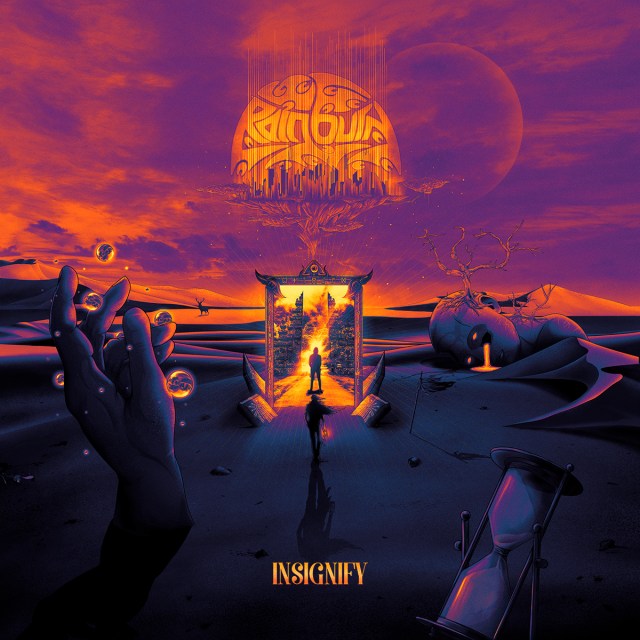
Review: Rainburn – Insignify

Insignify

Indian progressive rockers Rainburn are a band who sit firmly within that region of emotive music which crosses the line between the plaintive sound of Porcupine Tree and the bluster of cinematic indie. Now on their second release, Insignify out on November 7th, they return to the age old trope of the concept album with a narrative, which feeds into the at times explosive music.

Telling the story that deals with issues of existentialism, the significance of human life, narcissism, craving importance, insecurity and the search for reason, you may consider it all a bit convoluted. At nearly 50 minutes long it does test your patience and you may find yourself drifting away from the main theme. Give it some due listening though, and you’ll find a concept which works to keep your attention.

Although thematically it’s difficult to keep up, within the music you find a way to enjoy this album. Cinematic in not just scope, but in drive, the peaks and troughs of a film are recast within some wonderful playing. Particularly good are the plaintive guitar solos, feeding off a classic sound developed by masters of prog, and given new life here. They are moments which lift the album to another level and become moments of transcendent emotion.

Rainburn can do heavy too and on the tumultuous end of “Suicide Note”, the devastating centrepiece of the album, they bring a new heaviness to prog rock which only the metal maestros dare explore. Unafraid to raise the tempo, it’s fascinating to listen to the way the band use their music as a kind of soundtrack of emotion, rather than a classic style of songwriting. They may veer on the more predictable side of prog, but at least they do it well.

There is plenty on Insignify to excite prog fans. It’s always difficult to deliver emotional music such as this without veering into cloying territory and with a concept verging on the slightly pretentious, you’re edging towards dodgy terrain. All dues to Rainburn for pulling this off in the main though, and if you’re willing to give it the time you’ll find plenty to keep you coming back. Pour yourself a drink, stick your headphones on, and lose yourself in the story for a while. You’ll enjoy it.


Like Rainburn on Facebook and stay in the loop for more from this great group.

Effigy of the Forgotten

8th October marks 27th year of “Effigy of the Forgotten” – the first full-length release from these NY brutal death titans.

As expected, the debut is rife with jarring temporal switches, blistering harmonies and precision drums. Suffocation’s craft is immaculate, and at times insane. From “Liege of Inveracity” to “Jesus Wept”, the album is a pursuit of deathly perfection. Brutal and relentless, both in terms of guttural vocals and complexity, it simply razes all the barriers to the emergence of technical death.

If Tampa and Stockholm scene introduced the framework, Suffocation took an axe to it with their brand of restrained, but even more gruesome, assault. Channeling Immolation, the band introduced layers of sophistication to that unbridled madness of old-school death. All the electric blues hues were now completely subdued, and comfortably buried beneath broad downtuned riffs and incessant double bass. Both typically advancing in tandem, like a grand symphony. Quite reminiscent of later era Morbid Angel.

Undoubtedly, evolution tends to be incremental, and Suffocation is a vital link leading to technical death. Quite like any other searing metal classic, Effigy of the Forgotten is something all the extreme music fans should endure.


—- Image Attribution

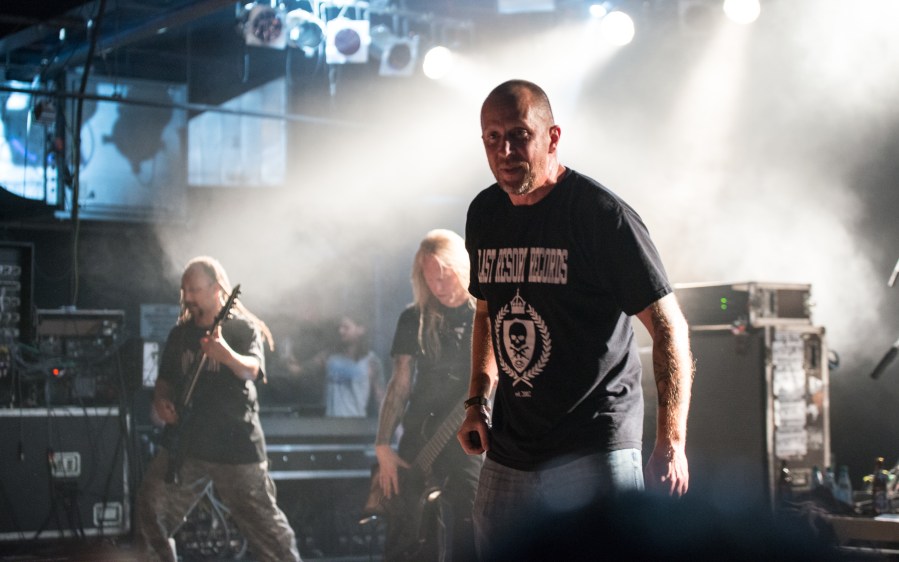
© pitpony photography /

Reign In Blood

Reign in Blood emphasizes Slayer’s nearly complete departure from NWOBHM roots. In fact, the last remaining cross-over imprints are only on the additional track, “Aggressive Perfector”, included in the 1998 reissue. In other words, this album begins the Slayer epoch of dissonance. Here the band march into the margins, with a level of fury steamrolling the genre sideways, inflicting legions of extreme metal imitators.

With aggressive structural progression and a signature speed — Hanneman and King effectively blend conflicting strands from hardcore/punk and heavy metal. Dissecting this intricate chaos mandates schooling in multiple extreme genres. But glad that appreciation only requires an ear for some atonal brew – of genre-bending twin guitar dissonance. The band simply accomplished what they actually state in Raining Blood — “abolish the rules made of stone”—and they did it while remaining grounded in that ever snowballing extreme metal roots.

Released on October 7th, 1986 – so today marks thirty two blood soaked years.

— Image Attribution
By Benoît from Tours, France (Hellfest 2007 – 22/06/2007 – Slayer) [CC BY-SA 2.0 ], via Wikimedia Commons

Riverside’s Incredible New Album is a WINO (Wasteland in Name Only)

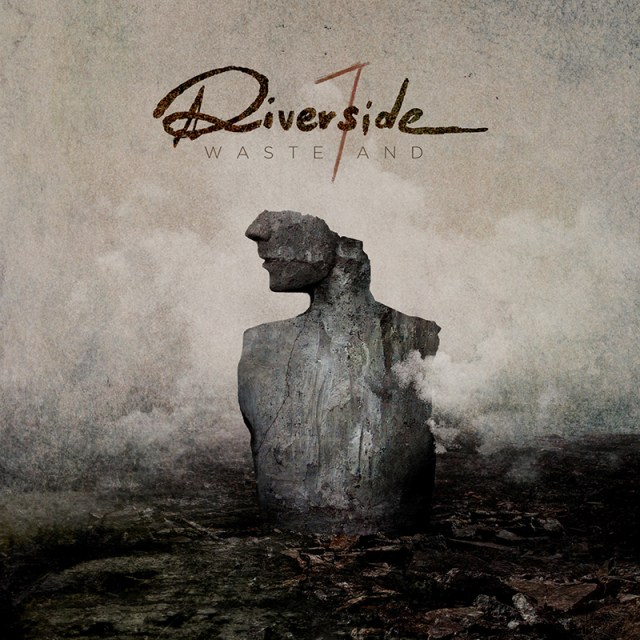
One of the lamentable facts about great art is that it is often inspired by pain.  It is wasteland by riversidefrequently beauty borne of suffering.  As many readers of this blog (and virtually all of the writers) are Rush fans, we are keenly aware of how the dual tragedies of Neil Peart’s life served as a creative impetus behind the band’s triumphant return on 2002’s Vapor Trails.  Riverside itself is no stranger to tragedy, having lost their brilliant guitarist Piotr Grudzinski in 2016, while the band’s de facto leader, Mariusz Duda, lost his father only months later.  Thus, the fuel for the creative fire behind Wasteland includes the pain of tragedies both real at a personal level, as well as imagined at a civilizational level when one considers the album’s apocalyptic theme.  And based on some of Duda’s own words in a recent interview (see here), it may also serve as a metaphor for our current, chaotic times.  The results of this creative fire are nothing short of stunning.
Continue reading “Riverside’s Incredible New Album is a WINO (Wasteland in Name Only)”

Emanon: Wayne Shorter’s Triple Dare

Jazz shouldn’t have any mandates. Jazz is not supposed to be something that’s required to sound like jazz. For me, the word ‘jazz’ means, ‘I dare you.’

Wayne Shorter, the last saxophonist standing from jazz’s golden age, its great lateral thinker both as player and composer, tossed off that quote in 2013 when he turned 80.  For his 85th birthday, Shorter has tripled down: his latest project Emanon breaches multiple boundaries, stretching out not just beyond jazz, but beyond music itself.

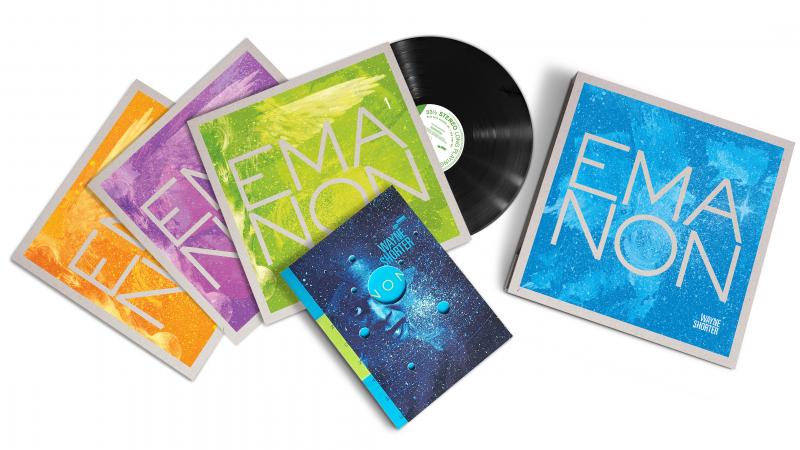
Emanon (“no name” spelled backwards, referencing both a Dizzy Gillespie tune and Ralph Ellison’s Invisible Man) is a marvelously ambitious sprawl, Shorter’s stab at a work of total art.  Containing a 2013 suite of his music re-imagined for jazz quartet and chamber orchestra, a double album of his quartet’s 2016 live date in London, and a graphic novel in collaboration with screenwriter Monica Sly and comic/children’s book artist Randy DuBurke, it’s meant to be heard and seen as a whole.  Also touched — it’s not available digitally, only in CD (Standard) or CD/LP (Deluxe) box sets.  Or as Shorter puts it, “The packaging is intentionally designed to reveal its dormant possibilities as it travels between alternative realities of the multiverse.”  Sounds kinda progressive to me …

Continue reading “Emanon: Wayne Shorter’s Triple Dare”

The days of …

Remembering the days of big metal bands or rock bands seems like a recurring theme:

Where’s the iconic bands that initially came out with the sounds that you love? I’ve never seen a band that impressed me that looks like they’re going to be the next Judas Priest or Iron Maiden.” “ — Says Exodus Vocalist Steve “Zetro” Souza

“there seems to be no Led Zeppelin for the current generation of music fans” — Forbes

But, we need note that there was no Iron Maiden until there was one. In other words, emergence of The Beatles or a Black Sabbath or an Iron Maiden is sort of non-cyclical. We may assume otherwise, but history itself is non-cyclic. What’s generally cyclic is human behavior. Especially our propensity to repeat mistakes, or ask instinctive questions. Even outside of rock and roll, same questions might arise. For example, who is the Antoine Lavoisier or Adam Smith or Charles Darwin of the last century! But the answer is the same.

We definitely don’t have giant arena filling heavy metal bands anymore, but the question is do we even want to go back to that time? Dialing back a vibrant musical evolution of 40 years seems inane. Back then we just had heavy metal, now it has mutated into hundreds of sub-genres. Instead of arena filling giants, we have an ecosystem and an extended research worthy genealogy. So, do we go back to stadium filling old school purists or just sit back and appreciate a hybrid fragmented mosaic — of Tribulation, Meshuggah and The Dillinger Escape Plan! We definitely cannot have both.

Analogous to Charles Darwin or Karl Marx — Black Sabbath and The Rolling Stones were also originators of powerful ideas. Those ideas were transformative and spawned whole new schools of thought. They were giants because they were at the beginnings — of something captivating and novel. In other words, we simply cannot expect arena filling giants from an aging refined genre, for that we simply might have to look elsewhere.

— Image Attribution
By S. Bollmann [CC BY-SA 3.0 ], from Wikimedia Commons

Joy in the Wasteland: Riverside’s Seventh

A Review of Riverside, Wasteland (Insideout, 2018).

wasteland by riverside
Wasteland, released two days ago.

At first, I was surprised that the two best (and best known, at least in American prog circles) Polish bands named their most recent albums, Wasteland. Well, ok, there’s a slight difference. Newspaperflyhunting named its album with a plural. Still, it must be more than a coincidence. Presumably, each took the name either from the Arthurian legends or from T.S. Eliot (who took his from the Arthurian legends).  Regardless, the title fits for most of our world of 2018.

Continue reading “Joy in the Wasteland: Riverside’s Seventh”