Soft Machine: The Fusion Years

Continuing the saga of Soft Machine, currently on a 50th anniversary world tour (coming to North America this fall).    Click here for Part One, covering the band’s psychedelic years of 1966-69; Click here for Part Two, covering the jazz-rock years of 1970-1973.  The Softs’ new album Hidden Details can be ordered at Bandcamp. 

Seven albums on, Soft Machine was stuck.  Founding organist Mike Ratledge was still around, but his contributions had diminished to an ongoing flow of “cosmic tinkles” — minimalist electric piano patterns enhanced by tape delay effects.  Keyboardist/reed player Karl Jenkins had taken up the compositional slack, but the music was edging into blandness onstage, no matter how much oomph bassist Roy Babbington and drummer John Marshall kicked up.  At Marshall’s suggestion, the Softs decided to freshen their palette with a different solo voice — namely, Allan Holdsworth on guitar.

Recruiting a guitarist for a band that hadn’t had one since 1968 seemed a drastic move, but the gamble paid off handsomely.  The young Holdsworth brought guts and brio back to Soft Machine’s sound, digging deep to play off Babbington and Marshall, spitting out energetic improvisations that channeled his idols John Coltrane and John McLaughlin.  Equally fired up, Jenkins and Ratledge composed extended suites with plenty of space for blowing, and the Softs hit the road with a completely new set.  Archive releases from that year’s world tour such as Cuneiform’s Switzerland 1974 and MoonJune’s Floating World Live (recorded in England in early 1975) amply display the impressive results.

The excitement carried over to 1975’s Bundles, the Softs’ first album for EMI’s Harvest label.  The side-long epic “Hazard Profile” is the perfect introduction to the new sound: Holdsworth’s light-speed melodicism nicely complements Jenkins’ classically tinged ruminations; Babbington and Marshall groove relentlessly; Ratledge even provides a skittering synthesizer solo that nods at his salad days.  The players are in full flight throughout, locking in over a variety of backgrounds and moods; there’s new room for acoustic interludes (Holdsworth’s “Gone Sailing”) and multi-sectioned proggy workouts (the Jenkins/Holdsworth mashup “Bundles/The Land of the Bag Snake”).  Even the “cosmic tinkles” get a shot of adrenalin in Ratledge’s unstoppable crescendo “The Man Who Waved at Trains/Peff” and Jenkins’ lush, spacious “The Floating World.”  The future looked bright again.

But, predictably for those who know both Soft Machine and Holdsworth history, it wasn’t that simple; Holdsworth left just as Bundles was released, joining Miles Davis alumni Tony Williams’ New Lifetime.  With more touring already booked, the group quickly tapped up-and-coming guitarist John Etheridge (Holdsworth’s suggestion) for the open slot.  Etheridge fit the bill, with his spare, muscular style leaving more space for his bandmates to shine onstage.

Recording the next album brought further changes: Alan Wakeman (Rick’s cousin!) joined on hard-charging solo sax, so Jenkins could focus on keys and composing; the new tunes drew sharper lines between tightly arranged prog/classical movements and vamps to improvise over; and Mike Ratledge’s long exodus from Soft Machine culminated in contributions to just two tracks.  Despite all these shifts, 1976’s Softs had plenty of energy and appeal, a striking variety of well-crafted textures, space for free blowing on Side Two (dig “The Camden Tandem” and the end of “One Over the Eight”), and first-class playing throughout.

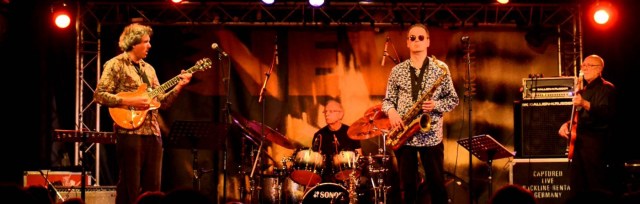
Still, poor record sales and precarious finances took their toll.  Wakeman bailed on the eve of another tour, replaced by Ray Warleigh; afterwards, Warleigh and Babbington left, with the bass chair taken first by Brand X’s Percy Jones, then by Steve Cook; violinist Ric Saunders became the second soloist, lending a Mahavishnu Orchestra tinge to the proceedings.  By 1977, the band was actively splintering, with members taking lucrative side gigs to make ends meet and a variety of live substitutes (even Holdsworth!) filling in as necessary.

Given the situation, recording Soft Machine’s 1977 Paris gigs was deemed the way forward to another album.  Disaster ensued: equipment was held up at customs, safety officials limited attendance, an assistant recording engineer failed to turn up, and Etheridge and Cook’s instruments were stolen after the first night.  And yet Alive and Well: Recorded in Paris comes off remarkably well: the new music is solid; the band interplay on “Huffin'” and “The Nodder” is stunningly on point, and even the Giorgio Moroder-style disco funk concoction “Soft Space” (complete with uncredited contributions from Ratledge) clicks. (Note that Esoteric Recordings’ 2010 reissue features an extra disc of live outtakes.)

And then — nothing.  Well, nothing except 1981’s Land of Cockayne — in actuality, producer Mike Thorne’s invitation for Karl Jenkins to record with both rock and orchestral forces.   Despite a stellar cast (including Softs alumni Marshall, Warleigh and Holdsworth, plus bass legend Jack Bruce) and echoes of past glories like “Panoramania” and “Sly Monkey,” Land of Cockayne is a completely different beast, the most mainstream music ever released under the Soft Machine name.  Ultimately, it proved a marker toward the rest of Jenkins’ career, occasionally in collaboration with Mike Ratledge: advertising jingles (including the inescapable-for-a-time DeBeers Diamond music), then the 1990s classical crossover project Adiemus, then a full-blown career as an orchestral composer, culminating with a 2015 knighthood.

It had been a good run, but after one last week-long London residency in 1984, Soft Machine was no more.  Still, the legacy of the band lived on in its recordings and in the work of its numerous alumni until …

But that’s an unlikely tale for another time.


softs legacy

— Rick Krueger


Terminal

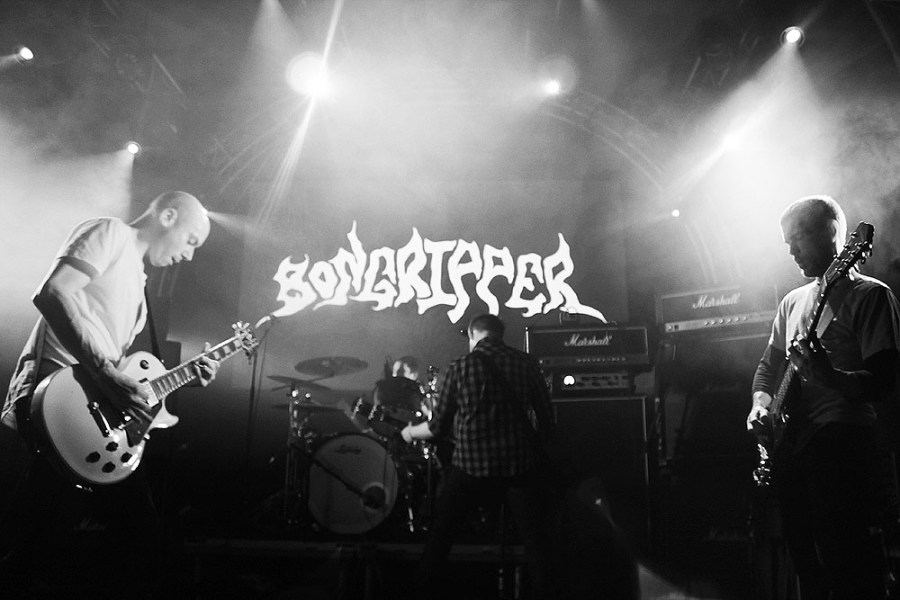
Bongripper simply proves vocals are optional for an idyllic doom atmosphere. For an instrumental sludge/doom album clocking 43 minutes, and with just two songs, it takes stunningly creative song writing directions. Sublime and adequately downtuned, Terminal integrates those dreary elements from doom straight into an atmospheric sludge wall.

With thick bass lines and precision beats interleaved with dreamy solos, at times it’s slow to the point where time itself stands still. Almost like ‘Dance of December Souls’ meets the legendary ‘Odd Fellows Rest’. When this sonic grind of sludge meets doom like guitar hues, it tends to become a perfect introspective complement to a misty weekend evening, probably wasted at a dim tavern, with suitable amounts of your choice for that chilled beverage.

—————- IMAGE Attribution —————-

http://www.bongripper.com/


Bon Voyage: Melody Prochet’s Fantastic Journey

a1708157068_16

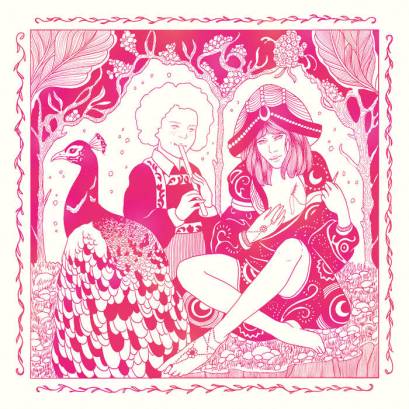
This summer saw the long-awaited second release from Melody’s Echo Chamber: Bon Voyage arrived after five stop-and-go and, at times, tortuous years. On its June 15 release date Melody Prochet (vocal, guitar, synthesizers, violin, viola) wrote on her Facebook band page,

Today is a day life forced me to give up waiting for… ‘Bon Voyage’ is a little monster I hope will find it’s home in some of your hearts and…if not soothe, will resonate somehow positively…

So it comes down to listeners interacting with this beast, a theme-park ride of a record, while the artist, one imagines, pulls the covers over her head. First off, it is little, clocking in at a compendious 33 minutes. But given its twists and turns, its density and scope, the brevity of the work allows repeat listens to work out its strange but satisfying logic.

As I told a friend: I can’t imagine a Syd Barrett or Brian Wilson or Todd Rundgren or Wayne Coyne not really liking this record.

Prochet (b. 1987, Puyricard, France) began working on her sophomore project and releasing tracks (e.g. “Shirim”) in 2013. Rumor has it she threw away some of the material. Then last year she was involved in an undisclosed accident resulting in serious injuries. Her fans despaired until Bon Voyage was dropped in time for the summer solstice.

Melody’s Echo Chamber (2012) was readily classified as “psych pop.” But for those who tire of musical taxonomies Bon Voyage is as open borders as they come. The opening track “Cross My Heart” begins with composite acoustic guitar chords followed by a swelling string arrangement, a mid ’60s Wilsonish verse, then a beat box section folding into a flute and percussion-driven jazz passage embellished with some fanatical bass lines. The lyrics here, as throughout the album, flow freely between English and French. We’re escorted back to the opening chords for a reprise of the main (?) verse and a riff-laden, cinematic flourish.

As soon as “Breathe In, Breathe Out” drops a power rock groove the listener’s head-bobbing is interrupted by a trance section before the track accelerates again to its finish, the opening themes reworked but almost unrecognizable in the sonic whiplash.

Prochet cites composer Olivier Messiaen (1908 – 1992) as a favorite, and perhaps what we catch on this record are flecks of his emphasis on color and unusual time signature.

The first of two foci on this record is “Desert Horse,” pairing a dark Middle Eastern groove (including on old Black Sabbath riff) with a bright but plaintive chorus,

So much blood
On my hands
And there’s not much left to destroy
I know I am better alone

…except the isolation that birthed this record finds its emotional epicenter in the epic “Quand Les Larmes D’un Ange Font Danser La Neige.” Ironically it’s among the more conventional and readily accessible tracks on the album, even at seven minutes. Imagine the Bee Gees not taking that disco detour…

[spoken word] …it comes through the window like a whistle or a whisper under the bed and little children think that the monster —

Angels, aching
Keep smiling
Ain’t no karma, only love
To punish those with rotten heart

Good to have Melody’s Echo Chamber back — and this creature on the loose.

All Catholics Need to Listen to This

Given the state of the Church, this song is more timely and necessary than ever.  Not prog, but undeniably gorgeous.

Burning Shed News (August 23, 2018)


Be Bop Deluxe

Sunburst Finish (boxset pre-order)


A deluxe 3cd/1dvd limited edition box set of BBD’s beloved 1976 studio release.

Remastered from the original tapes, this edition features 39 tracks, stunning 5.1 and stereo mixes by Stephen W. Tayler, album session out-takes, a BBC Radio In Concert performance from January 1976, a rare John Peel Show session from February 1976, along with an unissued and previously unreleased 1976 Harvest Records promotional video for Ships in the Night and a session for BBC TV’s Old Grey Whistle Test show from January 1976.

Includes a 68 page book with previously unseen photographs and an essay by Bill Nelson, plus a facsimile of the 1976 Sunburst Finish tour programme, postcards and a replica poster.

Pre-order for 16th November release. An expanded and remastered double CD edition is also available.

Continue reading “Burning Shed News (August 23, 2018)”

Tom “The Elf King” Timely’s Five Video Diary–1983

Tom has released yet another segment of his video diary.  Poor Tom!  Long live, the Elf King!

Welcome to All Things Glass Hammer (TAC)

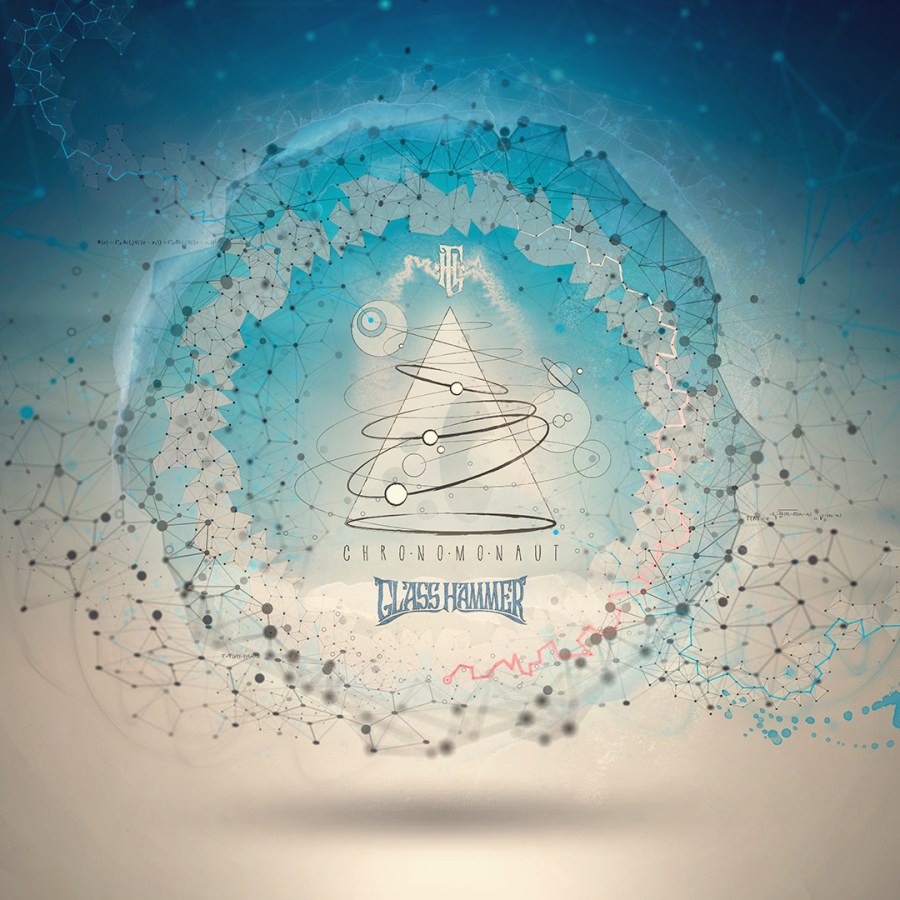
Glass Hammer Chronomonaut
Preorder on September 12.

This morning/today, I have a piece at The American Conservative introducing a 26-year old band as America’s greatest rock band.  Please check it out.  And, note, there’s nothing political in the article, despite the venue.  So, humans of all political persuasions, be not afraid!!!!

Creating Glass Hammer in 1992, long-time friends, Steve Babb and Fred Schendel—who had played in several 80s metal bands—decided to dive into what they loved most: complicated, intricate, baroque, over-the-top rock. At the time of the band’s creation, the term “progressive rock” was more than out of favor, evoking for most the horrors of bloated songs, the wearing of capes, the stabbing of keyboards with knives, and lyrics about Hobbits. Though, if Babb and Schendel had hoped to avoid the “progressive rock” stereotype, they failed miserably. If anything, their music—what they called “fantasy rock,” bringing the speculative and imaginary worlds of C.S. Lewis, J.R.R. Tolkien, and others to life—was inordinately more nerdy than “progressive rock.”

https://www.theamericanconservative.com/birzer/glass-hammer-giving-meaning-to-time-space/

Lee Speaks About Music… #97 — Lee Speaks About…

Treason – Gryphon Introduction… With the departure of Graeme Taylor and Malcolm Bennett things may have looked all over for Gryphon. But they was not about to give up just quite yet, and pretty soon they was to recruit 3 new members to the band, they even brought in a lyricist to make things run […]

via Lee Speaks About Music… #97 — Lee Speaks About…

New music: THE ELATION — The Rockin’ Chair

Summer 2018 will live long in the memory of The Elation. The first two singles from their debut EP garnered huge radio support across Ireland and the UK. “Clickbait” was then released in June via Top 6 and went straight into the Irish Indie Charts at #3. A milestone for most artists and labels. The […]

via New music: THE ELATION — The Rockin’ Chair