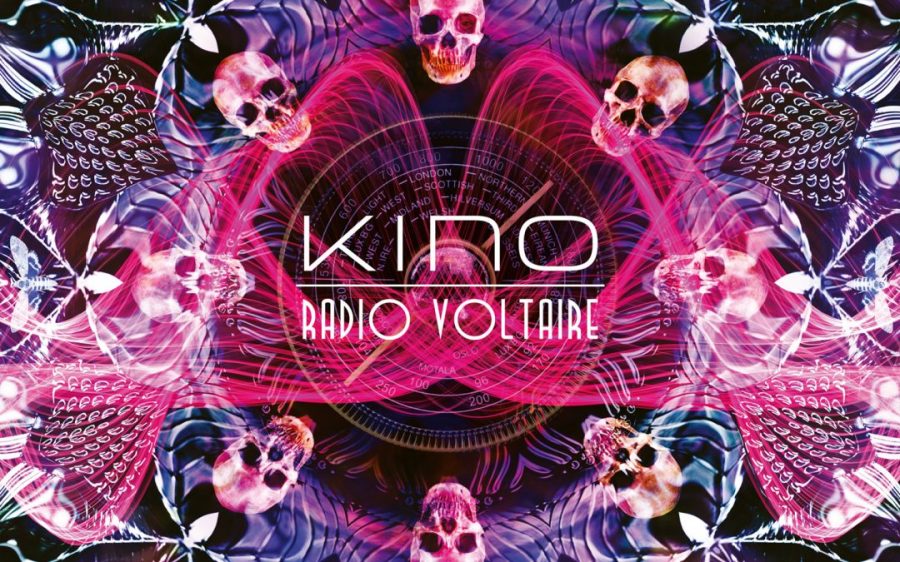
Kino, Radio Voltaire

I discovered John Mitchell’s attractive take on modern prog when I heard It Bites’ “Wallflower” on a Prog Magazine cover CD, then bought and was floored by 2012’s Map of the Past.  John Beck, Bob Dalton and Lee Pomeroy are essential to the success of that fine album, of course — but Mitchell’s yearning vocals, sharp guitar work and classy songwriting sealed the deal for me.  Whether contributing to Frost* or masterminding his own Lonely Robot, Mitchell consistently brings irresistible melodic hooks, exciting riffage, heart-on-sleeve lyrics, passionate singing and meticulous craftsmanship to the table.  Like John Wetton in Asia and Trevor Rabin in Yes, you can rely on him for a canny, immersive mix of strong musical substance and broad appeal.

Radio Voltaire revives Kino, Mitchell’s 2005 collaboration with Marillion bassist Pete Trewavas; Beck provides tasty keyboard work, while Craig Blundell (Steven Wilson, Lonely Robot) whacks the drums with energy and aplomb.  True, the blissed-out album opener/title track is a low-key start, but Mitchell’s “The Dead Club” fires things up without further adieu, laughing at the lengths people go to for fame (to a 7/4 beat,yet):

Mitchell comes up with some of his best songs in a while, breaking your heart with the haunting ballads “Idlewild” and “Temple Tudor,” then shocking it back to life with four-alarm rockers like “I Won’t Break So Easily Anymore” and the tense “Grey Shapes on Concrete Fields.”

Trewavas chips in as well, providing welcome contrast and optimistic uplift with “Out of Time” and “I Don’t Know Why,” mid-tempo Beatlesque gems that build and build until they explode:

And (always important in prog-pop), Kino sticks Radio Voltaire’s ending: “Keep the Faith” is a warm Trewavas love letter to the next generation, with his McCartney-style melodic bass lines setting up both Mitchell’s delectable vocals and an unexpected orchestral surge in the song’s home stretch.   But hard-won serenity isn’t the final word; that goes to Mitchell’s “The Silent Fighter Pilot,” a lament for a unexpected casualty of war that deploys extremes of quiet and loud to devastating effect.

In sum, Radio Voltaire pulls you in and doesn’t let go till an hour later, when you return to life challenged, refreshed and invigorated for having heard it.  Check out Mitchell & Trewavas’ track by track take on the album here.  But above all, listen to it for yourself; it’s a winner.

— Rick Krueger


My Favorite 99 Albums of the Rock Era

bbt eefpMaybe it’s because I’m now closer to death than I am to birth, but I’ve been thinking a lot lately about what I love and what I want to promote.  This is as true in my choice and love of books as it is in my love of rock.

Thus, as I contemplate my own mortality, I offer, for what they’re worth, my 99 favorite albums of the rock era.  Mostly in chronological order.

Feel more than free to agree or disagree!  Over the long haul, my five favorite bands have been Big Big Train, Glass Hammer, Rush, Talk Talk, and Tears for Fears.

Continue reading “My Favorite 99 Albums of the Rock Era”

Immortal and Megadeth

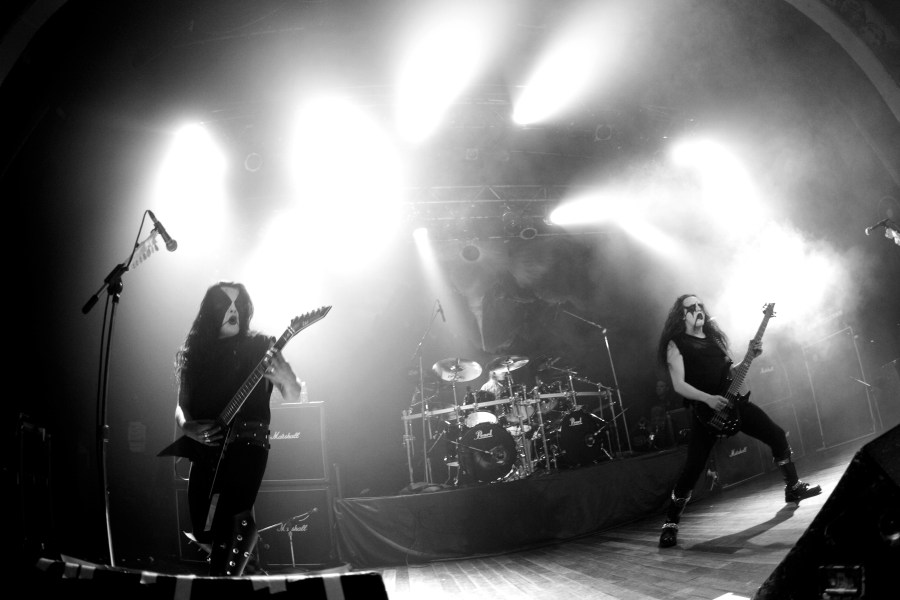
Two brand new releases — one a remastered version of 80s metal, the other a brand new single. Compositions separated by decades, but illustrating raw melody in its most natural habitat — old school black and thrash metal — at threatening velocity. Immortal and Megadeth school of craft is on stunning display. Records developed in different eras, but still sharing a common context; Mustain proving he can play as well, or better, than Metallica — and Immortal going into studios for the first time without Abbath.

Killing Is My Business… and Business Is Good is already a classic, its testament is simply its massive influence. Immortal’s new single takes no prisoners, they launch headlong into an aggression totally missing from their last few works. An icy chill descends, rewinding music to the darkest corners of mid-90s. Worth mentioning there are striking 1349 like qualities here, another essential Norwegian talent. If the whole album is even a fraction as good as “Northern Chaos Gods”, we are in for an early winter.

—– Image Attribution
By Mark Coatsworth [CC BY-SA 4.0], from Wikimedia Commons

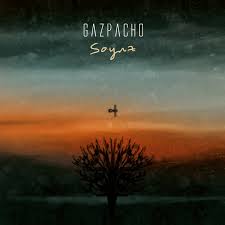
Soft Landing – A Review of Gazpacho’s Soyuz

Among the current wave of progressive rock acts, few (if any) are more unique than Gazpacho.  Quite simply, there is nobody else that sounds anything like them.  Describing them to the uninitiated is difficult, if not impossible.  I’ve tried to tell others that they are the love child of latter-day Talk Talk and Pink Floyd, but even this description is inadequate.  They truly are one of a kind, and their music defies words whenever it is separated from the band’s name.Gazpacho Soyuz
However, it’s not merely their music that makes them unique, it’s the subject matter they tackle on their albums as well.  One avenue of pursuit has been to find tiny slices of history, remembered by few, and use those as a springboard for lyrical exploration.  They did this on Tick Tock, using the attempted Paris-Saigon flight and subsequent non-fatal crash in the desert of Antoine d Saint-Exupery in 1935 as the subject matter foundation for that album.  In 2014, with Demon, they went even more obscure, basing their album on the “mad ramblings” of an unknown apartment tenant in Prague, as left behind in writings found in said apartment.

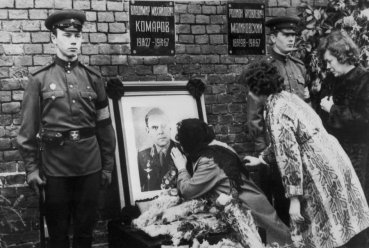
With their latest album, Gazpacho uses the tragic loss of Soyuz One (also the title of the leadoff track) and the loss of its lone cosmonaut, Vladmir Komarov, as its jumping off point.  Most people won’t know much about this, but for space geeks like me that devoured volumes as kids regarding both the U.S. and Soviet space programs, the space race with the moon at the prize, and so on, the tragedy of Soyuz One is well known.  To give a little more background, Soyuz one was the first flight of a new Soviet spacecraft.  While Komarov was selected as the cosmonaut to fly the mission, his backup was Yuri Gagarin, a more recognizable name since he was the first human in space and a hero of his country.  Komarov was a personal friend of Gagarin’s, and refused his attempts to allow a national hero to take his place.  This is important, as both men knew the Soyuz spacecraft was nowhere near ready to fly.  But bureaucratic inertia and political considerations (much like what contributed to the loss of the space shuttle Challenger) overrode technical considerations.  Knowing that the mission was going to fly either way, Komarov insisted on remaining as its pilot, knowing full well that it would likely end in tragedy.  Sure enough, it did.  Among the many things that went wrong was the failure of the parachute to properly deploy upon re-entry.  Through a radio link, Komarov cursed his Soviet masters as he plunged from the heavens to his death in the Russian tundra.

From this base, Gazpacho builds an album that explores themes such as isolation and moments in time frozen in history.  While only two tracks, the leadoff Soyuz One and the epic Soyuz Out, deal directly with the ill-fated mission, one can easily see how the other tracks tie to the ideas explored in the album’s lyrical foundation.

Soyuz One starts off in typical Gazpacho fashion, simple riffs stacked on top of one another, eventually building a layered piece of dazzling complexity, punctuated by some heavier riffing beginning midway through the song.  There is almost a fatalistic, mysterious feel to the piece, and it sets the tone for the rest of the album.  Next up is Hypnomania, which includes some uncharacteristic heaviness for Gazpacho – but it works great nonetheless.  The next track, Exit Suite, contrasts is predecessor by being slow and subtle, with some excellent violin fade ins and outs.

Emperor Bespoke is next, and it’s one of my favorite tracks on the album.  A slightly longish piece clocking in at 7:43, it begins with a light, folky feel, but by the middle of the song has a much bigger feel – it’s very well executed and powerful.  Gazpacho is great when they go big.  Sky Burial is shorter, but similar in structure to its predecessor, and is very sweeping and majestic.  Fleeting Things follows, and is relatively mellow most of the way through, and lyrically, expresses one of the album’s themes with more directness than any other song in this set.

Soyuz Out is the epic of the album, and the song that deals most directly with the Komarov tragedy.  The piece begins with an eerie feel, which pops up in interludes from time to time.  Some of the more uptempo sections include some best rhythm section work I’ve heard on any Gazpacho album, the interplay between the bass and drums pulling the listener along for the ride.  And speaking of being along for the ride, Jan Henrik Ohme delivers lyrics that put you inside the Soyuz One spacecraft as it makes its final, fatal fall to Earth:

The phase of entry

The shields are burning

I couldn’t keep the angle

This devil ship – a future machine

Come in too steep on one wing

Out of Control

I know you mean this

There’s no more next time

Musically, the closing section of Soyuz Out conveys the gravity of what has happened in the preceding lyrics with haunting effectiveness that joins the temporary to the permanent, that which is fleeting becoming that which is eternal.komarov_funeral_custom
The album closes out with Rappaccini, ending the album in a mellow yet melancholy mood.

What an album!  Gazpacho made us wait nearly three years for this one, but they definitely made it worth it.  This 48 minute slice of Gazpachian goodness can stand proudly aside any of their previous works, and continues the roll they have been on since 2007’s Night.  Needless to say, when I write my end of year review discussing my favorite albums of 2018, Soyuz will definitely land on the list.  I’m pretty sure I’m not alone on that score.  If you like Gazpacho, if you like prog, you shouldn’t be either.

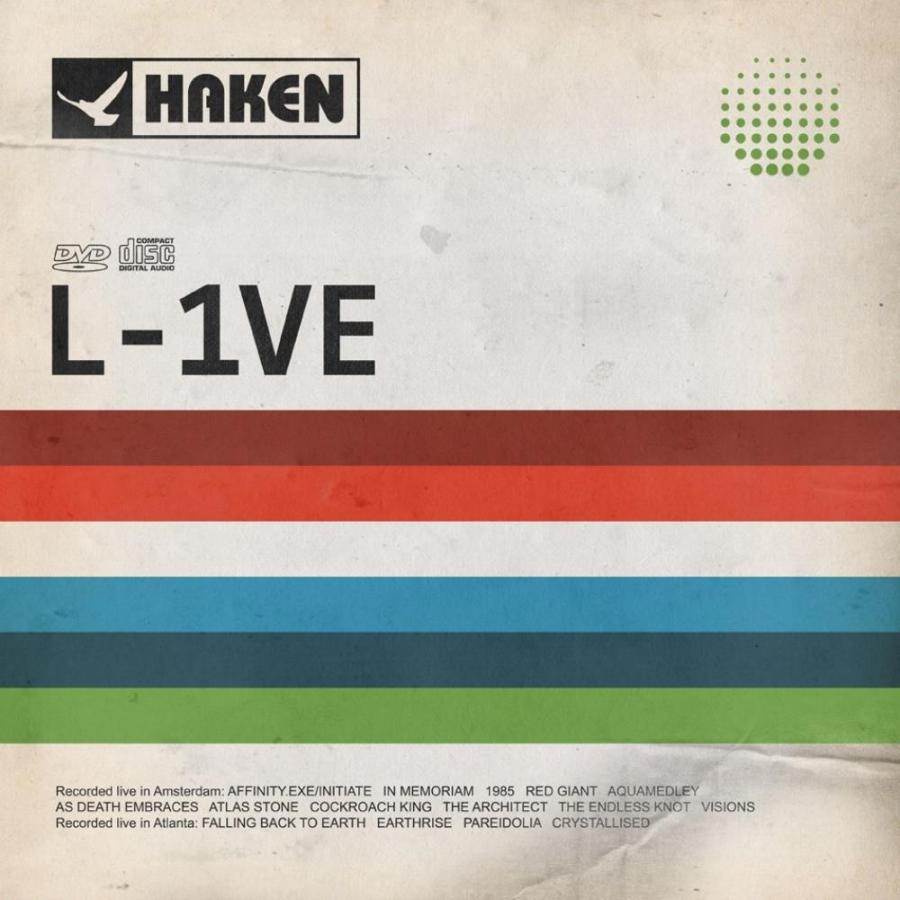
Haken, L-1ve: Rick’s Quick Takes

In a word: YOWZAH!!

From the brooding opening of “affinity.exe/Initiate” to the concluding tour de force of “Visions,” Haken went for it at the Amsterdam stop of their 10th anniversary tour –and they got something special.  If anything, L-1ve is even more ecstatic and energetic than the band’s stunning studio albums The Mountain and Affinity — the unique mix of prog and metal, head-spinning vocal counterpoint and harmony coalesces into an breathtaking, unstoppable unity.  To my ears, it’s Haken’s ultimate statement of their mandate: strong melodies and killer riffs indeed.

Every member of the band is in sync and on point here.  Richard Henshall and Raymond Hearne are relentless on guitar, never letting up on the impressive sonic barrage; Diego Tejeida is smooth and versatile on keyboards, laying down classical piano lyricism, rich orchestral grandiosity or virtuoso organ/synth licks as the situation requires; bassist Conner Green and drummer Raymond Hearne navigate the twists and turns with confidence, pushing the band forward with precision and power.  And then there’s Ross Jennings, riding the wave of the music’s complexities and smash cuts with death metal growls, soaring choruses, a gorgeous, wordless falsetto and heartwarming, enthusiastic frontman banter.

Haken never flags throughout L-1ve, plowing through more than half of Affinity, a condensed medley from Aquarius and core tracks from The Mountain (including an audience singalong on “Cockroach King” — props, Amsterdam!) with undiminished verve and commitment.   If anything, they get stronger and more thrilling as they go; when the title track from Visions closes down the main set, it left me as hungry for more as the crowd at the Melkweg.  Fortunately, the DVD includes four more tracks from Haken’s 2016 ProgPower set in Atlanta (featuring Mike Portnoy on gong?  Well, he does seem to be everywhere …)

In a sentence: you don’t want to miss L1ve.  If you haven’t heard Haken, you don’t know what you’re missing; if you have, this is even better than you think it might be.

Or, in a word: YOWZAH!!!

L1ve is released worldwide by InsideOutMusic on Friday, June 22.

— Rick Krueger

Robert Smith–The Cure Redux!

Cure Disintegration
1989’s DISINTEGRATION.  Still waiting for its proggier sequel.

Anyone who knows me, knows how much I love The Cure–at least the non-bubbly Cure.  P—ography and Distintegration are two of the greatest albums of the rock era.

Needless to write (or, maybe, needful to write), I found this interview with Smith somewhat disturbing and a bit painful.  How he’d can’t recognize his own influence on at least two generations of those of us living in western civilization is simply beyond me.

And, Robert, please–just go full out prog and experimental and artsy on the next album.  What do you have to lose!?!?!

https://www.theguardian.com/music/2018/jun/07/the-cures-robert-smith-i-was-very-optimistic-when-i-was-young-now-im-the-opposite?CMP=fb_us

The 57 Best Albums of 3rd Wave Prog

For those of us who love prog rock, we live in the best of times.  There’s been more creativity in the years since Marillion’s Brave (1994) came out then ever before in rock history–at least over such an extended period of time.  As I sit at my laptop at 9,500 feet above sea level in the Rocky Mountains, I quickly typed out my favorites.  I’m sure I’m missing some–these were off the top of my head.

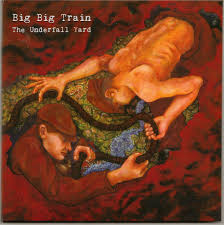
Underfall Yard by Jim Trainer
The Underfall Yard by Big Big Train, the ultimate 3rd Wave Prog album.  Art by Jim Trainer.

Anthema, We’re Here Because We’re Here

Ayreon, Human Equation (and, well, everything. . .)

Ayreon, Universal Migrator

Big Big Train, Grimspound/Second Brightest Star (and, well, everything. . .)

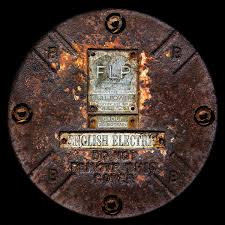
Big Big Train, English Electric Full Power

Big Big Train, Underfall Yard

Cosmograf, Capacitor

Dave Kerzner, Static

The Fierce and the Dead, Spooky Action (and, well, everything. . .)

Flower Kings, Paradox Hotel

Flower Kings, Space Revolver

Continue reading “The 57 Best Albums of 3rd Wave Prog”

The Progarchy Interview: Tom Brislin of The Sea Within

Tom Brislin first came to prog fans’ attention as the keyboardist for Yes’ 2001 Symphonic tour, going on to work with numerous other bands in the genre.  Recently he joined guitarist Roine Stolt, bassist Jonas Reingold, drummer Marco Minnemann, and vocalists Daniel Gildenlöw and Casey McPherson in the new collective The Sea Within.  Their debut album for InsideOut is released on June 22, and Tom graciously talked about his career and TSW with us.

On becoming a musician:

“It’s a funny thing; I had this sort of clear sense of purpose for a long time.  I don’t know really how to explain it.  I don’t know if it was from the time I first heard my sister’s record collection and saw what a rock band was, and how there was this team of people that collaborate to make this music.  But it always fascinated me, and I’d always been trying to form bands – I think my first band was when I was ten years old.  And we were just always going for it, and it never stopped.  I just always identified as a musician and took lessons and played with whoever I could – and here I am now!”

On Tom’s major musical influences and heroes:

“Like I said, I was first exposed to my family’s record collection, mostly the ‘70s rock stuff from Foreigner to Yes to Pink Floyd, Led Zeppelin – you name it.  But it was in the ‘80s when I was a little kid that I discovered music on my own through the radio.  So a lot of those bands that were really iconic in the early ‘80s, like The Police, Men at Work, Duran Duran, Tears for Fears, groups like that were exciting to me, because that was the music I discovered on my own.  And to this day I think there’s still a little bit of their influence.  As I became more serious about playing piano, I got really into Emerson Lake & Palmer and Gentle Giant and a lot of progressive bands, and also heavy into jazz, which I ended up going to college for. And I would say that from that time is when I really got into players like Herbie Hancock, who I guess is one of my dearest influences, because I just always admired his versatility and his mastery and pretty much anything he does musically.”

About playing with Yes:

“I had been Meat Loaf’s piano player for about three years, and we did VH1 Storytellers and a lot of UK television, and we had done a couple world tours.  Meat Loaf and Yes shared the same management company at one point.  And someone from management had been at one of our Meat Loaf concerts.  And we got to talking about Yes, and I told them that Yes was a huge influence, and how I grew up playing all that music, and that I was raised on it, practically.  And they must have remembered that!  So when the need came up, they looked me up and asked me to submit a CD playing some of [Yes’] music. And I got the gig!”

“It’s interesting, ‘cause the Meat Loaf experience was like a muscular or athletic and theatrical type of thing.  It was high-energy, three hours of Jerry Lee Lewis-influenced piano, and it was really interesting; it sort of brought me into that mentality of playing for large audiences and playing big arenas and big venues.  The Yes experience was, of course, the more cerebral challenge.  Even though there was an orchestra behind us, by the end of my first phone conversation with Jon Anderson, he wanted me to do everything a Yes keyboardist does, whether or not there’s an orchestra.  Especially once they found out I could sing, Chris Squire was especially keen on me singing backing vocals in addition to all that stuff.”

“So there was a lot of juggling going on, too.  Because, you know, a typical Yes keyboardist gets to have thirteen keyboards on stage, [laughs] and because of the orchestra being there, we didn’t have a whole lot of room, and they just wanted me to fit in with four keyboards – which in any other gig would be more than enough!  But I had some technical tap dancing to do to get all the sounds that were needed for the concert, and to bring out these parts that were initially recorded by such iconic, different-styled keyboard players.”

Continue reading “The Progarchy Interview: Tom Brislin of The Sea Within”

Burning Shed News (June 7, 2018)


The Pretty Things

S.F. Sorrow 50th Anniversary Edition (box set pre-order)


A 50th anniversary edition of the Pretty Things’s groundbreaking 1968 concept album (featuring the 1998 ‘Live At Abbey Road’ recording – with David Gilmour and Arthur Brown – on vinyl for the first time).

Includes four 12″ LPs, four rare European 1960s picture sleeve 7” singles, and handwritten recollections from Phil May, Dick Taylor, Jon Povey and Wally Waller on individually signed inserts.

Pre-order for 27th July release.

Yes

90125 (coloured vinyl pre-order)


limited tri-coloured – pink, yellow and blue – vinyl edition of Yes‘s 1980’s colossus 90125.

Pre-order for 13th July release.

Continue reading “Burning Shed News (June 7, 2018)”

MC50: Kick Out the Jams – The 50th Anniversary Tour

From Shorefire Media:

Wayne Kramer, leader of Detroit’s proto-punk/hard rock band MC5, announces 35 North American dates for “Kick Out the Jams: The 50th Anniversary Tour.” Touring with the MC50 — which includes guitarist Kim Thayil (Soundgarden), drummer Brendan Canty (Fugazi), bassist Dug Pinnick (King’s X), and frontman Marcus Durant (Zen Guerrilla) — Kramer will be celebrating the landmark anniversary of the MC5’s incendiary debut album Kick Out the Jams and the release of his memoir The Hard Stuff: Dope, Crime, the MC5, and My Life of Impossibilities, to be published August 14 by Da Capo Press.

The North American tour begins in early September, after several European summer festivals, and culminates with an October 27th concert back where it all began: in Detroit in 1968, where Kick Out the Jams — recently cited by Pitchfork as one of the 50 best albums of the 1960s—was recorded live in front of a raucous home town audience at the Grande Ballroom on Halloween night. On the MC50 tour, Kramer and the band will play the album Kick Out the Jams in its entirety followed by an encore of MC5 material that will change each night …

Continue reading “MC50: Kick Out the Jams – The 50th Anniversary Tour”