The Big Big Tangent

Subtitle: “Or, How Plato Made Me Realize We Need to Love 2013.  And, If We Don’t, Why We’re Idiots.”

A week or so ago, I had the opportunity to list my top 9 of 11 albums of the past 11 months.  Several other progarchists have as well, and I’ve thoroughly enjoyed looking at their lists as well as reading the reasons why the lists are what they are.  I really, really like the other progarchists.  And, of course, I’d be a fool not to.  Amazing writers and thinkers and critics, all.
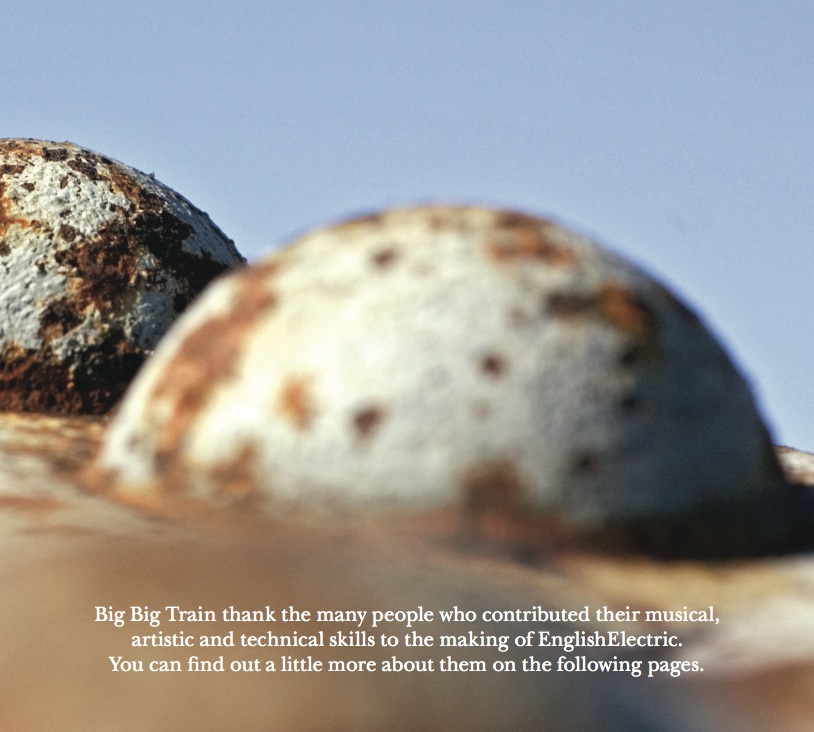
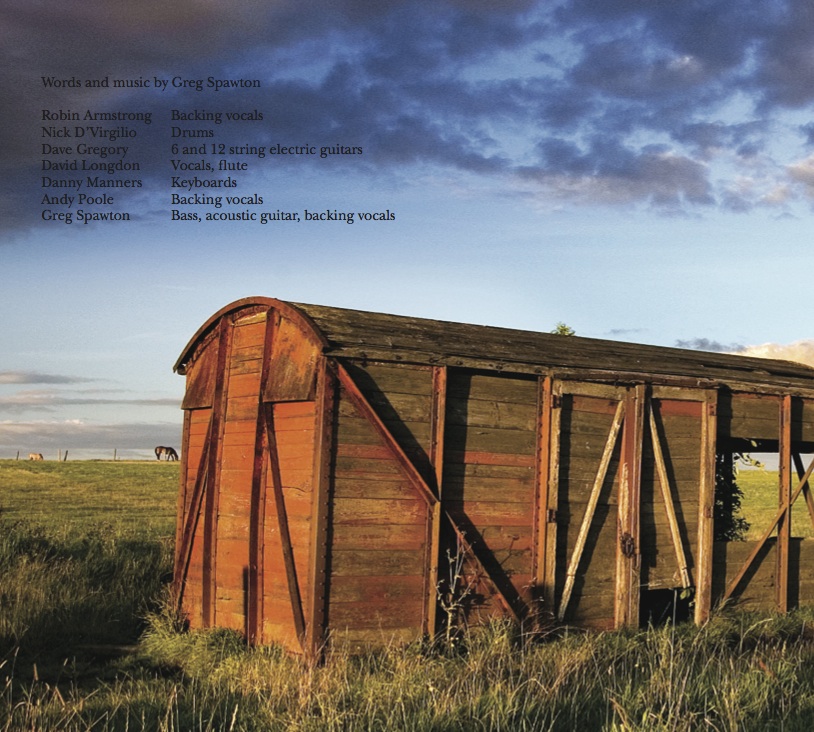
Another page from the booklet.  Courtesy of the band and the artist, Matt Sefton.
From the 96-page BBTFP booklet. Courtesy of the band and the artist, Matt Sefton.

I’ve been a bit surprised, frankly, that there hasn’t been more overlap in the lists.  I don’t mean this in the sense that I expect conformity.  Far from it.  We took the name progarchists—complete with the angry and brazen red anarchy sign in the middle—for a reason.  We’re a free community—free speech, free minds, free citizenship, and free souls.  We have no NSA, CIA, or IRS.  Nor would we ever want any of these.  And, we’ve really no formal rules.  We just want to write as well as we can about what we love as much as we love.  Any contributor to progarchy is free to post as often or as infrequently as so desired, and the same is true with the length of each post.

I, as well as many others, regard 2013 as the best year of prog in a very, very long time, perhaps the best year ever.  I know that some (well, one in particular—a novelist, an Englishman, and a software developer/code guy; but why name names!) might think this is hyperbole.  But, having listened to prog and music associated with prog for almost four decades of my four and one-half decades of life, I think I might be entitled to a little meta-ness.  And, maybe to a bit of hyperbole.  But, no, I actually believe it.  This has been the best year in the history of prog.  This doesn’t mean that 2012 wasn’t astounding or that 1972 was less astounding than it actually was.  Being a historian and somewhat taken with the idea of tradition, continuity, and change, I can’t but help recognize that the greatness of 2013 could never have existed without the greatness of, say, 1972, 1973, 1988, or 1994.

In my previous posts regarding 2013, I thanked a number of folks, praised a number of folks, and listed some amazing, astounding, music—all of which, I’m sure I will continue to listen to for year to come, the good Lord willing.  And, I’m sure in five years, a release such as Desolation Rose might take on new meaning.  Perhaps it will be the end of an era for Swedish prog or, even, the beginning of an era for the Flower Kings.  Time will tell.

So, what a blessing it has been to listen to such fine music.  My nine of 11 included, in no order, Cosmograf, The Flower Kings, Ayreon, Leah, Kingbathmat, The Fierce and the Dead, Fractal Mirror, Days Between Stations, and Nosound.

The cover of the new Sam Healy solo album, SAND.

And, there’s still so much to think about for 2013.  What about Sam Healy (SAND), Mike Kershaw, Haken, Francisco Rafert, Ollocs,and Sky Architects?  Brilliant overload, and I very much look forward to the immersion that awaits.

No one will be shocked by my final 2 of the 11 that have yet to be mentioned.  If you’ve looked at all at progarchy, you know that I can’t say negative things about either of these bands . . . or of Rush or of Talk Talk.  Granted, I’m smitten.  But, I hope you’ll agree that I’m smitten for some very specific and justified reasons.  That is, please don’t dismiss the following, just because I’ve praised them beyond what any reasonable Stoic with any real self respect would expect.  No restraint with these two, however.  Admittedly.

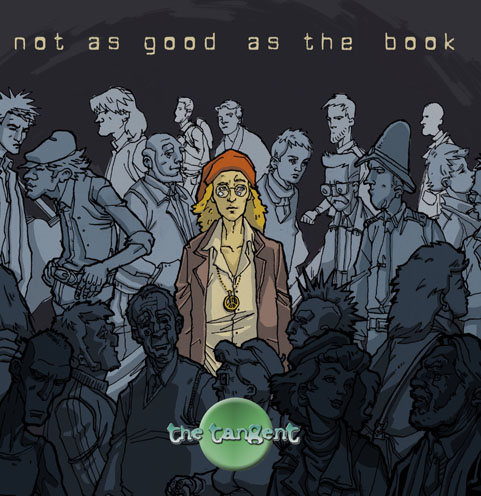
So, let me make my huge, huge claim.  The following two releases are not just great for 2013, they are all-time great, great for prog, great for rock, great for music.  In his under appreciated book, NOT AS GOOD AS THE BOOK, Andy Tillison offers a very interesting take on the current movement (3rd wave) of progressive rock.

The current, or third wave of new progressive rock bands is as interesting for demographic and social reasons as much as for its music . . . . Suddenly a wave of people in their late thirties began to form progressive rock bands, which in itself is interesting because new bands are formed by younger people. . . .

I’m not sure how much I agree with Andy regarding this.  I’m also not sure I disagree.  I just know that I’ve always judged eras or periods by what releases seem to have best represented those eras.  Highly subjective, highly personal, and highly confessional, I admit.  But, I can’t escape it.  For me, there have been roughly four periods: the period around Close to the Edge and Selling England by the Pound; the period around The Colour of Spring, Spirit of Eden, and Laughing Stock; a little bit longer—or more stretched out—period around Brave, The Light, Space Revolver; and Lex Rex.

Of course, I’ve only listed three.  We’re passing through the fourth as I type this.  Indeed, the fourth is coming from my speakers as I type this.  Over the last year and a half some extraordinary (I’m trying to use this word in its purest sense) things have happened, all in England and around, apparently, some kind of conflicted twins.

When asked about why he participated in latest release from The Tangent, Big Big Train’s singer, David Longdon, replied:

Amusingly, [Tillison] has said that The Tangent is Big Big Train’s evil twin.

In this annus mirabilis, does this mean we have to choose the good and the evil?  Plato (sorry; I’m not trying to be pretentious, but I did just finish my 15th year of teaching western civilization to first-year college students.  And, I like Plato.) helped define the virtue of prudence: the ability to discern good from evil.

Well, thank the Celestial King of the Platonic Realm of the Eternal Good, True, and Beautiful, we get both, and we don’t have to feel guilty or go to Confession.

Progarchy Best All-Around Progger, 2013, Brit: Sally Collyer.

Aside from being the Cain and Abel of prog, The Tangent and Big Big Train offer the overall music world three vital things and always in abundance of quality.

First, each group is smart, intelligent, and insightful.  Neither group panders.  The music is fresh, the lyrics insightful—every aspect is full of mystery and awe.  The listener comes away dazzled, intrigued, curious, and satisfied, all at the same time.

Second, each group strives for excellence in every aspect of the release—from the writing, to the performing, to the engineering, to the mastering, to the packaging.  And, equally important, to interaction with fans.  Who doesn’t expect an encouraging word and some interesting insight on art, history, and politics—always with integrity—from either band?

MARTIN STEPHEN COVER PICAs maybe point 2.5 or, at least, the culmination of the first two points, each band has the confidence to embrace the label of prog and to embrace the inheritance it entails without being encumbered by it.

In Big Big Train’s English Electric Full Power, there are hints of Genesis and, equally, hints of The Colour of Spring and Spirit of Eden.  But, of course, in the end, it’s always Greg, Andy, David, Dave, Danny, Nick, and Rob.

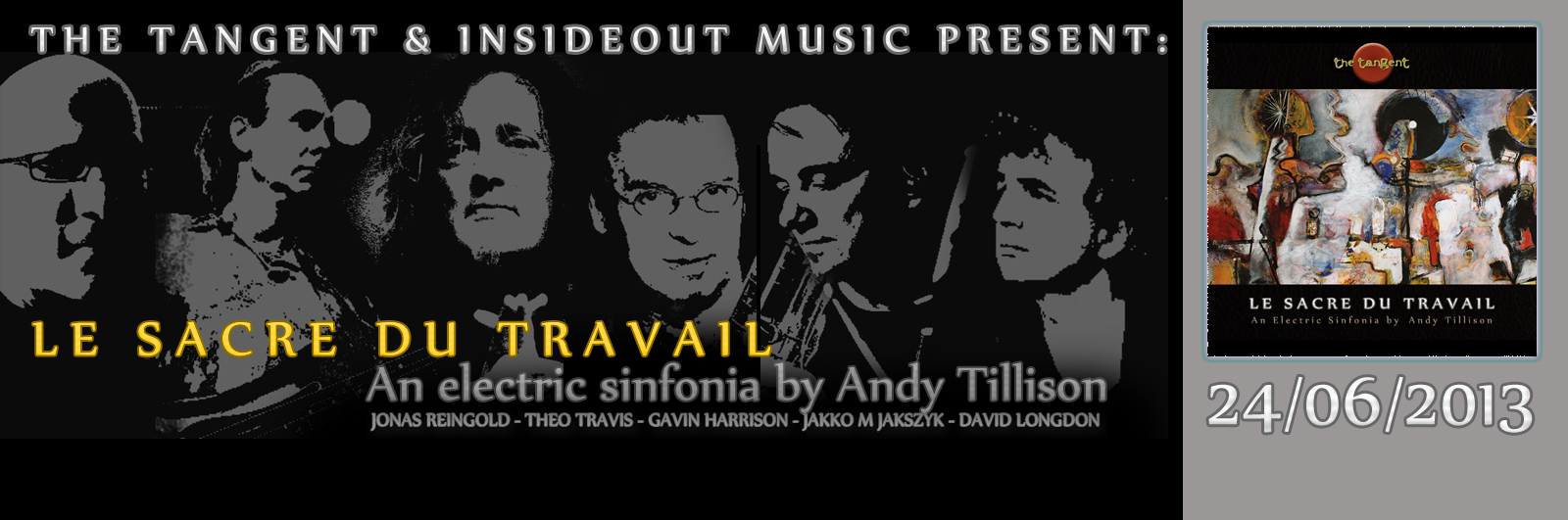
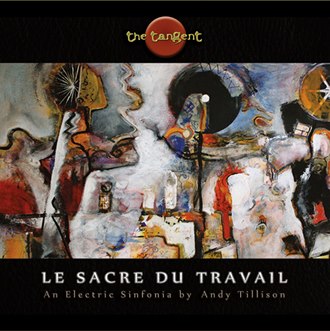
In The Tangent’s Le Sacre du Travail, there are obvious references as well as hints to Moving Pictures, The Sound of Music, and The Final Cut.  But, of course, in the end, it’s always mostly Andy.
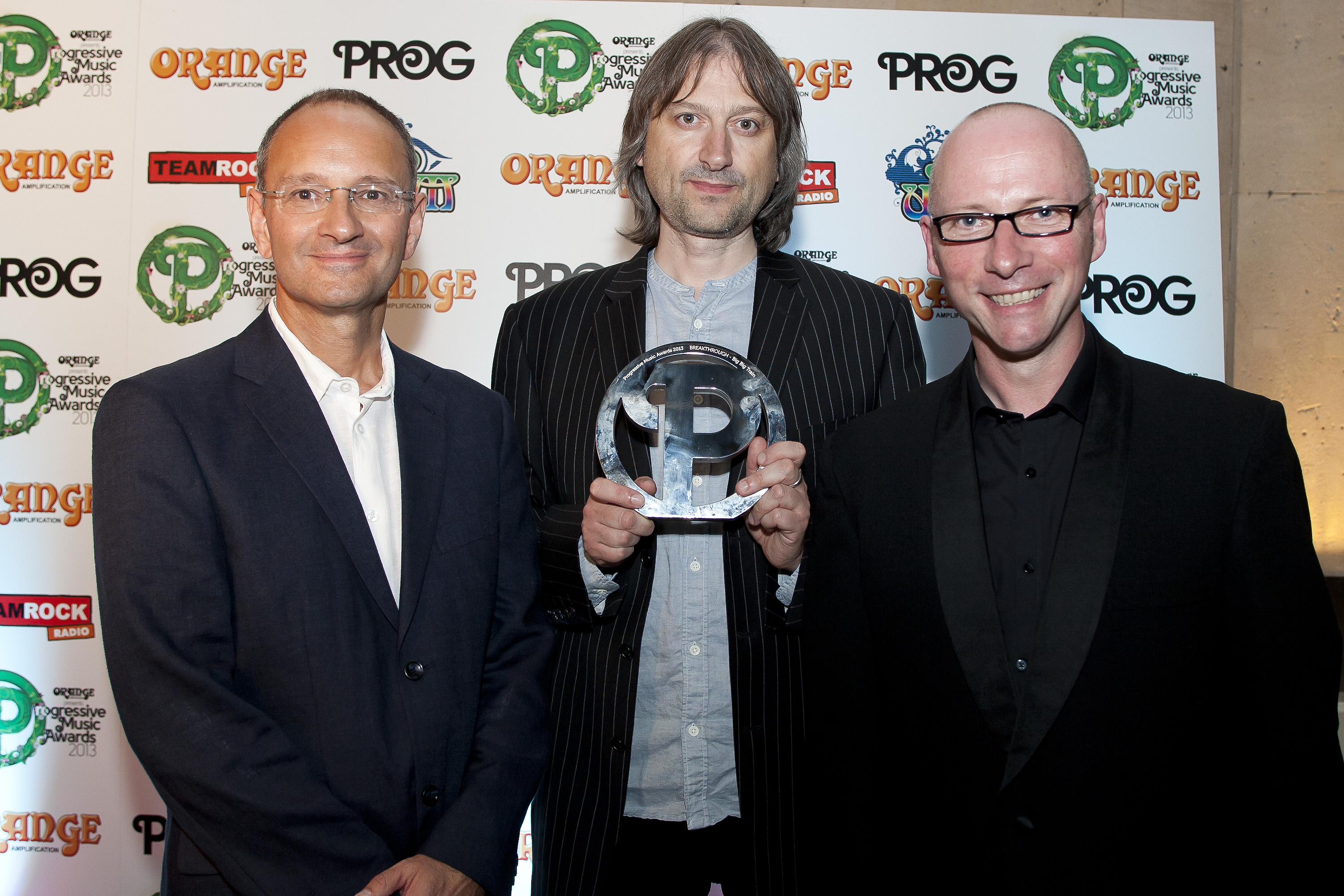
Big Big Train's justly deserve award, "Breakthrough Artist of 2013," by Jerry Ewing and the readers of PROG.
Big Big Train’s justly deserve award, “Breakthrough Artist of 2013,” by Jerry Ewing and the readers of PROG.

Regardless, each gives us what David Elliott masterfully calls “Bloody Prog™” and does so without hesitation.  Indeed, each offers it without embarrassment or diversion, but with solidity of soul and mind.

Finally, but intimately related to the first two, each band releases things not with the expectation of conformity or uniformity or propaganda, but with full-blown art.  Each band loves the art for the sake of the art, while never failing to recognize that art must have a context and an audience.  Not to pander to, of course, but to meet, to leaven.

Life is simply too short not to praise where praise is due.  Life is too short to ignore the beauty in front of us.  And, no matter how dreary this world of insanities, of blood thirsty ideologies, of vague nihilisms, and of corporate cronyism, let us—with Plato—love what we ought to love.

The Tangent and Big Big Train have given us art not just for the immediate consumption of it, or for the year, 2013,—but for a generation and, if so worthy, for several generations, perhaps uncounted because uncountable.


[Ed. note–if there are any typos in this post, I apologize.  I’ve been grading finals, and I’ve been holding my two-year old daughter on my lap.  She’s a bit more into Barney than Tillison or Spawton at this point.]
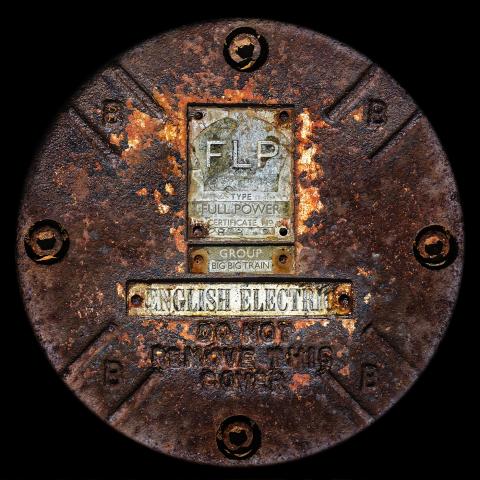
Perfecting Perfection: Big Big Train’s English Electric Full Power

English Electric Full Power, September 2013

Set in stone.  Chiseled, carved, done.  Or, at the very least, set in digital stone.

For the ever-growing number of Big Big Train devotees (now, called “Passengers” at the official Facebook BBT page, administered by everyone’s most huggable rugged handsome non-axe wielding, non-berserker Viking, Tobbe Janson), questions have been raised and discussed as to how BBT might successfully combine and meld English Electric 1 with 2 plus add 4 new songs.

How would they do it with what they’re calling English Electric Full Power?  Would they make it all more of a story?  Would the album become a full-blown concept with this final version?  Where might Uncle Jack, his dog, or the curator stand at the end of the album?  Actually, where do they stand in eternity?

The members of BBT have already stated that EE as a whole calls to mind–at least with a minimum of interpretation–the dignity of labor.  Would the new ordering and the four new songs augment or detract from this noble theme?

Somewhat presumptuously, many of us Passengers proposed what we believed should be the track order, and I even took it upon myself to email Greg last spring with a list.  Well, I am from Kansas, and we’re not known for being timid–look at that freak, Carrie Nation, who dedicated her life to hacking kegs and stills to bits, or to that well-intentioned but dehumanizing terrorist, John Brown, who cut the heads off of unsuspecting German immigrants.

And, then, there’s the fact, for those who know me, that I can produce track lists like I can produce kids.  No planning and lots and lots of results.

Or, that other pesky fact, that I’m so far into BBT that I could never even pretend objectivity.  [Or, as one angry young man wrote to me after I praised The Tangent, “your head is so far up Andy’s @ss, you can’t even see sunlight.”  Cool!; who wants to spend tons of time writing and thinking about things one doesn’t like?  Not me!  As Plato said, love what you love and hate what you hate, and be willing to state both.  Guess what?  I love BBT and The Tangent!  And, just for the record, I’ve never even met Andy in person, so what was suggested is simply physically impossible.]

Admittedly, maybe I’m such such a fanboy that I’ve gone past subjective and into some kind of bizarre objectivity.  You know, in the way Coleridge was so heretical that he approached orthodoxy.   Or, maybe I’m just hoping that Greg and Co. will ask me to write the retrospective liner notes for the 20th anniversary release of EE Full Power.  I’ll only be 66 then.  Who knows?  Even if I’m in the happy hunting grounds (I’m REALLY presuming now), I could ask the leader for some earth time. . . .

If you’ve read my bloviations this far, and you’re still interested in my thoughts on English Electric Full Volume, well, God bless you.  A real editor would have removed the above rather quickly.

The members of Big Big Train with Dutch photographer, Willem Klopper.

Back from the Blessed Isles of soulful prog realms. . . .

In my reviews of English Electric 1 and 2, I stated that these albums were the height of prog music perfection, the Selling England By the Pound of our day.  I wouldn’t hesitate to proclaim this again and, perhaps, even more vocally and with more descriptives.

At the risk of turning off some of my friends, I would say that EEFP is even superior to its 1973 counterpart.  How could it not be, really?  Selling England is now an intimate and vital part of the prog and the rock music traditions, and it has been for forty years.  Add that album and hundreds of others to the integrity, dedication,and purposeful intelligence, imagination, and talents of Greg Spawton, David Longdon, Andy Poole, Dave Gregory, Nick d’Virgilio, Danny Manners, and Rob Aubrey.   Putting all of this together, well, of course, you’d demand genius.

You’d expect genius.

And, you’d be correct.

It’s the height of justice that Jerry Ewing of PROG awarded Big Big Train with the Prog Magazine Breakthrough Award.

That breakthrough started with that meaningful paean to British and western patriotism in Gathering Speed, reached toward sublime spheres in The Difference Machine, found a form of edenic Edenic perfection in The Underfall Yard and Far Skies (it’s hard for me to separate these two albums for some reason), and then embraced transcendent perfection in English Electric 1 and 2.  Each member who has joined the original Greg and Andy has only added to the latest albums.  Nick, the perfectionist drummer; Dave, the perfectionist guitarist; Danny, the perfectionist keyboardist; Rob, the audiophile.  And by perfectionist, I don’t mean it in its modern usage, as without flaw, but rather as each having reached his purpose.

I don’t think this point can be stressed enough: these guys are perfectionist NOT against each other but with, around, near, above, and below each other.  They are a unit of playful perfectionist individuals who become MORE individual, not less, in their community.

Looking at the history of art from even a quasi-detached and objective viewpoint, I think we all have to admit, this is more than a bit unusual.

Breakthrough, indeed, Mr. Ewing.  Breakthrough, indeed.

Greg and Andy don’t become less Greg and Andy as the band grows beyond what they have founded, they become more Greg and more Andy.  In the first and second wave of prog, how many bands are known for only getting better and better with each album?  Those that did are certainly the exceptions.  One of the most important differences of this third wave of prog is that the best only get better, even after twenty years of playing.  Exhaustion and writers-block seem to be of another era.

BBT exemplifies this trend of improvement in this movement we now call the third wave of prog.  And, not surprisingly, when BBT asks artists to guest with them, they invite those with similar trajectories–Andy Tillison and Robin Armstrong to name the most obvious.

David Longdon.  Photo by the Willem Klopper.
David Longdon. Photo by the Willem Klopper.

Longdon

Again, if you’ve made it this far in this review, you should be asking–hey, Birzer left out David Longdon above, what the schnikees?

Yes, I did.  So, let me now praise famous Davids (with apologies to Sirach). I’ve not been shy in past writings (well, over the last four years) to note that I believe David is the finest singer in the rock world at the moment.  He has some rather stiff competition, of course, and I reject the notion that he sounds just like “Phil Collins.”

No, David is his own man and his own singer. I do love and appreciate the quality of David’s tone and voice.  He possesses a beautiful and talented natural one, to be sure.  Nature or God (pick your theology) gave this to David in abundance, and he’s used his own drive and tenacity to bring his voice to the height of his profession.

But, what I love most about David is that he means every single thing he sings.  These aren’t “Yeah, baby, let’s do it” lyrics.  These are the lyrics of a bard (Greg’s lyrics are just as excellent, of course, as I’ve noted in a number of other articles; these are two of my favorite lyricists of the rock era–rivaling even Mark Hollis).

Longdon can make me as happy as one of my kids running to the playground on the first day the snow thaws (“Let’s Make Some Noise”); he can make me want to beat the living snot out of a child abuser (“ABoy in Darkness”); and he can make me want to start a novena for a butterfly curator.

In no small part, Longdon has a voice that makes me want to trust and follow him.

Put David and Greg together, and their lyrical abilities really knows no known bounds.  They are the best writing team, to me, in the last fifty years.  I know most would pick Lennon/McCartney, but I’m a firm believer that “electrical storms moving out to sea” trump “I am the walrus.”

Master of many things, Greg Mark Aurelius Spawton.  Photo by Willem Klopper.
Master of many things, Greg Mark Aurelius Spawton. Photo by Willem Klopper.

EEFP

So, what about this third manifestation of English Electric, English Electric Full Power?  Well, all I can state with some paradoxical certainty, Spawton, Longdon, and five others, have now shown it is possible to perfect perfection. I’ll use perfect here in its proper sense: not as without flaw (though that would apply as well) but as having reached its ultimate purpose, as I noted above.

EEFP is still very much about the dignity of labor, and, as such, it has to deal with the dignity of the laborer, that is, the fundamental character of the human person in all of his or her stages.

The song order of EEFP, consequently, follows this natural logic.

The opening track, a new one penned by Longdon, celebrates the joys of innocence. David has said it was his goal to invoke the glam rock of his childhood.  For me, it invokes the rock of my mother’s college days.  A shimmering, pre-Rolling Stones rock.

The video that the band released just makes me smile every time I watch it.  The video also confirms my belief that these six (and Rob, the seventh member) really, really like each other.

Rather gloriously, “Make Some Noise” fades into one of the heroic of BBT tracks, “The First Rebreather.”  This makes “The First Rebreather” even better, especially when contrasted with the innocence of track one.  After all, in The First Rebreather, the hero encounters beings from Dante’s Fifth Circle of Hell (wrath).

The second new song, “Seen Better Days,” begins with a strong post-rock (read: Colour of Spring) feel, before breaking into a gorgeous jazz (more Brubeck than Davis) rock song.  All of the instruments blend together rather intimately, and David sings about the founders and maintainers of early to mid 20th century British laboring towns, while lamenting the lost “power and the glory” as that old world as faded almost beyond memory.  The interplay of the piano and flute is especially effective.

The third track, “Edgelands,” begins immediately upon the end of “Seen Better Days,” but it’s short.  Only 86 seconds long and purely a Manner’s piano tune, it connects “Seen Better Days” with “Summoned by the Bells.”  If at the end of those 86 seconds the listener doesn’t realize the creative talents of Mr. Manners, he’s not thinking correctly.

The fourth new track, “The Lovers,” appears on disk two, after “Winchester” and before “Leopards.” The most traditionally romantic and folkish song of the four new ones, Longdon’s voice has a very “Canterbury” feel on this tune, and the tune provides a number of surprises in the various directions it takes.

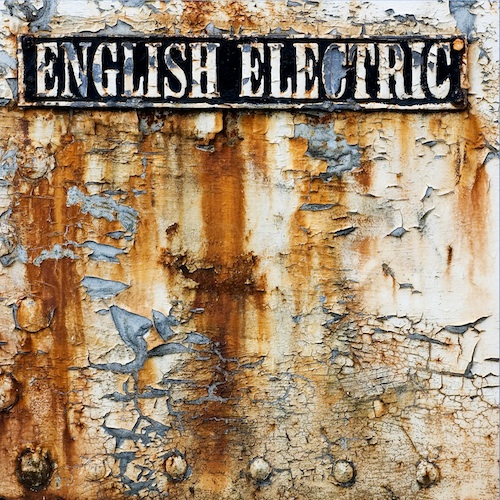
English Electric

What’s next for BBT?

Thanks to the delights of social networking, we know that Danny’s kids are concerned that he doesn’t look “rock” enough (he needs to show them some Peter Gabriel videos from Gabriel’s last studio album), and we know that Greg’s middle name is Mark.

Ok, yes, I’m being silly (though all of the above is true).

We do know that Big Big Train is working on a retrospective of their history, but with the current lineup.  I don’t think any of us need worry that this (Station Masters) will be some kind of EMI Picasso-esque  deconstruction of Talk Talk with a “History Revisited: The Remixes.”  Station Masters will be as tasteful, elegant, and becoming as we would expect from Greg and Co.

After that, we know that BBT is writing a full-fledged concept album, their first since The Difference Machine.  We know that the boys are in the studio at the very moment that I’m typing this (NDV included).

Perhaps most importantly, though, we trust and have faith that Greg and Co. are leading progressive rock in every way, shape, or form.  EEFP is the final version of EE.  At least for now.  But, BBT is not just breaking through, it’s bringing a vast audience, sensibility, and leadership to the entire third movement of prog.  And, for this, I give thanks.  Immense thanks.

When it comes to BBT, perfection only gets more interesting.

***

To order English Electric Full Power, click here.

Making Much More than Noise: An Exclusive Interview with Greg Spawton

English Electric Full Power, September 2013

An exclusive interview with Greg Spawton of Big Big Train.  Interview by progarchy editor, Brad Birzer.  [N.B.  I was going to write a longish introduction, but I’ll do that with the review of EEFP I’ll have up in the next day or two.]

***

Progarchy: Hello, again, Greg.  I’m so glad you continue to be so generous with your time, and I’m deeply honored to have you do yet another interview with me.  The order of the songs, BBT EE+4, is now set.  In stone!  How did you arrive at this ordering?  I would guess you agonized over this, individually and as a group?  

Greg Spawton: Thanks, Brad.  We had four new tracks to accommodate and a listening experience as a long double album (as opposed to two single albums) to create and so there was a lot of discussion and consideration of various options. I wanted to create mini-suites out of some of the tracks with linked themes and that helped a bit as it drew some of the songs together. So, we had the Edgelands sequence of Seen Better Days / Edgelands / Summoned By Bells and the love-songs sequence with Winchester From St Giles’ Hill / The Lovers / Leopards and Keeper of Abbeys. Once those two sets of songs were in place it became easier to work the other tracks around them.

Progarchy: Do you see EEFP as a fundamentally different release from EE1 or EE2, or is it a fulfillment of the first two releases?  A sort of baptism or sanctification?  

Spawton: It’s a bit of both. Completists are likely to buy EEFLP even if they already own EE1 and EE2 and so we felt an obligation to create something new and different rather than just stick four new tracks on the end. But it also seems to have drawn all the threads together and, for us, it’s the ultimate expression of our work in this period of the band.

Progarchy: A followup, considering track order.  You start with the very 1950s and 1960s rockabilly-ish “Make Some Noise,” but you end the entire collection with the–as I interpret the lyrics–suicide of the curator.  Is this intentional?

Spawton: We knew those two songs had to be the bookends. Curator of Butterflies is not a song about suicide, although I can see why many people interpret it that way. It’s actually about life from the perspective of growing older. Now I’ve reached middle-age, I have a much greater awareness of how fragile life is. With my family and my good friends I find that awareness very burdensome. At home, I’m surrounded by teenagers and their take on life is entirely different. It’s fearless, they feel indestructible, they feel they have all the time in the world, whereas I sit back and wonder: ‘where did all the time go’? In Make Some Noise David captures the feelings of being young and full of hope and of dreams so we felt that had to be the opening statement. And as we had song from the perspective of an older person in Curator of Butterflies, it seemed right to put that one at the other end of the album.

Big Big Train's justly deserve award, "Breakthrough Artist of 2013," by Jerry Ewing and the readers of PROG.
Big Big Train’s justly-deserved award, “Breakthrough Artist of 2013,” by Jerry Ewing and the readers of PROG.


Progarchy: Is the whole album, EEFP, still an album dealing with the dignity of labor, in all of its various forms?

Spawton: In old money, EEFLP is a triple album so there is room on there to explore a lot of different themes. One of the main themes of the album is about the dignity of labour. There have been major social changes in parts of Britain in the last 50 years and some communities in areas that used to rely almost solely on employment from the mines or docks or from heavy industry have lost their way because that employment has gone. I am not being nostalgic about this; I am well aware that those industries were very tough places to work. I spent a few minutes down a Victorian drift-mine recently and I cannot imagine what it would have been like to work a shift down there. However, what these industries did bring was a sense of pride in working hard and of the potential of communal endeavour. The loss of these things has been catastrophic for some communities.

A page from the new 96-page booklet accompanying EEFP.  Used by courtesy of the band and the artist.
A page from the new 96-page booklet accompanying EEFP. Used by courtesy of the band and the artist.

Progarchy: Now that you’re done with EE–really three releases overall–how do you see your work with EE?  That is, where does it fit in the history of BBT (besides, being the most recent thing)?  How do you see it in the history of prog?

Spawton: If the band carries on in its current trajectory, we’re likely to end up selling about 30,000 copies of all of the EE albums. In the context of the huge 70’s progressive bands that is a tiny amount and we are only too aware that it can never have the sort of impact that Selling England by the Pound or Close to the Edge had. Having said that, it’s been a sequence of releases which has, I think, shown us at our best and has helped us to reach a wider audience and to get played on national radio in the UK. We’ve also grown as a band during the making of the albums. We are closer together as a unit and know what we can achieve. Danny has come onboard as keyboard player and has added a considerable amount to our sound. We’ve been able to work with a string quartet as well as the brass band and have been able to collaborate with some fabulous musicians and arrangers. And we are very pleased that we have been able to put together a release of 19 songs without any of them being there just to fill some space. Some songs are better than others, inevitably, but all have something to say and will, we hope, offer something to listeners.

BBT even has its own beer now.  Really, now? Great writing, serious beer, depthless prog.  Does it get better than this?
BBT even has its own beer. Really, now? Great writing, serious beer, depthless prog. Does it get better than this?

Progarchy: A number of the new tracks reflect some really interesting influences, at least as I hear them.  “Make Some Noise” seems very innocent and joyful, perhaps a pre-Byrds type of rock, the rock my mother danced to in college.  “Seen Better Days” seems very Mark Hollis/Talk Talkish and then very jazzy.  “Edgelands” again has a Talk Talkish feel.  But, so very jazzy–an impressionistic jazz of the second half of the 1950s.  “The Lovers” is proggy in a Canterbury, dramatic kind of way.  Am I reaching, or were these influences intentional?

Spawton: I wouldn’t argue with any of those. We’re all fans of Talk Talk and the Canterbury scene. Influences are not something we think about during the creative process, though. I’d be a bit resistant to the idea of deliberately writing a song in the style of another band. For us, it’s an organic process of writing, arranging and performing. Influences often operate in a subliminal way and the writer may be unaware of how the listener will experience the songs.

Progarchy: The blending of songs into one another harkens back to The Difference Machine, and you’ve mentioned in a recent interview that your next studio album will be a concept album.  Are you and BBT making a statement about where prog should be going with any of these decisions, or are you just taking your art as you feel so moved at the moment of creation?

Spawton: Honestly? We just write. Sometimes that is with something in mind (for example, where we need a song with a particular sound to help make a balanced album) but often it’s just what comes into our heads and falls under our fingers.

Progarchy: You’ve put so much into the booklet that accompanies EEFP.  How much of the total art do you see in the packaging, the graphics, the photography.  That is, how important is it to peruse the booklet rather than simply download the four new songs?  We all lament the loss of the album sleeve, but you seem to have found away to recapture that glory.  Again, was the booklet a group project, or did you work on this individually?

Spawton: Andy and Matt Sefton must take most of the credit for the overall design. Once we’d found Matt’s remarkable photos and he’d agreed to work with us, Andy was able to develop the overall shape of things using Matt’s images as the basis. The design of the packaging which carries our music is very important to us. Music is, of course, our primary concern and I have no problem with downloads. However, many people still prefer to experience music by purchasing physical releases and we put a huge amount of thought into making those items things of beauty and interest. Luckily, we found, in Chris Topham, a chap with a similar attention to detail for our vinyl releases and so we have worked with Chris and Plane Groovy to try to recapture the glory of the gatefold album cover.

Progarchy: A followup to the above question: you spend a significant part of the book honoring those that/who came before.  As a historian, I love this.  Again, how did you decide to do this?  From my perspective, you’re tying in your work (adding all of those who contribute to BBT directly) with a whole lineage of English history and art.  Any thoughts on the necessity and importance of this? 

Spawton: I have been fascinated by history since I was a young child. In the 70’s, we had these beautifully-produced children’s books called Ladybird books in Britain and they were a big part of my early childhood. Looking back, they had a particular view of the world which wasn’t very nuanced (for example, the Roundheads were the goodies and the Cavaliers were the baddies) but they were spellbinding books with lovely artwork and they seemed to be able to transport me into those historic periods. As the band was developing I started to experiment with telling historical stories in the songs. Really, I think I’m just a frustrated historian without the outlet to write books so I used the ‘voice’ that I did have. I also began to become more aware of folk-music and that stories can be smaller and close to home and be just as interesting for people. And it’s the fact that the listeners are interested in these stories that has spurred me on. We get suggestions of stories sent to us now and there are so many interesting tales.

A guest appearance on EEFP from Lord Cornelius Plum.

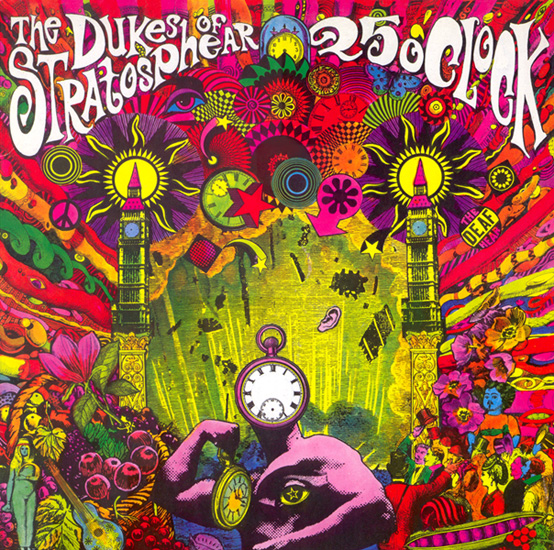
Progarchy: Again, somewhat related, it’s a stroke of genius to tie this release into the work–sadly, often forgotten or poorly remembered–of The Dukes of Stratosphear.  Just how did you come to work with one of its members?

Spawton: When I got to know Dave Gregory I realised that he knew just about everybody in the music business. When we were working on The Lovers, David and Dave wanted the fusion section to be quite spacey and psychedelic and so we ended up asking Dave if he would mind giving Lord Cornelius Plum a call. Lord Plum hasn’t really been involved in music since The Dukes split up and we were delighted that he wanted to play a solo for us, albeit he insisted on playing the guitar backwards. I have to say, he’s still got the chops. He plays backwards guitar a lot better than I can play in the forward direction.

Progarchy: As you know, your fan base (getting larger, deservedly, by the moment!) craves knowledge about the future of BBT.  Can you talk about how you plan to perform live?  Where?  With whom?  When?  What setlist (not exact, of course–no spoilers!)?  Will Rob travel with you?

Spawton: Our live sound will be done by Rob, no question about that. We’re slowly gearing up for some live shows but we know that it requires careful planning. One of the things we are adamant about is that a live show will be an attempt to convey the whole BBT sound with brass and string sections. That is a complicated set-up and requires a fair bit of rehearsal. We’ve chosen Real World as a large studio environment which can accommodate us all and we are going to spend a week there next year working songs through and ironing out any live issues. The setlist will mainly feature songs from The Underfall Yard and English Electric, although we may also do some earlier songs. We’re going to film the rehearsals as that is a good way of recording a live set without the controlled chaos of being on stage. After Real World we’ll be looking to play a small number of shows and I think that we will then aim to play a handful of gigs every year. Just occasionally, progressive bands manage to crossover into a much broader audience (Steve Wilson being the best example) and, of course, if that happens then perhaps we can aim to tour more extensively. I think that is unlikely though and the main thing for us is not to try to put anything on that ends up losing a lot of money which could put the band’s finances out of kilter.

Another page from the booklet.  Courtesy of the band and the artist, Matt Sefton.
Another page from the booklet. Courtesy of the band and the artist, Matt Sefton.

Progarchy: A followup.  What about your future albums?  Station Masters is coming in 2014.  What about the next studio album?  Can you tell us anything about it?

Spawton: Most of the next studio album is written and recording is under way. Nick is in England in late September so we’ll get another couple of days of drum recording done then. We may also do some recording at Real World. As you mentioned, it is a concept album with a story which David has been developing. It is not English Electric Part Three and it will be a little different but we are very excited about it. In the meantime, Station Masters is slowly moving forward and we aim for that to be a beautiful release.

Progarchy: What are the members of BBT listening to right now?  If you could praise some current music, what would you praise?  Or, any recent discoveries of older music?  What about books?  Anything that’s really grabbed your attention recently?

Spawton: There is so much great progressive music about at the moment and we have heard a number of excellent new releases so far this year. The nice thing is that we don’t feel in competition with anybody. There is a good feeling in progressive rock of us all being in it together, the bands and the listeners. Recently, I’ve had some fun working my way back though some of the classic 70’s albums and in the last few weeks I’ve been listening to a lot of Van Der Graaf Generator and PFM. I am looking forward to new music from Mew, Elbow and I have just bought the new Sigur Ros album. As for books, at the moment, I’m reading The Norman Conquest by Marc Morris and Britain Begins by Barry Cunliffe. And I’ve been reading a very interesting biography of Pink Floyd by Mark Blake. The book that has made the most impact on me in the last year was Working Lives by David Hall.

Progarchy: Again, Greg, thank you so much for your time.  It’s always a pleasure.

Spawton: Thank you, Brad.

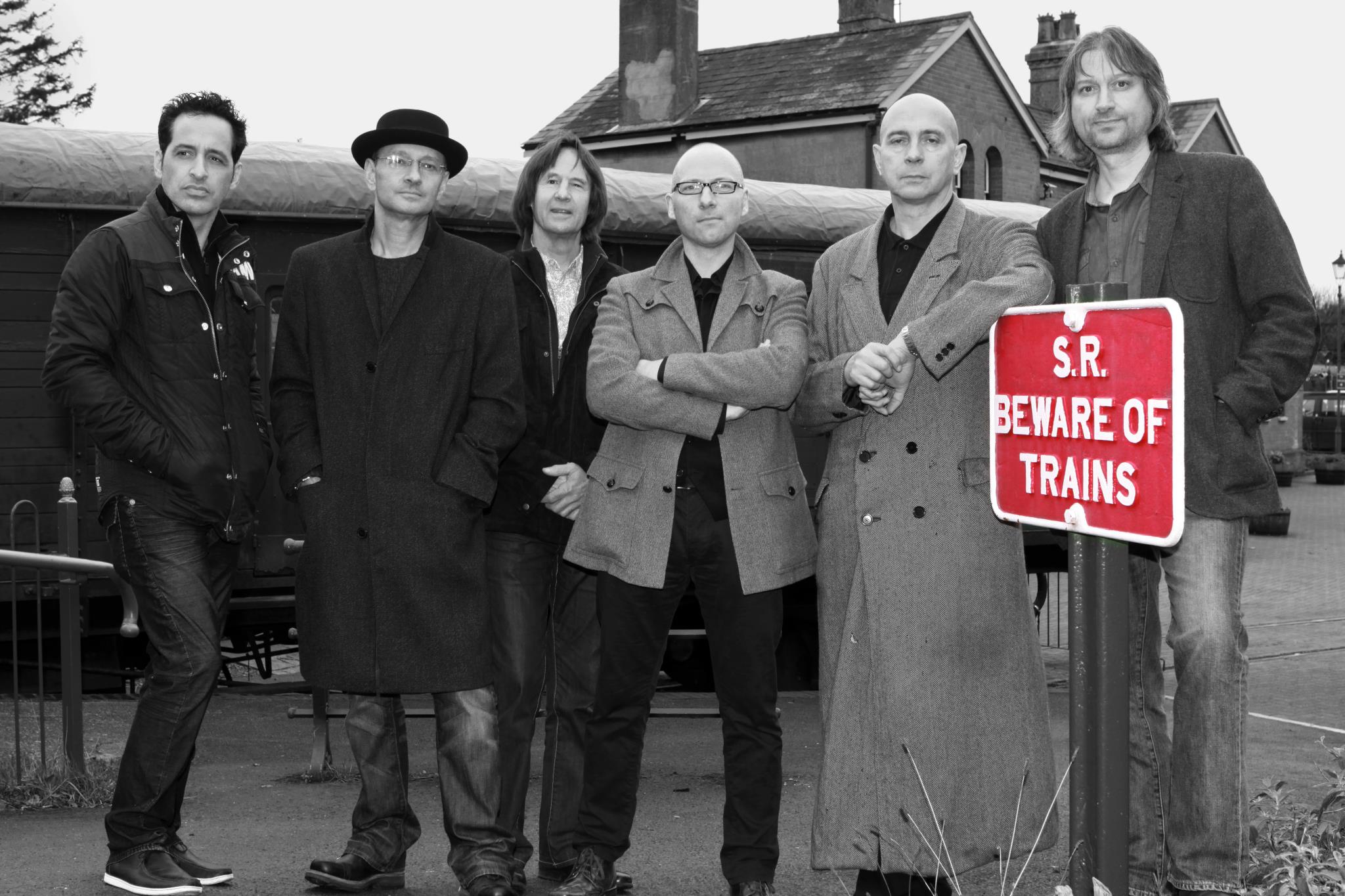
Nick, Andy, Dave, David, Danny, Greg.  Photo by Dutch Master, Willem Klopper.
Nick, Andy, Dave, David, Danny, Greg, and huge red warning sign. Photo by Dutch Master, Willem Klopper.

To order English Electric Full Power or the “Make Some Noise” EP, please click here.

Wait.  Did you just miss that link?  Here it is again:

To order English Electric Full Power or the “Make Some Noise” EP, please click here.

Big Big Train–Justice!

I’m so proud of these guys.  For the full article, click here.

The host of The Prog Magazine Radio Show on TeamRock Radio, Philip Wilding presented the Breakthrough award and he highlighted exactly why that honour has been bestowed on him with an hilarious intro based on schoolboy rivalry between Gavin Esler and Jeremy Paxman. The award was won by Big Big Train who were clearly very pleased with their achievement as three members of the band – Greg Spawton, David Longdon and Andy Poole – paused to thank everyone who had helped them. It’s important to remember who’s helped you get to where you are, of course!–Jerry Ewing


Andy Poole, Greg Spawton, and David Longdon at the Prog Awards.  Photo taken from Prog's website.
Andy Poole, Greg Spawton, and David Longdon at the Prog Awards. Photo taken from Prog’s website.

A Moveable and Glorious Feast: L’Étagère Du Travail by The Tangent

etagereJust as The Tangent’s Le Sacre du Travail was entering into the ordinary time of our lives, Andy Tillison (though the son of a Congregationalist minister) jolts us toward a high Feast Day, and the liturgy of life and art continues with The Tangent’s second release of 2013.

A moveable but glorious feast, L’Étagère Du Travail offers us more glimpses–through a glass, not darkly, as it turns out (with apologies to Paul)–of the essence of truth and beauty.

Please forgive all of the religious references, but musicians such as Tillison, Spawton, Longdon, Armstrong, Cohen, Erra, Stevens, and others bring this out in me.  These fine artists always reach for the best, and that best is often beyond any rational interpretation or explanation.  It’s no wonder the medievals spoke of artists with reverence and awe, in terms of ecstasy.  They touch something the rest of us (the vast, vast majority of us) can only sense exists.

2013 will go down, someday, as one of the best years in the history of progressive rock music, and Tillison has now contributed not one but two major releases and, consequently, two critical steps to and toward the sheer quality of this year.

The Tangent has been in existence for over a decade now, and Mr. Diskdrive himself, Andy Tillison, that red-headed, mischievous sprite, has given the music world much to celebrate.  Tillison has consistently brought together the best of the best musicians, and he has orchestrated all–lyrics, instruments, and arrangements–with some thing that is nothing short of brilliance.

The "red-headed" one.  Stolen from Tillison's FB page.  Without permission but not with malice.
The “red-headed” one. Stolen from Tillison’s FB page. Without permission but not with malice.

This new release, available exclusively at thetangent.org consists of ten tracks including, as the website notes, five new “unreleased demo” tracks and 3 “revisitations.”  The 10 tracks come to roughly 1.2 hours of music.  So, this is no EP.  As Tillison notes on the site, it’s a companion album, a “sister” (a very lovable little sister, I presume) to Le Sacre du Travail.

As with its sibling–naturally having received almost nothing but rave reviews–L’Étagère Du Travail is a must own.  It needs to be in the collection of anyone who appreciates fine art, but especially for those of us who like our music progressive.

I received a review copy just after departing for family vacation, and it has, in many ways, become the soundtrack of my trip into the American West, despite the fact Tillison is, perhaps, the most English of English folk!

From my many listens, I’m absolutely taken with and blown away by the energy and the highly controlled anger of the album.  It’s jazzier and more experimental (there’s even a hint of disco on one track, “Dancing in Paris”–all done, of course, with taste), moment by moment, than Le Sacre du Travail.  This, of course, is to be expected, as the former album told a coherent story, while this companion album explores the same sacred space, but in exemplary fragments not in overarching mythos.

Yet, Tillison’s art is unmistakably Tillison’s art.  Every single thing you love about The Tangent is here in abundance.  As far as I know, I (rather proudly) own everything The Tangent has recorded with the exception of A Place on the Bookshelf (a stupid oversight on my part; it slipped under my radar when it came out; and I’ve regretted not buying it ever since), and I’ve been listening to them for a decade.

Getting a review copy just on the eve of my longed-for summer vacation into the Rockies was akin–again, forgive the religious references–to having wine filled to the brim at a wedding.  As it was at Cana, so it must be in York.  Tillison’s goodness overflows.

Yet, as I just wrote–there’s a lot of anger in this album, but it’s the anger of a righteous man, the kind of anger that demands justice.  What Tillison does with his lyrics is criticize what desperately needs to be criticized in this world.  He does it with passion, but also with immense graciousness, charity, and exactness.  This is not the cheesiness of Bono’s preaching in 1987, but the jeremiad of, well, a modern Jeremiah, albeit an atheist anarchist Jeremiah.  Tillison wants the idealism of his era to meet reality, and he finds the post-modern world more than a bit disconcerting.  The Tangent’s website proclaims correctly and with perfect self-understanding, “Progressive Rock Music for a World on Auto-pilot.”

Yes.  Absolutely, yes.  Every word Tillison sings proclaims, “Wake up, world!!!”

I’ve never had the privilege of meeting Tillison in person, but I suspect he’s rather Chestertonian–clever as the dickens and willing to let the world know what needs to be known, but always with that impish and knowing smile and always with a wry sense of humor.  He is, I believe, a man who reaches and reaches but who understands too much of human nature to be taken in by the nakedness of the king.

Topics on this companion album include generational betrayal, crony capitalism, and corporate biotechnology.

As soon as I heard the first lyrics of “Monsanto,” I knew I’d love this album as much as any thing Tillison has written.  Perfection itself.  My favorite track, however, is the bitterly hilarious “Supper’s Off,” an obvious reference to the Genesis classic, complete with generational disgust and bewilderingly Apocalyptic imaginings, bettered only by John the Revelator himself at Patmos!

As I’ve noted before at progarchy and elsewhere, the various prog musicians in the world today are nothing if not perfectionists.  Eccentrics, to be sure, but perfectionists, too.  And, to these perfectionist eccentrics, I offer the highest praise I can.  If every person took her or his life and work as seriously as do the greatest of prog musicians, the world would not swirl so close to the abyss, the killing fields might be kept a bit more at bay, and we might all recognize the unique genius in every one of our neighbors.  Or, as Tillison writes of himself: “romantic enough to believe you can change the world with a song. I wanna write that song.”

Mr. Diskdrive, thank you.  Thank you for truth, and thank you for beauty.  Long may you rage.

*****

ETAGEREbanner

Order from http://www.thetangent.org/.  Now.  Yes, now.  Hit the link.  Quit reading this–go now!  Ha.  Sorry–too many John Hughes’ movies in my life.  Go order!

Seriously, enjoy this offering from The Tangent.  L’Étagère Du Travail by The Tangent (2013).  Tracks: Monsanto; Lost in Ledston; The Iron Crows (La Mer); Build a new House with The Le; Supper’s Off; Dancing in Paris; Steve Wright in the Afternoon; A Voyage through Rush Hour; The Ethernet (Jakko Vocal Mix); and The Canterbury Sequence live.

For interviews with Tillison (including with the grandest of interviewers, Eric Perry and Geoff Banks), check these out:

  • interview – Eric Perry, “beta tester” for the new album asks Andy some very involved questions about it – and gets some very involved answers.
  • interview – The Dutch Progressive Rock Page’s David Baird asks about the album, the band, the lineup changes etc
  • radio interview – Geoff Banks and Andy natter on ad-infinitum about prog, pop, Magenta, the UK, the world etc.

The Genius Rages: The Tangent’s Le Sacre Du Travail (2013)

group ANNOUNCEMENT

Genius

Andy Tillison is a genius.  It must stated as bluntly as possible.  Tillison is a genius.  He’s a musical genius and a lyrical genius, but he’s also just a genius genius.  Actually, this might seem redundant, but it’s not.  Only genius could properly modify genius when it comes to Tillison’s art.

As I mentioned in a previous post on our beloved site, Progarchy, anything Tillison releases is not just an event, but a moment.  A real moment, not a fleeting one.  A moment of seriousness and reflection.

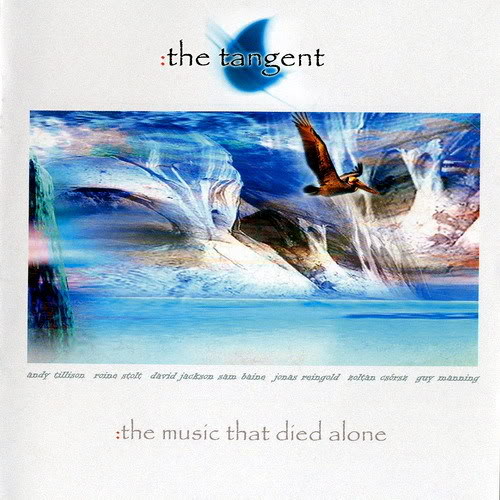
From the first I listened to The Tangent’s The Music That Died Alone, a full decade ago, I knew there was something special going on.  Not only did the cover art entrance me,  but the very depth and seriousness of the music captured my then 35-year old imagination.  I felt as though Tillison was speaking directly to me, asking me to remember the greatness of the musicians who came before 2003, but also inviting me–in a very meaningful fashion–to move forward with him.

cover_2458173122009The Music That Died Alone really serves as a powerful nexus between past and present, present and future, up and down, and every which way.  Only the evocative power of the lyrics match the classiness and free flow (though, we all know what makes something seem free is often a highly disciplined mind and soul) of the music.

At the time I first heard them, I mentally labeled The Tangent a “neo-Canterbury band,” but I was too limited in my imagination, and I would discover this very quickly.  Indeed, each subsequent The Tangent album offers new pleasures and paths for adventure, but always with that power of that Tillison nexus, connecting the past and the future with beauty.

Tillison makes this connection literal in his very fine novella, “Not as Good as the Book: A Midlife Crisis in a Minor.”  The dedication lists close to 100 names, including numerous members (first names only) of the members of various bands from Yes to ELP to The Flower Kings to Spock’s Beard to XTC and to authors such as Arthur C. Clarke and J.R.R. Tolkien.  None of this is contrived.  Just pure Tillison expressions of gratitude.not as good

Privileged (well, blessed, frankly, if you’ll pardon a blatant religious term) to receive a review copy of the new album, Le Sacre Du Travail (Out officially June 24, 2013 from InsideOut Music), I dove right into the music.  Full immersion.  With every album, Tillison has only improved.  Each album has bettered the already previous excellent album with even more classiness, more intensity, and more meaning.  Not an easy feat in this modern world of chaos and consumerist fetishes.

With this album, though, Tillison has moved forward the equivalent of several The Tangent albums.  Again, to be blunt, the album is mind-boggingly good.

Easy listening?  No.  Of course not.  It’s Tillison, it’s prog, and it’s excellent.  What part of those three things suggests easy.  No excellent thing is easy.  Can’t be.  It wouldn’t and couldn’t be excellent if easy.

Satisfying listening?  Oh, yes.  A thousand times, yes.

For one thing, Tillison has brought together some of the finest artists in the business.  I was convinced of the potential greatness of this new album when I first heard David Longdon (in my not so humble opinion, the finest voice in rock today) would appear on the album.  But, add a number of others in: Jonas Reingold (The Flower Kings), Jakko Jakszyk (Level 42), Theo Travis (Soft Machine), and Gavin Harrison (Porcupine Tree).  And, it doesn’t stop here.  Add Brian Watson (DPRP.net)’s spectacular art work and the cool dj voice of Geoff Banks (Prog Dog show).  Ok, this is one very, very solid lineup of the best of the best.

1913

Ten years ago, Tillison released the first The Tangent album.  100 years ago, Igor Stravinsky released what was arguably his masterpiece and certainly one of the finest pieces of music of the twentieth-century, The Rite of Spring.  While The Rite of Spring hasn’t pervaded our culture in the way the fourth movement of Beethoven’s 9th Symphony has, it’s a close second.  Every person, an appreciator of music or not, knows at least part of The Rite of Spring.

Imagine for a moment 1913.  It was, by almost every standard, the last great year of the optimism of western civilization.  Technology upon technology had produced innumerable advancements, almost everyone in the western world believed in unlimited progress, and even devout Christian artists (such as Stravinsky) had no problems embracing the greatest elements of paganism and folk culture.

In almost every way, Stravinsky explored not only the folk traditions of his era, but he embraced and, really, transcended the modernist movement in music.  He bested it.  His Rite is full of tensions and dissonance, but each of these is overruled and corrected by harmony and emergent joy.  The Rite, no matter how pagan, also has deep roots in the Judeo-Christian and Greco-Roman traditions.  The Rite–the ritual, the liturgy–has been a part of western civilization since the pre-Socratics debated about the origins of the cycles of the world and history: earth, water, air, or fire.

MARTIN STEPHEN COVER PIC2013

Imagine for a moment 2013.  Well, ok, just look around.  Technology remains exponential in its growth, but few would praise the development of the Atomic Bomb, the gas chamber, or the aerial bomber.  But, then, there’s the iPod.  And, unless you’re Steven Wilson, you probably think your iPod is ok.  Certainly better than an Atomic Bomb.

Optimism?  No.  I don’t need to go into detail, but, suffice it state, T.S. Eliot might very well have been correct when in the late 1940s he claimed the western world in an advancing stage of darkness:

the tower overthrown, the bells upturned, what have we to do

But stand with empty hands and palms turned upwards

In an age which advances progressively backwards?

The U.S. and the U.K. are currently waging numerous wars, and there seems to be no end in sight.

The Rite of Work

As with the Stravinsky of 1913, the Tillison of 2013 surveys the cultural landscape.  Unlike his Russian counterpart, the Yorkshire man finds little to celebrate in this whirligig of modernity.

The “good guy anarchist,” as he described himself in a recent interview (and, not to be too political, but more than one progarchist would be in great sympathy with Tillison on this point), Tillison observes not the Rite of Spring, but the liturgy of work.  We get up, we commute, we sit in our cubicle, we commute again, we eat, we drink, we have sex, we watch a little t.v., and we sleep.  The cycle beings again every Monday, Tuesday, Wednesday, Thursday, and Friday.  Who made this deal, Tillison wisely asks.

Throughout it all–pure prog interspersed with very modernist musical elements from time to time–Tillison references much in our modern folk and popular culture, including The Sound of Music and Rush (2112):

In a Rush T-shirt, pony tail, 2112 tatooed on his hands

He’s a star through thick & thin

But he still gets that data in

A modern day warrior, today’s Tom Sawyer is a clerk

He’s a meta for disillusion

He’s a metaphor for life

But, interestingly enough, Tillison does all of this as a modern-day St. Thomas the Doubter.

But I don’t believe them, not ’til I see it

Until I put my finger in the holes

In every word, the lyrics rage against the conformity demanded in 2013–demanded by our corporations, our neighbors, and our governments.  What have we become. . . mere ants, living in a world of bird dung.  Certainly, whatever humanity remains has been given over to some institution radiating power.

And, yet, still somewhat in the persona of St. Thomas, Tillison asks us to reconsider our day-to-day rituals and liturgies.  Is it worth it that we squander what little time we have in the name of the mindless and soulless cycles of modern life?  By far the most powerful moment of an album of immense power (power in the good sense; not in the domineering sense):

‘Cos you can’t take it with you

There’s no luggage allowed

No you can’t take it with you

No matter how rich or proud

Your kids will sell it off on Ebay

For god’s sake don’t waste their time

‘Cos you can’t take it with you

You can leave just a little bit behind.

Summa

Well, what an album.  What an artist.  What a group of artists.  If any one ever again complains about the superficiality of rock music, consider handing them a copy of this CD.  No superficiality here.  Only beautiful–if at times gut wrenching–meaning.

Keep raging, Mr. Diskdrive.  Rage on.

To order the album (and you should, several times!), go here: http://www.thetangent.org/

The Tangent News

MARTIN STEPHEN COVER PIC

As most readers of Progarchy well know, Andy Tillison will be releasing the new The Tangent album at the end of this month.  Any Tillison release is as much an event as it is a momentous moment.  As he’s proven time and again over the last decade with The Tangent releases, Tillison is a true believer in the roots and the origins of prog as well as in the future and innovation of prog.  He’s a seeker of all things excellent and beautiful.

Bringing in David Longdon for the new album is a touch of genius.  But, Longdon is not alone.  Bassist Jonas Reingold and guitarist Jakko M. Jakszyk join as well.

In case you’re interested, and I assume we all are, there are two pieces on the internet well worth checking out today:

A newspaper interview with Tillison here:

http://www.yorkshirepost.co.uk/yorkshire-living/arts/music/prog-rock-is-alive-and-well-in-otley-1-5747200

And, the first review of the new The Tangent album here:

http://ytsejam.com/music-review/the-tangent-le-sacre-du-travail-the-rite-of-work/

You can order the album here:

http://www.thetangent.org/

Enjoy!

New Tangent Ready for Pre-Order

As the Tangent posted this morning on Facebook:

tangent 2013 coverSTATEMENT FROM INSIDEOUT/CENTURY MEDIA TUE 7/5/13

On the 24th June 2013, InsideOut Music is set to release the seventh studio album by The Tangent entitled Le Sacre Du Travail (The Rite Of Work). The album is the group’s first fully blown “concept album” but band-leader Andy Tillison is keen to point out that this concept is something that involves all of us now rather than a rambling fiction.

Formed from a single hour long piece of music in 5 movements and referred to by the band as “An Electric Sinfonia” based around a working day of a typical Western-world citizen, the album has a very personal feel. It’s highly orchestral and 20th century classical in tone, very much inspired by Stravinsky’s The Rite Of Spring. Described by INSIDEOUT CEO Thomas Waber as “A very mature album” with “Stellar Musicianship” – this album sees the lineup of The Tangent revert to an earlier formation, Andy Tillison (composer/keyboards/singer) again bringing on board Jonas Reingold on bass (The Flower Kings, Karmakanic), Jakko M Jakszyk on guitar & vocals (King Crimson, Level 42), Theo Travis on wind instruments (Soft Machine, Steve Wilson Band) with the new additions of Gavin Harrison on drums (Porcupine Tree) & David Longdon on vocal harmonies (Big Big Train). In addition there are cameo appearances by Rikard Sjoblom (Beardfish) and Guy Manning amongst others.

The Tangent add to the statement:
The artwork for the outside cover you see here, is by a remarkable gentleman named Martin Stephen. The interior artwork will be announced & featured extensively later.

Much more info on the Tangent Website updated today (please allow for bizarreness)www.thetangent.org And of course regular Pre-Ordering begins today!

Look out for more information on the album in the coming weeks!

Big Big Train and the birds

I’ve been in love with a band called Big Big Train since late 2011. It was very many years since I got so moved by music as I have been by the music of BBT. Many great posts have been published here at Progarchy about the music and lyrics from the pens of David Longdon and Greg Spawton. So now it’s my pleasure to here in my blog premiere make a little detour to the world of birds… Why, you may think, is that? Well for starters I couldn’t add much new to what’s already been said about the themes in the music and lyrics and then I’m a birdlover and have been so delighted by the use of birds in the lyrics and even in songtitles (Brambling). It’s apparent that the songwriters are quite familiar with some of the common birds in Britain (they’re also common in Sweden. I mean the fantastic Hedgehoppers’ Chorus line where blackbird, redwing, song thrush and yellowhammer are mentioned is something that I can connect to as well. Those are birds that are typical for the Swedish countryside too. And they are all birds that signal springtime by letting us enjoy their melodic songlines from March onwards until Midsummer or something.

The thing that distinguishes Big Big Train from many other bands and artists is that they not only use the general expression “birds” in the lyrics but actual names of real species. You also find the partridge in the lyrics on Uncle Jack and Hedgerow. This precise way of describing what kinds of birds that inhabit their lyrical landscapes is something that put Big Big Train in the same league as literary giants such as our very own (Swedish giant) August Strindberg who was a keen naturalist and knew much about birds and plants. In his novels you always find the names of actual species as well, not only the general terms “birds” and “flowers” for instance. This way of namedropping species adds much to the feel of a very alive lyrical landscape within the musical landscape that is Big Big Trains. And for me who know what all those different birds look like, when they can be expected to come back from their winter quarters, when they start singing and also what they sound like when they do it, the picture widens and gets deeper colours so to speak.

So is birds in music a novelty then? Of course not. We all remember the second movement of Beethoven’s Pastoral Symphony (No. 6) where several birds lend their voices to the great master’s musical creativeness. There we can hear the nightingale, the quail and also the cuckoo.  Within the bird theme Big Big Train also connect in a very fine way with Vaughan Williams. How is that? Well, Mr Williams wrote that absolutely wonderful piece of music called The Lark Ascending which makes us think about the eighties masterpiece Skylarking by the wonderful band XTC whose guitarist Dave Gregory nowadays as we all know resides in…Big Big Train. Skylarking is by the way such a fantastic album title. For me the word skylarking doesn’t actually mean what it’s supposed to mean (playing boisterously or to sport or something like that) but to lie flat on the back in the sun on a green meadow watching the skylark hanging there on its invisible string singing its heart out about spring, love and joy underneath the deep-blue dome….but that’s a meaning I’ve made up all by myself. But the music of Big Big Train’s always makes me want to go skylarking – in my meaning of the word.

The Moral Law of Big Big Train

by Craig Farham

Music is a moral law. It gives soul to the universe, wings to the mind, flight to the imagination, a charm to sadness, and life to everything. (Plato)

The members of Big Big Train with Dutch photographer, Willem Klopper.

Is it possible that Plato was writing about Big Big Train’s latest masterclass of musical wonder, English Electric, Part 2 (EE2)? Probably not, but two millennia before locomotives, social networking, digital recording, the global network, or austerity measures in his beloved city state, Plato certainly knew a thing or two about the power of oscillating waveforms to connect people.

Did the members of Big Big Train read Plato before embarking on their epic journey to morph their observations of contemporary and historical people and events into oscillating waveforms of power and beauty? Again, probably not. But EE2 certainly fits Plato’s moral law to a tee.

Beautifully crafted from the opening piano chords to the final fade out of a single piano note, EE2 continues the journey begun on EE1, my album of the year in 2012, into the heart and soul of industrial England, its people, and the surrounding countryside. The album weaves tales of steam trains, ship-building, coal miners, a second chance at love, the custodian of a historical monument, the British landscape, and butterfly collections as a metaphor for life and death, with musical arrangements that range from sparse to massive, light-hearted to intense, but are always melodious and warm. The album has the same lush production and attention to detail as EE1, with exquisite use of brass band and strings beautifully complementing the electric instruments. The songs range in length from just under 4 minutes to nearly 16 minutes, and every song is exactly as long as it needs to be – no filler, bloat, or needless noodling.

The addition of Danny Manners as a full-time band member on piano, keyboards and double bass has lifted an already impressive ensemble another notch, and I’m delighted that the compositions on EE2 have given David Gregory more scope to develop his exceptional guitar solos. The rest of the band are also in fine fettle – Greg Spawton’s basslines are on a par with those of Gentle Giant’s Ray Shulman (and his compositional skills are equally impressive), Nick D’Virgilio’s drumming is peerless (he recorded the drum parts for both EE1 and EE2 in three days…!), Andy Poole has stepped forward from the producer’s chair to contribute backing vocal, guitar and keyboard parts, and Dave Longdon, who I think has the best voice in modern prog, contributes massively with his flute work and a wide array of sundry instruments, including banjo, keyboards, guitar, cutlery and glassware(!), in addition to his great songwriting. There is also a large cast of supporting musicians, including Dave Desmond, whose marvelous brass band arrangements are an integral part of the unique BBT sound, Rachel Hall on violin, and The Tangent’s Andy Tillison on keyboards.

The newest member of Big Big Train, the extraordinary Danny Manners.  Photo used by kind permission from Willem Klopper.
The newest member of Big Big Train, the extraordinary Danny Manners. Photo used by kind permission of Willem Klopper.

Although EE2 is the second half of a double album released in two separate parts, it stands on its own as a superb example of the vibrance of the new wave of progressive music, which is finally lifting itself out of the shadow of the so-called “golden age of prog” in the 1970s. To listen to EE2 on its own, however, is to miss out on half the fun. EE1 and EE2 should be seen as a single body of work, a superb collection of songs and an important milestone in the history of modern music.

English Electric by Big Big Train is a moral law that demands to be upheld. To paraphrase a comment I made on the BBT Facebook site, these are albums to cherish – I’ll be listening to this music as long as my cochlear apparatus is capable of responding to their oscillating waveforms and connecting my soul to the universe…

***

[Dear Progarchists, thank you so much for letting us enjoy this four-day love fest of all things Big Big Train.  It’s been quite an honor.  Craig’s post–his inaugural post as an official citizen of the Republic of Progarchy, by the way–concludes our roundtable reviews of the latest BBT masterpiece, English Electric V. 2.  To order it directly from the band, go to www.bigbigtrain.com/shop.–Yours, Brad (ed.)]