Interview: CIVORTEP

Civortep

Civortep is a progressive death metal project of Stefan Petrovic who gathered a group of guest musicians to help him with the creation and release of his debut EP “The Return.”

In the interview below, Stefan explains the meaning behind the project’s name, his writing process, and more.

What made you go for the name Civortep?

It is my last name backwards, I always thought it sounded neat so for my producer name I chose to have it as that.

How do you usually describe your music?

It has a little bit of everything in it! Not exclusive of any style, but I pretty much just go with what comes to mind and sounds equally as good.

What is your writing process like?

Write, Refine, Refine, Refine. For me I can’t play a lick and have it be a polished piece of gold from the beginning. It takes a lot of refining to get it to the point that I feel it is good enough to go with. And even then I may go back and build off of it even more.

Who or what is your inspiration, if you have any?

My biggest inspiration is independent musicians that can promote themselves and build an organic image without being manipulated both in their music and persona by the industry, which in my opinion produces clones, lacking in originality, like its existence depends on it.
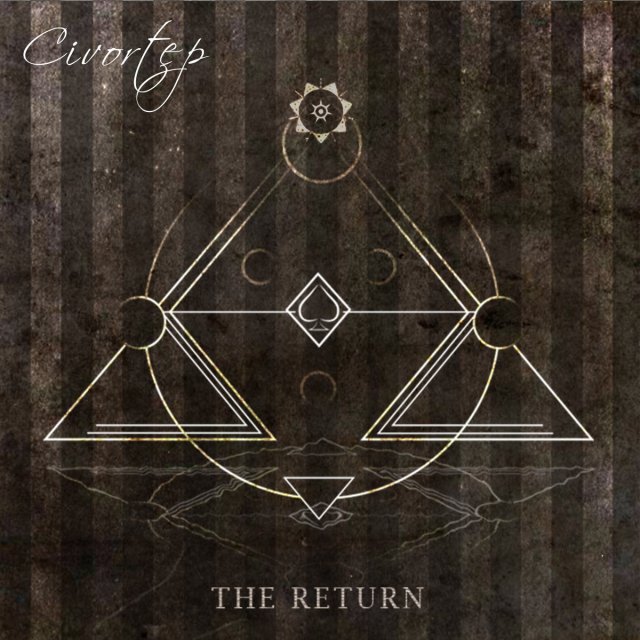
Civortep - The Return

What is your favourite piece on the “The Return” album?

I’m stuck between Shadow Covenant and The Return as my two favorites. The words are definitely the strongest points in my opinion, and I felt that the way I sung them expressed the emotion I was going for very well.

What makes “The Return” different?

It has a lot of elements that are very scarce within the metal community. I don’t like to be gridlocked by a method or any single type of approach, so I went all out including elements with synths, orchestra parts, and tons of sound effects.

What should music lovers expect from “The Return”?

A ton of variety that can pretty much satisfy any taste, from heavy elements, to atmospheric and melodic.

What kind of emotions would you like your audience to feel when they listen to your music?

I approached this album with a vision of including all emotions, so I hope that would translate over to the listener. There’s definitely enough variety within it to satisfy pretty much the whole emotional spectrum.

Pick your three favourite albums that you would take on a desert island with you.

Keep of Kalessin – Epistemology
Immortal Technique – The Martyr
Omar Linx – City Of Ommz

Get “The Return” from Bandcamp here. Follow Civortep on SoundCloudYouTube and Facebook.

Interview: PERIHELION SHIP

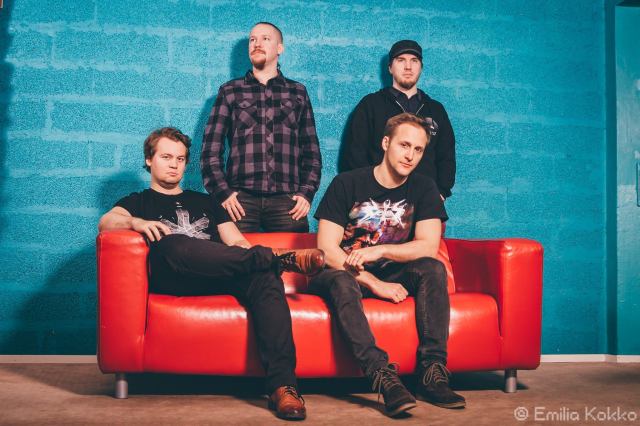
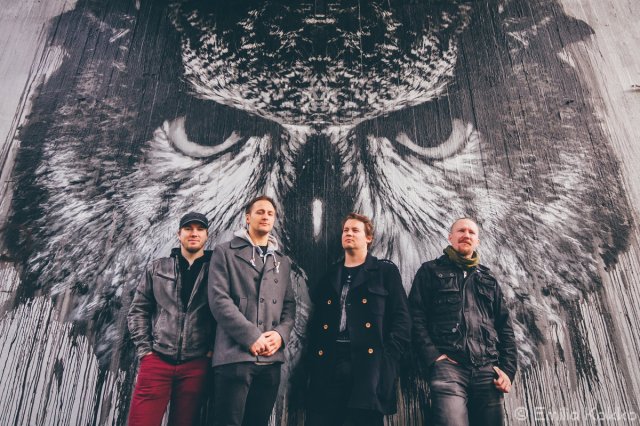
Perihelion Ship band

It can be said that a Finnish progressive death metal act Perihelion Ship offer an rollercoaster ride through Prog with their sophomore full-length release “To Paint a Bird of Fire.” Indeed, it feels as an album that has everything specific for the Prog genres since its inception in the late ’60s until today.

Mastermind Andreas Hammer walks us through the creative process for the new album.

Alright, first thing is first. Before we dive into all the music stuff, how’s life?

All is well. Trying to balance work, music and free time.

Speaking of new music, you have an album. What can people expect from “To Paint a Bird of Fire”?

“To Paint a Bird of Fire” is a little more straightforward than the debut, but the instrumentation is pretty much the same: a lot of Mellotron and Hammond Organ over heavy guitar riffs. The idea was to create a single 40-43 minute record to fit into one 12″ vinyl, like classic prog records. It ended up being a kind of a concept album, which is very evident in the lyrics.

There are two longs songs, two semi-long songs and two short songs, each displaying a variety of style in playing and composition, but still flowing nicely together.

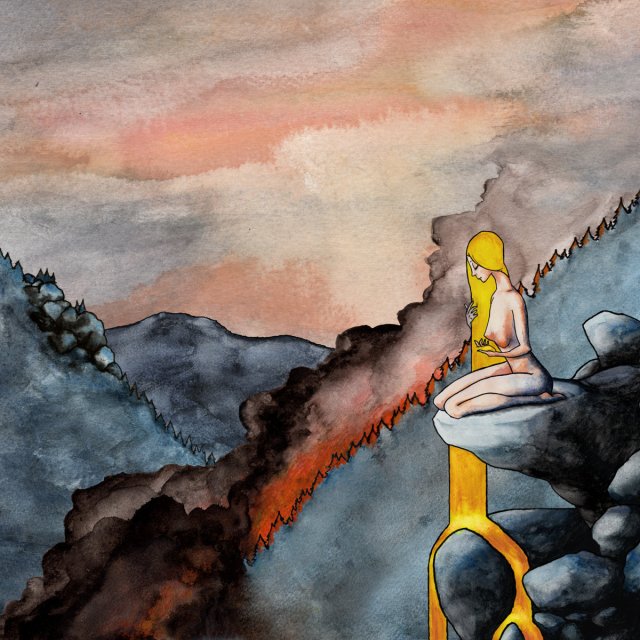
To Paint a Bird of Fire

What was it like working on the album?

It was fun at first: I recorded the backing tracks for drum recordings with guitars and virtual instruments after the songs were written last year.

The drum recordings went very smoothly and we had much better environment recording drums than last time and the sound ended up fantastic.

After the final bass and guitar tracks were recorded and re-amped, things started to get slow and frustrating.

Jani (keyboards) had a lot of work in his hands and had to really push to get the keyboards done in his free time.

I recorded the vocals at home during spring and mixed them as well. This was the most frustrating part, as the songs did not end up sounding the way I had envisioned them at first. Even though Kris McCormick (production, engineering) had the skills to put everything together nicely in the end, the negative effect of these events started to show a bit on the practice room during spring. Due to the growing pressure, Jani and Jouko (bass) decided to quit the band during Summer. Thankfully we found replacements: Pirkka Maksimainen (keyboards) and Mikael Aalto (bass) have joined us. Both are very capable players.

Are there any touring plans in support to “To Paint a Bird of Fire”?

No not touring in the traditional sense; we are an independent act and don’t have the resources or time to tour. But we will play as many shows we can through the winter and next spring with the new lineup.

While we are on the subject of touring, what countries would you love to tour?

US definitely, cause that’s where most of our fans reside and I haven’t personally been there yet. I’d like to see the nature and smaller, more inner-cities as well as the west coastline.

In Europe, I personally enjoy Germany and Italy and their neighboring countries. And maybe visit the dear Sweden next door sometime.

Perihelion Ship

Who and what inspires you the most?

Inspiring art, nature and scientific advancements. For me, artworks have to have some kind of personal and emotional touch with them that shines through, and purely technical achievements do not really interest me (usually). This year, the new Pain of Salvation record as well as the new Bell Witch record are great examples of such art.

What other genres of music do you listen to? Have any of the other genres you listen to had any impact on your playing?

I still try to find great prog rock bands, but mostly I listen to underground metal and avant-garde. I do like synth/retrowave (you should check out Nightstop and their album “Streetwalker”) as well as classical piano music.

The fourth track from the new album; ‘River’s Three’, is inspired by classical guitar piece ‘Asturias’ by Isaac Albeniz, as well as the original Diablo -video game “Tristram theme” OST. Jani really nailed the Mellotron orchestrations in this song.

I really appreciate you giving us your time today. Is there anything else you would like to tell us and the fans before we wrap things up?

Thank you for the opportunity of being here. As most of our fans reside outside of Finland, it would be cool to record a live set and/or playthrough videos of our songs. You can find us on Facebook or www.perihelionship.fi

https://bandcamp.com/EmbeddedPlayer/album=935251725/size=large/bgcol=ffffff/linkcol=0687f5/tracklist=false/artwork=small/transparent=true/

Dismember

The initial guitar harmony is quite enticing, and well tailored to mislead that unsuspecting casual listener. As you can hear, the musical terrain flips in a couple of minutes. Lyrics, quite aptly scream — “Innocent soul dismembered…Enter the dark regions. And suffer a thousand deaths”. It’s good old Swedish brand of hardcore/punk aggression, but reconciled with guitar melody.

Dismember is an apt introduction to the early 90s Stockholm scene. Borrowing elements from their American and English contemporaries, these Swedes distilled their own characteristic flow and melody. Here, we can clearly discern that multinational lineage of Venom, Celtic Frost, Possessed, and Napalm Death.

For the uninitiated, the elegantly down-tuned melodic leads make Dismember relatively more palatable. The sheer sonic density of Entombed or Grave could be a tad intimidating. In some ways, Dismember also exhibits tendencies mostly associated with Gothenburg death, especially that of ‘At The Gates’. A closer examination reveals even more musical parallels, especially with the legendary English death metallers — ‘Bolt Thrower’.

But not just from the neighboring avenues, fascinating how back in the 80s, influences from places as far as Tampa, Florida or the Bay Area traveled back to Stockholm. Informal networks and underground tape trading channels simply emerged. Even without the World Wide Web, Altars of Madness wrecked a sonic carnage within the European scene. Simply stated, it was artistic entrepreneurship which drove the most extreme sounds on the planet. To channel a wise Scottish philosopher – death metal evolution is yet another illustration “of human action, but not the execution of any human design”.

Image attribution:
By Mattias Hedström (Own work) [CC BY-SA 2.5], via Wikimedia Commons

The Karelian Isthmus

The Karelian Isthmus’ does further that recklessly snowballing early 90s black/death wave, but mostly into relatively less threatening waters. Compared to Norwegian and Swedish contemporaries, these Finns dial down the dissonance and integrate quite a few contrasting elements.

Florida death was undoubtedly a catalyst – surging across the great Atlantic it caused permanent mutations within the European scene. Within the early Amorphis albums, especially ‘Privilege of Evil’ and ‘The Karelian Isthmus’, we can clearly hear this wave brushing up against a firm melancholic chill – that Black Sabbath like doom metal overtones.

This confrontation of an all razing morbid dissonance with a doom like texture was unique – ideal for integrating even more vibrant influences.

Amorphis goes on to deck this framework with folksy tremolo picking, thick downtuned grinds, progressive riffs and brutal blast beats. Deep growls of Celtic influenced lyrics – “Distant gate, gothic grave, through ages our clan still remain” – does add to that vital grimness. It’s Carcass and Grave like abrasiveness, but mellowed with Finnish cultural influences. Essentially, all the elements which eventually lead Amorphis to their epic Tales From the Thousand Lakes, and beyond, are exhibited here – but in subtle and intense measures.

By Jarno Koskinen [CC BY-SA 3.0], via Wikimedia Commons

Orchid

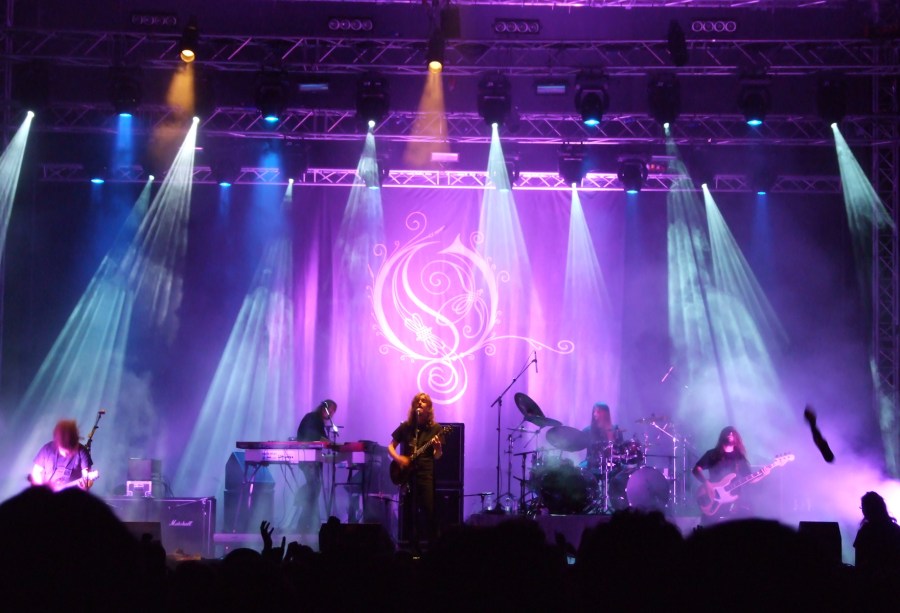
Opeth’s debut is a rare blend, it’s good old British metal melody, but decked with prog, folk, black and death metal textures. It’s the most accessible elements of metal combined with the least. Songs effortlessly transition from murky black metal to deathly blast beats, and then frequently into melodic folk passages — and they are also interestingly devoid of that punk dissonance integral to extreme metal. In short, it’s a unique cross-over. Guttural riffs, acoustic melody, and Akerfeldt growls with clean vocals – all stitched together into 10 minute epics.

Not surprising that Dan Swanö is the producer, Edge of Sanity is reflected all over the long and meandering eclectic passages. That infamous ‘Thomas Gabriel Fischer’ like curt grunts is also frequent and numerous. Opeth weaves that Celtic Frost like textures into the more accessible 70s and 80s metal progressions. Orchid is composed of those two divergent heavy metal strands, but spun seamlessly into one prog symphony. Examine long enough and we can discover Black Sabbath to Bathory to jazz elements – even for early 90s metal this is avant-garde. With drawn out extreme metal sound, but still illustrating that melodic classic metal roots, Opeth comfortably slingshots a casual metal listener — straight into the abyss of 90s Scandinavian scene.

MrPanyGoff [CC BY-SA 3.0], via Wikimedia Commons

Left Hand Path

“This is so hardcore”, responded one of my colleagues at work. At that time, ‘Left Hand Path’ CD was running in my Jeep stereo. So, along with the engine, ignition turned on some Swedish death metal. My usual reflex is to adeptly switch the channel, but he insisted on listening. Perception is really an evolutionary product; going headlong into the margins of a genre might just inspire bewilderment, not fascination. So, without that musical context, he was quite puzzled about the incoherent riffs and that defiant buzzsaw guitar sound.

Early death metal is a blend of punk like structures with melodic guitar. But, 90s Swedish scene exhibits significantly more punk influences. Someone evolving from hardcore punk to metal would certainly find Entombed and Dismember more familiar than Obituary. One of the main hurdles to grasping Entombed is also that punk like dissonance. It’s that same dissonance which separates Slayer from Metallica, and also Motörhead from Judas Priest.

Pitch and tempo progressions will sound chaotic; it often contradicts our mental conception of melody. These compositions will simply not progress in those familiar comforting directions. 80s crossover thrash also seems to be a part of this whole cross-pollination. They illustrate similar blast beat and riff patterns, but with significantly less speed and distortion. In fact, last month D.R.I played at SF, and it was difficult to ignore the striking similarity across these seemingly different genres.

Entombed’s first two records are absolute death metal classics. Especially ‘Left Hand Path’, an unrelenting train of melodic guitar hooks, heavy down tuned riffs, exploding drums and deep growls. Even the leads are down tuned and always layered with grinding riffs. But, in between endless growls and distant echoing screams — almost like an accident – we have a full total of two seconds of desperate clean vocals. Undoubtedly, lyrics are even more morbidly tailored, and intended to finish off anyone who manages to survive this buzzsaw assault.

Entombed

Within this broad genre, Entombed is an icon. Once I had weathered 60 miles of rain storm and flu on a weekday night to see them live. A relatively small venue, crowd was sparse and probably not more than a few dozen. Set list dominated by songs from their first two records – it was an absolute head-banging feast. Swedish death metal legends, tiny venue, and tickets priced at an affordable $19 — perks of listening to sounds not many care about.

IMAGE Attribution:

By commons: Lilly Mpl.wiki: Lilly Mreal name: Małgorzata Miłaszewska (Own work) [CC BY-SA 2.5], via Wikimedia Commons

In Mourning – Afterglow – Album Review

Artist: In Mourning Album Title: Afterglow Label: Agonia Records Date Of Release: 20 May 2016 In Mourning is a name that that have flitted around the very edges of my consciousness for a few years now. ‘Afterglow’ however, takes the Swedish quintet out of my personal periphery and re-positions them at the very forefront of […]

https://manofmuchmetal.wordpress.com/2016/04/22/in-mourning-afterglow-album-review/

OBSCURA Premiere Video For Title Track of New Album “Akróasis”

It has been five years since the release of Obscura‘s universally acclaimed Omnivium album. Now the progressive metal masters return with their strongest and most dynamic release to date. The aptly named Akróasis (Greek for “hearing” or “listening”) draws on all the various elements of Obscura‘s signature sound and combines those qualities into a cohesive…

http://www.prog-sphere.com/news/obscura-premiere-video-title-track-new-album-akroasis/