
American genius. Susie looks like she’s having a blast.

American genius. Susie looks like she’s having a blast.
[A review of Glass Hammer, ODE TO ECHO (Sound Resources, 2014). Please excuse any typos. I composed this on my ipad while waiting for a very, very delayed flight at the Detroit airport.]
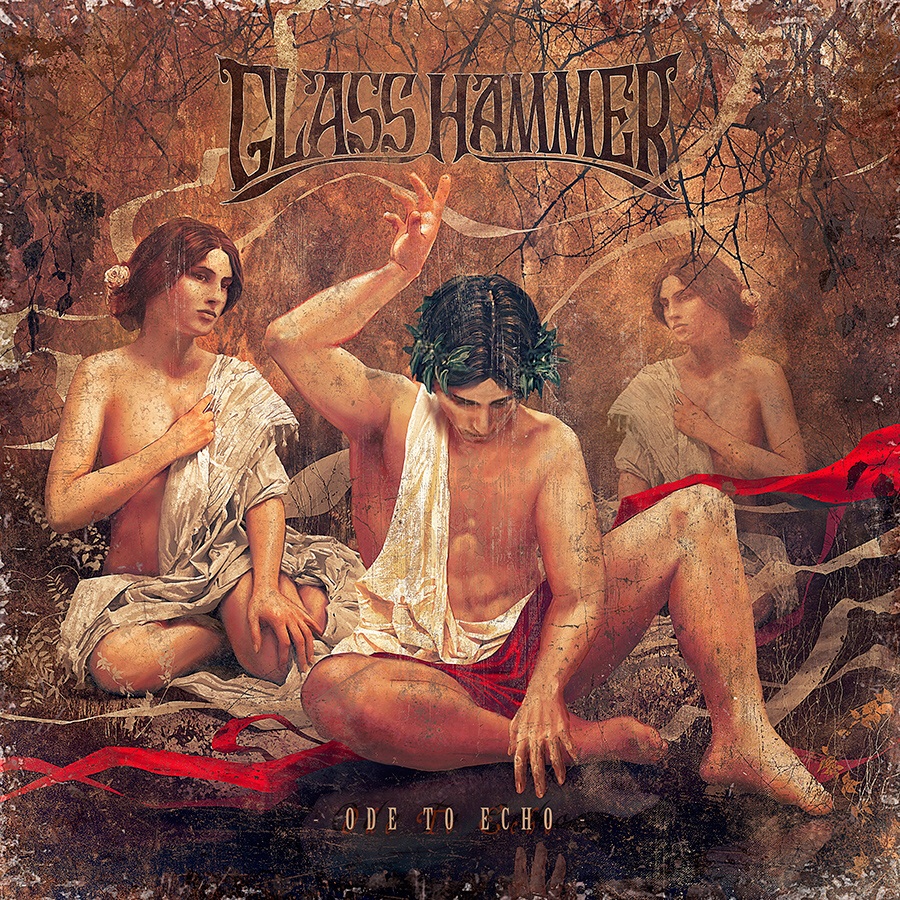
For Glass Hammer, ODE TO ECHO means two things. First, and vitally, it’s a reference to a story of antiquity by Heroicus and dealing with the greatest of warriors, Achilles. Second, it’s a tribute to two decades of success as a band.
In every way, this album is packed with brilliance, beauty, and treats around every corner.
One of the most noticeable features of Glass Hammer’s latest, ODE TO ECHO, is its sheer diversity of styles and moods. Having four lead vocalists and three backup ones adds significantly to this, and it provides a wonderful listening experience. Over the course of eight songs, Babb and Schendel provide a journey into the fantastic and mythic. One could never find a dull moment here, even if one tried.
The second most noticeable aspect of the album is its self-assuredness. Progging since the early 1990s and rocking since the early 1980s, Babb and Schendel have every right to be confident. Creating Glass Hammer, a project that has always been self supporting, self sustaining, and impressively profitable, has proven significant not only for the history of American rock but, critically, for third-wave prog overall. These two geniuses emerged on the prog scene at the moment the genre was, almost certainly, at its nadir of popularity and influence. Through immense and never faltering talent, entrepreneurial initiative, and intense tenacity, Glass Hammer has reshaped much of the genre over the past two decades.
In almost every way, ODE TO ECHO, is a tribute and—musically—an autobiographical statement.
A third aspect of the album, and intimately connected to the second aspect, is Glass Hammer’s willingness to innovate as well as to borrow. Many reviewers have criticized the band for being too Yes-like. Babb and Schendel are nothing if not feisty, and such criticisms only fuel their desire to do whatever they want. If they want to reference Yes, they do so. If they want to reference Genesis, they do this as well. If they simply want to try something new, they do this, too! It’s endearing, frankly, contrarian, and very American. Hence, at a few points, this album references Yes from Going for the One as well as Yes from Magnification. At other points, it references Kansas (having David Ragsdale as a guest musician doesn’t hurt!). The Beatles creep in at points, too. Mostly, though, the album reveals the love Babb and Schendel bring to the art of music.
Frankly, I’m relieved Glass Hammer followed up their masterpiece, PERILOUS, with ODE TO ECHO. PERILOUS was so good and so mysterious as well as so profoundly moving that it would be most difficult for any band to follow. By moving away from a single story and embracing diversity of vocals and music styles, Babb and Schendel very successfully create a totally different kind of masterpiece.
While this is probably heresy in some circles, I find Jon Davison’s vocals fine but not glorious. I much prefer, for example, the vocals of a David Longdon, a Leah McHenry, a Sam Healy, a Jan-Henrik Ohme, or a Andy Tillison. Davison’s voice just comes across a little too fey at times. But, Susie Bogdanowicz? Be still my beating heart. She can sing, and she can sing with the absolute best of them. Indeed (and again I’m on possibly heretical ground), her version of Yes’s “South Side of the Sky” is better than the original. That she’s as gorgeous on the outside as she is in her vocals, of course, doesn’t hurt. But, once you’ve heard her vocals, you can’t imagine her as anything other than a truly beautiful person, nearly angelic.
Carl Groves and Walter Moore have much to offer as well, as do the backing vocalists.
No review of this album would be even close to complete without a reference to the actual playing. Babb and Schendel are certainly at their best. Indeed, their vast experience lends itself not to complacency but to the drive to perform better than ever. I have a feeling, these two do nothing half way. If a thing is to be done, it is to be done well. And, indeed, very, very well. I must also note the sonic excellence of the new drummer, Aaron Raulston. Sheesh, I’ve not heard anyone this good since Neil Peart and Nick D’Virgilio. Wow is all I can write. This guy will make his mark in the rock world, to be sure.
2014 has already proven to be a year every bit as good as 2012 and 2013, though we’re only in the fourth month. Whatever you do, do NOT bypass this album. ODE TO ECHO is not just great prog, it’s brilliant and shimmering Glass Hammer. Considering Glass Hammer never does anything that is not at the highest of standards, this is saying something.

Ode to Echo comes out in two days. I have yet to hear it, but I love everything Glass Hammer has done thus far. My words and thoughts regarding one of my favorite bands at Catholic World Report.
A scratchy LP, probably on a phonograph player from the 1930s or so, begins playing and a man clears his throat. Horns and woodwinds slowly swell and unveil, coming into tune in the background, finding a place in the rotating spheres.
Good evening, ladies and gentlemen. Welcome to this evening’s performance, Babb and Schendel’s musical extravaganza, Lex Rex, a tale of the ancient world. The conductor is ready. The actors and actresses are all assembled. So, without further ado, Lex Rex.
A gorgeous organ, something straight out of an early Genesis album, is followed by soaring Yes-like guitars. The two syncopate. Drums, voices, and bass join in. So, it begins, and the spheres rotate quickly now.
To keep reading, please go here: http://www.catholicworldreport.com/Item/2988/the_music_of_glass_hammer_an_appreciation.aspx
Jerry Ewing and PROG have just posted the first video/single from the forthcoming (March 11) new album from Glass Hammer, ODE TO ECHO.
Have a listen:
http://www.progrockmag.com/stream/glass-hammer-premiere-crowbone/
 Just received the following from Steve Babb the Mighty.
Pre-ordering for autographed copies of Glass Hammer’s Ode To Echo and Limited Edition T-Shirts has begun at The Glass Hammer Store. (Now accepting PayPal)
“Ode To Echo” represents the most powerful ensemble of Glass Hammer members ever assembled on one recording. Featuring co-founders Steve Babb and Fred Schendel joined by guitarist Kamran Shikoh, drummer Aaron Raulston, vocalist Jon Davison and fan-favorites Carl Groves and Susie Bogdanowicz. The fourteenth studio album by America’s top-prog group also features cameo performances by past GH members Walter Moore and Michelle Young with cameos by Randy Jackson of Zebra, Rob Reed of Magenta and David Ragsdale of Kansas.
Artwork by Michal Xaay Loranc, mastered by Bob Katz of Digital Domain, “Ode To Echo” is a must for fans of symphonic-prog! Reserve your autographed copy today!
The fine members of Glass Hammer have just posted a five-plus minute trailer for the forthcoming album, ODE TO ECHO. Need a break from a long day–break here! This is amazing and amazing and then some. Thank you, Steve and Fred and everyone else at Glass Hammer. This will be one of the finest releases of the year, to be sure.
Really nice to see PROG magazine and editor Jerry Ewing giving Glass Hammer their just due! Thank you, PROG.
Jon Davison, who also fronts Yes, has laid down vocal tracks alongside returned live singer Carl Groves and former member Susie Bogdanowicz. Guest musicians include Rob Reed of Magenta, David Ragsdale of Kansas and Randy Jackson of Zebra.
And the album marks Glass Hammer’s first-ever collaboration with an outside lyricist in the track Crowbone, penned by British historical fiction novelist Robert Low.
Babb tells Prog: “We turned a corner last year when Carl rejoined to fill in for Jon, who was touring with what we call ‘the other band.’ We knew it wasn’t a good thing to have Carl only front us on stage, but we’d always said how much we would love to have him in the studio, as well as Susie – so, back she came as well In our minds, they’d never really left.
To keep reading (and you should!), go here: http://www.progrockmag.com/news/glass-hammer-unveil-ode-to-echo/
Nothing Glass Hammer does is unimportant. Steve Babb posted a teaser preview of the new album this morning and the two words that spring to mind: delicate and intricate.
Call me very excited about this. 20 years of Glass Hammer certainly leaves much to celebrate.
Subtitle: “Or, How Plato Made Me Realize We Need to Love 2013. And, If We Don’t, Why We’re Idiots.”
A week or so ago, I had the opportunity to list my top 9 of 11 albums of the past 11 months. Several other progarchists have as well, and I’ve thoroughly enjoyed looking at their lists as well as reading the reasons why the lists are what they are. I really, really like the other progarchists. And, of course, I’d be a fool not to. Amazing writers and thinkers and critics, all.
I’ve been a bit surprised, frankly, that there hasn’t been more overlap in the lists. I don’t mean this in the sense that I expect conformity. Far from it. We took the name progarchists—complete with the angry and brazen red anarchy sign in the middle—for a reason. We’re a free community—free speech, free minds, free citizenship, and free souls. We have no NSA, CIA, or IRS. Nor would we ever want any of these. And, we’ve really no formal rules. We just want to write as well as we can about what we love as much as we love. Any contributor to progarchy is free to post as often or as infrequently as so desired, and the same is true with the length of each post.
I, as well as many others, regard 2013 as the best year of prog in a very, very long time, perhaps the best year ever. I know that some (well, one in particular—a novelist, an Englishman, and a software developer/code guy; but why name names!) might think this is hyperbole. But, having listened to prog and music associated with prog for almost four decades of my four and one-half decades of life, I think I might be entitled to a little meta-ness. And, maybe to a bit of hyperbole. But, no, I actually believe it. This has been the best year in the history of prog. This doesn’t mean that 2012 wasn’t astounding or that 1972 was less astounding than it actually was. Being a historian and somewhat taken with the idea of tradition, continuity, and change, I can’t but help recognize that the greatness of 2013 could never have existed without the greatness of, say, 1972, 1973, 1988, or 1994.
In my previous posts regarding 2013, I thanked a number of folks, praised a number of folks, and listed some amazing, astounding, music—all of which, I’m sure I will continue to listen to for year to come, the good Lord willing. And, I’m sure in five years, a release such as Desolation Rose might take on new meaning. Perhaps it will be the end of an era for Swedish prog or, even, the beginning of an era for the Flower Kings. Time will tell.
So, what a blessing it has been to listen to such fine music. My nine of 11 included, in no order, Cosmograf, The Flower Kings, Ayreon, Leah, Kingbathmat, The Fierce and the Dead, Fractal Mirror, Days Between Stations, and Nosound.

And, there’s still so much to think about for 2013. What about Sam Healy (SAND), Mike Kershaw, Haken, Francisco Rafert, Ollocs,and Sky Architects? Brilliant overload, and I very much look forward to the immersion that awaits.
No one will be shocked by my final 2 of the 11 that have yet to be mentioned. If you’ve looked at all at progarchy, you know that I can’t say negative things about either of these bands . . . or of Rush or of Talk Talk. Granted, I’m smitten. But, I hope you’ll agree that I’m smitten for some very specific and justified reasons. That is, please don’t dismiss the following, just because I’ve praised them beyond what any reasonable Stoic with any real self respect would expect. No restraint with these two, however. Admittedly.
So, let me make my huge, huge claim. The following two releases are not just great for 2013, they are all-time great, great for prog, great for rock, great for music. In his under appreciated book, NOT AS GOOD AS THE BOOK, Andy Tillison offers a very interesting take on the current movement (3rd wave) of progressive rock.
The current, or third wave of new progressive rock bands is as interesting for demographic and social reasons as much as for its music . . . . Suddenly a wave of people in their late thirties began to form progressive rock bands, which in itself is interesting because new bands are formed by younger people. . . .
I’m not sure how much I agree with Andy regarding this. I’m also not sure I disagree. I just know that I’ve always judged eras or periods by what releases seem to have best represented those eras. Highly subjective, highly personal, and highly confessional, I admit. But, I can’t escape it. For me, there have been roughly four periods: the period around Close to the Edge and Selling England by the Pound; the period around The Colour of Spring, Spirit of Eden, and Laughing Stock; a little bit longer—or more stretched out—period around Brave, The Light, Space Revolver; and Lex Rex.
Of course, I’ve only listed three. We’re passing through the fourth as I type this. Indeed, the fourth is coming from my speakers as I type this. Over the last year and a half some extraordinary (I’m trying to use this word in its purest sense) things have happened, all in England and around, apparently, some kind of conflicted twins.
When asked about why he participated in latest release from The Tangent, Big Big Train’s singer, David Longdon, replied:
Amusingly, [Tillison] has said that The Tangent is Big Big Train’s evil twin.
In this annus mirabilis, does this mean we have to choose the good and the evil? Plato (sorry; I’m not trying to be pretentious, but I did just finish my 15th year of teaching western civilization to first-year college students. And, I like Plato.) helped define the virtue of prudence: the ability to discern good from evil.
Well, thank the Celestial King of the Platonic Realm of the Eternal Good, True, and Beautiful, we get both, and we don’t have to feel guilty or go to Confession.

Aside from being the Cain and Abel of prog, The Tangent and Big Big Train offer the overall music world three vital things and always in abundance of quality.
First, each group is smart, intelligent, and insightful. Neither group panders. The music is fresh, the lyrics insightful—every aspect is full of mystery and awe. The listener comes away dazzled, intrigued, curious, and satisfied, all at the same time.
Second, each group strives for excellence in every aspect of the release—from the writing, to the performing, to the engineering, to the mastering, to the packaging. And, equally important, to interaction with fans. Who doesn’t expect an encouraging word and some interesting insight on art, history, and politics—always with integrity—from either band?
 As maybe point 2.5 or, at least, the culmination of the first two points, each band has the confidence to embrace the label of prog and to embrace the inheritance it entails without being encumbered by it.
In Big Big Train’s English Electric Full Power, there are hints of Genesis and, equally, hints of The Colour of Spring and Spirit of Eden. But, of course, in the end, it’s always Greg, Andy, David, Dave, Danny, Nick, and Rob.
In The Tangent’s Le Sacre du Travail, there are obvious references as well as hints to Moving Pictures, The Sound of Music, and The Final Cut. But, of course, in the end, it’s always mostly Andy.
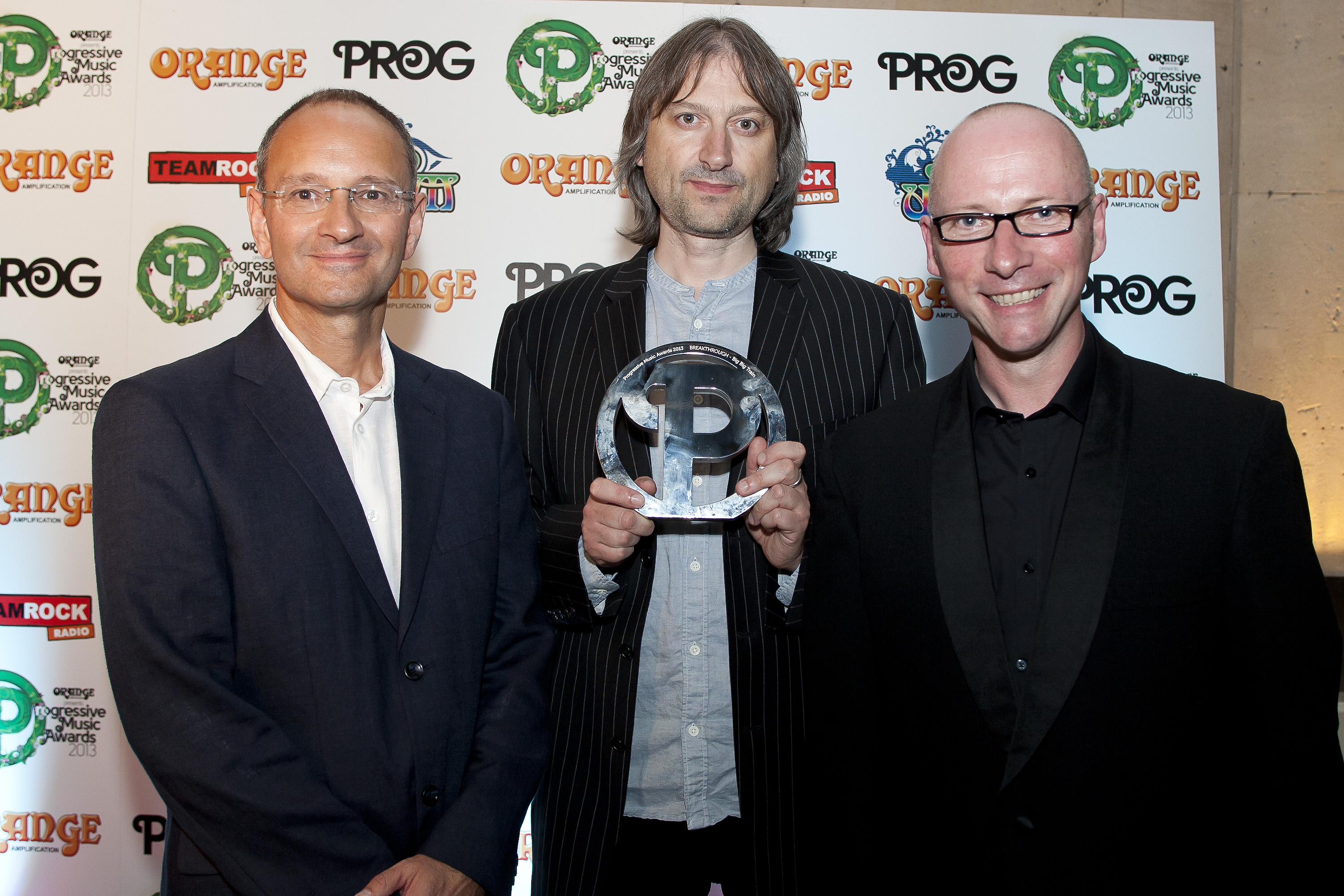
Regardless, each gives us what David Elliott masterfully calls “Bloody Prog™” and does so without hesitation. Indeed, each offers it without embarrassment or diversion, but with solidity of soul and mind.
Finally, but intimately related to the first two, each band releases things not with the expectation of conformity or uniformity or propaganda, but with full-blown art. Each band loves the art for the sake of the art, while never failing to recognize that art must have a context and an audience. Not to pander to, of course, but to meet, to leaven.
Life is simply too short not to praise where praise is due. Life is too short to ignore the beauty in front of us. And, no matter how dreary this world of insanities, of blood thirsty ideologies, of vague nihilisms, and of corporate cronyism, let us—with Plato—love what we ought to love.
The Tangent and Big Big Train have given us art not just for the immediate consumption of it, or for the year, 2013,—but for a generation and, if so worthy, for several generations, perhaps uncounted because uncountable.
[Ed. note–if there are any typos in this post, I apologize. I’ve been grading finals, and I’ve been holding my two-year old daughter on my lap. She’s a bit more into Barney than Tillison or Spawton at this point.]
One of my favorite bands, and one of my favorite CDs. Lex Rex–a 2002 masterpiece of prog, faith, and excellence.
 Progarchy