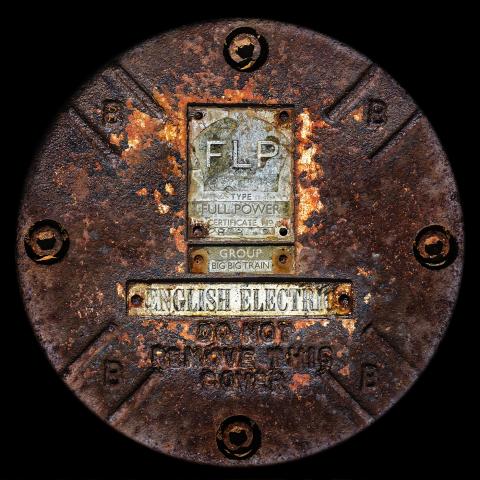
Making Much More than Noise: An Exclusive Interview with Greg Spawton

English Electric Full Power, September 2013

An exclusive interview with Greg Spawton of Big Big Train.  Interview by progarchy editor, Brad Birzer.  [N.B.  I was going to write a longish introduction, but I’ll do that with the review of EEFP I’ll have up in the next day or two.]

***

Progarchy: Hello, again, Greg.  I’m so glad you continue to be so generous with your time, and I’m deeply honored to have you do yet another interview with me.  The order of the songs, BBT EE+4, is now set.  In stone!  How did you arrive at this ordering?  I would guess you agonized over this, individually and as a group?  

Greg Spawton: Thanks, Brad.  We had four new tracks to accommodate and a listening experience as a long double album (as opposed to two single albums) to create and so there was a lot of discussion and consideration of various options. I wanted to create mini-suites out of some of the tracks with linked themes and that helped a bit as it drew some of the songs together. So, we had the Edgelands sequence of Seen Better Days / Edgelands / Summoned By Bells and the love-songs sequence with Winchester From St Giles’ Hill / The Lovers / Leopards and Keeper of Abbeys. Once those two sets of songs were in place it became easier to work the other tracks around them.

Progarchy: Do you see EEFP as a fundamentally different release from EE1 or EE2, or is it a fulfillment of the first two releases?  A sort of baptism or sanctification?  

Spawton: It’s a bit of both. Completists are likely to buy EEFLP even if they already own EE1 and EE2 and so we felt an obligation to create something new and different rather than just stick four new tracks on the end. But it also seems to have drawn all the threads together and, for us, it’s the ultimate expression of our work in this period of the band.

Progarchy: A followup, considering track order.  You start with the very 1950s and 1960s rockabilly-ish “Make Some Noise,” but you end the entire collection with the–as I interpret the lyrics–suicide of the curator.  Is this intentional?

Spawton: We knew those two songs had to be the bookends. Curator of Butterflies is not a song about suicide, although I can see why many people interpret it that way. It’s actually about life from the perspective of growing older. Now I’ve reached middle-age, I have a much greater awareness of how fragile life is. With my family and my good friends I find that awareness very burdensome. At home, I’m surrounded by teenagers and their take on life is entirely different. It’s fearless, they feel indestructible, they feel they have all the time in the world, whereas I sit back and wonder: ‘where did all the time go’? In Make Some Noise David captures the feelings of being young and full of hope and of dreams so we felt that had to be the opening statement. And as we had song from the perspective of an older person in Curator of Butterflies, it seemed right to put that one at the other end of the album.
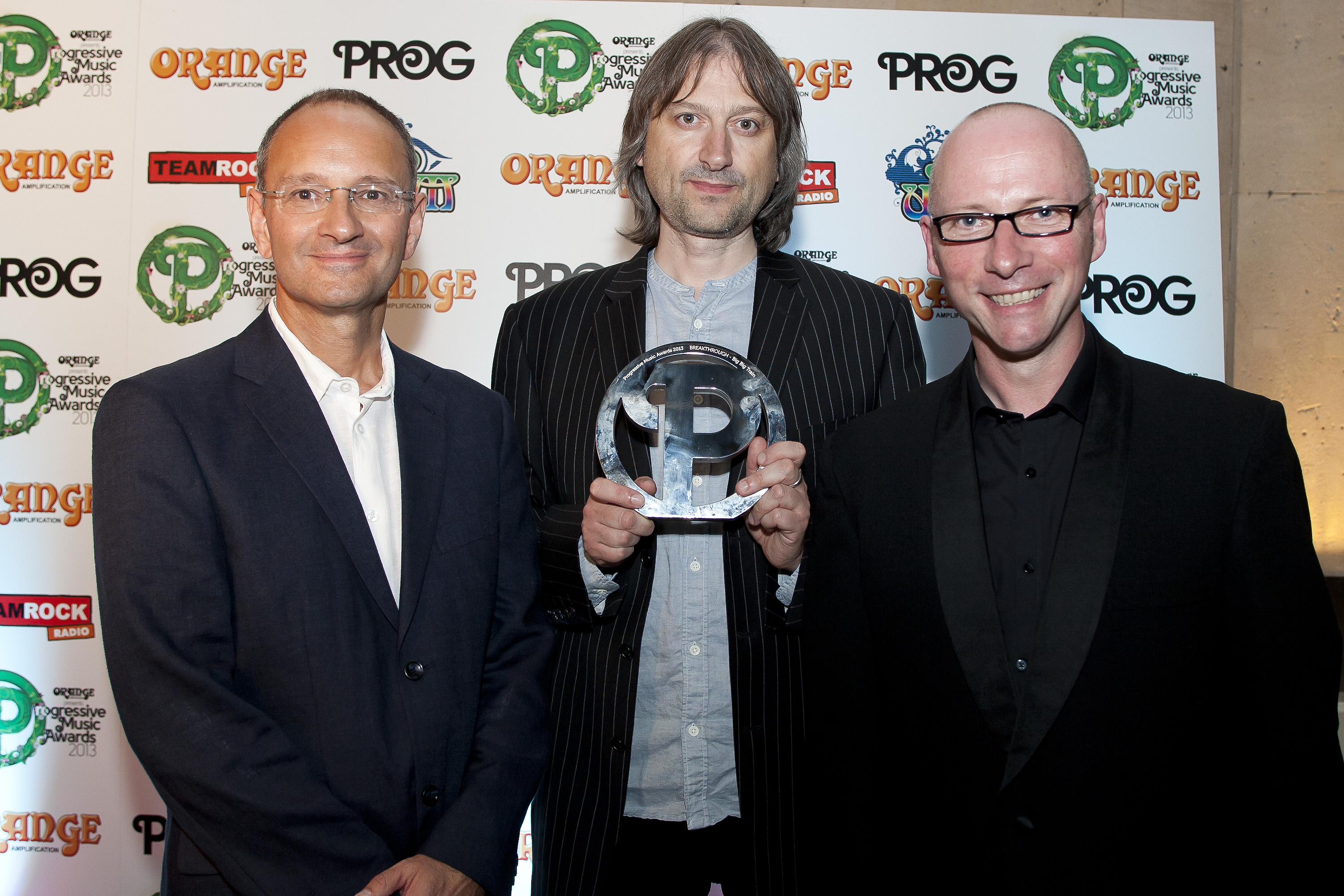
Big Big Train's justly deserve award, "Breakthrough Artist of 2013," by Jerry Ewing and the readers of PROG.
Big Big Train’s justly-deserved award, “Breakthrough Artist of 2013,” by Jerry Ewing and the readers of PROG.


Progarchy: Is the whole album, EEFP, still an album dealing with the dignity of labor, in all of its various forms?

Spawton: In old money, EEFLP is a triple album so there is room on there to explore a lot of different themes. One of the main themes of the album is about the dignity of labour. There have been major social changes in parts of Britain in the last 50 years and some communities in areas that used to rely almost solely on employment from the mines or docks or from heavy industry have lost their way because that employment has gone. I am not being nostalgic about this; I am well aware that those industries were very tough places to work. I spent a few minutes down a Victorian drift-mine recently and I cannot imagine what it would have been like to work a shift down there. However, what these industries did bring was a sense of pride in working hard and of the potential of communal endeavour. The loss of these things has been catastrophic for some communities.
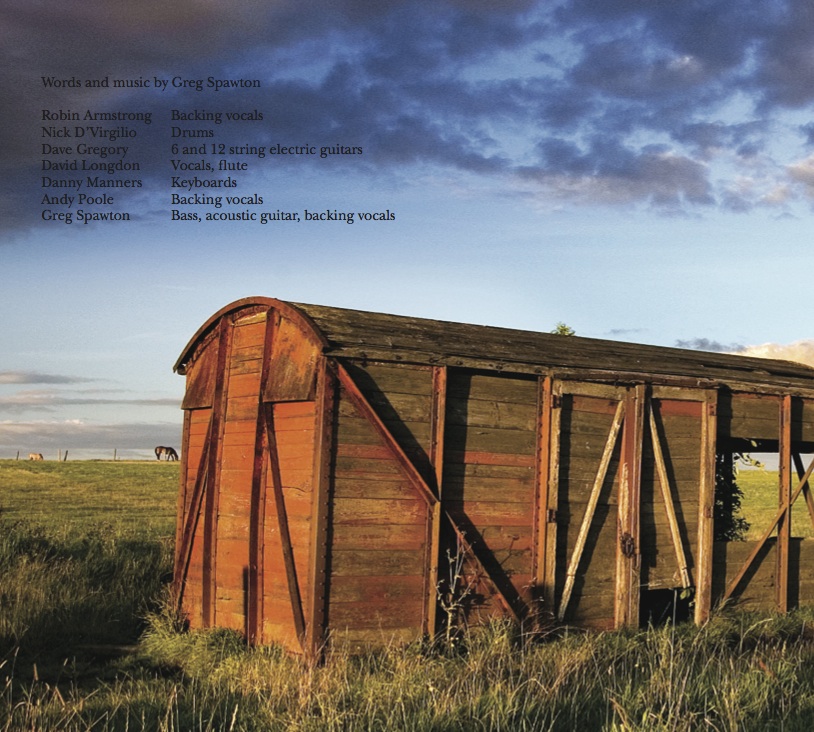
A page from the new 96-page booklet accompanying EEFP.  Used by courtesy of the band and the artist.
A page from the new 96-page booklet accompanying EEFP. Used by courtesy of the band and the artist.

Progarchy: Now that you’re done with EE–really three releases overall–how do you see your work with EE?  That is, where does it fit in the history of BBT (besides, being the most recent thing)?  How do you see it in the history of prog?

Spawton: If the band carries on in its current trajectory, we’re likely to end up selling about 30,000 copies of all of the EE albums. In the context of the huge 70’s progressive bands that is a tiny amount and we are only too aware that it can never have the sort of impact that Selling England by the Pound or Close to the Edge had. Having said that, it’s been a sequence of releases which has, I think, shown us at our best and has helped us to reach a wider audience and to get played on national radio in the UK. We’ve also grown as a band during the making of the albums. We are closer together as a unit and know what we can achieve. Danny has come onboard as keyboard player and has added a considerable amount to our sound. We’ve been able to work with a string quartet as well as the brass band and have been able to collaborate with some fabulous musicians and arrangers. And we are very pleased that we have been able to put together a release of 19 songs without any of them being there just to fill some space. Some songs are better than others, inevitably, but all have something to say and will, we hope, offer something to listeners.

BBT even has its own beer now.  Really, now? Great writing, serious beer, depthless prog.  Does it get better than this?
BBT even has its own beer. Really, now? Great writing, serious beer, depthless prog. Does it get better than this?

Progarchy: A number of the new tracks reflect some really interesting influences, at least as I hear them.  “Make Some Noise” seems very innocent and joyful, perhaps a pre-Byrds type of rock, the rock my mother danced to in college.  “Seen Better Days” seems very Mark Hollis/Talk Talkish and then very jazzy.  “Edgelands” again has a Talk Talkish feel.  But, so very jazzy–an impressionistic jazz of the second half of the 1950s.  “The Lovers” is proggy in a Canterbury, dramatic kind of way.  Am I reaching, or were these influences intentional?

Spawton: I wouldn’t argue with any of those. We’re all fans of Talk Talk and the Canterbury scene. Influences are not something we think about during the creative process, though. I’d be a bit resistant to the idea of deliberately writing a song in the style of another band. For us, it’s an organic process of writing, arranging and performing. Influences often operate in a subliminal way and the writer may be unaware of how the listener will experience the songs.

Progarchy: The blending of songs into one another harkens back to The Difference Machine, and you’ve mentioned in a recent interview that your next studio album will be a concept album.  Are you and BBT making a statement about where prog should be going with any of these decisions, or are you just taking your art as you feel so moved at the moment of creation?

Spawton: Honestly? We just write. Sometimes that is with something in mind (for example, where we need a song with a particular sound to help make a balanced album) but often it’s just what comes into our heads and falls under our fingers.

Progarchy: You’ve put so much into the booklet that accompanies EEFP.  How much of the total art do you see in the packaging, the graphics, the photography.  That is, how important is it to peruse the booklet rather than simply download the four new songs?  We all lament the loss of the album sleeve, but you seem to have found away to recapture that glory.  Again, was the booklet a group project, or did you work on this individually?

Spawton: Andy and Matt Sefton must take most of the credit for the overall design. Once we’d found Matt’s remarkable photos and he’d agreed to work with us, Andy was able to develop the overall shape of things using Matt’s images as the basis. The design of the packaging which carries our music is very important to us. Music is, of course, our primary concern and I have no problem with downloads. However, many people still prefer to experience music by purchasing physical releases and we put a huge amount of thought into making those items things of beauty and interest. Luckily, we found, in Chris Topham, a chap with a similar attention to detail for our vinyl releases and so we have worked with Chris and Plane Groovy to try to recapture the glory of the gatefold album cover.

Progarchy: A followup to the above question: you spend a significant part of the book honoring those that/who came before.  As a historian, I love this.  Again, how did you decide to do this?  From my perspective, you’re tying in your work (adding all of those who contribute to BBT directly) with a whole lineage of English history and art.  Any thoughts on the necessity and importance of this? 

Spawton: I have been fascinated by history since I was a young child. In the 70’s, we had these beautifully-produced children’s books called Ladybird books in Britain and they were a big part of my early childhood. Looking back, they had a particular view of the world which wasn’t very nuanced (for example, the Roundheads were the goodies and the Cavaliers were the baddies) but they were spellbinding books with lovely artwork and they seemed to be able to transport me into those historic periods. As the band was developing I started to experiment with telling historical stories in the songs. Really, I think I’m just a frustrated historian without the outlet to write books so I used the ‘voice’ that I did have. I also began to become more aware of folk-music and that stories can be smaller and close to home and be just as interesting for people. And it’s the fact that the listeners are interested in these stories that has spurred me on. We get suggestions of stories sent to us now and there are so many interesting tales.
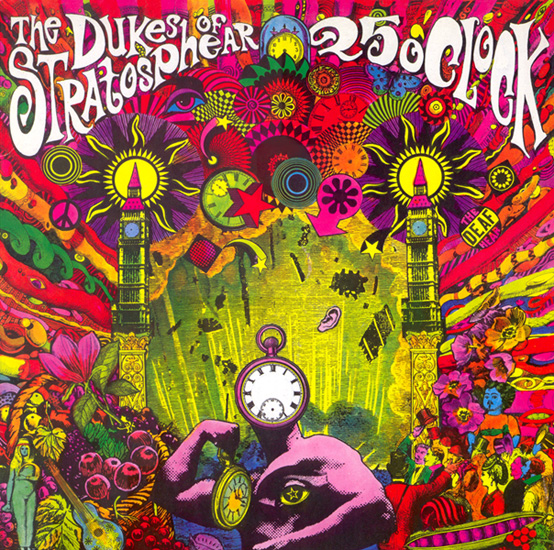
A guest appearance on EEFP from Lord Cornelius Plum.

Progarchy: Again, somewhat related, it’s a stroke of genius to tie this release into the work–sadly, often forgotten or poorly remembered–of The Dukes of Stratosphear.  Just how did you come to work with one of its members?

Spawton: When I got to know Dave Gregory I realised that he knew just about everybody in the music business. When we were working on The Lovers, David and Dave wanted the fusion section to be quite spacey and psychedelic and so we ended up asking Dave if he would mind giving Lord Cornelius Plum a call. Lord Plum hasn’t really been involved in music since The Dukes split up and we were delighted that he wanted to play a solo for us, albeit he insisted on playing the guitar backwards. I have to say, he’s still got the chops. He plays backwards guitar a lot better than I can play in the forward direction.

Progarchy: As you know, your fan base (getting larger, deservedly, by the moment!) craves knowledge about the future of BBT.  Can you talk about how you plan to perform live?  Where?  With whom?  When?  What setlist (not exact, of course–no spoilers!)?  Will Rob travel with you?

Spawton: Our live sound will be done by Rob, no question about that. We’re slowly gearing up for some live shows but we know that it requires careful planning. One of the things we are adamant about is that a live show will be an attempt to convey the whole BBT sound with brass and string sections. That is a complicated set-up and requires a fair bit of rehearsal. We’ve chosen Real World as a large studio environment which can accommodate us all and we are going to spend a week there next year working songs through and ironing out any live issues. The setlist will mainly feature songs from The Underfall Yard and English Electric, although we may also do some earlier songs. We’re going to film the rehearsals as that is a good way of recording a live set without the controlled chaos of being on stage. After Real World we’ll be looking to play a small number of shows and I think that we will then aim to play a handful of gigs every year. Just occasionally, progressive bands manage to crossover into a much broader audience (Steve Wilson being the best example) and, of course, if that happens then perhaps we can aim to tour more extensively. I think that is unlikely though and the main thing for us is not to try to put anything on that ends up losing a lot of money which could put the band’s finances out of kilter.
Another page from the booklet.  Courtesy of the band and the artist, Matt Sefton.
Another page from the booklet. Courtesy of the band and the artist, Matt Sefton.

Progarchy: A followup.  What about your future albums?  Station Masters is coming in 2014.  What about the next studio album?  Can you tell us anything about it?

Spawton: Most of the next studio album is written and recording is under way. Nick is in England in late September so we’ll get another couple of days of drum recording done then. We may also do some recording at Real World. As you mentioned, it is a concept album with a story which David has been developing. It is not English Electric Part Three and it will be a little different but we are very excited about it. In the meantime, Station Masters is slowly moving forward and we aim for that to be a beautiful release.

Progarchy: What are the members of BBT listening to right now?  If you could praise some current music, what would you praise?  Or, any recent discoveries of older music?  What about books?  Anything that’s really grabbed your attention recently?

Spawton: There is so much great progressive music about at the moment and we have heard a number of excellent new releases so far this year. The nice thing is that we don’t feel in competition with anybody. There is a good feeling in progressive rock of us all being in it together, the bands and the listeners. Recently, I’ve had some fun working my way back though some of the classic 70’s albums and in the last few weeks I’ve been listening to a lot of Van Der Graaf Generator and PFM. I am looking forward to new music from Mew, Elbow and I have just bought the new Sigur Ros album. As for books, at the moment, I’m reading The Norman Conquest by Marc Morris and Britain Begins by Barry Cunliffe. And I’ve been reading a very interesting biography of Pink Floyd by Mark Blake. The book that has made the most impact on me in the last year was Working Lives by David Hall.

Progarchy: Again, Greg, thank you so much for your time.  It’s always a pleasure.

Spawton: Thank you, Brad.
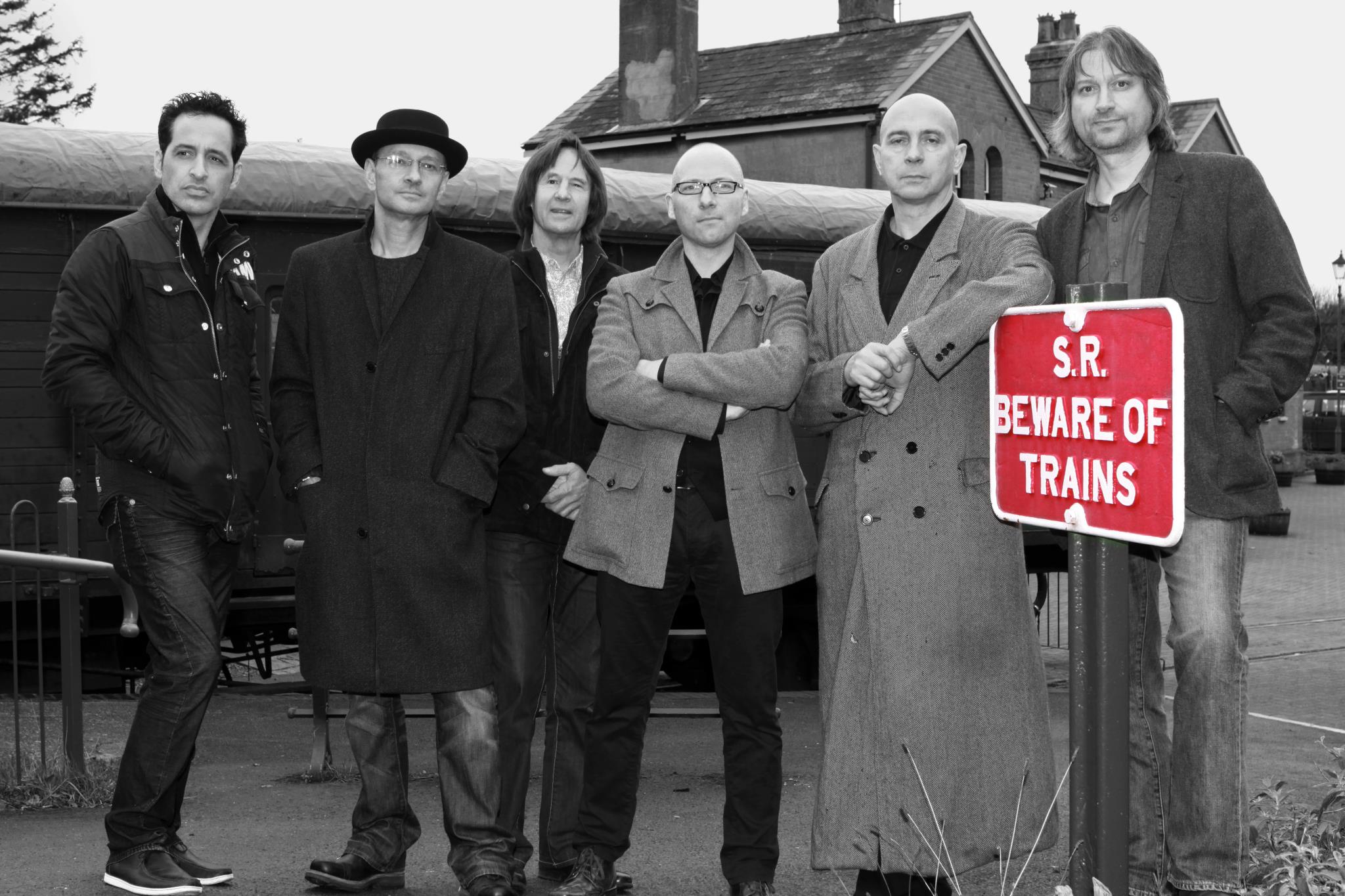
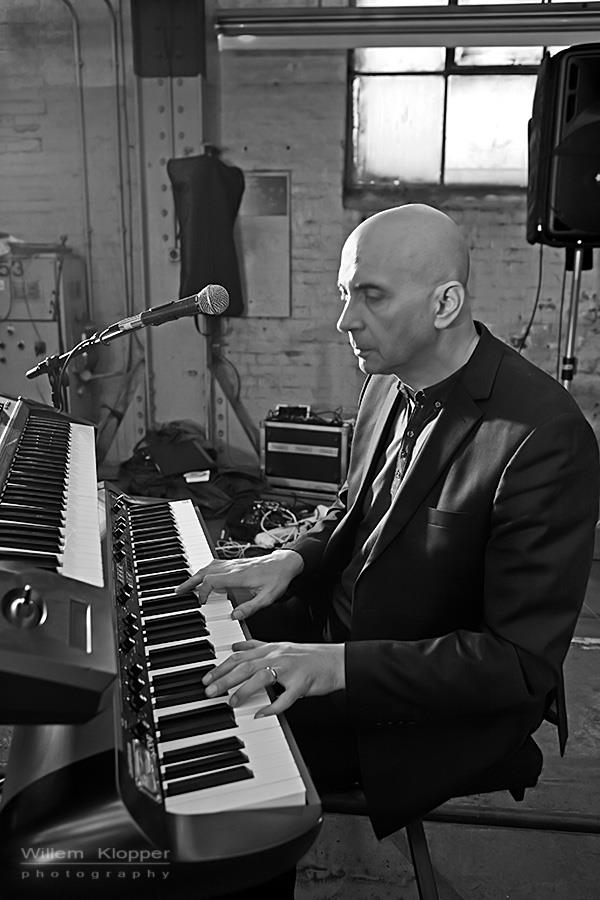
Nick, Andy, Dave, David, Danny, Greg.  Photo by Dutch Master, Willem Klopper.
Nick, Andy, Dave, David, Danny, Greg, and huge red warning sign. Photo by Dutch Master, Willem Klopper.

To order English Electric Full Power or the “Make Some Noise” EP, please click here.

Wait.  Did you just miss that link?  Here it is again:

To order English Electric Full Power or the “Make Some Noise” EP, please click here.

Big Big Train–Justice!

I’m so proud of these guys.  For the full article, click here.

The host of The Prog Magazine Radio Show on TeamRock Radio, Philip Wilding presented the Breakthrough award and he highlighted exactly why that honour has been bestowed on him with an hilarious intro based on schoolboy rivalry between Gavin Esler and Jeremy Paxman. The award was won by Big Big Train who were clearly very pleased with their achievement as three members of the band – Greg Spawton, David Longdon and Andy Poole – paused to thank everyone who had helped them. It’s important to remember who’s helped you get to where you are, of course!–Jerry Ewing


Andy Poole, Greg Spawton, and David Longdon at the Prog Awards.  Photo taken from Prog's website.
Andy Poole, Greg Spawton, and David Longdon at the Prog Awards. Photo taken from Prog’s website.

A Moveable and Glorious Feast: L’Étagère Du Travail by The Tangent

etagereJust as The Tangent’s Le Sacre du Travail was entering into the ordinary time of our lives, Andy Tillison (though the son of a Congregationalist minister) jolts us toward a high Feast Day, and the liturgy of life and art continues with The Tangent’s second release of 2013.

A moveable but glorious feast, L’Étagère Du Travail offers us more glimpses–through a glass, not darkly, as it turns out (with apologies to Paul)–of the essence of truth and beauty.

Please forgive all of the religious references, but musicians such as Tillison, Spawton, Longdon, Armstrong, Cohen, Erra, Stevens, and others bring this out in me.  These fine artists always reach for the best, and that best is often beyond any rational interpretation or explanation.  It’s no wonder the medievals spoke of artists with reverence and awe, in terms of ecstasy.  They touch something the rest of us (the vast, vast majority of us) can only sense exists.

2013 will go down, someday, as one of the best years in the history of progressive rock music, and Tillison has now contributed not one but two major releases and, consequently, two critical steps to and toward the sheer quality of this year.

The Tangent has been in existence for over a decade now, and Mr. Diskdrive himself, Andy Tillison, that red-headed, mischievous sprite, has given the music world much to celebrate.  Tillison has consistently brought together the best of the best musicians, and he has orchestrated all–lyrics, instruments, and arrangements–with some thing that is nothing short of brilliance.

The "red-headed" one.  Stolen from Tillison's FB page.  Without permission but not with malice.
The “red-headed” one. Stolen from Tillison’s FB page. Without permission but not with malice.

This new release, available exclusively at thetangent.org consists of ten tracks including, as the website notes, five new “unreleased demo” tracks and 3 “revisitations.”  The 10 tracks come to roughly 1.2 hours of music.  So, this is no EP.  As Tillison notes on the site, it’s a companion album, a “sister” (a very lovable little sister, I presume) to Le Sacre du Travail.

As with its sibling–naturally having received almost nothing but rave reviews–L’Étagère Du Travail is a must own.  It needs to be in the collection of anyone who appreciates fine art, but especially for those of us who like our music progressive.

I received a review copy just after departing for family vacation, and it has, in many ways, become the soundtrack of my trip into the American West, despite the fact Tillison is, perhaps, the most English of English folk!

From my many listens, I’m absolutely taken with and blown away by the energy and the highly controlled anger of the album.  It’s jazzier and more experimental (there’s even a hint of disco on one track, “Dancing in Paris”–all done, of course, with taste), moment by moment, than Le Sacre du Travail.  This, of course, is to be expected, as the former album told a coherent story, while this companion album explores the same sacred space, but in exemplary fragments not in overarching mythos.

Yet, Tillison’s art is unmistakably Tillison’s art.  Every single thing you love about The Tangent is here in abundance.  As far as I know, I (rather proudly) own everything The Tangent has recorded with the exception of A Place on the Bookshelf (a stupid oversight on my part; it slipped under my radar when it came out; and I’ve regretted not buying it ever since), and I’ve been listening to them for a decade.

Getting a review copy just on the eve of my longed-for summer vacation into the Rockies was akin–again, forgive the religious references–to having wine filled to the brim at a wedding.  As it was at Cana, so it must be in York.  Tillison’s goodness overflows.

Yet, as I just wrote–there’s a lot of anger in this album, but it’s the anger of a righteous man, the kind of anger that demands justice.  What Tillison does with his lyrics is criticize what desperately needs to be criticized in this world.  He does it with passion, but also with immense graciousness, charity, and exactness.  This is not the cheesiness of Bono’s preaching in 1987, but the jeremiad of, well, a modern Jeremiah, albeit an atheist anarchist Jeremiah.  Tillison wants the idealism of his era to meet reality, and he finds the post-modern world more than a bit disconcerting.  The Tangent’s website proclaims correctly and with perfect self-understanding, “Progressive Rock Music for a World on Auto-pilot.”

Yes.  Absolutely, yes.  Every word Tillison sings proclaims, “Wake up, world!!!”

I’ve never had the privilege of meeting Tillison in person, but I suspect he’s rather Chestertonian–clever as the dickens and willing to let the world know what needs to be known, but always with that impish and knowing smile and always with a wry sense of humor.  He is, I believe, a man who reaches and reaches but who understands too much of human nature to be taken in by the nakedness of the king.

Topics on this companion album include generational betrayal, crony capitalism, and corporate biotechnology.

As soon as I heard the first lyrics of “Monsanto,” I knew I’d love this album as much as any thing Tillison has written.  Perfection itself.  My favorite track, however, is the bitterly hilarious “Supper’s Off,” an obvious reference to the Genesis classic, complete with generational disgust and bewilderingly Apocalyptic imaginings, bettered only by John the Revelator himself at Patmos!

As I’ve noted before at progarchy and elsewhere, the various prog musicians in the world today are nothing if not perfectionists.  Eccentrics, to be sure, but perfectionists, too.  And, to these perfectionist eccentrics, I offer the highest praise I can.  If every person took her or his life and work as seriously as do the greatest of prog musicians, the world would not swirl so close to the abyss, the killing fields might be kept a bit more at bay, and we might all recognize the unique genius in every one of our neighbors.  Or, as Tillison writes of himself: “romantic enough to believe you can change the world with a song. I wanna write that song.”

Mr. Diskdrive, thank you.  Thank you for truth, and thank you for beauty.  Long may you rage.

*****

ETAGEREbanner

Order from http://www.thetangent.org/.  Now.  Yes, now.  Hit the link.  Quit reading this–go now!  Ha.  Sorry–too many John Hughes’ movies in my life.  Go order!

Seriously, enjoy this offering from The Tangent.  L’Étagère Du Travail by The Tangent (2013).  Tracks: Monsanto; Lost in Ledston; The Iron Crows (La Mer); Build a new House with The Le; Supper’s Off; Dancing in Paris; Steve Wright in the Afternoon; A Voyage through Rush Hour; The Ethernet (Jakko Vocal Mix); and The Canterbury Sequence live.

For interviews with Tillison (including with the grandest of interviewers, Eric Perry and Geoff Banks), check these out:

  • interview – Eric Perry, “beta tester” for the new album asks Andy some very involved questions about it – and gets some very involved answers.
  • interview – The Dutch Progressive Rock Page’s David Baird asks about the album, the band, the lineup changes etc
  • radio interview – Geoff Banks and Andy natter on ad-infinitum about prog, pop, Magenta, the UK, the world etc.

Progarchist Journal, June 18, 2013

Spawton bass
BBT bassist, lyricist, and composer extraordinaire, Greg Spawton. Photo by Willem Klopper.

What more can one write than: 2013 has already proven to be one of the finest years in prog history.

We’re not even quite halfway done with the year, and just consider the number of quality (an understatement) releases: Big Big Train’s English Electric, Vol. 2; Cosmograf’s The Man Left in Space; Nosound’s Afterthoughts; The Tangent’s The Rite of Work (translated!); Shineback’s Rise Up Forgotten; Days Between Stations’s In Extremis; Majestic’s V.O.Z.; Riverside’s Shrine of New Generation Slaves; Sanguine Hum’s The Weight of the World; and Lifesigns’ Lifesigns.  Additionally, BBT, Matt Cohen, Matt Stevens, Leah McHenry, IZZ, Heliopolis, Arjen Lucassen, Glass Hammer, The Advent, Kevin McCormick, Transatlantic, The Flower Kings, and Gazpacho are working on new material.

If I forgot anyone, please forgive me.  So much greatness is emerging, that it’s hard to keep track of it all.

When I see comments on the web to the effect of “sure, there’s lots of stuff coming out, but it doesn’t live up to the past,” I just scratch my head.

Are you kidding me?  Name another time when so much intensity, diversity, meaning, and beauty has sprung forth from the prog community?  There are several recent releases that I would argue beat (though, of course, they build upon) any thing that’s come before.  But, why compare?  Let’s enjoy what we have and give some thanks.

Consider other developments in the prog world:

  • David Elliott has founded Bad Elephant Music
  • Kev Feazy of The Fierce and the Dead is a dad.
  • Prog fan, Richard Thresh, is a father yet again, as well
  • Billy James of Glass Onyon is promoting prog like a wonderful mad man
  • First lady of Prog, Alison Henderson, is one of the three winners of Playtex’s Ageless Generation competition to find women who are fabulous and over 50
  • Brian Watson has created much of the art for the forthcoming The Tangent release
  • Willem Klopper, Captain Redbeard, Craig Farham, and Nick Efford reveal prog-inspired art and photography by the week
  • Russell Clarke also gives us prog-inspired photos of his Norwegian Forrest Cats (well, ok, this is not quite as proggy as I’m suggesting)
  • Back to a serious note, 3RDegree and John Galgano are touring in the U.S.

. . . . and the list of accomplishments go on and on. . . . Bravo!

We’re truly sad to have lost Ray Manzarek to the ravages of time, and Chris Thompson of Radiant Records to another profession.  But, of course, we recognize this is life.  And, we wish all well.

Progarchy.com

On the Progarchy.com front, the progarchists remain unified in their vision of attempting to match our writing quality and thoughts with the excellence of the music being made and created, past, present, and future.  Our site is not even a year old, and we have 760 of you who receive every single post via email, and anywhere from 100 to 1,000 visit the website on a daily basis.  Folks as profound as Greg Spawton, Matt Stevens, Giancarlo Erra, and Andy Tillison have offered their kind thoughts about the site.  A huge thanks to all who have supported us.

A few interesting additional notes

for Brad
Our own progarchist, John Deasey, and Matt Stevens.
prog demi god Robin
Master of Prog and Chronometry, Robin Armstrong.

Matt Stevens has started a video series on Youtube, answering questions presented to him.  In this one video–https://www.youtube.com/watch?v=bcmmj5YtRdY–you’ll get a sense of Matt’s integrity and genius.  In under three minutes, he demonstrates more confidence and virtue about art and humanity than a myriad of academic books have done over the last 30 years.  Atheist or theist, I say, “God bless you, Matt!”

Also, as we all well know, most proggers can’t afford to live only on the profits of their releases.  Such, of course,  is a rueful comment on modern life, but it’s also simply a reality.  So, for this journal entry, let me praise the other business/pursuit of Cosmograf’s Robin Armstrong.  We all know the kind of professionalism and artful sense Robin brings to music.  He does the same as an entrepreneur.  Just check out his website, http://poshtime.com/wordpress/about/, a witness to his mastery of all things chronometric!

Please support Robin not only in his music, but in his excellence as a businessman as well.

Thanks for reading all of this.  Rising pizza dough beckons me. . . .

Here She Comes, Laughter Upon Her Lips: Talk Talk’s 1986 Masterpiece

IMG_1425Years ago–maybe as many as 25 years ago–fellow Progarchist and classical musician Kevin McCormick and I vowed to listen to Talk Talk’s The Colour of Spring every April 5th, in honor of what is arguably the first post-rock track ever released, entitled, appropriately enough, “April 5.”  I’ve tried to live up to this agreement every year since, and I don’t think I’ve missed an April 5th listening yet.

Last year, before Progarchy even existed, I wrote a piece asking Mark Hollis to call his legitimate successor, Greg Spawton, and the members of Big Big Train.  I mean really.  Imagine Mark Hollis working with Spawton, Poole, NDV, Longdon, Manners, Gregory, and Aubrey.  What a match made in heaven.  After teasing Greg about this a few times, he admitted that if he ever runs into Hollis, he’ll invite him to join BBT.

Amen, Greg, amen.

But, back to Talk Talk.

Though I’d seen Talk Talk’s earlier pop songs/videos on MTV in the early to mid 1980s, I wasn’t taken with the group until I came across 1986’s “The Colour of Spring,” an album that, without much exaggeration, not only opened my eyes to artistic possibilities but also caused me to claim my second music obsession: first, Rush; second, Talk Talk and Mark Hollis.

Everything else I treasured at the time such as early Yes and early Genesis paled next to The Colour of Spring.  Please don’t get me wrong.  I still adored Yes and Genesis, and I always have and probably always will.  But, The Colour of Spring was something beyond.  Beyond rock.  Beyond prog.  I heard lots of Traffic and Spooky Tooth in it, but I also heard a lot of experimental jazz from the 1950s and 1960s.

This album, frankly, seemed like the best prog album since 1977’s Going For the One, but still bettering anything that had come before it.

I studied the art work of James Marsh–those brightly colored moths forming some kind of order as they hovered around droplets of water.  I listened repeatedly to the music.  Too many times over the past twenty-six years to count now.  And, I have dwelt lovingly over the lyrics, which have, in their own way, brought me so much comfort during the good and bad of my life as to rival my love of the words of T.S. Eliot and of St. John the Beloved.  When I first purchased the American version of The Colour of Spring, no lyrics came with it.  Part of Hollis’s charm is his ability to muffle his words in a mysterious but artistic fashion.  I had all kinds of ideas about what Hollis was singing, but I later found I was mostly wrong in my interpretation and translation of those words into song lyrics.

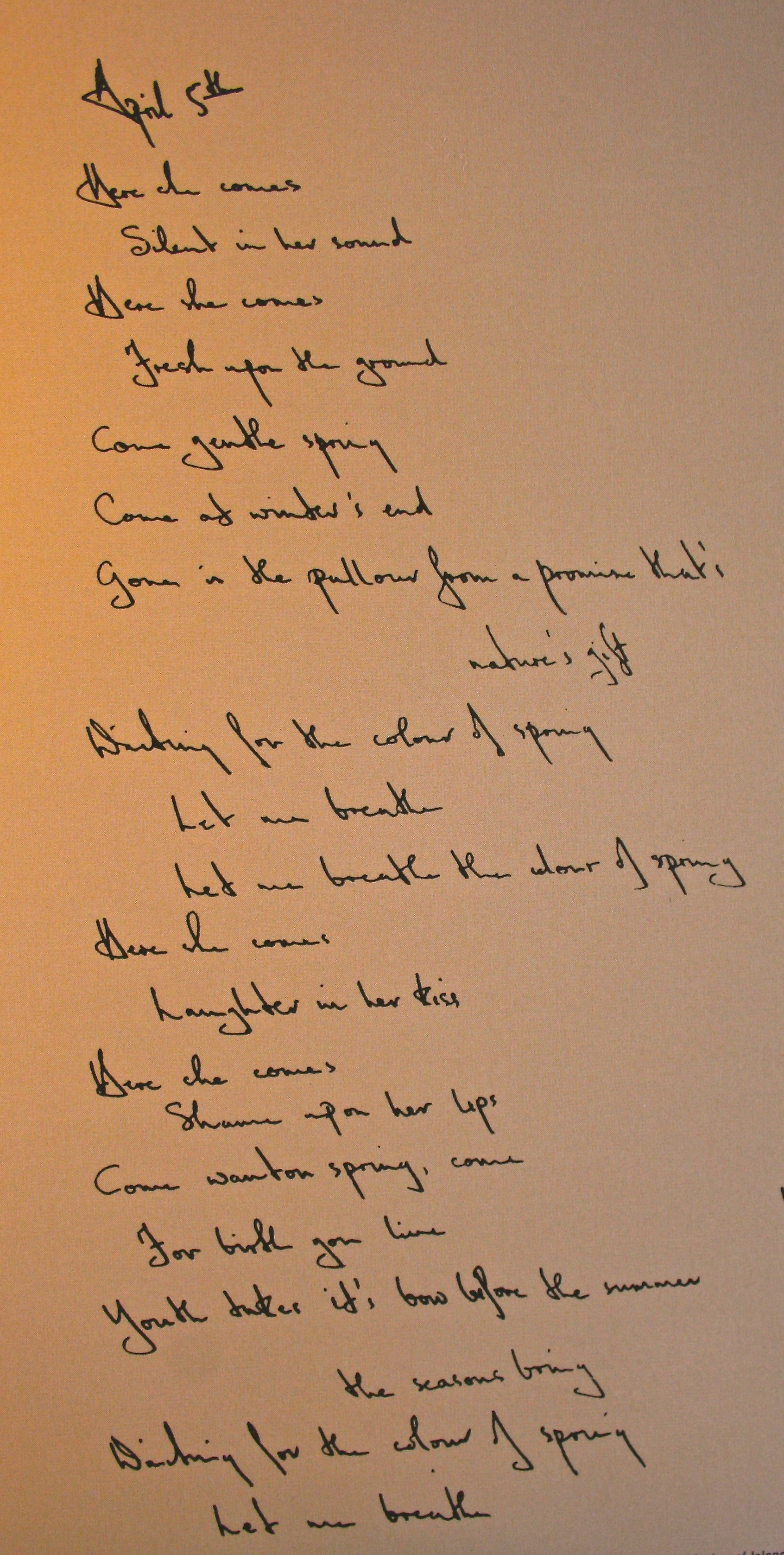
In March 1988, Kevin and I found a copy of the British release of the album in a London music shop.  There, on a brilliant spring day–I can still remember the sun streaming through the windows into that rather dark shop–I read the lyrics as Hollis had written them (even printed in his handwriting) for the first time.

I was, needless to write, emotionally overcome as my mouth dropped open and my eyes teared up.

The lyrics were far better than I’d imagined, in meaning and in form.  I shouldn’t have been in the least surprised.  Though, every listening from that point forward has meant more to me than each and any previous listening.  Only a few other albums in my life have stuck with me as long as has The Colour of Spring.  It has remained my gold standard, surpassed only by its immediate successor, The Spirit of Eden, and (finally–twenty-five years later) by Big Big Train’s English Electric vols. 1 and 2.

In every aspect of The Colour of Spring, Mark Hollis offered not only his genius, but his very being.  That is, he was the music, and music reflected him.  But, really, it did far more than reflect him.  Without trying to become too metaphysical, I must state, the music seems to be coming from somewhere beyond anything known in this world, with Hollis merely reflecting the Divine itself, but putting his own personality on what was given to him.  This is much like the way Tolkien claimed to have written his mythology–not as a creator, but as a discoverer and as a recorder.

Hollis expressed so much love of the world (its physical nature) and a profound respect for religion in interviews–along with his despising of the corporate media culture of the 1980s–that one can easily envision him in Rivendell, the Last Homely House, recording his work among the greatest artists of Middle-earth, lost somewhere in a timeless realm.  Or, more classically, Hollis’s love of the created order makes me wonder if he somehow heard (or felt) the revolving of the Platonic spheres.

Back in 1986, Hollis admitted in interviews that the concept behind the album and the theme were quite simple: religion is wonderful, and war is horrific.  An alliance of the two, however, makes for the worst of all possible worlds.  Ultimately, Hollis claimed, the lyrics reflect the ideals of “life and morality.”

Prog fans, take pride: The Colour of Spring was a concept, to be sure.

The aim of ‘The Colour of Spring,’ he explains ‘is to present great variety in terms of mood and arrangement, treating the whole thing as a concept.  An album shouldn’t be something from which a single is pulled, leaving the rest filled up with rubbish. [New Music Express, Feb. 22, 1986]

The theme, however, must be the only thing that was simple about the album.  Certainly not the actual lyrics, or its song structure, or its production, or, even, its reception.

The album took Hollis exactly one year and two days to write and record.  Having made an enormous sum of money with the first two Talk Talk albums, The Party’s Over (1982) and Life’s What You Make It (1984),  Hollis fulfilled his dreams of moving everything toward the real and organic, away from the synths of the previous albums, there only because he couldn’t afford to hire a rock ensemble.  Now, with The Colour of Spring, he could.

Interestingly enough, Hollis considered “It’s Getting Late in the Evening” to be the core of the album.  For those of you who know The Colour of Spring, you’re probably scratching your head, as this song didn’t make it onto the final cut, and appeared at the time only as a b-side.  Haunting to the extreme, “It’s Getting Late in the Evening,” presents an impressionistic look at American slaves discovering their freedom following the American Civil War.

The tide shall turn to shelter us from storm/The seas of charity shall overflow and bathe us all.

IMG_1428Today, though, we at Progarchy remember the last track of side one, “April 5,” perhaps the first post-rock, post-prog track ever released.  At only 5 minutes and 52 seconds, it is a masterpiece of meandering brevity, a creative breath of freedom and beauty, a reaching and striving as well as a reflection.

Thank you for everything, Mr. Hollis.  If you read this, I only request of you the same thing I requested of you a year ago.  Please call Mr. Spawton.  If you need his number or email, just let me know.

***


I dedicate this post to the genius and friendship of Greg Spawton.

Sources: Talk Talk, The Colour of Spring (EMI, 1986); “A Chin Wag with Talk Talk,” Number One (Feb. 8, 1986); “Talk Talk,” Record Mirror (Feb. 1, 1986); “Communication Breakdown,” New Music Express (Feb. 22, 1986); Rachael Demadeo, “Mark Hollis Interview,” Britannia Hotel in Manchester, May 5, 1986, posted at Within Without.

The Modern Condition: Cosmograf’s “The Man Left In Space”

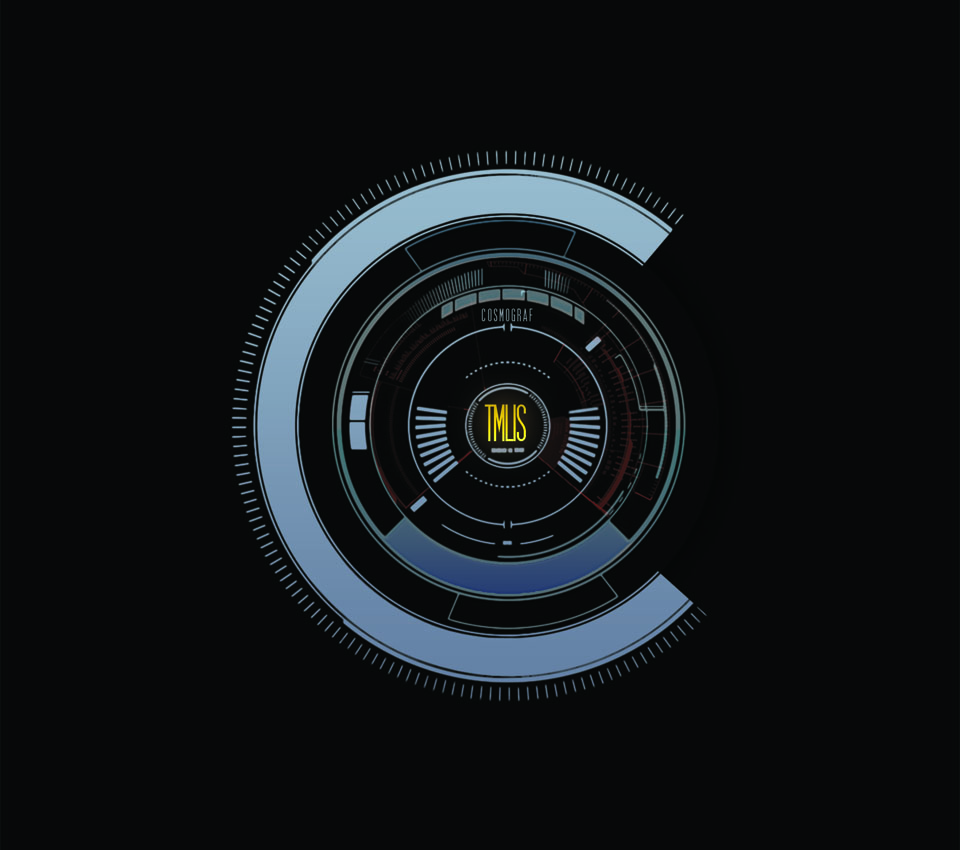
cdcover-tmlisFrom its cover image reminiscent of the all-seeing camera eye of 2001: A Space Odyssey‘s HAL computer, to the final track “When the Air Runs Out”, Cosmograf’s  new album, The Man Left in Space, is a profound meditation on the tragedy of modern man’s surrender to ambition and technology, and the ensuing isolation that results.  

Beginning with a bewildered astronaut, Sam, asking, “How did I get here?”, the listener is transported to the near-future, where Sam is questioning his motives for agreeing to a mission to “change the human race”. Can over-achievement bring satisfaction and happiness?

Ambition brought me here.

A winner in my field.

Dare to be a dreamer.

Find your fate is sealed.

Hidden truths revealed.

Through memory flashbacks, snippets of dialog with the ship’s android, and sampled audio of actual NASA space missions, we share Sam’s growing sense of melancholic disconnection with reality.

I take these pills. They help me numb the pain.

They stop me from feeling blue.

I feel the days getting longer now.

I’d like to dream, but I’ve forgotten how.

He’s even reduced to crooning a love song to his “beautiful treadmill” that will “keep my soul in grace”. Throughout, the ship’s android is monitoring Sam and vainly attempting to create a normal environment.  Earth’s Mission Control tries to contact him, but they cannot get through. Sam realizes that without human contact, he will eventually slide into madness. No simulation, no matter how realistic, can replace the touch of another person.

Eventually, the “man left in space” is forced to face his own mortality:

10 minutes more and the air will run out.

This craft will fall into the sun.

My chance of returning is none. None. None.

As the last chords of the final song fade away, the ship’s android repeatedly asks, “Please respond, Sam?”

Robin Armstrong, who is Cosmograf, has constructed a beautiful, allegorical warning for those of us who would replace face-to-face communication with all the technological means at our fingertips: emailing, texting, Tweeting, “liking” on Facebook, etc. Right on cue, Google is coming out with “Google Glass“, which will add even more distractions to our interactions with others. We must resist the temptation to withdraw into self-imposed isolation and foster real relationships, regardless of the risks.

The Man Left In Space would not be the success it is without having superb music to complement its message. Every track is extraordinary, and the album really must be listened to in its entirety. Highlights include “Aspire, Achieve”, which begins with a delicate acoustic guitar melody and vocal harmonies that shift into crunching metal worthy of Ayreon’s best work. “Beautiful Treadmill” has an indelible hook that will have you singing along in no time. The instrumental, “The Vacuum That I Fly Through”, featuring the marvelous Matt Stevens on guitar and Big Big Train’s Nick D’Virgilio and Greg Spawton on drums and bass respectively, rivals anything Pink Floyd ever committed to tape. Trust me, it’s that good.

Finally, some praise for the artwork. In this age of digital downloads, it’s worth it to get the physical CD. The booklet that comes with the album is essential to fully appreciating the  album. The illustrations remind me of the incredibly realistic sci-fi artwork Shusei Nagaoka did for Electric Light Orchestra’s Out of the Blue album from the late ’70s. The attention to detail is amazing: every page features readouts of various gauges, creating the feeling that you are involved in monitoring Sam throughout his doomed journey. The ship’s android is named ESA-1410-4MY, which pops up in several places and adds to the sense of technological surveillance and control of Sam.

Even though we have yet to finish the first quarter of 2013, Cosmograf’s The Man Left In Space is certain to be in many Top Ten Albums of the Year lists.

Enjoy “The Vacuum That I Fly Through”:

Update: A brief, but illuminating interview with Robin Armstrong.

Big Big Train and the birds

I’ve been in love with a band called Big Big Train since late 2011. It was very many years since I got so moved by music as I have been by the music of BBT. Many great posts have been published here at Progarchy about the music and lyrics from the pens of David Longdon and Greg Spawton. So now it’s my pleasure to here in my blog premiere make a little detour to the world of birds… Why, you may think, is that? Well for starters I couldn’t add much new to what’s already been said about the themes in the music and lyrics and then I’m a birdlover and have been so delighted by the use of birds in the lyrics and even in songtitles (Brambling). It’s apparent that the songwriters are quite familiar with some of the common birds in Britain (they’re also common in Sweden. I mean the fantastic Hedgehoppers’ Chorus line where blackbird, redwing, song thrush and yellowhammer are mentioned is something that I can connect to as well. Those are birds that are typical for the Swedish countryside too. And they are all birds that signal springtime by letting us enjoy their melodic songlines from March onwards until Midsummer or something.

The thing that distinguishes Big Big Train from many other bands and artists is that they not only use the general expression “birds” in the lyrics but actual names of real species. You also find the partridge in the lyrics on Uncle Jack and Hedgerow. This precise way of describing what kinds of birds that inhabit their lyrical landscapes is something that put Big Big Train in the same league as literary giants such as our very own (Swedish giant) August Strindberg who was a keen naturalist and knew much about birds and plants. In his novels you always find the names of actual species as well, not only the general terms “birds” and “flowers” for instance. This way of namedropping species adds much to the feel of a very alive lyrical landscape within the musical landscape that is Big Big Trains. And for me who know what all those different birds look like, when they can be expected to come back from their winter quarters, when they start singing and also what they sound like when they do it, the picture widens and gets deeper colours so to speak.

So is birds in music a novelty then? Of course not. We all remember the second movement of Beethoven’s Pastoral Symphony (No. 6) where several birds lend their voices to the great master’s musical creativeness. There we can hear the nightingale, the quail and also the cuckoo.  Within the bird theme Big Big Train also connect in a very fine way with Vaughan Williams. How is that? Well, Mr Williams wrote that absolutely wonderful piece of music called The Lark Ascending which makes us think about the eighties masterpiece Skylarking by the wonderful band XTC whose guitarist Dave Gregory nowadays as we all know resides in…Big Big Train. Skylarking is by the way such a fantastic album title. For me the word skylarking doesn’t actually mean what it’s supposed to mean (playing boisterously or to sport or something like that) but to lie flat on the back in the sun on a green meadow watching the skylark hanging there on its invisible string singing its heart out about spring, love and joy underneath the deep-blue dome….but that’s a meaning I’ve made up all by myself. But the music of Big Big Train’s always makes me want to go skylarking – in my meaning of the word.

The Moral Law of Big Big Train

by Craig Farham

Music is a moral law. It gives soul to the universe, wings to the mind, flight to the imagination, a charm to sadness, and life to everything. (Plato)

The members of Big Big Train with Dutch photographer, Willem Klopper.

Is it possible that Plato was writing about Big Big Train’s latest masterclass of musical wonder, English Electric, Part 2 (EE2)? Probably not, but two millennia before locomotives, social networking, digital recording, the global network, or austerity measures in his beloved city state, Plato certainly knew a thing or two about the power of oscillating waveforms to connect people.

Did the members of Big Big Train read Plato before embarking on their epic journey to morph their observations of contemporary and historical people and events into oscillating waveforms of power and beauty? Again, probably not. But EE2 certainly fits Plato’s moral law to a tee.

Beautifully crafted from the opening piano chords to the final fade out of a single piano note, EE2 continues the journey begun on EE1, my album of the year in 2012, into the heart and soul of industrial England, its people, and the surrounding countryside. The album weaves tales of steam trains, ship-building, coal miners, a second chance at love, the custodian of a historical monument, the British landscape, and butterfly collections as a metaphor for life and death, with musical arrangements that range from sparse to massive, light-hearted to intense, but are always melodious and warm. The album has the same lush production and attention to detail as EE1, with exquisite use of brass band and strings beautifully complementing the electric instruments. The songs range in length from just under 4 minutes to nearly 16 minutes, and every song is exactly as long as it needs to be – no filler, bloat, or needless noodling.

The addition of Danny Manners as a full-time band member on piano, keyboards and double bass has lifted an already impressive ensemble another notch, and I’m delighted that the compositions on EE2 have given David Gregory more scope to develop his exceptional guitar solos. The rest of the band are also in fine fettle – Greg Spawton’s basslines are on a par with those of Gentle Giant’s Ray Shulman (and his compositional skills are equally impressive), Nick D’Virgilio’s drumming is peerless (he recorded the drum parts for both EE1 and EE2 in three days…!), Andy Poole has stepped forward from the producer’s chair to contribute backing vocal, guitar and keyboard parts, and Dave Longdon, who I think has the best voice in modern prog, contributes massively with his flute work and a wide array of sundry instruments, including banjo, keyboards, guitar, cutlery and glassware(!), in addition to his great songwriting. There is also a large cast of supporting musicians, including Dave Desmond, whose marvelous brass band arrangements are an integral part of the unique BBT sound, Rachel Hall on violin, and The Tangent’s Andy Tillison on keyboards.

The newest member of Big Big Train, the extraordinary Danny Manners.  Photo used by kind permission from Willem Klopper.
The newest member of Big Big Train, the extraordinary Danny Manners. Photo used by kind permission of Willem Klopper.

Although EE2 is the second half of a double album released in two separate parts, it stands on its own as a superb example of the vibrance of the new wave of progressive music, which is finally lifting itself out of the shadow of the so-called “golden age of prog” in the 1970s. To listen to EE2 on its own, however, is to miss out on half the fun. EE1 and EE2 should be seen as a single body of work, a superb collection of songs and an important milestone in the history of modern music.

English Electric by Big Big Train is a moral law that demands to be upheld. To paraphrase a comment I made on the BBT Facebook site, these are albums to cherish – I’ll be listening to this music as long as my cochlear apparatus is capable of responding to their oscillating waveforms and connecting my soul to the universe…

***

[Dear Progarchists, thank you so much for letting us enjoy this four-day love fest of all things Big Big Train.  It’s been quite an honor.  Craig’s post–his inaugural post as an official citizen of the Republic of Progarchy, by the way–concludes our roundtable reviews of the latest BBT masterpiece, English Electric V. 2.  To order it directly from the band, go to www.bigbigtrain.com/shop.–Yours, Brad (ed.)]

What’s in a Name?: Quite a lot when it comes to Big Big Train

Aubrey and D'Virgilio, courtesy of the uber-great Willem Klopper.
Aubrey and D’Virgilio, courtesy of the uber-great Willem Klopper.

by John Deasey

Just looking at the artwork of EE2 and taking in the song titles is a pleasure all of it’s own.

I savour the industrial art and the titles such as ‘Swan Hunter, ‘Keeper of Abbeys’, Curator of Butterflies’, ‘East Coast Racer’ ……

To those with a passing knowledge of English industrial heritage, it goes without saying we are back in the land of The Underfall Yard, back to The Last Rebreather and back to the land and communities that so shaped our country.

Big Big Train with this, the second part of English Electric,  take us further into the arms of working fathers, loving sons and warm families to extract beauty from industry and agriculture like no other art I know.

With a gentle piano introduction along with a typical BBT signature motif that will be repeated, we are soon driven by Nick d’Virgilio’s intricate drum patterns along the same tracks the famous Mallard steam train once flew. A stunning tour de force restlessly moves along evoking the men who rode the plates of this famous flying machine. The overall sound returns to the rich warm tones of The Underfall Yard, beautiful bass patterns underpinning a whole host of instruments including viola, tuba and cello.

David Longdon has never sounded better and the guitar fills from Dave Gregory are typically tasteful and restrained.

Big Big Train are masters at creating great soundscapes that swell and build and finally spill over into something quite beautiful.  Think of the Victorian Brickwork ending where I defy anyone not to shed a tear as the guitar overplays the brass section to create a crescendo of beauty.

Well, at 9.24 into ‘East Cost Racer’ they only do it again, and do it better, and do it in such stunning style it really is hard not to find a tear escaping …..

If the album finished at the end of this 15 minute track I would be more than delighted – I would be ecstatic. But you know what ?  The beauty just keeps on coming …..

Just as we’ve finished the great Mallard story we taken into the magical and harsh world of ship building at the Swan Hunter shipyard

A melodic and rather gentle opening, reminiscent of the whole feel of EE1, tells of the father to son continuity of such industries but with the sad caveat

Tell me what do you do

When what you did is gone

No one throwing you a lifeline

How do you carry on?

‘Swan Hunter’ is a stately track that has simple elegance in it’s phrasing and tones and once again has a gorgeous build-up and release towards the end combining brass, guitars and vocals.

From the shipyards we move to the coal face with ‘Worked Out’ and again we have this magnificent connection with time, place, community and industry. Father and son, working together, regular shifts, routine, warm and generous folk who forged communities but realise “.. we had our day, our day is over”

Despite the subject matter there is a real drive to this track with some sublime moments where viola, cello and guitar inter-act to build a warm wall of sound. Flute interjections from David Longdon lead into a real jam type session where Dave Gregory adds subtlety and skill proving that a masterful guitar solo does not need a million notes.

After such an astonishing triumvirate of tracks, some space is needed and breathe needs to be drawn.

We are given this chance with ‘Leopard’ which, if I am honest, does not work for me just yet.  As a breathing space though, it is perfect ….

The pace picks up again with ‘Keeper of Abbeys’ – a joyous and infectious track in the style of Judas Unrepetant with a drive, vigour and melody to die for which at 2 minutes in, goes places where other musicians must dream about. A typically sweeping refrain with soothing organ and cello sweeps into a section where you could be forgiven for thinking you had stumbled into a Greek taverna or a Russian vodka bar. Stoccatto guitars, flutes, viola and an incessant drum beat will have you tapping along infectiously then you are swept up unknowingly into the most beautiful choral-backed guitar solo you have heard which builds and builds into something far greater than I have words for.

The next track, ‘The Permanent Way’ is a real surprise.

Big Big Train have a knack of returning to refrains throughout their albums – think of the opening to The Difference Machine, or Evening Star for example

A pastoral opening about the farmer working in the fields soon gives way to a soaring re-working of Hedgerow which takes you by surprise on first listen as you are suddenly thrown back to EE1 and thinking ‘Blimey – where did that come from !”  It’s stunning.

And then – wow – we suddenly have the fantastic soaring refrain from The First Rebreather.

This is like a celebration of everything that is so warm, honest and true about Big Big Train. They are making music they love and it shines through like the brightest light.

‘The Permanent Way’ is an encapsulation of everything that is so perfect about Big Big Train – recurring motifs, connecting with land and industry, streams, hills, high moors, dry stone walls, far skies, the mark of man.

I cannot recall music that so connects with time, place or community that this does. As I live in an old industrial town surrounded by beautiful countryside filled with relics of a bygone age it maybe resonates clearer for me as it seems the music was set to to the sights and sounds that surround me.

From the BBT EEv2 booklet.  Photo by Matt Sefton.
From the BBT EEv2 booklet. Photo by Matt Sefton.

Now if you thought ‘Hedgerow’ on EE1 was a good album closer, wait till you hear ‘Curator of Butterflies’

I cannot think I will hear any music more moving, relevant and genuine than this superb album for a long time.

That is all I can say. Simply stunning and beautiful.

A Peerless Evocation of English History: BBT English Electric Vol. 2

by Ian Greatorex

A joy to listen to and, as always, a peerless evocation of English history, both rural and industrial.

The musicianship is impressive and the arrangements for woodwind, brass and strings are excellent.

David Longdon’s vocals are superb, so smooth and pitch perfect, but there are also many beautiful harmonies on this release.

BBT have an uncanny grasp of when and where to add the astonishing array of instruments being used; we have harp, violin, viola and cello; we have trumpet, trombone, euphonium, tuba and cornet; we have recorder and flute; we have piano, organ, mellotron and synthesizer; we have accordion, dumbek, cajon, marimba, vibraphone and tambourine; we have 6 and 12 string guitars, sitar and mandolin, banjo, bass and double bass. And even cutlery and glassware are played . It’s no wonder they never play live!!!

ee2So what do the tracks bring us:

East Coast Racer – an epic 16 min track about the railway industry. I love the way the music captures the ‘feel’ of the workers at their craft and the sense of the Mallard’s speed. It’s almost as though you are on the train itself, racing through the English countryside.

Swanhunter – a story about the community impact of the shipbuilding industry on the Tyne. A very mellow track with stunning harmonies and beautifully arranged brass band.

Worked Out – we move to the coalmining industry; step up the marimba and flute; unusually rocky guitar and keyboard solos.

Leopards – a song about love, people and change. This is my favourite track on the album. At under 4 minutes, short by BBT standards. Arise the violin followed by acoustic guitar. This upbeat song is beautifully soft and gentle and includes some more marvellous harmonies. A magnificent piece of music. In the ‘70s this would have been a great single.

Keeper of Abbeys – based upon a real-life guardian. An accordion intro draws one in nicely (I love the accordion!); there’s a classic fast, folksy fiddling about in the middle section; and is that a sitar?….lovely stuff.

The Permanent Way – covering the everlasting and essential importance of people working on the land. A charming mix of song and narration; very atmospheric with some great mood changes.

Curator of Butterflies – with an exquisite piano opening and full of delightful melodies. This track has palpable emotional power and intensity (it’s a bit of a ‘hairs standing up on the back of the neck’ moment for me). Making this the concluding track was a masterstroke…a perfect ending.

Another wonderful journey into the world that is Big Big Train. One senses on every track a meticulous attention to detail in what are dense arrangements. It takes a number of listens for the beauty of this album to be revealed. Rob Aubrey’s production mix is superb with the ‘cornucopia’ of instruments all getting their fair share of the sound pie. A good hi-fi system or a set of quality headphones is essential. And don’t download as mp3 files as this music demands lossless format only!

There are exceptional musical skills on display on EE Part 2 and the story-telling is worthy and beautifully told. From a purely objective point of view this is an astounding piece of work, just like Part 1 and I found it an emotionally compelling experience. I am in no doubt it will be a contender for the Prog album of the year. If you liked Part 1 and wanted more of the same then it’s a huge understatement to say that this will appeal. Usually I like music that is both heavy and ‘edgy’ and explores the ‘dark side’ of human nature (I’m more an Oceansize man) but I was captivated by this album.

Music is an intensely personal experience and EE Part 2 pressed almost all of my buttons.  However, I was hankering for something slightly different; a musical and lyrical progression of sorts. English Electric generally uses past events to discuss universal themes such as love; work; communities; unsung heroes; the importance of maintaining monuments of our past. I would really like the band to lyrically explore more contemporary social and political themes such as the internet age; globalisation; the aging population; business ethics etc. and hence produce an album that would naturally have a harder, ‘edgier’ feel. Of course they have the talent to do this and I believe this would attract a wider fan base by making their music more relevant to a younger audience.

None of my comments above can detract from the superb quality of this release. Lock the door, turn the off the lights and even close your eyes. Let nothing disturb you from enjoying the astonishing beauty of this album.