


Tag: Insideout Music
Tangent News
My great friend and hero, Andy Tillison, just posted this on Facebook:
So… Jonas Reingold promises to make the Karmakanic set as simple as possible to play for everyone. Nice Guy.
Three weeks ago we received the set, which includes a brand new piece. None of their band has played it before. It is a little ditty which clocks in at around half an hour. It has about 30 sections in it. It takes as its lyrical subject matter that oft discussed little chestnut.. THE HISTORY OF THE UNIVERSE ITSELF.
“this is some definition of the word ‘simple’ i wasn’t previously aware of….”
CELEBR8.3 May 31 and on tour in Europe late May….The insanity goes on…

It’s Time to Connect With John Wesley
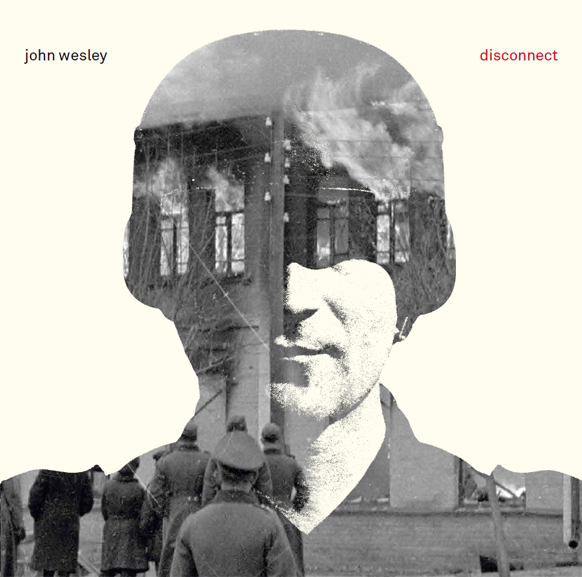 InsideOut Music recently signed John Wesley to its label, and his new album, Disconnect, will be available March 31 in Europe and April 1 in the U.S. I’m not pulling an April Fools’ joke when I say that it is my favorite album of 2014 so far (despite stiff competition from the likes of John “KingBathmat” Bassett, Gazpacho, and Transatlantic).
Who is John Wesley? Hailing from Tampa, Florida, he’s an enormously talented guitarist and vocalist who has toured with Porcupine Tree, Fish, and Steven Wilson. Check out Porcupine Tree’s DVD, Anesthetize, to see how integral he was to their live show. As a matter of fact, after watching that DVD, I wondered why Steven Wilson didn’t go ahead and make Wesley an official member. His guitar playing and vocals added a new and exciting dimension to Wilson’s songs.
Approaching Wesley’s new solo work, I had low expectations – sidemen often fail to carry the load of an entire album. (Tony Levin is my all-time favorite bassist, but his solo stuff just doesn’t do anything for me.) Suffice it to say, from the opening chords of the first track, “Disconnect”, to the spacey fadeout of “Satellite”, this is a jaw-dropping collection of songs. There isn’t a weak track in the whole bunch as Wesley runs through a wide range of styles, all the while rocking like a maniac.
I hear hints of Pink Floyd in the aforementioned “Satellite”, Rush (none other than Alex Lifeson lends a hand on “Once a Warrior”), and Lindsey Buckingham in “Windows”. “Gets You Every Time” is an aural blast of pure joy in the vein of classic Cheap Trick.
The highlight has to be the transcendent and chiming “Mary Will”. In it, Wesley sings like a desperate man clinging to his last hope:
“In the cleansing rain, you stand by her.
In the roses, miracles will occur.
Never to forgive, never yourself,
Not even Mary’s son dared to offer help,
But maybe Mary will stand for you.
Maybe Mary will stand for you.
Maybe Mary will have a word for you”.
A spiraling, yearning, yet perfectly restrained guitar solo brings this brief masterpiece to a close.
John Wesley is a major talent in rock, both as a performer and a songwriter. Kudos to InsideOut Music for making his music available to a larger audience. Disconnect is a must-have if you value passion, brilliance, and depth in your music.
Here’s the official video to “Mary Will”:
Holy Vernal Equinox! Arrivals today at Progarchy HQ.
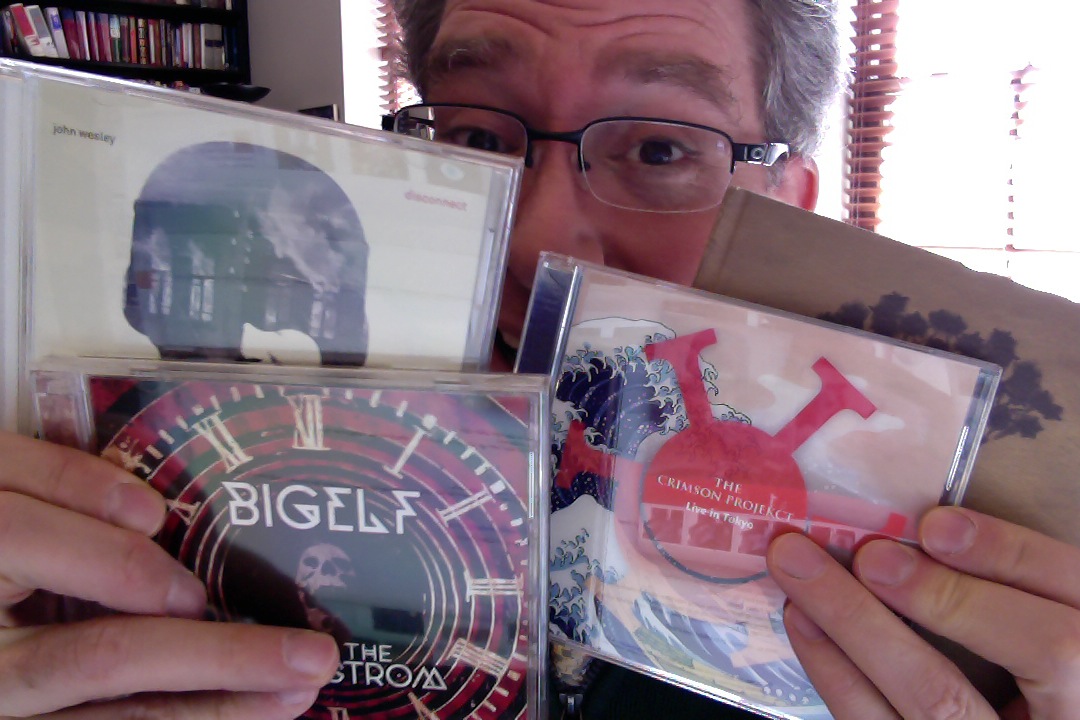
What a load of treasures to show up at Progarchy today.
- Big Elf, INTO THE MAELSTROM (Insideout Music)
- John Wesley (with Alex Lifeson), DISCONNECT (Insideout Music)
- The Crimson Projekct, LIVE IN TOKYO (Insideout Music)
- and, Gazpacho, DEMON (Kscope)
A huge thanks to Edgel Groves, Jr.!
P.S. And, the sun is actually out and happy on this first official day of spring in Michigan. Will wonders never cease!?!?
BillyNews: Transatlantic
Transatlantic To Release New Studio Album Kaleidoscope on Jan 28, 2014
Announces World Tour Jan 31 – Mar 15, 2014
Cross Plains, TN – Good things come to those who wait. Transatlantic fans are accustomed to playing the waiting game, and their patience has been rewarded with the band’s fourth official studio album, Kaleidoscope. Steeped in vibrant prog rock organics, it’s a triumphant return to the band’s original creative style.
The beloved prog rock project featuring Neal Morse (ex-Spock’s Beard), Mike Portnoy (The Winery Dogs, ex-Dream Theater), Roine Stolt (The Flower Kings) and Pete Trewavas (Marillion), Transatlantic’s foundation was built in 1999 with the release of their debut album, SMPT:e, in 2000. A second studio album, Bridge Across Forever, solidified their position as prog’s definitive supergroup. It would be nine years before Transatlantic’s fans were rewarded with a new studio album: 2009’s The Whirlwind, the band’s most popular release to date. Following the subsequent tour, spawning two live DVDs, the band decided to record a new studio album as soon as they could.
“There was talk about a year ago about doing an album before we actually did it,” reveals Morse. “I was feeling it for a while. Some of the music that ended up on my Momentum album (2012) seemed like good material for Transatlantic. Roine and my schedules have a little more space in them, and Pete and Mike’s schedules finally aligned, so we were able to put this together. I’m just glad we got to do it again and I’m really happy with the way the album came out.”
Morse, Portnoy, Stolt and Trewavas shared equally in the songwriting, with Portnoy ultimately sifting through the material and picking out what he felt was best. For the most part, the music that fans hear on Kaleidoscope (and all of their previous albums) was created for Transatlantic. There are, of course, exceptions. “I wrote the second song on Kaleidoscope, “Shine,” before my Momentum album came out,” says Morse. “I thought about recording it for myself, but it just smelled of Transatlantic. I presented it with two other acoustic songs, and that’s the one the other guys chose, as well.”
The band convened at Neal’s studio in Tennessee; writing, arranging, and laying down the final drums and bass. Morse offers, “At this stage, we sketch out the house and build the foundation. Then Roine and I go off to our respective studios and do what we need to. We send those parts, including vocals, back and forth via the internet; but the writing is done together in Tennessee. We just go from the gut, and I think it’s an amazing process of trusting each other. There’s no shortage of ideas; it’s more like which ideas do we want to use?”
As the fans have come to expect, Kaleidoscope is also available as a Special Edition featuring eight uniquely Transatlantic cover songs. “I don’t know how it started,” Morse says of the cover song tradition. “But we’ve done it for every album. It’s a lot of fun because most of the time it’s simpler music than what we’re mainly involved with.”
There are points during the journey through Kaleidoscope where the listener will be reminded of artists like Yes, early Genesis, and even Styx. But in the end, the album is distinctly Transatlantic before it can be compared to anyone else.
“I think that comes from the different ingredients,” says Morse. “It’s the four of us from all over the world—with our different backgrounds, cultures and musical history—that makes this band totally unique.”
The band will embark on a six-week world tour January 31 – March 15, with an additional performance at the Sweden Rock festival June 4-7. They will be joined by Pain of Salvation’s Daniel Gildenlöw as a 5th touring member. The tour will include headlining the Progressive Nation At Sea 2014 Cruise,February 18-22, alongside 22 other leading prog acts including Adrian Belew Power Trio, Devin Townsend Project, King’s X, Anathema and Spock’s Beard. The event will also feature a special performance of Yes material by Transatlantic with legendary singer Jon Anderson on vocals.
Transatlantic – Kaleidoscope (75:50)
1. Into The Blue (25:13)
I. Overture (Instrumental)
II. The Dreamer And The Healer
III. A New Beginning
IV. Written In Your Heart
V. The Dreamer And The Healer (Reprise)
2. Shine (07:28)
3. Black As The Sky (06:45)
4. Beyond The Sun (04:31)
5. Kaleidoscope (31:53)
I. Overture (Instrumental)
II. Ride The Lightning
III. Black Gold
IV. Walking The Road
V. Desolation Days
VI. Lemon Looking Glass (Instrumental) VII. Feel The Lightning (Reprise)
Bonus CD:
1. And You And I (Yes)
2. Can’t Get It Out Of My Head (ELO)
3. Conquistador (ProcolHarum)
4. Goodbye Yellow Brick Road (Elton John)
5. Tin Soldier (Small Faces)
6. Sylvia (Focus)
7. Indiscipline (King Crimson)
8. Nights In White Satin (The Moody Blues)
Line-Up:
Roine Stolt – Electric guitars, vocals
Pete Trewavas – Bass, Vocals
Neal Morse – Keys, Guitars, Vocals
Mike Portnoy – Drums,Vocals
An Evening With Transatlantic 2014 World Tour
Jan 31st – Los Angeles, CA – El Segundo Performing Arts Center
Feb 1st – San Francisco, CA
Feb 2nd – Seattle, WA
Feb 4th – Chicago, IL – The Arcada Theater
Feb 5th – Quebec City, Canada – Theatre Du Capitole
Feb 6th – Montreal, Canada – L’Olympia
Feb 7th – Boston, MA
Feb 8th – Philadelphia, PA – Keswick Theater
Feb 9th – New York City, NY – Highline Ballroom
Feb 11th – Mexico City, Mexico – Teatro Metropolitan
Feb 13th – São Paulo, Brazil
Feb 14th – Buenos Aires, Argentina
Feb 15th – Santiago, Chile
Feb 18th to 22nd – Progressive Nation At Sea
Feb 27th – Madrid, Spain – La Rivera
Feb 28th – Barcelona, Spain – Razzmatazz 2
March 2nd – Milan, Italy – Alcatraz
March 3rd – Rome, Italy – Orion
March 5th – Pratteln, Switzerland – Z7
March 6th – Karlsruhe, Germany – Substage
March 7th – Munich, Germany – Muffathalle
March 8th – Berlin, Germany – Astra
March 9th – Cologne, Germany – E Werk
March 11th – Antwerp, Belgium – Trix
March 12th – London, England – The Forum
March 13th – Tilburg, Holland – 013
March 14th – Tilburg, Holland – 013
March 15th – Paris, France – Le Bataclan
June 4th-7th – Sweden Rock Festival
Studio Album Discography
SMPT:e (2000)
Bridge Across Forever (2001)
The Whirlwind (2009)
Kaleidoscope (2014)
Press Contact
Glass Onyon PR
Transatlantic Online:
Progressive Nation Cruise
Radiant Records
Haken’s “Pareidolia”: 11 Minutes of Prog/Metal Perfection
Last month, we posted Haken’s very entertaining “Cockroach King” video. Here’s the official video to another song from their excellent The Mountain album, the epic “Pareidolia”. Blending Indian and Greek elements (bouzoukis anyone?) with scorching guitars and tremendous vocals, Haken has come up with a prog/metal classic.
Pareidolia “is a psychological phenomenon involving a vague and random stimulus (often an image or sound) being perceived as significant” (according to Wikipedia). You can watch the curling smoke and cascading light in the video and experience your very own pareidolia.
Fans of Rush, Dream Theater, Ayreon, Riverside, and Devin Townsend will be all over this album.
Welcome to the Dark Side. Of the Flower Kings?
The Flower Kings have been an essential part of my life for the last thirteen years. In 2000, one of my students (now, rather happily, a colleague) lent me his copy of Flower Power. I’d never heard of the band up to that point, though I’ve been a progger since the age of 4, way back in 1972.
I’d purchased my first Spock’s Beard album (their first as well) when it first came out in the fall of 1994, and I knew that Morse had been working with a Swede (all I knew about him) in a new a “supergroup,” Transatlantic. I remember thinking, “Wow, this phase of progressive rock truly is mighty if it can have a ‘supergroup.’”
It’s almost humorous now to think there was a time when I didn’t know the work of Roine Stolt. Through Stolt’s work, I found out about The Tangent. And, really, life without The Flower Kings or The Tangent? Too weird to even contemplate.
From the opening few notes of Flower Power, I was hooked. I loved the packaging, the music, the dreaminess. I immediately purchased the back catalogue of The Flower Kings, and I’ve since purchased every release upon its release date. And, I’ve done the same with all of Stolt’s projects. I was also lead, of course, to Tom Bodin’s solo work, Agents of Mercy, Kaipa, and Karmakanic.
Be ware, gentle reader, the rabbit hole into the world of Swedish Prog is a winding but glorious one.
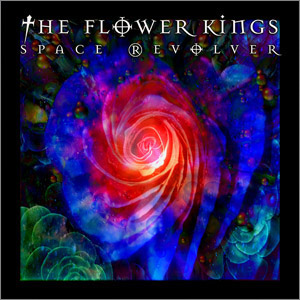
While there’s no album by The Flower Kings I dislike (quite the opposite), Space Revolver has always been my favorite. It has a perfect flow to it, and it only grows increasingly interesting with each listen. It served as a real life saver for me when traveling fourteen days for my job. I’d never been away from my family that long, and it was painful. This was back before I owned an ipod (did they exist then?; I can’t remember), and I only took about ten cds with me. It was Space Revolver that gave me the most joy and comfort on that trip. But, this is getting too long winded, and I’ll save this story for another time and another post. Let me just state here, Space Revolver is a desert island disk for me. I think it might very well be one of the top ten albums of the rock era. If you don’t own it, you should. In fact, you should stop reading this right now and order it now. Yes, it’s that good.
Admittedly, I’ve listened to the band so much, I’m really not sure I could even pretend objectivity when reviewing them. Nor at this point in my life, do I really want to be objective. All of the Birzers love The Flower Kings.
Additionally, whatever creativity I might possess, I owe a lot to The Flower Kings. Space Revolver served as the sound track for my first book, Unfold the Future for my second, and Paradox Hotel for my third. The Sum of No Evil and Banks of Eden have played a major role in the one I’m currently writing.
As I’ve stated too many times before, I dislike labels, as they’re almost always used to bypass real engagement with a person, an idea, or a work of art. But, even if I appreciated labels, I really don’t know how I’d label this band. The Flower Kings have produced so much beauty, and in such diversity, that they’re almost fully resistant to categorization. Well, that is, to label properly. For me, every Flower Kings album is a mood or a state of being.
- The Flower King: Humanity.
- Back in the World of Adventure: Exploration.
- Retropolis: Playfulness.
- Star Dust We Are: Redemption.
- Flower Power: Mythic.
- Space Revolver: Appreciation.
- The Rainmaker: Warning.
- Unfold the Future: Righteousness.
- Adam and Eve: Confidence.
- Paradox Hotel: Tranquility.
- The Sum of No Evil: Love.
- Banks of Eden: Elegance.
- Desolation Rose: ?
The most common description I’ve seen of the Flower Kings is “retro.” But, of course, this is meaningless. The band pays homage to those they love. Shouldn’t we all? I deeply admire my maternal grandfather, and I’ve tried to live my life in accord with the dignity he displayed. Does that make me “retro”? I speak the same language as my mother. Does that make me “retro”? The Flower Kings love Genesis and King Crimson. So do most proggers. At some point, labels become not only offensive, but absurd. But, enough of this rant. . . . If anything, pietist might be better than retro. Ok, now, really, the rant is over.

Desolation Rose
Through the good graces of Edge at Insideout Music, I was able to receive an advanced release of Desolation Rose.
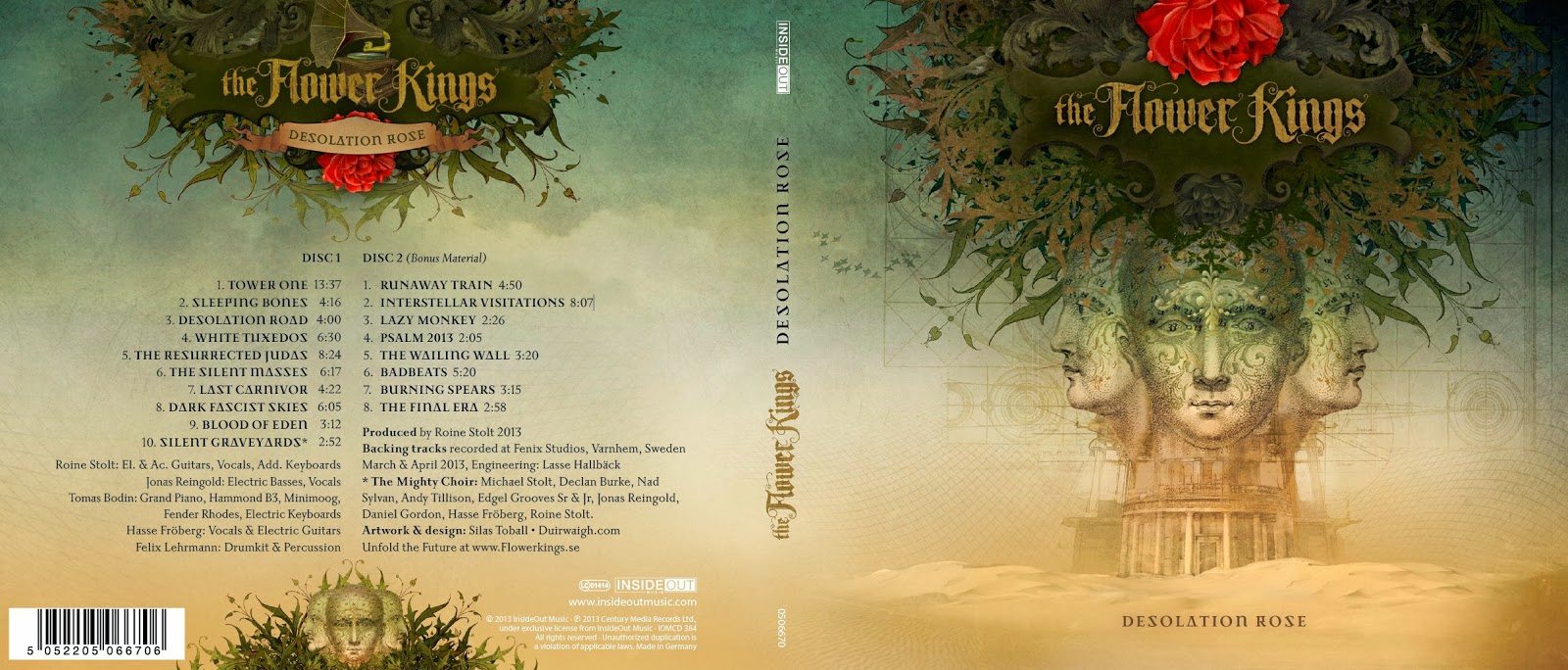
The first thing to notice about this release is the darkness of the art as well as of the subject matter. The cover art depicts three tattooed human heads resting atop a deserted (and in a desert) classical structure. Above the heads blooms a bright red rose, surrounded by nesting birds of paradise intertwined in intricate greenery. From a distance, the image could be an explosion, possibly atomic. There are visual references to the cover art of Space Revolver as well as Unfold the Future.
The title could mean many things. Desolation almost never has a positive connotation, unless one might be referring to the landscapes of the American West. But, Rose? Rose is almost always good, at least as a noun and a proper name. Who couldn’t love a Rose? It’s the middle name of two of my daughters. And, traditionally, the rose is almost always associated with the mother of Jesus. She’s not exactly been absent from the art of The Flower Kings. She appears weeping in the lyrics of Space Revolver, and the devil hides from her in his playground in Unfold the Future. It’s worth noting again, the cover art of Desolation Rose refers to the albums that already have a reference to Mary.
Unfortunately, as with Eric and Tad, I don’t have the lyrics in front of me, and I’ve had to interpret them simply through listening to them repeatedly. I’m fairly sure that I am probably hearing what I want to hear, and I hope any interpretation I make will be taken with this caveat.
Though ten separate tracks appear on the main disk, the music flows from one song to another without a moment of silence. The album as a whole, however, ebbs and flows, and every track bleeds into the one following it. This only adds to the intensity and urgency of the record. A number of images and lyrics recur as well: revolution; false kings and false idols; mechanized man; the abuse of power; our place in the order of existence (“we’re the third from the sun”); our life as a game or a false dream; the soil of Eden; silent graveyards (where is the voice of the ages?); and, above all, the need to be individuals, unchained by the restraints of corrupt authorities and mass thinking.

All of the songs build to a climax in “Last Carnivore” and “Dark Fascist Skies.”
This has to rank as one of the darkest and most politically charged and angry (righteously so) of all Flower King’s tunes. It’s also absolutely brilliant. At the end of the song, the album rather quickly embraces a quiet denouement in the very short “Blood of Eden” and “Silent Graveyards.” In the end, the Flower Kings affirm that “we are stardust/we are sunkissed/we are brothers and still we’re strangers.”
Songs: Tower One; Sleeping Bones; Desolation Road; White Tuxedos; The Resurrected Jadas; Silent Masses; Last Carnivore; Dark Fascist Skies; Blood of Eden; and Silent Graveyards.
The album, itself, is flawless. Every instrument has a punctuated clarity to it. Upon my first listen, it was the bass I heard most. On the second, it was the guitar. On the third, it was the keyboards. On the fourth, it was the interplay of Stolt’s vocals with Frosberg’s vocals. On, probably, my fifth listen, I realized it was everything. Stolt has produced this album with an eye toward perfection. This album feels, at least at this point in my listening, less symphonic than other modern prog masterpieces, such as Big Big Train’s English Electric. In terms of urgency, it has a similarity to The Tangent’s latest studio album, Le Sacre Du Travail.

The only thing I find painful in Desolation Rose is the sampling of Richard Nixon’s voice in “White Tuxedos.” Don’t get me wrong. The song works, and it works well. But, having been born in 1967 and having been raised in a very politically libertarian family, Nixon was always the bad guy. His voice, to this day, makes me wince. And, as many times as I’ve listened to this album over the past week, I still cringe every time his voice pops up. Equally creepy, the voice from “Bavarian Skies” returns, but so does one of the coolest guitar lines ever (think The Good/The Bad/The Ugly meets Chris Isaak). Even the song, “Silent Masses,” makes me pause a bit, as Nixon continuously attempted to appeal to those he called the “silent majority.”
I can’t end a review with THAT man’s name in my conclusion.
So, on a much happier note, this year, 2013, has been nothing short of an annus mirabilis. When the new year hits, every prog lover will be, materially, worse off after having survived 2013. Every prog lover will be, also and more importantly, enlivened spiritually and intellectually after having survived 2013.
In the top of this astounding year of Prog is Desolation Rose. Empty your pockets. Another must–absolute must–buy.
The Flower Kings and States of Being
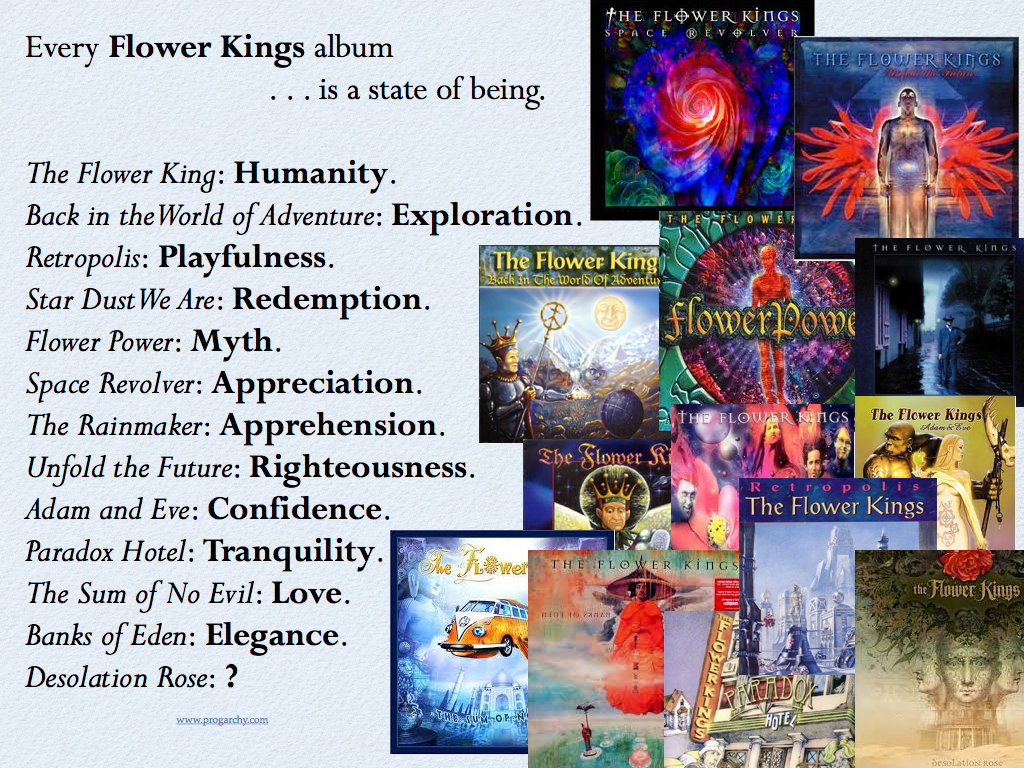
Reviews of Desolation Rose forthcoming. . . .
Riverside, ADHD (2009)
As I prepare to give the new Riverside a spin (it is arriving much later in the U.S. than in other parts of the world), I thought it would be worth offering my thoughts on the previous work of Riverside, in particular the last full album, ADHD.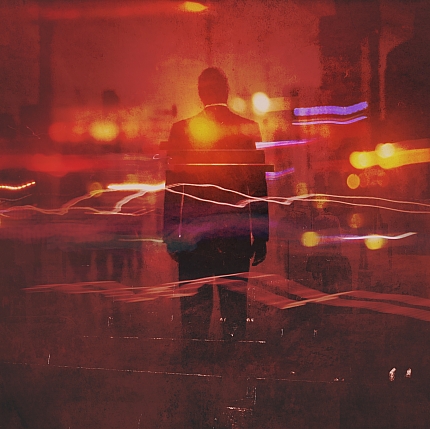
Five songs at 44 minutes and 42 seconds. The intrepid Carl Olson (of Ignatius Insight fame and now fellow Progarchist) first introduced me to this post-Communist Polish band, and I’ve been more than a little fond of them since our first encounter.
Brilliantly, their first three studio albums–collectively known as “Reality Dream”–form one story. Though I’ve listened to the albums too many times to count, I’m still not exactly sure what that story is about. It follows a man who is either a saint and having endless mystical visions, or else he’s insane and trapped in an asylum.
Either way, I like the story.
ADHD appeared at an important moment for me, musically speaking. Compared to some of the other “big” releases of 2009, ADHD towered.
Dream Theater’s album that year, “Black Clouds and Silver Linings,” served as an incoherent exercise in notes chasing notes and embarrassingly written lyrics.
Even more disappointing, Pure Reason Revolution’s “Amor Vincit Omnia” offered nothing but miserable sexual decadence and ridiculous Euro dance-type music. The title should’ve been Lust Conquers All, not Love Conquers All. How this could have been the same band that released the captivating “The Dark Third,” I have no idea.
Riverside’s ADHD redeems them all. Labeled “harder” and “heavier” by several reviewers, ADHD is nothing if not insanely intense. Is it hard? Yes. Do notes chase notes? Yes. Is there sexual deviance in the lyrics? Yes. But, unlike the music of Dream Theater’s most recent cd, or the lyrics of Pure Reason Revolution’s new album, Riverside’s heaviness, notes chasing notes, and lyrics all have a purpose; they each serve the entirety of the album. Indeed, nothing in this short 44plus minutes is in vein; every aspect of the album has its purpose and knows its place.
Indeed, Riverside expresses intense anger and frustration about the state of the world—the “liquid modernity” identified in the first track, “Hyperactive.”
Modernity destroys real community. “In the mass of different runners/Different lies/We can’t make time to realize/How the same we are.” And, modernity results in isolated, insecure (“hatred for my inner chaos”), and self-centered individuality.
We’ve lost the flow of generations, and we wallow in our subjective realities. “I used to be one of you/With the same spark in my eyes/And now I don’t belong to this place/It’s a matter of merciless time/I wholly vanish.” So far gone are we as a people, that we obsess about our own created gadgets, the products of our will and ingenuity, and our immediate fame, here and now. “Come to me now/I will cure your soul/I’m the savior of our times/I know exactly what it needs/You’ve let yourself go/You’ve felt so down/So my hi-tech salvation is just for you.”
Properly, progressive rock reviewers love their tradition and the heritage of the music. Reviewers always compare releases of Riverside to Porcupine Tree, Pink Floyd, and Tool. These are fine comparisons, but Riverside–from the opening note on their first album to the ending note on this most recent release–are very much their own band. Frankly, while building on what Pink Floyd offered, Riverside has topped Pink Floyd in terms of musical ability and atmosphere. More than anything else, Riverside has confidence its in its own abilities and direction, it understands the parts each member of the band plays in the band as a whole, and it recognizes the importance of voice (human and instrumental) in its music.
While each member plays exceedingly well here, the keyboardist, Michal Lapaz, stands out the most. From the opening note to the end of the album, his work defines ADHD. No keyboardist has played this well since Steve Winwood on “Blind Faith,” Greg Allman on “Fillmore East,” Rick Wakeman on “Close to the Edge,” or Mark Hollis on “Spirit of Eden.” I can’t even put my admiration in words. Every time I listen to him play on ADHD, I can only provide a rather sincere but inarticulate “phew.”
I give Riverside’s ADHD one of the highest rankings I can. This album is simply exemplary. Thank you, Riverside. Thank you, Poland.
Kings and Thieves / Geoff Tate – Review
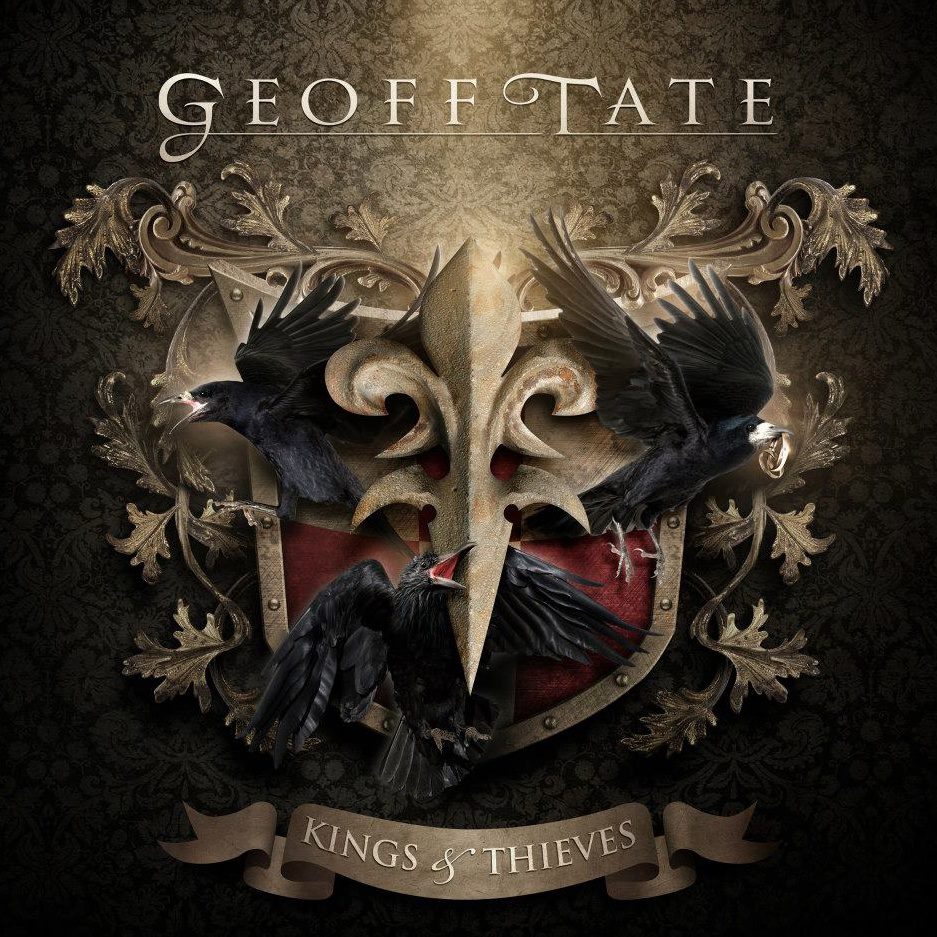 Kings and Thieves / Geoff Tate – Review
(Insideout Records, available Tuesday, November 6, 2012)
Received wisdom from the now far-distant era of grunge has things playing out thus: hair metal, riding high through the 80s in various forms, from NWOBHM to G’n’R, was coffin-ed by Nirvana and their Seattle brethren, who brought the music back to rock basics in 1991 with a DIY ethic and no-frills aesthetic. But like a lot of stories that have been settled on for historical convenience, the Grunge-Killed-the-Metal-Star fable is over-weighted by victim and victor alike. Hair metal had been killing itself slowly starting about the time of Aerosmith’s remarkable reinvention as an AOR band, blazing a suspect trail based on power balladry that had a lot of us ready to impale ourselves on our air guitars. Add to this that grunge, if not so-called, had been healthy and growing for years in bands like Husker Du and Pixies.
I think if grunge, as made popular by Nirvana’s pop nugget Nevermind, did anything for metal it was to make it healthier in the long run, and Geoff Tate’s album, which is a solid rock record, is a good case in point. I’m not going to pretend to know a lot about him, as my familiarity with his band Queensryche pretty much begins and ends with “Silent Lucidity” — one of the aforementioned power ballads that chased me, screaming, to the edges of mainstream metal in the late 80s — but I’m impressed with this record, and have probably missed out on more than I’d like to admit. Technically gifted vocalists like Tate have a natural advantage in hard rock, where the bar can sometimes be very high (Paul Rodgers, Rob Halford, David Coverdale, Chris Cornell, Ronnie James Dio), and with a good lyric and a good riff can continue to make great records for years.
That’s certainly the case with Kings and Thieves’ opener, “She Slipped Away,” complete with a classic rocking opening progression reminiscent of the Eagles’ “Chug All Night,” an anthemic chorus, really nice guitar soloing, and a well worn, but true, take on relationships and highways. Here and in other tracks (“In the Dirt,” particularly) I’m also struck by a real Peter Murphy-ish sound, part of which is Tate’s vocal tone, but also in the song structures, which want to tend toward pop even as they’re definitely coming out of metal (in Murphy’s case, goth). It’s as if there’s a desire for rebirth or newness, and even when this fails, as it does in the playa’ attempt of “The Way I Roll” (the man’s no Eminem or Kid Rock, and he shouldn’t feel he needs to be) I have to admire that he’s going after it.
The low-end grind of “Take a Bullet” and “In the Dirt” makes for awesome, straight-up hard rock perfect for the open highway. Tate knows how to make his voice match a lyric and a lick, and carries it off even when he’s lyrically pushing things a bit (“She’s got moves like I’ve never seen, rides me hard like an exercise machine” … really? Smell the Glove, anyone?). This record is like all those hard rock albums that came out on the various Columbia subsidiaries of the 70s — it’s like a Nugent record, where you’d get a handful of duff tracks but the rest rocks out enough to make you want to flash the horns, and between it and the next record you’d get enough great tracks for your one-band mixtape.
For those wanting a return to 80s power glory, look no further than “Tomorrow,” with its Kashmir-ish break and vocal choruses of “Tomorrow starts today…sometimes love is not enough….” This is a bow to fans from back in the day, but Tate can really pull it off, convincingly and refreshingly. Kashmir, interestingly, is referenced again in the next song, as “Evil” recycles another part of that indefatigable Zep riff, but it’s hard to care, because Tate really brings it to the mic. “Dark Money,” with its stab at privilege and eco-political power, is an odd moment, not terribly well-matched by the absolute rock star howl that Tate can whip up (kind of like if Ian Gillan led Deep Purple through a ditty about the gas crisis of the 1970s). “Glory Days” may suffer from the same problem, but again, is buoyed by Tate’s delivery and a crack band, which is really together throughout the album. It’s a guitars and drums forward record, live sounding, with a rumbling bass lending metal grind to the tunes. Pianos and synths illuminate when necessary, and keep me thinking, this is a really tastefully produced rock record that fans of classic Queensryche and hard rock in the new millenium can enjoy.
The last two tracks, “Change” and “Waiting,” make well-chosen closers, bringing it down a bit, showing how Tate and company influenced the metal side of grunge (Pearl Jam or Alice in Chains would be at home here), and making me appreciate how much classic metal and hard rock really benefited from the shifts that happened a generation ago.
Craig Breaden, November 2012
 Progarchy