Concert Review: Anderson, Rabin & Wakeman (ARW) Saturday, November 12, 2016 at the Majestic Theater, San Antonio, Texas.

5734baaa-jon-anderson-trevor-rabin-and-rick-wakeman-unite-reunite-to-form-anderson-rabin-wakeman-arw-an-evening-of-yes-music-more-tour-announced-image
ARW


With the first step into the Majestic Theater in San Antonio one crosses the threshold into a magical space, like entering a ride at a theme park.  The original 1920s tiled floors direct your paces into the main theater with beautifully sculpted dark wood lining the walls, railings, ceilings, and staircases.  Ornate chandeliers illuminate the space and the main theater is adorned in its entirety with an elaborate stucco relief which includes birds and vases and spiraling banisters. It’s a sight to behold.  My fondest concert memories are from this incredible place.

Something about the Majestic’s dramatic architectural collage made it the perfect setting for the music of Yes performed nearly fifty years after the band’s creation.  That it would be performed by the band’s founding member—arguably the soul of Yes—Jon Anderson, along with his concertmaster, ringmaster, and erstwhile musical genius Rick Wakeman, and guitarist/composer extraordinaire Trevor Rabin, made it a concert for the ages.

Opening with the track that began the joining of Rabin to Yes, the band rolled in with the rocking instrumental “Cinema” from 90125: Rabin in a slim-fit coat and slacks looking like he might have stepped off of the photo shoot from the Beatle’s Sergeant Pepper’s album, and Wakeman dramatically strolling onto the stage in his iconic cape and tennis shoes and settling in behind his mission control deck of nine keyboards.  This served as the band’s intro, much in the same way that Stravisky’s Firebird Suite had in past concerts.  The stage is set, the band are playing…

Continue reading “Concert Review: Anderson, Rabin & Wakeman (ARW) Saturday, November 12, 2016 at the Majestic Theater, San Antonio, Texas.”

A Fish Out of Water That Swims On

chris-squire-fish-out-of-water

I have been meaning to write in praise of Chris Squire’s solo album Fish Out of Water for some time now. In fact, I wanted to publish a review after his sudden passing last June, but I feared I would not do his album justice (or something to that effect). I suppose now would be as good a time as any to call attention to this somewhat obscure gem of an album. As I write this, I am listening to “Silently Falling”, a hauntingly beautiful, eleven minute masterpiece featuring dramatic and complex keyboards, a driving bass guitar, and the melodic vocals of Mr. Squire, whose voice lies somewhere between Jon Anderson’s and Peter Gabriel’s. The album also features the talents of Yes alums Bill Bruford and Patrick Moraz, King Crimson‘s Mel Collins, and a small orchestra conducted by Squire’s friend Andrew Jackman.

If you are not already familiar with this album, I suggest you give it a listen. Here are brief notes on each song:

“Hold Out Your Hand” – The album opener is driven by Moraz’s organ and Squire’s melodic Rickenbacker bass. It’s a relatively fast-paced tune, but it transitions smoothly to the softer…

“You by My Side” –  A well-orchestrated piece that features a beautiful flute solo. The next song,

“Silently Falling” – I have already discussed, but I’ll mention the name again in case you forgot it! Squire then switches gears to the jazzier…

“Lucky Seven” – A tune which features the talented Mel Collins on alto sax. Squire shifts gears one more time before the grand finale…

“Safe (Canon Song)” – A majestic fifteen minute piece that deserves a spot among some of prog’s better epics.

Fish Out of Water is without question the finest solo album by a Yes member, and I would go so far to say it is one of the best prog albums of the early 1970s. Unlike the solo albums of other Yes members (Anderson and Howe, in particular), Fish Out of Water has a distinctive sound, and it has aged well. If you do not yet believe me, watch the promo video below:


Jon Anderson’s Instructions to His Dog Sitter on National Dog Day

I have no idea if Jon actually wrote this, but it is pretty funny.

https://www.mcsweeneys.net/articles/yes-frontman-jon-andersons-instructions-to-his-dogsitter

Dear Frank,

Overture—Heart of Sunrise

Total Breakfast: Alpo-calypse

ii. Comb of Life

iii. The Solid Bowel Movement

Bridge—A Venture (Outside With Leash)

Fetch/Play Dead

a. Fetch

b. Play dead

ii. Long Distance Runaround (seg. into The Calling)

iii. Starship Pooper (use grocery bags!)

Requiem—Edge of the Sun

The Revealing Science of Dog (food)

ii. Sweet Dreams

Da Capo

Progressively,
Jon

MAGNIFICATION: Anderson’s Final Yes Album, 2001

Yes, MAGNIFICATION (Beyond, 2001).

Yes_-_Magnification
Not Roger Dean, but still rather nice packaging (especially inside)

I was only age 33 when Magnification first came into the world.  Now, fifteen years later, as I approach age 49, I find myself marveling that this was the last Yes album released with Jon Anderson’s vocals.  I’m by no means a Yes purist, but I certainly think of Anderson as synonymous with Yes.  Regardless. . . how well has this album held up?

One of the great problems with mixing rock and classical music is the actual choice of traditionally classical instruments employed.  When it comes to the staples of rock—bass, drums, and guitar—certain classical instruments work extremely well in accompaniment.  Others, not at all, or rarely so.  Generally—at least to my untrained ear—deep strings and woodwinds work best with the traditional instruments of rock.

Continue reading “MAGNIFICATION: Anderson’s Final Yes Album, 2001”

DPRP Reviews New Anderson/Stolt Album

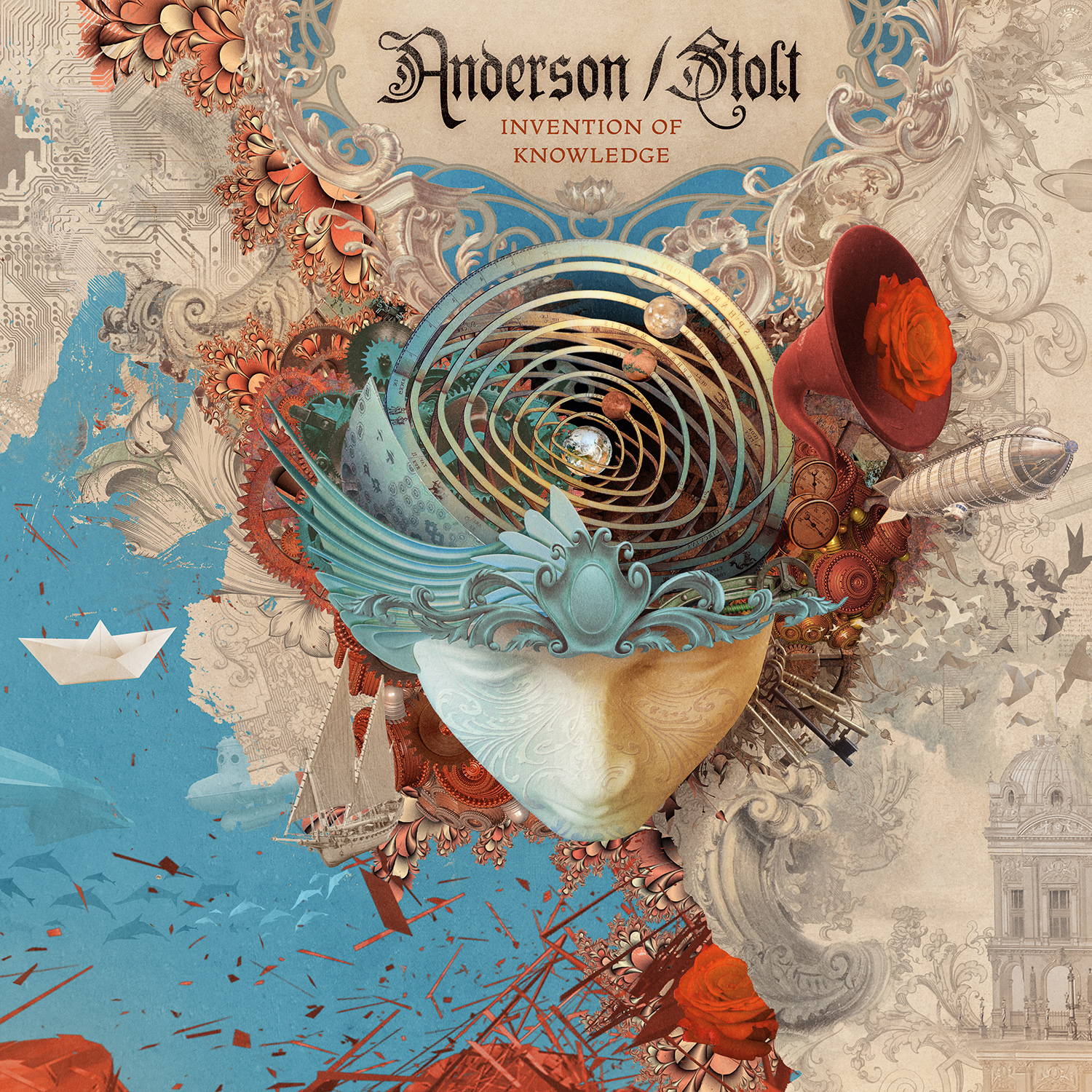
Press_Cover_01The great folks over at the DPRP (where I am proud to be a writer, as well) have just released a Round Table Review of the new Anderson/Stolt album, Invention of KnowledgeThree great reviews of a fantastic album.

If you like classic 70s Yes and you also like Roine Stolt’s godlike work on the guitar, then this is the album for you.

Check out InsideOut for more info on the album, and be sure and read the DPRP reviews.

Jon Anderson Announced As Prog Magazine’s Prog God of the Year

92193247-bfc3-434c-8ce6-0e8bfdb8575f
Photo courtesy of Prog magazine

Fun news from the great folks over at Prog magazine – Jon Anderson is 2016’s Prog God of the year. A well deserved honor indeed. Congratulations Jon!

http://teamrock.com/feature/2016-07-15/prog-god-2016-jon-anderson-in-his-own-words

Anderson/Stolt: The Invention of Knowledge

Release date: June 24, 2016, from InsideOut

Press_Cover_01

Two masters from different eras working together? That’s one way of looking at the combination of Jon Anderson and Roine Stolt. But this isn’t just two giants from the progressive world pooling their considerable natural resources. But a project with a fresh sound, in the process making music that spans the ages.

For me, this is an album that will prove to be timeless,” says Stolt. “In the way that you can put on a Yes album from the ’70s now and it still sounds fresh, so I feel people will be able to listen to what we have done here in 10 years’ time and it will still make an impact.

The idea to bring together the Yes legend and The Flower Kings/Transatlantic maestro actually came from InsideOut owner Thomas Waber.

It was Thomas who originally told me that I should work with Jon Anderson,” recalls Stolt. “But at the time, Jon was just so busy that I couldn’t see any way this might happen.

But fate, as it can sometimes do, already had laid plans for this alliance. So, in February 2014, the pair were brought together on the Progressive Nation At Sea cruise.

Mike Portnoy suggested Transatlantic should do a couple of songs live with Jon, when he agreed to join the cruise. It was meant to be a surprise for everyone, and no more than a 20 minute set. But then Jon emailed and suggested we should also do the first side of the ‘Tales From Topographic Oceans’ album. Now, I love that music, but it was an extra 20 minutes to learn. But we were all really keen to do this. So, we spent three hours on board the boat rehearsing, and then performed for an hour or so with Jon, doing ‘The Revealing Science Of God (Dance Of The Dawn)’ (the aforementioned ‘…Topographic Oceans’ piece), ‘Long Distance Runaround’, ‘And You And I’ and ‘Starship Trooper’. That was the first time I had ever met Jon, but we got on very well.”

“Roine and I had a wonderful instant connection when we met on that boat out of Miami two years ago,” adds Anderson.

From this beginning, Anderson and Stolt began exchanging musical ideas across the world.

The foundation of the songs started many moons ago via the internet,” explains Anderson. “Even though we are at opposite ends of the world, we have been able to co-create this very special album, thanks to the modern technological world we live in.”

“Jon began to send me through files with ideas he had,” adds Stolt. “And I took these, chopped them into bits and began to assemble the tracks for the album. This process began in the summer of 2014 and over the next six months or so, everything came together. Because of the time difference, Jon would get up in the morning and send me over demos he had been creating with musicians out there, and I would then take these and develop them.

And Stolt was delighted with the way things worked out.

It was like going back to the ’70s in one way. Because there were no rules. We were drawing inspiration from all sorts of musical heritages across the world. There were no restrictions. Jon said he didn’t want us to do a traditional progressive rock album, but rather wanted it to be progressive music. It took me a little while to understand what he meant. However, the point was that we didn’t need to aim at producing a rock record. We should be prepared to bring in any musical elements we wanted. And he was right. We took inspiration from anywhere and everywhere. There is so much music out there to be excited by, so why deny yourself that possibility?”

However, there is still a familiarity in the way the music sounds, something Stolt was keen to keep at the core of what has been achieved.

Yes, I felt we should keep it all on recognisable territory. Both of us have a history of music behind us. To take on something completely new wasn’t really something either of us wanted to do. However, this is definitely the most complicated and detailed music that I have ever done. And that’s so exciting.

The recording process began a year ago, with Stolt going into the studio with three old friends to record the basic tracks.

I worked with The Flowers Kings duo of Jonas Reingold on bass and Felix Lehrmann on drums, with Tom Brislin on keyboards. Tom had done the Yes Symphonic Tour, and I knew him well. It was important for me to be comfortable with the musicians at this stage, because that way I was more relaxed about telling them how we wanted it all to sound. If I had been in the studio with people who were strangers, then I might have felt more restricted.

Stolt of course handled all the guitars parts, and subsequently other musicians were inveigled into the tapestry. These included Nad Sylvan plus Pain Of Salvation’s Daniel Gildenlow both on backing vocals, joined by female singers Anja Obermayer, Maria Rerych and Kristina Westas.

I also did some of the backing vocals,” reveals Stolt. “But none of the lead ones. Jon did all of those, as well as writing the melodies and lyrics. And he was happy with me to work with the musicians I chose in the studio. He trusted my instincts.

“Jon recorded his vocals in California, and I constructed these parts of the songs from the files he sent me.

The album, which is titled ‘Invention Of Knowledge’, has been co-produced by the two main protagonists. And Stolt was very impressed with Anderson’s attention to detail.

He was very specific in what he believed was needed. I have never worked with anyone who had so many creative ideas. I loved it. For instance, he might suggest that there was a need for a tribal rhythm at 12 minutes and 43 seconds into a track. Or, that his vocal needed a little effect at seven minutes and 12 seconds. It was so easy working with him. Not in the least what anyone might believe.

The album has just four tracks – ‘Invention Of Knowledge’, ‘Everybody Heals’, ‘Know’ and ‘Knowing’. “As you would expect, these are very long,” suggests Stolt. “It is difficult to describe the way they sound. You’ll have to hear for yourself. There is so much going on musically. As I said earlier, it does reflect the attitude in the ’70s, when artists didn’t allow their creativity to be confined to a linear dimension.”

Working with Roine has been such a musical mystical journey for me,” muses Anderson. “I’ve had so many musical adventures in music over the past decade, and feel the time is just right to release some of the songs that came to me with the help of fellow musicians. Roine has proved to be an excellent producer, as well as a very soulful guitarist and all round musician. We decided to create long-form musical journeys for people to take time to relax, listen and enjoy the results of our labours.

Source: InsideOut

Anderson-Stolt Trailer

Amazing sound from this new trailer.  Sounds like something from TALES OF TOPOGRAPHIC OCEANS.

Relayer: A Brief Retrospective

relayer

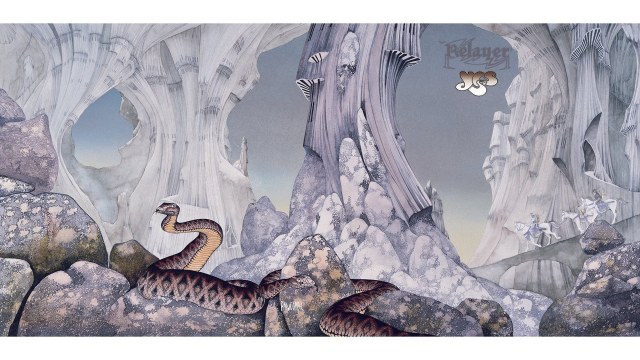
A visually stunning album cover. Profound and thought-provoking lyrics. Epic instrumentation and vocals. I could be describing almost any progressive rock album of note, but I am specifically referring to the underrated Yes album Relayer in this case. I say underrated because this album, featuring only three songs, all of which are worthy of the designation “progressive,” ended up wedged in between the controversial Tales from Topographic Oceans and the (relatively) lackluster Yes albums of the late 1970s/early 1980s.

First a brief comment on the sleeve design. Roger Dean is an integral part of Yes’ image, and his design for Relayer only bolsters the importance of his role. Inspired by images of war and the Knights Templar, Dean draws the viewer in to a world of fantastical images and drama, as the knights on horseback arrive to do battle with the twin snakes. Before one even listens to the album, he can already grasp its focus and themes: war and peace, victory and hope. Dean can capture in an image what Anderson, Squire, and Howe can capture in music.templar

The three songs are not only well-written, but they are also well-performed. This may seem like an understatement in regards to Yes, but this cannot be said about every song they released. The epic opener Gates of Delirium, inspired by Tolstoy’s even longer epic War and Peace, and featuring superb work on keys and synths from Patrick Moraz on his only Yes album, was best described by Jon Anderson: it is a “war song,” but not one that seeks to explain or denounce war, but rather a song that explores war’s aspects: there is a “prelude, a charge, a victory tune, and peace at the end, with hope for the future.” Sound Chaser, a frenetically paced tune featuring a true guitar solo from Steve Howe, solid drumming courtesy of Alan White, and a sizzling performance on bass guitar from the late, great Chris Squire, allows Yes to explore their jazzier side. The final tune, To Be Over, moves at a more relaxed pace, anchored by Howe’s electric sitar. It is a beautifully straightforward song, and it provides the perfect final touch on a visually and acoustically stunning album.

In sum, Relayer may not be the most renowned album in Yes’ extensive catalogue, but in this reviewer’s humble opinion, it is one of their finest works overall, and one that deserves more attention and respect.

YesYears: Twenty-Five Years Later

Remember YesYears?  It was one of the first really nice box sets to come out, back in the day when the only nice box set was that Bruce Springsteen one that had come out in the late 1980s?

yesyears
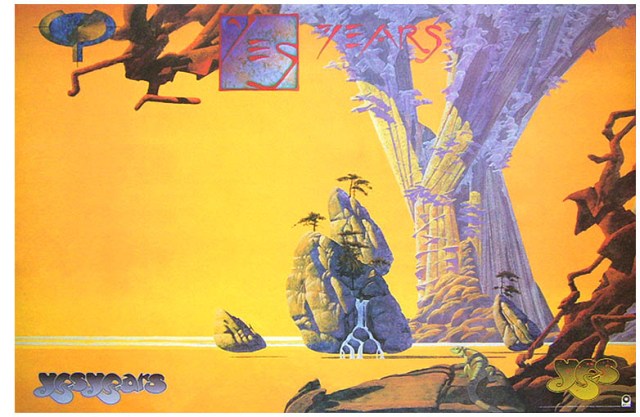
YesYears–a Nice Fiction that Every Member of Yes Loved One Another, Beginning to Present

YesYears came out on August 6, 1991.  Union had come out at the very end of April that same year.  Unless you were really connected to the internet (not that easy in 1991), Yes fans just had to guess as to what was going on that summer with the band.  Was Yes really an eight-person band?  And, how long would that last?  YesYears seemed to present the eight as living in harmony with one another.  After all, while the four discs did not include anything from Anderson Bruford Wakeman and Howe, it did list them as a part of the really nice fold-out sleeve, tracing every aspect of Yes history from “The Warriors” to Yes incarnation #9.

Whether real or not, the packaging of YesYears certainly makes a coherent narrative of the band and everyone of its members from Alpha to. . . well, certainly not Omega!  Yes was alive!  Or, so it seemed.

At the time that YesYears came out, I was very poor (a second-year graduate student) and still listening to cassette tapes.  Despite the expense of the YesYears box set, I purchased the four-cassette package.  And, yes, it made a deep cut in my savings account.  Those were years when I would skimp on lunch (usually not even eating one) to spend the money on music or books.

Yes+Yes+Years+350639bAnd as far as I remember, I never regretted having bought that box set.  Sadly, though, the cassettes that came with it were not of the best quality, and I wore my copies out rather quickly.

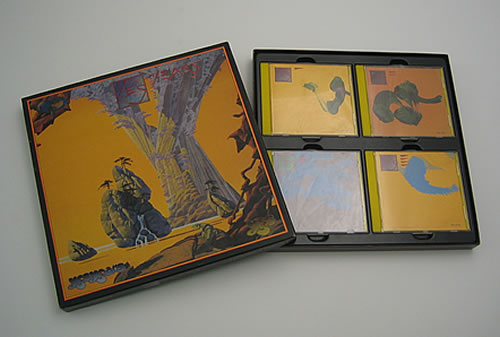
Jump forward two decades.  Today, in the mail, all the way from an Ebay seller in New Jersey, arrived a mint condition 4-cd box set of YesYears.

Wow, it is a thing of beauty.

I know that many of the songs that had not been readily available in 1991–such as Abilene, Vevey, Run with the Fox–are now very easily available.  Still, the 1991 box set is really, really gorgeous.  I actually paid less for this mint condition version (including postage) than I did for the cassette version 25 years ago.

Just as in 1991, I have no regrets.  The sun is out, my kids are laughing somewhere in the house, and I’m listening to disk three of YesYears.

Still amazingly beautiful. . . even a full quarter century later.