My Proggy Vacation

How does a two-week vacation circling the Great Lakes wind up being this . . . proggy?

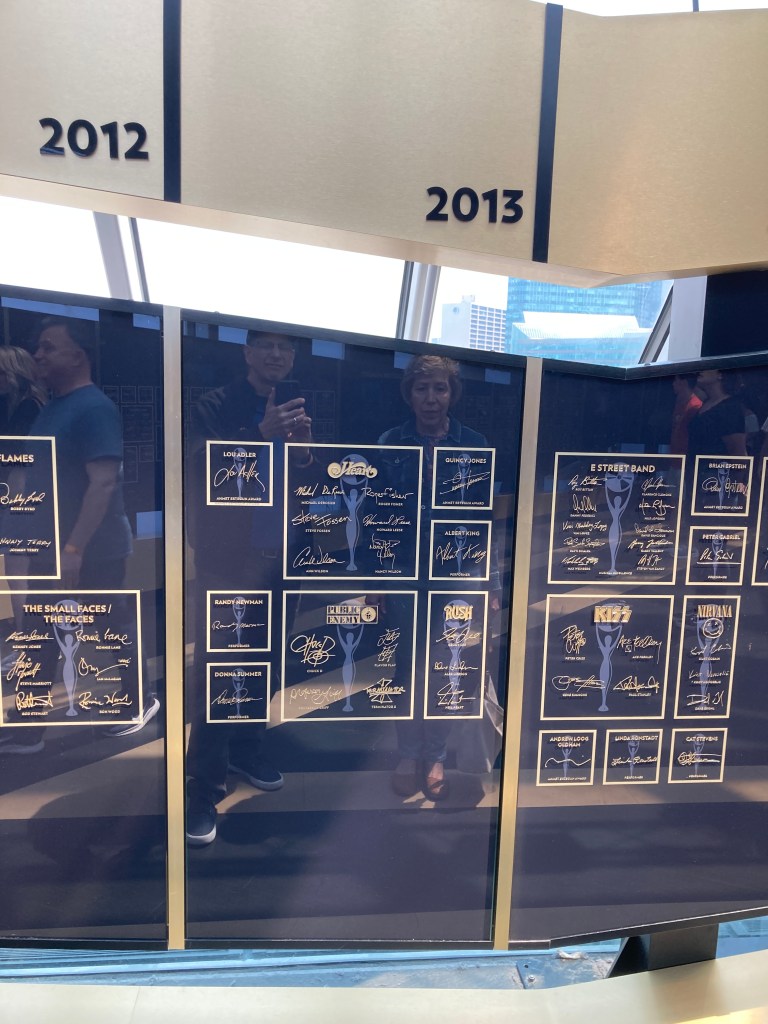
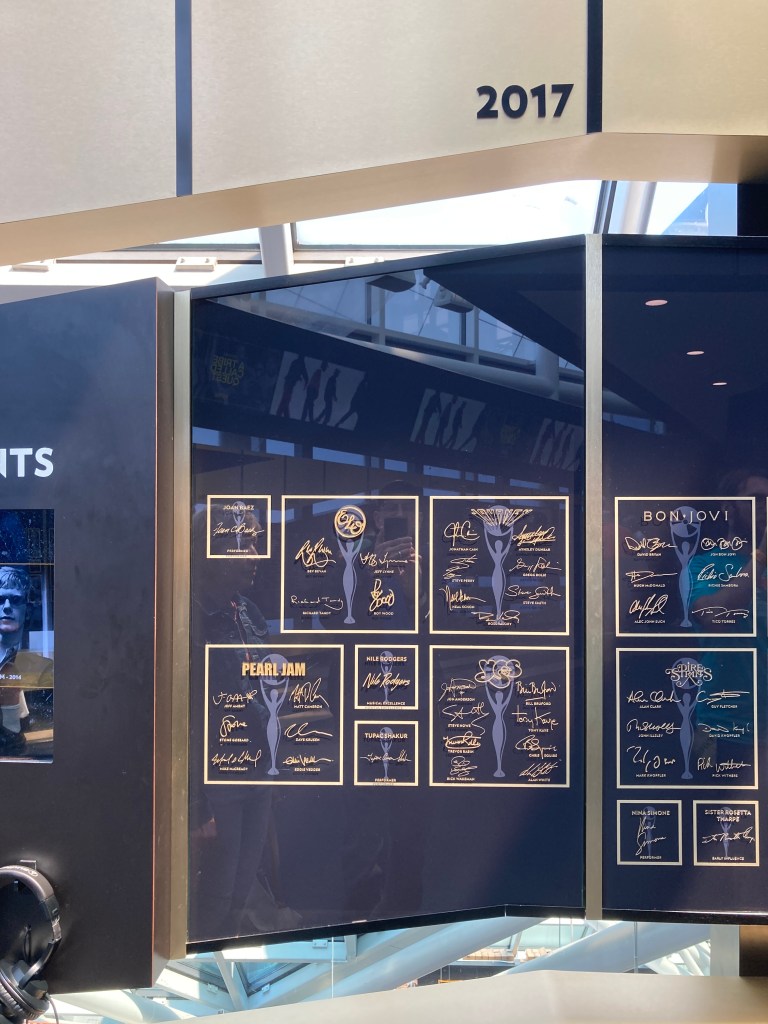
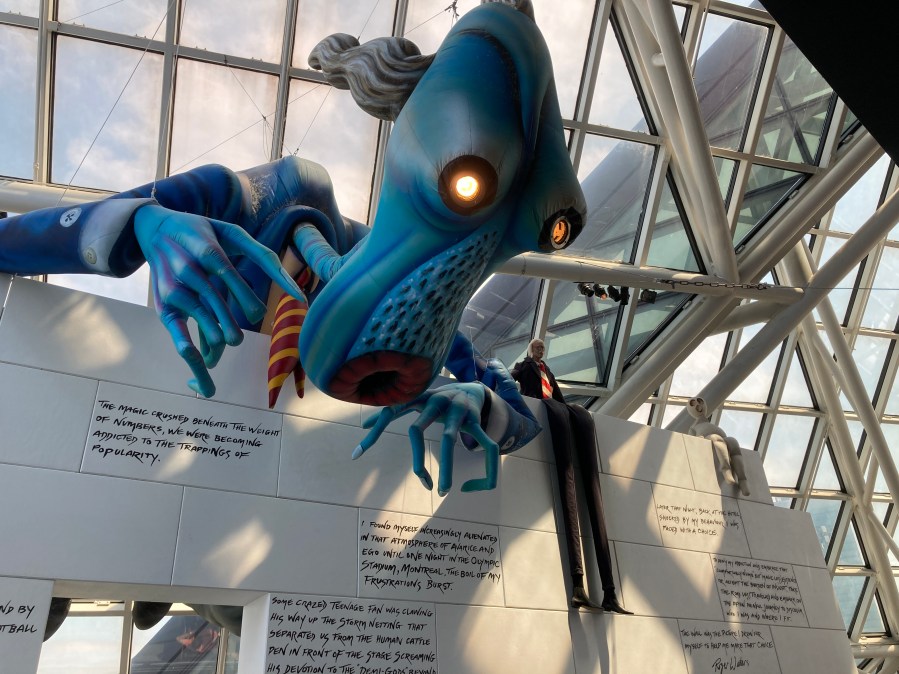
Well, starting out with a few days in Cleveland made a visit to The Rock and Roll Hall of Fame inevitable; it’s been almost thirty years since I set foot in its controversial precincts. (In fact, I’d argue that any hall of fame, no matter its subject, is about controversy — who’s in, who’s not, who should and shouldn’t be there. On such foundations are sports talk radio and the seething hatred of prog fans for Rolling Stone magazine built.) Has the R&RHoF improved in welcoming progressive rock since its fledgling days in 1997, when gigantic props from Roger Waters’ version of The Wall glowering from the top of its atrium (see above) were about the only evidence prog was even on its radar?

Honestly, omissions are still painfully plentiful; the otherwise comprehensive rock history displays on the first two floors blank out prog entirely, hopping from psychedelia and singer-songwriters to punk with only the barest nod to heavy metal. On the other hand, there has been movement in the last 30 years, with three of Britprog’s Big Six — Pink Floyd (1996), Genesis (2010) and Yes (2017) — plus Rush (2013) inducted into the Hall proper, currently housed on the third floor.
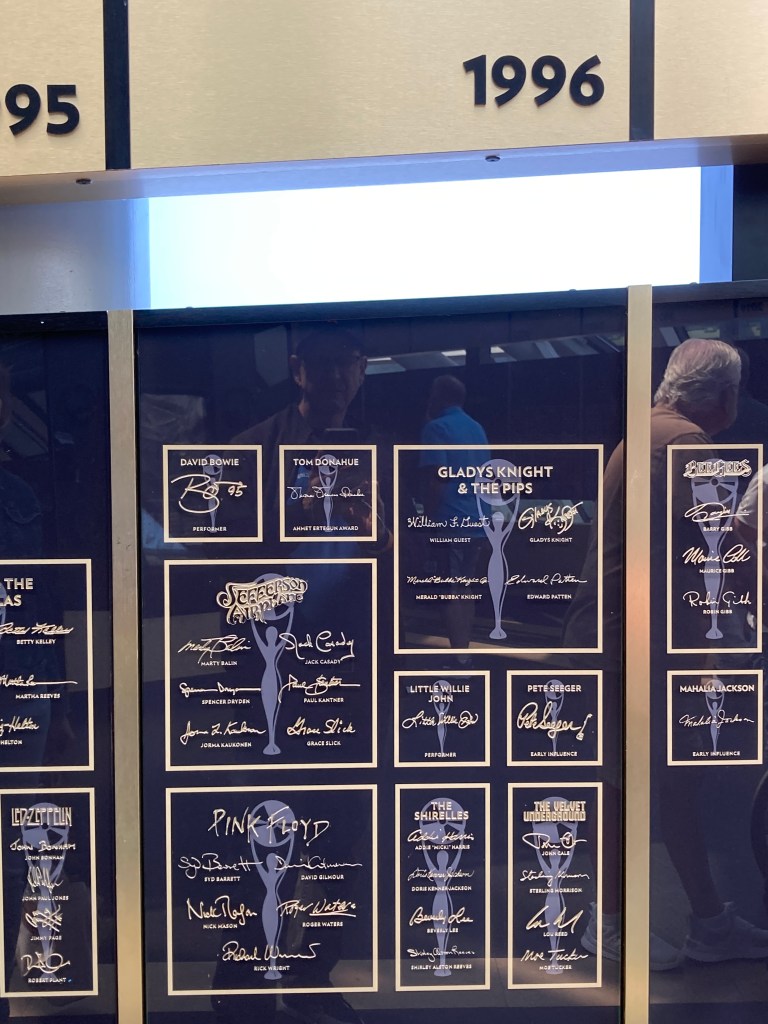
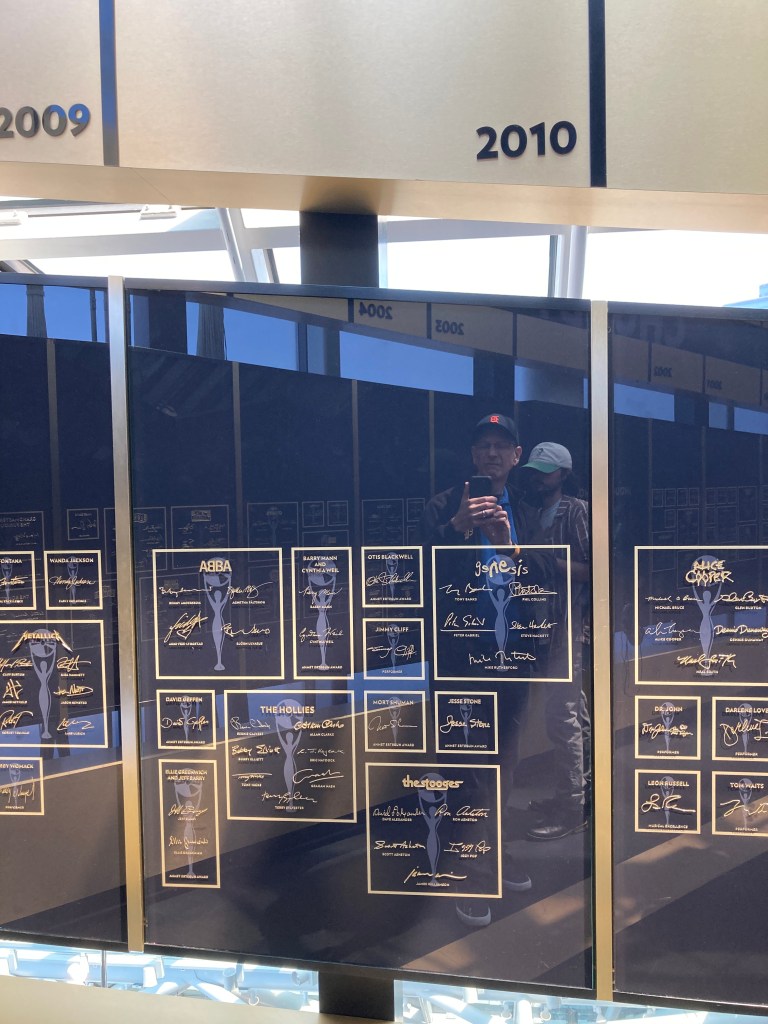
(By the way, you can watch highlights from any artist’s HoF induction on video displays stationed in the Hall. Of course I dialed up that marvelously manic night when Rush was honored — the highlight reel included a full minute of Alex Lifeson’s inspired “Blah blah blah” speech.)

And, doubtless more to harvest email addresses than anything else, you can also vote on who you think should be in the Hall on adjacent video screens. Having done my civic duty by casting a vote for King Crimson, it was heartening to see them at #83 in the Top 100 of this year’s fan poll, though in a lower position than Styx (#5, just in front of Weird Al Yankovic), Tool (#12), Jethro Tull (#15), and Kansas (#35, not pictured). (And sad to say, Emerson Lake & Palmer were nowhere in sight.)
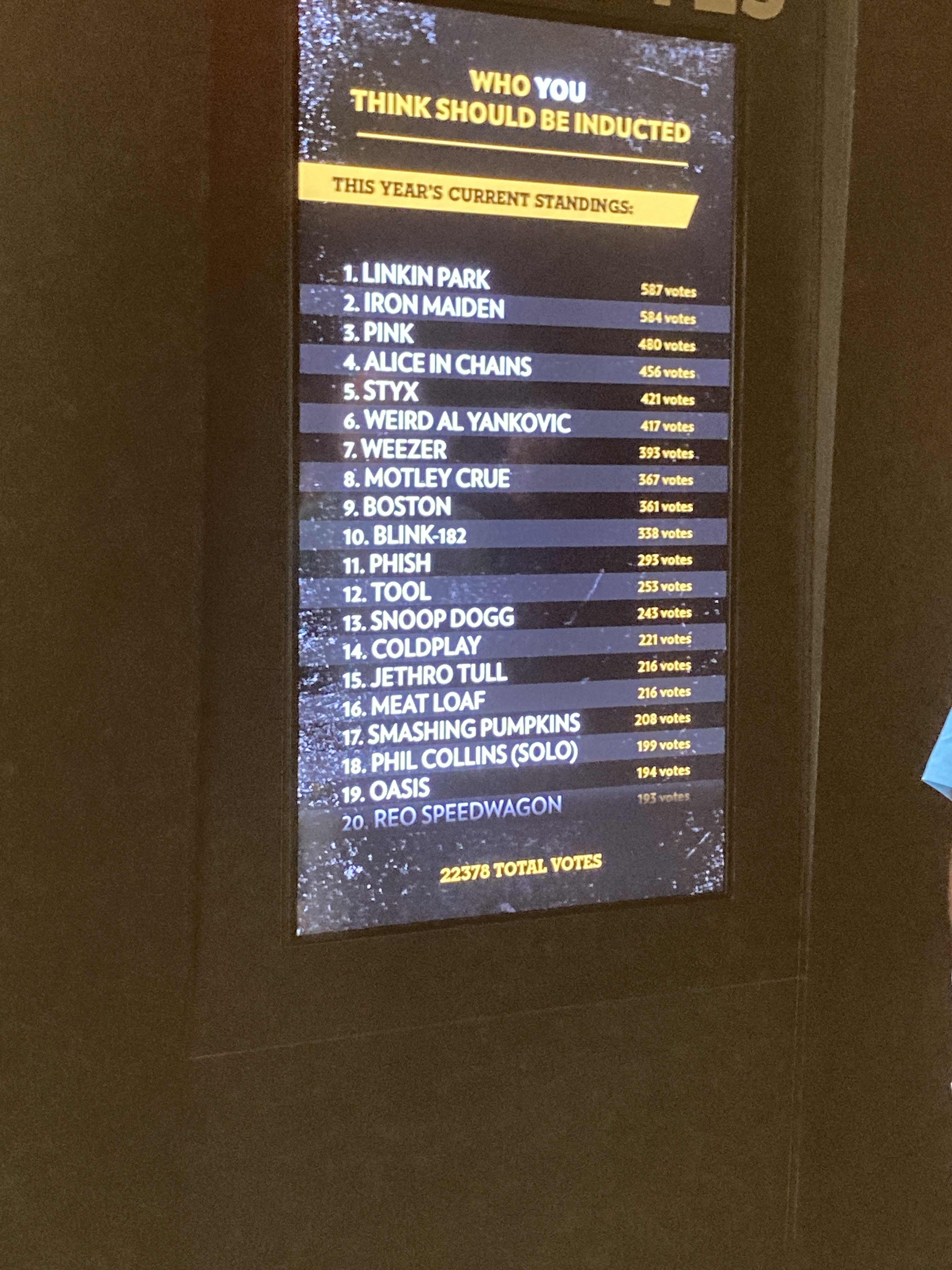
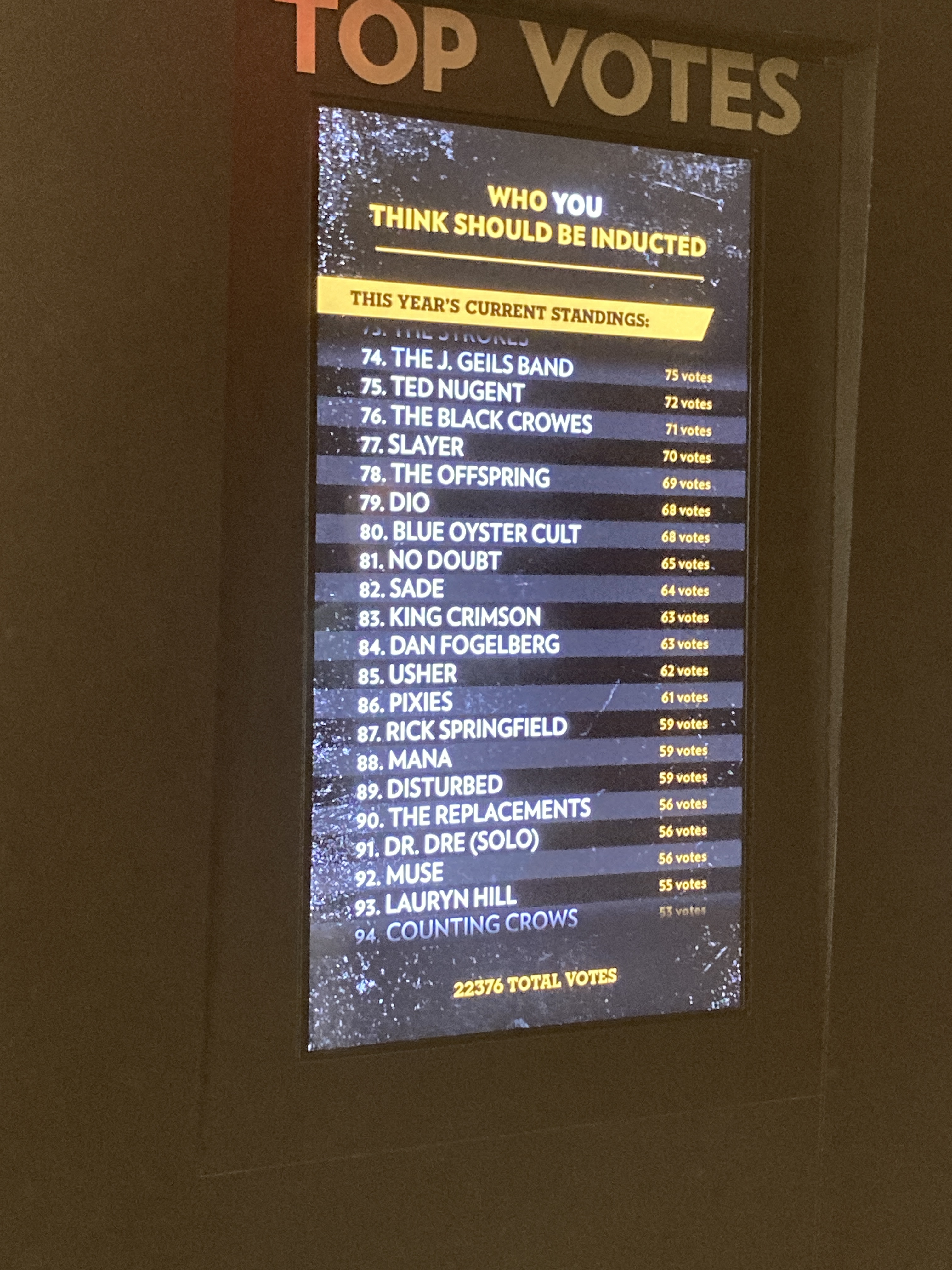
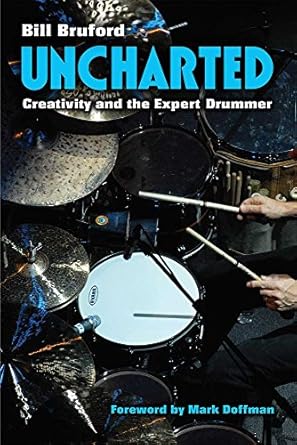
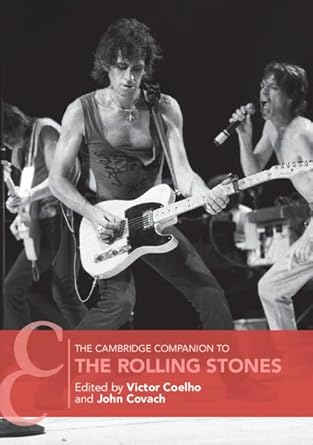
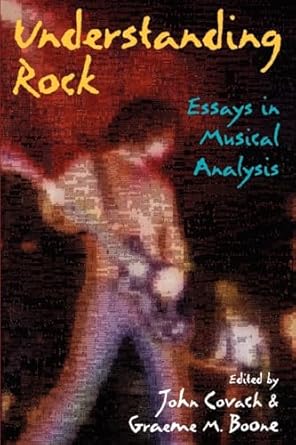
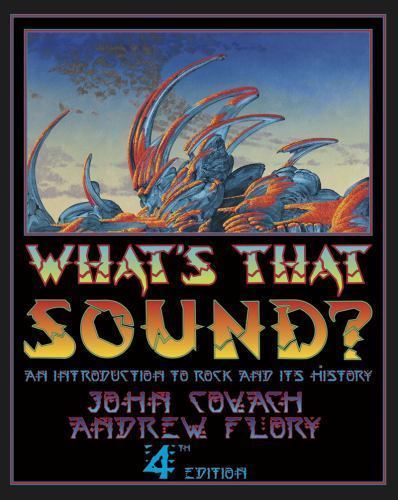
Then it was on to upstate New York, where I spent a delightful hour over coffee with noted music theory scholar and killer guitarist (and acquaintance from my grad school days) John Covach. One of the vanguard academics who pioneered rigorous analytical study of rock in general and prog in particular, John overflowed with good vibes as he waxed eloquent on the delights and challenges of shepherding books like Understanding Rock, What’s That Sound? and The Cambridge Companion to the Rolling Stones through the university press publication process; setting up a lecture tour of U.S. music schools for legendary drummer Bill Bruford (fresh from gaining his own Ph.D at the time); and getting gigs in a Yes tribute band when the post-Anderson version of the group still toured North America every summer! It was a blast to reconnect with John, who in addition to teaching and researching at the Eastman School of Music, is hard at work editing The Cambridge Companion to Progressive Rock (still in pre-publication, hopefully to be officially announced in 2026).
From there, it was a short border hop to an overnight stay in St. Catherine’s, Ontario — in a subdivision:

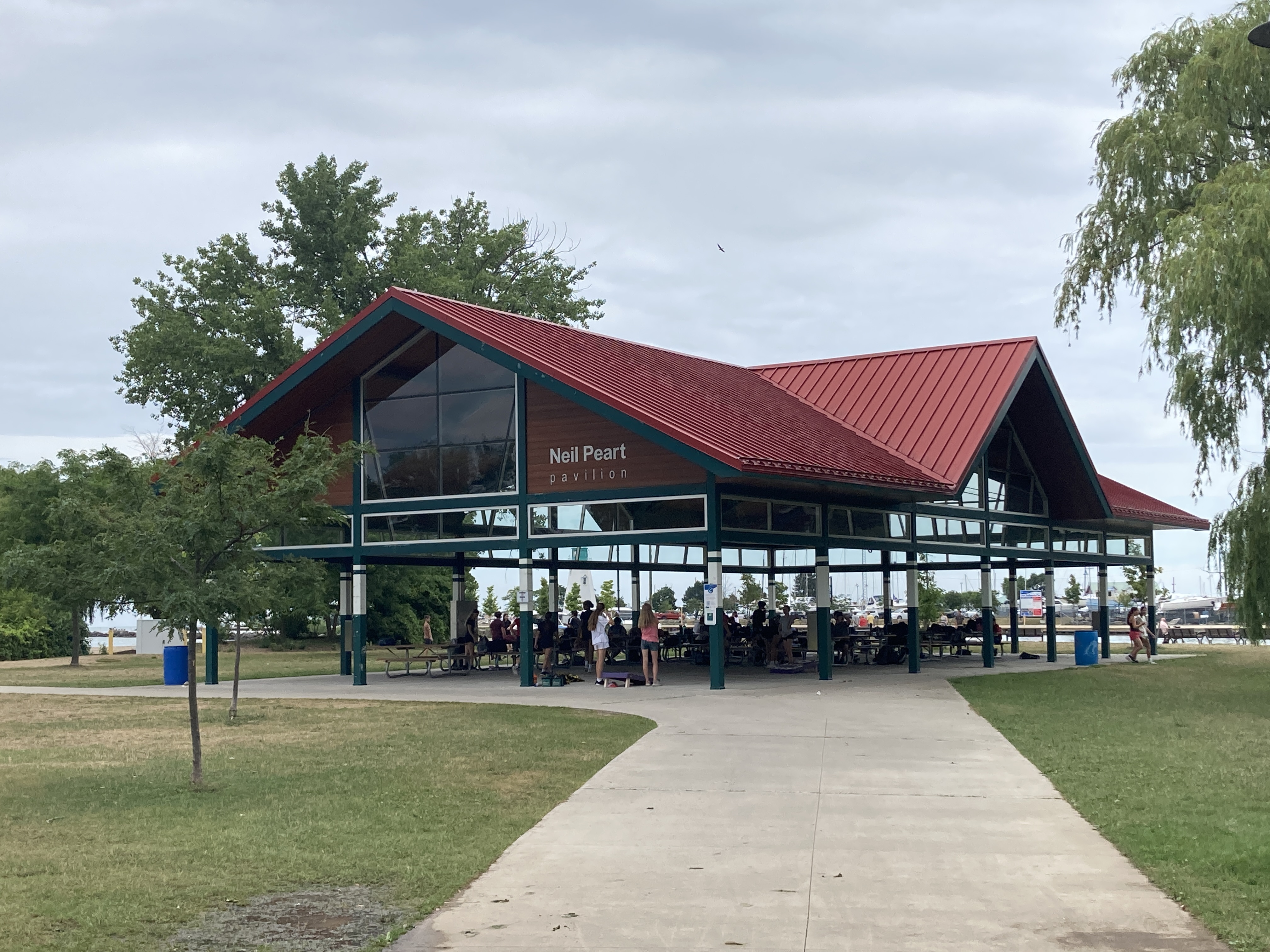
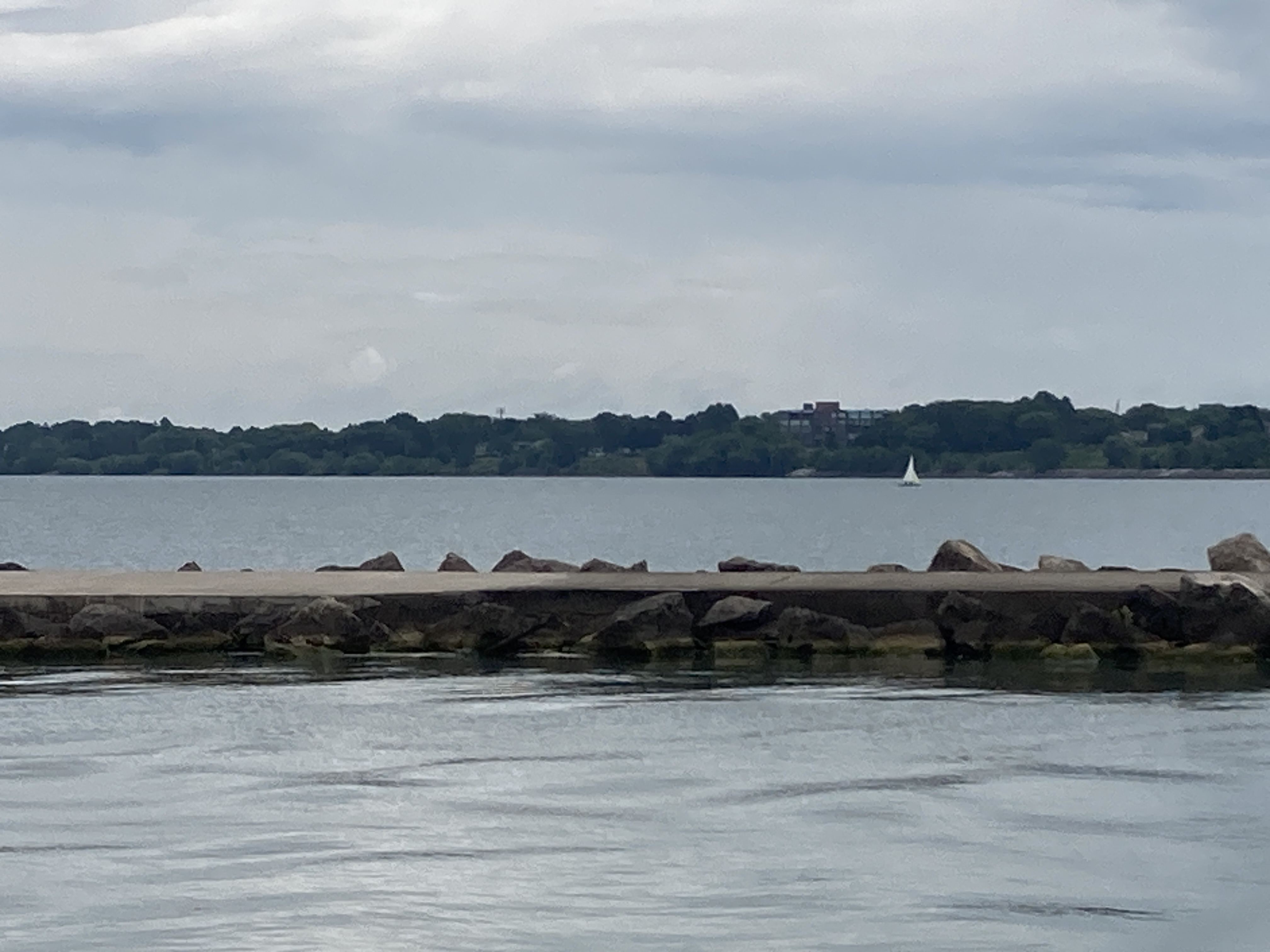
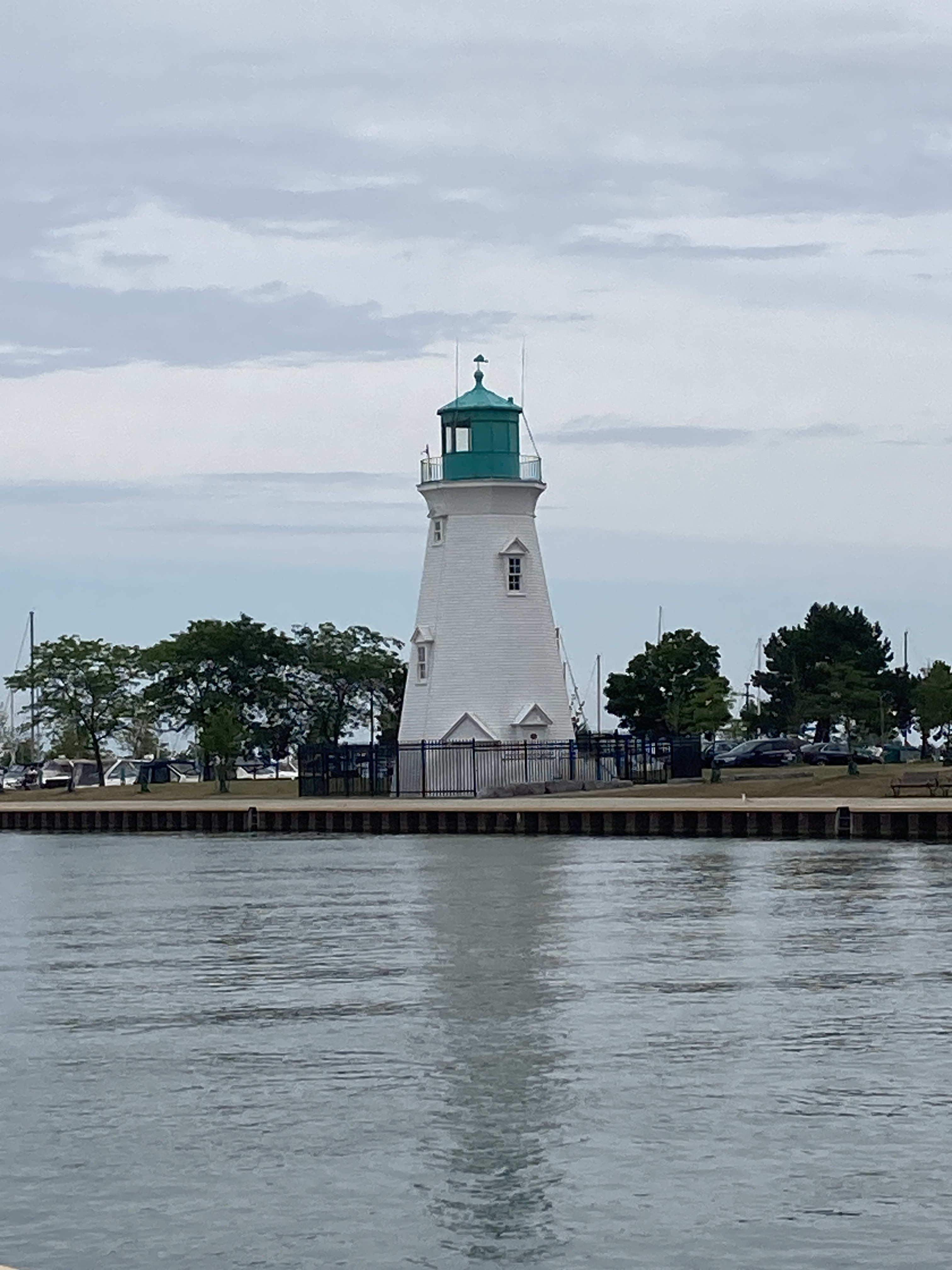
And yes, landing in the hometown of prog-metal’s finest drummer/lyricist was no coincidence; an outing to the town’s Lakeside Park (gorgeous even on an overcast day), complete with a picnic lunch in the shadow of the Neil Peart Pavilion brought the early Rush song of that name to vibrant life. (Fundraising for a memorial sculpture of Peart to be installed in the park has been in progress since last fall; click here for more information.)
If there’s a lesson, I suppose it’s this: a proggy vacation does not just happen; it must be carefully planned. So, fellow Progarchists: what’s your dream itinerary?

— Rick Krueger

P.S. Yes, all of the above is pretty retro; but new prog and more cool music piled up in my inbox while I was gone, so the appropriate Quick Takes are coming . . .
In Concert: Kansas Whips Up a Classic Rock Storm

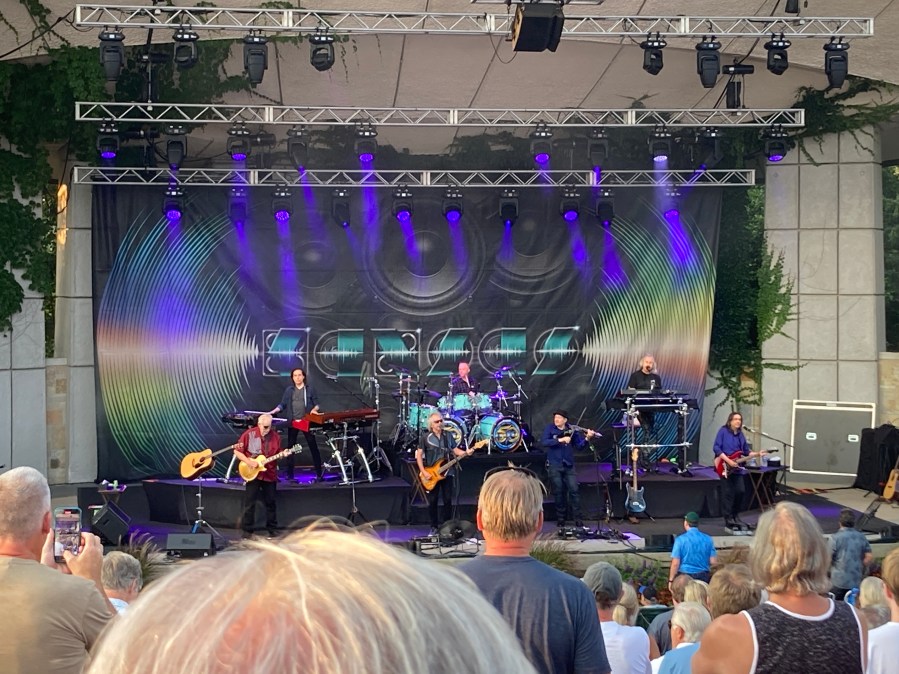
Kansas, Meijer Gardens Amphitheatre, Grand Rapids Michigan, August 8, 2024

With a sell-out crowd in front of them, a nostalgic vibe in the air and their last album of new music (late career highlight The Absence of Presence) released back in 2020, you could argue that all Kansas really had to do last night was show up, then conjure their heyday by playing their hits. And they did that, with drive and enthusiasm to spare. But thankfully, they also did much more, delving deep into their catalog to unearth the sturdy foundation of their mid-Seventies success.

In this age of long-running rock bands morphing into ongoing franchises, you could also try to litigate the “but is this really Kansas?” question. After all, only one original member (fluid, piratical-looking guitarist Rich Williams) was onstage last night, and (gasp) three of the current members hail from New Jersey!

But let’s acknowledge that time marches on. Founding drummer Phil Ehart continues to recover from a major heart attack, but his protegé Eric Holmquist filled the drum throne with confidence; he has Ehart’s taut grooves, twisty rhythms and spectacular licks down cold, with plenty of power undergirding the finesse. Longtime bassist/singer Billy Greer was back after an extended leave, looking and sounding great as he anchored the low end, tackling the late Robbie Steinhardt’s vocal parts and revving up the crowd with genial banter. After eight years as Kansas’ lead vocalist, Ronnie Platt consistently rose to the occasion, following the trail Steve Walsh’s legendary performances blazed with both the midrange power and the high-end acrobatics required. And those guys from New Jersey? Keyboardist/musical director Tom Brislin locked in with Holmquist to propel the music with pulverizing organ and fluent piano and synths, while Joe Deninzon on violin (plus a little guitar) and Zak Rizvi on guitar went to town — ranting and raving, bearing down with crunchy power chords, firing up hard rock riffs (often played face-to-face or back-to-back, just like old times).

Left to right: Billy Greer, Tom Brislin, Ronnie Platt, Joe Deninzon onstage at Meijer Gardens Amphitheatre. Photo by Bob Keeley.

All night, Kansas’ playing was spectacular; their intricate instrumental weave ebbed and flowed through the music’s symphonic paces, whether earlier tunes like “Icarus”, “Song for America” and “Can I Tell You” or deep tracks from the chart-topping years “Paradox” and “Miracles Out of Nowhere”. Performed as a tribute to Steinhardt, the early southern rock of “Down the Road” smoked and sizzled, with Deninzon getting his Charlie Daniels on with a scorching fiddle break. And of course the hits were present, correct and eagerly welcomed; “Dust in the Wind” (to my knowledge, one of only two US Top Ten singles based on Ecclesiastes – and definitely the most depressing) “Hold On” (one of songwriter Kerry Livgren’s earliest born-again altar calls) and inevitable encore “Carry On Wayward Son” (complete with five-part harmony, maniacal Brislin organ and piercingly precise Williams guitar) brought on lit-up cell phones and bellowed singalongs galore.

Fifty years ago, if you’d told me I’d be sitting on a hill watching a young couple in front of me swaying to a song about Albert Einstein — “Portrait (He Knew)”, in case you were wondering — I’m not sure I would have believed you. But even though last night’s weather was about as perfect as you can imagine, the current edition of Kansas whipped up an unstoppable musical storm that pulled their eager audience into that kind of a vortex. Classical gas, prog rock, heavy metal, folky balladry, lyrics about seeking and occasionally finding – it was all there, and it all worked to near-perfection. If you caught Kansas back then, they’ll still take you there effortlessly; if you’ve discovered them since then, they won’t disappoint.

— Rick Krueger

Setlist:

  • Point of Know Return
  • What’s on My Mind
  • Fight Fire with Fire
  • Icarus – Borne on Wings of Steel
  • Paradox
  • Throwing Mountains
  • Dust in the Wind
  • Song for America
  • Can I Tell You
  • Hold On
  • Down the Road
  • Portrait (He Knew)
  • The Wall
  • Miracles Out of Nowhere
  • Carry On Wayward Son

Kruekutt’s 2021 Favorites!

I thought I didn’t have a big list of favorites from this year’s listening — until I revisited my six-month survey from back in June and added in the good stuff I’ve heard since then! The listing below incorporates links to full or capsule reviews, or other relevant pieces on Progarchy and elsewhere; albums I haven’t written about yet get brief comments, along with my Top Favorites of the year. Most of these are available to check out online in some form; if you find yourself especially enjoying something, use that Christmas cash and support your choice with a purchase! And the winners are . . .

Continue reading “Kruekutt’s 2021 Favorites!”

Bryan’s Best of 2021

We’ve come to the end of another year, and what a horrible year it has been. Really the only positive thing I can think of from this year is the music. In addition to all the non-music nonsense that has gone on this year, we lost from legends in the prog world, none hurting more than the tragic and completely unexpected death of David Longdon. That one will hurt for a long time.

I usually write my best of lists in no particular order, with my top pick(s) at the end. So without further ado…

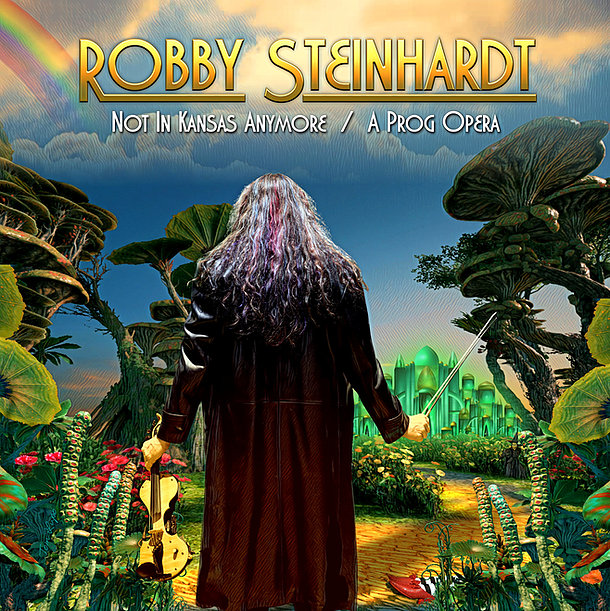
Robby Steinhard Not in Kansas AnymoreRobby Steinhardt – Not In Kansas Anymore
Robby Steinhardt was another prog legend we lost unexpectedly earlier this year. He hadn’t been active in music for quite some time, but that was about to change as he was finishing up his first solo album and had plans for a tour. Sadly the latter was not to be, but we did end up getting his solo album in the fall. It’s a great record, and it shows what a key player he was in Kansas. His vocals are stellar, and his violin playing is second to none. This record has a bit of the magic that I think Kansas lacks without Steinhardt. There are more musical influences at work than just Kansas on this record. It’s not a solid 10/10 throughout, but it is a very good record. Check out my review and my tribute to Robby.

Devin Townsend Galactic QuarantineDevin Townsend – Devolution Series #2 – Galactic Quarantine
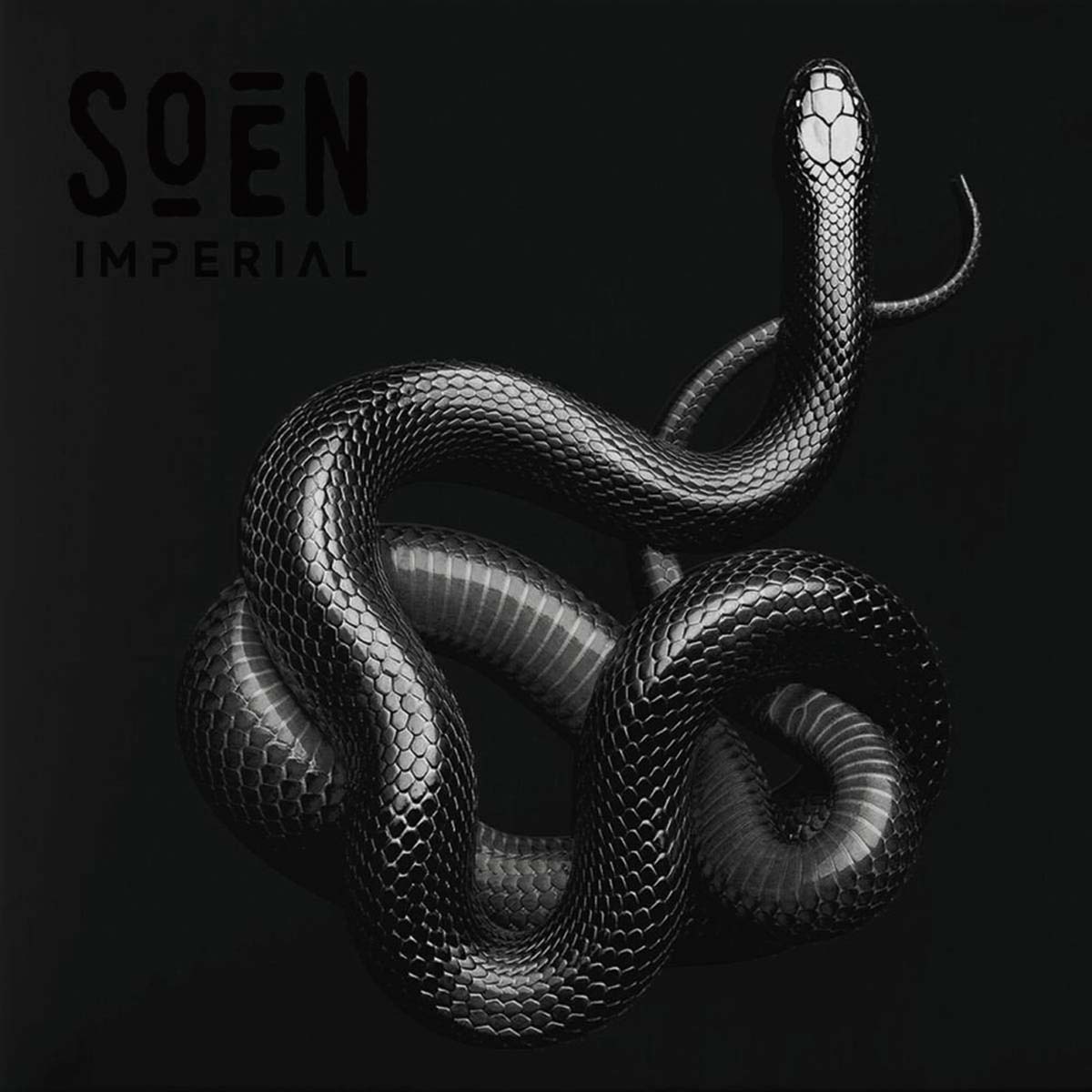
Devin Townsend has been a busy bee this year. In addition to working on three new records this year, he released two minor releases of live material. The first is an acoustic album (see my glowing review) from a show he did in Leeds in 2019. It’s a raw and emotional take on his music. The Galactic Quarantine album is one of his live-streamed albums from 2020 with the musicians playing live on green screens across the world. The music is blisteringly great, with a surprising amount of Strapping Young Lad material played. Devin humorously engages with his virtual audience, which makes the music come to life a bit more. This has been one I’ve returned to quite a bit this year. Perhaps an unorthodox release, but it would make a really good entrance point for the uninitiated to the heavier side of Devin’s music. Check out my review.

8250379_e4a1fc34c7Soen – Imperial

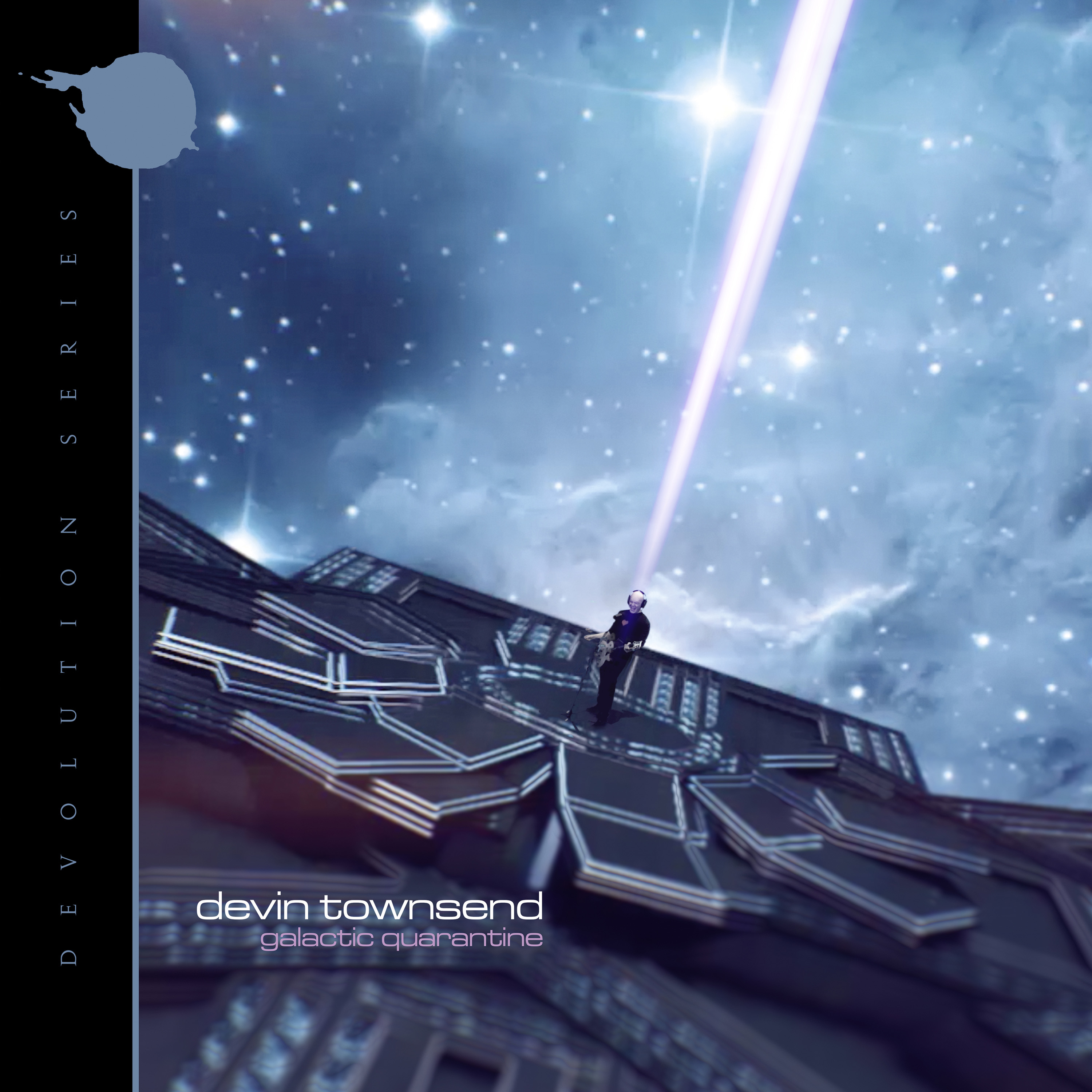
It turns out we never reviewed Soen’s latest album, which was released in January. The Swedish prog-metal supergroup can do no wrong. Their songs are catchy, memorable, and thoughtful. They can be both heavy and contemplative, and in my book they rank in the upper echelon of progressive metal. This record has been on repeat all year.

Atravan - The Grey LineAtravan – The Grey Line

Sticking with the progressive metal theme, Atravan was a pleasant surprise at the beginning of the year. This is the first Iranian band we’ve ever reviewed here at Progarchy, and they’re fantastic. I’m so glad the band reached out to us. They make metal in the vein of Riverside – heavy, spacey, wall of sound. Definitely a band that deserves recognition, although I worry what too much recognition could do for them with the repressive Iranian regime. Check out my review.

Continue reading “Bryan’s Best of 2021”

A Final Goodbye: Robby Steinhardt’s “Not In Kansas Anymore”

Robby Steinhard Not in Kansas AnymoreRobby Steinhardt, Not In Kansas Anymore, 2021
Tracks: Tempest (1:41), Truth 2 Power (Only Truth Can Change The World) (3:48), Mother Earth (Is Calling You) (4:42), Rise Of The Phoenix (5:22), The Phoenix (4:06), Prelude (1:54), Dust In The Wind (5:43), Pizzacato (A Slice For Baby Boy Flynn) (2:37), Tuck Tuck (6:10), Not In Kansas Anymore (4:40), A Prayer For Peace (Bonus Track) (3:15)

It was only a few months ago that we mourned the loss of Robby Steinhardt, but out of that sadness we found out that his very first solo album was just about finished. The album release was delayed because of his death, but Not In Kansas Anymore was released a week ago. It is far better than I could have imagined. In many ways it sounds more like Kansas than Kansas does these days. The hard rock, the unique touch Robby had on the violin, the beautiful vocal harmonies – Not In Kansas Anymore has it all.

The album was produced by Michael Thomas Franklin, who produced Jon Anderson’s 1000 Hands a few years ago, for which Steinhardt played violin on one song. Franklin pulled together a cast of literal rock stars for this record, including Ian Anderson (flute on Pizzacato), Steve Morse of Deep Purple/Dixie Dregs/Kansas/Flying Colors, Billy Cobham of Mahavishnu Orchestra, Bobby Kimball of Toto, Chuck Leavell of The Rolling Stones, Liberty Devitto (Drummer on Billy Joel’s hits), Jim Gentry, Pat Travers, Billy Ashbaugh (Moody Blues/Pat Benatar), Lisa Fischer (longtime vocalist for The Rolling Stones), and more. 

The record opens with a brief instrumental before pounding into a classic Kansas sound with “Truth 2 Power.” It has a glorious intro of vocal harmonies that screams late 70s Kansas. The lyrics deliver a message of, well, truth about the necessity of speaking truth even when it is derided. The line “only truth can change the world” seems Livgren-esque in a lot of ways, seeing as the world-changing power of truth as personified in Jesus is central to Christianity and the Bible. I don’t know what Steinhardt’s spiritual background was or whether or not he was a Christian, but these lyrics certainly spoke to me in that regard. 

The album features an ode to the earth, which is another theme that ran through Kansas’ lyrics back in the day. Musically and lyrically “Mother Earth” reminds me a little bit of “Cheyenne Anthem.” We get a bit of western imagery in the middle of the album, and there or subtle lyrical nods to the Wizard of Oz, which is most blatant in the beautiful cover art by Tom Lupo. “Rise of the Phoenix” is an instrumental track that is pure Kansas. The guitar, bass, drums, and violin all blend perfectly in a driving track that sets the stage for “The Phoenix,” which is another track reminiscent of Kansas. 

I was surprised to hear something that reminded me of Big Big Train on this record. The sixth track, “Prelude,” is a brief introduction to a beautiful cover of Kansas’ “Dust In The Wind.” The prelude blends aspects of the Kansas sound with distinctly Big Big Train movements, including a brass band towards the end and the way the musical action steps down towards the end before morphing into “Dust In The Wind.” Perhaps it wasn’t intentional, but it sounds great all the same. “Dust In The Wind” is mostly true to the original, with the song building into harder rock territory as it goes along. It also adds more symphonic elements to the track. All along it retains the Kansas sound. 

Ian Anderson’s flute stands out immediately on “Pizzacato (A Slice For Baby Boy Flynn),” which is a folk instrumental rather than a rock piece. Robby’s violin blends well with Anderson’s flute, and it makes you wonder what an entire album of their collaborations could have given us. Both men strike me as being rather similar in a lot of ways, at least when it came to their stage presence back in the 70s. 

“Tuck Tuck” is a rather touching ode to the forgotten people of society – the hookers, beggars, and downtrodden of the cities. Steinhardt reminds us that those who have absolutely nothing matter just as much as anybody else. He reminds us that they all have stories – backgrounds of where they came from. He calls them “a royal family / lords and ladies of the evening.” He tells us of Nancy, a girl who excelled in her youth but had to leave home at 17 because of abuse at home, and sadly now she is on the streets. He tells of a young man who came back home from serving in the military and who couldn’t find any work. Now Joey is living in a cardboard box on the streets. Both are “downtown royalty.” Musically the song is a blend of styles with elements of a laid-back country song mixed with more a more traditional ballad. Lyrically I find the song quite moving. 

The losers and twenty-four hour girls
The street corner boys and the underworld
Holding court in city streets
Everyone’s seen downtown royalty

Steinhardt’s vocals really shine on the album. I wasn’t sure how he would sound after so many years on the road as well as so many years away from the industry and the health issues he dealt with over the last decade. But he sounds just like you would remember, albeit with a bit deeper tone. It’s a warm and comforting voice that I have missed in the milieu of modern prog. 

Robby Steinhardt’s Not In Kansas Anymore is one of the first albums in a little while that made me sit up and take notice. I wasn’t sure which direction this record would go – if it would be more rock, more classical, folk, or what. Robby had been mostly retired for a long time, but that time away clearly didn’t impact his talent as a musician. The most tragic part of this record is how it now represents a new beginning cut short. It was Steinhardt’s first, and sadly last, solo album. He was excited to get on the road and tour starting this past August, but unfortunately he got sick in May and never fully recovered. Thankfully we will have this record by which to remember him, in addition to his years of brilliant work with Kansas. 

This album is definitely one to check out, especially if you’re a Kansas fan. It has the special touches that I think have been missing from the last two Kansas records. 


https://robbysteinhardt.com
https://www.robbysteinhardtofficial.com/album-orders

Kerry Livgren’s Long-Awaited Cantata, “The Resurrection of Lazarus,” Now Available to Order

After decades of work and contributions from 18 vocalists, including Robby Steinhardt and John Elefante as well as many musicians, Kerry Livgren’s cantata, The Resurrection of Lazarus, is now available to order at his website: http://www.numavox.com/cd.htm. This album has taken 35 years for Livgren to complete, and I for one am excited to hear it. I believe I first heard about this project about a decade ago, so even my young self has been waiting a long time. 

Details are a little vague, since to my knowledge no music from it has been released. I assume they’ll be shipping CDs soon after you order them. I wish I could tell you more about it, but I will once I receive my CD. It doesn’t appear to be for sale on Amazon yet (a website I loathe), but I imagine it will be soon since his other music is for sale there. 

In case you missed it, Kerry Livgren released a new book last year, which you can also purchase on his website (see link above). Check out my review: https://progarchy.com/2020/11/01/a-life-of-miracles-kerry-livgren-and-the-art-of-storytelling/

All We Are Is Dust in the Wind… Remembering Robby Steinhardt

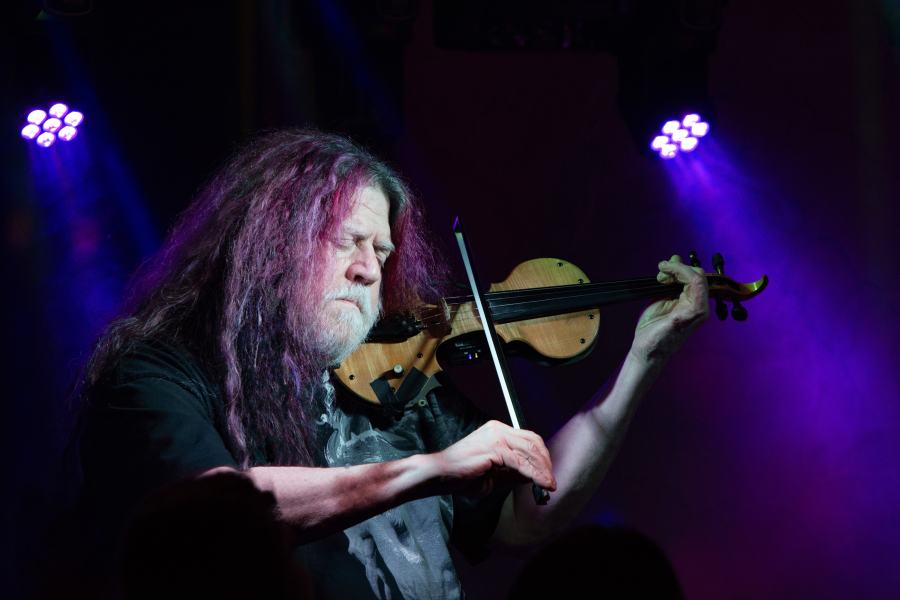
Robby-SteinhardtBy now I’m sure you’ve heard that Robby Steinhardt passed away a week ago at age 71 after complications from acute pancreatitis and sepsis. I wanted to write something sooner, but it’s been a busy week. Since Robby Steinhardt is a far more important figure in progressive rock than he is given credit for, I thought I’d share a few thoughts. The timing of his death is doubly tragic since he was in the final phases of finishing a new solo album, and he had plans to tour the country in the future. I hope that album still gets released. 

More so than any other band member, Steinhardt is arguably the one person who set Kansas apart from any other rock band in the 1970s. His violin created an entirely new sound. Sure there were other rock and progressive rock bands incorporating violins into their music, but no one else came close to touching Kansas. Pretty much every other rock band that incorporates a violin does it in a way that allows the violin to shine in a more traditional symphonic way. The violin tends to add a folk element to a rock band’s sound. That isn’t a critique against violinists in rock bands who play that way, but Robby didn’t play that way. Even though he was classically trained, he was able to take that background and apply it to a rock sound, creating something entirely new in the process. 

Steinhardt’s violin had this magnificent ability to supplement Steve Walsh’s and Kerry Livgren’s keyboards in some parts of songs while carefully interplaying with Livgren’s and Rich Williams’ electric guitar riffs at other parts. He played a hard a fast violin for those rock moments, but he could play the gentler, smoother sounds when needed too. “Song For America,” one of Kansas’ best tracks, displays both methods. Without the violin, that song just wouldn’t have the power that it has. It’s pure Americana, and it’s pure progressive rock at it’s finest. Arguably a top ten track in the genre. 

https://youtu.be/DYklWF1lqEM

Like many people, I was initially drawn to Kansas’ music by the violin, as was my Dad, who saw the band play at Six Flags in Missouri in the early 1970s before the band released their first album. As a kid, he was struck by a rock band using a violin. I had the same reaction as a kid. I was exposed to Kansas’ music about the same time I first heard Rush’s music, and both bands ended up playing an enormous role in my life, so much so that I wrote an academic essay on Kerry Livgren for one of Dr. Brad Birzer’s (Progarchy’s founding father) classes in college. But it was that violin that first grabbed my attention and pulled me in for a closer listen. 

If being a whiz on the violin wasn’t enough, Steinhardt also had a golden voice that elevated Kansas’ sound. In his prime, Steve Walsh had the finest voice in rock music, but Steinhardt added a grit to their sound. Walsh was capable of that heavier blues singing, which can be heard on their first couple of albums. Steinhardt didn’t add a blues flair, though. His voice had a natural deepness and tone, and the harmonies the two vocalists made were glorious. His voice had a distinctive sound, and it was backed by a lot of power.

Together Walsh and Steinhardt made a sound that was unique. Just listen to “The Devil Game.” When they harmonize, Walsh takes the highs and Steinhardt takes the lows, providing a well-balanced sound that reflects the lyrics. How many bands would have a secondary singer open up their album, as Kansas did with “Down the Road” off Song For America? That shows how vital Steinhardt’s vocals were to the band’s sound.

Continue reading “All We Are Is Dust in the Wind… Remembering Robby Steinhardt”

2021: My Favorite Albums, Six Months In

As life in these United States opens up, my life finally seems to be settling down — at least for the summer. Which means it’s time to make up for the backlog of excellent albums (new and old) that I’ve heard since January, but haven’t written about here! Links to listen (to complete albums or samples) are included whenever possible.

New Albums: The Art of Losing (The Anchoress’ rich meditation on endurance) and the multi-version adrenalin rush of Transatlantic’s The Absolute Universe notwithstanding, most of the new albums I’ve loved so far have migrated towards jazz and classical — frequently with pianists at their center. Vijay Iyer’s Uneasy, made with bassist Linda May Han Oh and drummer Tyshawn Sorey, is a state of the art piano trio effort; blues and abstraction suspended in perfect balance and caught in an intimate, tactile recording. Canadian Bach and Mozart specialist Angela Hewitt shows off her range with Love Songs, a gorgeous confection of orchestral and art song transcriptions assembled in lockdown and performed with undeniable panache. The same goes for Danny Driver’s phenomenal rendition of Gyorgy Ligeti’s hypermodern 18 Etudes — virtuoso pieces whose serene surfaces turn out to be rooted in super-knotty counterpoint and off-kilter rhythmic cells. My favorite new album of 2021 to date? Promises by electronica artist Floating Points, spiritual jazz saxophonist Pharoah Sanders, and The London Symphony Orchestra, which manages to bring all of the above (well, except for the piano!) together in one glorious, 40-minute ambient epic.

Reissues: Big Big Train’s double-disc update of The Underfall Yard has definitely had its share of listening time, between Rob Aubrey’s rich remix/remaster and the welcome bonus disc (featuring fresh recordings of the title track and “Victorian Brickwork” by the full band and brass quintet). With My Bloody Valentine’s catalog back in print, their masterpiece Loveless sounds as incredible as ever; crushing distortion and lush romanticism collide to channel the sublime. And Pete Townshend has masterminded a comprehensive Super Deluxe edition of The Who Sell Out, the band’s pre-Tommy high point. But my favorite reissues thus far have been It Bites’ The Tall Ships (especially the title track — what a power ballad!) and Map of the Past (a favorite of mine since its original release). With the then-unknown John Mitchell taking over from Francis Dunnery, IB sailed into the 21st century with their 1980s pomp intact, killer hooks, head-spinning riffs and all.

Live Albums: Beyond the visceral thrills of Fanfare for the Uncommon Man: The Official Keith Emerson Tribute Concert, I’ve had a blast hearing krautrock legends Can conjure up spellbinding group improvisation on Live in Stuttgart 75, an initial dip into their voluminous concert archives. I’ve been giddy to hear Kansas, bolstered by keyboardist Tom Brislin, get their mojo working on Point of Know Return Live & Beyond. (They’ll be my first post-lockdown rock show next month.) And my journey back into soul music (see below) set me up nicely for the razor-sharp, precision funk of Tower of Power: 50 Years of Funk and Soul Live at the Fox Theater, a deliriously exciting reunion show recorded in 2018.

From the Catalog: All the good new stuff above aside, this is where some of my most fruitful listening has been happening this year — frequently inspired by other media. Watching the movie One Night in Miami led me back to Sam Cooke’s Portrait of a Legend: 1951-1964; the resulting dive into soul music ultimately brought me to Marvin Gaye’s classic concept album What’s Going On — 50 years old in 2021! Perusing various “best of 2020” lists turned me on to the avant-garde jazz of trumpeter Ambrose Akinmusere’s on the tender spot of every calloused moment and Maria McKee’s art-pop song cycle La Vita Nuova (inspired by Dante, no less). Jazz/fusion legend Chick Corea’s death prompted a deep dive into his catalog; new favorites included Return to Forever’s Where Have I Known You Before and the fabulous Five Peace Band Live, Corea’s long-delayed collaboration with guitarist John McLaughlin. And after long years of the album doing nothing for me, Radiohead’s The Bends finally clicked when I read Steven Hyden’s fine band biography This Isn’t Happening. (Curt Bianchi’s wonderful new book, Elegant People: A History of the Band Weather Report, is prompting a similar deep dive into that quintessential jazz/rock band’s catalog; I highly recommend their cutting edge debut album from 1971 and their 1976 masterpiece of groove, Black Market.)

Coming Soon: In addition to Big Big Train’s Common Ground (take it from me, it’s a humdinger), I highly recommend MoonJune Records’ latest release, Indonesian fusion guitarist Dewa Budjana’s incandescent Naurora. I’m also eagerly anticipating new music from the Neal Morse Band (oops, NMB now), Steve Hackett and Isildur’s Bane & Peter Hammill; reissues of BeBop Deluxe’s Live in the Air Age and George Harrison’s All Things Must Pass; and comprehensive box sets from The Beach Boys and Van Der Graaf Generator. Plus live shows from Kansas, Emmylou Harris and Los Lobos, King Crimson with The Zappa Band, and opening night of Genesis’ USA tour.

So, yeah, it’s taken a while — but at least from my point of view, 2021 has already been a solid year for music — and the prospects for it getting even better are looking up!

— Rick Krueger

Almost 50 Years In, Kansas Still Carries On

kansas_point-of-know-return_2cdRecently legendary prog band Kansas released their latest live album, Point of Know Return Live & Beyond. The album features performances taken from various shows during their 2019 and 2020 fortieth anniversary tour of Point of Know Return, one of the finest albums in rock history.

I’ve seen Kansas live only once, and that was back around 2008 or so. It was a free show at my town’s annual week-long Independence Day festival. The lineup featured Steve Walsh on keyboards and vocals, Phil Ehart on drums, Rich Williams on guitar, David Ragsdale on violin, and Billy Greer on bass and vocals. I enjoyed the show, and in fact that show launched me into Kansas’ music. But there was no denying that at the point Walsh’s voice was long past its prime, and it was no surprise when he decided to retire from Kansas in 2014. 

Kansas’ new lineup formed, and they have since taken the world by storm with their 2016 album The Prelude Implicit and 2020’s The Absence of Presence. Their recent live lineup (as heard on this live record) features Ronnie Platt on vocals. His voice has its own sound, but he’s absolutely phenomenal singing this music, kind of like Nad Sylvan singing for Steve Hackett’s Genesis Revisited shows. The band’s rendition of “Nobody’s Home” sounds almost identical to the original record.

Combine Platt’s voice with the winning combo of Phil Ehart on drums, Rich Williams and Zak Rizvi on guitars, David Ragsdale on violin, Billy Greer on bass, and Tom Brislin on keyboards, and you’ve got an unstoppable prog rock powerhouse. The energy levels on this live record remind me of the energy Kansas had in the 70s. I imagine Platt isn’t dancing like a maniac at the keyboards the way Walsh used to, but the audio has that same intensity. 

In addition to playing all of Point of Know Return, the band include a few newer tracks as well as some other hits and deep cuts. It’s great to hear “Song For America” and “People of the South Wind” (Monlith is an underrated album). “Two Cents Worth” was a surprise, but it’s cool to hear that blues element that appeared in Kansas’ early work. From beginning to end this live record is a must-listen. I’m so glad the band continues to carry on and bring this music to old and new fans. Kerry Livgren’s lyrics are some of the best out there, and they deserve to be heard for years to come. 

Order the album: https://kansas.lnk.to/PointofKnowReturn-LiveBeyond

CD1
1. Cold Grey Morning
2. Two Cents Worth
3. The Wall
4. Song for America
5. Summer
6. Musicatto
7. Taking in the View
8. Miracles Out of Nowhere

CD2
1. Point of Know Return
2. Paradox
3. The Spider
4. Portrait (He Knew)
5. Closet Chronicles
6. Lightning’s Hand
7. Dust in the Wind
8. Sparks of the Tempest
9. Nobody’s Home
10. Hopelessly Human
11. Carry On Wayward Son
12. People of the South Wind
13.Refugee
14. Lonely Wind

https://youtu.be/D3S-1p18_So

Bryan’s Best of 2020

Looking back at 2020, it’s hard to believe that we lost Neil Peart at the beginning of the year. That loss hit me pretty hard, since Rush’s music has been central to my life from an early age. I talk more about that in my tribute to Peart: https://progarchy.com/2020/01/12/neil-peart-a-misfits-hero/. I start off my year-end review list with a reminder of the loss of Neil because it seems like a fitting way to remember 2020. Peart’s loss represents what so many people have lost this year, whether it be family members and friends due to the virus or jobs lost due to draconian forced business closures that haven’t actually accomplished anything in slowing the viral spread. Not to mention the emotional distress that physical separation is causing many people.

Another thing we lost this year was live music from our favorite bands. Big Big Train had their first North American tour planned for late spring this year. Canceled. Devin Townsend was in the middle of a glorious North American tour with Haken when everything blew up. Canceled. Obviously this list could be expanded to every band that tours. Losing live music makes it even more difficult for bands in a niche genre to spread their music to more people.

But enough lamenting. We still got a lot of great music this year. The following list is in no particular order apart from my number one album at the end. I include both new albums and live records.

Haken – Virus
I was a little surprised that I was the only person over at the Dutch Progressive Rock Page to include this one in my top ten list for their annual list. Maybe people were really sensitive about the name of the album, but it was clear that the album was written and completed before the novel coronavirus was a known entity. The music is fantastic. It’s probably their heaviest album to date, but it still has some of their calmer moments. It’s Haken through-and-through, and it makes a wonderful companion to 2018’s Vector. We also get to hear some more about our old nemesis, the cockroach king. It’s pretty cool how they worked in some of those themes. Fantastic album that should’ve received more attention than it did. Check out my review: https://progarchy.com/2020/07/23/haken-goes-viral-virus-album-review-haken_official/

Continue reading “Bryan’s Best of 2020”