The group Asia (website) has a new guitarist (20-something Sam Coulson) and a new album, “Gravitas,” which is due out on March 25th. The band talks about their new guitarist (their fifth? seventh? twelfth?) and the new album:
The more eye-brow-raising interview, however, appeared on the Huff-and-Puff Post earlier this week. A couple of interesting excerpts; first, from John Wetton about aging and songwriting:
Most of this band are in their sixties–we’ve got one exception who’s twenty-six, but most of us are getting to that respectable age now. We can’t come up with punk anthems, we never have done. What we do is we reflect the internal conflict that people get. Look at “The Heat Of The Moment.” It’s an apology. “Only Time Will Tell” is about a relationship falling apart because of infidelity. My complete change-around as far as lyric-writing came in 1971 when I had three records that I listened to all summer. One was Joni Mitchell’s Blue, the other one was What’s Going On by Marvin Gaye and the last one was Surf’s Up by The Beach Boys. The one that hit me the hardest, really, was Blue by Joni Mitchell because she wrote every song in the first person. It’s all like she’s reading straight out from her journal. For me, who had been brought up on art rock where you’re observing other people from a distance, it catapulted me into the world of, “Why don’t you write it from your own experience? To this day, if I hear someone bleating on about fame, I want to hear about their fame, not someone else’s. If it’s coming from the horse’s mouth, great. If it’s coming from the horse’s ass it’s no good at all.
And this, about prog and classic rock:
MR: I also have to ask you, you said “classic rock,” but Asia also falls under the category of progressive rock, which I think allows you the freedom you talked about before to do anything you want with your music.
JW: Yes. We have a foot in three trenches, really. We’re classic, we’re prog, and we verge on pop at times. We certainly can have singles that will appeal to people outside the prog fraternity, which they probably don’t even like. It’s clearly elitist, this prog thing. The bands that we came from, certainly all of them were prog. They died in the war of prog. But Asia, when it came out, reached far beyond the prog circles. To this day our audience is so varied, we get real kids at concerts, we get people our age and everyone in between. It’s great, I love it. And we still have a fairly broad spectrum as far as gender. Usually, we don’t have a room full of beards and sweaters, it’s usually a good mix of women and men. Very, very healthy audience. It’s great.
Wetton also states, a bit later: “My favorite male artist of all time is Don Henley because it’s like he’s reading poetry that comes straight from himself and it’s so gorgeous.” Huh. I cannot say I saw that one coming. Not that there’s anything wrong with Henley’s music; I enjoy some of his solo stuff and a fair amount of the Eagles’ music as well. But not expected.
Here is the video for the album’s first single, “Valkyrie”. The positives: Wetton sounds great; his vocals are impressively strong and clear at the age of 64. The song itself is quite decent, with the distinctive Asia “sound”: soaring keyboards, big chorus, and lyrics tinged with semi-mythical elements. The negatives: the video is rather (very!) low budget, the song sounds quite a bit like most Asia songs of the past couple of decades, and young Coulson seems underused. What strikes me odd, as I’ve read about this new album, is that while the band members talk about Coulson bringing a harder, even more metal-ish, sound with him, it doesn’t show up in the first single or in the clips of the other eight tunes. And, of course, none of them really sound prog-gy at all. Come to think of it, when did Asia last really incorporate anything obviously proggy in its albums? The mid-1980s? I’m not sure, because I stopped listening for about 20 years or so, and have only regained interest in the past couple of years.
Personally, I’ll always have a soft spot for the first three Asia albums. In part, because of my age; I was in junior high school when the self-titled debut album appeared in 1982 (32 years ago this month), and in high school when Alpha (1983) and Astra (1985) came along. I thoroughly enjoyed all three albums, and they were in my regular rotation, along with Kansas, Queen, Styx, and some groups I’m too embarrassed to mention here. Through Asia, I learned about ELP, but I didn’t discover King Crimson until many years later, and when I did, I thought, “Wow, that was John Wetton?!” Part of me wonders if the mega-success of the first Asia album didn’t create some problems, creatively, for Wetton and Geoff Downes; it certainly led to lots of conflicts, break-ups, and such over the years. Whatever the case, I am curious about this new album, but I’m trying to have modest expectations. I am thankful, however, that the group didn’t do a cover of Henley’s “Boys of Summer”.
Progarchist Birzer doesn’t like doing ANY thing half way–his love for GH is tangible. He also owns the t-shirt.
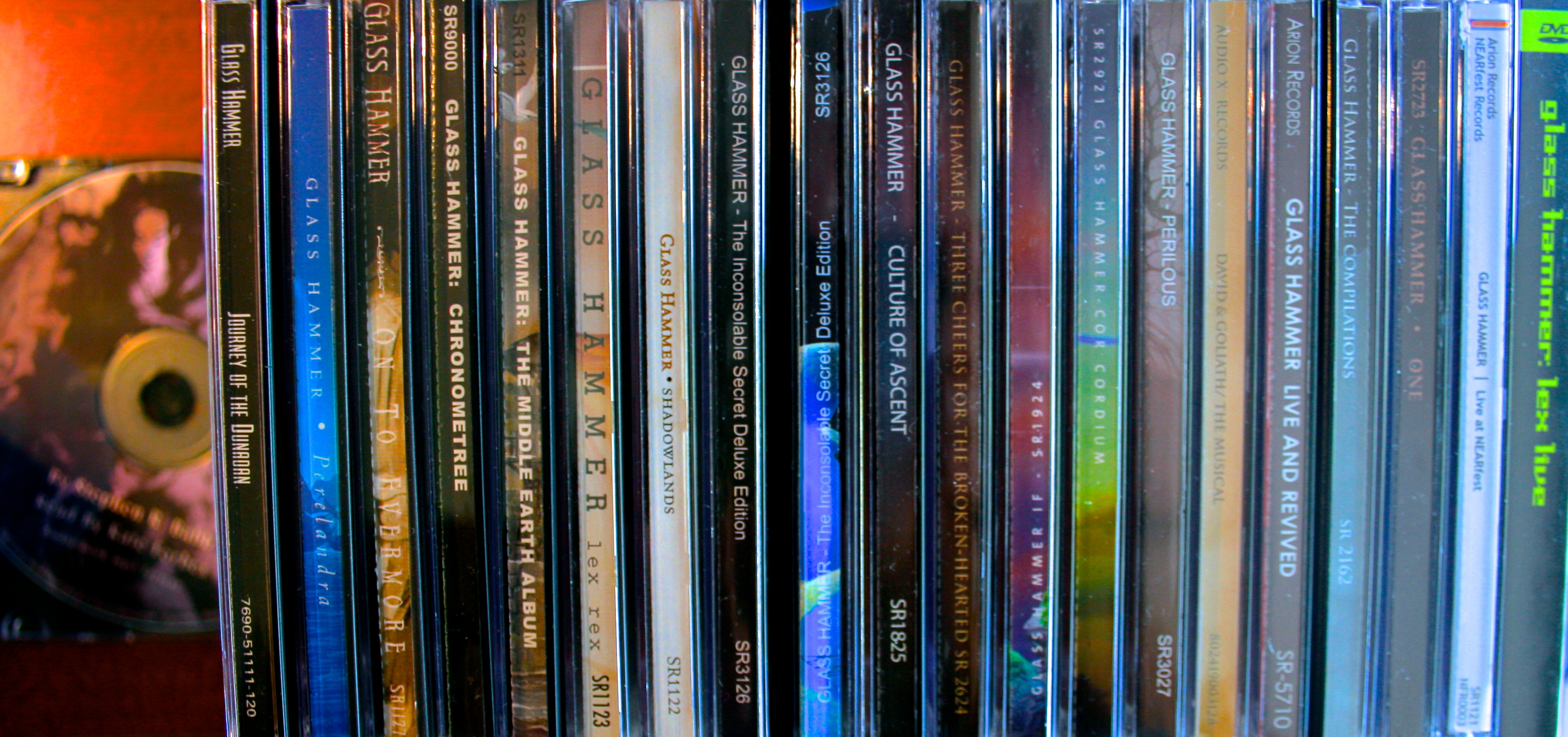
Feel free to call me a “Glass Hammer Junkie.” Steve and Fred might not approve, but it is the truth. Ever since my great friend, Amy Sturgis, introduced me to their music, days or so before LEX REX appeared in 2002, I’ve been hooked. As you can see by the accompanying photograph, I’m pretty much a completist as well. After all, why like anything halfway? Besides, Glass Hammer isn’t a “half-way” kind of love. You either love them completely, or you don’t know them.
Some reviewers have–in an almost obligatory way–compared their music to that produced during the first decade of Yes. As Babb has joked, GH admires Jon Anderson and Yes deeply, but he’s merely acknowledging the debt in his own music, not mimicking it. And, frankly, from my perspective, GH has much more of a “Leftoverature” feel than a Yes one. Regardless, Babb and Schendel are artists, pure and simple, indebted and original all at once.
There is so much I could write about GH, a book really. But, for now, let me state that there will be more much about GH at progarchy, as well as an extensive analysis and history of the band over at Carl Olson’s brilliant, Catholic World Report. Additionally, we’ll have a long interview with GH co-founder, Steve Babb.
As many of you know, I’m not a huge fan of labels, as they tend to narrow the beauty of a thing. If you forced me to label Glass Hammer’s music, though, I’d probably claim it as “Ransom Prog,” the kind of music Elwin Ransom would’ve written while on Malacandra. For one (or three, really) of the things to love about GH is the “voice” of the band. And, I don’t mean the vocalists. There are lots of vocalists for GH, and there have been since the band’s beginning, the release of their first cd back in 1993, twenty years ago. There quite good. I’m especially fond of Susie Bogdanowicz. Phew, can she sing or what? Her rendition of Yes’s “South Side of the Sky” is simply breathtaking. The vocal equivalent would be Dawn Upshaw singing Gorecki’s Third Symphony. Yes, Bogdanowicz is THAT good.
The real voice of the band, however, can be found in three very different things. Second and third, the distinctiveness of the bass and keyboards, a profound mixture of the punctuated, the soaring, and the lush. But, first and foremost, are the lyrics. Glass Hammer contains some of the best lyrics in rock history. No exaggeration. Last year, just as 2012 was winding down, I was utterly blown away by Perilous. I even held up my “best of” because of the album. It went from not being on my radar in October to being one of the top releases of the year by early December. The music is, certainly, excellent. But, the lyrics are top notch–meaningful, imagist, and philosophical.
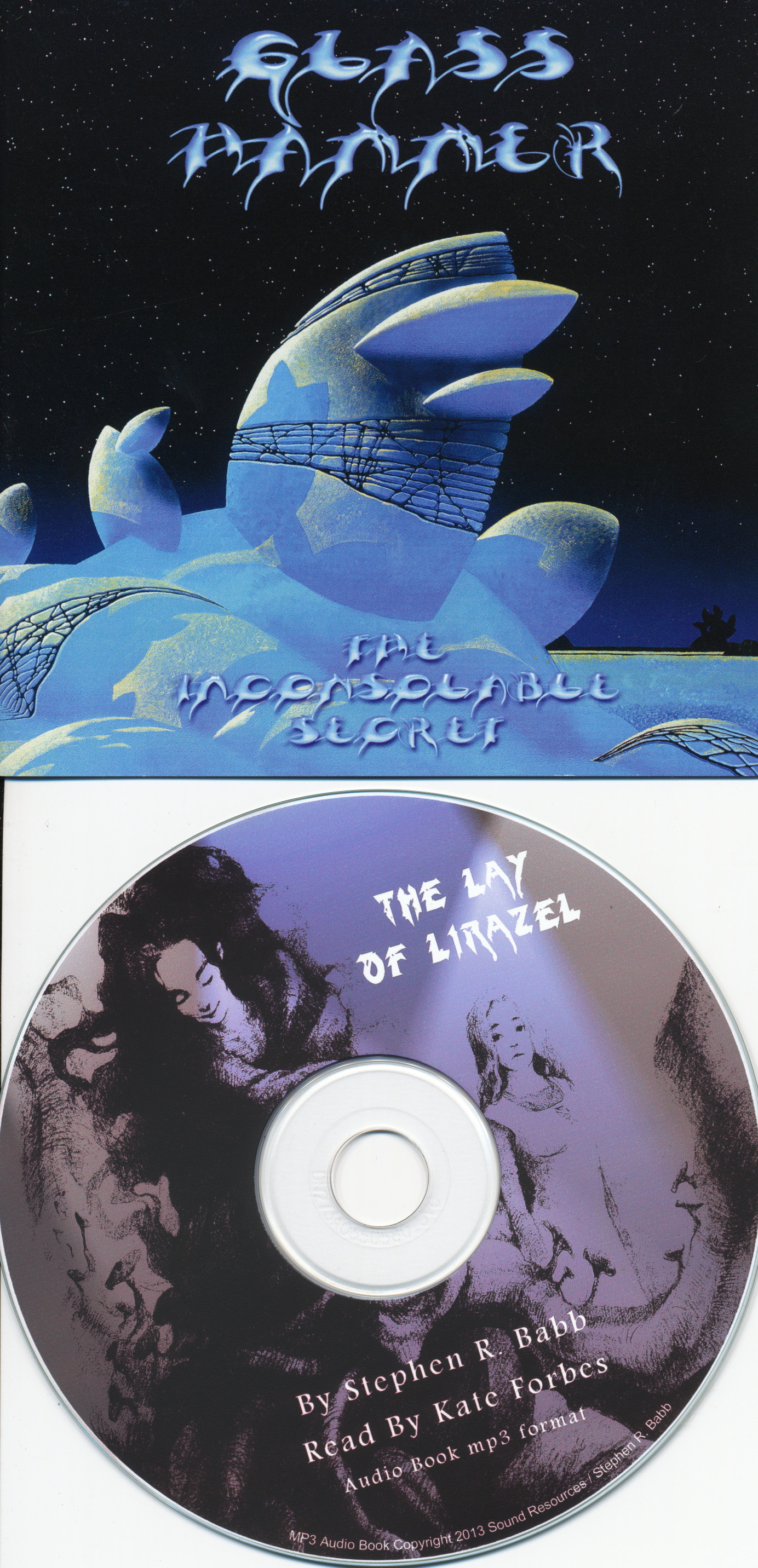
I think the lack of recognition of excellent lyric writing is one of the great faults in reviewing and assessing this third wave of prog (as our own Brian Watson labels it). After all, look at the lyrics of Spawton, Longdon, and Tillison, the lyrics of the Tin Spirits, of Gazpacho, or Ayreon (the plot of Ayreon is also mind boggling–but this is for another post), and others. The lyrics for GH are at this top. They are as good as the music, and the two–lyrics and music–serve one another. The lyrics are at once mythic and deeply moving. Here’s just one example from Inconsolable Secret:
This is where we draw the line
And here is where we make our stand
You’ll gather all our forces here for
Here we stand on hallowed ground
And here the foe will surely fall
We’ll send his army scattering for
This is where we draw the line
And here is where we make our stand
Now sound the trumpets, form the battle line
Hold the line
Babb’s lyrics reflect those of the Beowulf poet as well as the poet of the Battle of Maldon. Certainly, Babb is drawing upon these medieval sources, and, probably, a bit of Chesterton’ s Everlasting Man.
There’s a really nice review of the rereleased and remixed version of Glass Hammer’s masterful, Inconsolable Secret, over at http://www.progrocket.com. Sadly, I can’t figure out who the author is, or I’d give her or him explicit credit.
One of the quintessential modern-day symphonic progressive rock bands, Glass Hammer recently re-released their 2005 album The Inconsolable Secret. The new “deluxe edition” contains all the original material from the two-disc album, as well as a third disc featuring remixes of several of the songs, two with new vocal tracks from present lead singer Jon Davison, who is currently the lead singer for Yes. Glass Hammer is led by multi-instrumentalists Steve Babb and Fred Schendel.–Progrocket.
To keep reading this excellent review, click here.
Any rock group that has been around for a few decades has seen its share of line-up changes. The same is true several times over for certain prog groups, some having a near legendary reputation for players coming and going, returning and re-leaving, rinsing and repeating. Yes comes to mind, along with King Crimson, Asia, and Kansas. The latter has essentially (if not precisely) had three different incarnations in the forty years since it formed in 1973: the original/current one (1973-1981; 1985-present), the one with John Elefante replacing Steve Walsh as lead singer/keyboardist (1982-84), and the line-up with Steve Morse taking the place of Kerry Livgren as lead guitarist (1985-89). Violinist Robbie Steinhardt has come and gone several times over the years; the two stalwarts have been drummer Phil Ehart and guitarist Rich Williams, who have appeared on every Kansas album. (A complete breakdown is available here)
The 1980s brought challenges stylistic, cultural, and technological in nature for most prog groups (Yes, Genesis, etc.) that tasted or enjoyed significant success in the 1970s . Much is made of the influence of punk in the demise of ambitious, complex prog albums, but other factors were in play. Those included the advance of electronic instrumentation and production values that were intertwined with the arrival of New Wave Music, something of a sophisticated, artsy cousin of punk. Also notable was the rise of Album Oriented Rock (AOR) in the mid-70s, which eventually narrowed the focus and homogenized the content of music-oriented radio. It is rather fascinating, in considering the groups Yes, Genesis, and Kansas, how each went through big line-up changes in the late 1970s and early 1980s, and then experienced massive successes in the first part of the Eighties with songs and albums that were less complex, more commercial, and often very much in keeping with the AOR sounds of the time. Journey, the band that (arguably) best embodied the AOR “sound”—or at least approach—was originally formed in the mid-1970s as a rather “meandering jazz-rock” , prog-ish band, finally arriving on the winning formula when singer/songwriter Steve Perry joined the group in 1977. And there is no doubt that Asia was formed by four prog giants in order to produce radio-friendly music that could—and did, of course—move truckloads of units.
Kansas, meanwhile, had its biggest hit with “Dust In the Wind” (what, you’ve heard of it?), which reached #6 on the Billboard Top 100 in 1978. Yet the song was not the typical Kansas song up to that point: it was quite short—just over three minutes long)—quite simple, and quite sparse, with just vocals, acoustic guitar, violin, and a great melody line (not to mention some overtly existential lyrics shot through with palpable angst). But, having achieved remarkable success, the band began to show the wear of constant touring and being pushed to have further commercial success. In addition, band founder and primary songwriter Livgren announced during the Monolith tour in 1980 that he had converted to Christianity after years of obvious spiritual seeking (many of the lyrics on the Monolith album were influenced by The Urantia Book). Later in 1980, Livgren released his first solo album, Seeds of Change, which featured overtly Christian lyrics. With discord growing, Walsh finally left Kansas in October 1981. The year before, Walsh had released his first solo album, Schemer-Dreamer, which featured Kansas band mates Livgren, Williams and Ehart, as well as the great Steve Morse, who would eventually become the lead guitarist of Kansas when Walsh rejoined the group in 1985 (yes, keeping track of this stuff can be challenging!).
Any rock group that has been around for a few decades has seen its share of line-up changes. The same is true several times over for certain prog groups, some having a near legendary reputation for players coming and going, returning and re-leaving, rinsing and repeating. Yes comes to mind, along with King Crimson, Asia, and Kansas. The latter has essentially (if not precisely) had three different incarnations in the forty years since it formed in 1973: the original/current one (1973-1981; 1985-present), the one with John Elefante replacing Steve Walsh as lead singer/keyboardist (1982-84), and the line-up with Steve Morse taking the place of Kerry Livgren as lead guitarist (1985-89). Violinist Robbie Steinhardt has come and gone several times over the years; the two stalwarts have been drummer Phil Ehart and guitarist Rich Williams, who have appeared on every Kansas album. (A complete breakdown is available here)
The 1980s brought challenges stylistic, cultural, and technological in nature for most prog groups (Yes, Genesis, etc.) that tasted or enjoyed significant success in the 1970s . Much is made of the influence of punk in the demise of ambitious, complex prog albums, but other factors were in play. Those included the advance of electronic instrumentation and production values that were intertwined with the arrival of New Wave Music, something of a sophisticated, artsy cousin of punk. Also notable was the rise of Album Oriented Rock (AOR) in the mid-70s, which eventually narrowed the focus and homogenized the content of music-oriented radio. It is rather fascinating, in considering the groups Yes, Genesis, and Kansas, how each went through big line-up changes in the late 1970s and early 1980s, and then experienced massive successes in the first part of the Eighties with songs and albums that were less complex, more commercial, and often very much in keeping with the AOR sounds of the time. Journey, the band that (arguably) best embodied the AOR “sound”—or at least approach—was originally formed in the mid-1970s as a rather “meandering jazz-rock” , prog-ish band, finally arriving on the winning formula when singer/songwriter Steve Perry joined the group in 1977. And there is no doubt that Asia was formed by four prog giants in order to produce radio-friendly music that could—and did, of course—move truckloads of units.
Kansas, meanwhile, had its biggest hit with “Dust In the Wind” (what, you’ve heard of it?), which reached #6 on the Billboard Top 100 in 1978. Yet the song was not the typical Kansas song up to that point: it was quite short—just over three minutes long)—quite simple, and quite sparse, with just vocals, acoustic guitar, violin, and a great melody line (not to mention some overtly existential lyrics shot through with palpable angst). But, having achieved remarkable success, the band began to show the wear of constant touring and being pushed to have further commercial success. In addition, band founder and primary songwriter Livgren announced during the Monolith tour in 1980 that he had converted to Christianity after years of obvious spiritual seeking (many of the lyrics on the Monolith album were influenced by The Urantia Book). Later in 1980, Livgren released his first solo album, Seeds of Change, which featured overtly Christian lyrics. With discord growing, Walsh finally left Kansas in October 1981. The year before, Walsh had released his first solo album, Schemer-Dreamer, which featured Kansas band mates Livgren, Williams and Ehart, as well as the great Steve Morse, who would eventually become the lead guitarist of Kansas when Walsh rejoined the group in 1985 (yes, keeping track of this stuff can be challenging!).
Which brings me, finally, to John Elefante.
Back in late 1980, he was a young 22-year-old just getting started, along with his brother Dino (guitar), in the music business. He was also a recent convert to Evangelical Christianity and a huge fan of both Kansas, Yes, Gentle Giant, and other prog groups. In this 1992 interview, he explained how he came to be the lead singer of Kansas: he knew someone who knew someone who knew…and the rest was history. “I remember, the first thing the band wanted to do was to go over some of their early material,” he said, “They’d been off the road for a few months at that time, and I actually knew some of the songs better than they did!” The other two top candidates for the job were reportedly Warren Ham and Michael Gleason, both of whom would eventually form the group A.D. with Livgren in 1983. Kansas hit the road for one of the highest grossing tours of 1981 and then released Vinyl Confessions, which included the hit song, “Play the Game Tonight” (#17 on Billboard) and three songs penned by the Elefante brothers and one (“Play On”) co-written by Livgren and John Elefante.
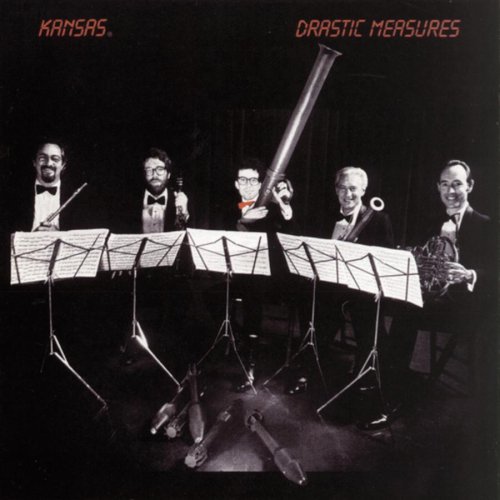
What is notable about Vinyl Confessions is the obvious move in the AOR direction; the only song that I would generally describe as “prog-gish” is the final cut, “Crossfire”, penned by Livgren. AllMusic.com is in the ball park in writing that “it was getting hard to distinguish Kansas from Foreigner and Journey.” The big difference was that while Journey and Foreigner specialized in love songs, the new Kansas material was lyrically much more in the vein of early ’80s CCM (Contemporary Christian Music). Songs such as “Borderline”, which urged listeners to make a choice between being “hot and cold”, obviously referred to the church of Laodicea, chastised in the Book of Revelation for being “lukewarm, neither hot nor cold” (Rev 3:15). The next album, Drastic Measures, which features the worst Kansas album cover of all time. was Elefante’s second and last with Kansas, and it was, to put it nicely, a mixed affair. Livgren was already moving on to A.D., and at times it is hard to believe it was produced by the same band that had, just a few years before, put out Leftoverture (1976)and Point of Know Return (1977). As Elefante would bluntly admit ten years later: “I didn’t like ‘Drastic Measures,’ and we even said to the band, ‘Guys, this is almost an Elefante Brothers album. This isn’t what Kansas is all about.’” Steinhardt had left the band at the end of 1982 and the band was now an overly AOR group, with just one song, “Mainstream”, breaking the six minute mark—and it was a Livgren-penned tune that openly skewered the direction of both the music world and his band:
It’s so predictable and everybody judges by the numbers that you’re selling,
Just crank ’em out on the assembly line and chart ’em higher (higher, higher),
Just keep it simple boys it’s gonna be alright, as long as you’re inside the Mainstream,
are we moving too far away?
Is it worth it if it doesn’t pay?
That said, the album does demonstrate that the young Elefante, in addition to being a fine vocalist, could write a great hook and a good tune. The hit, “Fight Fire with Fire” (#3 on the Billboard Mainstream Rock Chart) is a good example, but personal favorites include “Andi”, which is a precursor of sorts to songs such as Night Ranger’s “Sister Christian”, with its imploring, ruminating lyrics about a young girl trying to find her way in life (“And you’re not just anyone; don’t be ashamed”), and “Don’t Ever Take Your Love Away”, which ambiguously works as either a love song or a modern psalm: “‘Cause nothing means a thing unless you’re here/To live without your love’s my only fear/I just want to let you know/I can’t make it on my own.”
After Kansas broke up in 1984, John Elefante embarked on a prolific and award-winning career (multiple Grammy and Dove awards) in CCM as a producer, songwriter, and bandleader (Mastedon). Although he received offers that promised success in the broader music world (such as an invite to be lead singer of Toto in the late 1980s), Elefante was committed to working with Christian artists, including Guardian, Petra, Bride, and numerous others and, later, producing some of his own albums. During the 1990s, he released three solo albums, none of which I’ve listened to. In fact, I’ve not paid much attention to Elefante’s work for many years until he released his new solo album, On My Way to the Sun, his first in fourteen years, which came out on May 7th. I saw the album on amazon.com, noticed that Kansas members Williams and David Ragsdale (violin) performed on the 11-minute-long opening cut, “This Is How the Story Goes”, and I had a listen. My immediate impression was, “This is Kansas, circa 1978!” That was not entirely accurate, but similarities are obvious: the lush harmonies, the violin-driven opening, the very Kansas-esque guitar licks from Williams. In truth, the song is a near perfect marriage of mid-1970s and early 1980s Kansas, but with superior production and some frankly evangelistic lyrics:
And this is how the story goes:
You must believe it all, my friend,
from the beginning to the end.
Everyone lives forever, we just have to choose where,
Because the virgin had a son,
and the stone was rolled away,
so how can we can be terminal,
because He lives today.
Granted, those sort of direct lyrics aren’t going to attract many new listeners (I do like the line about being “terminal”; it reminds me somehow of Part IV if Eliot’s “East Coker”). But, while I’m not a big fan of overtly evangelistic rock tunes, I think “This Is How the Story Goes” is a really fine bit of prog-rock. It is perfectly produced and performed, has a killer hook, develops wonderfully, and is both rocking and thoughtful. Another plus, and a pleasant surprise, is just how great Elefante sounds. He has always been a fine singer, and he displays not only range, but an admirable combination of confidence and reserve, never over-singing or being indulgent; there isn’t an unnecessary note on the album.
The other nine songs are certainly in the AOR/”classic rock” vein, but with lots of nice twists and details. “Where Have the Old Times Gone” has some obvious tips of the hat to Led Zeppelin and Foreigner, but also features violin work that is directly from the Kansas playbook. The Foreigner influence is front and center on the title track while “All I Have to Do” could have fit nicely on Vinyl Confessions, albeit with an updated sound. “The Awakening” begins with a huge, warm wash of harmonized vocals that then leads into lush guitar-driven verse and chorus that reminds me of some of Livgren’s work with A.D. “Half the Way Home” featured more lush harmonies, over the top of a 38-Special-like guitar riff; the lead vocal, oddly enough, sounds like Doug (Dug) Pinnick of King’s X in a few spots, and there is a huge sing-a-long chorus (did I mention the album has big hooks?). “We All Fall Shorts” is a largely acoustic number that starts with a Beatles/Phil Keaggy vibe before moving into a very Yes-ish chorus. “Don’t Hide Away” returns to the Foreigner influenced sound, but with a very Styx-like chorus, along with a short section of rap (yes, that’s right). “This Time” offers a somewhat abrupt shift in tone and lyrics, a moody, minor-keyed (and quite emotional) song about a pregnant girl who decides, at the last moment, to keep her baby rather than have an abortion. The closing track, “Confess”, is, frankly, a praise-and-worship tune, but a very well done one at that: “Fall down on your knees/Praise Him/And fall to your knees/And confess with your lips/that Jesus is Lord.”
While the influences are obvious, there’s never a sense that Elefante is trying to write, say, a “Foreigner” or “Kansas” tune. Rather, this is a very cohesive-sounding album that works because Elefante is an exceptional musician, songwriter, and producer who seamlessly marries a myriad of loves and influences without losing his way or his focus. He knows prog-rock and classic rock better than most, and he does a fine, even exceptional, job of crafting songs that draw on those sources. Anyone who enjoyed the Elefante-fronted Kansas, or likes AOR/classic rock with lyrics that are unapologetically Christian will enjoy this well-crafted album. Having said that, here is the opening cut:
Pro Tip : Two great technologies that help you work on your music and videos from anywhere – Cloud Desktop and Cloud SharePoint from the best DaaS provider – http://www.apps4rent.com .
I’ll skip my usual apologia attempting to explain my long absence from this fine blog and instead spend my limited, if not valuable time, remarking on four recent prog and proggy albums that have been found a home on my regular iTunes rotation. I may write longer reviews of a couple of these albums, but some short remarks are better than none.
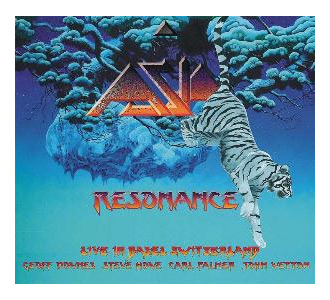
• Asia — Resonance (The Omega Tour, 2010; released 2012): After Kansas, Asia was the group that first introduced me into the world of prog, back in the early to mid-1980s, when I was an innocent small town Montana boy making my way through high school. I recall seeking out books and magazines that explained the musical pedigree of Downes, Howe, Palmer, and Wetton, and thus being introduced to early King Crimson, ELP, Yes, and more. I know that Asia has been a source of debate among prog fans, some of whom dismiss and even deride the group; I’ll just say that I really liked and still do like the first two albums, Asia and Alpha, and make no excuses for the warm and gratifying nostalgia they bring to the surface whenever I play them. And, truth be told, I’m partial to the third album, Astra, which marked the first of two billion line-up changes (Mandy Meyer took over guitar from Howe, who had departed), as it is actually a good, hook-heavy example of what might be call “arena prog” or “pop prog” or something similar. Anyhow, the original line-up has been back for a while—and getting solid to excellent reviews—and this live album documents the group’s 2010 tour. I’ve heard cuts from earlier live albums by Asia, and have found most of them disappointing, especially in the vocal department. But this album, dare I say it, is rather stunning, both in terms of the outstanding sound quality and the amazing power and clarity of Wetton’s voice. Wetton, to my ear, sounds just as good as he did on the studio cuts from the early and mid ’80s, which is saying something. The playing is excellent, of course; my only small beef is that the drums seem a bit back in the mix, although there is an extended and fine drum solo on “The Heat Goes On”. Otherwise, a great mix of cuts, with some nice acoustic-oriented variations of old hits such as “Don’t Cry” and “The Smile Has Left Your Eyes”.
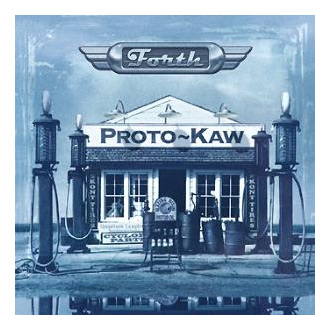
• Proto-kaw: Forth (2011): Speaking of Kansas, the group Proto-kaw was the second of three early incarnations of what eventually became simply “Kansas” in 1973. The key constant in those groups was songwriter, lyricist, guitarist, and keyboardist Kerry Livgren, who conquered the world with Kansas in the 1970s (“Dust in the Wind”, anyone?), had a run of contemporary Christian rock albums in the 1980s (both solo and with the group AD), and then reformed Kansas and Proto-kaw in the 1990s. (Fun fact: metal legend Ronny James Dio sang lead on two songs on Livgren’s first solo album, “Seeds of Change”, in 1980.) All three of the newer Proto-kaw albums are worth checking out, and that is especially true of Forth, the most cohesive and fully realized album yet by the group. What strikes me, as a longtime fan of Kansas, is how much classical influence there is in Livgren’s writing, as his songs often have a suite-like quality that builds on either strings or keyboards/guitars that act as a strings section. Proto-kaw, like all Livgren-led bands, has dual lead singers (yes, Steve Walsh was a the primary singer in Kansas, but Robby Steinhardt sang lead or co-lead on numerous songs), and features excellent and often complex harmonies, masterfully constructed arrangements, and strong songwriting. One distinctive element is the presence of saxophone and flute (John Bolton), used to great affect in song such as “Pilgrim’s Wake”, one of my favorite cuts on Forth. A must listen for anyone with a soft spot for 1970s Kansas. And, speaking of Kansas (again!), this year marks the 40th anniversary of the group’s founding; I plan a couple of posts about the group and some of my favorite Kansas albums and songs.
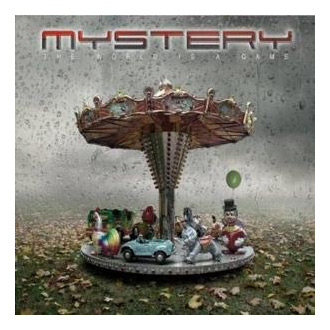
• Mystery: The World Is a Game (2012): How embarrassing it is to admit that prior to the Yes album, Fly From Here (2011), I had no idea who Benoît David was. Having replaced Jon Anderson and toured with Yes—and then having himself been replaced due to his own respiratory issues—the talented vocalist worked on his third album with veteran Canadian proggers Mystery, a group he had joined in 1999. Having not heard any of his work with Mystery (which my iTunes annoyingly tagged as “The Mystery”), I was surprised—in a good way—that David did not sound like Anderson and that the group does not sound much like Yes, although the influence is present. In fact, at times David sounds more like another great Canadian singer, Geddy Lee. The two words that keep coming to mind after repeated listens of this exceptional album are “melodic” and “soaring”. The vocals soar, the guitars (by band founder, guitarist, lyricist, and producer Michel St-Père) soar, and the songs soar with a wonderful sense of discovery, melancholy, joy, and introspection, a not-so-easy mixture to navigate. And then there is the drumming of Nick D’Virgilio, who is rightly revered as one of the finest drummers in the prog/rock world. His drumming is, in a word, orchestral, and it is reason alone for buying this fine release. But, for me (a vocalist junkie), it is David who is the revelation here, especially after hearing his solid but rather emotionless performance on Fly From Here. In the words of a reviewer on ProgArchives.com, “Finally vocalist Benoit David proves what a versatile and commanding singer he is, a million miles away from the Yes/Jon Anderson clone dismissals. It’s also great to hear his voice so full of human feeling and compassion again after being so over-produced and rendered mostly lifeless on the Yes album `Fly From Here’!” Exactly right.
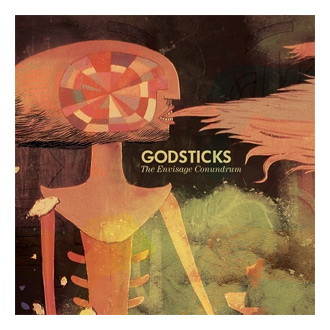
• Godsticks:The Envisage Conundrum (2013): Here is a group (from South Wales) I knew nothing about a week ago, but has captured my attention in a way that only a few groups have on first listen. Explaining why is a bit difficult; the difficulty arises, in part, from the most enjoyable fact this is a group that is very hard to describe or label or situate in the universe of prog/rock music. Nearly every review I’ve read says the same, and rightly so. One of those reviews, by Adrian Bloxham, puts it well: ” The world of Godsticks is not straightforward; they seem to have baffled other reviewers trying to pigeon hole them. They make their own brand of what they describe as ‘progressive rock/pop, but it is very much their own take on the sound. You get the idea that this is exactly the music they have inside their heads trying to get out and if you like it they will be pleased but that’s not why they do what they do.” The one influence I hear is later King Crimson, but even that is hard to pinpoint, although the angular, often astonishing guitar work by guitarist/singer Darran Charles brings it to mind in several places. None of the songs are longer than seven minutes in length, but some of them pack in more twists, turns, veers, swerves, and surprises in five or six minutes than many bands can pack into songs three times as long. The title cut is a perfect example. It begins with a chugging, almost “boogie” riff out of which emerges a spider-like flurry of notes, leading into a wall of harmonized vocals over a heavy, grunge-like riff backed by the tight, slightly funky, never quite straight forward rhythm section of Steve Roberts (drums, keys) and Dan Nelson (bass). Charles’ voice is part of the mystery here, a strong, clear instrument that manages to be intense, detached, soulful, and slyly humorous (and occasionally darkly smirking) all at once. There is an abundance of odd chords, meters, notes, and harmonies, sometimes, to my ear, sounding like a Robert Fripp-inspired space alien sibling of Soundgarden. And did I mention the album features a 3:49 piano solo by Roberts that could easily have made it onto one of Keith Jarrett’s solo albums? Followed by a three-part suite—”Borderstomp”, parts 1-3—that sometimes calls to mind Steve Vai? Not straightforward, indeed!
I balked for a few moments at the temptation of writing an indulgent, long, complex, and idiosyncratic post about my journey to and into prog, and then realized: hey, this is Progarchy.com! If I cannot string together tenuously-related, semi-mystical concepts and conceits imbued with mythical overtones, quasi-autobiographical meta-narratives, and intertwining (and purposely confusing) philosophical musings here, then what’s the point of this wonderful blog? (No need to answer that, as I’m already soloing on my inner Moog without regard for the boring 4/4 time signature others might wish to force upon me.) Actually, much of what follows was already presented in a long-ish comment I left on a previous post below. But Brad, as he often does, inspired me to do more, even at the risk of embarrassing the shy and retiring Olson clan. So here goes.
I was oddly oblivious to most music until my early teens. This was due in part to being raised in a Fundamentalist home and church, both of which largely frowned on rock music as the rhythmic spawn of the devil, meant to corrupt good morals and encourage bad haircuts. Yes, the stereotypes do hold, at least to some degree. I heard a lot of church music (classic Protestant hymns, some of them very good) and mostly bland to bad contemporary Christian music. Then, around the age of fourteen or so, I started listening to the radio (one station, weak signal) and began to slowly accumulate a few tapes. My road to prog went through AOR acts such as Journey, REO Speedwagon, Loverboy, Foreigner, and Styx, with a helping of popular mid-80s albums by ELO, Elton John, Toto, and Queen. I found the standard rock of the day (including some of the stuff above) to be rather dull; I was fascinated by the more extended songs of Elton (the early 1970s albums especially), Queen, Asia, and the Moody Blues. I’m happy to say I was hooked on “Bohemian Rhapsody” long before “Wayne’s World” re-presented it to my generation. Also, I thought the usual popular, party music about sex, drugs, and rock ‘n’ roll was mostly shallow, even if occasionally diverting. Which is another way of saying I secretly listened to my share of Van Halen while playing some laughable air guitar (oh, wait, all air guitar is laughable). I did not, however, ever party. Seriously.
Around 1985 or so, I bought a copy of “The Best of Kansas”. That opened the door to prog. There was something about the mixture of Livgren’s lead guitar, Steinhardt’s violin, and Steve Walsh’s amazing voice, along with lyrics soaked in spiritual longing and Americana, that grabbed me by the scrawny neck. Over the next three or four years, I ended up collecting everything by Kansas, Kerry Livgren (solo and with AD), and Steve Morse (solo, Dixie Dregs, etc.). My favorite Kansas albums are “Song for America” and “In the Spirit of Things”, although they weren’t the chart-toppers that “Point of Know Return” and “Leftoverture” were. I also went on a serious Moody Blues binge, focusing on the early stuff, prior to their more pop-oriented work of the mid-’80s. Then I really got into Yes (both Rabin-era and the early classic albums with Howe), Rush, and Pink Floyd; in fact, while in Bible college (1989-91), I freaked out some of my more staid classmates with my obsessive interest in Pink Floyd, Queen, Queenrÿche, and King’s X (and, yes, I also listened to Petra, David Meece, White Heart, White Cross, Russ Taff, and Margaret Becker). King’s X was a major revelation, especially the brilliant, crunching, melodic beauty of “faith hope love”, which was a masterful blend of hard rock, metal, prog, blues, and Beatle-esque harmonies. And I recall very clearly driving across the Montana plains to school in Saskatchewan, blaring “Fly By Night” and other brilliant Rush tunes. Ah, to be young again.
A quick aside here, in the spirit of musical indulgence: while in high school, I also developed a semi-secret soft spot for country artists such as Johnny Cash, Johnny Horton, and Jim Reeves. And two composers: Mozart and Brahms. I tried to get into opera (our family doctor, who owned a massive classical collection, gave it his best shot), but couldn’t get there. I would try again in the late 1990s, failing again. And at one point I must have listened to Eric Clapton’s 1989 comeback album, “Journeyman”, about a thousand times. Go figure, as it’s the only Clapton album I’ve ever fixated on. Okay, back to prog.
In my early-to-mid twenties (1989-1995), I launched into Van Morrison, Seal, Jeff Buckley, Radiohead, and jazz, five of my big musical loves ever since (I’ll eventually write some disturbingly long posts about each, I hope). My interest in prog advanced in fits and starts. Yes was a constant, as I worked through most of the band’s catalog, with excursions into solo projects by Jon Anderson, Trevor Rabin, Rick Wakeman, Bill Bruford, and Steve Howe. The next big breakthrough was Dream Theater in the late 1990s, followed by Spock’s Beard, then Porcupine Tree and a bunch of others. Then, around 2004, I “discovered” Frank Sinatra, which led to the purchase of about 1,000 Sinatra tunes (favorite album: “In the Wee Small Hours”). I mention Sinatra because I have the semi-crazy idea of writing a blog titled, “Sinatra: Grandfather of Prog?”, that will either get me ejected from Progarchy, or enshrined in the Progarchy Hall of Fame.
I fully agree with Brad: we are living in a new, golden age of prog. There is such a stunning array of prog and prog-ish music to be had, I’ve long given up hope of keeping abreast of it all. Current favorites, in addition to the already mentioned acts, include Pain of Salvation, Threshold, Riverside, Muse, Animals As Leaders, Big Big Train, Anathema, Devin Townsend, Three, Astra, Blackfield, The Pineapple Thief, King Crimson, Headspace, and Mars Volta. But there are still huge holes in my prog knowledge and experience. I’m making prog-ress, but the road continues to rise and wind ahead. Which is exciting, as it means there is more to discover and hear.
A few days ago, Progarchist and classical philosopher Chris Morrissey asked about our first introductions to music.
The youngest of three boys, born in the summer of love (September 6, 1967—only 3 months and five days after the release of “Sgt. Pepper’s Lonely Hearts Club Band” by the Beatles), and coming of age in the late 1970s and early 1980s, I grew up on progressive rock: Yes, Kansas, Genesis, and the Moody Blues. We faithfully shunned the 3-minute pop format and we sought mightily the 20- and 30-minute epics of European (usually liturgically derived) symphonic music with rock instrumentation and bizarre time signatures.
I remember hearing lots of longish, prog songs as early as 1971 or 1972. Though I’ve never played an instrument with any degree of passion, I’m assured by my mom and two older brothers that I was obsessed with music even as a toddler. Somehow, I figured out how to crawl out of my crib and down the stairs to the family stereo. Even as a one-year old, I would wake the entire household up, blaring the Banana Splits or Snoopy and the Red Baron at 3 in the morning.
My first great awakening came, though, from seeing the sleeves of YesSongs. I spent hours trying to figure out how the animals made it from one floating island to the next. And, I’ll never forget the first time I played side one of YesSongs—I was overwhelmed by the depth and complexity of it.
As is now well recognized, the prog lyrics as well as the cover art tended to be fantastic, pretentious, overblown, and theological. There have even been some interesting scholarly articles about progressive rock thriving in the western and midwestern states of America, mostly among middle-class, conservative kids. And, of course, we, with great confidence, derided disco and top-40 music through junior high, high school, and college. Disco and top-40 music, as we understood it, were decadent and vacuous. As far as we were concerned, progressive rock artists (and some New Wavers) were the only real musicians outside of the classical and jazz world.
In many ways, progressive rock helped define my own childhood and teenage years. I will never forget seeing abolitionist John Brown on the cover of a 1974 Kansas album (it sparked all kinds of historical questions re: Kansas, abolitionism, and the American Civil War); hearing Pink Floyd’s “The Wall” at the University of Notre Dame in the fall of 1979; being introduced to Rush’s 1981 “Moving Pictures” in the Liberty Junior High School library in Hutchinson, Kansas; or listening to Yes’s “Fragile” over and over again and trying to figure out the “deep” meaning of the lyrics. In high school, I worked as on overnight D.J. at a local rock station (KWHK), which doesn’t exist anymore. And, while in college at Notre Dame, I had a Friday-night progressive rock show (WSND) my junior and senior years, often playing two hour blocks of Rush or other groups.
As powerful as any of the albums just mentioned, though, was my first listen to Talk Talk’s Colour of Spring in the spring of 1987 and, even more so, my first listen to Talk Talk’s Spirit of Eden in September 1988.
My comrade in arms in college was the singer of the most popular band on campus, St. Paul and the Martyrs. They even opened for Phish when Phish played on campus, spring 1990. The leader singer, Kevin McCormick, even became my oldest son’s godfather! Now, he’s a well-known classical guitarist and even a Progarchist.
But, I’ll never forget the two of us listening to Spirit of Eden for the first time. We were just stunned and in complete silence as we explored every note and every silence of the album.
Having turned 13 in the autumn of 1980, I also, of course, grew up with New Wave: Thomas Dolby, Kate Bush, The Police, The Cure, Oingo Boingo, XTC, Siouxie and the Banshees, and Echo and the Bunnymen. Over the Wall!
Our local Kansas radio station—KWHK—had briefly been formatted for New Wave, so I was able to get every new album sent by the record labels. The one that hit me hardest was XTC’s Skylarking.
My college radio show at Notre Dame focused on progressive rock, as mentioned above, but I threw in a lot of New Wave. New Wave just seemed the more radio-friendly version of progressive rock. And, by the early 1980s, progressive rock seemed to have run its course. Could Asia really claim to be the successor of Yes? Or, could Genesis without Peter Gabriel or Steve Hackett really be Genesis? We answered with a resounding “no.” That left us with New Wave.
After all, in 1990, we still had a few years before Dream Theater and Spock’s Beard re-introduced—in the states—a new wave of Progressive Rock.
A quarter of a century later, I realize that music took on religious significance for me and my friends. Those who embraced disco, pop, or top 40 music were heretics, and we supporters of progressive rock were the orthodox.
***
A year or so ago, some former students asked me to write about my listening tastes in the 1980s. Here’s what I wrote for them:
High School was a long time ago for me, but I still remember it well. During the summers, I had one of the best jobs in the world–I was a DJ at our local AM-station, KWHK. Not only did I DJ, but I also got to write and produce commercials, and I served as a liaison between the sheriff’s department and the National Weather Service. I grew up in central Kansas, so we had tornados and tornado warnings quite frequently. Great job. I’ve also been into collecting music (mostly progressive and alternative rock, some jazz, and a bit of classical) since second grade. I started young, and, for better or worse, I’ve never stopped. My kids (13 and under) can name bassists, singers, and drummers of the major progressive bands. And, yes, I’m proud of them.
Freshman year of high school, 1982-1983. It was freshman year that I really discovered New Wave. I had been listening, almost exclusively, to progressive rock and what’s now called classic rock during the 1970s and earliest part of the 1980s. The father of a friend of mine owned a record store, and we were introduced to all kinds of music through the store in 9th grade. In particular, I listened to Thomas Dolby’s Golden Age of Wireless (favorite song: One of Our Submarines is Missing). I had this on one side of a tape and ABC’s The Lexicon of Love (favorite song: 4 Ever 2 Gether). Also lots of U2’s War (favorite song: Sunday Bloody Sunday). Progressive Rock was never far from my heart, and I listened to Rush’s Signals (favorite song: Subdivisions) pretty much non-stop, Peter Gabriel’s IV (favorite song: Lay Your Hands on Me), and Roxy Music’s Avalon (favorite song: Take a Chance with Me).
Sophomore year of high school, 1983-1984. This was a huge year for music. Genesis released their self-titled album (favorite song: Home by the Sea, Parts I and II); the Police released Synchronicity (favorite song: Synchronicity II); and Yes released 90125 (favorite song: Cinema).
Junior year, 1984-1985. Rush’s Grace under Pressure (favorite song: Between the Wheels) dominated every other album that year. Frankly, this was THE album. If I had to name a favorite album of high school, this would be it. My sophomore year in college, I wrote a paper using only the lyrics from the album. I even got an A. I also listened a lot to The Smiths’ Hatful of Hollow (favorite song: Please, Please, Please), Oingo Boingo’s Dead Man’s Party (favorite song: same as title), and Thomas Dolby’s second album, The Flat Earth (Favorite song: same as title).
Senior year, 1985-1986. Another great year for music, but mostly for former proggers going pop. Albums that year included, at the top of the list: Sting, Dream of the Blue Turtles (favorite song: Fortress Around Your Heart), Peter Gabriel, So (favorite song: In Yours Eyes), Tears for Fears, Songs from the Big Chair (favorite song: Broken), and XTC, Skylarking (favorite song: The Man Who Sailed Around His Soul). The other album I played constantly was the soundtrack to To Live and Die in LA (a pop band, Wang Chung, playing a very proggy style). Lots of Kate Bush, Hounds of Love, too (favorite song: Hello Earth).
It wasn’t until my freshman year (1986-1987) of college that I really got into Talk Talk, the Cure, and Echo and the Bunnymen. I also really liked Blancmange (kind of a really smart Talking Heads) and New Model Army and a few others. That year, U2 released “The Joshua Tree.” I’ll never forget sitting in the car with a friend, being about 1/2 through the album and just breaking down (not something I did very often) because of the beautiful intensity of the album. Crazy. At the time, I was horrified by RATTLE AND HUM. Now, I think The Joshua Tree as a whole is really good, not brilliant. Side two, maybe, is brilliant. Side one has a brilliant moment–bullet the blue sky. And, RATTLE AND HUM seems better than it did to me then.
In high school, I also remember listening to some A-ha, B-Movie, b-52s, Erasure, Depeche Mode, and Communards. I don’t think I would’ve chosen to listen to these groups, but they would’ve been pretty hard to escape then. I would’ve always preferred something prog–unless we were dancing. Had an all night party at my house once my senior year when my mom was out of town. Late, late into the evening, a group of us were trying to analyze a 1977 Genesis concert we’d taped off of PBS! I’ll never forget that night. Lots of analyzing Pink Floyd, too.




 Progarchy