

Billy Reeves never disappoints. Check out his latest podcast featuring Nosound, Ulver, and Sam Healy (focused on Healy). #45. Quite good.
https://soundcloud.com/kscopemusic

Billy Reeves never disappoints. Check out his latest podcast featuring Nosound, Ulver, and Sam Healy (focused on Healy). #45. Quite good.
https://soundcloud.com/kscopemusic
Last night, I was a bit surprised to see a Belgian friend of mine post his “Best of 2013” list. I shouldn’t have been surprised, and, of course, I was more than eager to read his choices. I’m also hoping he’ll let us post them here. In fact, I’d love for him to become a full-time progarchist. Regardless, my first instinct upon seeing that list was to play Bill Buckley, that terrible infant of the American right of the 1950s and one of the fast friends of the Beatniks, and yell “Stop! Stand athwart history!” It’s all happening so quickly.
Several progarchists have joked that the current moment third wave prog releases is akin to drinking water from a firehose. So much incredible music is being discovered, sung, written, produced, released, engineered, mastered.
Of course, there’s a real and true beauty in all of this. We’re truly blessed at the moment with so much goodness.
Still, it’s good to breath and pause. As the that grand prophet of old, Habakkuk, would call it, it’s time for Selah, time for a rest and a bit of peace. Or, as our English Puritan ancestors did on the shore of New England (I speak as a papist and an American), it’s time to give thanks.
One of my worries about the current state of prog is that we’ll miss something vital as we ckeep looking to the next thing to come out. In this spirit, then—whether of Habakkuk or William Bradford or Bill Buckley or Jack Keroauc—I want to make sure we don’t forget anything important, vital, and crucial in the real historical and artistic progress of progressive rock. Over the next several posts, I’ll offer my thoughts on albums that the we proggers (as a community) have overlooked or neglected—the best releases of 2012 that we forgot but never should’ve. If nothing else, as a historian, I want to make sure that certain things at least make it into the record (no pun meant).
***
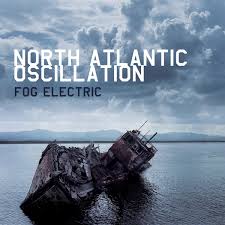
So, first up, an album dismissed after listening to it two or three times, North Atlantic Oscillation’s second album, Fog Electric (Kscope, 2012).
I bought the band’s first album, Grappling Hooks, as soon as it was released in 2010. At the time, I was pretty much ordering every single thing Kscope released (I can’t do this anymore, financially; and despite the immense love progarchy has shown Kscope, we can’t seem to attract the company’s attention when it comes to review copies—Kscope, where are you??? Regardless, we’re good Stoics. We’ll make it!).
I liked Grappling Hooks. Indeed, I liked it a lot, and I listened to it quite a bit. I wasn’t quite ready to label it prog in 2010. I thought of it more like excellent pop—in league with Talk Talk’s It’s My Life (this comparison, by the way, became extremely important to me), XTC’s The Big Express, or The Cure’s Kiss Me (x3). Great stuff, but not really, properly, playfully prog.
For better or worse (well, better), I was so utterly immersed in The Underfall Yard at the time I was listening to Grappling Hooks, that I was using NAO’s release as a breather from the intensity of Spawton and Co.! Call me loyal to Big Big Train or just OCD (though, probably both!)
Well, just as I never could’ve predicted a Colour of Spring, a Skylarking, or a Disintegration, I didn’t predict a Fog Electric.
The comparison is apt. Picking Fog Electric back up this year, a year after it was released, I was—to use drug terminology of the 1960s—rather “blown away.” It is an incredible leap forward in terms of creativity. It’s as prog as the first album was pop. Each is spectacular, but in very different ways.
The two three songs of Fog Electric feel very much like the majority of tunes on Grappling Hooks. But, something profound happens in track number three, “Mirador.” It begins very much to sound like My Bloody Valentine or Cocteau Twins as a wall of sound ploddingly assaults the listener.
Then, an explosion with track number four, “Empire Waste.” Suddenly, the listener is in the same world as Hollis’s Colour of Spring. Even the drumming—generally what I would dismiss as a little too electronic—resembles very much Lee Harris’s style (track six, “Interval,” even more so). With track four, we’ve begun to trespass on holy ground. Even the lyrics astound. The song is a plea for us to recognize the modern post-World War II wasteland of colossal powers, each raping the earth and denigrating its inhabitants. The vocals become deeply haunting.
In fact, I wouldn’t just equate this, musically, with the Colour of Spring. It’s also a proper sequel, lyrically, to Thomas Dolby’s “One of Our Submarines is Missing.” Whether the three Scots—Ben Martin, Sam Healy, and Chris Howard—intended this or not, I have no idea.
While I think the highpoint of the album is in “Empire Waste,” the remaining six tracks are simply stunning. Each listen makes me want to listen yet again and again. I can’t believe I went a year without this release in my listening rotation. That won’t happen again. I have a strong belief that this album will only age well—as well as Skylarking, Colour of Spring, and Disintegration have for me.
Fog Electric will, in some way that is beyond explanation or at least my ability to explain, become a part of me. Isn’t this really want we want all of the things we love to do? Not in a possessive sense, but in the sense of sharing in the beauty of it all.
Regardless, thank you Ben, Sam, and Chris. Thank you for bringing such beauty to my soul.
No pressure, of course, but I’m waiting for release number three to be your Spirit of Eden.
 Kscope Music puts out an entertaining and informative monthly podcast featuring conversations with and performances by the label’s artists. It’s free, and you can subscribe to it via iTunes, or listen to it here.
This month’s podcast focuses on Nosound’s new release, Afterthoughts (see our review of this extraordinary album here). It features interviews with Giancarlo Erra and Chris Maitland, and we’ve embedded it below for your convenience!
 I know that I can get into all kinds of trouble for stating this, but, when covers are done well, they’re often even better than the originals. And, I don’t mean to degrade the originals. For example, I think NDV’s Rewiring Genesis does an even better job at LAMB LIES DOWN than did Genesis originally. Heresy??? Maybe. But, it’s true.
Here’s another example. I love Pink Floyd’s Echoes. I was probably 14 or so when my friend and sometime debate colleague, Darrin, showed me Pink Floyd’s Live in Pompei on laser disc. I was blown away.
But, this version (linked below) is even better. I’m sure production and technological advances have something do with it. But, I also think it’s because the covers do come later, and the folks who cover them often have integrated the songs into their very being in ways the original writers probably didn’t.
Yes, start writing crazy things about me in the posts comments! At 45, I’m thick skinned enough to take it!!!
So, here’s the cover and the masterpiece: Nosound’s version of Pink Floyd’s Echoes. Makes me just sigh in wonder. Erra is a genius. And, he “just gets it.”
https://soundcloud.com/kscopemusic/nosound-echoes-pink-floyd-live
 Review: Afterthoughts (2013; Kscope Records). It can be ordered here.
Listening to a Nosound album (original, live, or compilation–they come in every variety and always possess the very essence of quality itself) is so much more than a moment or an event. It’s an immersion into something immeasurably deep and wide and beautiful. It’s a mystery. It’s liturgy. It’s possibilities. It is eternity.
Looking over the reviews of the first three studio albums–Sol29 (2005), Lightdark (2008), and A Sense of Loss (2009)–a few words appear repeatedly and unmistakably. Ethereal, intelligent, contemplative, flowing, organic, psychedelic, spacey (as in Pink Floyd space rock), progressive, artful, ambient, flowing, melodic, painted, cinematic.
If one had to label the music of Nosound, it might be something like: neo-classical, Hollis-esque, Shoe-gaze prog. Certainly, the spirit of Mark Hollis lingers over the music of Nosound, but, as with most bands loved and admired by Progarchy, Nosound is its own band, and the sound it creates is its own.
Some have labeled the music of Nosound minimalist, but this is simply false. While it might have the feel of Philip Glass at times, Nosound is about a wall of sounds as well as about the absence of sounds. Just as Arvo Part uses amplifiers when necessary to make the music he needs, so does Nosound. If a synthesizer is called for, a synthesizer is used. But, if a real stringed instrument is appropriate, the stringed instrument is used. Everything has its place, and every thing supports every other thing.
Afterthoughts (2013; Kscope)
In less than a week, Kscope will be releasing the fourth studio album from Nosound, Afterthoughts. When it was first announced, I ordered the three cd-version immediately. Very graciously, Nosound sent us a promo-advanced copy of Afterthoughts. I’m not sure how many times I’ve listened to it over the past week and a half. It is every bit as captivating as the first three albums, and I have thoroughly enjoyed and appreciated and been made better by my immersion in this latest work. It is a glory, to be sure.
It is certainly Nosound, but it is Nosound plus.
The nine songs of the album are: In My Fears, I Miss the Ground, Two Monkeys, The Anger Song, Encounter, She, Whatever You Are, Paralysed, and Afterthought.
As always, the album ebbs and flows. Though I grew up on the treeless and waterless plains of Kansas, I imagine the music best represents the ebb and flow of the tide. Just as with the ocean, one must imagine creatures populating the water well beyond anything we know, and we must imagine the edge of the world just over the horizon. When reaching it though, one does not fall into nothingness but into everythingness, life itself.
The words flow as beautifully and as meaningfully as the music itself, and the lyrics only take one further into this sacramental reality. The listener feels the joys, the anguish, and the incomprehensibilities experienced by the lead singer, Giancarlo Erra.
While every song presents and exists in its own form of majesty, the album especially reaches its highest highs in the second half. From the longings of Encounter (the fifth track), Afterthoughts climbs to ever greater heights, reaching eternity sometime in the middle of the eighth track, Paralysed.
Giancarlo Erra
The mastermind behind the band, Roman Giancarlo Erra, is as intelligent and as talented as he is kind. An artist in the purest sense, Erra writes for himself, but he never forgets his audience. Yet, unlike so many in the larger rock and pop world, Erra keeps that sense of traditional relationship between artist and patron (his fans and those who purchase his CDs). He never–in any way, shape, or form–dumbs down his art, but he remains responsive to his audience, incorporating them joyfully in his own art.
As the greatest of Anglo-American poets, T.S. Eliot, explained at the very end of World War I:
And he is not likely to know what is to to be done unless he lives in what is not merely the present, but the present moment of the past, unless he is conscious, not of what is dead, but of what is already living.
Though 94 years early, Eliot must have been writing about Erra. Certainly, we can consider Eliot’s voice prophetic. Erra embraces the moment while never forsaking what he has inherited. Indeed, Erra willfully and lovingly embraces the past in the present, and the present in the future. As with Eliot in the greatest work of art of the twentieth century, The Four Quartets, Erra stands in the middle of his art and looks outward. He observes the world from within the miracle.
Unlike so many those pretentious artists of the last century who often stood aloof from all of those around them, Erra, again, invites all listeners into this world of majesty. They might not accept his invitation, but the invitation remains, nonetheless.
As I would with Greg Spawton, Matt Stevens, and Robin Armstrong, I would give much to sit down and have a drink with Giancarlo. It wouldn’t matter if we had a coffee, a beer, or a glass of red wine–the conversation, I assume, would be spectacular and meaningful. We’d certainly talk about music, but, if I’m judging Erra correctly, we’d talk about everything under the sun and, perhaps, beyond.
Probably, Erra’s work will be remembered someday more as an early 21st century equivalent of Arvo Part and Henryk Gorecki rather than it will be with, say, Marillion or Oceansize (both bands I love).
Regardless, the work of Nosound is a must-own for any person celebrating this current return of prog music or any real lover of any kind of music. And, not just Afterhoughts, but every studio album by Nosound. You can also go beyond the studio albums as well. Happily, Erra never stops releasing EPs and other assorted good things. At the Pier, Clouds, The World is Outside, and The Northern Religion of things are well worth owning as well.
And, perhaps most interesting of all is the mixing of Nosound and No-man in what is arguably the finest name ever for a band, Memories of Machines. Erra’s music has its own place within the current revival of prog, and it’s as important as the music of Big Big Train, Gazpacho, Matt Stevens, The Reasoning, Neal Morse, and a number of other acts Progarchy cherishes.
Thank you, Nosound. You ably capture the essence of the music of the spheres, and we living in this vale of tears can do nothing but smile and appreciatively wait for more glimpses of all that is eternal.
After posting a brief note this weekend re: the forthcoming album from Nosound, “Afterthoughts,” Giancarlo Erra himself (!) contacted me. What a gracious man he is.
Thanks to his good graces, I have now had a chance to listen to a preview/promo of the new album several times. In fact, I’m on at least my sixth time. And, I’ve the had the chance to listen to it on at least three different types of devices.
“Afterthoughts” is stunning. I–and perhaps a few other progarchists as well–will review this fully. But, if you’re looking for something to preorder, make sure this is it. Fantastic, melancholic yet uplifting, intense, organic, deep, imaginative–everything you expect from Nosound and then some. A 2013 must-own.
To preorder (and YOU SHOULD!), click here.
***
Also, in doing a brief bit of research on Nosound, I came upon this insightful interview from Prognaut:
 Progarchy