And finally, after my ‘Top 5 Contenders‘, we have (drum roll please!) my Top 5 of 2012:
5. Panic Room – Skin
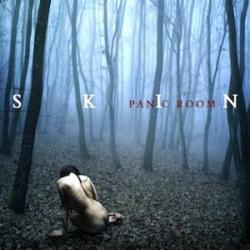
A real surprise, this. I like Panic Room well enough; I admire their previous release, Satellite, both for its fine production values and for the two or three stand-out tracks on it. It is a good album, but not a great album. So I wasn’t expecting them to have raised their game quite so much with the follow-up. Production-wise, Skin sounds every bit as good as its predecessor, but the quality of the songwriting is higher and more consistent. The rockier tracks, Song For Tomorrow and Hiding The World, are as good as anything they have done, but it is the slower, quieter songs that really shine. There’s a wonderful mellow, chilled vibe to these quieter songs, and the liberal use of strings adds a degree of sophistication. Anne-Marie Helder’s voice is simply heavenly. This isn’t music that will challenge you, unlike some of the albums in my Best of 2012 list; rather, it is the sonic equivalent of a silk shirt or satin sheets: smooth, elegant and luxurious.
4. Kompendium – Beneath The Waves

Another surprise entry. Being a fan of Magenta, I pre-ordered this purely on the strength of Rob Reed’s involvement and he hasn’t disappointed. Magenta’s distinctive take on prog pervades Beneath The Waves, but this is an altogether more epic piece than anything done by that band, bigger in scope and bigger in its production. A ‘cast of thousands’ has been involved over the album’s three-year gestation period: Steve Hackett, Francis Dunnery, John Mitchell, Nick Barrett and Jakko Jakszyk on guitar; Gavin Harrison and Nick Beggs providing the rhythm section; Mel Collins, Troy Donockley and Barry Kerr on sax, pipes and whistles; Dave Stewart and the London Session Orchestra; The English Chamber Choir; Tina Booth, Shan Cothi, Rhys Meirion, Angharad Brinn and Steve Balsamo providing solo vocals.
The result of all this labour is a lush and richly atmospheric album, successfully blending classic prog with symphonic and celtic/folk elements. At times, it sounds uncannily like something Mike Oldfield might have produced in his heyday – a most welcome resemblance to an Oldfield fan like me! In places, it has the feel of a film score, in others the drama and impact of musical theatre or opera – and the vocal and choral work is quite stunning. The packaging of the album, in a mini-gatefold sleeve with an 18-page colour booklet on the inside, also deserves praise.
3. Rush – Clockwork Angels

I have to admit that I idolise this band, but if they had produced another Snakes & Arrows, they wouldn’t be featuring in my Top 5. Not that there’s anything particularly wrong with S&A; it is undoubtedly a good album, but there’s a certain ‘sameness’ to the tone and texture of the individual tracks. It feels densely-layered rather than loose and free-flowing, safe rather than adventurous. Clockwork Angels addresses these issues head-on. For starters, it’s a full concept album – their first, shockingly (the concept pieces on Caress Of Steel, 2112 and Hemispheres being one side of an LP only). And what a concept! The familiar dystopian themes beloved by Neil Peart, but set in a Steampunk universe, and tied into a novel by Kevin J Anderson and Peart.
The music is also a delight. The concept lends it a greater sense of urgency and purpose. The sound is a bit more stripped down than on S&A and there are subtle nods to classic 70s Rush – such as the Bastille Day bass riff that creeps into the opening of Headlong Flight. The latter is a beast of a track, one of several real rockers on this album – the title track and The Anarchist being the other prime examples. Changes in tone and pace come from a delightfully loose section of the title track featuring slide guitar and from a couple of slower, more reflective numbers: Halo Effect and The Garden. The latter ends the album in uncharacteristically emotive fashion. Could the subtext really be a farewell to fans? Let’s hope not, but if this is their last bow then they have taken it in fine style.
2. Marillion – Sounds That Can’t Be Made

Even the most hardened Marillion fan would probably admit that the band’s muse has proved elusive since they basked in well-deserved acclaim for 2004’s masterful Marbles. Sure, they have served up some memorable music for us in the eight years since then – musicians with their talent, dedication and integrity could hardly fail to do so – but somehow it hasn’t had quite the same spark or level of consistent brilliance found on Marbles. With Sounds That Can’t Be Made, however, I feel that the magic is back. STCBM doesn’t quite scale the heights achieved by Marbles – which may well prove to be their career-defining highlight – but it comes close.
Album opener Gaza is a brooding monster of a track that courts controversy with its position on the conflict between Israel and Palestine. Whether you agree with Hogarth’s take on the issue or not, you have to admire the band’s boldness here. The album’s other ‘epic’, Montreal, is less successful, feeling to me like a collection of music ideas that don’t quite gel. The quirky Invisible Ink is likewise not really my cup of tea, but everything else is wonderful: the synth pop and soaring Rothery solo of the title track, the cool sophistication of Pour My Love, the laid-back groove of Power, the painful honesty in the tale of relationship break-up that is The Sky Above The Rain. This is Marillion doing what they do best: always reinventing themselves but always finding that intellectual and emotional connection, making you think but also making you feel.
1. Big Big Train – English Electric Pt 1
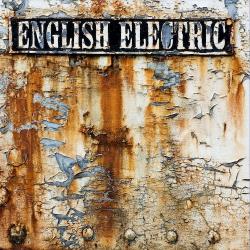
Yes, another Progarchist with English Electric Part 1 as his No. 1 of 2012, I’m afraid! And the fact that a self-confessed Marillion and Rush fanboy like me has placed this ahead of great albums by those bands tells you just how good this is. I can’t do better than the erudite and rather beautiful analysis of EE1 by Progarchy’s very own Brad Birzer (which I urge you to read), so I’ll simply say that it stunned me from the very first listen. As you’d expect from Big Big Train, this is an album suffused with a love of the English landscape, its rich history and its industrial heritage. It is less classically proggy than its excellent predecessor The Underfall Yard, leaning instead towards pop and folk music influences – there’s more of XTC in here than there is of Yes. Don’t let that put you off (not that it should), because the result is utterly sublime.
It’s difficult to pick out highlights when so much of the music is exquisite, but at the moment I’m particularly fond of joyous opener The First Rebreather, the elegaic Summoned By Bells and the dramatic A Boy In Darkness. Judas Unrepentant is wonderfully uplifting as well. And Uncle Jack is just so lovely, light and summery… Damn it, it’s all brilliant! And the cover artwork is rather special too. Could Part 2 possibly match, or even exceed, this? We will know soon enough!


 Progarchy