
The Dutch Progressive Rock Page has released the results of the 2014 reader poll. Unfortunately, DPRP saw a decline in the number of voters over previous years, especially in the younger demographics. But, Mike Portnoy won best drummer by a wide margin. Is anybody really surprised about that, though? Congratulations Mike, and to all of the fantastic prog artists of 2014!
Tag: Mike Portnoy
The Neal Morse Band – Alive Again and On Tour

Last Night in Nashville, TN, The Neal Morse Band kicked off their tour in support of their new album, The Grand Experiment. Performing in the intimate confines of Rocketown to a very enthusiastic audience, Neal and his cohorts tore through an energetic set that lasted more than 2 hours and included some surprises in the set list.
They got things started with the a cappella opening to “The Call”, with every band member nailing his vocal part perfectly. Eric Gillette, a veteran from the Momentum tour, is on lead guitar, while Bill Hubauer (another Momentum vet) plays keyboards, clarinet, and sax. Of course, no Morse band would be complete without longtime collaborators Randy George on bass and Mike Portnoy on drums. I brought a friend with me to the show, and he was blown away by Mike’s performance, saying, “I haven’t seen anyone play drums like that since Keith Moon!” Eric was incredible throughout the show, singing occasional lead vocals and playing some absolutely shredding guitar. Bill’s instrumental and vocal versatility give the band almost two musicians in one person, and Randy George holds it all together with his fluid bass runs. As Neal proclaimed at one point, “Randy with the bass pedal solo – how prog is that!”
The band played every song from The Grand Experiment except (surprisingly) “Agenda”. Highlights included Neal playing a beautiful instrumental on acoustic guitar that led into “Waterfall”, as well as the Kings-X-sounding title track. They also played “Into the Fire” from ?, “The Creation” from One, and they got a roar of approval when the intro to “In Harm’s Way” (from Neal’s Spock’s Beard days!) boomed out.
This being the first gig of the tour, there were some inevitable glitches, but Neal took them in stride – even stopping “The Grand Experiment” to restart a tricky vocal section. The audience loved it, and once they were back on track, they never looked back.
There are few performers who can connect with their audience the way Neal does – conducting them during singalongs, raising his arms in appreciation, and even jumping off the stage to sing and play among them. He and the entire band gave all they had, every minute. As my friend exclaimed to me in the middle of a song, “It sure is nice to see a band just having a great time playing together!”
Neal asked if we could handle “one more epic” (of course we could), and then launched into “Alive Again”. Neal has written many, many epics, and this one is near the top. It rocks, it soars, it ebbs, and just when you think it’s over, it comes roaring back for an incredible finale.
As far as the encores, I won’t be a spoiler. Suffice it to say that there are some really fun surprises, both in terms of performance and song selection!
It’s been said (I have no idea if it’s true) that Keith Richards was once asked what it was like to be the world’s greatest rock and roll band. He replied that on any given night, there was a band playing in a club, somewhere, and for that night they were the world’s greatest rock and roll band. Last night, Rocketown hosted the world’s greatest.
You can get details of the rest of the Alive Again Tour at Radiant Records. Don’t miss this one.
Update: I mentioned above that “Alive Again” is one of Neal’s best epics. Actually, all of the songs on The Grand Experiment are a group effort, and Neal, Mike, Randy, Eric, and Bill all deserve credit for them.
A Grand Experiment, indeed. Morse Conquers All.
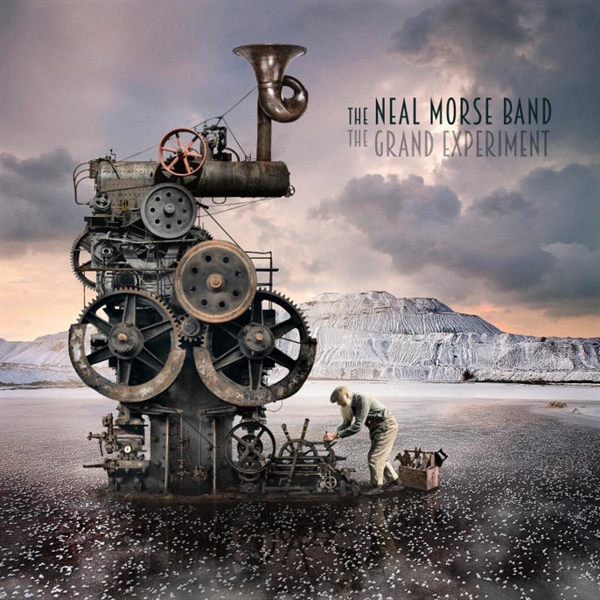
The Neal Morse Band, The Grand Experiment (Radiant Records, 2015), Special Edition. Tracks: The Call; The Grand Experiment; Waterfall; Agenda; Alive Again; New Jerusalem (Freedom is Coming); Doomsday Destiny; MacArthur Park; The Creation (Live); and Reunion (Live).
Birzer rating: 9.5/10.
“The Call” begins with a multipart gospel/Trevor Rabin-Yes era harmony before breaking into a wild keyboard/drum sequence that is pure third-wave prog. Quickly, all instruments play at full blast. It’s a rather ingenious immersion into the album.
Everything soars with a precision and beauty. “With every beating of my heart. . . I am engulfed in who you are.” Morse is doing for the listener what God’s grace has done for him. As the lyrics suggest, the only thing that prevents disaster of an eternal magnitude is an embracing of “The Call,” unique to each person.
A little past the halfway mark in the song, the Neal Morse Band breaks into a harrowing Transatlantic/Flower Kings moment of dread and introspection. Randy George’s bass, especially, steals the moment as things only slowly resolve into a hyperfrenetic mass of sound.
After Momentum, I had thought Morse had become rather comfortable in his Christianity, thus allowing it to become a part of his art, a foundation, rather than an explosion. That is, Momentum might very well have been written by a seriously religious person whose sensibilities had been shaped dramatically by his faith but who felt no need to proclaim it as though by one recently saved. This album, though, is an explosion of religious enthusiasm and praise. Clearly, “The Grand Experiment” is prog meets worship in a significant way.
Whether the listener will agree with Morse’s religious perspective or not matters little, as the music is so strong and the conviction so real that one can’t help but admire Morse for writing about and proclaiming what he loves most. I might not go to his Church, but he certainly makes his faith look extremely attractive, open, warm, and loving. This is not the kind of evangelicalism that condemns all who do not understand or agree 100% to some form of a brimstone hell. Instead, Morse chooses to critique the world but praise the potential of each individual as endowed by grace.
“The Grand Experiment,” the second track, opens with a more blues-based sound than I’d normally expect from Morse, but it has a strong Kansas, Styx, Allman Brothers feel as Morse almost growls his way through the beginning of the song. This is rather heavy. A short song at only 5 and ½ minutes, “The Grand Experiment” remains very heavy throughout—again, in a 1970’s American prog-gish fashion. Backwards keyboard sounds even swirl from speaker to speaker. It’s with this song that I realize how astounding the engineering, production, and mastering of this album is. An audiophile’s dream.
Tasteful acoustic guitar opens the third track, “Waterfall,” and the intertwining vocals carry a soft Crosby, Stills, Nash, and Young folk lilt throughout. “Waterfall” could easily have been a Flying Colors song. Most interestingly, the song morphs into a mid-period Genesis song, something off of Trick of the Tail or Wind and Wuthering mixed with a bit of early solo Sting. The trajectory of this six and ½ minute song is nothing short of extraordinary, and it proves just how brilliant Morse is as a musician.
“Agenda,” the fourth track, is another extremely hard-rock track, though less than 4 minutes in length. Despite the hard-rock elements of the instruments, Morse sings in a sweet poppish way, and the entire song reminds me of the best of Cheap Trick and The Pretenders.
The final sing of the main disc, “Alive Again,” is a nearly twenty-seven minute prog success. In every way, it’s a masterpiece. No hyperbole needed to explain this one. Indeed, the song is hyperbole made manifest! No one in the music world can write songs of this length in the way that Morse can. It is with this song that the Nashville progger reveals not only his brilliance and genius, but his very mastery of and over the genre. Rather than feeling like a series of songs thrust together with interesting bridges, “Alive Again” flows logically from part to part, telling a cohesive and compelling story. It has the structure of a classical symphony, but with all of the rock elements one would expect. The lyrics and vocal harmonies (again, think mid-1970s Kansas) guide, glue, and predominate, while the song never shies away from 1978 Rush-style atmospherics and percussion. Intensely religious, this song carries more respect for creation and the Creator than almost any formal church music produced over the last three decades. The song also features a psychedelic part with one of the members of the band (not Morse; Portnoy, maybe?) singing a testimonial. It works.
The bonus disc has three new songs—“New Jerusalem (Freedom is Coming)”; “Doomsday Destiny”; and “MacArthur Park”—as well as two songs recorded from last November’s Morsefest, “The Creation” and “Reunion.” Each of the new songs is absolutely gorgeous, and I’m not at all sure they didn’t make it as a part of the original, main album. While “New Jerusalem” has a bit of a Relayer aspect to it, nothing on the entire album has been shy about paying homage to earlier bands. Musically, this might very well be the best song on the two discs. There’s a bit more funk in “Doomsday Destiny,” for example, than anything on the main disc, but it would still fit well with the lyrical themes of The Grand Experiment. “MacArthur Park” seems to be an homage, at least musically, to Kansas, Yes, Jethro Tull, and ELP, despite the rather Peartian title.
My advice, make sure you get the entire package—the main disc as well as the special edition. The only reason I’m not giving this release a perfect 10 is simply because the album is confusing with its variations. But, the bonus disc is every bit as good as the main disc, and you’ll kick yourself in the future if you pass up these “bonus” songs. They are, to my ears, absolutely essential.
One last thing. I must praise the individual musicians. Morse might be the leader, the touchstone, and the fountainhead, but he has created a community of artists around him, artists who clearly love Morse, the art, each other, and the listener. No one of the five members of the Neal Morse Band gives only a part of himself. Each gives every single thing he has. George’s bass, Gillette’s guitar, Hubauer’s many, many instruments each boggle the mind.
But, I have to single out Portnoy. I’ve been listening to him since 1992. Since, I have regarded him as one of the three greatest drummers in the rock world, along with Peart and D’Virgilio. Over the past 23 years, though, I would’ve always put the caveat that Portnoy is the best hard rock drummer, lacking the subtly of Peart or D’Virgilio. For what it’s worth, I now officially revise that claim. Portnoy’s drumming and percussion absolutely, completely, and totally blow me away on this album. Holy Moses! The drumming and percussion is just so, so good that words fail me. Portnoy reveals sides to himself that I had no idea existed. On a personal note, he is just three or four months older than I am. I can’t tell you–the reader–how happy I am to see his growth, his desire to become what he is capable of. Thank you, Mr. Portnoy. I bow to your excellence.
Whatever the reason–Morse’s charisma or God’s grace or some mixture of both–“The Grand Experiment” is a true success, an explosion of enthusiasm, a true work of art. Nothing halfway here. This is the real deal. This is what we proggers live for.
To pre-order–AND YOU SHOULD–go here. Make sure to get the full version.
***
Update, January 18, 2015–Chris Thompson, who works closely with Morse at Radiant, posted this on Facebook: “”The Grand Experiment” was written by everyone in the band. Neal came to the writing sessions with nothing, planning to co-write the entire album, with a piece of each member framed perfectly throughout each song.” Thanks, Chris!
My favorite Album of 2014, Redux
 At risk of annoying those who waded through my New Year’s Day post on my favorite prog/rock albums of 2014, I’m (re)posting my #1 pick from that list, as I think it stands alone just fine as a review. And because I think so highly of this album. Oh, and because I don’t post nearly enough on this fine blog, so maybe this can count toward my post total! By the way, a recent issue of PROG magazine (Issue 51 2014) raved about this album—but didn’t get into the lyrical content as I do below.
“Second Nature” by Flying Colors. Every once in a while—perhaps once every few years—I hear an album that I listen to again and again…and again: Jeff Buckley’s “Grace”, “OK Computer” by Radiohead, and Soundgarden’s “Superunknown” come to mind. I’ve now listened to this album 75 times or so (according to my iTunes), and I’ve not tired of it at all. Not even close. If anything, I like it more than ever, and I’m confident I’ll be listening to it for years to come. There are numerous reasons for my obsession with “Second Nature,” but I’ll note just a couple of big ones. It begins with the album title, “Second Nature,” which certainly references that this is the group’s second studio album and the fact that making music, for these five masters, is second nature.
But it finally points to the intertwining, overarching theme of the album, which is that of spiritual awakening, ascent, and transformation, the movement from putting off the “old nature” and putting on the “new nature,” spoken of by Paul the Apostle in his letter to the Ephesians (4:22-24). The arch can be seen in the opening and closing lyrics. “Open Up Your Eyes” is a song of self-examination and spiritual assessment:
Dream, empty and grey
A story waiting for a place to begin
Hands, laying all the best laid plans
But where do we leave our mark
In this life?
There is reference to original sin, echoing Eliot’s “Four Quartets”: “Torn, wearing the disease you mourn/Like a deep freeze it burns.” And then the promise and the hope is proffered: “Open up your eyes and come awake/You will be created now”—itself a reference, I’m quite certain, to the Apostle Paul’s various exhortations to rouse oneself from spiritual slumber and to be made a “new creation.” The language of redemption and salvation are shot through the entire album; in many ways, this is the most open and covert Christian album I’ve ever heard (up there with early King’s X), and the approach is perfectly balanced and executed.
“Mask Machine” laments the layers of deception inherent in the dominant, de-sacralized culture, “With love for sale and gold for dirt/I’ll worship every fleeting aching.” The song “Bombs Away” furthers the lament and confesses the sad state of the first and fallen nature: “Run by my instincts/I’m high on the freeway/And I’m scared I’ll come down.” But there is a recognition of the vocation to transcendence: “I’d love to be found” and, “I need to find a way beyond.”
The next four songs, “The Fury of My Love”, “A Place In Your World”, “Lost Without You”, and “One Love Forever” are love songs—but for whom? Or Whom? There is a certainly ambiguity in the first two, as if nodding to the face that earthly love is itself a reflection of heavenly love: “Singing I surrender/I surrender/Tearing all the walls away/I’m giving you a place.” but by “One Love Forever” the ambiguity is gone, replace by clarity and knowledge of the God-sized hole in the human heart: “One love forever/For one consuming hole inside/One love forever/… One love for all time/Is calling/Our eyes contain eternity.”
The final two songs, “Peaceful Harbor” and “Cosmic Symphony”, mark the apex of the redemptive ascent: arrival and contemplation. And the music, amazingly, more than matches the rather mystical topic at hand. “Peaceful Harbor” is a soaring, ecstatic hymn: “I’ll look beyond/With this bedlam behind me/And I embrace the sky/My soul will cry/May your wind ever find me.” The final song is both prog heaven and, well, a hopeful glimpse of heaven: “I’m searchin’ for the air but I’m stuck here on the ground … And when I get to walk the streets/Without this burden on my feet/I know I’ve been called home…”
The monumental final, three-part track, “Cosmic Symphony,” is deeply emotional but resolute in nature. Once again, Eliot comes to mind (“Preludes” and “The Hollow Men” in particular), with references to scarecrows and cigarettes, with descriptions both abstract and apocalyptic: “Shrinking violet wounded by her mother/Old men sleep while porcelain screams take over/And the wolf disguises her undying lover.” There is a recognition, it seems, that redemption comes through acknowledging our limits in this temporal realm: “I’m searching for the air but I’m stuck here on the ground now…” But the conclusion, again, is one of hope in the world beyond: “And when I get to walk these streets/Without a burden on these feet/I’ll know I’ve been called home…”
Secondly, as indicated, the music perfectly carries and conveys the rich lyrical content. We all know that these guys can play anything; what is especially striking to me is how they play as a band, for the sake of the music. There are no solos for the sake of solos; everything is at the service of the songs. Steve Morse, who I’ve been listening to for 30 years now, continues to amaze with his ability to play with such precision and economy, yet with such soulfulness. See, for example, his solos in “Peaceful Harbor” and “Cosmic Symphony”. Morse is always distinctly Steve Morse, and yet he has an uncanny—humble, really—ability to serve the music at hand (I also think of his masterful work on Kansas’ criminally underrated “In the Spirit of Things”). Neal Morse and Carey McPherson have apparently mind-melded as vocalists; at times it is hard to say who is singing, nor does it matter. The amount of energy and love they have poured into this album is obvious. Dave LaRue is the epitome of virtuoso bass playing that is rooted and melodic; his brief solo near the beginning of “Cosmic Symphony” is a piece of sheer beauty—again, at the service of the song. And Mike Portnoy’s playing is so very tasteful, with all sorts of meticulous detail.
In short, this is, for me, a magical album. Thank you, Flying Colors!
My Best of 2014, Part I: By the Way. Which one is Pink?
 In a previous post or two, I’ve tried to explain what I mean by 2014 being a significant year in the history of progressive rock. Something(s)—though I still can’t quite get my fingers exactly on it—is quite different. That is, 2014 is not 2013, in the way that 2013 resembled but improved upon 2012, 2011, and 2010.
And, just to be clear, I’m not one of those proggers who actually thinks all new music must progress in the sense of offering some new technique the world has never heard before. Sure, I love innovation. But, never for innovation’s sake. Innovation, by its very nature, is always momentary. I want permanence. And, permanence comes only with the discovery and uncovering of beauty. If the new technique or innovation leads to a better understanding of beauty, so be it. But, I would, I hope, always choose the timeless and true and beautiful over the clever and ephemeral.
So, what’s different about 2014 and what I believe to be a new wave of progressive rock? Three things spring to mind. First, the best of 2014—and there’s an immense amount of good—is beautiful. Second, it’s eclectic. Third, it’s atmospheric.
A few years ago, several progarchists were happily complaining that so much prog is being released into the world that it’s impossible to catch up with it or, once caught up, stay up with it. True, I think. And, all to the good. Competition is rarely a bad thing, and competition for market and attention has forced proggers to think in very creative and entrepreneurial ways. This is as true in selling music as it is in making music.
Take one very specific example. Andy Tillison has always been one of the two or three demigods of Third Wave prog. Take a listen, however, to his 2014 release, Electronic Sinfonia No. 2. It is a thing of intense beauty, eclectic, and atmospheric. It is the perfect fourth-wave prog release, in many, many ways.
Because we’ve been so overwhelmed with so much goodness over the last two decades, and, especially, the last few years, Anathema’s Distant Satellite is a severe disappointment. Had it been released five years ago, it would have been pretty great. Now, though, in this context, it’s simply a parody of Anathema and Radiohead.
Well, enough ranting. I’d like to start describing my favorites of this year. In no particular order, I offer my first glimpse into my loves of 2014. Pink Floyd’s THE ENDLESS RIVER. I’ve been shocked at how many folks on the internet have decried it, as a betrayal to Roger Waters and to traditional Pink Floyd. Since when has PF ever been traditional? The Endless River is something PF has never been before. It has echoes of Echoes, but it also had a lot of Tangerine Dream in it. It’s interesting, it’s soaring, it’s daring, it’s full of whale song. Just listen to Skins and Unsung. There’s no ego. Just flight.
And, what an incredible honor to the brilliance of Rick Wright.
I’e always liked Mike Portnoy. In fact, I’ve been quite taken with him, and I’ve been more than willing to put up with his own eccentricities and strong opinions. But, when he lamented a new PF album this past summer, something in me gave. My respect for the former DT drummer has declined dramatically.
Around the time that the Division Bell was released, Wright admitted that he feared that PF had lost some of its creativity, and he cited Mark Hollis as an inspiration. Talk Talk, he argued, got away with much, mostly because Hollis had the integrity to dream and dare. He wanted Floyd to have the same spirit.
Well, here it is. THE ENDLESS RIVER.
What do David Gilmour and Nick Mason have to prove? Nothing, really. And, they prove nothing except the ability to offer a memorial to Rick. Amen. If every person in the world offered such a tribute to a lost friend, this would be a much better world.
Gilmour and Mason, I salute you for doing the right thing, the good thing, the true thing.
Bryan’s Best of 2014
Without a doubt, 2014 has been a great year for Prog. It seems as if we have been barraged by great music from all sides. The string of excellence continues. This list is my arbitrary ordering of what I liked best from this year. I’m really not a huge fan of “best of” lists because I don’t think you can really judge art in that way. So, consider this a list of what I enjoyed. The order of numbers 10-3 is relatively interchangeable.
10. Dream the Electric Sleep – Heretics 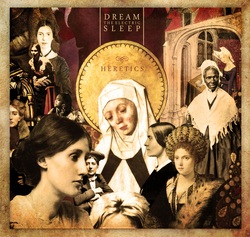
I should have reviewed this album when it came out back in January, but I’m lazy. This was a fantastic sophomore release by the Lexington, Kentucky prog outfit. Their first album, Lost and Gone Forever, was an excellent concept album. These guys do a fantastic job of combining classic prog influences with a harder rock edge. The beginning of the album sounds almost Pink Floydian, and there are definite nods to The Wall. The singer also sounds a bit like Roger Waters. Heretics is another concept album, and it clocks in at over 70 minutes in length. Check these guys out – they are ascending as a band and are making some great music.
http://www.dreamtheelectricsleep.com
9. Cosmograf – Capacitor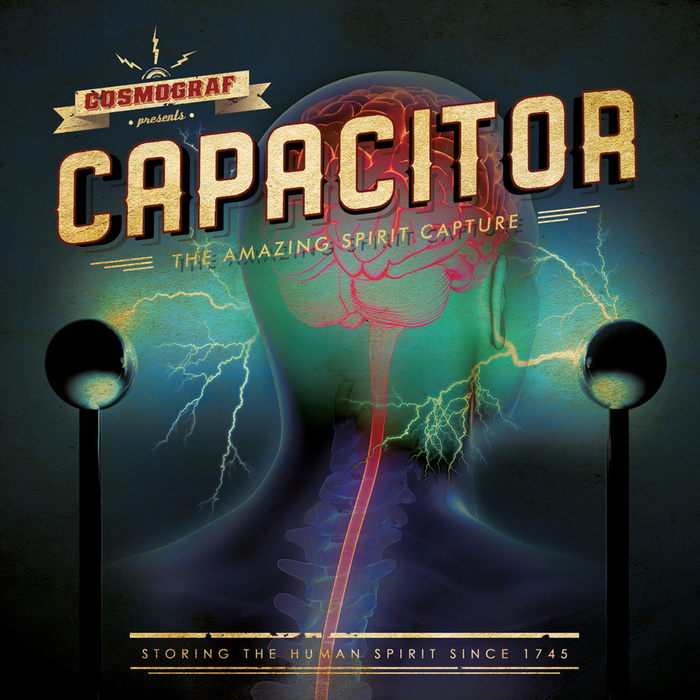
Robin Armstrong’s latest offering, combined with the efforts of such wizards as Andy Tillison, Nick D’Virgilio, and Matt Stevens, is a fresh take on prog rock. As of right now, I haven’t listened to any other Cosmograf albums, but this one is quite good. I’m sure there are others here at Progarchy that could tell you more about the band, and I’ll wager they would be more than happy to. Capacitor is definitely worthy of any 2014 “top 10” list.
8. Bigelf – Into the Maelstrom 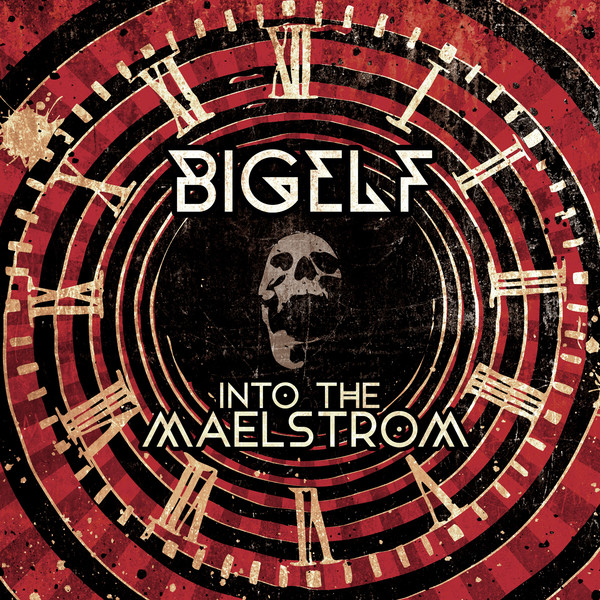
Three words – Mike freaking Portnoy. He teamed up with Bigelf to drum on their latest album, and it was insane. He has to be the hardest working musician in prog. This isn’t the last we shall hear from him on this list.
Bigelf’s breed of prog metal is unlike anything I have heard before. Maybe it’s lead singer Damon Fox’s awesomely bizarre vocals, or their fantastic combination of metal and classic rock, or maybe it’s Portnoy. Or all of the above. Whatever it is, Bigelf has created something special with Into the Maelstrom. They have been around since the early 1990s, have four studio albums, and have toured with Dream Theater, so they know their way around the business. Certainly worth the time for any Mike Portnoy fan, as well as any fan of prog metal.
https://www.facebook.com/bigelfmusic/info?tab=page_info
7. The Gift – Land of Shadows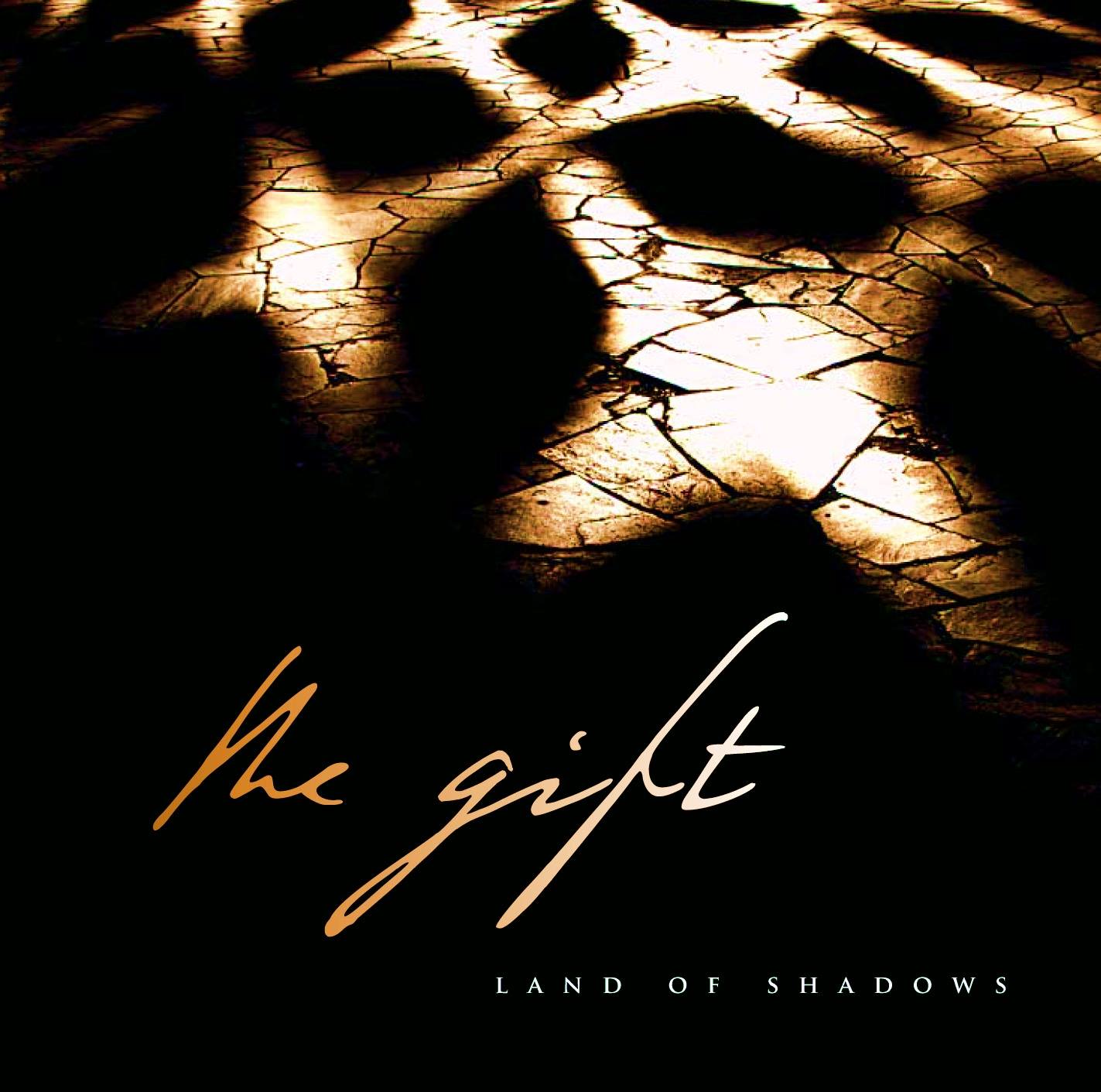
London’s The Gift masterfully combine prog metal with symphonic metal and Gabriel-era Genesis prog. This album is refreshing in its tonal clarity and its thematic prowess. It is definitely an album worth listening to over and over again through the years. Here’s my review of it from several months back:
https://progarchy.com/2014/07/20/the-gift-land-of-shadows/
http://www.thegiftmusic.com/index.php
6. Voyager – V
Australian prog metal outfit Voyager have released a very solid album this year. While I feel like it could have been more tightly constructed and some of the songs featured unnecessary repetition, there are some awesome riffs to be found here. This band rocks, and they rock hard. Many comment that the second half of the album is a let down, but I think it is just the opposite. Voyager ventures into the wonderful void of prog in the second half of V, including some softer songs. Time Lord wrote a very nice review of the album earlier this year:
https://progarchy.com/2014/07/05/voyager-v/
5. Transatlantic – Kaleidoscope 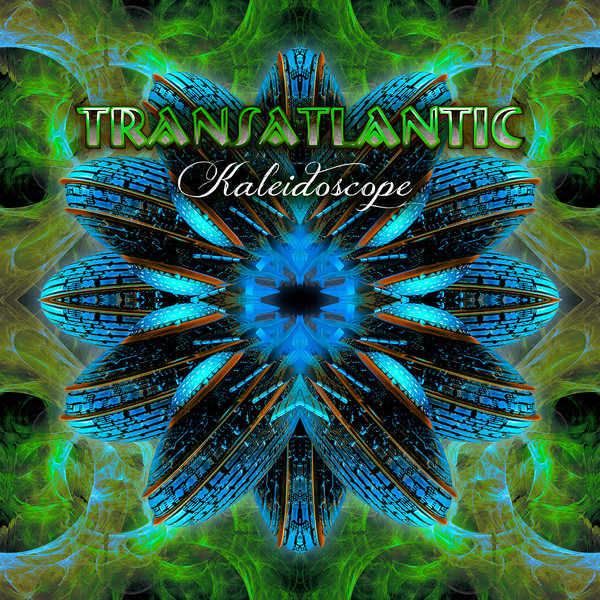
I told you Mike Portnoy would be heard from again on this list. Supergroup Transatlantic cranked out a fantastic album this year. Made up of Neal Morse, Mike Portnoy, Roine Stolt, and Pete Trewavas, Transatlantic has several albums under their belt, and they continue to impress. Kaleidoscope was my first introduction to Transatlantic, and it was an excellent first impression. The cover songs found on the accompanying special edition are all excellent. Anyone who can cover Yes, King Crimson, Elton John, Focus, Moody Blues, and a few others while still sounding entirely unique deserves immense respect. The live album, KaLIVEoscope, that came out in October, was equally brilliant, with three hours of musical genius. The collective talent in this band is shocking, and it clearly shows on Kaleidoscope.
http://www.transatlanticweb.com
4. Chevelle – La Gárgola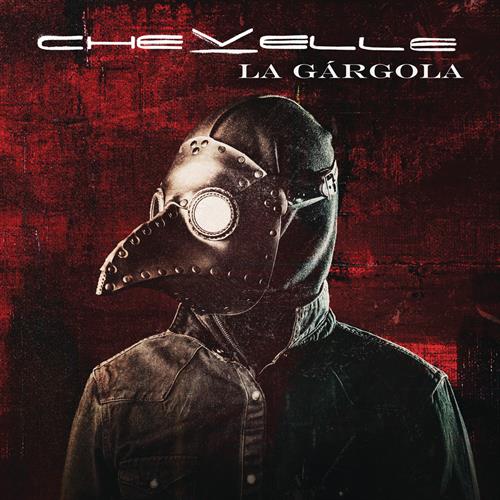
No, this isn’t a prog album. However, Chevelle released one of the best albums of their career with La Gárgola. Their heavy, yet not overly heavy, style of metal has been a staple of contemporary hard rock over the past 15 years. Their excellent vocals, steady bass, clear guitar, proficient drumming, and haunting lyrics makes Chevelle one of the most interesting metal bands of the 21st Century. I found this album to be an excellent return to their heavier beginnings, while simultaneously exploring new and more complicated territory.
http://getmorechevelle.com/home.php
https://progarchy.com/2014/08/26/chevelle-la-gargola/
3. Pink Floyd – The Endless River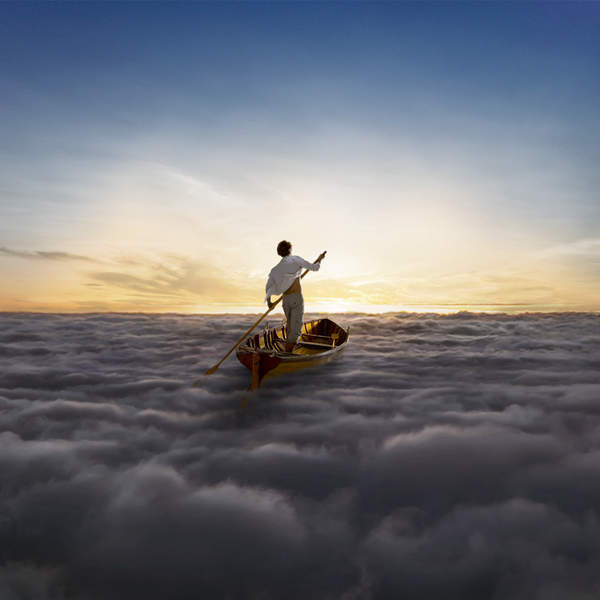
Is Pink Floyd even capable of making an album that isn’t good? Their latest (and final) album combines extra recordings from The Division Bell with recordings from David Gilmour and Nick Mason, as well as studio musicians. Mainly instrumental (only one song has singing), this album hearkens back to the instrumentation found in Wish You Were Here and Animals. The one thing missing, in my opinion, is Roger Waters’ bass. I feel like his involvement in this album would have made it even more spectacular, as well as thrill millions of fans. Even so, this is clearly Pink Floyd, and any fan of psychedelic prog will love this album. The album serves as a worthy sendoff for Richard Wright.
http://www.pinkfloyd.com/index2.php
http://www.pinkfloyd.com/theendlessriver/
2. Vanden Plas – Chronicles of the Immortals – Netherworld
Vanden Plas’ latest album might very well be the best progressive metal album I have ever heard, with no disrespect to Dream Theater’s Images and Words. It is just that Netherworld so beautifully captures the intricacies of metal, “high prog,” and magnificent story telling. There have been some excellent albums released this year, but few reach the brilliance of Vanden Plas. Having listened to some of their previous work, this album is not out of the ordinary for them. One of the nicest things about this band is the vocals are not your traditional “metal” vocals – there is no screaming, yelling, whining, etc. Andy Kuntz’s voice is beautifully melodic and mysterious, and it is perfect for this album. Vanden Plas perfectly crosses over between the worlds of full-on head banging metal riffs and quieter, classic progressive rock. This album also has one of the best beginnings and endings of any album I have ever heard. There is a clear and definite start and resolution – you aren’t left hanging or wishing there was more. It is perfect just as it is.
Check out Gianna’s and Time Lord’s reviews of Chronicles of the Immortals – Netherworld.
1. Flying Colors – Second Nature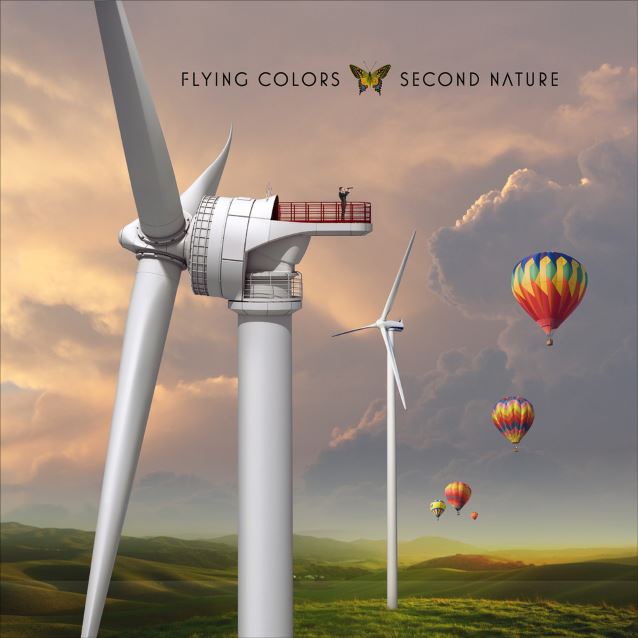
Mike Portnoy again. The guy sure does get around. Neal Morse again too. Go figure. Also in the band are Steve Morse, Casey McPhersen, and Dave Larue.
Second Nature is one of the best albums I have ever heard. Flying Colors combine prog rock and pop rock in a way not seen since the glory days of Styx and Kansas. Seeing them live merely solidified my position on the matter. Catchy yet complicated riffs abound, as well as thoughtful lyrics. If prog wants to become mainstream and popular again, then bands need to take note of Flying Colors.
Check out my review of Second Nature, as well as my review of their live show.
***
Well, there’s my top 10 of 2014. A fair mixture of metal, prog metal, and straight up prog. Honorable mention should go to Ian Anderson’s Homo Erraticus, Fire Garden’s Sound of Majestic Colors (which I thought had far too much of a “garage band” mixing to make my top 10 list), Fractal Mirror’s Garden of Ghosts, Salander’s STENDEC, and Glass Hammer’s Ode to Echo. Special mention goes to Haken’s recent EP, Restoration EP. Had this been an album, I would have placed it in my top 5. Dishonorable mention goes to Yes’ Heaven and Earth.
Top concert of the year goes to Dennis DeYoung. His voice has not changed in 40 years, and his backup band and vocalists are better than Styx. He also has a singer who sounds better than Tommy Shaw did 40 years ago. Runner up for best show goes to Flying Colors, from their brief Second Nature tour. The reason I’m not placing them as best live show of the year is because of the audio problems they had during the show. The sound system for Dennis DeYoung’s show was superb, with no feedback issues during the show. I also had a wonderful time at the B.B. King concert, as well as seeing the CSO perform the music to Return of the King live. It was a great year for concerts!
I would also like to mention Dream Theater’s self-titled album as one of my most listened to albums of 2014. Everything about this album was fantastic, including the live album on Blu-Ray they released a few months back. From the metal virtuosity to the lyrics, this album will be on the rotation for years to come.
2014 has been another fantastic year for prog, and I look forward to more of the same in 2015. Neal Morse’s next project, The Neal Morse Band The Grand Experiment, comes out in February. Take a wild guess at who the drummer is. Muse will also be releasing an album in 2015, one which they claim will return to their rockier roots. There is also talk of a Rush 41st anniversary tour (I think there is, anyways). Much to look forward to in the coming year, and much to appreciate from 2014.
Prog on, Progarchy!
Reflections on Transatlantic’s “KaLIVEascope”
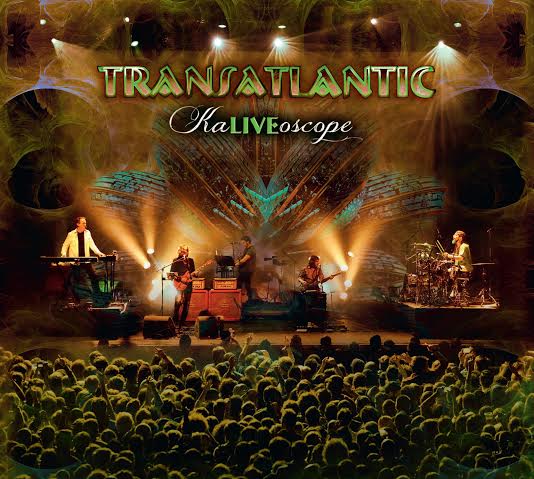 A kaleidoscope takes a mishmash of glass bits, pieces of plastic and paper, and combines them into symmetric images. Random elements are jumbled together and reflected into scenes of beautiful harmony and balance. Just like the kaleidoscope’s mirrors create beauty from seemingly incompatible pieces of broken glass, Transatlantic takes four exceedingly talented and strong personalities and combines them in ways that generate some of the most beautiful and powerful music today.
Transatlantic has just released a mammoth live set from their European tour in support of their recent album, Kaleidoscope, and it’s a scorcher. There are several different editions, and the smallest consists of 3 CDs/1 DVD (which is a steal at 23 USD). The CDs document their more than 3-hour-long show at Tilburg, The Netherlands, while the DVD covers their Cologne, Germany concert. The Tilburg show is really something special – Transatlantic and Neal Morse (as a solo artist) have performed there many times, and an obvious bond exists between the band and the audience. The DVD is very nice, because throughout the concert here is a huge screen behind the band with continually evolving kaleidoscopic/fractal patterns that enhance the viewing experience.
Transatlantic have grown tremendously as a group. For the uninitiated, it is a “super-group”, with members coming from some of the most successful prog acts ever: Neal Morse (Spock’s Beard, Flying Colors, solo), Mike Portnoy (Dream Theater, Winery Dogs, Adrenaline Mob, Flying Colors, etc., etc.), Roine Stolt (The Flower Kings), and Pete Trewavas (Marillion). Their first couple of albums, SMPTe and Bridge Across Forever were great, but one got the sense that the various members brought their own songs to the projects, and not a lot of collaboration happened. The musical interaction on their third album, The Whirlwind, was excellent, but the music had a sense of familiarity that was getting worrisome.
Fortunately, on Kaleidoscope, Transatlantic have truly come into their own as a group. It’s hard to tell where one member’s influence ends and another’s begins; they have established their own unique sound, and when all the parts lock together and take off, there isn’t another band that can touch them. The DVD documenting the making of Kaleidoscope confirms the collaborative nature of the songs – I had assumed that Neal Morse was the primary creative force, but surprisingly, Mike Portnoy comes across as the main driver of the composing and arranging.
For KaLIVEascope, the boys are supported by multi-instrumentalist Ted Leonard, which frees up Roine to concentrate on his gorgeous lead guitar lines. Mike Portnoy has to be the hardest-working drummer in show business – he is indefatigable through hours and hours of incredibly complex and lengthy songs. Neal Morse is the primary lead vocalist, and in both the Tilburg and Cologne shows he again demonstrates his uncanny ability to reach out and connect with the audience. Finally, both the CD and DVD mixes give bassist Pete Trewavas the prominence he deserves. I’m a sucker for energetic and melodic basslines, and Pete does not disappoint.
Both shows open with “Into the Blue”, off Kaleidoscope. Then comes “My New World” from their debut. Their performance of this song is a revelation, as Roine sounds like a fire’s been lit under him. It’s now one of my favorite songs from their extensive catalog. “Shine” follows, which is one of their most straightforward “pop” songs. There’s a 30 – minute “Whirlwind” medley, then Neal sings a brief “Beyond The Sun” alone. They immediately segue into the epic “Kaleidoscope” which is performed exceptionally well on the Cologne DVD. A highlight is a jazzy section where Neal and Roine bring to mind the classic live work of Jan Hammer and Jeff Beck.
At this point, most bands would call it a night and leave the stage utterly spent, but there’s much more music in store. Neal and Roine perform a beautiful duet on acoustic and electric guitars. Next is the perennial crowd singalong, “We All Need Some Light”, and then the show proper concludes with an electrifying performance of “Black As The Sky”. I’ve seen all of Transatalantic’s live DVDs, and on this song they are at the absolute top of their game. (Video is below)
For encores, the Tilburg and Cologne setlists diverge: Tilburg includes “Nights in White Satin”, and Focus’ “Sylvia/Hocus Pocus”, featuring Thys van Leer himself(!). The evening finally concludes with a rousing medley of “All Of The Above/Stranger In Your Soul”. The Cologne show skips the covers, and goes straight to the medley.
Transatlantic is not a super-group; they are a cohesive unit. They are far greater than the sum of their parts, and it shows in these performances. Even earlier material sounds new; they’ve achieved that mysterious ability of gifted musicians to anticipate each others’ next move, and push themselves to higher and higher levels.
Flying Colors – “Second Nature” – Rock Brilliance
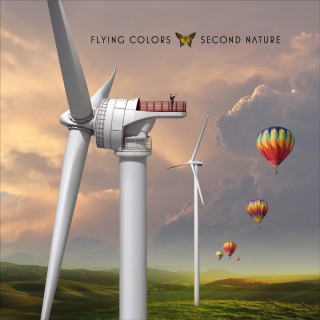
Flying Colors’ sophomore release, Second Nature, may very well be the best album of 2014. If it weren’t for Big Big Train’s English Electric, I would say this may be the best album of the past ten years. It is that good. Seeing the band live only confirmed this suspicion for me. Many times, so-called “supergroups” don’t turn out to be so super. While the idea of putting some of the best musicians in the world in the same band sounds like a recipe for success, the results are often the opposite. I find it easy to believe that egos could often get in the way of making fine music. Not so with Flying Colors. This band combines some of the greatest musicians in the world, and they fit together as band members perfectly. In fact, for several of them, this band may be some of their best work. With Second Nature, the band has an album and a tour under their belts, and they have developed a good relationship.
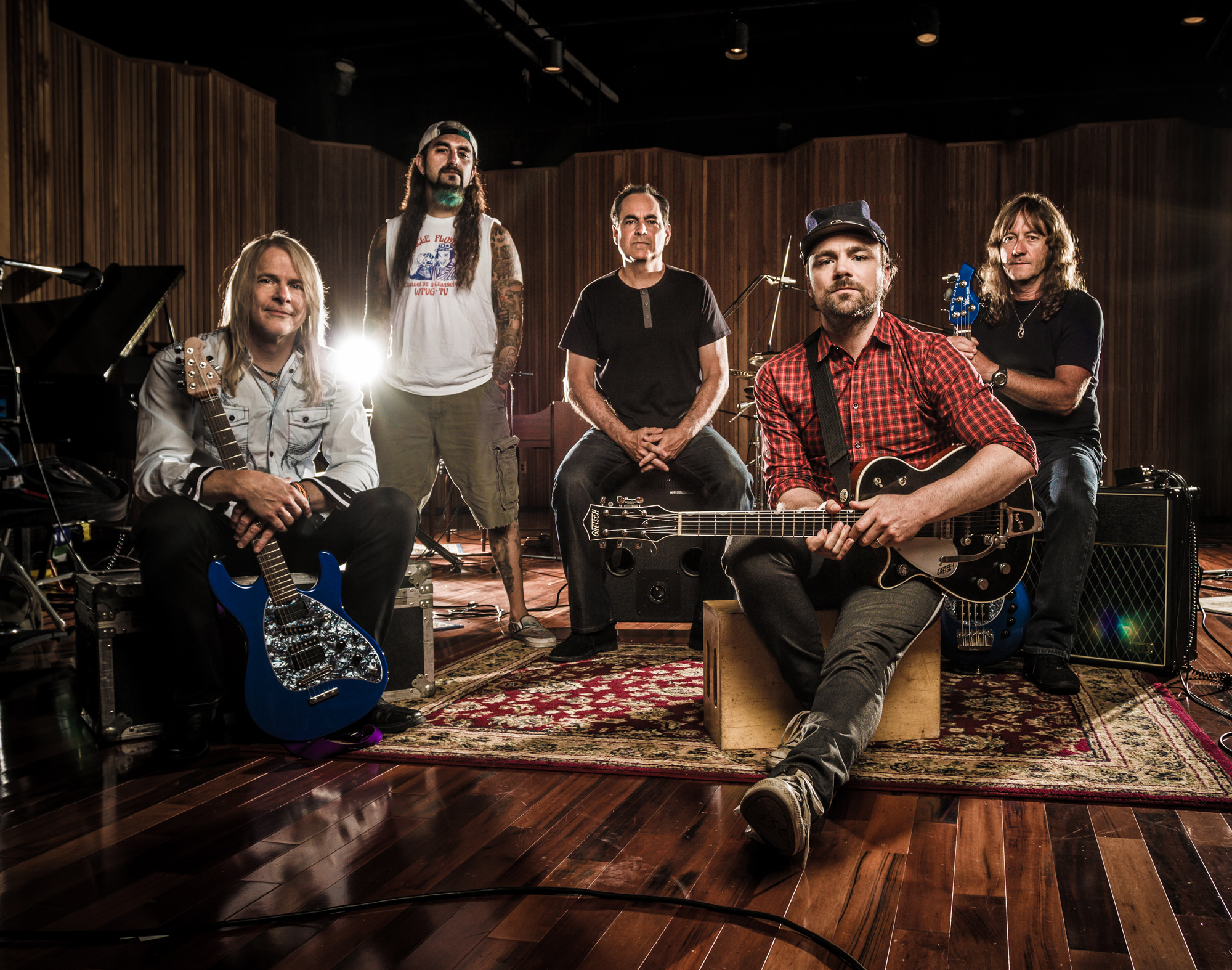
For those of you unfamiliar with Flying Colors (like I basically was about a month ago), the band is made up of :
Mike Portnoy – drums, backup vocals (co-founder of Dream Theater, member of Transatlantic and The Winery Dogs)
Neal Morse – keyboards and vocals (Spocks Beard, Transatlantic)
Steve Morse – lead guitar (Dixie Dregs, Deep Purple)
Dave Larue – bass (Dixie Dregs)
Casey McPhersen – lead vocals and guitar (Alpha Rev)
The talent in this band certainly is not lacking. The same can easily be said of their new album. When I first heard it a few weeks ago, I was blown away. Then I listened to it again. Wow. It has been played basically every day since then. I went back and listened to their first, self-titled, album and their live album, and I was thoroughly impressed. I knew I just had to see them live.
The album itself begins with the over 12 minute long progressive epic, “Open Your Eyes.” This song combines the musical virtuosity of these amazing artists with McPherson’s haunting vocals. The album quickly shifts gear with the second song, “Mask Machine,” probably the most “radio friendly” song on the album. This song masterfully combines prog and pop rock. The next song, “Bombs Away,” is probably the heaviest song on the album, with an awesome bass line courtesy of Dave Larue. That guy rocks, quite literally. From the heaviest song on the album, we move to one of the quietest on the album, and one of my favorites, “The Fury of My Love.” I identify with this song: it isn’t anger, it’s intensity (listen to the song and you’ll understand what I mean). The next three songs, “A Place in Your World,” “Lost Without You,” and “One Love Forever” are straight up classic hard rock songs. Great guitars, strong keyboards, steady bass, driving drums (it’s Portnoy, what do you expect), and great lyrics. The 8th song on the album, “Peaceful Harbor,” is my favorite on the album, if not my favorite song of the year. Brad mentioned in a comment on another Flying Colors post that “Peaceful Harbor” is like “Dust in the Wind” revisited. I couldn’t agree more. The song starts quietly, in a brilliant fashion, and gradually builds to an epic guitar solo with choral singing reminiscent of Pink Floyd’s “Great Gig in the Sky.” This song is good, true, and beautiful. The album finishes with another prog epic, “Cosmic Symphony.” Made up of three parts (I. Still Life Of The World; II. Searching For The Air; III. Pound For Pound), this song ends the album perfectly. The name of the song is perfect, as it sounds symphonic. In concert, I couldn’t help but sing along with “Pound for Pound.”
One of the elements that I like the most about the music of Flying Colors is the upbeat tempo that it has. I’m no expert on the technical side of music, but I don’t think any of their songs are in minor key. This isn’t really a metal album (although you certainly hear metal elements in Portnoy’s drumming). From the music to the lyrics, you are uplifted the whole time. Furthermore, Flying Colors doesn’t go overboard trying to make their music sound complicated. It seems as if many bands in the progressive genre these days are making their albums overly complicated in studio with so many extra instruments that they can’t possibly go on tour. Flying Colors keeps it simple by only recording what they can play in concert, and they do a fantastic job with it.
As a whole, Second Nature is a masterpiece of progressive rock, as well as AOR rock. This album belongs in the rock annals with the likes of Leftoverture, Journey’s Escape, Moving Pictures, The Grand Illusion, and many other classics of progressive and arena rock. It is that good. This album is, in my opinion, an instant classic, and it pains me to think that so few people will appreciate this masterpiece. This is an album that should be blasted loud to annoy the neighbors (and to hopefully win them over to prog!).
I highly recommend Flying Colors’ new album, Second Nature, to anyone who is a fan of rock. From the guitars, to the keyboards, bass and drums, to the amazing vocals, this album is a must have. You will not be disappointed, as it is one of the best albums made in any genre over the past several years.
Flying Colors – Live in St. Charles, IL – 10/3/14

Last night, I had the great pleasure of seeing Flying Colors perform songs from their first and second albums live on the second show of their tour. Held at the Arcada Theater in St. Charles, IL (western suburb of Chicago), the show got off to a rather slow start. Two hours slow, to be exact. The concert was supposed to start at 8PM, with seating to begin at 7. That didn’t happen, due to the fact that the FAA is yet another incompetent government agency run by morons and buffoons. Weather might have also played a part in the fact that the band’s flight from California was late, but I blame the FAA. (The Air Traffic Control facility in Chicago was lit on fire by a “disgruntled” employee last week, and they are still recovering.) Mike Portnoy claimed the band hadn’t slept in a couple of days, but it sure didn’t show while they were playing. So, considering the circumstances, it was almost a miracle the show happened at all, so props to Flying Colors for making it happen.
The Flying Colors began playing at 10, but they had a touring band called Bend Sinister, of Vancouver, Canada, open for them at 9 PM. According to the theater people, Flying Colors didn’t inform the theater that Bend Sinister would also be playing. Shoutout to the band manager for a job well done (sarcasm). Bend Sinister’s music can be best described as classic hard rock. They had guitar, drums, bass, keyboards, and a singer with the vocal range of Steve Perry (I’m not kidding, the dude was amazing). They played loud, and were a fairly solid opening act. They finished their act with a cover of Supertramp’s “The Logical Song,” and they did a great job with that. I kind of felt bad for not buying one of their albums to support them, but I’m a poor college student. The bassist gave me a business card after the show though, so there’s that.
Flying Colors finally took the stage around 10, and, boy, was the crowd ready. I don’t remember the setlist, which doesn’t much matter because they ended up playing a song that wasn’t on it. All the songs were from their first two albums, except for one acoustic song done by Casey McPherson from his band, Alpha Rev. He phased that song right into the beginning of “Peaceful Harbor,” and it worked perfectly.
Right from the get go, Flying Colors was rockin’ the roof off the joint. I was so excited to finally get to see Mike Portnoy, my second favorite drummer behind Neal Peart (who else?). After listening to my review copy of Second Nature a few weeks ago, I knew I had to hear more from this band. I acquired their first album (thanks, Brad), and I listened to both of Flying Colors albums almost daily for the past two weeks, until I decided to buy a ticket on Wednesday. They did not disappoint in concert. Everything from Steve Morse’s unworldly guitar work, to Portnoy’s always amazing drum work, to Dave Larue’s steady and technical bass work, this band has it all. I don’t think it is too much to say that this is one of the best “supergroups” ever.
The frustrating part of the evening, both for me and obviously for the band, was the feedback problems they had with their audio system. I think all of the problems were coming from Casey’s amps, as he said a couple of times that he blew a few amps, and the audio guy was on stage half the show messing with Casey’s guitar and amps trying to fix the problem. He never did, unfortunately. But, it was only noticeable on the quiet songs. Despite the setback, the band still performed flawlessly, and they really deserve credit for fighting through yet another setback. The crowd was more than gracious, which I’m sure the band appreciated.
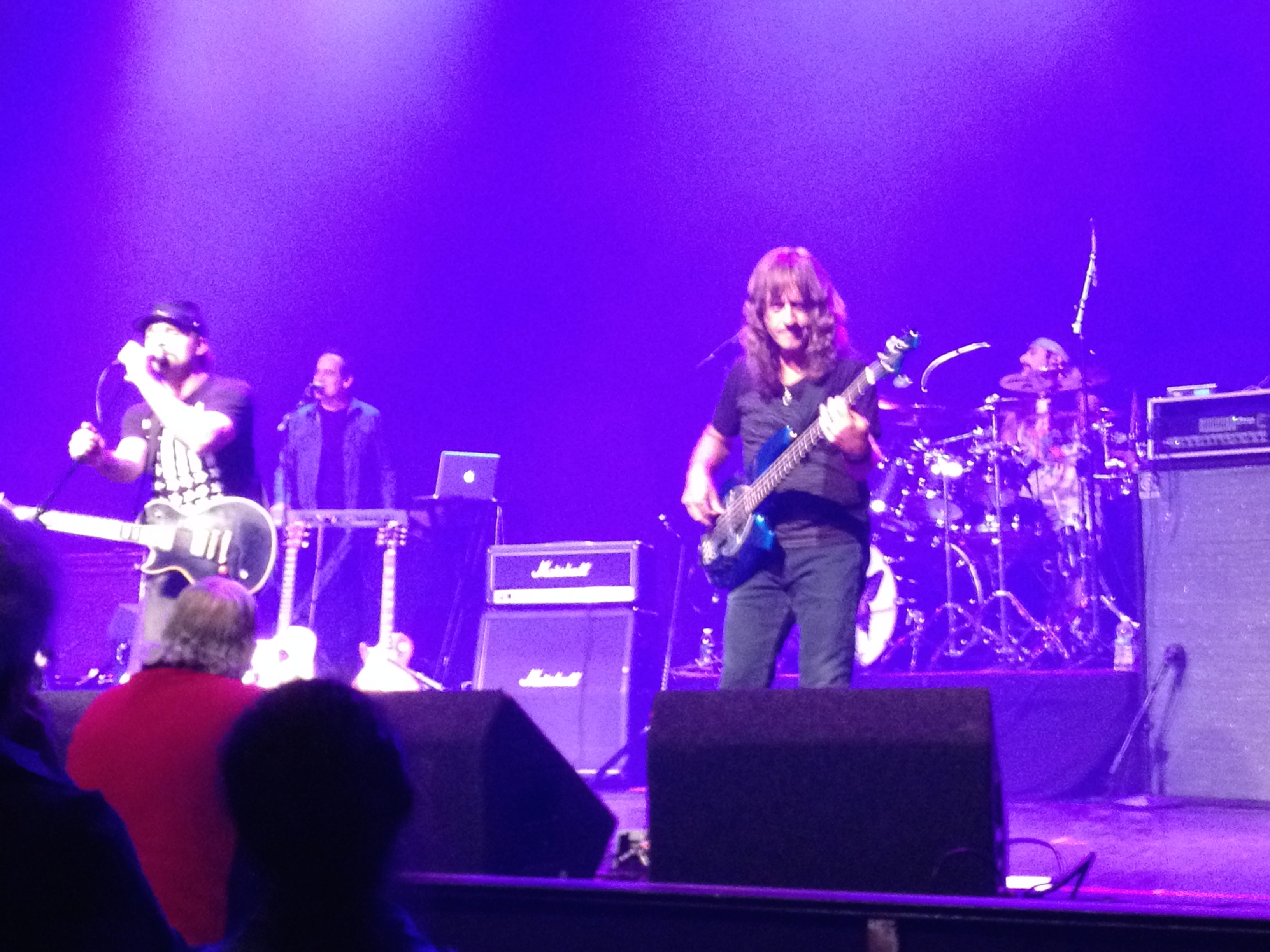
If you have listened to any of the Flying Colors catalogue, you know how amazing these guys are. In concert, they take it to the max. In fact, some of their songs sound even better live, especially “Infinite Fire,” which was the encore, and “Peaceful Harbor.” The beautiful thing about this band is they don’t play loud for the sake of playing loud. Even though I left with about 1/4 of the hearing capacity I arrived with, each instrument could be heard (or felt) clearly and distinctly. It wasn’t just loud noise, like some bands. As a lead singer, arguably the least famous member of the band, Casey McPhersen has an excellent stage presence and a fantastic voice with great pitch and range. He never missed a note. Neal Morse sounded good as well, and he was a whiz on the keyboards. Even Portnoy sang, which was cool to see the drummer do. He talked to the audience a lot as well, explaining their difficulties getting to Chicago. The Arcada Theater has become his “home away from home,” as this was the third show he has played there this year, all with different bands. Dave Larue is incredible on the bass, and he bears an uncanny resemblance to Geddy Lee. Steve Morse is a god on guitar, enough said.
Throughout the night, the band played a good mix of songs from both of their albums. It was probably about 50/50, but they may have played more from Second Nature. I think they opened with “Open Your Eyes,” but I can’t rightly remember. (I’m better at remembering albums, since I usually listen to albums in their entirety and never look at what song is playing. That’s why I love TaaB!) In no specific order, they also played, “Cosmic Symphony,” “Mask Machine,” “Bombs Away” (freakin’ amazing bass!), “The Fury of My Love,” “Peaceful Harbor,” Shoulda Coulda Woulda,” “Kayla,” “The Storm,” “Infinite Fire,” and several other songs I’m forgetting. It was all awesome, and there isn’t a Flying Colors song that I don’t like.
In the end, this was a fantastic concert. The band did a great job of overcoming adversity, especially when the venue was nowhere near sold out. They truly love their fans, because they showed nothing but appreciation to the crowd. In my mind, the only thing holding them back is the airlines, equipment failure, and whoever the hell set up the sound equipment.
Tonight was the last American show, held in Philadelphia. However, for European fans, there are seven more shows in the tour spread out around the continent. My recommendation: go! You won’t regret it. And go buy Second Nature. Great job Flying Colors!
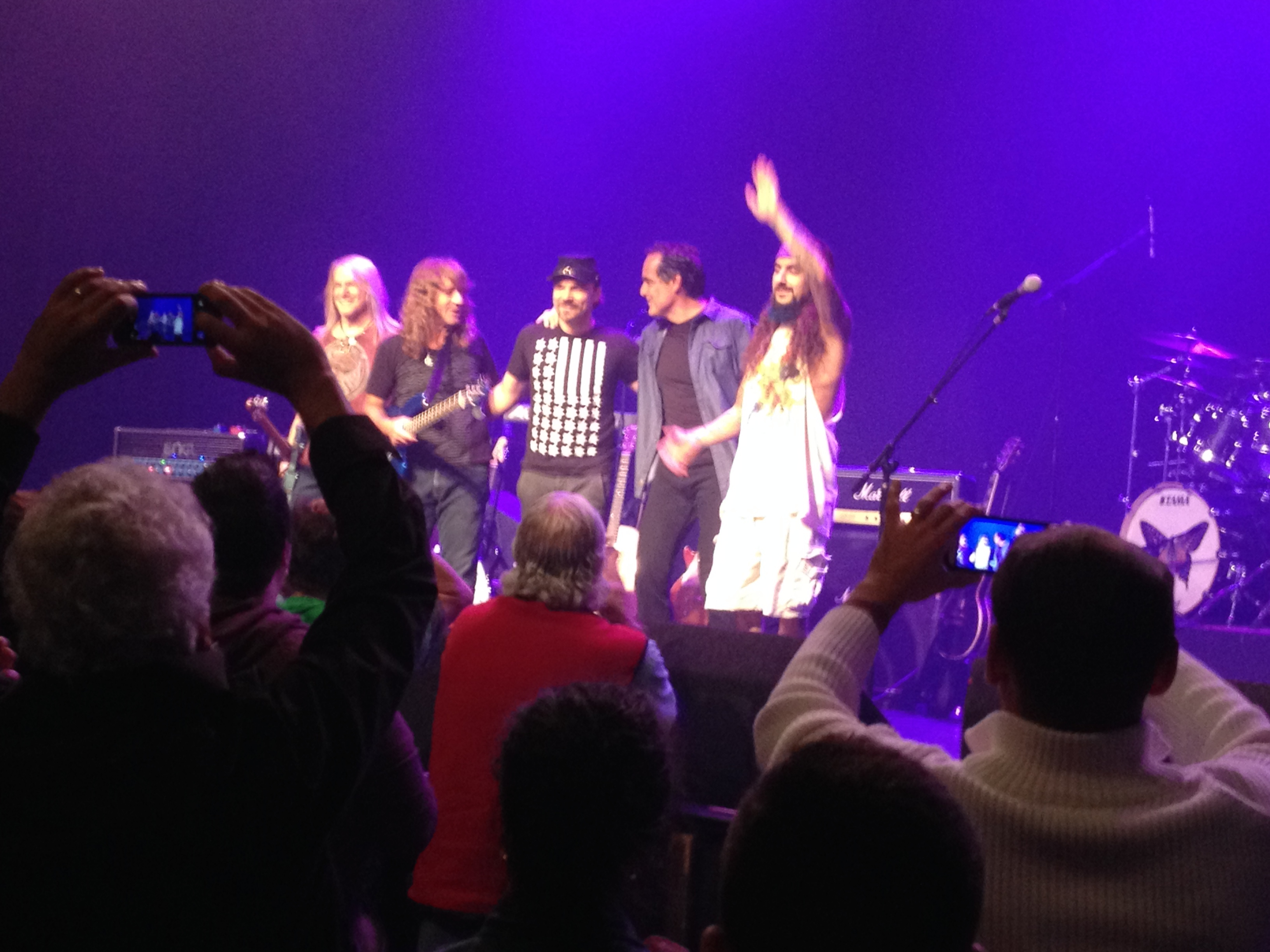
Flying Colors Presale just Began
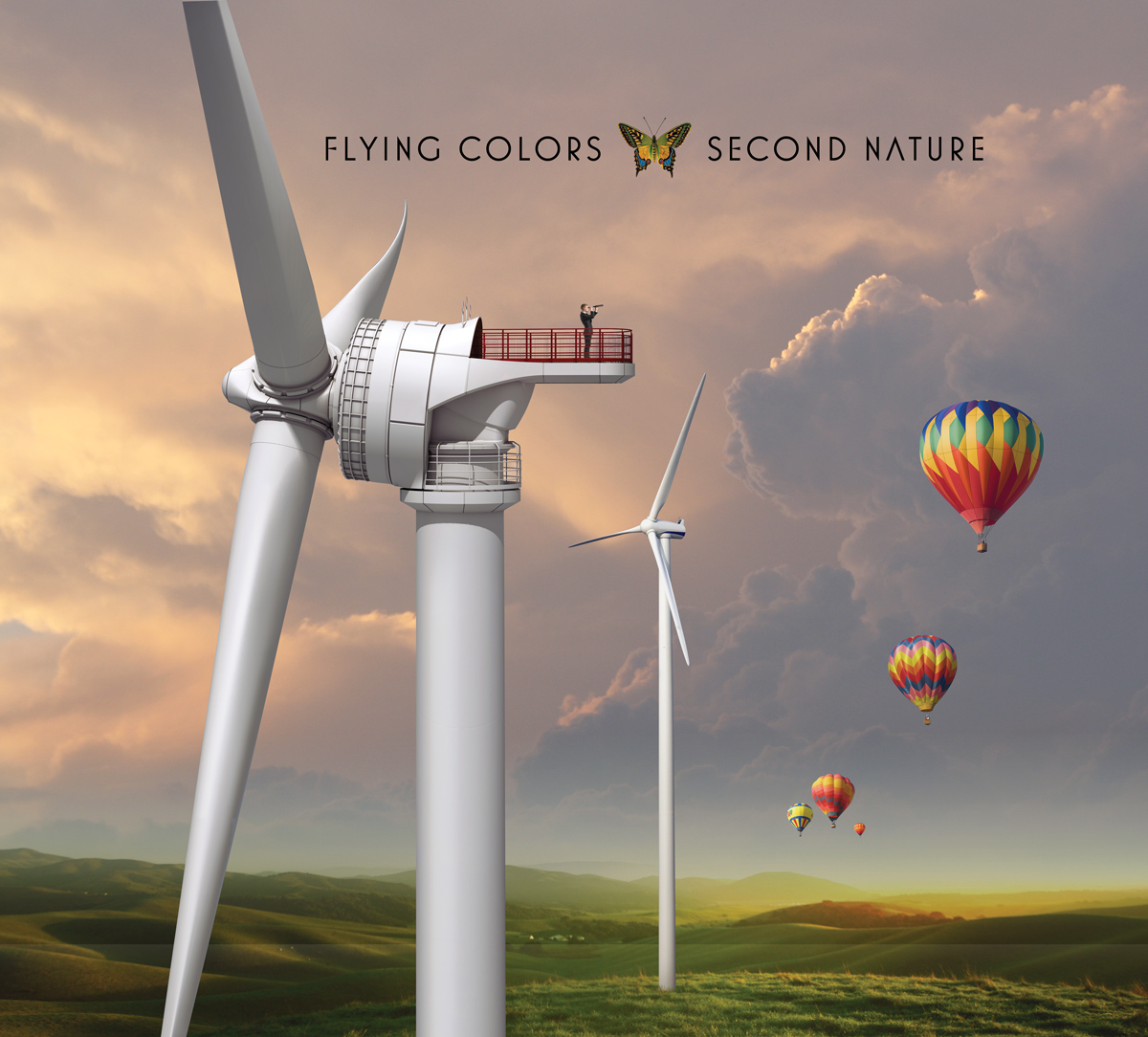
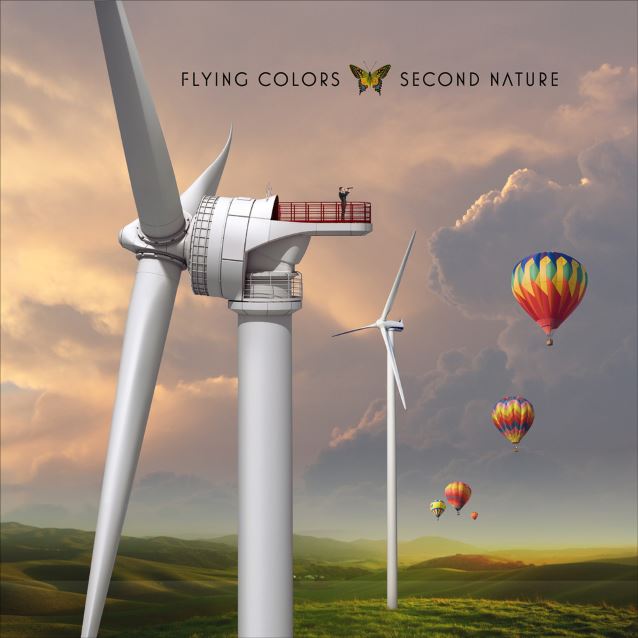
You can order the second Flying Colors LP, “Second Nature,” at Radiant Records as of this morning. Mine is ordered! Happily.
I love the cover–a really nice jab at modernity.
http://www.radiantrecords.com/products/503-flying-colors-second-nature.aspx
 Progarchy