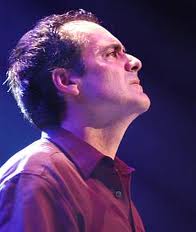
Mike Portnoy is the Best

So far, I have revealed that Mike Portnoy is on two items of my “Best of 2012” album list.

You know, I agree with what Mike frequently says: there is no “best”; only “favorite”.

I agree that this is a great way to keep the peace when people are being obnoxious and unreasonable.

And it’s also a fine way to habitually cultivate humility on a personal level.

So okay, Mike, you got it. You’re one of my favorite drummers, and you are on many of my favorite albums this year!

But surely something only becomes a favorite because we consider it the best.

And the real reason we share “best of” lists, is not because we claim omniscience, but because we want to share what we know and love, so that others will do the same for us.

If they do, we can thereby learn from them, and thus grow in our love…

We don’t want to merely win musical arguments. We want to learn from the musical experiences of others, and to expand our own experiences, and to enlarge the way we think about music.

But still, when it comes to aesthetic argument, Roger Scruton gets it right:

Perhaps the most persistent error in aesthetics is that contained in the Latin tag that de gustibus non est disputandum— that there is no disputing tastes. On the contrary, tastes are the things that are most vigorously disputed, precisely because this is the one area of human life where dispute is the whole point of it. As Kant argued, in matters of aesthetic judgement we are “suitors for agreement” with our fellows; we are inviting others to endorse our preferences and also exposing those preferences to criticism. And when we debate the point we do not merely rest our judgement in a bare “I like it” or “It looks fine to me”; we search our moral horizons for the considerations that can be brought to judgement’s aid. Just consider the debates over modernism in architecture. When Le Corbusier proposed his solution to the problem of Paris, which was to demolish the city and replace it with a park of scattered glass towers and raised walkways, with the proletariat neatly stacked in their boxes and encouraged to take restorative walks from time to time on the trampled grass below, he was expressing a judgement of taste. But he was not just saying, “I like it that way.” He was telling us that that is how it ought to be: he was conveying a vision of human life and its fulfilment, and proposing the forms that gave the best and most lucid expression to that vision. And it is because the city council of Paris was rightly repelled by that vision, on grounds as much moral and spiritual as purely formal, that Le Corbusier’s aesthetic was rejected and Paris saved.

Check out this great issue (#14) of iDrum, with Mike Portnoy as the cover story: http://bit.ly/iDrum_Issue_14

Lots of interactive goodies in that one!

Stay tuned for more Mike Portnoy on my Best of 2012 list.

Flying Colors (Best of 2012 — Part 4)

Flying Colors

Another one of the albums in my Top Ten for 2012 is Flying Colors.

The sad fact is that so many “supergroup” collaborations end up being less than the sum of their parts.

But this collaboration is a glorious exception. Everything has gone right here.

Neal Morse (and Mike Portnoy) teaming up with Steve Morse (and Dave LaRue)?

Continue reading “Flying Colors (Best of 2012 — Part 4)”

Momentum (Best of 2012 — Part 3)

Momentum

Another one of the albums in my Top Ten for 2012 is Neal Morse’s Momentum.

Brad Birzer appends a useful album overview to the end of his epic CWR review of Neal Morse’s career:

Not a concept in the way several of his other albums are, Momentum most resembles his penultimate album with Spock’s Beard, “V.” As with its 2000 counterpart, Momentum has six songs. The first five are eight minutes or less long, with the last song being a 34-minute epic.

With skill and passion, Morse’s new album considers [in “Momentum”:] the pace of modernity and our reactions to it, [in “Thoughts Part 5”:] the necessity of appearing deep in conversation, [in “Smoke and Mirrors”:] how to weather deception in this world, [in “Weathering Sky”:] how one interprets his calling in the world, and [in “Freak”:] the way a powerful spiritual figure would be perceived should he arrive bodily in the present day (I’ll leave it for the reader to discover the identity of the protagonist in the track, “Freak,” as Morse deftly leaves the identity a mystery until the very end of the song) in his shorter tunes.

The epic is, well, epic. As the title, “World without End,” suggests, the thirty-four minutes explore the motivations of a person, and especially whether he or she is trying to shape the ephemeral or the permanent and timeless.

I have to admit that one of my favorite moments on the disc is when the title track glides on into the killer guitar solo that is expertly framed by an ecstatically swirling keyboard flight path:

Go listen to 3:10—4:10 on the album track…

Indeed, that is definitely one of the best minutes of prog we have heard all year.

(Note: 2:49—3:18 in the video below has the killer guitar solo, but omits the awesome keyboard/guitar dogfight. But I am not complaining: I love that I heard the Single Edit version first by watching it as a sneak peek on YouTube; and then, even though I had already fallen in love with the song, when I downloaded the album itself, I got the extra thrill of hearing the suddenly-new keyboard/guitar dogfight now added to the end! It was a unique experience unparalleled by any previous prog preview encounter!)

Continue reading “Momentum (Best of 2012 — Part 3)”

The Future Belongs to Neal Morse, aka “Rev. Prog.”

Thanks to http://www.rocktimes.de/gesamt/m/neal_morse/interview08.html for the image.

Neal Morse just completed the Flying Colors and Momentum tours, and, from everything I saw and read regarding the various shows, they were all spectacular.

Watching Morse and his band play in St. Charles, Illinois, last Friday (a week ago tonight) with my wife, Dedra, and the Widhalms will serve as a great moment in my adult life.  Morse and the band gave everything they had, and what they had to give was beyond ample.  Indeed, had I enjoyed hearing them play any more than I did, I would be bordering on sheer decadence, demanding far more in this world than I have a right to.

Given Morse’s abilities–as a brilliant songwriter, a lyricist, a book author, multi-instrumentalist, and great show-man–we have a lot to expect from him in both the near and distant futures.

In addition to releasing the two major albums mentioned above in the last several months, he has also just released A Proggy Christmas, featuring Mike Portnoy, Steve Hackett, Steve Morse, Roine Stolt, Pete Trewavas, and Randy George.  The cover even has a Sgt. Pepper’s style image with a photo of the head of Ray Bradbury included.  Of course, it also looks like UFOs are invading a snow covered earth, but, hey, it’s all in good fun.  We hope.

Of course, three albums simply wouldn’t be enough for Morse, aka Mr. Prog.  Ok, how about “Reverend Prog”?  Oh, I like this. . . .

So, in addition to what by any standards of output is beyond the natural, Morse is releasing an album of keyboard parts cut from the Flying Colors album.  Entitled Island of the Lost Keyboards, it will be released for his Inner Circle fanclub in November.  Should be excellent, and we’ll make sure to review it at Progarchy.  We are, after all, huge fans of Radiant Records, Rev. Prog, and Chris Thompson.

And, if you’ve not yet gotten enough Morse (because More is Never Enough), here’s a great interview with John Wenlock-Smith, posted at DRPR.  http://www.dprp.net/wp/interviews/?page_id=3240

Never enough Rev. Prog.

Interview with Mike Portnoy

wpid-portnoyoctober122012-2012-10-13-16-51.jpegPortnoy seems happier than he’s been in years. After watching him drum some of the greatest drumming I’ve ever heard or seen last night in Chicago (“Chicago or St. Paul or wherever we are. . .”), I was very excited to see this interview with him today.
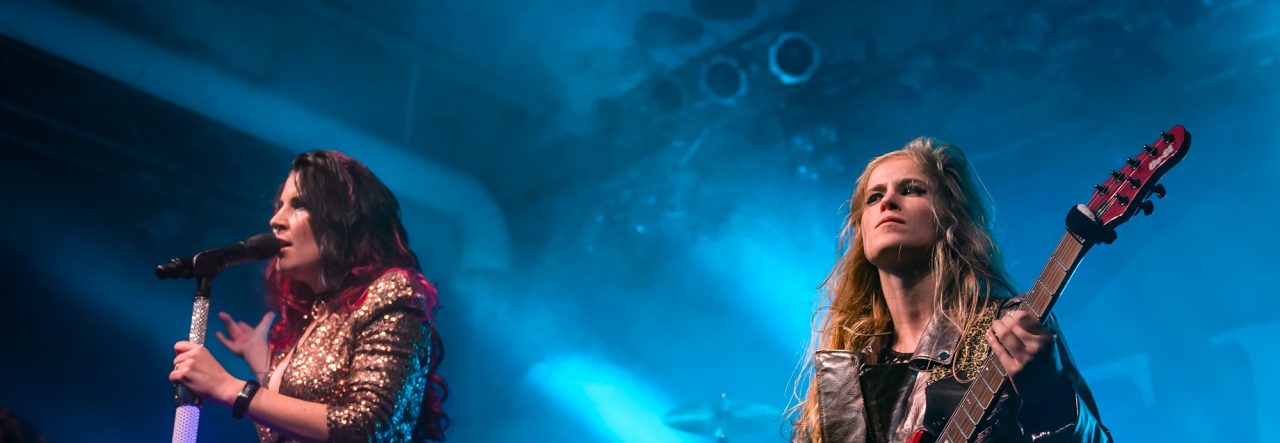
http://rollingstoneindia.com/backstage-with-mike-portnoy/

Q.  And finally, how did you manage to get a progressive band like Dream Theater up and running in the late Eighties and early Nineties, at the height of prog-phobia?

A.  When we recorded Images and Words in 1991, it was at the height of the grunge explosion. It was Nirvana-ville at the time. You would think that us getting signed to a label and having success with that album was completely impossible, but somehow it clicked. The only thing I can think of is maybe it was a reaction to the fact that nobody else was doing it. We were so drastically out of fashion, but  there was an audience that was looking for something like that. For the first 10-15 years of Dream Theater’s career, prog was a dirty word. We always embraced it, we never had a problem with it, but all the critics would blast us for it and it wasn’t until the turn of the millennium that it started to turn around, and it was our perseverance that helped that happen.

Mike, I’ve been listening to you since “Pull Me Under.” Now that I’ve seen you live, I only think the absolute best of your ability and your personality.

Neal Morse, Chicago, October 12, 2012.

Last night, fellow Progarchist Mark Widhalm, our lovely and patient wives, and I had the wonderful privilege of enjoying six hours of live progressive rock.  We saw District 97, Three Friends (Gentle Giant), and Neal Morse.

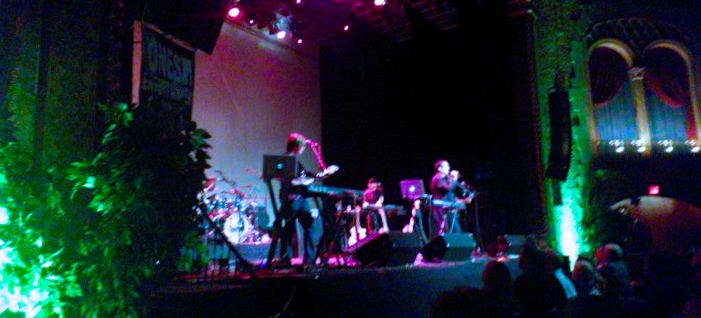
Here are two photos from the event.  The first is of Three Friends.  The second is of Neal Morse.

Image

Image

Sorry about the poor quality of the photos; I took these with my Nokia phone.  I also got to see Chicago celebrities (well, at least they’re celebrity in the Birzer house), Mike and Sarah D’Virgilio.  I glimpsed Neal Morse’s manager and Facebook friend, Chris Thompson, from a distance, but he was a man understandably on a mission, and I didn’t want to interfere with his direction of the show.  “Hey Chris, it’s me, Brad, your Facebook friend!”  Yes, I can be obnoxious, but this might have gone a little too far, even for me.

A few quick impressions–Gary Green was one of the single finest guitarists I’d ever seen as was his bassist, Lee Pomeroy (of It Bites).  The music of Gentle Giant was rather mind-boggling and profound.  It was, I think, rock at its highest art.  Steve Hayward has been encouraging me to immerse myself.  Add Steve’s suggestion with actual performance, and I’m sold.  Now, another band to explore in its entirety

But, we went originally to see Neal Morse and Mike Portnoy.  The other music was just an excellent fringe benefit.

Neal Morse is a wonderfully talented madman.  I pretty much hung on his every word and action on stage.  His energy, his talent, and is ability to direct and lead his band is probably beyond compare.  While I’m sure I’m not the first person to place supernatural ability on a great show man, but Morse’s showmanship did seem to be animated by something well beyond (and above) this world.  I know this probably sounds absurd, but there was glow about him that I’ve only seen (once at most) on truly holy persons.

And, while I’ve always considered Mike Portnoy one of the world’s best drummers (along with Nick D’Virgilio and Neil Peart), I’ve always also thought his studio records seem more mechanical than soulful.  Watching him in action convinced me, rather strongly, that he’s a man as full of soul as he is of ability.  In judging his abilities, I realized I should never allow his precision and perfectionism to detract from his power and radiance of soul.  Having him and Neal Morse on the same stage was overwhelming, to say (write) the least.  These are two powerful personalities who served as critical poles of incarnate myth.  Because of my seating, I had a perfect view of Morse but a poor one of Portnoy.  Had I been able to choose between one or the other to focus on during the concert, I would’ve been rather torn.

The two men, despite clearly being perfectionists and powerful personalities, are obviously the best and most trusted of friends.  At one point, two obvious Mike Portnoy fans yelled something at the end of a very powerful moment in Morse’s Testimony.  Morse was a bit taken aback (as was the entire audience), and I would guess that the audience as a whole lost a story of some kind because of the interruption.  Portnoy stood up from his drumkit and yelled directly at the two: “There will be no heckling at a Neal Morse concert.”  He did it with great humor and strength.  Needless to write, no one yelled like that again.

Everyone in Morse’s band, not surprisingly, was an expert and multi-talented musician.  Randy George didn’t move around much, but he played his bass with confidence and skill.  All of the musicians, though, were equally good, and the most impressive part of the whole night were the vocal multipart harmonies which Morse directed with passion.

This was probably the best concert I’ve ever seen (Three Friends as well as Neal Morse).  Yes, I’m still basking in it.