Big Big Train, FOLKLORE (Giant Electric Pea, 2016).
The band: Greg Spawton; Andy Poole; Danny Manners; David Longdon; Dave Gregory; Rachel Hall; Nick D’Virgilio; and Rikard Sjöblom. Engineered by Rob Aubrey.
Tracks: Folklore; London Plane; Along the Ridgeway; Salisbury Giant; The Transit of Venus Across the Sun; Wassail; Winkie; Brooklands; and Telling the Bees.
By chance, the new issue of PROG arrived at the same time as FOLKLORE. A glorious day.
The centerpiece of third-wave prog, Big Big Train, matters. How they write music matters; how they write lyrics matters; how often they perform live matters; how they package their music matters; and how they market what they do matters. They are a band that has evolved significantly over twenty-plus years of existence, a restless band that never quite settles on this or that, but rather keeps moving forward even as they never stop looking back. In their art, they move forward; in their ideas, they move backward. All to the good.
It’s not everyday that a Big Big Train album appears in my mailbox. An immense thanks to Kathy Spawton and Greg Spawton for sending it, and to the band for signing it!
Veronica Rose celebrates with SONGS FROM THE BIG CHAIR, BBT style.
The song features the first reunion of my fellow “Thud” bandmates Nick D’Virgilio and Russ Parrish since we last played together with Kevin in the mid 90s. On the Deluxe Edition of “New World” there is a trippy intro piece called “Theta” that also features Durga McBroom (of Pink Floyd fame who knew Kevin back in the Toy Matinee days and he produced her first demo… btw Guy Pratt, also from Pink Floyd, played on that Toy Matinee album as well) and Satnam Ramgotra on tabla who played with Thud on the Kashmir single as well as on songs like “Joytown” and “Waiting” which can be heard/seen on the “Kevin Gilbert – Live At The Troubadour” DVD. Also joining us on the track are Fernando Perdomo on bass + backwards guitar and Maryem Tollar with an exotic Egyptian vocal solo. I sing, play keys and acoustic guitar on this one.
The story of the song is about the main character of “New World” meeting up with a mysterious Shamen-like apparition in the desert where a grand perspective and vital wisdom is shared. I purposely wrote the words a bit more toward Kevin’s style. The music has hints of our old “Thud” live band sound, particularly with the creative contributions of Nick, Russ and Satnam. However, the Doors, Nick Drake and Peter Gabriel are as much of an influence in this piece. Hope you like it. Here’s the Standard album version to listen to off of my Sonic Elements bandcamp page.
The lyrics:
“My Old Friend”
Hello, my old friend
From the other side of the end
You’ve come to visit me again
Poetic license to pretend
Hello, to the shape unknown
Waiting dauntless on my own
Bare and fragile flesh and bone
I am eager to be shown
Give me reason, give me art
Unearthly wisdom you impart
Crossing over, shaking hands
With someone who understands
Hello, my old friend
From the other side of the end
We both took that drive
To an unexpected curve
With hollow people
Who’ve got a lot of nerve
Restrained what we deserve
In a cloud you observe
Give me reason, give me art
Unearthly wisdom you impart
Crossing over, shaking hands
With someone who understands
Give me courage, give me grace
Spin the dogma that I face
I am tuning to the signs
Etching truth in cosmic lines
So long, my old friend
One day we shall meet again
I also can’t help thinking of Pink Floyd when Dave sings, “Hello…”!
Dave adds:
I’ll tell you something I like about this song (and especially the version on the Deluxe Edition that has the intro piece I mentioned). Because it reunites me with Nick, Russ and Satnam and we’ve only improved as musicians over the years since (not that these guys weren’t ALWAYS amazing but they certainly haven’t lost it that’s for sure) it has the feel of something NEW with that band. It’s impossible to do any new songs with Kevin unfortunately (I wonder what music he’d be making if he were still around today). But, the other players in that band have a distinct character and artistry to their playing and it’s nice for that chemistry we have to shine again, even if just for this moment. It’s deep. I’m very honored they came on board for this. It means so much to me.
Looks like Nick D’Virgilio got to spend his 46th birthday live on the Jimmy Kimmel Show, playing with Tears for Fears. TFF is celebrating the thirtieth anniversary of their pop-prog masterpiece, Songs from the Big Chair. Roland’s voice sounds off to me, but Curt is in great form. Definitely worth watching.
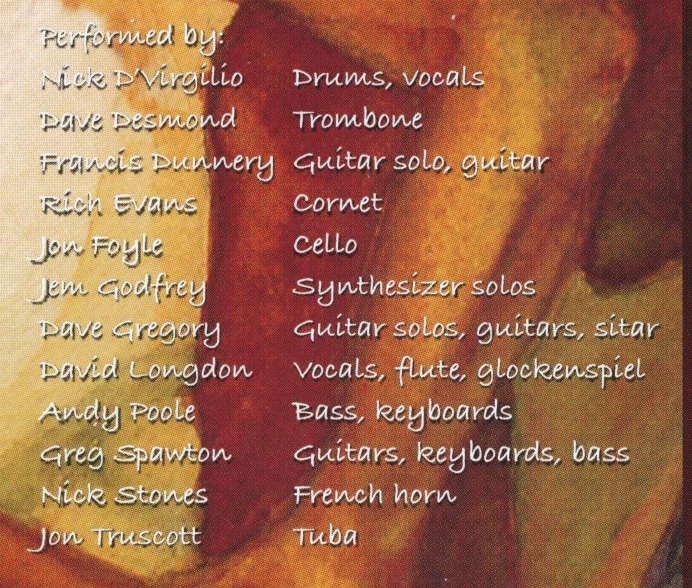
A review of “The Underfall Yard” from The Underfall Yard by Big Big Train (English Electric, 2009). Song and words by Greg Spawton. Additionally: David Longdon, vocals and vocal arrangements; Dave Gregory, guitars; Nick D’Virgilio, drums; Andy Poole, bass and keyboards; and [see image on right for a full list]
*****
As much I love albums, I’m always looking for that perfect song. The song that longs to linger in our souls after we’ve heard its last notes. The song that cries to the heavens in triumph, praise, and rage. The song that hovers over that second away from eternity, rooted in the human condition, but reaching for timelessness.
In my first two pieces of this series, I looked at Rush’s “Natural Science” (1980) and The Tangent’s “Where Are They Now” (2009)? In this article, I turn to none other than a well-recognized masterpiece, a (perhaps, THE) cornerstone of third-wave prog, “The Underfall Yard” (2009) by Big Big Train. It originally appeared at the final track of Big Big Train’s 2009 album of the same name, the first to feature the vocals of the incomparable David Longdon.
Six seconds short of twenty-three minutes in length, “The Underfall Yard” is epic in every sense of the meaning of the word. I once gave it to a non-prog friend of mine as an introduction to the genre. He liked it (really, who couldn’t?), but he also joked, “Brad, when I started the song, I didn’t realize I’d have to miss dinner to finish it.”
The lyrics of the song reveal its scope best:
Using available light
He could still see far skies,
Deep time
Beyond, above, and yet below the far skies rests (not contentedly) deep time. Indeed, given the song, one must imagine deep time as equal parts restless but also confident in its restlessness, sure of itself even in its transitions.
Always a superb lyricist, Spawton reveals his most intimate and poetic sense in this song overall. The words are at once hopeful and melancholic, the piece as a whole trapped in a slowly shifting twilight. The loss is of England’s entrepreneurial and industrial moments of the interwar era, the parents Edwardian, but the children Georgian.
As one stands with Spawton, watching this scene fade in golden and royal hues, he might just as readily be standing with King Alfred hopeful against heathen men as hairy as sin; with Harold of Hastings, tilting against a bastard’s armies; or with Winston Churchill, toiling and sweating against those would rend idyllic places such Coventry with insidious and inhumane progress.
Spawton’s words endlessly capture that which is always true but never quite obvious to all at all times.
The opening moments of the song move from an earnest guitar into a driving and equally earnest interplay of bass and drums, Gregory, D’Virgilio, Poole, and Spawton weaving something both tribal and civilized. More guitars appear, jutting and jetting. Strings emerge as if from the land itself. At 1:45, David Longdon’s voice enters into the art itself with the necessary pitch, the perfect lilt and quaver, and a resonant meaning. If Spawton is coming from sacred soil, Longdon is coming from the heavens, thus allowing the horizon and sky to meet in an infinite moment.
Almost uniquely among singers, Longdon possesses both assuredness and humility in all of his vocal arrangements, but none more so than in this song. While his voice is the voice of a man, it also is the voice of a chorus of men, a plea for generations.
Chasing a dream of the west
Made with iron and stone
Man, in Spawton’s vision, if armed with genius and integrity, reshapes the land, not in man’s image, but in the sacramental, Adamic way had things in Eden not soured.
These are old hills that stand in the way
breaking the line.
It came out of the storm,
out of the sea
to the permanent way
Using just available light,
he could still see far.
Even in his broken state, some men–seers, prophets, bards, skalds, poets and prog rockers–can see beyond the immediate, toward that which is far and that which is deep. Of all creatures, they alone can imagine the heights and the depths of existence.
In Spawton’s vision, England becomes not just another place on this earth, but a place sacred, sacred because man has recreated nature, not through domination, but through creative understanding, the soul and the intellect of each in harmony, not tension.
One is reminded of Spawton’s counterpart in the world of poetry, T.S. Eliot.
A people without history
Is not redeemed from time, for history is a pattern
Of timeless moments. So, while the light fails
On a winter’s afternoon, in a secluded chapel
History is now and England.
–T.S. Eliot, Little Gidding
Even the timeless moment, though, can not be seen or understood forever. Timeless moments—the light falling on a secluded chapel—lasts only as long as man knows to look for it. As with all things of beauty, truth, and goodness, it is fleeing, at least through our abilities to perceive, incorporate, and understand.
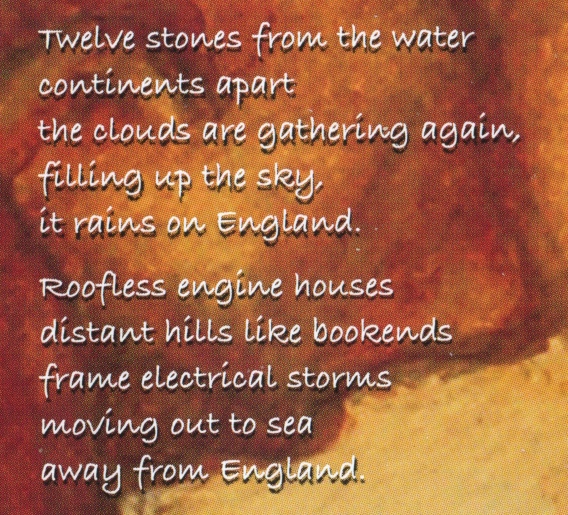
Roofless engine houses
distant hills like bookends
frame electrical storms
moving out to sea
away from England.
Spawton’s words and Longdon’s voice combine to make the above lyrics not only the most moving parts of the song, but combine to make one of the most moving parts of any song in the rock era.
I could never even count how many times I’ve listened to this song over the last five years. Every time, my stomach drops and my heart and soul swell when I hear this. Every single time.
And, yet, despite the loss of the thing itself, the moment in all of the revelation of its glory, Spawton knows—with the greatest thinkers of the western tradition—that memory can comfort us. Perhaps memory alone.
Parting the land
with the mark of man,
the permanent way,
Using just available light,
he could still see far.
The imprint is true. It always exists. We, however, must choose to remember. When we do, the world becomes just a little brighter. Using just available light.
And, thus, Big Big Train reveals its ultimate contribution to the world of art. Somethings are worth remembering, whatever the cost, and memory itself is a precious and delicate thing beyond any cost.
This photo was rather unceremoniously stolen from Steve Llewellyn’s Facebook page. Let’s hope he doesn’t mind!
If you’ve not noticed before, we progarchists kind of, sort of, really, really like Big Big Train. So. . . it’s with much excitement that we report this.
The Classic Rock Society of the U.K. has just awarded BBT with three well-deserved awards: 1) David Longdon for best vocals; 2) “East Coast Racer” as the best track of the year; and 3) Big Big Train as Great Britain’s best band.
The progarchists of progarchy hq in central Hillsdale County of Michigan are doing a little victory dance for our friends across the Atlantic.
Congratulations to Greg Spawton, David Longdon, Nick D’Virgilio, Dave Gregory, Danny Manners, Andy Poole, and Rob Aubrey. And, of course, to Jim Trainer as well. Amazing and brilliant and wonderful.
Coming in the #8 slot (in alphabetical order) on my Best of 2013 list is this year’s perfect slice of prog from:
Spock’s Beard
This one completely caught me by surprise. I was not prepared for how awesome it is!
I was not expecting “Brief Nocturnes and Dreamless Sleep” to be soooooogood. I was not expecting to like it so much!
No Neal? No Nick? Wow, I was not expecting this to be one of the year’s best.
But holy smokes! I feel like this is the Beard’s best album ever!!
(Time will tell if I persist in that judgment. But so far my enthusiasm has not waned!)
I really love this disc a lot. Everything works here! All the tracks are amazing.
(And I have seen this album on a lot of Top Ten lists, so I know I am not alone in the republic of Progarchy with my enjoyment of this fantastic album.)
Congratulations, gentlemen! You have gone above and beyond, showing us all what true excellence in prog is.
Subtitle: “Or, How Plato Made Me Realize We Need to Love 2013. And, If We Don’t, Why We’re Idiots.”
A week or so ago, I had the opportunity to list my top 9 of 11 albums of the past 11 months. Several other progarchists have as well, and I’ve thoroughly enjoyed looking at their lists as well as reading the reasons why the lists are what they are. I really, really like the other progarchists. And, of course, I’d be a fool not to. Amazing writers and thinkers and critics, all.
From the 96-page BBTFP booklet. Courtesy of the band and the artist, Matt Sefton.
I’ve been a bit surprised, frankly, that there hasn’t been more overlap in the lists. I don’t mean this in the sense that I expect conformity. Far from it. We took the name progarchists—complete with the angry and brazen red anarchy sign in the middle—for a reason. We’re a free community—free speech, free minds, free citizenship, and free souls. We have no NSA, CIA, or IRS. Nor would we ever want any of these. And, we’ve really no formal rules. We just want to write as well as we can about what we love as much as we love. Any contributor to progarchy is free to post as often or as infrequently as so desired, and the same is true with the length of each post.
I, as well as many others, regard 2013 as the best year of prog in a very, very long time, perhaps the best year ever. I know that some (well, one in particular—a novelist, an Englishman, and a software developer/code guy; but why name names!) might think this is hyperbole. But, having listened to prog and music associated with prog for almost four decades of my four and one-half decades of life, I think I might be entitled to a little meta-ness. And, maybe to a bit of hyperbole. But, no, I actually believe it. This has been the best year in the history of prog. This doesn’t mean that 2012 wasn’t astounding or that 1972 was less astounding than it actually was. Being a historian and somewhat taken with the idea of tradition, continuity, and change, I can’t but help recognize that the greatness of 2013 could never have existed without the greatness of, say, 1972, 1973, 1988, or 1994.
In my previous posts regarding 2013, I thanked a number of folks, praised a number of folks, and listed some amazing, astounding, music—all of which, I’m sure I will continue to listen to for year to come, the good Lord willing. And, I’m sure in five years, a release such as Desolation Rose might take on new meaning. Perhaps it will be the end of an era for Swedish prog or, even, the beginning of an era for the Flower Kings. Time will tell.
So, what a blessing it has been to listen to such fine music. My nine of 11 included, in no order, Cosmograf, The Flower Kings, Ayreon, Leah, Kingbathmat, The Fierce and the Dead, Fractal Mirror, Days Between Stations, and Nosound.
The cover of the new Sam Healy solo album, SAND.
And, there’s still so much to think about for 2013. What about Sam Healy (SAND), Mike Kershaw, Haken, Francisco Rafert, Ollocs,and Sky Architects? Brilliant overload, and I very much look forward to the immersion that awaits.
No one will be shocked by my final 2 of the 11 that have yet to be mentioned. If you’ve looked at all at progarchy, you know that I can’t say negative things about either of these bands . . . or of Rush or of Talk Talk. Granted, I’m smitten. But, I hope you’ll agree that I’m smitten for some very specific and justified reasons. That is, please don’t dismiss the following, just because I’ve praised them beyond what any reasonable Stoic with any real self respect would expect. No restraint with these two, however. Admittedly.
So, let me make my huge, huge claim. The following two releases are not just great for 2013, they are all-time great, great for prog, great for rock, great for music. In his under appreciated book, NOT AS GOOD AS THE BOOK, Andy Tillison offers a very interesting take on the current movement (3rd wave) of progressive rock.
The current, or third wave of new progressive rock bands is as interesting for demographic and social reasons as much as for its music . . . . Suddenly a wave of people in their late thirties began to form progressive rock bands, which in itself is interesting because new bands are formed by younger people. . . .
I’m not sure how much I agree with Andy regarding this. I’m also not sure I disagree. I just know that I’ve always judged eras or periods by what releases seem to have best represented those eras. Highly subjective, highly personal, and highly confessional, I admit. But, I can’t escape it. For me, there have been roughly four periods: the period around Close to the Edge and Selling England by the Pound; the period around The Colour of Spring, Spirit of Eden, and Laughing Stock; a little bit longer—or more stretched out—period around Brave, The Light, Space Revolver; and Lex Rex.
Of course, I’ve only listed three. We’re passing through the fourth as I type this. Indeed, the fourth is coming from my speakers as I type this. Over the last year and a half some extraordinary (I’m trying to use this word in its purest sense) things have happened, all in England and around, apparently, some kind of conflicted twins.
When asked about why he participated in latest release from The Tangent, Big Big Train’s singer, David Longdon, replied:
Amusingly, [Tillison] has said that The Tangent is Big Big Train’s evil twin.
In this annus mirabilis, does this mean we have to choose the good and the evil? Plato (sorry; I’m not trying to be pretentious, but I did just finish my 15th year of teaching western civilization to first-year college students. And, I like Plato.) helped define the virtue of prudence: the ability to discern good from evil.
Well, thank the Celestial King of the Platonic Realm of the Eternal Good, True, and Beautiful, we get both, and we don’t have to feel guilty or go to Confession.
Progarchy Best All-Around Progger, 2013, Brit: Sally Collyer.
Aside from being the Cain and Abel of prog, The Tangent and Big Big Train offer the overall music world three vital things and always in abundance of quality.
First, each group is smart, intelligent, and insightful. Neither group panders. The music is fresh, the lyrics insightful—every aspect is full of mystery and awe. The listener comes away dazzled, intrigued, curious, and satisfied, all at the same time.
Second, each group strives for excellence in every aspect of the release—from the writing, to the performing, to the engineering, to the mastering, to the packaging. And, equally important, to interaction with fans. Who doesn’t expect an encouraging word and some interesting insight on art, history, and politics—always with integrity—from either band?
As maybe point 2.5 or, at least, the culmination of the first two points, each band has the confidence to embrace the label of prog and to embrace the inheritance it entails without being encumbered by it.
In Big Big Train’s English Electric Full Power, there are hints of Genesis and, equally, hints of The Colour of Spring and Spirit of Eden. But, of course, in the end, it’s always Greg, Andy, David, Dave, Danny, Nick, and Rob.
In The Tangent’s Le Sacre du Travail, there are obvious references as well as hints to Moving Pictures, The Sound of Music, and The Final Cut. But, of course, in the end, it’s always mostly Andy.
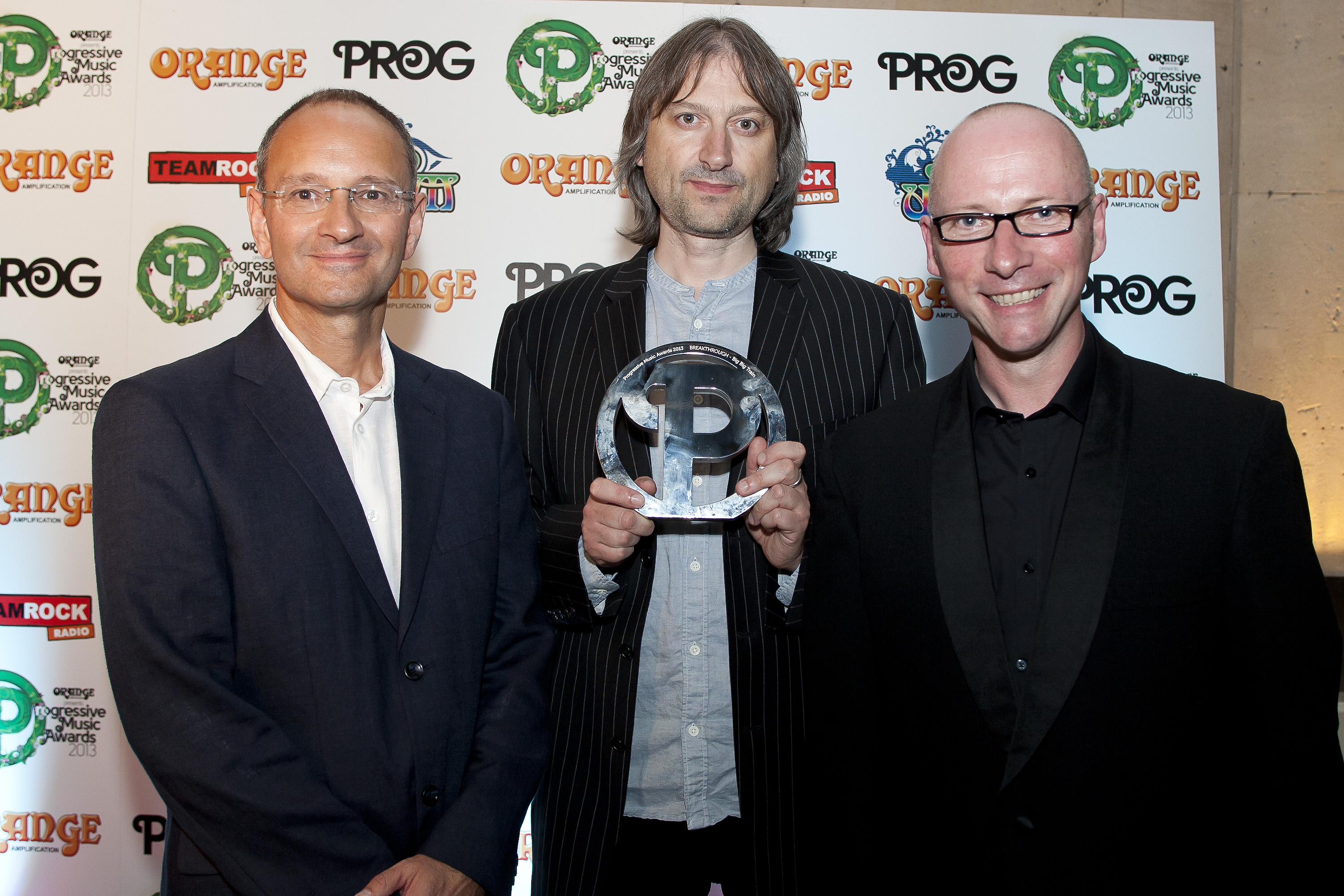
Big Big Train’s justly deserve award, “Breakthrough Artist of 2013,” by Jerry Ewing and the readers of PROG.
Regardless, each gives us what David Elliott masterfully calls “Bloody Prog™” and does so without hesitation. Indeed, each offers it without embarrassment or diversion, but with solidity of soul and mind.
Finally, but intimately related to the first two, each band releases things not with the expectation of conformity or uniformity or propaganda, but with full-blown art. Each band loves the art for the sake of the art, while never failing to recognize that art must have a context and an audience. Not to pander to, of course, but to meet, to leaven.
Life is simply too short not to praise where praise is due. Life is too short to ignore the beauty in front of us. And, no matter how dreary this world of insanities, of blood thirsty ideologies, of vague nihilisms, and of corporate cronyism, let us—with Plato—love what we ought to love.
The Tangent and Big Big Train have given us art not just for the immediate consumption of it, or for the year, 2013,—but for a generation and, if so worthy, for several generations, perhaps uncounted because uncountable.
[Ed. note–if there are any typos in this post, I apologize. I’ve been grading finals, and I’ve been holding my two-year old daughter on my lap. She’s a bit more into Barney than Tillison or Spawton at this point.]
Last year was an incredible year for Progressive Music (note: upper case), but in my opinion, 2013 has been even better. Thanks to this community (Progarchy) and the ever-lively Big Big Train Facebook group, I have been exposed to more new prog in 2013 than in any year since the halcyon days of the early 70s. As a result, my wallet has been considerably lightened, but my musical universe has been enriched way beyond mere monetary value.
What follows is a brief review of my top ten purchases in 2013 – albums received for review or borrowed from friends are not included, however much I enjoyed them. The list is alphabetic, as each of these albums is my favourite when I’m listening to it, depending on my mood.
Steven Wilson – The Raven That Refused To Sing: A superb album from start to finish, replete with powerful, hard-rocking passages, beautiful melodies, jazzy interludes, lush arrangements, and oodles of emotion (not something SW is renowned for). Much as I enjoy SW’s guitar playing, I’m delighted that he has handed over most of the guitar work to the incredible Guthrie Govan and stepped back to be more of a musical director – he has always been an excellent songwriter, but I think his compositions have benefitted greatly from this change of focus. I also think this is Wilson’s strongest and most confident vocal performance ever. Of course the rest of the band members are all outstanding, but in particular I love Wilson’s use of Theo Travis’ woodwinds to add an extra dimension that was sometimes lacking in the Porcupine Tree soundscape.
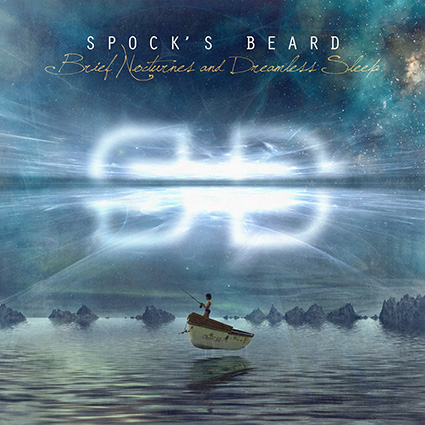
Spock’s Beard – Brief Nocturnes and Dreamless Sleep: I love Nick D’Virgilio’s singing and drumming and was concerned when I heard that he’d left Spock’s Beard, but I needn’t have worried. I thought X was an excellent album, but Brief Nocturnes is even better. Ted Leonard not only brings his powerful and emotive vocal delivery to the band (I think he’s the best vocalist the Beard have had to date), but also his strong compositional skills, which were always evident with Enchant. And Jimmy Keegan is a monster drummer, a worthy full-time successor to the vacated “batterie” stool (he’s been touring with the band for years). Ryo’s keyboard work has also been going from strength to strength since Neal Morse, the uber-controlling force, left the band, while Alan Morse and Dave Meros seem to be even more energised by the injection of new blood into the band. A strong set of songs, powerfully delivered by a great band.
Sanguine Hum – The Weight of the World: Sanguine Hum are one of my favourite “new” finds. This Oxford-based band deliver layered and beautifully structured compositions with plenty of dynamics, which never fail to surprise and delight. One reviewer described their approach as “polymath”, but I think this may give the wrong impression – while their music is precise, it is never clinical, and while complex, it is never complicated for the sake of it. Although I slightly prefer their first album, “Diving Bell”, “Weight of the World” is an excellent album that gets repeated listening, and will continue to do so.
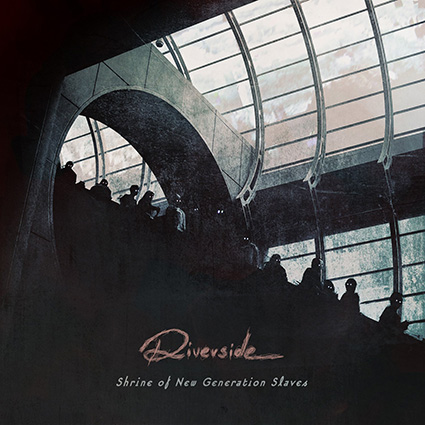
Riverside – Shrine of New Generation Slaves: “SoNGS”, to my ears, is the best Riverside album since their impressive debut “Out Of Myself” in 2004. With greater emphasis on songwriting rather than thrash, and more varied textures that their last few albums, this album is imminently listenable, apart from the rather tiresome first few minutes of the opening song, which seems to stutter along for ages before it gets going. Mariusz Duda’s side project, Lunatic Soul, is definitely bleeding back into Riverside, which I’m delighted about. More, please Mariusz…
Haken – The Mountain: For me, the find of the year. Two months go I’d never heard of this band, but now I have all three of their albums and can’t stop listening to them. “The Mountain” is a real tour de force, with light and shade, strong melodies, excellent harmonies, tight ensemble playing and impressive pyrotechnics that are just right in context of each song, when they explode. I think their “Gentle Giant” moment (The Cockroach King) is one of the finest since the great band themselves were performing – far better than Spock’s Beard’s efforts (which are nevertheless uniformly good), and rivalling Kevin Gilbert’s genius in his “Suit Canon”. This band has everything (except a permanent bass player – sad that I’m living on the wrong continent, too old and simply not talented enough to audition for the post… !). Great album, and great band with a stellar future.
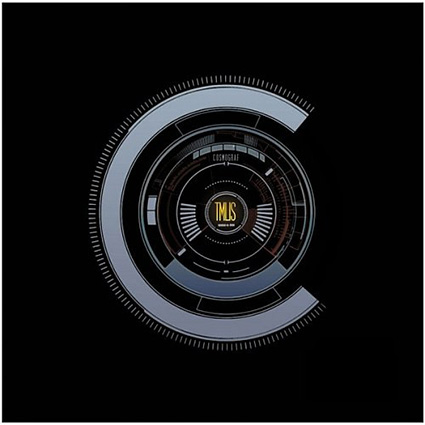
Cosmograf – The Man Left In Space: I’m a sucker for good sci-fi – combine it with superb songwriting and musicianship from wide range of musicians and I’m in there, lead boots, space suit and all. The first time I heard this album, I thought some of the the interludes caused the album to lose momentum musically, but repeated listening has completely dispelled that impression. I now think this is a beautifully balanced album, lyrically and musically, and I’m really looking forward to the next Cosmograf album (which is always a good sign).
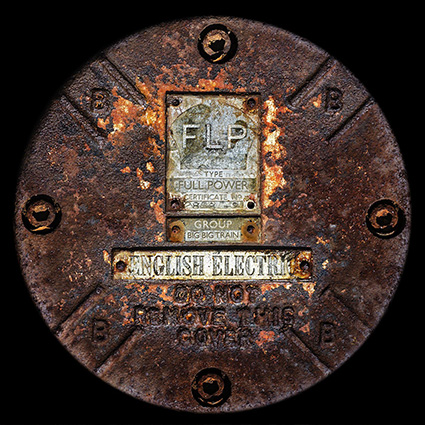
Big Big Train – English Electric Full Power: “English Electric”, parts 1 and 2, were already two of my all-time favourite albums, but the combined and expanded package, “Full Power”, has raised the bar even higher. I have already written full reviews of the individual albums (here on Progarchy and elsewhere), so suffice to say that the re-ordering of the songs and the additional material has created one of the most satisfying listening experiences I’ve had since I first became “aware” of music. Brilliant songwriting, meaningful lyrics, exemplary delivery, superb, lush production. And of course, there’s also the magnificent packaging…
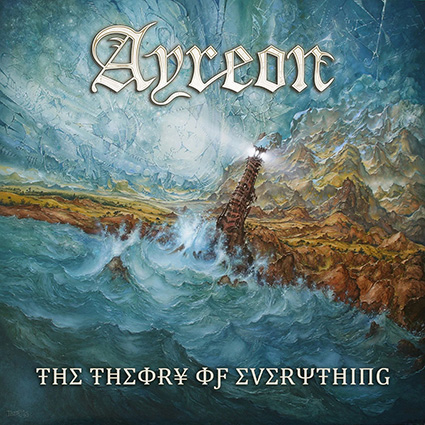
Ayreon – The Theory of Everything: Two adjectives often associated with Ayreon are “bombastic” and “overblown”, but I prefer to use adjectives such as “majestic” and “melodic”. Arjen Lucassen has more musical ideas than is reasonable for any single human being, and he seems to be a helluva nice guy as well. “The Theory of Everything” is his best work, including side projects, since “The Human Equation”, which was my first encounter with his music and still my favourite. However, I’ve only had TTOE for two weeks, and already it is threatening to nudge THE aside. With a stellar cast of musicians and singers, including major prog alumni John Wetton, Rick Wakeman, Keith Emerson, Jordan Rudess and Steve Hackett, he’s created another intense epic work that soars and delights, while examining the very human themes of genius, deception, ambition, pride and love. As a scientist, I also appreciate the recurring symbol of the lighthouse, representing intellect and science casting illumination through the gloom. Brilliant album.
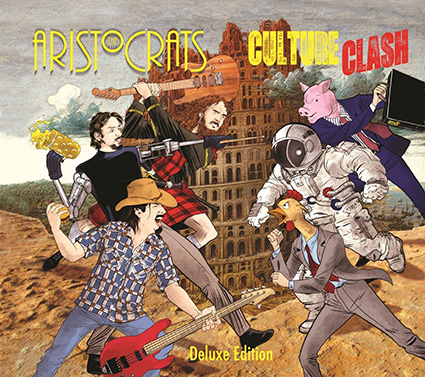
The Aristocrats – Culture Clash: This band has literally blown my socks off (it’s OK, it’s summer in the southern hemisphere, so I’m not too uncomfortable). I bought the “Boing! We’ll Do It Live” DVD earlier this year, and was mesmerised by the incredible technical abilities of the three musicians, Govan Guthrie (guitar), Marco Minnemann (drums) and Bryan Beller (bass). But this is not just a musical show-off band – not only do they write splendid (instrumental) music that crosses a vast range of genres (truly Progressive), but their obvious enjoyment of the music, and each other, is completely infectious. “Culture Clash”, their second album, sees them settling into their relationships and interactions, and writing music specifically for each other – and it’s a sheer delight. Want more!
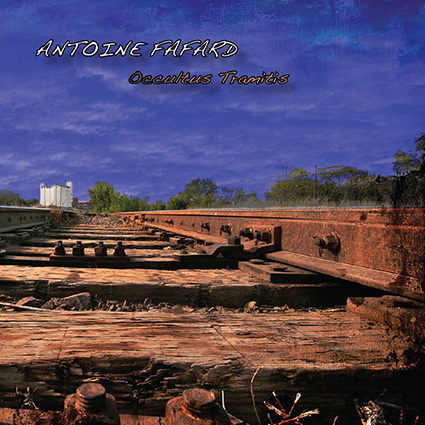
Antione Fafard – Occultus Tramatis: I get to listen to a lot of new music while I’m working, putting science textbooks together. Much of it tends to slip by me while I’m concentrating on the work, but every now and then an album wrests my attention from whatever I’m doing and forces me to focus on the music. “Occultus Tramatis” was one of those albums. Canadian bassist Antione Fafard has put together a star-studded cast of jazz, jazz-fusion and progressive rock performers including Jerry Goodman and drummers Simon Phillips, Chad Wackerman, Terry Bozzio and Gavin Harrison, and produced an outstanding album of prog fusion, which despite its musical complexity and ever changing time signatures is nevertheless fresh and rewarding, revealing different possibilities every time you listen to it. Each track has its own feel, with changes of pace, a variety of complex rhythms and contrasting instrumental arrangements, but the album still still has an organic flow. I listened to my review copy twice straight through, and immediately ordered the CD. Challenging, but excellent.
Honourable mention: Thieves’ Kitchen – One For Sorrow, Two For Joy: I marginally prefer The Water Road, but this is a strong collection of jazzy prog songs.
Roy Harper – Man and Myth: Powerful, emotional work.
The Flower Kings – Desolation Rose: Their darkest album to date, but a real return to form. May have made it into my top 10 if it had arrived earlier.
Airbag – The Greatest Show On Earth: Only arrived last week. Excellent album that is rapidly growing on me.
Notable omission: Lifesigns: This is a strange one for me. I really like the instrumental work, but some of the compositions seem to meander for long periods. And I can’t get into the vocals – the delivery seems flat and unidimensional to me. Sorry.
Not considered (see above, but added to my wish list):
Comedy of Errors – Fanfare & Fantasy
Days Between Stations – In Extremis
Dream Theater – Dream Theater
KingBathmat – Overcoming the Monster
Levin Minnemann Rudess – LMR
Magenta – The Twenty Seven Club
Moon Safari – Himlabacken Vol. 1
Persona Grata – Reaching Places High Above
PFM – Da Mozart A Celebration
Shadow Circus – On A Dark and Stormy Night
Sound of Contact – Dimensionaut
The Tangent – Le Sacre Du Travail
TesseracT – Altered State
Verbal Delirium – From The Small Hours of Weakness
Von Hertzen Brothers – Nine Lives
Verdict: So much to listen to, so little time. Prog has never been healthier.









 Progarchy