Rick’s Quick Takes: Progging and Jamming and Twanging, Oh My!

Due to circumstances beyond my control — thanks to everybody who helped out! — this edition of Quick Takes is playing catch-up. This time around, purchase links are embedded in the release title, with any additional sample/streaming links labelled (LISTEN HERE).

The last few months’ progressive rock releases have skewed heavily toward reissues — for example, Keith Emerson and Greg Lake’s mid-1980s reunion with hard-rocker Cozy Powell in the drummer’s chair. Triple-cd box Emerson, Lake & Powell: The Complete Collection (LISTEN HERE) is a compact, yet worthy appendix to the ELP canon. The main album, ranging from extended throwbacks “The Score” and “The Miracle” through jazzy diversion “Step Aside” to souped-up classical gas like the single “Touch and Go” and Holst’s “Mars, the Bringer of War” is big, brash, widescreen stuff; both in the studio and on the two live discs included, Emerson’s thrusting digital synthesizer upgrades, Lake’s full-throated bravura vocals and Powell’s sleek percussive drive come on like gangbusters on new material and vintage classics such as “Pictures at an Exhibition” and “Pirates”. ELP’s mass appeal remained in the rear view mirror, but Emerson, Lake and Powell was a game try at reinvention for a different time.

Carl Palmer was playing drums for Asia during ELPowell’s flare and fade, but he’s remained engaged with his biggest band’s work, stepping up as legacy guardian after Emerson and Lake’s passing. Disc 1 of Palmer’s solo box Fanfare for the Common Man (a reissue/expansion of 2001’s Do You Wanna Play, Carl?) shows how he emerged from his bandmates’ shadows in the later 1970s, asserting himself in spellbinding trio jams, big band blowouts and a stylish, eclectic percussion concerto; disc 2 covers his roots in British R&B and psychedelia plus his later collaborations with Asia and others, while a new 3rd disc documents live work reinventing the ELP repertoire for guitar-based power trio. The accompanying BluRay video and biography are revealing, though scattered and even self-contradictory. But that’s a minor blemish: Palmer remains rightly admired and respected by musical peers and fans, and still on the road in his 70s, he retains the rhythmic fire and momentum that this set amply demonstrates.

ELP weren’t the only proggers trying to reinvent themselves after the mid-70s; on side one of 1977’s The Missing Piece (LISTEN HERE), the manic British sextet Gentle Giant made ever so coy feints at co-opting the energy of punk and New Wave (especially on the self-conscious spoof “Betcha Thought We Couldn’t Do It”). Side two was more relaxed; reaching for the soul-inflected art-pop that Genesis and Yes later rode to the top of the charts, the Shulman brothers & company still stirred in Baroque cross-rhythms (“As Old As You’re Young”), stately balladry (“Memories of Old Days”) and breakneck instrumental and vocal twists and turns (“Winning”). With Steven Wilson providing fresh stereo and spatial audio remixes, this is another delightful installment in the Giant’s ongoing series of album upgrades.

English folk-classicalists Renaissance kept plugging through the decades, with operatic lead singer Annie Haslam at the helm. 2000’s Tuscany (LISTEN HERE) was Haslam’s last go-round with key members guitarist Michael Dunford and drummer Terence Sullivan (plus limpid guest piano work from former keyboardist Jon Tout). Not as urgent as their 1970s work, it’s still a lovely, impressionistic album, gently meditating on the nexus of art (“Lady from Tuscany”, “Dear Landseer”), nature (“Pearls of Wisdom,” “Dolphin’ s Prayer”) and love (“In the Sunshine”, “One Thousand Roses”). A complete live show from Renaissance’s 2001 tour of Japan included as a bonus mixes new tunes with career standbys such as “Carpet of the Sun,” “Northern Lights” and “Mother Russia”, showing off Haslam and company’s musicality and consistency. As usual, Esoteric Recordings’ latest Renaissance reissue provides the context to better assess the work of this underrated band.

And in the wake of its new reissue, I now consider Yes’ 1994 album Talk the most unified effort of their post-prog decade. (It was also the least well-known, due to grunge taking over rock radio and Yes’ record company collapsing.) The only full-blown songwriting team-up of hippie muse Jon Anderson and guitarist/keyboardist/composer Trevor Rabin, Talk’s tunes ooze out-there ambition and hi-gloss appeal; the choral kick of “The Calling” and “Walls”, “Real Love’ jangle-pop/heavy metal synergy, the skip-hopping “State of Play” and the closing multi-part epic “Endless Dream” are stunningly remastered to devastating impact. Rhythm section Chris Squire and Alan White are at their most down and dirty; Tony Kaye leans in with expressive, gnarly organ work. And a bonus live set (from the soundboard at a 1994s tour stop) showed that this lineup could conjure a fairly close approximation of the classic sound on standbys like “Heart of the Sunrise” and “I’ve Seen All Good People”. If you loved Yes but wrote them off between 90125 and Union, I’m serious; give Talk a shot.

There have also been plenty of ear-opening new releases, mostly rooted in improvisation rather than composition. The latest posthumous set from piano legend Chick Corea has its source in a 2019 tour and follow-up sessions with eclectic banjo virtuoso Bela Fleck; the aptly-titled Remembrance (LISTEN HERE) covers an incredible range of sonic possibilities, with the duo wailing on Thelonious Monk’s “Bemsha Swing”, Scarlatti sonatas, brand new compositions and impromptus pulled from thin air. Impeccably tasty and always in the moment, Corea and Fleck spark off each other constantly, caught up in an unending sense of play and delight. Fans of either player will love this, and folks who dig acoustic jazz, bluegrass or both will find themselves smiling again and again when they hear it.

While Brad Mehldau is one of the numerous young lions who followed in Corea’s wake on piano, his sound and vision are uniquely his own, as a fresh pair of solo discs make clear. On After Bach II, Mehldau brings his love for the classical piano tradition and his improvisational chops to bear on a second set of J.S. Bach’s richly poised keyboard works, mingling preludes and fugues played straight with jazzier extrapolations (“Between Bach”) and superimposed twists of rhythm and counterpoint based on one of Bach’s pinnacles, the Goldberg Variations. Apres Fauré brings a similar freedom to the music of Gabriel Fauré, the French composer who became a unique bridge between the late Romantic and Impressionist schools; Mehldau responds to Fauré’s sense of adventure with sweeping repetitious bass lines, long-spun singing melodies, and thick two-handed harmonies. Plenty of rigorous development to chew on, plenty of knotty invention and lush sound to bask in on both of these!

On their new EP Tropic of Cancer, Chicago’s heavy-prog-jazzers Sons of Ra show how they can unspool variations on a theme with staggering impact. Setting a nimble, dancing idea with roots in fusion’s golden age into motion, multi-instrumentalists Erik Oldman and Keith Wakefield and drummer Michael Rataj put it through exhilarating paces over 23 minutes: you get wah-wah electric piano extrapolations, a sax/bass duet over a bed of guitar/sax noise; a wonderfully idiomatic folk/Celtic throwdown (complete with guests on violin, flute and pipa); a Santanesque guitar jam that spirals up dizzingly before it goes off like a fireworks display; and a gargantuan finish with hypnotic sax wailing over a shuddering guitar army. No jive; this is great stuff, and Sons of Ra are a band to which attention must be paid!

King Crimson-adjacent power trio Markus Reuter, Trey Gunn and Pat Mastelotto are also back with the ironically titled Tu-Ner for Lovers, another heaping helping of rich, doomy thrash. Sculpted from improvs recorded on their 2023 tour, the trio scrape, scratch and scrawl from the get-go, with Mastelotto laying down off-kilter tribal beats, Gunn rattling listeners’ innards with sludgy bass lines and Reuter slapping down arresting leads and color clusters on touch guitar. Stalking the abstract sublime, the music coalesces as the album progresses, locking in to galvanizing effect on closing stompers “They Call Him Threnody” and “Transistor Valentine”, wispily floater “I Put a Crush on You” and skittering finale “Combat and Courtship”. You may need to be in the right mood for this to grab you — alienation? Righteous anger? — but when you are, boy, does it hit home!

Kamasi Washington’s long-awaited double album Fearless Movement is every bit as kickass and sprawling as previous spectaculars The Epic and Heaven and Earth (the latter my 2018 Album of the Year), but somehow settles in a gentler, more welcoming vein. It kicks off with “Lesanu”, an Egyptian Orthodox chant of Psalm 96 riding first a free-jazz slam, then a finger-snapping, hand-clapping vamp and ends with “Prologue”, an Astor Piazzolla tango that morphs into a blaxploitation movie theme; at all points within and between, Washington on tenor sax, keyboardists Cameron Graves and Brandon Coleman, Ryan Porter and Dontae Winslow on brass, and a platoon of guests play and sing up a storm. But slower burning tracks like “Asha the First” and “Together” provide respite from the intensity of Washington’s sweep and surge, and a looser, relaxed sense of momentum on the Zapp cover “Computer Love” and the extended workout “Road to Self (KO)” helps you catch your breath. Washington and his friends are still making audacious spiritual jazz, building from whispers to screams again and again and dancing across barlines like they don’t exist; but somehow this set feels more like a place to make a home than a monument to visit. And yes, this one’s gonna be on my Favorites list this time around, too . . .

And sometimes, you just need some down-home picking and singing. On the heels of selling out the Ryman Auditorium (documented on record to great effect last year) and duetting with Willie Nelson, Charley Crockett pitches a passel of new songs our way on $10 Cowboy (LISTEN HERE) As with much of Crockett’s recent work, this album leans into soul nearly as much as country; the choogling brass and choral vocals of “America”, the piano-with-strings heartbreaker “Gettin’ Tired Again” and the funky “Diamond in the Rough” can’t help but call Motown and Memphis to mind. But there’s plenty of Nashville/Austin classicism too, in the steel guitar-laced single “Hard Luck and Circumstances”, the Latin-flavored acoustic revenge ballad “Spade” and the honky tonk shuffle “Ain’t Done Losing It” Whether this is the long-predicted breakthrough for Crockett or not, $10 Cowboy is a thoroughly satisfying album, capturing sharply defined snapshots of a nation wondering when things will get better.

And (thanks to the copious music collection found at the main branch of the Grand Rapids Public Library), I discovered that Sierra Ferrell’s 2021 debut Long Time Coming is every bit as good as her new one (Trail of Flowers, reviewed last time). My entire notes for this one consisted of the word “WOW!!”, so I’ll just point you in the direction of this review (from my go-to site for genre news and reviews, Saving Country Music), add Long Time Coming to my 2024 Favorites list and look forward to hearing her live in September!

— Rick Krueger
Rick’s Quick Takes: Summer, Part 3

Unless otherwise noted, title links are typically to Bandcamp for streaming and purchasing, or to Spotify/YouTube for streaming with a additional purchase link following the review.

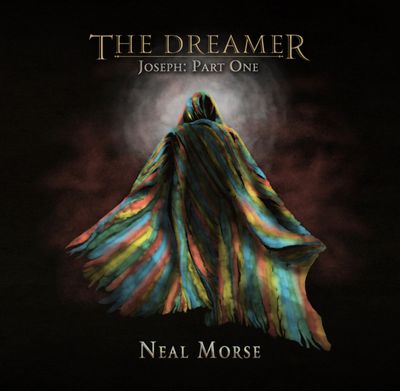
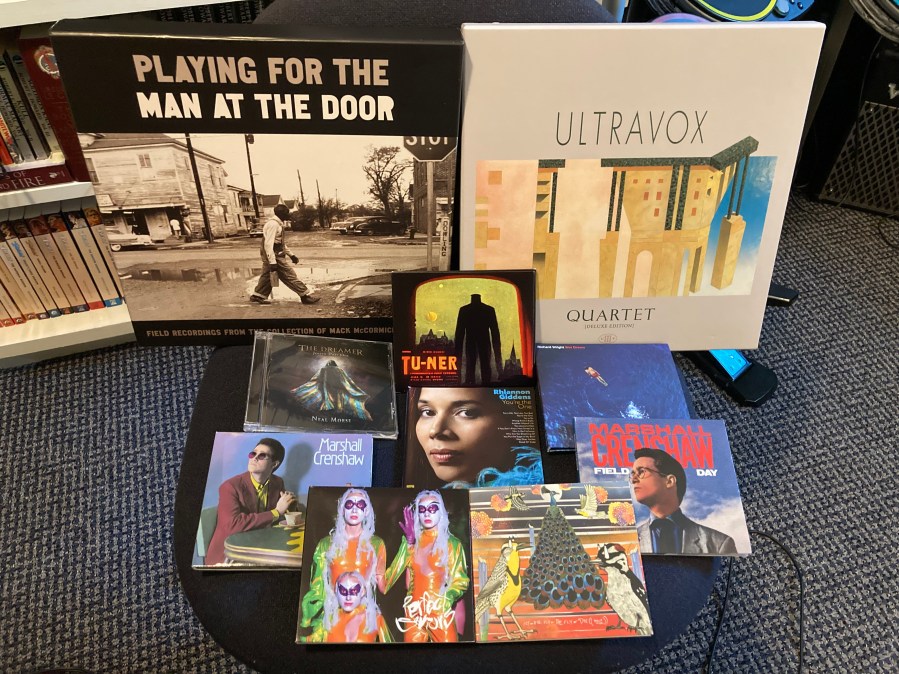
Neal Morse, The Dreamer – Joseph, Part One: For his latest rock opera a la 2019’s Jesus Christ the Exorcist, Morse and his studio sidekicks swerve toward hard-hitting blues-rock; the usual “Overture” and the narrative tracks “Burns Like A Wheel” and “Gold Dust City” are stuffed to the brim with chunky organ and grunged-up wah-wah guitar work. Wailing vocals from the cast of Christian Progressive Rock stalwarts who play Jacob, Joseph’s brothers and his Egyptian captors slot right in; even the power ballads (“The Pit”) have more grit this time around! And while the second half of the album is stylistically slicker (complete with classical chorale “I Will Wait on the Lord”), the hooky closer “Why Have You Forsaken Me?” pulls all the musical threads together, with Morse’s emotive portrayal of Joseph setting up intriguing possibilities for Part 2 — which, given his extravagant productivity, shouldn’t be too long in coming. Order from Radiant Records here.

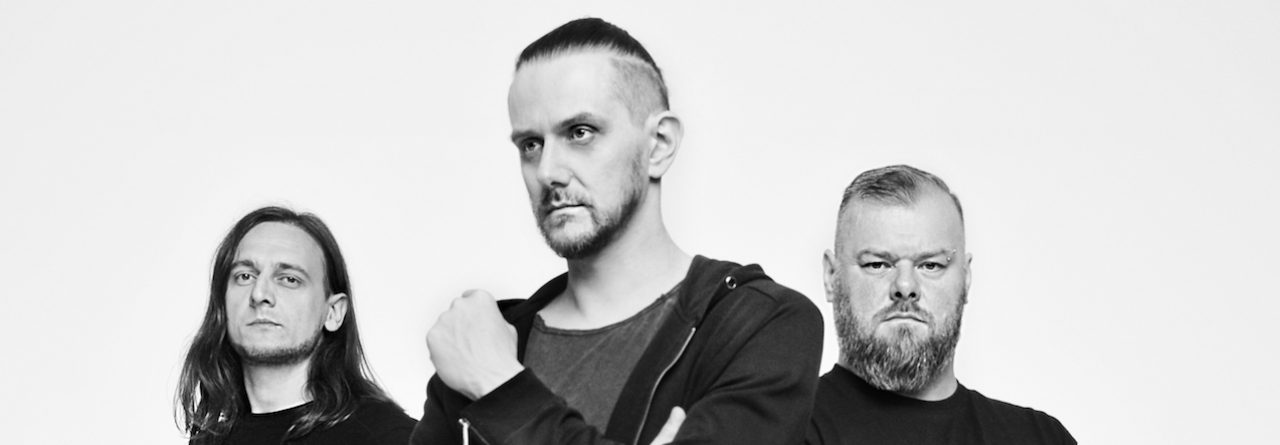
Tu-Ner, T-1 Contact Information: Power trio improvisation that takes no prisoners, from another eerily luminous satellite band orbiting the gravity well of King Crimson. Trey Gunn and Pat Mastelotto formed one of Crimson’s most ferocious rhythm sections in the early 2000s, also recording together as TU; here Mastelotto clatters away merrily on his sonic smorgasbord of drums and percussion, while Gunn unleashes the deepest, fattest bass licks known to subwoofers. Above and around the Rhythm Buddies’ brutalist bedrock, Markus Reuter (who’s worked with Mastelotto in the duo Tuner and the trio Stick Men) unleashes slashing, swooping touch guitar lines and dark, brooding soundscape clouds — and when Gunn joins him on the higher end, sparks really fly. Always arresting, intermittently galvanizing, but the track titles (or this review for that matter) can’t really give you a feel for what this sounds like. In other words, you’ve gotta hear what Tu-Ner do to believe it.

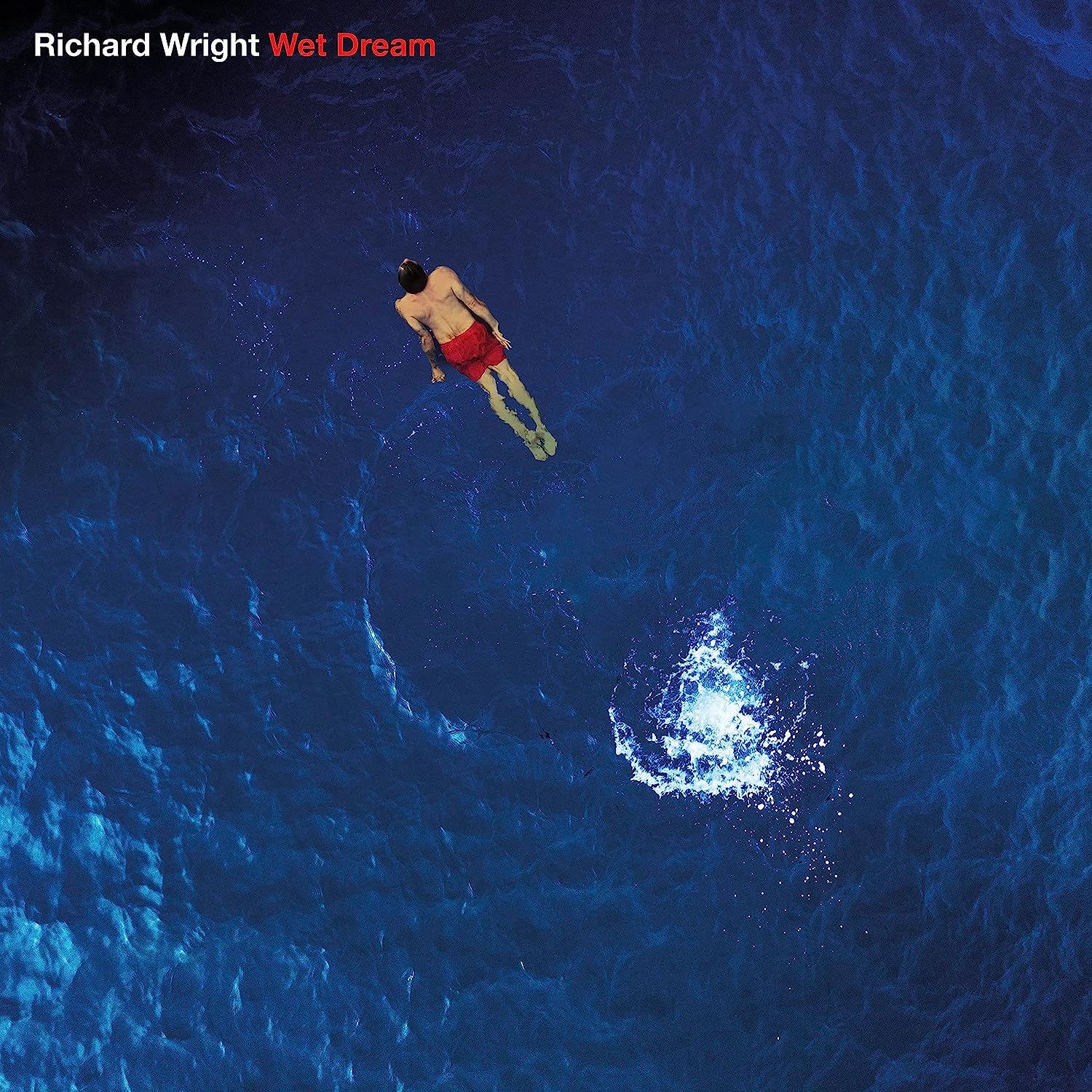
Richard Wright, Wet Dream: In case you ever wondered exactly what keyboardist Wright brought to Pink Floyd, his 1978 solo album has it in spades. On tracks like “Mediterranean C” and “Drop In from the Top” lush, floating chord progressions set up open-ended jams by guitarist Snowy White and sax legend Mel Collins; Wright’s reedy voice spins out languid vignettes of detachment and disillusion such as “Summer Elegy” and “Holiday”. All thoroughly gorgeous (especially in this immaculate new Steven Wilson remix), occasionally funky, ineffably melancholy — and not terribly urgent in isolation. Still, you can hear the breathing space that Floyd lost as Wright faded into the background and Roger Waters began repeatedly kicking his audience in the head on The Wall. Order from Rhino Records here.

Ultravox, Quartet [Deluxe Edition]: Speaking of immaculate Steven Wilson remixes: this is his third in a series for the British new wave quartet. Regrouping after early personnel changes, Ultravox struck a quirky vein of New Romantic post-punk on 1980’s Vienna, then pursued cutting-edge Krautrock on the follow-up Rage in Eden. Connecting with legendary producer/5th Beatle George Martin, frontman Midge Ure, violinist/keyboardist Billly Currie, bassist Chris Cross and drummer Warren Cann aimed straight for the charts; Quartet is as pure of a pop album as they ever achieved. The UK singles “Reap the Wild Wind,” “Hymn,” “Visions in Blue” and “We Came to Dance” have an irresistible mix of rock drive, synth-pop color and devil-may-care melody, and the album tracks slot right in; the whole thing’s overripe and melodramatic in the most appealing way. Plenty of extras in the 7-disc box too, with b-sides, rarities, rehearsal tapes, studio monitor mixes and an intense live set all included. Order from the Ultravox store here.

Continue reading “Rick’s Quick Takes: Summer, Part 3”

Kruekutt’s 2020 Favorites: Not Necessarily New Albums

This year, I’m starting off my “best of” retrospective with albums that aren’t technically “new” — compilations, live albums, reissues and (re)discoveries from previous years — that grabbed me on first listen, then compelled repeated plays in 2020. I’m not gonna rank them except for my Top Pick, which I’ll save for the very end. The others are listed alphabetically by artist. (Old school style, that is — last names first where necessary!) Where available, listening opportunities are linked in the album title or included below my summary via Bandcamp, YouTube or Spotify.

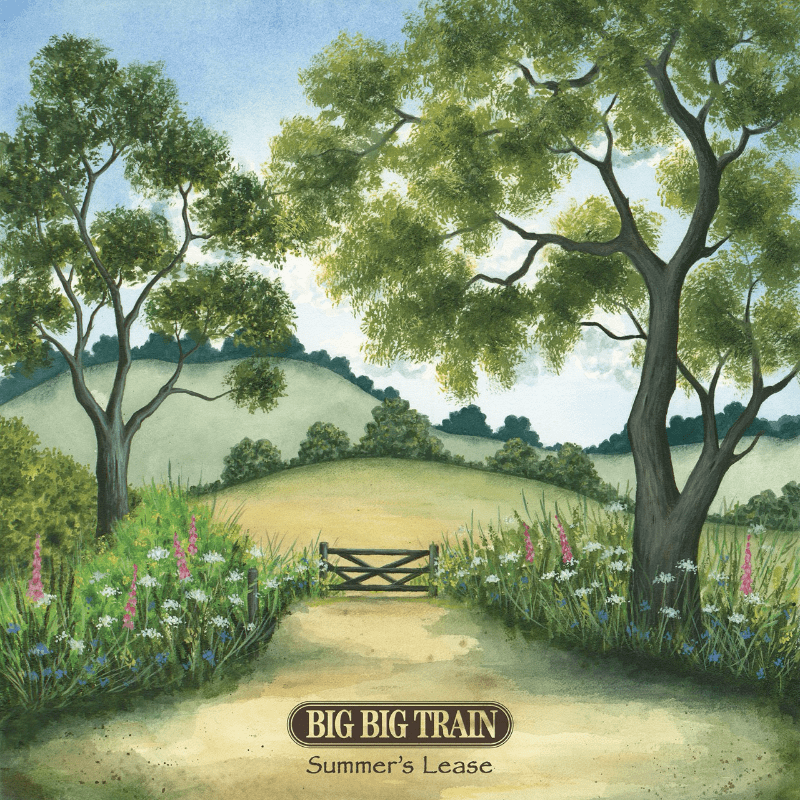
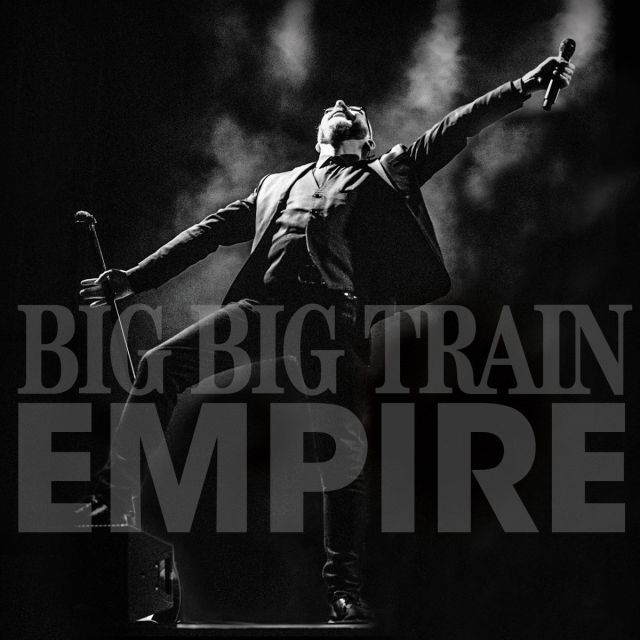
Big Big Train, Summer’s Lease (compilation) and Empire (live): This year, I’ve bought music from even more far-flung corners of the world than usual — including Big Big Train’s Japanese-only retrospective. Disc 1 features various rarities on CD for the first time: re-recordings old and new (including excerpts from my intro to the band, the Stone and Steel Blu-Ray), plus the “London Song” sequence from Folklore in all its sprawling glory. Disc 2 leans into the post-Underfall Yard era with a solid mix of epics and, um, shorter epics, plus an unreleased instrumental as dessert. It’s all impeccably curated, and (in retrospect) a fitting capstone to the work of recently departed Train crew Dave Gregory Rachel Hall and Danny Manners. In a similar fashion, Empire is a fond farewell — the last concert played by this incarnation of the band (including Cosmograf’s Robin Armstrong) before COVID-19 killed off their first-ever North American tour. Which makes the entire show, brilliantly performed as always, even more poignant, from the rocket-fueled opener “Alive” to the romantic, spiraling coda for the best version of “East Coast Racer” yet. Sorry, there’s something in my eye . . .

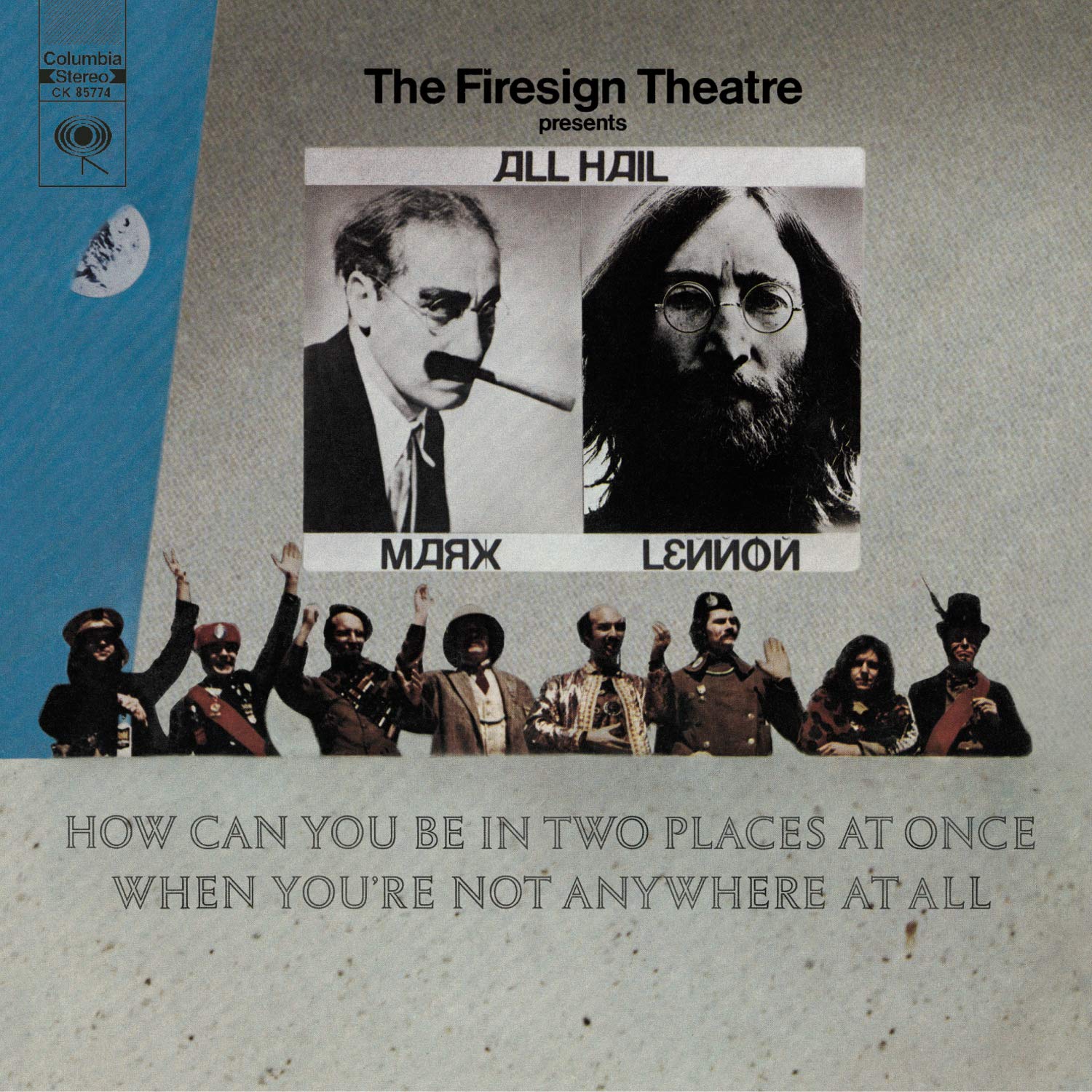
The Firesign Theatre, How Can You Be in Two Places at Once When You’re Not Anywhere At All (rediscovery): This spring, my big brother Bob pointed me back to this 1969 classic — quite possibly the single most insane comedy album ever recorded. The half-hour long title track’s surrealistic road trip morphs into a wickedly irreverent (yet oddly touching) patriotic pageant, with stopover cameos from Lewis Carroll and James Joyce; “The Further Adventures Of Nick Danger,” memorized and mimed to by me and my roommates back in college, is a hallucinogenic smoothie of hardboiled detective drama, time travel and the Beatles’ White Album. “Wait a minute — didn’t I say that line on the other side of the record?” Believe me, you need to find out.

Pat Mastelotto and Markus Reuter, FACE (discovery): My New Year’s resolution was to become a MoonJune Music subscriber through Bandcamp; twelve months later, it’s still one of the best musical decisions I made. In recent years, touch guitarist Reuter has become a major contributor to Leonardo Pavkovic’s ongoing quest to “explore and expand boundaries of jazz, rock, ethnographic, avant, the unknown and anything between and beyond,” frequently joined by King Crimson drummer Mastelotto (his partner with Tony Levin in Stick Men). The 2017 FACE (not actually on MoonJune) stands out in the duo’s catalog: a single, 35-minute instrumental travelogue that swiftly spans the globe and its myriad rhythms, aided and abetted by Steven Wilson and associates of David Lynch, Tool and the Rembrandts. Blink with your ears and you’ll miss the transitions from theme to theme and place to place; this one both demands and thoroughly rewards my attention every time. Hopefully, the excerpts linked above will convince you — don’t hesitate to hop on board!

The Neal Morse Band, The Great Adventour Live in Brno (live): every bit as impressive as when I saw this show in Detroit the same year, the NMB’s concert take on The Great Adventure is even tighter, more driven and more finely honed than the studio version. Kaleidoscopic contrasts of rhythm, instrumental color, vocal textures (mainly from Morse, guitarist Eric Gillette and keyboardist Bill Hubauer) and tonality mesh effortlessly with drummer Mike Portnoy and bassist Randy’s George’s badass forward propulsion, mirroring the lyrical highs and lows of the journey to John Bunyan’s Celestial City. The result is sustained, extended, unforced ecstasy in the Czech audience, capturing how Morse’s recent work embodies the ongoing ideal of American revivalist religion. A journey worth taking, whether you caught this in person or not.

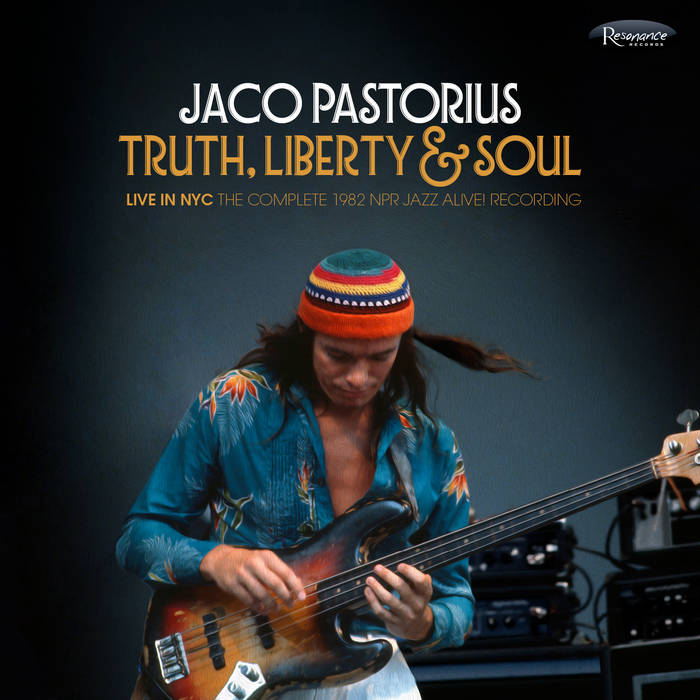
Jaco Pastorius, Truth, Liberty and Soul: Live in NYC (live, archival, discovery): 2020 was the year I came across Resonance Records, where “jazz detective” Zev Feldman has been unearthing incredible archival treasures for nearly a decade. Jaco Pastorius single-handedly revolutionized electric bass playing in the 1970s; this 2017 release captures him in 1982, fresh from his boundary-busting stint in jazz-rock titans Weather Report. Fronting a big band of great players — the best New York horns, the drum/percussion duo of Peter Erskine and Don Alias, Othello Molineaux on steel pans and harmonica virtuoso Toots Thielmanns — Pastorius mixes classic tunes with his own soulful writing. It’s a mighty, bubbling noise — jazz, funk, rock, reggae, swing and more, with a groove that never stops and heart behind the flash. Irresistible for anyone with a pulse!

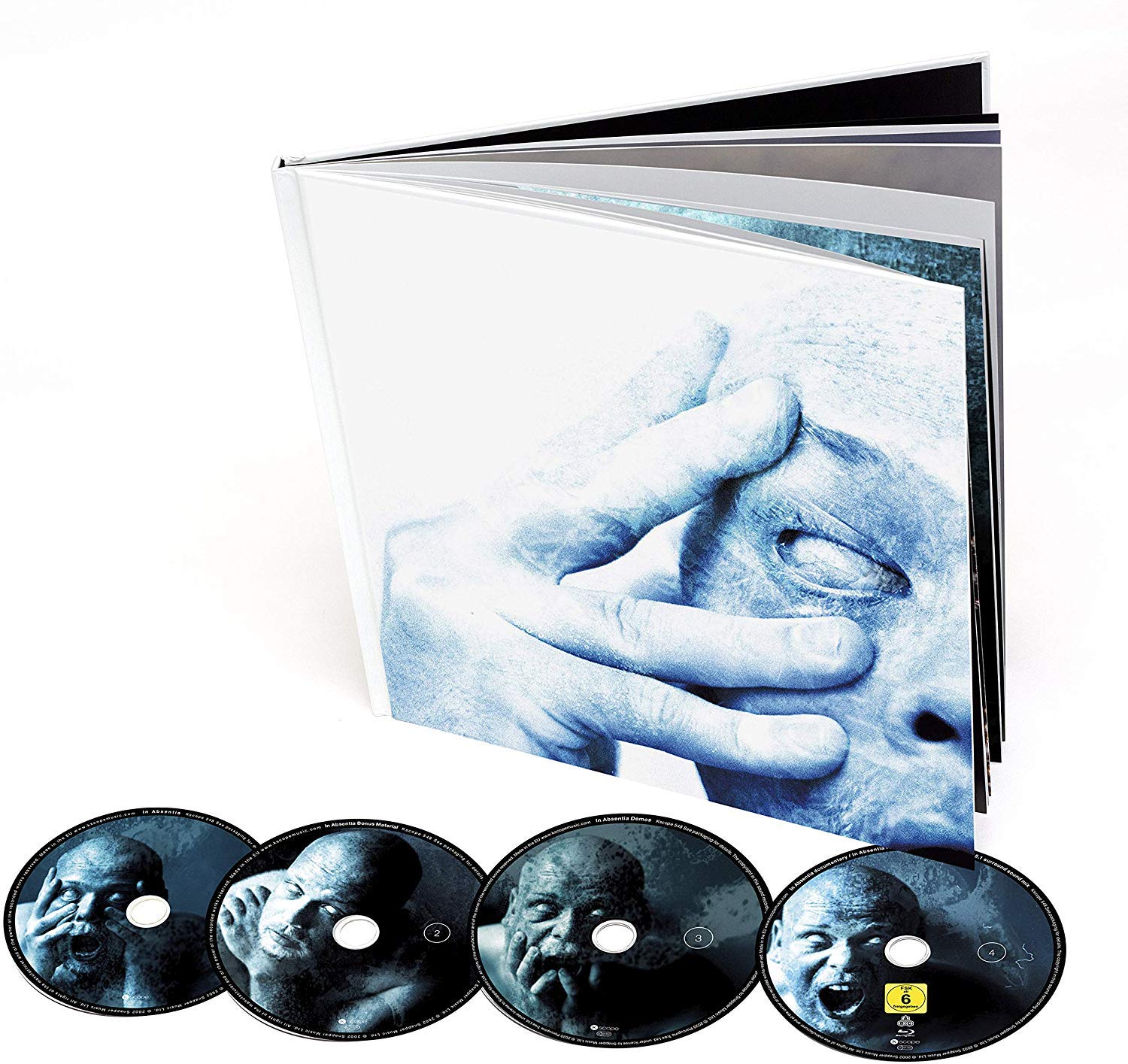
Porcupine Tree, In Absentia (deluxe reissue): Not the Porcupine Tree album that hooked me (that was Deadwing, promised its own deluxe box next year) but, looking back, my firm favorite of the band’s late period. Freshly signed to the American label that brought us Trans Siberian Orchestra, Steven Wilson and company made the polar opposite of a sentimental holiday album, focusing on the inner motivations of — serial killers? What makes that work? Well, how about: the full-on debut of Gavin Harrison’s stylish, rhythmically slippery drumming; Richard Barbieri’s off-center, arresting synth textures and solos; Colin Edwin’s relentless, incomparably steady bass workouts; Steven Wilson’s reignited love of metal slamming up against the songcraft developed on Stupid Dream and Lightbulb Sun, as well as a fixation with Beach Boys-tinged harmonies? Oh, and a clutch of superior tunes that became perennial favorites, both on the main album (“Blackest Eyes,” “Trains,” “The Sound of Muzak”) and the bonus disc (“Drown With Me,” “Futile”). Add in subtle yet superb remastering and you have a near-perfect example of how these boxes should be done.

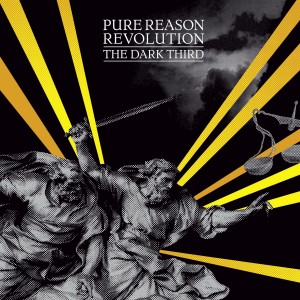
Pure Reason Revolution, The Dark Third (reissue): At a time when progressive rock’s troops were thin on the ground, PRR provided reinforcements — and a breath of fresh air. It’s still hard to believe a major label released The Dark Third back in 2006; the effortlessly evolving long-form suites, the sweet-and-sour pairings of lush soundscapes and jacked-up beats were a vivid variant on Pink Floyd’s classic palette that turned the bass and drums up to 11. Jon Courtney, Chloe Alper and their cohorts weave the webs of melody and harmony; Paul Northfield’s co-production brings out the cavernous bottom end. The new bonus disc includes both the intriguing student work that led to Sony signing PRR and outtakes that showed up in different forms on later albums. Always an booming, blissed-out listen, now more inviting than ever.

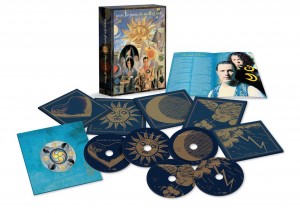
Tears for Fears, The Seeds of Love (reissue): A marvelously all-over-the-place, widescreen record. Unabashedly pop but also fearlessly expanding the TFF sound into psychedelia (the title track was everywhere back in 1989), soul (big shout-out to Oleta Adams and Tessa Niles, who pushed Roland Orzbaal and Curt Smith to new vocal heights on “Woman in Chains” & “Swords & Knives”), jazz (Nicky Holland & Adams serve up stunningly tasty piano), world music (Jon Hassell’s superlative trumpet on “Standing on the Corner of the Third World” & “Famous Last Words”) and even a touch of prog-funk on “Year of the Knife.’ The squeaky-clean remaster (plenty of headroom and dynamic range) is dandy, but if you need more, the super-deluxe set linked above includes some dynamite rehearsal recordings.

and my Top Pick . . .

Ella Fitzgerald, The Lost Berlin Tapes (live, archival): My recent listening has tacked in the direction of mainstream jazz; if I had to speculate as to why, I’d say I might be looking for less tension and more release during my unobligated time. But what’s on offer is a factor as well. Instead of baking sourdough bread or taking up acoustic guitar during the time of COVID, it’s as if jazz musicians and aficionados have all dug deep in their closets and simultaneously unearthed long lost vintage recordings — which record companies eager to fill their distribution pipelines have snapped up and launched into the wider world. 

This, in my view, is the best of that harvest: an astounding, life-affirming 1962 concert buried in the archives of Ella Fitzgerald’s manager until now. Ella and her fellas (Paul Smith on piano, Wilfred Middlebrooks on bass, Stan Levey on drums) are at their absolute peak, in tune with each other and with an extroverted, enthralled Berlin audience. Every note of this concert radiates warmth and inner joy, even when the mood darkens on torch songs like “Cry Me A River” and Billie Holiday’s “Good Morning Heartache.” And when Ella swings on “Jersey Bounce,” jumps on “Clap Hands, Here Comes Charlie,” digs into Ray Charles’ “Hallelujah, I Love Him So” (resulting in an immediate, complete encore!), then breaks into her trademark scatting on “Mack the Knife,” well, she is unstoppable. I have had no finer feeling listening to music this year; whatever may ail your soul, I believe that The Lost Berlin Tapes are good medicine for it.

But wait, there’s more! Watch for my “new album” favorites from 2020 coming soon . . .

— Rick Krueger

Stick Men with David Cross, Panamerica

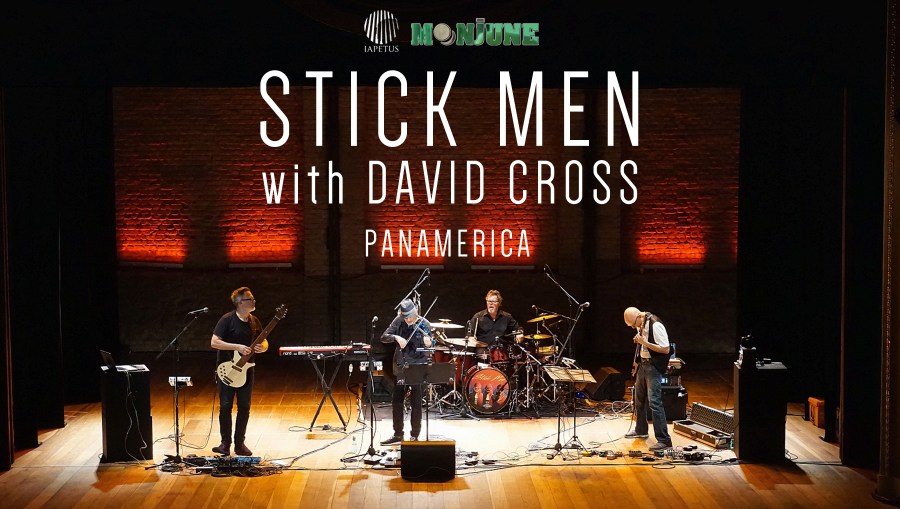
Stick Men — touch guitarist Markus Reuter, bassist/Stick player Tony Levin and percussionist Pat Mastelotto — have been expanding the frontiers of progressive music since 2007.  With a repertoire that encompasses Levin & Mastelotto’s legacy in King Crimson, Reuter’s innovative soundscapes and searing improvisations, 4 studio albums as a group and even Igor Stravinsky’s Firebird, they are the real deal, whether as a self-contained unit or joined by other groundbreaking musicians.  I heard them live in 2011 when they toured with The Adrian Belew Power Trio, both performing their own music and joining Belew’s band for an awe-inspiring set of Crimson classics.

In August and September 2018, Stick Men teamed with violinist David Cross (best known for his contributions to King Crimson from 1972 to 1974), touring ten countries in Latin America.  The results are documented on the new Panamerica, due for release in September.  Expanding on previous live Stick Men releases Midori (recorded with Cross in Japan) and Roppongi  (recorded with saxophonist Mel Collins), the set will include:

  •   A complete show recorded live in Costa Rica
  • “Pan America Specials” recorded live in Argentina and Brazil
  • “Pan America Suites” recorded live in Peru, Chile, Argentina, and Uruguay
  • “Fire Starters”, a continuous mix of selected Cross/Reuter show opening pieces

While Panamerica will be available for download at Stick Men’s Bandcamp store, pre-orders are now being taken for a collectors’ 5-CD set, limited to 500 copies and sold by invitation only, with all proceeds going directly to the band.  Interested? Go here for all the details!

— Rick Krueger