I believe I have found the perfect song for these times….
Something to consider as we lose contact:
“Earlier generations understood that institutions anchor our lives. That’s why German children went to school throughout World War II, even when their cities were being reduced to rubble. That’s why Boy Scouts conducted activities during the Spanish flu pandemic and churches were open. We’ve lost this wisdom. In this time of crisis, when our need for these anchors is all the greater, our leaders have deliberately atomized millions of people.
Society is a living organism, not a machine that can be stopped and started at our convenience. A person who is hospitalized and must lie in bed loses function rapidly, which is why nurses push patients to get up and walk as soon as possible after sicknesses and operations. The same holds true for societies. If the shutdown continues for too long, we will lose social function….” – R. R. Reno
To celebrate this 14th of February–the Feast of St. Valentine–here are fifteen tracks to enjoy. All about love, but not necessarily romantic love. Blessings, Brad
Today marks the 40th anniversary of the release of Peter’s first solo album.
“This record was my first step as a solo artist, the first step away from being a part of a band. I was uncertain of what I could or couldn’t do so went with some of Bob Ezrin’s choice of musicians (including Tony Levin) and invited Robert Fripp and Larry Fast to cover my more soundscape orientated / European ambitions. Although it was mainly recorded in a snowy couple of weeks in Toronto I remember the sessions as fast, exciting and hot. Many of the backing tracks were put down live, working to the limitations of the 16-track tape machine.
It was a fun, intense and scary session, with a great band – who later came out to tour with me.” Peter Gabriel, February 2017.
Following his departure from Genesis two years previously and his intervening, self-imposed, exile from the music business the album was the start of a new phase of Peter’s creative life, a chance to be the master of his own destiny and be respected as a songwriter and artist in his own right;
“It took me three albums to get the confidence and to find out what I could do that made me different from other people. And the first record really was a process of trying.“
Quick review of Michael Drewett, Sarah Hill, and Kimi Kärki, eds., PETER GABRIEL, FROM GENESIS TO GROWING UP (Surrey, ENG: Ashgate, 2010).
Birzer Rating: D.
Don’t waste your time.
I’ve had this book for five years, but I’ve just finally had a chance to read through (yes, just through) it. What a disaster. I’m so very happy that scholars realize how important Gabriel is, but this is one of those “apply theory, subject doesn’t matter” books.
It’s so theory-laden that it could be just as well about Jane Austen or John Updike as it is Peter Gabriel. And, the theory isn’t even interesting. Deconstruct the means and methods of entertainment by the politics of identity and the power structures of an oppressive culture.
“In his search for individuated identity, XXXX undermined the very structures of power as understood in a declining corporatist society.”
Just who is XXXX? It really doesn’t matter. Peter Gabriel, Mercy Otis Warren, Carl Olson, or Baby Jesus. Write book, insert subject, publish as an academic book, and sell to every library around the world.
Frankly, this book is a total mockery of the actual and individual genius of Peter Gabriel. He deserves better, and so do we.
In part I of this review, I attempted–and I hope succeeded–in professing my respect for Genesis, 1978-1983, while admitting my disappointment in INVISIBLE TOUCH (1986) and my nearly complete ignorance of anything the band released after 1986. When Steve Hackett first introduces the [insert positive descriptive] Ray Wilson on one of the Genesis Revisited concerts, I had to google the guy. I had no idea who he was. This, for better or worse, probably tells you how little I know about Genesis’s later history. I also noted that there were a few good things about the documentary the BBC made a year or so ago, Genesis Together and Apart. Some of the questions, the footage, and the memories truly moved me. I’d never heard of one of the talking heads, but, frankly, they were pretty entertaining, and I enjoyed their enthusiasm.
The documentary that teaches selling Britannia is better than SELLING ENGLAND
Overall, the BBC narrative just infuriated me.
Some smart guys meet in an elite school. They really like one another, except for Tony, whom everyone simply tolerates because of his talent. Oh, and when there is disagreement, Tony gets grumpy. Rather than backing down, everyone gives into Tony. His moodiness isn’t worth combatting. The friends write music that taps into nostalgia for pre-industrialized, Edwardian England. From there, they create complex, artful tunes and dress in funny costumes. Along for the ride comes some guy–who according to Tony–plays the guitar “stiffly” and another guy who plays the drums fiercely but who also smiles a lot and loves fun and gets along with everyone. Weirdo costume guy leaves the band and becomes happy, even writing a pop anthem. Stiff guitarist guy leaves the band and no one really cares one way or the other if he is happy or not.
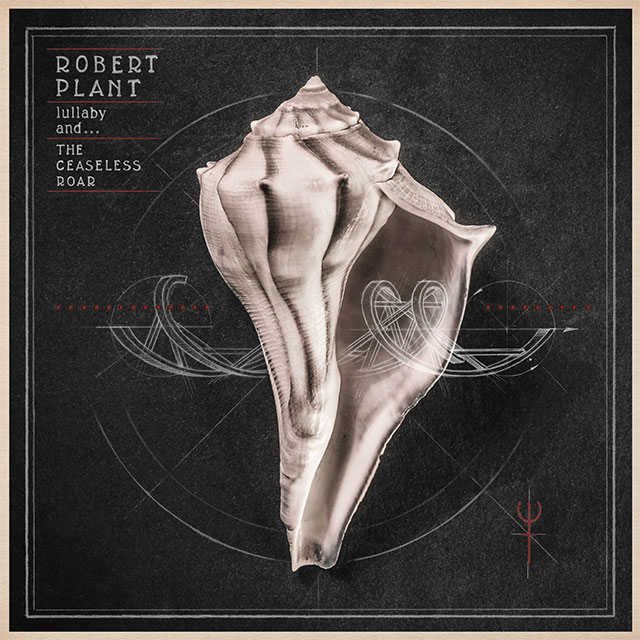
I was hooked from the start. I have already listened to Lullaby and… The Ceaseless Roar twice in its entirety and thus far it is one of the few albums of which I can sincerely say I enjoy every song. Be forewarned, however: this is not the Plant of hard-rocking Led Zeppelin. Instead, this album is a blend of alternative, folk, Americana, progressive, and world music, a peculiar amalgam of genres, but it works. It is more Battle of Evermore-esque (my favorite Zeppelin song) than Whole Lotta Love-like. Absent is the wailing guitar of Page; the thunderous and formidable drumming of Bonham; the dexterous bass of Jones. This might seem disagreeable to some, but guess what: I don’t miss them and the album doesn’t either. These standards of the rock genre have been replaced by bendirs, banjos, kologos, ritis, and other exotic instruments to create a distinctly West African/alternative inspired sound. Imagine Peter Gabriel, Gordon Lightfoot, and George Harrison got together one day and made an album: this would be the product. Add Plant’s vocals and I’d say you have a recipe for success. Fortunately, Plant acknowledges his strengths and understands his weakness: namely, that his vocals are not what they used to be. You will hear no wailing or screaming; no vain attempt to hit notes out of his range that at this point would make him sound like a man in agony rather than the great vocalist that he is. Anyway, the point I am trying to make here is that I cannot recommend this album highly enough. As someone who appreciates the complexity and diversity of world music and folk, I believe Robert Plant has found his niche, crafting music that is good, true, and beautiful.
Here are my favorite songs from the album:
Little Maggie: an enjoyable traditional folk song updated with a somewhat “alternative” sound
Embrace Another Fall: somber, haunting, alternative sound with a dash of electric guitar added for good measure
Up on the Hollow Hill: sounds like a softer, eerier version of When the Levee Breaks from IV, featuring a consistent drum and guitar pattern
Arbaden: shortest song on the album; more alternative with a techno-edge, similar in sound to some of Coldplay’s works; features Fulani vocals by Juldeh Camara, a native Gambian
P.S. I also highly recommend Plant’s previous two releases, Band of Joy and Mighty ReArranger.


 Don’t waste your time.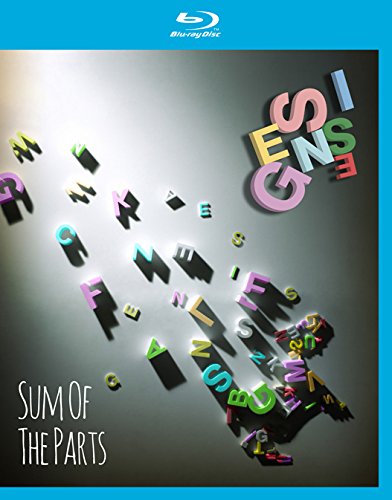

 Progarchy