Who Is This Steven Wilson You Keep Going on About?

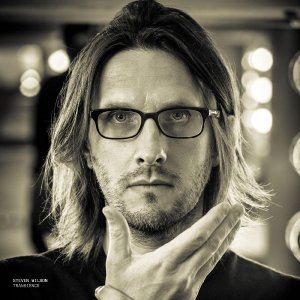
wilson-transience

If you’re a regular reader of Progarchy, you’re probably familiar with Steven Wilson, whether it’s as the leader of Porcupine Tree, a solo artist, or the go-to remixer of classic progressive albums. And you’ve probably raved about his work to uncomprehending friends and relatives.

Well, Mr. Wilson has just released a compilation that speaks more effectively to his artistry than any words. Transience consists of fourteen songs, clocking in at more than an hour. There’s not really anything new, unless you want to count a couple of edits, but they were hand-picked by Wilson, and as such make for an interesting listen.

All of the songs highlight Wilson’s “pretty” side – in other words, his extraordinary gift for composing a beautiful melody. The flow of the album is flawless, moving from one entrancing moment to the next. One thing that struck me was just how good his first solo album, Insurgentes, was. “Harmony Korine”, “Significant Other”, and “Insurgentes” are all included, and they really stand out.

Continue reading “Who Is This Steven Wilson You Keep Going on About?”

Porcupine Tree – Stupid Dream (1999) — Grendel HeadQuarters

Yes, I know… Another review of an old Porcupine Tree album, but I just couldn’t resist! Released back in the year 1999, the album that came out three years later after my favourite album Signify.

via Porcupine Tree – Stupid Dream (1999) — Grendel HeadQuarters

An Apology to Mr. Steven Wilson

Steven Wilson
Steven Wilson, The LONDON GUARDIAN.

I will admit, I find it hard to believe that Steven Wilson’s HAND.CANNOT.ERASE. is now fourteen months old.  It arrived on my doorstep—courtesy of amazon.com—on the day it was released, and I played it immediately, of course.  At the time, however, I had become truly skeptical of anything Wilson was doing at that moment.  My dislike and distrust had not come on me suddenly, but, rather over a relatively long period of time.  As I mentioned in a previous post, I didn’t come across his work until a random turning on of album rock radio in Fort Wayne played an incredible song—“Trains” if I remember correctly—just as Porcupine Tree had released IN ABSENTIA.  I not only purchased that album that day at a Fort Wayne Bestbuy, but I also searched out an independent CD/record store, and purchased much of PT’s back catalogue.  To say that a decade of obsession (in the healthy, fan sense; not in the psychotic sense) with Wilson and all of his art set in.  I was certainly a completest.  If it had Wilson’s name on it, I owned it.

Continue reading “An Apology to Mr. Steven Wilson”

A Not So Gentle Reminder: Anesthetize from Porcupine Tree

Porcupine Tree, ANESTHETIZE: LIVE IN TILBURG, OCTOBER 2008 (Kscope, 2cd/1dvd, 2015).

pt anes
Kscope, 2010, 2015.
I admit, I have a strange relationship with Steven Wilson.  Well, ok, it’s a totally one-sided relationship.

I’m a relative late comer to his music.  As chance happened (as chance does), I actually turned on a radio (something I’d really not done since the late 1980s) while driving through Fort Wayne, Indiana, in the early fall of 2002.  And, miraculously, at that moment, the station was playing something from IN ABSENTIA.

“Trains,” I think.

Continue reading “A Not So Gentle Reminder: Anesthetize from Porcupine Tree”

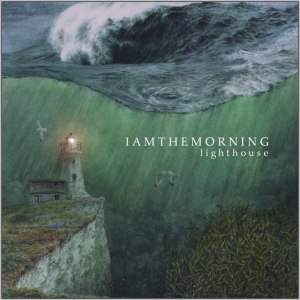
iamthemorning’s Lighthouse: Neoclassical Beauty

lighthouse_cover

Imagine, if you will, a world where Aerial-era Kate Bush, Dumbarton Oaks-era Igor Stravinsky, and Sketches of Spain-era Miles Davis got together to compose a song cycle. They might come up with something to rival iamthemorning’s new album, Lighthouse, but it’s doubtful.

A work of astonishing beauty, Lighthouse is also deeply moving. The songs chronicle a young woman’s struggle to overcome mental illness, and her ultimate surrender to it. Heavy stuff, but fortunately the gorgeous musical arrangements make Lighthouse a work worth returning to again and again. iamthemorning takes the listener on this journey through the use of neoclassical music, prog, and classic jazz. Most of the songs feature a full chamber orchestra, while others are buttressed by the talents of Gavin Harrison and Colin Edwin – Porcupine Tree’s rhythm section. Mariusz Duda, of Riverside and Lunatic Soul fame, lends his distinctive vocals to the album’s centerpiece, “Lighthouse”.

Of course, the true stars of Lighthouse are the members of iamthemorning, vocalist Marjana Semkina, and pianist Gleb Kolyadin. Semkina’s vocals are heartbreakingly beautiful, moving from peak to peak as the songs unfold. Kolyadin’s piano work is perfectly simpatico with Semkina’s singing, providing graceful accompaniment. On “Harmony”, he takes center stage, leading a sextet through a swinging instrumental.

The mood of the album flows from the somber overture of “I Came Before the Water, Pt. 1” through the melodic “Clear Clearer”, to the relatively upbeat “Harmony” and “Matches”, before descending again with “Belighted”. “Chalk and Coal”, in the words of Semkina, “represents the final twist of the album story-line, the final breakdown”. The first half of “Chalk and Coal” features the most straight-ahead rock of the album before the band seamlessly shifts into chamber jazz for the second half. “I Came Before the Water” returns, with Semkina, unaccompanied, singing of accepting defeat while a gradually swelling string chorus provides solace. The tender and brief “Post Scriptum” is a final elegy, and Lighthouse is over.

Even though the album is almost entirely acoustic, it packs an enormous punch. It is a work that is best experienced by listening to it in its entirety. Everything, from the cover art to the extraordinarily high level of musicianship, combine to create a tasteful and sophisticated work. This is music that transcends categorization; it is music that is timeless and evocative. iamthemorning have come up with an album that is destined to be a classic of modern music, regardless of the genre.


The Musical Momentum of Steven Wilson

stevenwilson_poland2007
Steven Wilson live with Porcupine Tree at Arena, Poznan, Poland. 28 November 2007. (Wikipedia)

John Kelman of AllAboutJazz.com has written an excellent piece about the trajectory of Steven Wilson’s career, intertwining details about Wilson’s music, career choices, and closest collaborators:

Continue reading “The Musical Momentum of Steven Wilson”

Chasing Light by Built for the Future

Built for the Future

A few weeks ago Facebook friend and prog-rocker jHimm (you can read my review of his debut album here) called my attention to a new band named Built for the Future. B4TF hails from San Antonio, Texas, and consists of only two members: Patric Farrell (all instruments, backing vocals), and Kenny Bissett (lead vocals). This dynamic duo released their debut album Chasing Light on July 28. They are supported by Dave Pena and Chris Benjamin on guitars and Imaya Farrell on cello/violin/viola. The album is dedicated to the late, great Chris Squire.

B4TF sound like a fusion of Yes, Porcupine Tree, and Spock’s Beard. Throw in some Tears for Fears, and I believe that impressive concoction comes closest to describing these alternative prog-rockers. At the end of the day, however, B4TF definitely maintain their own unique sound.

A concept album, Chasing Light is an exciting debut. These songs in particular stand out:

“Arrive” – the opening song bursts forth with energy, setting the tone for the rest of the album.

“Speed of the Climb” – as the title suggests, this piece is a thrilling, fast paced rocker that may remind one of Spock’s Beard.

“Build for the Future” – has a more somber feel to it; similar in sound to Porcupine Tree, but not quite as dark. The title alone suggests hope, and the possibility of a better tomorrow.

“Running Man” – features sensational distorted guitar work. My favorite song on the album.

“Samsara” – echoes of Yes with multilayered synths and acoustic guitars.

“The Great Escape” – the closer; stunning epic on an excellent album.

I am always pleased to find a new album to review, and I highly recommend this one. The influence of some of the best symphonic prog bands is evident, but Farrell and Bissett add their own touch to the album, and what emerges is a distinct style worthy of praise. For the best (and most succinct) description of the album, however, here is Patric Farrell himself:

 “This theme was inspired by true events in my life, and each song actually represents real feeling and escapism from that experience. Change in life is a big ordeal, looking for truths, looking for a better place, looking for light is all we can do when we are faced with such a turn.”

You can purchase the album here: https://builtforthefuture1.bandcamp.com/releases

Swinging On the Porcupine Tree

Harrison -Polygraph

Well, this is certainly a surprise! Gavin Harrison, drummer par excellence of Porcupine Tree, has recorded an album of reworked PT songs, and it is not what you would expect. Rather than stick to a rock format, Harrison has entirely re-imagined these songs as big band jazz performances. And you know what? It works!

The key to Cheating the Polygraph’s success is that these are not note-for-note reproductions of the originals, but rather soaring flights of swing that use the original melodies as jumping off points. Freeing Steven Wilson’s melodies (and very few can write a melody as seductive as he can) from the strictures of rock, Harrison and his band really stretch out and explore the implications of Wilson’s chords through the harmonies and rhythms of jazz. And this is jazz that goes way, way out there. If Duke Ellington were alive today, he would probably be making music like this.

According to Harrison, the songs he selected are his personal PT favorites, which is fascinating. They aren’t the obvious choices, and most come from relatively obscure sources: “What Happens Now?” and “Cheating the Polygraph” are from the Nil Recurring EP, “So Called Friend” and “Futile” are from Recordings II, “Mother and Child Divided” is off the Arriving Somewhere soundtrack, and “The Pills I’m Taking” is a section from “Anesthetize” that I have from a BBC Radio One Rock Show Session (it may be available elsewhere; I’m not an obsessive PT collector!). So for many casual PT fans, Cheating the Polygraph may be the first time to hear these tunes.

A standout performance is “Heart Attack In A Layby”, where the somber mood of Wilson’s original performance is preserved, but marimbas and bass clarinet add an exotic element that is simply beautiful. Another highlight is “The Pills I”m Taking” which Harrison transforms into a suspenseful brass blast that would be right at home as the theme song for a 1950s TV crime drama. “Hatesong/Halo” begins with a marimba workout that soon morphs into an edgy flute-led arrangement; it sounds like a long-lost Stravinksy composition. The transition from “Hatesong” to “Halo” is masterful; pairing those two songs into a suite brings out the best in both.

What about Harrison’s own performance? Well, when I first saw the DVD of Porcupine Tree’s Anesthetize concert, I posted a review on Amazon, stating, “For me, this production highlights how indispensable Gavin Harrison is to Porcupine Tree. His drumming is simply phenomenal. Despite PT being Steven Wilson’s baby, Gavin is the true star of this DVD.” On Cheating the Polygraph, he has not lost one bit of his drive and grace. Every song is built on the foundation of his propulsive percussion. Harrison remains a master of energetic cross-rhythmic drumming while never sounding “busy”. He is to rock what Tony Williams was to jazz – always pushing the boundaries of what percussionists can do.

Cheating the Polygraph may not be “rock”, but it is challenging and very satisfying music. In my book, that makes it prog, and excellent prog at that!

Here is a preview of the album; Kscope Music plans to release it on April 13th:

Update: I should have mentioned Gavin’s collaborator, Laurence Cottle, is responsible for the marvelous arrangements of these songs. Let’s hope their partnership is not a one-shot deal!


RochaNews: Gavin Harrison’s New Album

GAVIN HARRISON RE-IMAGINES PORCUPINE TREE TRACKS ON UPCOMING SOLO ALBUM “CHEATING THE POLYGRAPH” 

“Cheating the Polygraph” out April 14 on Kscope; teaser video posted online

ENGLAND – Gavin Harrison, drummer for British prog innovator, Porcupine Tree, has announced a brand new solo album of re-imagined songs from the acclaimed Porcupine Tree repertoire, Cheating the Polygraph, due out in North America on April 14 via Kscope (April 13 in the UK, April 17 in Germany, April 22 in Japan).

Cheating the Polygraph can be pre-ordered now through the Kscope web-store at: www.kscopemusic.com/store.
Cheating the Polygraph album trailer can be seen on YouTube at: https://www.youtube.com/watch?v=NJCPiNby-DY and Vimeo at: https://vimeo.com/117829686.

1. What Happens Now?

2. Sound of Muzak (So Called Friend)

3. Start of Something Beautiful

4. Heart Attack in a Lay-By (Creator had a Mastertape / Surfer)

5. Anaesthetize (The Pills I’m Taking)

6. Hatesong-Halo

7. Cheating the Polygraph (Mother & Child Divided)

8. Futile

Gavin Harrison currently finds himself working with British progressive rock group, King Crimson. His playing and performing résumé includes stints with artists as varied as Iggy Pop, Lewis Taylor, Manfred Mann and Kevin Ayers.

Cheating the Polygraph is an ambitious project which sees the restlessly creative Harrison re-imagine eight Porcupine Tree songs in a set of vivid and vibrant new arrangements that give full, free rein to his inquiring musical mind.

The tracks which comprise the album were recorded over a five-year period, with Harrison working in conjunction with a crew of some of the finest contemporary musicians, including the gifted saxophonist Nigel Hitchcock and bass player Laurence Cottle. It’s a set that will no doubt excite much controversy; Harrison’s use of the ‘Big Band’ musical sound stage isn’t some ersatz attempt to make a ‘Swing’ album; it’s closer in execution and arrangement to the innovative works of Frank Zappa and The Mothers of Invention – a layered, richly-textured selection that is both beautifully-recorded and incisively delivered.

“I think every album needs a focus – a master plan – and whilst I thought about writing new tunes for a big band project, I made a version of Porcupine Tree’s ‘Futile’ (with Laurence Cottle) and it came out really well,” commented Harrison. “It felt like a good plan to follow on with some of my personal favorite PT songs and see if we could make them work. I had a vision that the arrangements would never lean towards a clichéd classic big band sound, but always follow a modern contemporary angle. So even if you didn’t know the original tune, you could still enjoy it as a modern composition that would work with this instrumentation. I couldn’t be happier with the results. Laurence Cottle’s immense talent as a musician and arranger was mind blowing.”

No respecter of arbitrary musical pigeonholing, Harrison doesn’t so much ignore genre confines as smash right through them – Harrison states in his thoughtful liner notes: “It’s very important to me to push the boundaries of music whilst respecting what came before. In the arrangements of these pieces we really get ‘out there’ with some of the harmonies and rhythms, and we vastly extended the edges of the original compositions.”

Harrison also drops little musical depth bombs throughout by interpolating shards of melody and musical themes from other Porcupine Tree songs seamlessly into the musical patina of Cheating the Polygraph, which serve to underscore his frontiersman spirit; this is some of the most enthralling, engaging and challenging music you’ll hear in 2015, but there is also wit and charm in abundance here, too.
Stay tuned for more information on Gavin Harrison and Cheating the Polygraph, out this spring on Kscope.

Dark Nordic Lullabies

Review of Bjorn Riis, LULLABIES IN A CAR CRASH (Karisma Records, 2014).  52 minutes.  Six songs: A New Day; Stay Calm; Disappear; Out of Reach; The Chase; Lullaby in a Car Crash.

From Karisma Records.

Without a doubt, my favorite Porcupine Tree song is “Arriving Somewhere But Not Here.”  If you could take the best of that 12 minute song—its moodiness, its psychedelic atmosphere, its thundering bass and guitar, its surrealism—and expand it to 52 minutes in length, you’d have Riis’s solo album, LULLABIES IN A CAR CRASH.

Of course, you might also find yourself with a slightly less depressing version of Pink Floyd’s ANIMALS or THE FINAL CUT or a less religious and more nordic version of Talk Talk’s SPIRIT OF EDEN.

Whatever you’d have, you’d be listening to and holding something of intensity, struggle, and beauty.  LULLABIES couldn’t be any moodier, frankly.  In fact, if you’re feeling the holiday blues at all, don’t come near this album.  If, however, you’re in a good state of mind, in a darkened room, wearing your state-of-the-art headphones, and sipping a vodka-tonic, then you’re a blessed listener.  It won’t get better than this.

Indeed, this is the perfect early 1980s album, the type of album that you could (and probably will, even if you’re now in your 40s) listen to again and again and again, trying to immerse yourself in the very Riis-Hollis-Waters-Wilson atmosphere: thick, claustrophobic, and all-pervasive.

Bjorn Riis, having entered the Norse pantheon of prog deities.

No one can avoid comparing Riis’s work here or with Airbag to Floyd and PT.  Yet, there’s something distinctively Riis-ian, too.  This is no mere cover band.  By no means.  In large part, Riis brings three critical things to each of his albums: 1) a haunting vocal style; 2) the uncanny ability to allow his music to flow, organically, as did Mark Hollis; and 3) an outrageously fine sense of audiophilia.

Of course, has there been a misfire from any Scandinavian prog release since Roine Stolt’s mind-bogglingly good THE FLOWER KING?  Not that I know of.

Riis ably follows in this noble tradition.

To learn more, visit Riis’s official site: http://www.bjornriis.com/about/