Review: The Mercy Stone – Ghettoblaster

Ghettoblaster

There is music that I can’t relate to. Sometimes it’s because the song is plainly stupid, trite, or obnoxious that I just wish it would be sent into the sun. It’s like your friend who posts way too much personal stuff on Facebook, you just want to scream “Stop”. Then, there is an even more perverse music, a music that speaks like a man half-way through a Xanax withdrawal, a music that both baffles the mind and produces a near awkward laughter in the listener. This is the music of lunatics, music that I would say (in the most professional of instances of course) has gone “completely bananas”.

And here we are with just an album, The Mercy Stone’s debut experimentation Ghettoblaster. An album I am sure my closest friends are sick of hearing and hearing about in the last coupe of weeks, yet it took me some time to write about it because — life.

If you are someone who actually was alive to see the prog spectacle of the ‘70s you may remember the slightly nerdy King Crimson or even the lord dorkdom of the cape wearing Yes. While there are many genuinely cringe worthy moments from those bands nothing — and until I can be proven wrong I genuinely mean NOTHING compares to the awkward vibe you get from Ghettoblaster.

The Mercy Stone is a new project; it’s been around for a few years and was assembled by composer and guitarist Scott Grady — who has a master’s degree in music composition — and who assembled a 12-piece group to “to put his composition chops to work within a project that would have the substance and sophistication fitting for a contemporary-classical concert stage as well as the accessibility that would be palatable to rock audiences.” Going simply-said for an extraordinary amalgam of Classical Music, Jazz and Rock, the group presents a large body of work with their full-length debut Ghettoblaster. Large as in bringing together Stravinsky, Led Zeppelin, Nirvana, Radiohead, Bach, Nine Inch Nails, Pink Floyd, to name but a few.

The music on Ghettoblaster is very well composed and performed. Grady tends to pull together a strong cast of performers for his musical circus act. These fine tunes tend to be something to marvel at. It is this dichotomy that provides more of the head scratching moments. The album progresses in a peculiar, but fairly typical fashion during the majority of its run time. You might find the music endearing and charming as it blends rock, jazz, and classical qualities.

The ‘70s were a glorious period in music because people were getting paid way too much money to do all sorts of crazy projects, and even though some of the end results were complete disasters there was a sincerity to them. There was no sense of irony or pretentiousness in the attitudes of the musicians, they just wanted to make weird and complicated music. With Ghettoblaster, this ensemble does exactly that. The Mercy Stone are driven by the love of music, and it pays back — maybe not filling their pockets, but rather something on a higher, more spiritual level. Highly recommended.

Follow The Mercy Stone on Facebook.
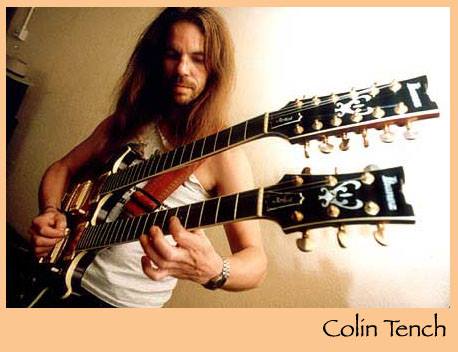
Colin Tench, RIP

Colin Tench
Taken from Tony Romero’s Facebook Page (hope you don’t mind, Tony!)


I just found that Colin Tench–Colin Tench Project, Corvus Stone, etc.–has passed away.  It looks like he died on December 29.  I didn’t know Colin personally, but when we founded  progarchy back in the fall of 2012, he was one of the first two or three major musicians to take us seriously.  I could not–nor would I–ever forget something like that.  When you’re just coming of age, it means everything to know that those you respect are willing to let you play in the playground.  And, not just tolerate your presence, but welcome you as an equals.

There are others at progarchy who could speak much better and more eloquently about his music, but it was clear to me that Colin valued his independence, having no time for conformity or uniformity or much of what passes as culture in our tapioca whirligig of a world.  He cared, first and foremost, about the art and about those who practiced the art and those who recognized the art for what it was.

I did have the privilege of emailing with Colin several times.  I found, even in our brief correspondence, that he was as hilarious as he was humble.  One of my favorite moments in being an editor at progarchy came when Colin sent us a review copy of CORVUS STONE II.  One look at the cover, and I replied, “Holy Moses, Colin, now I’m going to have to go to Confession!”  We both laughed at that over a couple of emails.

I have no idea what Colin’s religious beliefs (if any) were, but I pray that he is happy now, resting in peace eternal, or, perhaps, more given his nature, dancing and performing happily in peace eternal.  Earth’s loss is, to be sure, Heaven’s gain.

RIP, Colin.  You clearly did everything to use the outrageous gifts God gave you, not for yourself, but for the good of creation itself.  No one can do more in this fallen world.

Review: Heyoka’s Mirror – Loss of Contact with Reality

Heyoka's Mirror - Loss of Contact with Reality

Hailing from Calgary, Alberta in Canada, a progressive metal trio Heyoka’s Mirror has earlier this month launched their debut EP “Loss of Contact with Reality,” available as a name-your-price download and CD from Bandcamp.

“Loss of Contact with Reality” places Heyoka’s Mirror to the art-metal vanguard, but the three-song EP does find the band on surer footing from which to make their next leap forward. The last track in particular, “Chronovisor,” gets surprisingly good mileage from an unlikely source: melodic metal, maybe the least reputable of metal subgenres. It’s the metal niche that has least renounced the campy excesses of new-wave Brit metal a la Iron Maiden and Judas Priest, but it’s also the most melodic, its tell signs being clean-sung harmonies and dramatic synths that tend to blast out from behind the guitars. It turns out the style makes a good segue between the sections of “Chronovisor” that are rooted in math rock and those that are rooted in thrash metal, and the effectiveness with which Heyoka’s Mirror employs those soaring melodies suggests they may yet develop their own mutant pop sensibility.The first two songs are dynamic; they’re also wildly uneven, with very cool ideas alternating, often in rapid succession.

More than anything else, Heyoka’s Mirror is dependent on their ability to generate momentum here, by virtue of which they can keep listeners engaged in these unwieldy but ultimately rewarding compositions. By that standard, “Loss of Contact with Reality” is a success, though its true significance will be determined by how the band capitalizes on that momentum when they come up with their forthcoming full-length.

Damian Wilson and Adam Wakeman: KICKSTARTER

Hey Progarchists, a plea and an appeal.  Damian Wilson and Adam Wakeman have launched a Kickstarter pledge program.

Please, please, please support them.

The campaign lasts until February, and they’ve received about 30% of what they need at this point to complete and produce the album.

For those of you who might not know, these are the two who brought us the exceptional and outstanding [headspace] albums.  These guys are genius, and they very much deserve our support.

To support this project, please go here.


video-845281-h264_high.mp4

Some Neglected Music of 2017, Part I

By neglected, I don’t mean by the world.  I mean, by me.

In a few other posts, I have had the privilege of listing my top albums, in the order I loved them.  My 2017 list goes, from no. 10 to no. 1: Anathema, The Optimist; Bjorn Riis, Forever Comes to an End; My Tricksy Spirit; Ayreon, The Source; The Tangent, The Slow Rust of Forgotten Machinery; Cosmograf, Hay-Man Dreams; Glass Hammer, Untold Tales; Newspaperflyhunting, Wastelands; Dave Kerzner, Static; and Big Big Train, everything released in 2017!

There are, however, a number of great releases from the year that I simply did not have time to grasp fully or immerse myself in the way I think necessary to review properly.  None of this, however, should suggest–to my mind, at least–even a kind of lesser quality or second-hand citizenship in the world of Prog, or in the republican anarchy that is progarchy.

For what it’s worth, I thought each of the following extraordinary as well, and, I hope, when Kronos allows, time to embrace each in the way it deserves.

***

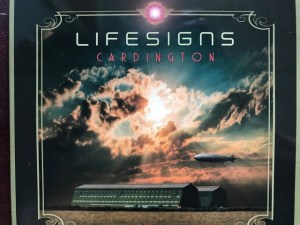
lifesigns cardingtonLifesigns, Cardington.  I think John Young is a treasure of a musician and composer, and I’m honored to travel this world at the same time as he.  Intelligence radiates from everything the man does, and, even better, it’s an intelligence utterly in the service of good things.  The first Lifesigns was a shock of joy to me.  This one as well, though I’ve just not had the time to dive into it.

When I listen to Lifesigns, I actually think of Young and the band as the anti-Radiohead guys.  Imagine the darkness of Radiohead and then do exactly the opposite, in terms of melody and lyrics.  And, you might arrive at Lifesigns. My favorite track on this new release is nine-plus minute “Different.”

Continue reading “Some Neglected Music of 2017, Part I”

Steven Wilson at TIC

Yesterday, I had the grand privilege of introducing the The American Conservative audience to the joys and delights of Big Big Train.  This morning, I’ve had an equal blessing in introducing Steven Wilson to The Imaginative Conservative audience.  It’s prog week in the Birzer house!  Then again, when isn’t it prog week in the Birzer house?

For this one, I focused on Wilson’s previous album, HAND.CANNOT.ERASE and explored the Christian humanist elements within it.

A huge thanks not only to Winston Elliott and Steve Klugewicz, masterful editors of The Imaginative Conservative, but to Stephen Humphries as well.  As some of you might very well know, there is no one in the world outside of Wilson himself who knows more about Wilson than Humphries does.

To read, please click here.

Screen Shot 2017-12-20 at 10.03.54 AM

Big Big Train at TAC

The kind and professional folks at The American Conservative have given me some space to spread my love for all things Big Big Train.

http://www.theamericanconservative.com/articles/an-ode-to-progressive-rock/

Screen Shot 2017-12-19 at 11.54.34 AM

SNOW by Spock’s Beard: Two Stories

Snow LIVE
From Radiant Records.

As I am sure is true for all of us, albums I love and cherish and listen to, repeatedly, carry with them fond personal memories.  For better or worse, almost every single Neal Morse album and Spock’s Beard album comes with a story, and usually more than one.  As I’ve mentioned on progarchy before, I’ll never forget the release of the first Spock’s Beard album, THE LIGHT.  Being a prog fan since as far back as I can remember, I had no idea about the arrival of neo-Prog in England, and I had to content myself in the early 1990s with jam bands such as Phish and jam pop bands such as the Dave Matthews Band to satisfy my not so easily satisfied prog desires.  I had purchased so many CDs and had had so many discussions with the manager of Tracks in Bloomington, Indiana, that she remained on the lookout for me.  Anything that even remotely smacked of prog, she let me know.  She rather gleefully handed me a copy of THE LIGHT when it first came out.  To say I was thrilled would be an understatement.  I was just plain elated, inserting that cd in the tray, putting on my Sennheizers, and falling into prog bliss, attempting to follow all the nuances of the album and to figure out all of the lyrics.  I mean really, who is the catfish man?

And, why did this guy with such a great voice have to cuss so much?

Continue reading “SNOW by Spock’s Beard: Two Stories”

Interview: Vladimir Agafonkin of Obiymy Doschu

Obiymy Doschu band

Ukrainian progressive rock outfit Obiymy Doschu has launched their new album entitled “Son” (Ukrainian for ‘dream’), and the band’s singer and songwriter Vladimir Agafonkin tells us about it, but also about the meaning of the band’s name, and more. You can read our review of the album here.

What made you go for the name Obiymu Doschu?

Obiymy Doschu means “Rain’s Embrace” in Ukrainian. This name reflects the melancholic, lyrical, autumnal feel of the music. At first, we wanted to use the English name, and write English lyrics, but eventually decided to write songs exclusively in Ukrainian. It’s an incredibly beautiful, mellow sounding language that fits this kind of music perfectly. Besides, we strive to write deep, meaningful poetry for our songs, and this wouldn’t be possible with a non-native language. It’s better to do your very best for a narrow audience than to be mediocre for a wider one.

How do you usually describe your music?

It’s a unique emotional blend of progressive rock with neoclassical, neofolk and post-rock elements, heartfelt Ukrainian lyrics and lush, beautiful string arrangements.

What is your writing process like?

It usually starts with a short musical idea, typically played on an acoustic guitar, which then very slowly expands and grows with new layers, details and meaning over many years — both as a result of individual writing and band member collaboration. We never rush the writing process. Most of the songs on our new album “Son” were perfected over a decade, with core song melodies and lyrics appearing first, and string arrangements last.

Who or what is your inspiration, if you have any?

Musically, we draw inspiration from modern progressive rock bands such as Opeth, Porcupine Tree, Anathema, from darker bands such as Katatonia and My Dying Bride, from neoclassical composers such as Max Richter, from unconventional bands such as Tenhi, The Gathering and Sigur Ros, but also from Ukrainian folk music. As for the meaning of our songs — we draw inspiration from everyday struggles we face as human beings, exploring basic feelings such as love, loneliness, compassion, regret, hope.

Obiymy Doschu - Son

What is your favourite piece on the new album “Son” and why?

Each and every song is my favorite piece — I can listen to them all over and over. But personally I’d like to highlight “Zemle moya myla” (“My dear land”), a love ode to my country. It holds a very important message and connects to me on a very deep level. Ukraine went through a lot of pain and struggle over the last few years, but many people still hope for the best and persevere, working on a better future, no matter what happens. We strive to be among them.

What makes “Son” different?

It’s rare for a rock band to put so much effort and care into music — we worked on it for 8 years, spent 2 years just recording it in 7 different studios, involved 15 musicians including a string quartet on most songs, and patiently worked extremely hard on it despite a very high risk of never reaching a sizable audience.

Today’s listeners tend to focus on easily digestible content, and writing long, conceptual, complex works such as Son is out of fashion. But we still do it because we deeply love what we do, and will continue despite all odds.

What should music lovers expect from “Son”?

It’s a complex, beautiful, emotive, meticulously crafted record with lots of wonderful melodies, great instrumentation and unique Ukrainian charm. We’ve put our souls into this album and it shows. Even if you don’t understand a word, give it a chance.

What kind of emotions would you like your audience to feel when they listen to your music?

We want them to feel connected to us. To feel that even in their deepest feelings, with all the pain they went through, they’re not alone, and there is always hope, and there is beauty.

OD

Which do you like most, life in the studio or on tour?

We don’t tour much. We’re not yet known enough to tour productively, and for Ukrainian bands, it’s usually strongly unprofitable and also draining. It’s also not easy to organize — everyone in the band has day jobs and families to take care of. But we try our best to turn the rare concerts we do into unforgettable experiences.

The studio process is very different, but it’s incredibly rewarding and enjoyable — when you see the songs you wrote slowly gaining shape with the help of many talented musicians and engineers, when the songs start to come together, it’s such a joy. You feel like those are the moments that are worth living for.

Pick your three favourite albums that you would take on a desert island with you.

Some of my most beloved albums (many of them progressive rock/metal) are not meant to be listened to over and over again, but there are albums that you can listen to forever and never get tired. Those are the kinds I’d take on an island with me.

Death Cab for Cutie — Transatlantism

Sigur Rós — Ágætis byrjun

The Gathering — How to Measure a Planet?

For more information about Obiymy Doschu visit the band’s official website.

Review: Mosh – Unbreakable Wall

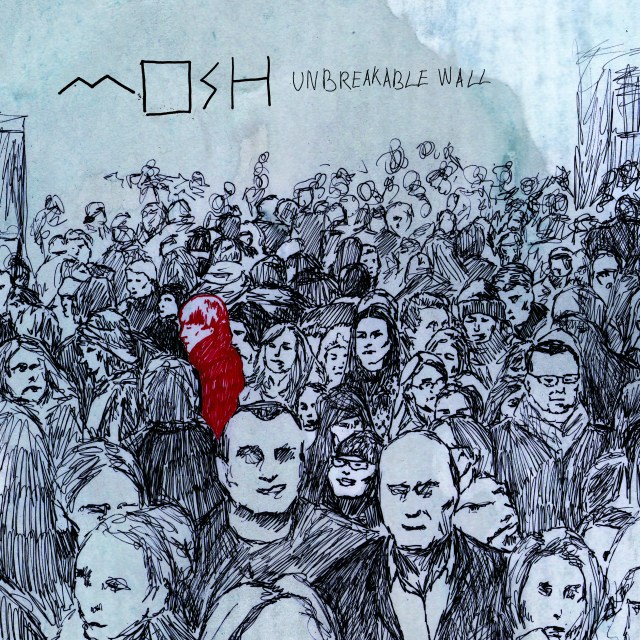
MOSH_AlbumArt_Square

“Unbreakable Wall” is a debut release from Mosh, an Israeli musician who “pours the human experience in all it’s rage, sadness, and happiness into his music as he explores universal themes of inner conflict, relationships with others and relationships with government.”

Speaking of the sound of “Unbreakable Wall,” it has a very solemn, jazzy feel that is brought some brightness in the form of Mosh’s vocal melodies. Due to amount of range Mosh possesses he is able to single handedly change the mood, or evoke some otherwise unseen emotion, in the various points of his songs. The effect of this is seen excellently on the track opening song “Keep on Moving,” where he begins the song with some low-register singing and then during the chorus he extends himself into a melody that would trip most vocal chords of the average rock singer. Throughout the song his constant change of singing, to all out bawling, to quiet talking makes the mood of the listener swing with the hymns. The instrumentation on the track and throughout the song is also superb and helps create the perfect backdrop for Mosh’s vocal expertise. Of special effect to this is the harmonica solo, courtesy of Roy Rieck.

Passionate performance on the lead single “Fish Us” sets the tone for the more mellow and emotional delivery both vocally and instrumentally, what tells about how far “Unbreakable Wall” goes when it comes to diversity. The mood of “All I’ve Got” is a fair bit optimistic than the previous song. The song has an acoustic guitar in it, and some other instruments. Mosh’s awesome voice shows in this song and his guitar abilites do as well. “One Way Out” is a mood-changer; stylistically it almost borders with the 1970s funk music; it comes with a catchy groove that makes it one of the highlights of the record. Warm vintage sound of electric piano in “You’ve Reached My Arms” and psychedelic vibe evolving around Mosh’s and Zoe Polanski’s vocals bring “Unbreakable Wall” to new heights. The instrumental work in “Save Me” serves as such a beautiful background for Mosh’s vocals, leading to some of his best performances on the album.

Overall, “Unbreakable Wall” is a pleasant listen, and perfect alternative rock offering from a musician that clearly knows what he wants to achieve.