
Who doesn’t love the work of Cailyn Lloyd? Incredible. Here’s a video from her 2012 album, FOUR PIECES. Stunning. Really stunning.
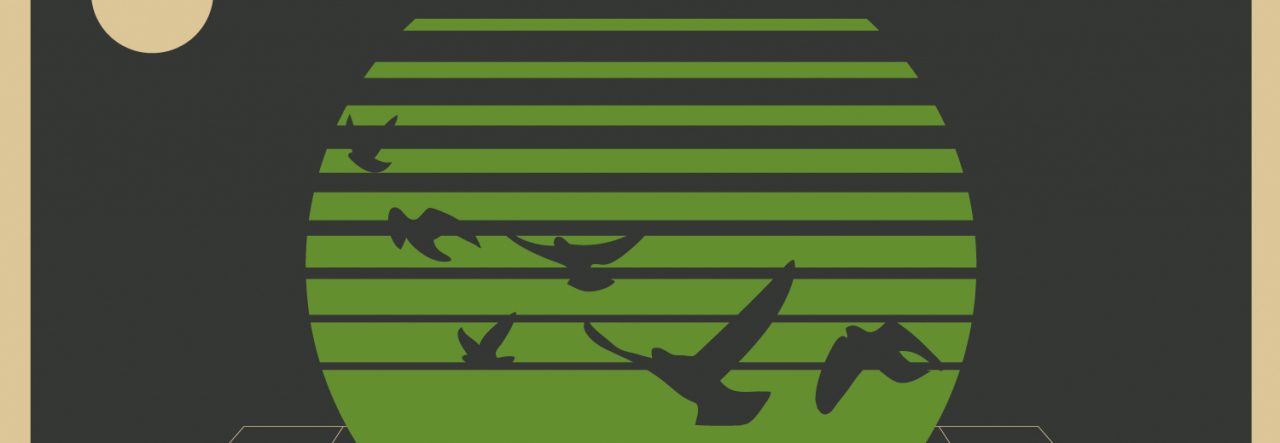
Who doesn’t love the work of Cailyn Lloyd? Incredible. Here’s a video from her 2012 album, FOUR PIECES. Stunning. Really stunning.
In part I of this review, I attempted–and I hope succeeded–in professing my respect for Genesis, 1978-1983, while admitting my disappointment in INVISIBLE TOUCH (1986) and my nearly complete ignorance of anything the band released after 1986. When Steve Hackett first introduces the [insert positive descriptive] Ray Wilson on one of the Genesis Revisited concerts, I had to google the guy. I had no idea who he was. This, for better or worse, probably tells you how little I know about Genesis’s later history. I also noted that there were a few good things about the documentary the BBC made a year or so ago, Genesis Together and Apart. Some of the questions, the footage, and the memories truly moved me. I’d never heard of one of the talking heads, but, frankly, they were pretty entertaining, and I enjoyed their enthusiasm.
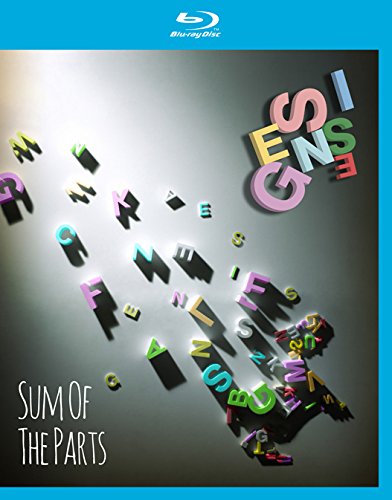
Overall, the BBC narrative just infuriated me.
Some smart guys meet in an elite school. They really like one another, except for Tony, whom everyone simply tolerates because of his talent. Oh, and when there is disagreement, Tony gets grumpy. Rather than backing down, everyone gives into Tony. His moodiness isn’t worth combatting. The friends write music that taps into nostalgia for pre-industrialized, Edwardian England. From there, they create complex, artful tunes and dress in funny costumes. Along for the ride comes some guy–who according to Tony–plays the guitar “stiffly” and another guy who plays the drums fiercely but who also smiles a lot and loves fun and gets along with everyone. Weirdo costume guy leaves the band and becomes happy, even writing a pop anthem. Stiff guitarist guy leaves the band and no one really cares one way or the other if he is happy or not.
Review of the documentary, Genesis: Together and Apart (BBC), Part I.
http://www.veoh.com/watch/v78665528YFza6yzt
As someone who grew up with Genesis in the 1970s and followed the band’s career very carefully until 1986, I found the most recent BBC documentary, Genesis: Together and Apart (2014 or 2015–I’ve seen both dates listed for its copyright), a serious disappointment.
Not that there weren’t some fine moments in the film. There most certainly were. Some great conversations? Yes. Some great scenes? Absolutely.
But, overall, watching the documentary made me feel as though I’d entered a de Tocquevillian nightmare. What is common becomes what is great in this story. Indeed, the documentary argues that it’s best to take one’s highest art and pander some low form to the masses, mediated by corporate marketers and profit-grubbing labels.
And, please don’t get me wrong. I’m not such a snob that I don’t enjoy post-Hackett Genesis. I do. I still consider ABACAB (1981) a great art-rock album. For me, there’s not a dud on the album, and it has never grown stale for me. While I don’t listen to it as much as I do MOVING PICTURES, which also came out that year, I listen to it constantly and have for 35 years.
I don’t have a problem with GENESIS (1983), either. While there’s a song or two on the album that does nothing for me, I still find “Mama” quite haunting and “Home by the Sea” outstanding. And, as much as Genesis fans mock “The Silver Rainbow” as sophomoric, I think it’s quite endearing, having captured the mystery (and clumsiness) of a moment of love quite accurately.
Continue reading “Celebrating Mediocrity as Success: Genesis Together and Apart”
Four progarchists have now weighed in on the matter of Dream Theater’s new release, THE ASTONISHING. For your convenience, here are links to each four. Enjoy.
The opposition
Chris: https://progarchy.com/2016/02/12/the-astonishing-pile-of-crap-from-dream-theater/
The defense
Kevin: https://progarchy.com/2016/02/11/they-cant-stop-thinking-big-dream-theaters-the-astonishing/
Brad: https://progarchy.com/2016/02/10/astonished-dream-theaters-complex-audacity/
 RUSSIAN PROGRESSIVE DUO IAMTHEMORNING ANNOUNCES NEW ALBUM “LIGHTHOUSE” FEAT. GUESTS GAVIN HARRISON (PORCUPINE TREE, KING CRIMSON), COLIN EDWIN (PORCUPINE TREE) & MARIUSZ DUDA (RIVERSIDE, LUNATIC SOUL), MIXED BY MARCEL VAN LIMBEEK (TORI AMOS).
“Lighthouse” out April 1 on Kscope
|
 RUSSIA – Kscope will release the brand new studio album Lighthouse from Russian progressive duo iamthemorning on April 1 (June 3 in France). Lighthouse is the follow up to the band’s 2014 album Belighted. Lighthouse will be released on CD, LP (with MP3 download code) and digitally.
Formed in 2010 in St Petersburg, Russia, iamthemorning features pianist Gleb Kolyadin and the charismatic vocals of Marjana Semkina. The band self-released its debut album in 2012 before signing to Kscope and releasing Belighted, its first record for the label in September 2014. In 2015 the duo toured Europe with labels mates, the art-progressive outfit, Gazpacho.
As with Belighted, the engineering and mixing on Lighthouse is handled by Marcel van Limbeek (Tori Amos) and self-produced by Gleb and Marjana. The album also features guest musicians Gavin Harrison (Porcupine Tree, King Crimson) on drums, Colin Edwin (Porcupine Tree) on bass and additional vocals on the album’s title track by Mariusz Duda (Lunatic Soul, Riverside).
Lighthouse is a rich and eclectic album with echoes of classical music, the Canterbury scene, northern folk, jazz and electronic sounds. Featuring a story of the progression of mental illness, the album takes the listener through the stages with the story’s central character, her attempts to fight it, and temporal remission leading to a final breakdown. Lyrically, the works and lives of Virginia Woolf and Sylvia Plath inspire the album.
Recorded across London, Moscow & St Petersburg, the core instrument of the band, the grand piano, was recorded in Mosfilm Studios Moscow, one of the largest and oldest studios in Russia. Founded in 1920, Mosfilm is renowned for recording orchestras for soundtracks for the most famous Soviet-era films, including works by Tarkovsky and Eisenstein.
The album artwork for Lighthouse was created by watercolor artist Constantine Nagishkin who the band has previously collaborated with before.
 1. I Came Before the Water (pt. I)
2. Too Many Years
3. Clear Clearer
4. Sleeping Pills
5. Libretto Horror
6. Lighthouse (feat. Mariusz Duda)
7. Harmony
8. Matches
9. Belighted
10. Chalk and Coal
11. I Came Before the Water (pt. II)
12. Post Scriptum
Stay tuned for more information on iamthemorning and Lighthouse, out this spring on Kscope.
-###-
|
|
iamthemorning is:
Marjana Semkina – vocals
Gleb Kolyadin – grand piano, keyboards
iamthemorning online:
|
In a time when attention spans are such that some artists are abandoning album-length efforts in favor of EPs – or even releasing one or two songs at a time – Dream Theater decided to double down with a 34-track, two-hour play set to their brand of heavy, progressive rock with “The Astonishing.”
Such an effort almost demands that a willing listener block out all distractions, don a pair of headphones, and, with the lyric sheet in hand, attempt to make sense of this massive body of music that Dream Theater created on this, their 13th studio album, in one shot.

They surely deserve our attention. Since forming in the mid-1980’s and finding commercial success with “Images And Words” in the early 90’s, the group’s formidable talent pool – no matter who has left or subsequently joined – at times almost seems unfair to other bands in the genre.
Think you have a singer? James LaBrie’s voice and operatic training makes him better prepared to execute the demands of a progressive rock/metal group than most others. Think your prog band boasts the best keyboardist, bass player, guitar player, or drummer around? Sorry, but your band is outmatched at every position by Jordan Rudess, John Myung, John Petrucci, and Mike Mangini – four of the most talented people to ever play their respective instruments. That’s not to say that there aren’t other prog groups making wonderful music on par with Dream Theater – we all know that’s untrue – but there aren’t too many bands out there with the collective ability to play nearly anything they can conceptualize, which makes Dream Theater impossible to ignore.
I began this column shortly after the release of “The Astonishing,” but it was clear that after a thousand or so words (with tons more to type before even wrapping up Act I), the review was far more a commentary on each track and how it moved the story along than a review of the album….such is the effort to write about such a huge amount of music! Additionally, the sheer amount of distractions that come with family and work matters was such that I just couldn’t give “The Astonishing” full and repeated listens, so I’ve had to break up the album into “acts within acts” to get through it.
The album begins in predictable epic form with an overture containing melodies and themes we’ll no doubt hear throughout this play, but once we hear from LaBrie for the first time on “The Gift of Music,” the album steers towards the realm of theater. All of the band members deserve props for dialing back the shredding – or at least strategically picking their spots – in favor of keeping focus squarely on the story.
That story, which is well covered in reviews elsewhere and on the band’s website, represents quite a challenge for LaBrie as he not only sings over much of this album but inhabits the characters as he goes.
And make no mistake: “The Astonishing” is James LaBrie’s tour de force. By virtue of this being a play set to music, LaBrie simply owns this album from start to finish, displaying his full, dynamic range of vocal ability. I don’t envy the task of him trying to pull this all off in a live setting, but we have his brilliant performance committed to a recording that will endure well after the tour ends.
As for the individual pieces, “The Gift Of Music” is a classic DT rock track in the vein of the more song-oriented material heard on their previous release. “When Your Time Has Come” has to be one of DT’s most accessible tracks ever written, certainly on par with a track like “Another Day” from “Images And Words.” This album boasts more piano-oriented ballads than anything the band has done prior, but Rudess’ piano playing is divine on this album. In and around some tracks are musical interludes that take the music from merely supporting the story to animating the story.
“A Life Left Behind” is a track unlike anything we’ve heard from Dream Theater before, the intro reminding me of something Kevin Gilbert might have written. The album’s penultimate track, “Our New World,” is a triumphant piece as the “The Astonishing” winds down. Because there is so much music to absorb, repeated listens will undoubtedly bring other favorite tracks to the fore.
The mix on “The Astonishing” is much the same as on their previous two albums, which is that “rich piece of chocolate cake” that Petrucci talked about when referring to his guitar tone on the last album. It’s a huge slab of ear candy to this listener, but I can understand those who criticize the overall tone as being too polished – it’s a slick-sounding album, no doubt about it – but I bet fans will feel different when this album is performed live.
“The Astonishing” is, quite simply, an intense, overwhelming effort, and Petrucci is to be commended for hatching an idea of this scope and getting the other band members on board with it. For the listener, the adjectives noted above are pretty much the same, which makes the album a bit daunting when it comes to casual listening. Since “The Astonishing” was released, I’ve paused to ask myself during morning and evening commutes if I really want to dive into the experience of this album or would I rather listen to something that can be consumed from start to finish in a shorter span.
Because of this, and drawing upon past experiences, I’ve decided not to try to rank “The Astonishing” alongside the rest of the Dream Theater discography, simply because it’s sheer scope sets it apart from everything else. I have the same feeling about Spock’s Beard’s “Snow” or Saga’s “Generation 13” – whether or not I like those albums, I feel like it’s unfair to judge those albums alongside the rest of the bands’ respective output – albums of this scale simply stand alone.
Whether or not one fully embraces the story may determine the emotional attachment one will have to “The Astonishing.” While the music is spine-tingling wonderful in many places, for me it doesn’t quite touch the emotional nerve of, say, the title track to
Six Degrees of Inner Turbulence” – the first time a piece of Dream Theater music reduced me to tears – but there is still plenty to enjoy about “The Astonishing,” and there’s no doubt that additional listens will reveal additional layers to this ambitious effort…
…and isn’t that what great, progressive rock is about?
Bravo, boys!
Dream Theater, The Astonishing (Roadrunner, 2016). Double CD, too many tracks to list!
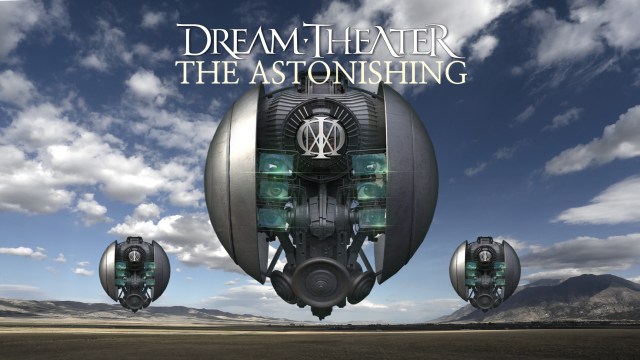
Has there been a progressive rock or metal release more divisive over the last several years than Dream Theater’s most recent, THE ASTONISHING?
If so, I can’t think of it.
As I look over the internet, I see lots and lots of ripping of the new DT album. The most common complaint is that DT has no business trying to write such a story, presumably—at least as I’m reading the arguments—because it’s akin to a young adult dystopian novel so prominently displayed in your local Barnes and Noble.
Well, I have no such problem with the album.
In fact, I think that for attempt and audacity alone, Petrucci and Rudess deserve immense accolades. The scope of the album is simply astounding. And, well . . . astonishing. This is the first concept album DT has attempted since 1999’s METROPOLIS: SCENES FROM A MEMORY. In form, however, it has far more in common with the recent work of Arjen Anthony Lucassen (Aryeon) than it it does with anyone else in the music world right now.
This isn’t just prog, this is theater.
I will rather openly admit that the first listening to the album made me dizzy. I don’t mean this in any metaphorical or symbolic way. I was actually—physically—dizzy and disoriented after listening to disk one. I had to put THE UNDERFALL YARD on to calm me down and get my bearings. No exaggeration.
In a private note to the editors of progarchy, progarchist editor Chris Morrissey admitted to having had the exact same reaction to THE ASTONISHING, though he had no way of knowing of my reaction. He, too, put on some Big Big Train to calm himself down.
How weird is this!?!?! I guess Chris and I really are brothers, though we’ve never actually met in person.
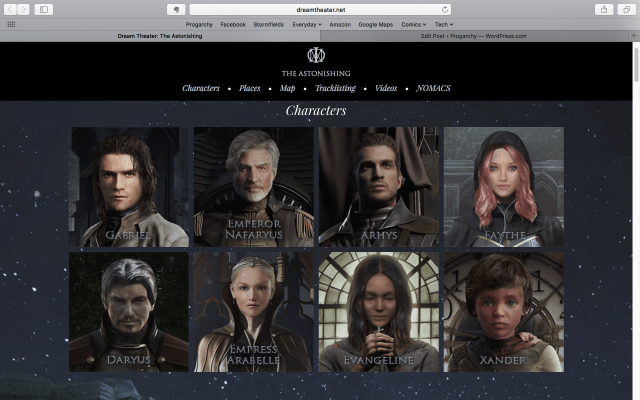
Without putting words into the mouths of the guys in Dream Theater, let me just state: this is NOT a young adult dystopian story as much as it is a (mostly-Christian) fairy tale. The names of the characters—Nefaryous, Gabriel, and Faythe—following fairy tale convention, allow the participant and listener to know immediately who is good and who is evil. Unlike in most fairy tales, however, Petrucci and Rudess’s story takes place in the not-too-distant future in the northeastern part of what is now the United States. One of the characters is Evangeline, and the illustration of her reveals a wholesome young woman holding—rather explicitly—a Christian cross. Regardless, the future of this part of America involves both medieval cultural conventions and extremely advanced technology.
I won’t retell the whole story, as it’s a crucial part of the enjoyment of THE ASTONISHING. I know Petrucci and Rudess have asked listeners to take in the whole album in one listening, but, frankly, as much as I enjoy the album, I find this impossible to do. There is simply too much going on in THE ASTONISHING for me to take it all in in one sitting.
It will be fascinating to see what the band does on tour and what the future holds in store for this story of THE ASTONISHING. Much like 2112 and CLOCKWORK ANGELS, THE ASTONISHING’s potential for novels, comics, movies, a tv-series, and video games coming out is unlimited.
And, since progarchy.com is a website devoted to the beauty of music, let me just state, every member of Dream Theater plays his heart out on this album. The musicianship is, as always, simply impeccable and breathtaking. No one, however, impresses me as much on this album (in terms of performance, not writing) as James LaBrie. I’ve always thoroughly enjoyed his vocals, but on THE ASTONISHING he reveals exactly why he’s one of the best voices in rock.
How many times will I go back to THE ASTONISHING? It depends. A lot rests on what the band does with the album as mentioned above, especially in terms of spreading into other media. When I’m in a DT mood, I probably will still pop on OCTAVARIUM before I put on THE ASTONISHING. Not because I think one is better than the other, but because it’s more digestible. At least for now.
Regardless, I do know this–Dream Theater has, after a quarter of a century, finally and truly lived up to its name.
A quick note about the new Dream Theater and the reviews I’ve read this far. Well, two notes.
First, THE ASTONISHING is one of the most ambitious undertakings for an album I have ever seen. Not just the music, but the story and everything that accompanies the story. For attempt alone, DT deserves the highest marks possible.
Second, I’ve seen a lot of reviews mock the story as “Young Adult” and ridiculous. Yes, names such as Faythe and Gabriel and Emperor Nayfarius are pretty obvious. But, more so than Darth Vader (Dark Invader) ?
Come on, folks, this form of naming is a fairy-tale convention, and it has been for centuries. It gives us an immediate knowledge of who is good and who is bad, who wears the white hat and who wears the black hat. If you want to make fun of the band for this, you’re welcome to, of course, but you’re making fun of one of the longest-lived literary conventions in western civilization.
I’ll have a full review of this album after I’ve had more time to listen to it, but thus far I’m just amazed at the scope of it all. What a treat.
Galahad is a band that knows where it’s been, where it is, and where it’s going. I love this. But, then, I love Galahad. And, so should you.
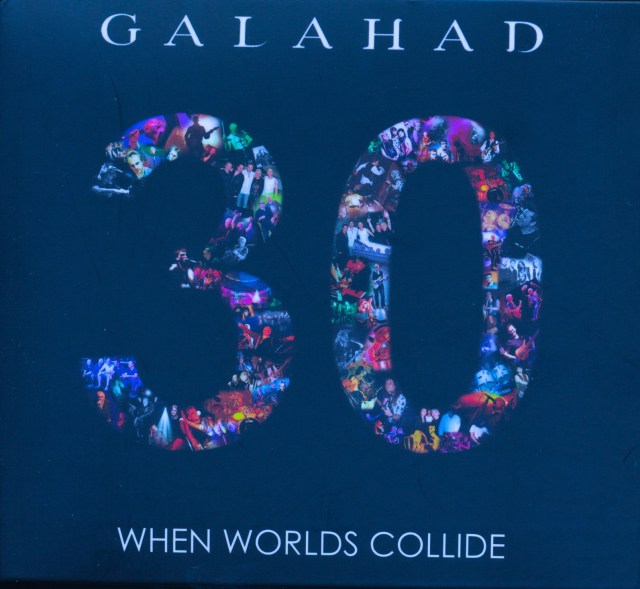
For the latest release, When Worlds Collide, Galahad has re-recorded a number of its older tracks and meshed them with the more recent ones in a wonderful and engaging two-volume set. In existence now for thirty-one years and with most of its original members still members (amazing; can you imagine saying the same thing about, say, Yes?), Galahad is neither shy nor cocky, just happily content. They never wanted to be rock stars, puppets of some record label, or the playthings of some marketing firm.
They just want to be Galahad. And they do it with such grace. That grace finds its way into their lyrics, their music, and their very presentation. If you forced me to make a comparison of the band, I would suggest imagining Peter Gabriel and Tony Levin playing with Ultravox and then progging it up to 11.
Here are the tracks and the dates (original and re-recorded):
CD1
CD2
As is obvious from the above track list and the accompanying dates of original recording and the re-recording, the band has been re-creating its sound for years now. All to the good. Even the older tracks—regarded as “neo-prog” by the press at their release feel much more dynamic and more “Galahadian.” Just as a test, I played several of these tracks—all from different releases—in succession to get a feel for just how different When Worlds Collide. The audio quality is simply amazing. It always has been, but with all of its confidence and just pride in being in existence for over three decades, Nicholson and Co. give us everything they have with When Worlds Collide.

Sadly, I didn’t encounter the music of Galahad until Lady Alison introduced the band to me in 2012. Since then, I’ve been hooked. I own the CDs, I own the authorized band biography, and I consider the lead singer, Stu, a friend and ally.
Whether you’ve loved the band for thirty-one years or if you’re reading about them for the very first time right here, right now, do yourself a huge favor: purchase When Worlds Collide. It’s a delight for the ear, the mind, and the soul.
Remember YesYears? It was one of the first really nice box sets to come out, back in the day when the only nice box set was that Bruce Springsteen one that had come out in the late 1980s?
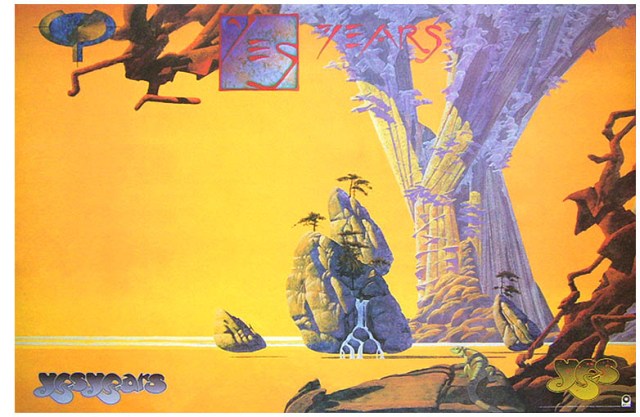
YesYears came out on August 6, 1991. Union had come out at the very end of April that same year. Unless you were really connected to the internet (not that easy in 1991), Yes fans just had to guess as to what was going on that summer with the band. Was Yes really an eight-person band? And, how long would that last? YesYears seemed to present the eight as living in harmony with one another. After all, while the four discs did not include anything from Anderson Bruford Wakeman and Howe, it did list them as a part of the really nice fold-out sleeve, tracing every aspect of Yes history from “The Warriors” to Yes incarnation #9.
Whether real or not, the packaging of YesYears certainly makes a coherent narrative of the band and everyone of its members from Alpha to. . . well, certainly not Omega! Yes was alive! Or, so it seemed.
At the time that YesYears came out, I was very poor (a second-year graduate student) and still listening to cassette tapes. Despite the expense of the YesYears box set, I purchased the four-cassette package. And, yes, it made a deep cut in my savings account. Those were years when I would skimp on lunch (usually not even eating one) to spend the money on music or books.
 And as far as I remember, I never regretted having bought that box set. Sadly, though, the cassettes that came with it were not of the best quality, and I wore my copies out rather quickly.
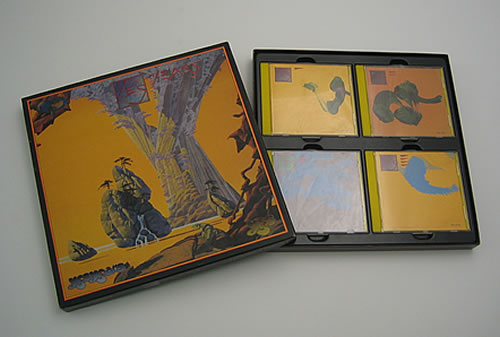
Jump forward two decades. Today, in the mail, all the way from an Ebay seller in New Jersey, arrived a mint condition 4-cd box set of YesYears.
Wow, it is a thing of beauty.
I know that many of the songs that had not been readily available in 1991–such as Abilene, Vevey, Run with the Fox–are now very easily available. Still, the 1991 box set is really, really gorgeous. I actually paid less for this mint condition version (including postage) than I did for the cassette version 25 years ago.
Just as in 1991, I have no regrets. The sun is out, my kids are laughing somewhere in the house, and I’m listening to disk three of YesYears.
Still amazingly beautiful. . . even a full quarter century later.
 Progarchy