TFATD, Spooky Action–Streaming Live and Legally

Enjoy Matt, Kev, and all of TFATD.

http://www.musicradar.com/news/guitars/exclusive-album-stream-the-fierce-the-dead-spooky-action-587116

And, from Matt and the guys today via email:


***

Listen to the whole album streaming at Total Guitar now!!

The new album ‘Spooky Action‘ is almost here, out on November 4th. However, we know you are an impatient bunch so you can now stream the whole album exclusively over at the Total Guitar Magazine website for the next 48 hours!

CLICK HERE TO LISTEN TO SPOOKY ACTION NOW!!

And you still have a little bit of time to pre-order the new album before it’s release date on November 4th and bag yourself a bonus live track, or a discounted CD/T-shirt bundle.

Digital pre-orders here:
http://music.badelephant.co.uk/album/spooky-action

CD and T-Shirt pre-orders here:
http://themerchdesk.com/shop/index.php?route=product/category&path=136_163

And another heads up – we will be appearing on Steve ‘Snooker’ Davis’ Interesting Alternative Show on Phoenix FM next monday. We’ll be celebrating ‘Spooky Action’ release day by picking our favourite music and chatting to Steve and Kavus. Will be much fun.

Get involved!


Kev, Matt, Stuart & Steve.

info@fierceandthedead.com
fierceandthedead.com
Spooky Action Pre-orders
fierceandthedead.bandcamp.com
twitter.com/tfatd
facebook.com/fierceandthedead
youtube.com/user/TFATD

Totally Unprofessional Video #3: Arjen Anthony Lucassen

Yesterday, Arjen released a new Ayreon album, The Theory of Everything.  I’ve not received my physical copy yet, but I was able to download the mp3s from amazon.

Stunning, stunning, stunning.

Here’s my quick and dirty video assessment.  See above inserted video.

Ave, Arjen!

TheoryOfEverything

Video: Andy Tillison Downloads

Available at thetangent.org.

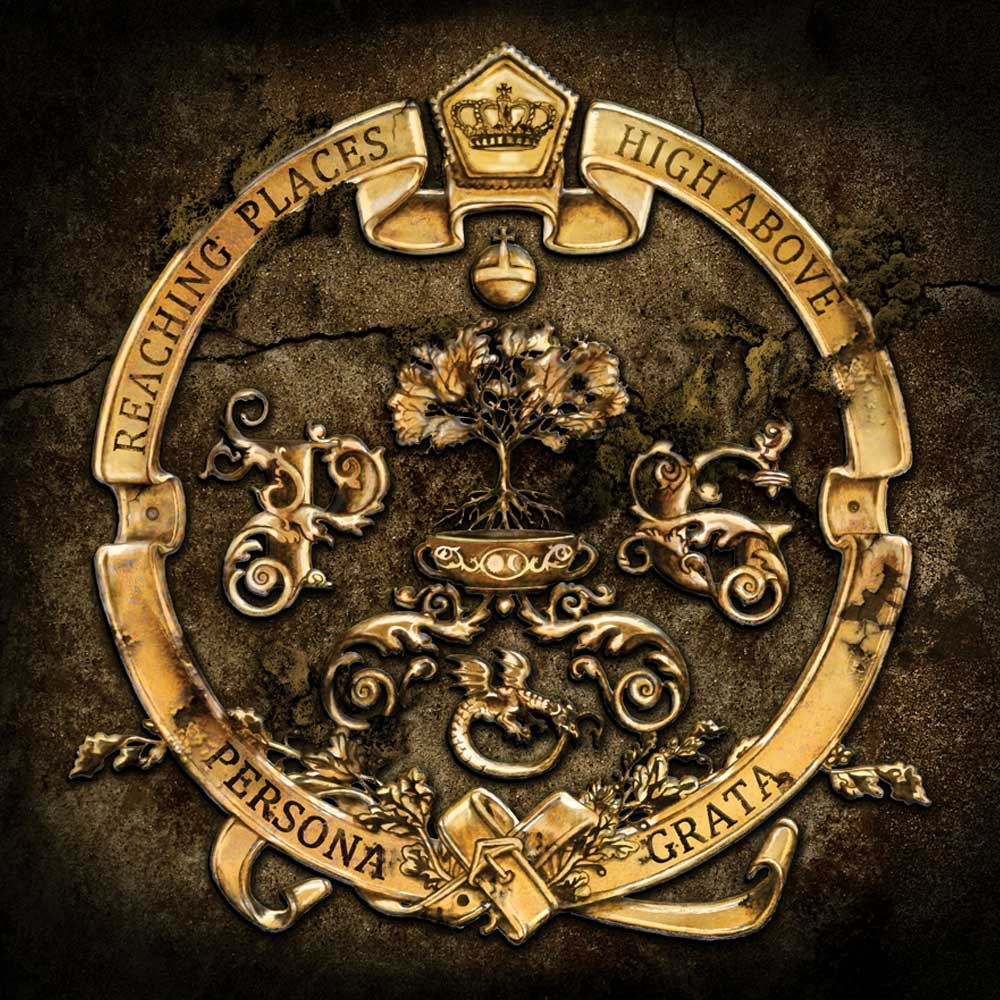
Scaling The Heights Of Heavy Prog – Persona Grata’s “Reaching Places High Above”

Reaching Places High Above

It’s probably a blessing and a curse that I tend to compartmentalize progressive rock into sub-genres in order to sort out what I’m hearing.  It’s likely a blessing in terms of having “signposts” of historical reference when trying to determine where a band’s music fits within the prog category, but perhaps a curse that I feel the need to shoehorn the band and music into a sub-genre in the first place, for we all know that progressive music rarely fits neatly into one “slot.”

No matter the reasoning, let’s just say that the Slovak proggers Persona Grata surprised the heck out of me with their new release, “Reaching Places High Above,” which for this prog fan fits nicely into the sub-genre where Dream Theater camps out – one that I’ll call “heavy prog” – and made this album an absolute pleasure to listen to.

“Reaching Places High Above” is at times aggressive, intricate, mellow, adventurous, and dynamic, but always progressive in scope, and a delight to listen to. Sound a bit like Dream Theater there?

It should. Listeners will be treated to a group that, like DT, fires on all cylinders with tight songwriting and arrangements, along with the technical prowess that easily puts them in a league with top-tier prog bands.  It’s worth mentioning in advance that the album is produced and mixed wonderfully, which can’t always be said for up-and-coming groups. It’s a big plus.

“Ace” preps us for the places we’ll go with some airline samples and radio dial tuning, eventually morphing into the track’s intro.  Those who may not be a fan of the two vocal wails at the beginning, fear not – it’s not indicative of what’s exclusively in store from the vocals department; singer/guitarist Martin Stavrovsky has plenty of range and, unlike some capable of wailing in prog, he doesn’t loiter in the high register all that much. The band moves from section to section in rapid pace with plenty of playing that’ll impress anyone who fancies quite a bit of playing in their prog.  However, they steer clear of what sometimes turns people off about virtuosic prog – shredding for shredding’s sake. The band does a fine job of keeping the song in check thematically and the song seems over before it starts.

“Edge Of Insanity” brings things down a notch with an intro electric guitar and flute (man, the flute sure is back in prog, innit?), moving to a first verse that features a lovely male/female harmony verse. The band then crescendoes with layers of aggressiveness for the next set of verses before heading back to the harmony vocals of the first verse. However, dust never settles on Persona Grata, for the prog returns almost as quickly, building to a heavy section of soloing.  Halfway though the track, the band pulls back to a section of acoustic guitar, flute and synth that brings us back to the feel of a couple of the early verses. They build back up to full-tilt, heavy prog, but seeing the bigger picture of arrangement, they bring it back down to reprise the intro.  Fab track.

The band then takes us on a three-instrumental, cross continental-themed musical journey starting with the brief “Istanbul,” which calls to mind elements of DT’s “Home” with sitar/guitar playing over a Tool-esque drum pattern. We’re then taken aboard the “Orient Express,” full of twists and turns in the vein of “The Dance Of Eternity” at nearly 10 minutes in length, then the band brings things to a close with the concluding “Venice” piece, done on harpsichord.

The album’s epic ender, “I Am You,” has an ambient start, then sees the band floating over an intricate, 5/4 piano part, then moving to a heavy yet cinematic feel that’s all ear candy.  Again, the band has a great ear for arrangements, never bleeding a riff to death and flowing from one section to another naturally. The song’s halfway point sees the band put the brakes on the heaviness a la Frost*, giving way to plucked strings that build into a full instrumental section. The harpsichord from “Venice” is back for part of the section and after one more “drop out” to a quiet section, the band cranks up to a fever pitch, followed by the obligatory anthemic finish, fading out to the ambient keyboards we heard at the beginning.

It seems like every year brings a surprise for me amidst the mass of prog releases; last year it was Big Big Train – truly a once-every-decade find for me – and this year has brought Persona Grata to the forefront of my new music listening.  Those bands certainly occupy two different sub-genres of prog, but neither lack in creativity. With “Reaching Places High Above,” Persona Grata have put themselves near the summit of the the heavy prog-rock peak.

More information: http://personagrataofficial.tumblr.com

A Perfect Introduction to Prog: 2003. Or, was it 2002?

fk fpWell, not quite perfect, but I probably got your attention.  I’m becoming a marketer!  Dear Lord.  Help us all.

For much of my life, friends have asked me to explain progressive rock to them.  A decade ago (Or so.  It might have been more than a decade ago–probably sometime around 2002, now that I think about it), I decided to start burning CDs as a way of introducing the genre.  This morning, as I was cleaning an area that should’ve been cleaned a while ago, I came across a copy of the CD.

For whatever reason, I entitled it “Regressive Rock, Part I.”  I must’ve thought that was pretty funny at the time, though I don’t remember exactly why.  I assume that I didn’t want my friends thinking that “progressive” had something to do with crazy right-wing nationalists (such as Teddy Roosevelt and Woodrow Wilson from a century ago; or President Bush of 2002).  In the United States, “progressive” often recalls horrifically embarrassing memories of slaughtering Indians, interning Japanese Americans, and treating African-Americans inhumanely.

Well, regardless.

As I was making Sunday brunch, I popped the CD in and found myself quite happy with the selections.  Here they are.  Let me know what you think.


***

1.  Flower Kings, “Deaf, Numb, and Blind”

Here’s my own appreciation of this song: https://progarchy.com/2012/11/17/mini-review-deaf-numb-and-blind/

2.   Genesis, “Squonk”

3.  Rush, “Natural Science”

4.  Pat Methany, “The Roots of Coincidence”

5.  Pink Floyd, “Echoes”

6.  Spock’s Beard, “At the End of the Day”

90125 at 30 – A Retrospective

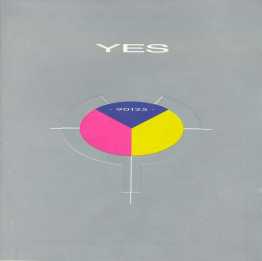
149178_f_1Thirty years ago this month, after being presumed dead in the wake of the ‘Drama’ album, Yes came roaring back into the music scene with ‘90125’.  Commercially, ‘90125’ was a spectacular success, yielding their only #1 single as well as several other staples for that era of rock radio.  ‘90125’ also brought in scores of new Yes fans, and became a gateway to progressive rock for many who were previously unaware.  However, with established Yes fans, ‘90125’ proved to be a lighting rod of controversy.

For some established fans, myself included, it was a joy to have Yes back as an active band, even if their new album wasn’t a full-blown prog album.  But to many established fans, this music simply wasn’t Yes.

At the center of the controversy was the new guitarist,  Trevor Rabin, who was the only Yes rookie on the album.  Rabin, while a fantastic talent in his own right, had significant stylistic differences with his predecessor, Steve Howe.  As a co-writer of every song on the new album, his imprint on the new music was larger than that of any other member.  And this music was a sharp departure from anything Yes had previously done.  Thus, with the membership change and the change in musical direction, many older fans declared “this is not Yes”.

So was it Yes?  Was it Yes save for the new guitarist?  And what to make of this strange new music (in Yes terms, anyway)?

Yes, it was definitely Yes

 A cursory examination of the membership makes it hard to declare the band that created ‘90125’ anything other than Yes.  Four of the five members on the album were Yes veterans.  Three of them – Jon Anderson, Chris Squire, and Tony Kaye – were original members of Yes.  The fourth, Alan White, had originally joined Yes more than a decade prior, and was firmly established in the band.  Calling the band Cinema, as they were before Anderson’s return, would have been odd, to say the least.  In fact, I’m willing to bet most of the “it’s not Yes” crowd would have said “well, it’s really just Yes” had they tried to get away with calling the band Cinema.  Four established Yes veterans with Jon Anderson on vocals is, for all intents and purposes, Yes.  And thus an album created by such a band is, for all intents and purposes, a Yes album.  When Anderson reconnected with Rick Wakeman, Steve Howe, and Bill Bruford in 1989, they may have called themselves Anderson, Bruford, Wakeman, and Howe for legal reasons, but everybody knew is was really just another incarnation of Yes.  Otherwise, why call the shows on your tour ‘An Evening of Yes Music Plus’?

One person who was decidedly a fan of the new band – Rabin himself – was also against calling it Yes.  I have sympathy for Rabin’s position, given that he took the brunt of the criticism from the established Yes fans.  Still, there was nothing else you could call this band, with four veterans in the lineup including Anderson on vocals.  It simply would not have been credible to call it anything else but Yes.  With a different vocalist – or with the pre-Anderson lineup, the Cinema name would have worked.  Once Anderson came on board, Yes was the only name that would do.  The band that did ‘90125’ was not Cinema.  It was Yes.  Yes with a new guitarist? Sure.  A Yes wherein the newest member had the most impact on his first recorded output with the band?  Undoubtedly.  But still Yes.  There is simply no other credible band name for the lineup that recorded ‘90125’.

 Musically?

Even with as radical a departure as this album was from its predecessors, it’s hard to think musically of ‘90125’ as anything other than a Yes album.  Certainly, it had a heaviness that was rarely heard on previous Yes albums.  The intro to ‘Owner of a Lonely Heart’ telegraphed early on that this was going to be a different kind of Yes music.  ‘Hold On’, ‘City of Love’, and ‘Changes’ produced more power chords than had been heard in any previous Yes album.  The music also had much more of a 80’s feel to it, and Tony Kaye’s description of it as sometimes being dimensionally sparse was fitting.

Still, there were more than a few common threads with previous Yes works.  And despite Anderson’s late entry into the project, there is no doubt that his creative impact on the final product was second only to Rabin’s.  No other song exemplifies this more than ‘It Can Happen’, in particular when the Cinema version is compared to the final Yes version.  The Cinema version of ‘It Can Happen’ appears, among other places, on disc 4 of the YesYears box set.  The lyrics on that version were those of a rather sappy love song.  Even keeping in mind that this is more or less a demo version, the music was relatively mundane.  In contrast, it is clear that Anderson had completely rewritten the lyrics by the time the final version was recorded. The rewritten lyrics have much more of the trademark cosmic mysticism that infuses so much of Anderson’s output.  Moreover, the music has much more in terms of ‘Yessy’ touches to it, beginning with the sitar intro.  If a Yes fan had entered a cave in 1979 and emerged in early 1984 to hear ‘It Can Happen’ on the radio, he or she might have concluded that Yes had never broken up or had gone through the turmoil of the intervening years.  The final version of ‘It Can Happen’ clearly sounds like a Yes song, and, 80’s production values notwithstanding.  It would not be out of place in the earlier Yes catalog.

Various vocal arrangements on the album also tie in nicely with Yes music past.  In ‘Hold On’, a multi-part harmony is sung on the verse that begins with “Talk the simple smile, such platonic eyes …”.  This bears a lot of similarity to the final chorus of “Does It Really Happen” (“time is the measure, before it’s begun …”) from ‘Drama’.  And of course, ‘Leave It’ is a vocal tour de force that begins with a huge five-part harmony that is unmistakably Yes (this was the second song I heard off of this album, and the one that told me “Yes is back!”).  In the previously mentioned ‘It Can Happen’, Anderson and Squire alternate on lead vocals, with Squire singing lead on those portions that serve as a transition from the verses to the chorus.  And finally, Anderson’s delivery on the album’s finale, ‘Hearts’, is not something that sounds unusual to the experienced Yes listener.

Other notable connections to previous Yes music includes the ebb and flow of ‘Hearts’, Squire’s bass work on ‘Our Song’ and ‘Cinema’, and the keyboard intro to ‘Changes.’  Had this lineup of musicians released these same songs under the guise of Cinema, I would have scratched my head and asked “why didn’t they just call themselves Yes?”, and I doubt I’m alone in that aspect.

What Rabin Brought to the Table

As we’ve already noted, ‘90125’ represented a significant shift in direction for the band, possibly more so than any other shift in their history.   And there is little doubt that much of that shift is due to the presence of Rabin.  It’s one thing to bring a new member into a band.  It’s quite another that the new member has such an outsized creative contribution to the finished product, and this was certainly the case on ‘90125’.Trevor+Rabin+rabin
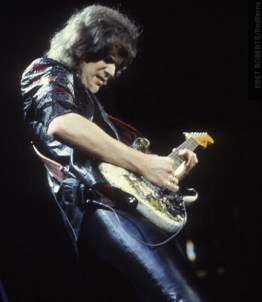
I’ll start out by saying that I like Howe’s guitar work better than Rabin’s.  In his book ‘Music of Yes’, Bill Martin described this difference perfectly, noting that Rabin divided his lead and rhythm guitar work in a fairly conventional manner, as opposed to Howe, who most decidedly did not.  As a prog fan, it shouldn’t be surprising that I prefer the unconventional to the conventional.  But that does not change the fact that Trevor Rabin is an exceptional guitarist in his own right.  Nor does it change the fact that Rabin brought certain things to the table that Howe did not.

One thing Rabin brought through his guitar playing was a much harder edge (or heaviness, if you prefer) than Howe ever did.  Much of ‘90125’ flat out rocks, as Rabin had a knack for delivering a bone-crushing power chord at precisely the right moment.  There were occasions on previous Yes releases where I wish Howe would have unleashed, one notable example being ‘Release, Release’ from the ‘Tormato’ album.  Listen to Shadow Gallery’s version of this song on the tribute album ‘Tales from Yesterday’, and you’ll probably understand what I mean.  Comparing live versions of ‘Owner of a Lonely Heart’ with Rabin to those done with Howe (sans Rabin) provide another demonstration of what I mean here.

The heaviness of Rabin’s guitar in Yes music was a good fit for its time and place.  Yes was not going to survive as a band by doing the epics of the 70’s.  They were going to survive by other means.  And while this did pull them closer to the mainstream, they never fully jumped into it the way their prog-rock peers Genesis did in the 80’s.  While Genesis largely ditched their progressive past to pursue top-40 hits, Yes under Rabin merely dipped their toes into the water a few times (with ‘Owner’ being the prime example on ‘91025’) while otherwise producing album-oriented rock that was just outside the mainstream.

Another of Rabin’s strengths was his capability as a multi-instrumentalist.  Although not known by many, Rabin did most of the keyboard work for the three albums that featured what we call the Yes-West lineup.  While he was no Rick Wakeman (but who is?), I am comfortable saying he was actually a better keyboard player than Kaye.  This stood out to me while listening to Rabin’s piano solo on the ‘Talk’ tour, in which he demonstrated a dexterity that Kaye never did during his time in Yes.  While ‘90125’ is more of a guitar-driven album to be sure, it does feature some interesting keyboard work, and the most interesting parts thereof were almost certainly played by Rabin.

However, where Rabin’s contribution to Yes really shines in comparison to Howe is in his abilities as a vocalist.  Rabin was much more than a merely capable lead vocalist.  With a rather smooth voice, he was indeed quite a good one.  This gave Yes a previously unknown vocal versatility which was used to great affect on songs like ‘Leave It’ and ‘Changes’, where he and Anderson take turns singing lead.  Rabin’s backing vocals on other songs like ‘It Can Happen’ added to the overall vocal picture in a synergistic manner.  And on harmony vocals?  Wow.  Rabin’s voice fit with those of Anderson and Squire so perfectly it’s almost frightening.  While I have no qualms saying Howe was a better guitarist, I similarly have no qualms saying that Rabin’s voice was a much better fit than Howe’s in harmonies with the voices of Anderson and Squire.  From a vocal standpoint, the version of ‘I’ve Seen All Good People’ that appears on ‘9012Live’ is far and away my favorite, as the harmonies of Rabin, Anderson, and Squire are very powerful.  Overall, the vocal dimension brought to Yes by Rabin infused the songs, both old and new, with an energy previously unknown to them.

When I look at the above and assess Rabin as a member of Yes, I can say two things for certain.  Number one, he fit into Yes in a manner much different than that of his predecessor.  Number two – he did so with virtual perfection given the time of his joining the band.

 The Final Verdict

 I’ll close out here by discussing two points that are seemingly contradictory.  The first is that ‘90125’ is not a progressive rock album, the second being that ‘90125’ is a very important album to the overall history of progressive rock.

I described ‘90125’ earlier in this piece as a work of album-oriented rock that was just outside the mainstream.  Indeed it’s hard to imagine any work which includes the creative imprint of Anderson being within the mainstream, and even the band’s big hit from this album was unconventional compared to other #1 singles.  The common threads with Yes music past as noted above also keep this album out of the mainstream of rock music.  In contrast, the hard rock playing of Rabin and simplification of the other instruments in the band (most notably, Squire’s bass on several songs) push ‘90125’ closer to the mainstream – and further away from prog – than any previous Yes album.

jjhODespite the direction of the music, ‘90125’ nevertheless earned its place as being an important album in prog history.  Due to its popularity, ‘90125’ literally brought millions of new fans to Yes.  Not all of these fans became progressive rockers, but many did.  It is not by any means uncommon to come across a prog rock fan who first came to the genre through Yes and ‘90125’.  I’ve met more than one fan who first became aware of Yes through this album, and subsequently took a liking to their back catalog.  The connections to the old music within ‘90125’ certainly helped in this aspect.  So too did their willingness to respect their past during their live shows by playing many of their 70’s classics, such as ‘Roundabout’, ‘Starship Trooper’, and the previously mentioned ‘I’ve Seen All Good People’, among others.  Contrast this with Genesis, whose 80’s music bore virtually no resemblance to their 70’s output, and who almost dismissively reduced their progressive past to nothing more than a medley during their live shows.

It is undeniable that ‘90125’ served as a catalyst for introducing a new generation of fans to progressive rock, even if it was not itself full-blown prog.  Moreover, it gave Yes a new (and rather long) lease on life.  Love it, hate it, or feel somewhere in between, ‘90125’ and the Yes lineup that created it are both owed a debt of gratitude for doing their part – no small one at that – in keeping the prog flame alive.  And therein lies the true, lasting impact of this controversial album.

In a Spirit of Gratitude: Andy Tillison offers even more. . . .

andy PO90

***

Andy writes the following at Facebook (here’s hoping he doesn’t mind me reposting here. . . .)

Pleased to announce number 2 in our Tangent Historical Artefacts Download Series. This time it’s a Po90 album – the very first one recorded in 1994-6. Apart from 30 home burned copies sold via the newly discovered “Information Super Highway” the album was subsequently released for a 500 copy limited run by Cyclops records AFTER the release of our Second album (Afterlifecycle). Like Porcupine Tree of the first couple of albums, Po90 was largely just one person.. in this case me. The album always included a 20 minute long BONUS track from the last days of GFDD which is the second version of the song “A Gap In The Night”. A Third version appeared on the Tangent’s album “The World We Drive Through”. This second version includes contributions from Guy Manning and Hugh Banton (VDGG) who recorded some organ for it (well actually there’s a story there.. he recorded it for ANOTHER song that we incorporated into this one) during rehearsals for a gig in Peterborough in the early 90s.

The album also includes a recording of the track we claim to have been the First Mp3 promotional file available for net download – “The Third Person”. The album is lyrical, very Tangent related and highly seminal to the rest of the dynasty’s output.

For the first time we’ve published a full set of lyrics with this album, the original 4 page cover plus all the new lyrics are included as a PDF virtual CD booklet and there’s a tray jpg if you wanna make the thing up. I’ve annotated the songs and written acouple of pages giving more info about the album. Hope some of you will go and see where what I’ve always seen as Chapter TWO started…

All funds we get from this are being ploughed into future projects (which includes tonight’s tea  ) and I hope those of you who get it enjoy it. Hint… Put the PDF onto a tablet/pad/phoney thing and browse it with the album! A nostalgic look back at the early days of the Third Wave…. And of course you get it at www.thetangent.org

Arrived at Progarchy HQ Today

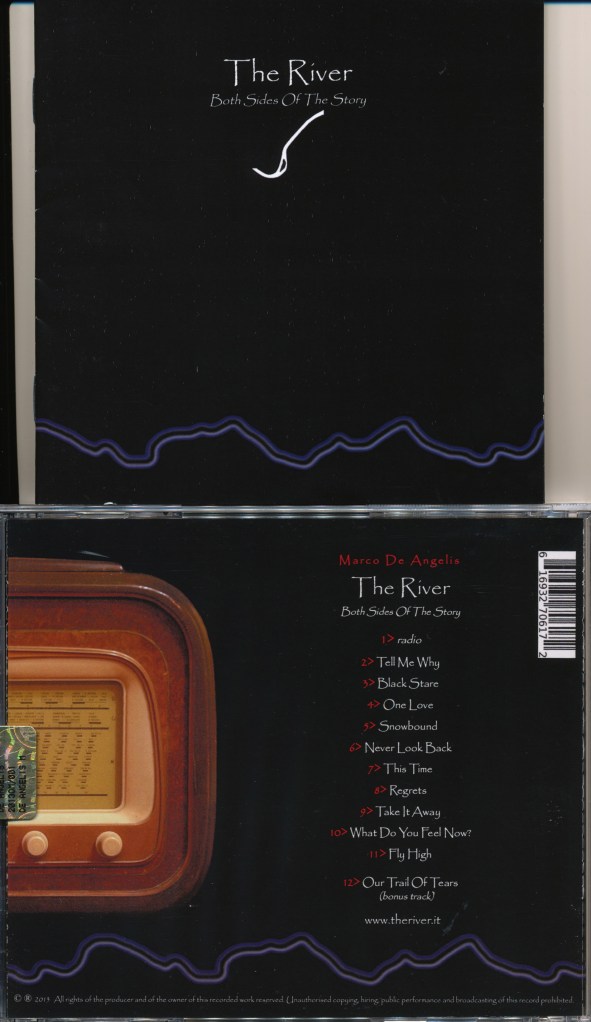
Two things arrived today, much to my happiness.  First, via post from Roma, Marco De Angelis, The River: Both Sides of the Story.  For more info on de Angelis, go here: http://www.marcodeangelis.com.

IMG
Marco De Angelis, The River (2013).


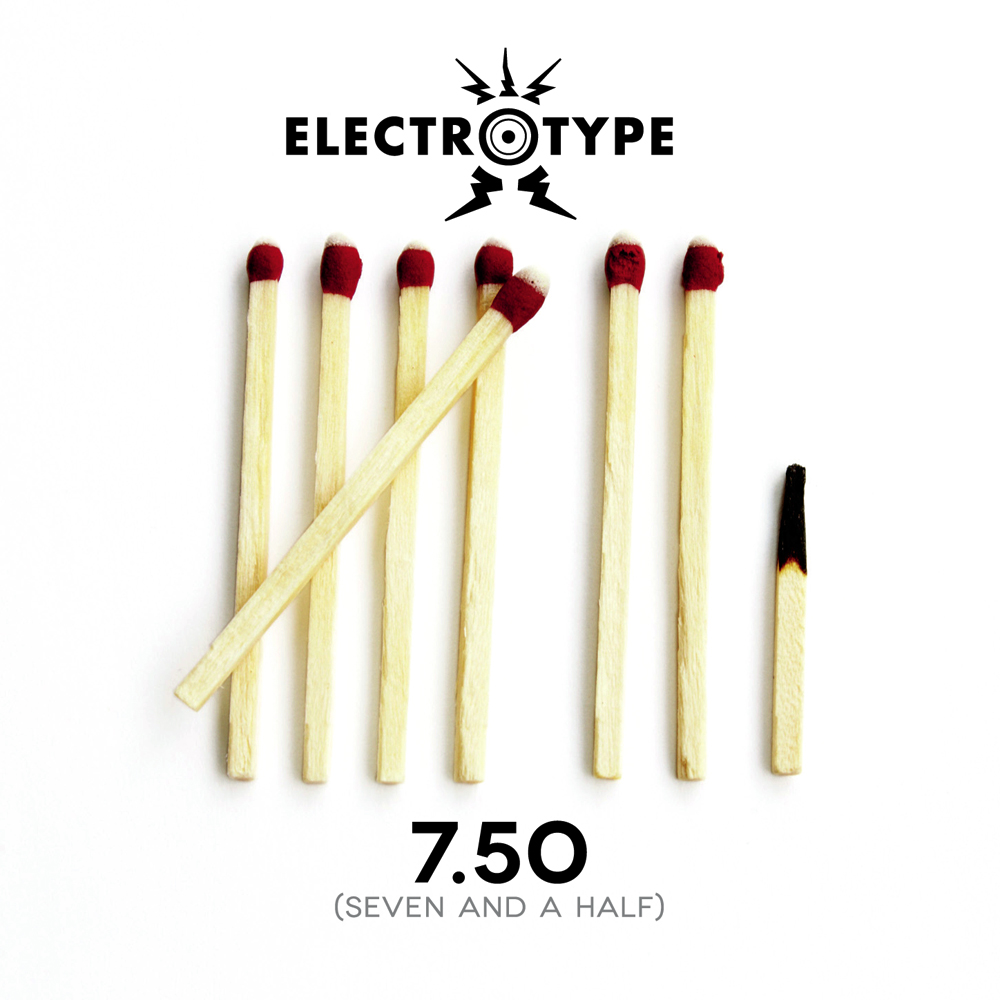
And, via the web, Electrotype, a one-person prog act.  That one person is Beth Maplesden.  She describes Electrotype as: “an independent art/prog rock uno based in the Philadelphia, PA area. The latest Electrotype EP, 7.50 (Seven and a Half), fuses art rock and alternative rock—New Prog and “old” prog with touches of garage, punk, metal, and grunge.”

The new album from Electrotype, 7.50.

Her website can be found here: http://www.electrotype.us/#top

Welcome to the Dark Side. Of the Flower Kings?

The Flower Kings have been an essential part of my life for the last thirteen years.  In 2000, one of my students (now, rather happily, a colleague) lent me his copy of Flower Power.  I’d never heard of the band up to that point, though I’ve been a progger since the age of 4, way back in 1972.

mediabook_cover_preview
Courtesy of Insideout Music.

I’d purchased my first Spock’s Beard album (their first as well) when it first came out in the fall of 1994, and I knew that Morse had been working with a Swede (all I knew about him) in a new a “supergroup,” Transatlantic.  I remember thinking, “Wow, this phase of progressive rock truly is mighty if it can have a ‘supergroup.’”

It’s almost humorous now to think there was a time when I didn’t know the work of Roine Stolt.  Through Stolt’s work, I found out about The Tangent.  And, really, life without The Flower Kings or The Tangent?  Too weird to even contemplate.

From the opening few notes of Flower Power, I was hooked.  I loved the packaging, the music, the dreaminess.  I immediately purchased the back catalogue of The Flower Kings, and I’ve since purchased every release upon its release date.  And, I’ve done the same with all of Stolt’s projects.  I was also lead, of course, to Tom Bodin’s solo work, Agents of Mercy, Kaipa, and Karmakanic.

Be ware, gentle reader, the rabbit hole into the world of Swedish Prog is a winding but glorious one.

The_Flower_Kings-Space_Revolver
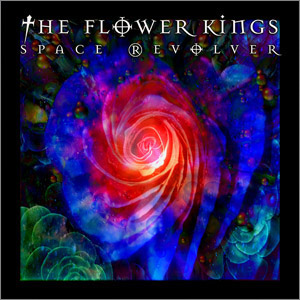
A desert-island disk, Space Revolver (released July 4, 2000).

While there’s no album by The Flower Kings I dislike (quite the opposite), Space Revolver has always been my favorite.  It has a perfect flow to it, and it only grows increasingly interesting with each listen.  It served as a real life saver for me when traveling fourteen days for my job.  I’d never been away from my family that long, and it was painful.  This was back before I owned an ipod (did they exist then?; I can’t remember), and I only took about ten cds with me.  It was Space Revolver that gave me the most joy and comfort on that trip.  But, this is getting too long winded, and I’ll save this story for another time and another post.  Let me just state here, Space Revolver is a desert island disk for me.  I think it might very well be one of the top ten albums of the rock era.  If you don’t own it, you should.  In fact, you should stop reading this right now and order it now.  Yes, it’s that good.

Admittedly, I’ve listened to the band so much, I’m really not sure I could even pretend objectivity when reviewing them.  Nor at this point in my life, do I really want to be objective.  All of the Birzers love The Flower Kings.

Additionally, whatever creativity I might possess, I owe a lot to The Flower Kings.  Space Revolver served as the sound track for my first book, Unfold the Future for my second, and Paradox Hotel for my third.  The Sum of No Evil and Banks of Eden have played a major role in the one I’m currently writing.

As I’ve stated too many times before, I dislike labels, as they’re almost always used to bypass real engagement with a person, an idea, or a work of art.  But, even if I appreciated labels, I really don’t know how I’d label this band.  The Flower Kings have produced so much beauty, and in such diversity, that they’re almost fully resistant to categorization.  Well, that is, to label properly.  For me, every Flower Kings album is a mood or a state of being.

  • The Flower King: Humanity.
  • Back in the World of Adventure: Exploration.
  • Retropolis: Playfulness.
  • Star Dust We Are: Redemption.
  • Flower Power: Mythic.
  • Space Revolver: Appreciation.
  • The Rainmaker: Warning.
  • Unfold the Future: Righteousness.
  • Adam and Eve: Confidence.
  • Paradox Hotel: Tranquility.
  • The Sum of No Evil: Love.
  • Banks of Eden: Elegance.
  • Desolation Rose: ?

The most common description I’ve seen of the Flower Kings is “retro.”  But, of course, this is meaningless.  The band pays homage to those they love.  Shouldn’t we all?  I deeply admire my maternal grandfather, and I’ve tried to live my life in accord with the dignity he displayed.  Does that make me “retro”?  I speak the same language as my mother.  Does that make me “retro”?  The Flower Kings love Genesis and King Crimson.  So do most proggers.  At some point, labels become not only offensive, but absurd.  But, enough of this rant. . . .  If anything, pietist might be better than retro.  Ok, now, really, the rant is over.

tfk forthcoming.001

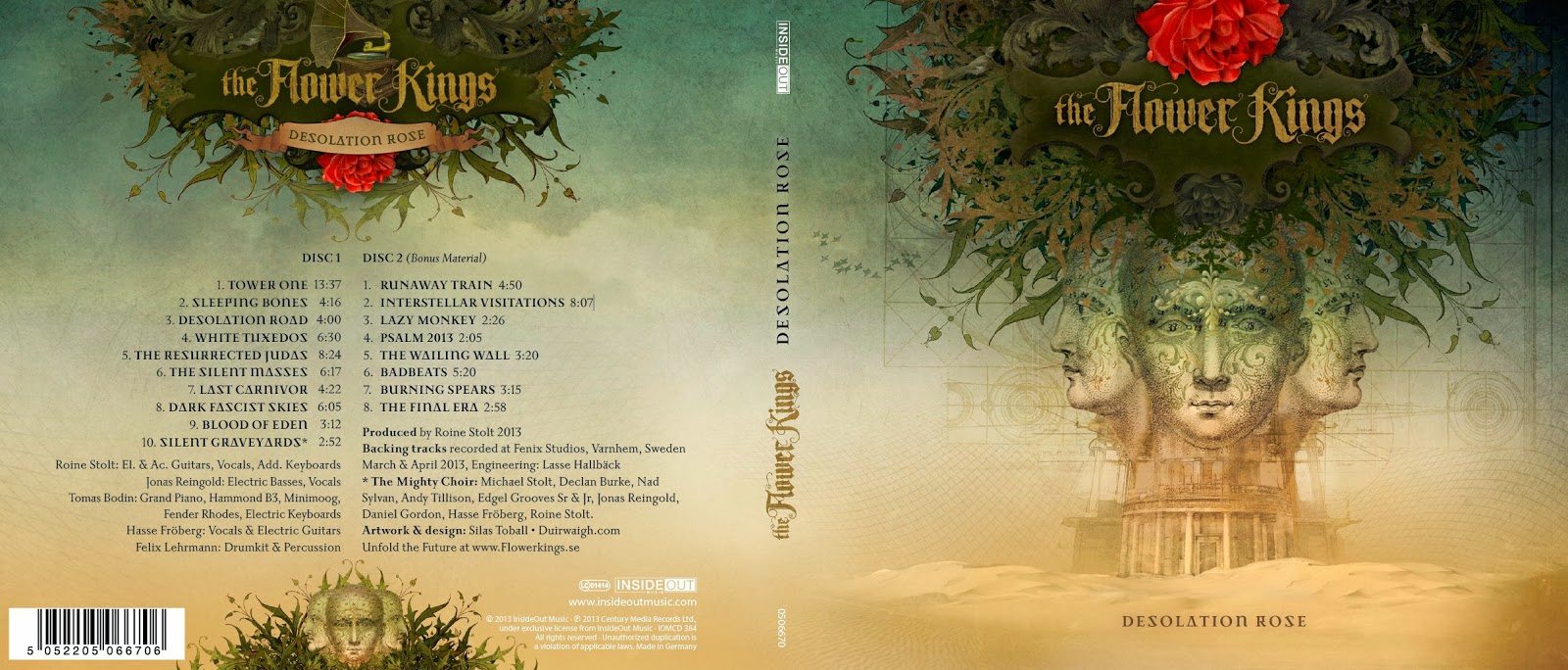
Desolation Rose

Through the good graces of Edge at Insideout Music, I was able to receive an advanced release of Desolation Rose.

The first thing to notice about this release is the darkness of the art as well as of the subject matter.  The cover art depicts three tattooed human heads resting atop a deserted (and in a desert) classical structure.  Above the heads blooms a bright red rose, surrounded by nesting birds of paradise intertwined in intricate greenery.  From a distance, the image could be an explosion, possibly atomic.  There are visual references to the cover art of Space Revolver as well as Unfold the Future.

The title could mean many things.  Desolation almost never has a positive connotation, unless one might be referring to the landscapes of the American West.  But, Rose?  Rose is almost always good, at least as a noun and a proper name.  Who couldn’t love a Rose?  It’s the middle name of two of my daughters.  And, traditionally, the rose is almost always associated with the mother of Jesus.  She’s not exactly been absent from the art of The Flower Kings.  She appears weeping in the lyrics of Space Revolver, and the devil hides from her in his playground in Unfold the Future.  It’s worth noting again, the cover art of Desolation Rose refers to the albums that already have a reference to Mary.

Unfortunately, as with Eric and Tad, I don’t have the lyrics in front of me, and I’ve had to interpret them simply through listening to them repeatedly.  I’m fairly sure that  I am probably hearing what I want to hear, and I hope any interpretation I make will be taken with this caveat.

Though ten separate tracks appear on the main disk, the music flows from one song to another without a moment of silence.  The album as a whole, however, ebbs and flows, and every track bleeds into the one following it.  This only adds to the intensity and urgency of the record.  A number of images and lyrics recur as well: revolution; false kings and false idols; mechanized man; the abuse of power; our place in the order of existence (“we’re the third from the sun”); our life as a game or a false dream; the soil of Eden; silent graveyards (where is the voice of the ages?); and, above all, the need to be individuals, unchained by the restraints of corrupt authorities and mass thinking.

TFK, live.  Photo courtesy of Roine Stolt.
TFK, live. Photo courtesy of Roine Stolt.

All of the songs build to a climax in  “Last Carnivore” and “Dark Fascist Skies.”

This has to rank as one of the darkest and most politically charged and angry (righteously so) of all Flower King’s tunes.  It’s also absolutely brilliant.  At the end of the song, the album rather quickly embraces a quiet denouement in the very short “Blood of Eden” and “Silent Graveyards.”  In the end, the Flower Kings affirm that “we are stardust/we are sunkissed/we are brothers and still we’re strangers.”

Songs: Tower One; Sleeping Bones; Desolation Road; White Tuxedos; The Resurrected Jadas; Silent Masses; Last Carnivore; Dark Fascist Skies; Blood of Eden; and Silent Graveyards.

The album, itself, is flawless.  Every instrument has a punctuated clarity to it.  Upon my first listen, it was the bass I heard most.  On the second, it was the guitar.  On the third, it was the keyboards.  On the fourth, it was the interplay of Stolt’s vocals with Frosberg’s vocals.   On, probably, my fifth listen, I realized it was everything.  Stolt has produced this album with an eye toward perfection.  This album feels, at least at this point in my listening, less symphonic than other modern prog masterpieces, such as Big Big Train’s English Electric.  In terms of urgency, it has a similarity to The Tangent’s latest studio album, Le Sacre Du Travail.

Stoic Kings.  Photo courtesy of Roine Stolt.
Stoic Kings. Photo courtesy of Roine Stolt.

The only thing I find painful in Desolation Rose is the sampling of Richard Nixon’s voice in “White Tuxedos.”  Don’t get me wrong.  The song works, and it works well.  But, having been born in 1967 and having been raised in a very politically libertarian family, Nixon was always the bad guy.   His voice, to this day, makes me wince.  And, as many times as I’ve listened to this album over the past week, I still cringe every time his voice pops up.  Equally creepy, the voice from “Bavarian Skies” returns, but so does one of the coolest guitar lines ever (think The Good/The Bad/The Ugly meets Chris Isaak). Even the song, “Silent Masses,” makes me pause a bit, as Nixon continuously attempted to appeal to those he called the “silent majority.”

I can’t end a review with THAT man’s name in my conclusion.

So, on a much happier note, this year, 2013, has been nothing short of an annus mirabilis.  When the new year hits, every prog lover will be, materially, worse off after having survived 2013.  Every prog lover will be, also and more importantly, enlivened spiritually and intellectually after having survived 2013.

In the top of this astounding year of Prog is Desolation Rose.  Empty your pockets.  Another must–absolute must–buy.

Prog News on this Day of Thor!

TA Kaleidoscope
TA announced their studio album today, to be released on January 27, 2014.


tangent dowloads
And, that impish genius, Mr. Diskdrive, announced a series of rolling back catalogue releases, available only through http://www.thetangent.org. Some folks like to call Steven Wilson, “Mr. Prog.”  For me, that title goes to Mr. Diskdrive.  I’m listening to the first, FOG, as I type this. A nice glimpse of the beyond. . . .