Symphonic Modern Progressive Rock (we will skip the word Neo) with rich, dense instrumentation and melancholy lyrics/melodies for fans of Marillion-Brave Era, PG, Radiohead, Porcupine Tree (SD, LBS Era), Bowie, Floyd, VDGG.
Recommendation:Highly Recommended
Art is a bitch, and so is literature – and music. They always present us worlds well out of reach – pipedream kingdoms of epic journeys, heroism, boundless yearning and lots of all the things we are, well, let’s face it, not. Art is, insofar, simply destructive for your everyday middle class John Doe. It makes him long for things he neither really wants or needs: danger, uncertainty, lovesickness, bleeding hearts, je ne sais quoi. – t on anti-matter poetry.
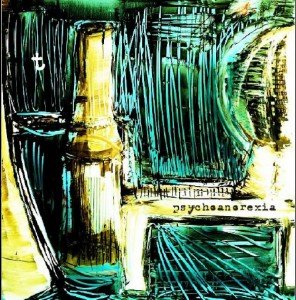
2013 is looking to be another great year for progressive music with Steve Wilson, Lifesigns, BBT, Riverside and Cosmograf all released by mid-March. The sheer volume of quality releases makes it easy to overlook an artist who cannot easily be googled ( t ), has long gaps between releases and does little or no touring. t /Thomas is classically educated in piano and voice, but switched to guitar early in childhood when he realized that ‘most girls in his class fancied guitar players’. Psychoanorexia is his fourth solo CD since leaving German art rock band Scythe, and he plays all instruments, sings, arranges, produces and mixes his work. His two most recent CDs, Voices and Anti-Matter Poetry, each about 3 years in the making, received critical acclaim in some quarters but failed to achieve the overall recognition they deserved. This is likely a result of two factors:
t music is not always an easy listen, but as Kinesis said, ‘t takes the listener into an alternate musical reality, and after the album concludes, you may need to pause and take several deep breaths before returning to waking reality’. The music is sometimes dark and moody, offset by beautiful, melancholy melodies often delivered through heavily processed vocals and dense instrumentation so it is not a easy casual listen.
t is a deep thinker and a poet. He focuses on the alienation we experience as society and technology advance, the impact on our relationships and our ability to stay linked and loved. Lost loves, disconnected lovers, feeling alone and alienated while being with someone, the multiple influences that affect our everyday lives and therefore our relationships is not always happy stuff.
From t:
“This is the time when ringtone applicability equals musical quality. This is the place where the greed of being a pop star has replaced the sublime experience of creativity. This is the era in which democracy means mass phenomena, not choices. When we have become too lazy even for subterfuges. And too busy to feel the loss.”
Psychoanorexia consists of only 4 songs, three epics and one shorter track. His lyrics –which fill several pages of the CD insert, are complex and interesting but not always easy to understand due to the amount of vocal processing. The opening track, the three-part The Aftermath of Silence, is a beautiful seventeen minute love story with very accessible melodies. Aftermath begins with a long and haunting instrumental passage leading to the refrain
‘ So this is the day, the sky too blue.’
Slow and sad, the opening moves through an interesting set of musical progressions reminiscent of Marillion, concluding with:
‘We came back, but we never recovered
We always reminded ourselves of each other’.
Kryptonite Monologues, the most complex and challenging track, continues the theme of love lost by abandoning the mood of the previous track with a frantic opening section named ‘Breakfast Cataclysm’. This is the most symphonic track, with hints of Yes, Van Der Graaf Generator and Crimson. After a soaring instrumental section with some pounding drums and heavy guitar lead t moves to a bombastic operatic interlude he describes as part comedy (Monty Python), hinting at the absurdity of it all, collapsing into a lovely classical section named ‘Borrowed Time ‘with soaring strings. Driving percussion builds to the haunting climax ‘The End of the World’ with echoes again of Marillion’s Brave.
The third track, The Irrelevant Lovesong could be a lost track from somewhere between Peter Gabriel’s Scratch and Us periods, and is a short, moving poem describing the growing gulf between two people:
‘All through the nights
Though cold and blind
I hold you here
But no, I love you not
No, I love you not’.
The CD concludes with Psychoanorexia in two movements, ‘Bedhalf Exiles ‘and ‘The Stand’. The music again alternates between attack and reflect, the gates are locked and defenses up in an effort to save all that is worth saving.
‘Save our souls
And guard all the doors we closed
And promise to stake our hearts
Lest one of our oaths could last’.
The song ends with a barrage of frantic drums and a vocal chant reminiscent of mid-70’s Genesis in tone. The journey is tiring but rewarding, challenging but gratifying. I thought that his previous were highly personal stories, but here t seems to be more of an observer, reporting on the irony of our (or his) existence, the decay that comes with progress.
Psychoanorexia is modern symphonic rock at its finest, rich, inventive and always interesting. I love the dense instrumentation, vocal effects and overall presentation. t’s biography mentions his obsession with sound and he is obviously proficient at all instruments, but it is his keyboard prowess and engineering skills are what enables him to deliver on his vision. t also uses electronic drums more effectively than most, and in many cases you are hard pressed to recognize them as electronic except the cymbals, which at times sound too separated (crash cymbals should not be left or right speaker only) and a minor quibble, sound a bit ‘spitty’. Psychoanorexia is an obvious labor of love by a unique musical poet and this outstanding effort by t is one I highly recommend.
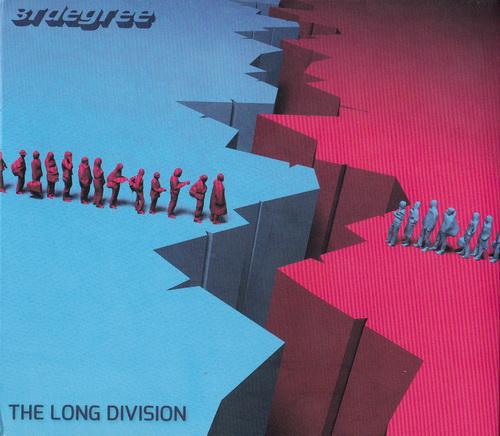
Sometime right after Christmas, I had the great joy of receiving a package addressed to Progarchy from New Jersey. A nice note accompanied the very intriguingly-packaged CD, “The Long Division” by 3rdegree.
Lots of great CDs have come in for review, but I’m always surprised when they’re not accompanied by some explanation. Or, it would be better to write: I love getting notes from the artists themselves. Even the short “Hey, let us know what you think” offers a personal connection. Maybe it’s just my Kansas upbringing regarding such things as “thank you notes.” But, I digress.
Suffice it to write, the note from Robert of 3rdegree said: love what you’re doing; please check us out when you have a moment.
Absolutely!
And, for the last month, I’ve been thoroughly enjoying my time with 3rdegree’s 2012 release, “The Long Division.” Imagine Steely Dan, Echolyn, and Tears for Fears in the studio together. Maybe throw in just a touch of the more complex aspects of some 70s harder rock. Prog it all up and throw some New Jersey attitude in. Finally, mix in some really bitter populist–true and righteous (in the best sense)–lyrics, and you start to approach the wonder that is 3rdegree.
And, I should mention, this is really, really American. How can I state this? I’m frankly not entirely sure. But, the whole cd certainly feels very American.
As with much of prog, there’s a real perfectionism here, too. The keyboards (especially the piano), the bass, the drums, and the guitars sound very sharp. The mix is simply excellent, and the group feels tight. My guess is they like each other very much. I don’t think it would be possible to play like this without a real sense of perfectionism and sympathy with and respect for one another.
My favorite part, though, are the vocals. The closest comparison I could make–in terms of vocals–is to the best of Spock’s Beard, Gentile Giant, and early Echolyn. I can’t imagine the vocal arrangements here ever getting boring or rote in any way. Outstanding. Truly outstanding.
This leads me, naturally, to the lyrics. When Carl, Chris, and I started Progarchy, we decided to make music the focus and avoid–wherever possible–the subject of religion and politics. The three of us already do that fervently elsewhere on the web. Progarchy is meant to be a music site, open to all.
That said, I don’t think it would be possible to review this cd without at least a mention of the politics presented here. Never dumbed down (thank you, 3rdegree), the lyrics reflect a real anger at the state of American political culture. Whether that anger stems from a Left or a Right–a liberal/Democratic or conservative/Republican–position, I just can’t tell, despite my numerous readings of the lyrics. My guess is that these guys are simply too smart to be either left or right. Clearly, they’re not fans of corporate welfare. But, they don’t seem thrilled with eco-freaks either. Here’s their own statement on their website:
“You’re Fooling Yourselves!”, wails 3RDegree lead singer/keyboardist George Dobbs on the band’s lead-off single from the new CD THE LONG DIVISION-their first since 2008. This song-as well as a few others on the first half of the album-flesh out the band’s 2012 political treatise: that America’s political parties (and probably those in other countries) have long divided it’s populous on the basis of color, salary, sex, age and much else, have played on their fears, and have used their accumulated powers to build up largesse to keep their supporters in the fold. Ok, it’s not always that heavy, but the album was penned in the shadow of the 2008 economic collapse that was happening right as 3RDegree were releasing their first album in 12 years: NARROW-CASTER. While that third album was a combination of fresh songs and resurrected ideas from the period just before the band’s original breakup in 1997, THE LONG DIVISION is in the shared vintage of Tea Parties, Occupy Movements, shovel-ready jobs and banks and car companies “too big to fail”.
Well, from whatever position, I like it.
I can’t give enough praise to this CD. It’s the kind of cd that makes you increasingly enthusiastic with each new track. One track is utterly brilliant, and just when you think there’s no way the band can top track one, track two starts, and you’re blown away. Then, track three, four, five. . . . It just keeps being increasingly mind boggling.
Whatever the state of civil liberties, the economy, or government in the U.S., 3rdegree dramatically affirms my belief that American prog is alive and well.
To learn more about 3rdegree, check out their outstanding website (the perfect model of a website for any band–a fan’s dream; lots and lots of information): http://3rdegreeonline.com/3RDegree/Home.html. I also want to note that one of our favorite American proggers, Mark Ptak of The Advent, plays on “The Long Division” as well. Additionally, the band supports good beer.
And there in the square he lay alone without face without crown and the angel who looked upon never came down
you never know what day could pick you baby out of the air, out of nowhere
~ Sun Kil Moon, “Duk Koo Kim” (2003)
Was it excess, or a change in consumer preference? Either or both, progressive rock music of the 1970’s ran afoul of the burgeoning punk rock scene. Carefully constructed compositions ranging from eight to 25 minutes (or longer) gave way to three-minute outbursts of street angst resonating with a culture sick and tired of inflation and corruption and openly questioning the permanent things — things (classical, jazz, church music) that progressive rock had integrated (unwittingly, subconsciously) into its ethos.
Then, after a decade of new wave, new romanticism, and sundry forms of techno (music for the masses) there arose the Cocteau Twins and My Bloody Valentine. Suddenly, pop song structure, melodic hooks, and outfront lead vocals were enveloped in a blizzard of distortion and dissonance. Critics, ever wary of the latest “art” project, disparagingly labeled it “shoegazing,” noting the performers’ penchant for staring down (likely at their effects pedals) on stage. Steve Sunderland (Melody Maker) went a step further, describing what he called “The Scene that Celebrates Itself” — in part, because the gazers attended each other’s gigs and drank together. It was too much like rugby and less like football. If the former is about gentlemen playing a hooligan’s game, then the press were quick to spot what they suspected were middle class values at play. This could not end well.
At length did cross an Albatross / Thorough the fog it came…
But to back up a bit. Whatever spirit inhabited the soundtrack of David Lynch’s Twin Peaks seems to have been carried aloft during that show’s run, falling out of the sky in the Thames Valley. It descended upon a group of Reading teenagers who called themselves Slowdive. Where to begin? If one samples Slowdive’s output (three albums, six EP’s) there is no way to pin down the band’s idiom. There are the ostensibly pop ballads (“Alison,” “Sleep”), Eno-induced trances (“Souvlaki Space Station,” “Changes”), pre-Kid A ambient exercises (“Option One,” “Sinewaves”), dark grunge (“So Tired”), ethereal raptures (“Catch the Breeze,” “Shine”), and others (“Albatross”) that defy categorization.
Like sorcerers they summoned other-worldly sounds from their guitars. If there’s a common thread it is the drone — catching the breeze of an unorthodox riff, maybe two chords, and riding it in an ever-widening gyre.
Even a few of their loyal fans would say Slowdive spun out of control with 1995’s experimental Pygmalion. By the time of its release British ears were drawn to Oasis and Blur, a Britpop North-South rivalry loaded to the hilt with working class ethos the press could celebrate.
“Revolution,” yes. “Revolution 9,” no. Within a year Slowdive had morphed into the country/folk Mojave 3.
I’ve Got a Gal… in Ypsilanti
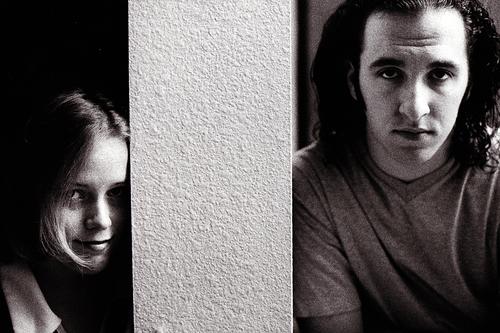
While Slowdive was relinquishing the gazing muse, another obscure stateside band was taking it up. Trey Many (pr. “may’-nee”), the drummer for Warn Defever’s His Name is Alive, was developing a side project at Eastern Michigan University. Together with art student Amon Krist (daughter of folk singer Jan Krist) he formed Velour 100 and signed with Seattle’s alternative label, Tooth & Nail.
Amon Krist (left) and Trey Many
Velour 100’s first full-length recording was Fall Sounds (1996) with Many on all instruments and Krist on lead vocals (and occasional acoustic guitar). Right away the listener finds the music here focused and thematically linked — a concept album based on the pair’s experiences of loss and renewal informed by their Christian faith. The same dense, hypnotic atmospherics present with Slowdive are found here; but Many keeps the listening interesting with changes and unusual time signatures. “Dub Space” is a sparkling eight and half minute tone poem that could have emerged from the waterfall at the end of “Close to the Edge.” The strongest track on the album — and, in my view, among the best three and a half minutes of the ’90s — is “Flourish”:
Velour 100 never received a bad critical review. As Krist departed to complete her studies and launch a teaching career, the duo’s first demo recording was re-recorded and released as Songs From the Rainwater EP to high praise. Many produced one more LP, Of Color Bright (1997) that featured three female lead vocalists, including ex-Sixpence None the Richer guitarist Tess Wiley. Wiley co-wrote “Dolphin Grey,” which showcases her distinctive alto against a splash of jangling guitars:
Many recorded a final four-song EP, For An Open Sky (1999), with soon-to-breakout vocalist Rosie Thomas. He now lends his formidable production skills to projects for other bands.
Ghosts of the Great Gaze
By the end of the ’90s “shoegazing” (or “dream pop”) was figured a dead letter. Its artsy sensibilities (pretenses, to some) were destined to remain out of favor with an X Factor world. But even into the 2000’s there remain artists who pay homage to the genre. An excellent example is the expansive “Duk Koo Kim” by Mark Kozelek’s side project, Sun Kil Moon. Aptly described by one listener as “magical sad tragic wonderful,” it is a meditation on mortality inspired by the Korean boxer who died from injuries suffered in a bout with Ray “Boom Boom” Mancini in 1982 (in fact, much of Sun Kil Moon’s Ghosts of the Great Highway is inspired by the stories of fighters).
In shoegazing fashion, the guitars ring and leave auras of reverb in their wake, Kozelek’s falsettos submerged in the melodies. Unlike Slowdive’s binary pieces, “Duk Koo Kim” has three distinct sections, and (in prog rock proportion) sprawls over 14 minutes — each representing the number of rounds Kim lasted in the ring before succumbing.
Come to me once more my love show me love I’ve never known sing to me once more my love words from your younger years sing to me once more my love songs that I love to hear
I’ve offered my “Talk Talk” testimony so many times, it’s probably getting a bit ridiculous. To sum up, I really, really, really, really, really (well you get the idea) like Talk Talk, and I have since the spring of 1987, when I first encountered them by chance. Further, I would have to rank “Spirit of Eden” as one of my two or three rock albums of all time.
Phew.
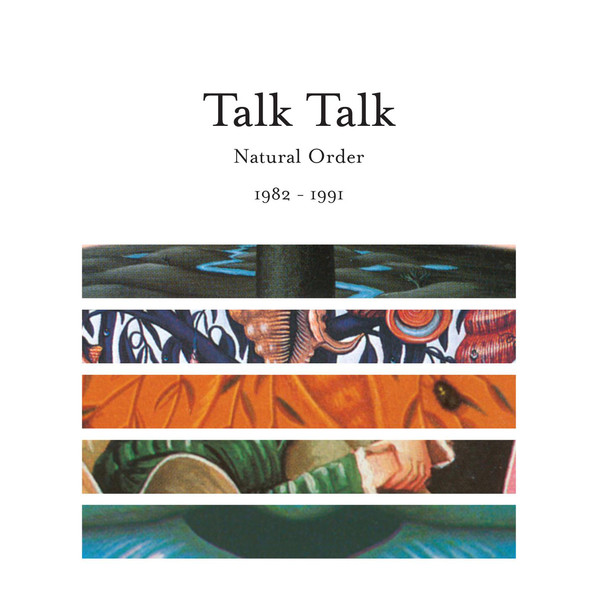
So, much to my surprise the other day, I saw that Mark Hollis had emerged from his seemingly J.D. Salinger like-life (may Salinger rest in peace) to release, under his official direction, a Talk Talk compilation. It’s entitled “Natural Order,” and it just arrived.
Most of the others, frankly, from “Natural History” to the remixes to . . . . Well, let’s face it, Talk Talk just can’t be broken into parts. The albums come as a whole. I don’t just plop “Colour of Spring” or “Spirit of Eden” or “Laughing Stock” into the CD player when dropping the kids off at school or running to the supermarket to get milk. No, these last three albums require attention and love. Listening to them casually would like roller skating through the Field Museum in Chicago or jogging through the Nelson Museum of Art in Kansas City. Continue reading “Nascent, Nascent: The Natural Order of Talk Talk”→
N.B. AP is Andy Poole, DG is Dave Gregory, DM is Danny Manners, GS is Greg Spawton. Progarchy interview conducted by Brad.
***
Progarchy (BB):When you put EE1 and EE2 together, how do you expect the listeners to see the whole EE? Say, 20 years from now, few will have had the experience of getting one, then the other. It will most likely be just EE. Do you expect your listeners–me, for example, or anyone else–interpreting EE1 differently in light of EE2? In particular, I think about a track like Hedgerow. As you probably know, Greg, I consider this the single finest conclusion to any album. Ever. Period. Even better than Abbey Road, which had that position for me prior to hearing EE1. But, when I do get to hear EE2, I will now see Hedgerow as the middle song.
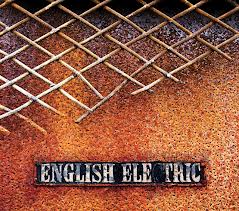
GS: You’ve put your finger on something that has caused us a fair bit of soul-searching Brad. At first, we had a fairly straightforward view on this which was simply: ‘it’s a double album, but we’ll split it into two separate releases’. Our reasoning was that 2 hours of music is a lot for the listener to get their head around which can initially cause under-appreciation of the double album in question. We were also aware that if you release so much music at one time, you get one round of publicity then the world moves on. If you split the release into two, the band is in the spotlight for a longer period of time. The only downside to this release strategy is that English Electric becomes seen as two separate pieces of work and so we always planned to release a special double edition bringing it all together. The thing is though, and as your question makes clear, it’s not as simple as we thought it would be. If you’re splitting an album into two you do have to try to make two satisfying separate halves, which is what we have tried to do. And that isn’t the same as sequencing a whole double album. So, the question we began to ask is: what do we do when we prepare the double Full Power edition? Do we simply stick Part One and Two together or do we start from scratch and re-sequence it as a double album? You mention Hedgerow as being a strong concluding track but we’ve also got Curator of Butterflies which is, we think, another strong end-piece. Which one of those takes precedence and gets to close the double album? And what happens with the three extra tracks we’re including? Where do they fit in? What we now think we’ll do is to start again from scratch and re-sequence Full Power as a double album without any reference to the orders on EE1 and EE2. It may be that we find some of the sequencing on EE1 and EE2 also works for EEFP and if it does, it does. Or it may be that the sequencing is completely different. In any case, the additional tracks will inevitably change the feel of things. The other question you raise is what happens when EEFP is released? Does that mean that EE1 and EE2 should go out of print? If not, will any new listeners buy them or will they go straight to EEFP? This is, I think, something we’ll have to keep under review. If EEFP turns out to feel like a very different listening experience to EE1 and EE2, then it makes sense to keep them all in print. Of course, the extra tracks will also be available on an EP and as downloads to make sure listeners don’t feel obligated to buy a double album just to hear three new songs. So, for many people their experience of English Electric will be as three separate releases.
Progarchy (BB):Tell me about the additional songs added to the full package? Will there be much new artwork?
GS: There are three strong new songs. They are not leftovers from the original sessions but have been recorded specifically for EE Full Power. One of them is a sort of bookend love song to go with Leopards. Another builds on the main album themes of working communities and the English landscape. And the final one is something very different for us.
AP: As regards the artwork, I’m working on a lavish design with a comprehensive booklet telling the stories behind the songs and behind the album.
Progarchy (BB):After EE2, you’ve announced plans to release Station Masters. Can you give us some details about this? Will it be reworked older tunes? Are there some new tunes?
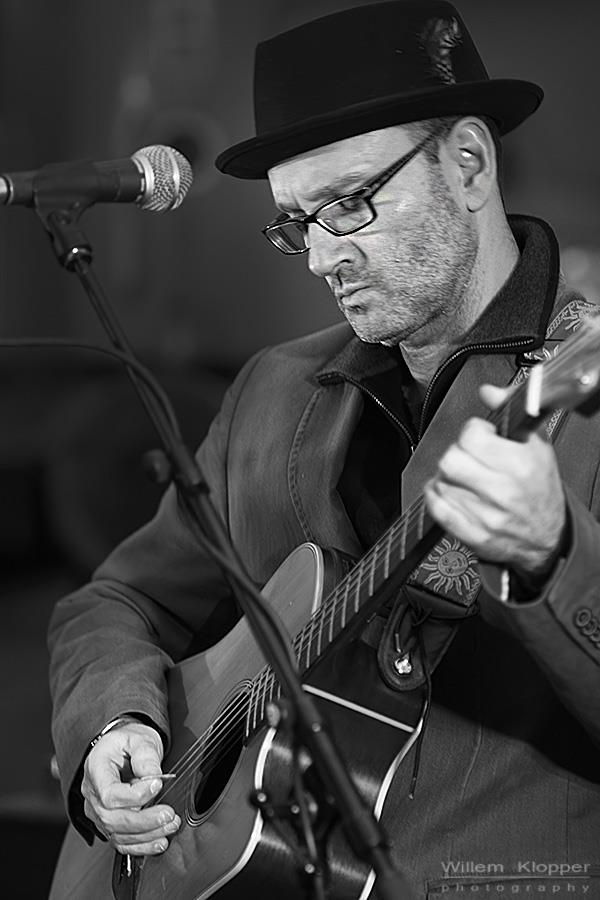
NDV by Willem Klopper.
GS: It’s a triple CD which aims to tell the story of the band. All recordings will be with the new line-up so songs from albums prior to The Underfall Yard will be entirely re-recorded. Some of these are radically re-worked, others are fairly close to the originals but with the strong performances that the current line-up is capable of. Even more recent material may be reworked to some extent. For example, I always wanted to feature violin in The Underfall Yard but we didn’t have a violinist at the time. Rachel Hall will feature on the updated version. Wherever we look back and think something could have been better, we’ll make it better.
Progarchy (BB):Will anything else come with the CDs? Any kind of BBT timeline or a poster? Concert DVD?
AP: There may be some video or other visual material. We haven’t made any final decisions on that yet.
Progarchy (BB):Where do you see BBT’s place the history of rock and the history of prog rock?
GS: I think it’s too early to make an assessment. There are many drafts of history. I hope we’ll find ourselves as more than just a footnote when later drafts are written. However, progressive rock is a fairly contained world and we’re a long way away from making any sort of breakthrough in the broader rock and pop worlds.
Progarchy (BB):You have an immensely large and loyal fanbase. How does this affect you or the band’s approach to music and the music world?
GS: We’re really lucky with our fanbase. They seem to us in all of our interactions to be a thoroughly decent and likeable bunch. The feedback we’ve had over the years has been really important. To hear that what we like to write about resonates with others and particularly that we’ve moved people with our music makes a huge difference.
Progarchy (BB):What is your view on packaging the material? You sell lots of downloads, and we live in a download world (for better and worse), but you also put a lot into the packaging of your CDs. Which I love. As you might remember, after I downloaded all of your albums up to The Underfall Yard, I contacted you because I wanted to purchase physical copies. And, it was worth the investment. Why do you consider it so important for BBT to have such beautiful packaging, especially in day and age? And, would you say such quality packaging should be important for all bands?
Andy Poole by Willem Klopper.
AP: The ideal package for us is a presentation of the words, music & images. The artwork is integral and we have been very fortunate over the years to have teamed-up with Michael Griffiths, Jim Trainer and Matthew Sefton who have each provided inspiring works that both complement & advance the sensory delivery of our albums.
Growing up with vinyl in the 70’s, you had an ingrained sense of interacting physically with an album … the touch, feel & smell of a new gatefold release was savored and an essential part of the experience … quite apart from placing a stylus in the groove and being aurally transformed to a progressive world of music where none of the old rules applied.
The initial advent of hurriedly released compact discs in their horrid plastic jewel cases and Lilliputian inserts amounted to instantly inferior packaging largely forgiven by consumers for the promise of digital sound.
We migrated to digipaks for the enhanced tactile experience, albeit in miniature compared to vinyl, and greater flexibility to represent the visual artists who collaborate with Big Big Train.
Although it is tempting to suggest and hope that other bands disregard the importance of physical product packaging to our advantage, I actually believe that it behooves us all to raise the quality bar up high and to the reasonable limits of affordability.
DG: It was certainly a very important factor with XTC. Andy Partridge claimed that every time he finished writing a song, he’d design a sleeve for it just in case it was chosen as a single! But then, he’s a very talented artist and can’t help himself. I’m certain sales of many of our releases were multiplied as a result of the packaging, as well as boosting the band’s ‘arty’ credentials.
Progarchy (BB):I’m always amazed at what a community BBT is. That is, it’s clear–from the music as well as things such as FB posts, etc.–that you each really like one another. There’s no sense of brilliant radical individuals working next to each other (such as in certain early Yes albums), but a true sense of group brilliance, an organic whole. What do you think accounts for this?
GS: From my point of view I come back to something I’ve said before – surround yourselves with talented people and things start to happen. There is something else as well though, and that is that the guys in the band are all thoroughly good chaps. We’ll all hold strong positions from time-to-time and we say what we think but good manners are important. Speaking of Manners, you’re the new boy, Danny, do you have any observations?
DM: Some of it is simply that there are no huge egos in the band, whether by luck or by conscious or unconscious choice. (Medium sized, maybe, but not huge!) However, one musical thing that strikes me is that the band members aren’t over-specialized – BBT doesn’t consist of “the singer”, “the drummer”, “the guitarist”, etc., all vying for the spotlight. Everyone is a multi-instrumentalist to at least some extent, and everyone also has writing and/or arranging experience, so there’s much more focus on making the music work as a whole.
DG: Don’t forget also that we’re grown men, not ambitious youngsters. We are focused on the music at all times, because we love it. Both Greg and David, as writers, are extremely accommodating in terms of accepting ideas and contributions from all of us; they have yet to display any serious proprietorial tendencies when it comes to protecting their original vision. Which is not to suggest that it’s an open free-for-all; we live with the songs for months, plenty of time to assimilate their essence, so we’re generally united in the common aim, ultimately.
Progarchy (BB):And, how do you see the role of Rob as engineer or any guest musicians you bring in? That is, how integral are they to a BBT sound, if such a particular thing exists.
The Seventh Train and Phill Brown of our age: Rob Aubrey. Photo by Amy Mumford.
GS: It’s an evolving sound and it will continue to develop. We have some really important collaborators at the moment and I envisage we will continue to work with many of them in the long-term. Certainly, Dave Desmond (who plays trombone and arranges the brass band) and violinist Rachel Hall will have significant input into Station Masters. As for Rob, he’s the seventh Train and our dear friend.
Progarchy (BB):Where do you see BBT after Station Masters?
GS: I’d like us to be playing some shows at some stage. It would be good to do something around the time of Station Masters and then something around each release after that. As mentioned earlier, we have another album well underway and have started recording it so that is likely to come out in 2015.
Progarchy (BB):Any final thoughts on the current and future state of rock?
GS: In Britain, the last of the high-street record stores has gone into administration. I guess there are similar issues in other countries. The supermarkets have stepped into the breach and will only really sell music in the pop charts, so the route through traditional music-distribution is closing down to most progressive bands. However, online, the choice is very broad and the issue there is getting noticed amongst all of the competition. Making a living out of music is going to get harder still but it’s been a labour of love for most folk and jazz musicians for years and I don’t see why it should be different for rock bands.
[Well, what does one say after such amazing interview, except—thank you. Thank you to BBT for giving us so much time for this interview. An even bigger thank you for making the world just a little bit brighter.—Ed.]
I would love to give an elaborate introduction, but, really, I’ll be very honest with myself–you’re here to read the words of Andy, Dave, Danny, and Greg. They very graciously gave us a significant amount of their time. All Progarchists eagerly await the release of Big Big Train’s much anticipated conclusion to the highly successful English Electric Part One. The first half released only last year represents, for me at least, the finest album in the rock world since Talk Talk’s 1988, “Spirit of Eden.” No pressure, guys.
Ok, Brad, remember you promised to bloviate only very, very little. . . .
Progarchy proudly presents an exclusive interview with Big Big Train (though, feel free to make this less exclusive and repost anywhere and everywhere).
Photo by Willem Klopper.
N.B. AP is Andy Poole, DG is Dave Gregory, DM is Danny Manners, GS is Greg Spawton. Progarchy interview conducted by Brad.
***
Progarchy: Greg, EE1 did extremely well in terms of critical response. Did its success surprise you at all? If so, what part of it surprised you?
GS: We believed we had made a strong album but by the time the mix is finished, all objectivity goes out of the window so you never really know what will happen when others get to hear it. I think we were a little anxious about the number of other albums being released last year, and English Electric started shipping at around the same time as Sounds That Can’t Be Made, so we worried about whether it would get lost amongst all of the attention that CD was going to receive. A couple of weeks ago, Prog magazine published its readers’ polls for 2012. It only really hit home to us when we saw the results of those polls as to quite how much reach English Electric has achieved. It was surprising and very pleasing to be up there with Rush, Marillion, Porcupine Tree and Anathema.
Progarchy: Does its success change at all what you think about BBT?
GS: BBT is six chaps making music. However well we do, that’s all I think of it as.
DM: We haven’t reached the stage yet where our rider has a “no brown M&Ms” clause.
Photo not by Willem Klopper.
GS: I suspect it has changed how others view us. I read a couple of reviews recently where the album was described as being ‘hyped’ and I felt a little indignant as that misrepresents us. We’ve promoted it sure, but not in an excessive way. If other people write or talk about something, that isn’t hype.
Progarchy: How much of EE2 was written before EE1? That is, how much of this album is a response to the last? Or, are they really two parts of a whole?
GS: All of the songs were written and recorded as part of the same sessions. Any of the songs on Part Two could have been on Part One instead and we had mixes of all 15 tracks before EE1 was released. However, once we knew the track-listing for EE1, those eight songs on the first part got our maximum attention to make sure they were ready for release. As soon as EE1 was out we then went back to the EE2 tracks and continued to work on them.
AP: We wanted to take full advantage of the 6 month gap between the two albums to make sure all of the songs were at their best. That sometimes meant a bit of a rethink about the arrangements. East Coast Racer, in particular, benefitted from us being able to spend more time on it. We always thought it was a good track but now I think it’s one of our best.
Progarchy: Was the writing process much the same as the last album and previous albums? David clearly offered much in terms of lyrics and song ideas. It it the same with EE2?
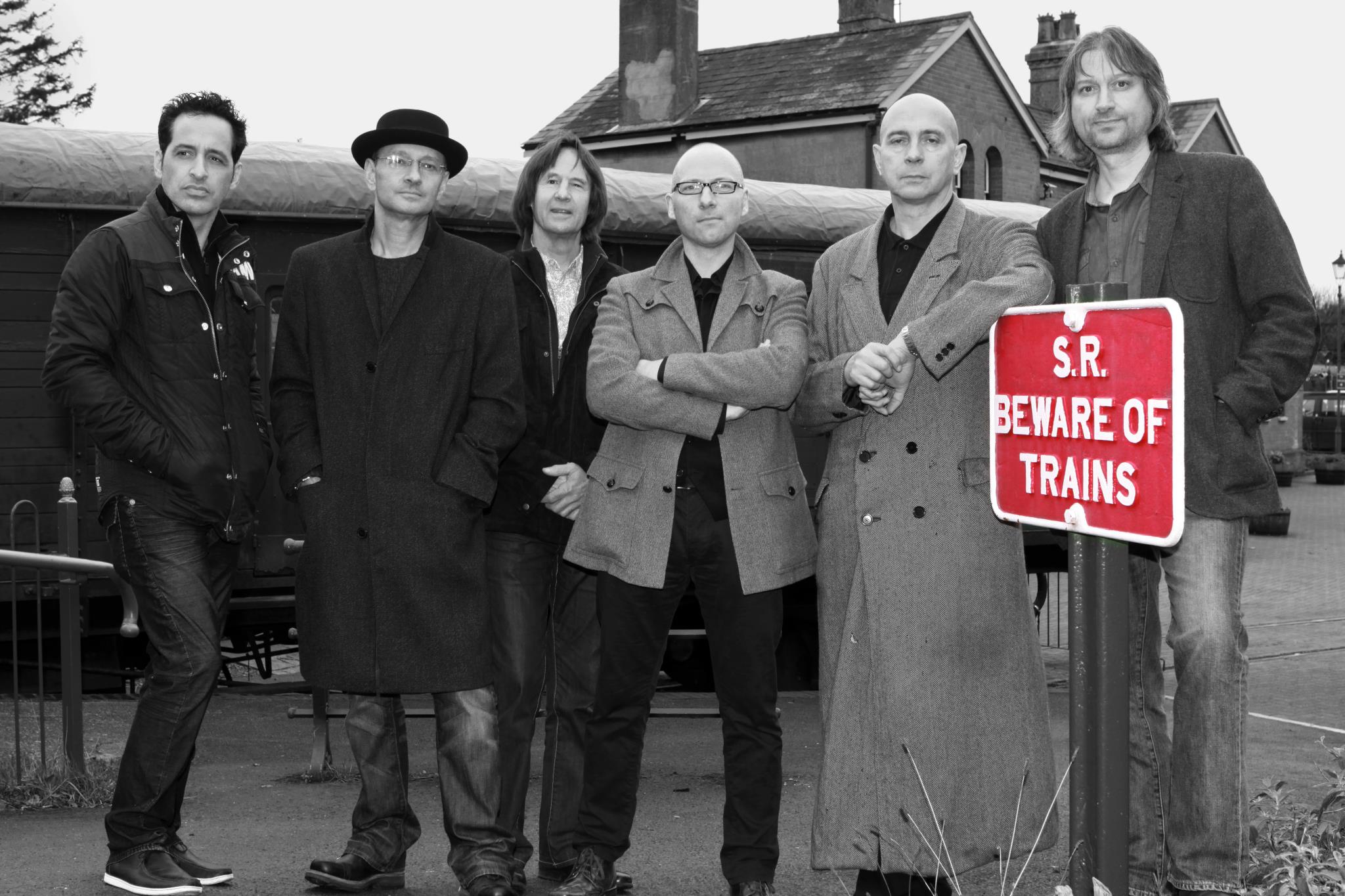
Nick, Andy, Dave, David, Danny, Greg. Photo by Willem Klopper.
GS: We’re really in a groove with the writing now and have very established way of working within the band. I’ve written more of EE2 than EE1, but that’s just to do with how the track-listing fell. In fact, David has already written a lot of material for our next studio album and we’ve recorded Nick’s drums for some of the songs. The other guys are heavily involved in arrangement and, in truth, there can be a blurry line between writing and arranging. The accepted practise is that the songwriter is the person that composes the chord sequence, the main melody and the words. However, sometimes the parts written by the musicians for those chord sequences and melodies can be as important as the underlying music. So, the songs evolve at the hands of all of us.
Progarchy: Can you tell us about some of the themes–musically and lyrically–of EE2. The titles are poetically enticing, and there’s, of course, a huge anticipation on the web as to what the titles mean. Curator of Butterflies? Worked Out? The Permanent Way? Keeper of Abbeys (my favourite title)? For better or worse, I have lots of James Marsh images floating around in my head as I visualize the possible meanings of the titles.
GS: English Electric isn’t a concept album but it is an album with a number of themes linking many of the songs. On EE2 some of the songs pick up on the subject matter of songs from EE1 whilst others head off in different directions. Swan Hunter and Worked Out are both about lost working communities (from the shipyards and the mines) so those follow on from songs like Summoned By Bells. East Coast Racer is set in the 1930’s when a group of people designed and built a steam train called Mallard which ran very fast indeed. It’s a great adventure story. Leopards is a love song and provides an important contrast with some of the more epic material. Keeper of Abbeys is about a chap I met at a ruined abbey in the north of England. This man worked from dawn until dusk every day, tending to the stones. I got to know him a little bit but used my imagination to join up the missing parts of his story. Curator of Butterflies is inspired by a woman called Blanca Huertas who is the Curator Lepidoptera at the Natural History Museum. I read an article about her where she said the study of butterflies can allow so many tales to be told. The song is about how narrow the line is between life and death. I was very anxious about it sounding trite and so I wove a character into it to make it a story and tempt me away from spouting platitudes. Finally, The Permanent Way is the pivotal track where we try to bring everything together.
Progarchy: There’s lots of excitement about you joining, Danny. Can you tell us a little bit about yourself and how you came to join BBT?
DM: Well, I started off learning classical piano from a young age, and later became very interested in twentieth century classical music – at one point I was fairly obsessed with Stravinsky and had serious ambitions to be a composer. In my teens I also took up double bass (and later bass guitar) and got heavily into modern jazz and jazz-rock. You could say I was always into “progressive” music in the broadest sense of the word. But also, I was at school in the mid-seventies when some of the classic prog rock albums were being released, or had recently been released, and handed round on vinyl. I remember really liking early Yes, and Gentle Giant – still a favourite band. After that, I was more interested in the Canterbury end of prog, probably because of the jazzier connections. At university, as the eighties started, I became fascinated with some of the new wave bands that were combining the more advanced musical ideas I was already into with the stripped-down aesthetic of punk, which I’d initially been completely affronted by! XTC became a particular favourite, and a big influence on a university band I played bass guitar in and wrote for. (It got nowhere, although the members all had interesting careers in music afterwards.)
After that I played a lot of jazz, and some free improvised music, on the London scene – on double bass. I joined a big band, The Happy End, which mixed up Kurt Weill, Sun Ra, swing, and protest songs from around the globe into a joyful, ramshackle stew, and got heavily involved for a few years gigging and writing arrangements for them – a highlight was working with Robert Wyatt, who made a guest appearance on a Happy End album. Gradually, I also became involved with various alt, leftfield or indie rock/pop singer-songwriters. The notable ones were: Sandy Dillon – that’s a female Sandy – originally from the US, whose band mixed blues and roots with the avant-garde, with Tom Waits and Captain Beefheart as major influences; Cathal Coughlan, one of the best lyric writers I know, whose voice and songs can range from beautiful ballads to corruscating anger; and, most importantly, Louis Philippe, a Frenchman resident in London, whose music mixes influences from the great pop writers like Brian Wilson or Burt Bacharach, classical music, jazz, French chanson…. I’ve worked with Louis for 25 years now, initially as a bassist, but later also as keyboard player and arranger, and as a participant in some of his production work for other artists.
In 1995, I think, Louis showed me a letter he’d been sent by a fan, who turned out to be David Longdon. David had included some of his own music, and was obviously hugely talented as a singer, songwriter, instrumentalist and arranger. So Louis had no hesitation in asking him to do a gig with us, and then to participate in Louis’s next few albums. (Also featured on those was Dave Gregory, who Louis had met when arranging and producing an album for labelmate Martin Newell.) I stayed friends with David, and he kept us informed about the Genesis near-miss, but we didn’t see each other for a while after that as we were both busy with young families. I do remember him telling me he’d joined a prog band, although the name Big Big Train meant absolutely nothing to me at that point. (I hadn’t kept up with contemporary prog at all.) Then a couple of years ago, he asked if I’d put down some double bass for a song called British Racing Green…
Happily, the band liked it. I think David had possibly recommended me for the keyboard chair earlier than this, but Greg and Andy may have been wary because I didn’t have any track record specifically in the prog field. However, when they started work in earnest on EE1 they asked me to see if I could do anything with the piano on a couple of songs. Again, it turned out to our mutual satisfaction, and in the end I contributed to almost every track, did a bit of arranging on Summoned By Bells, and stuck my nose in at the mixing stage as well. By the time attention turned to finishing off EE2, I was pretty much fully involved, so it made sense to them to ask me to join the band officially. I really liked the fusion they’d arrived at on EE, blending folk and acoustic instruments into the prog and other elements already there, and it was a great opportunity to work with fabulous players like Dave G and Nick, so I didn’t have any hesitation in accepting.
On EE2 I’m playing keyboards a bit more – including an honest-to-goodness, “I’m prog and I’m proud” synth solo – and it’s going to be quite exciting exploring further on future releases.
Part II tomorrow.–Ed. To order English Electric Part II, please go here–BBT’s official shop.
Make sure you head over to http://www.cosmograf.com to order Robin’s latest album. It will be released in three days. So, make sure to order now. Lots of our progarchy favorites–including Greg Spawton, Nick D’Virgilio, and Matt Stevens–contribute to the album. Also, the web is buzzing about what a great album it is–Robin’s best. So, order away!
Ok, it’s not yet the Feast of St. Valentine, so I won’t go into complete terror.
If you have a moment and if you (in the U.S. at least) possess $.99, there’s little better you can do with that money than purchase Glass Hammer’s latest single, “Cool Air.”
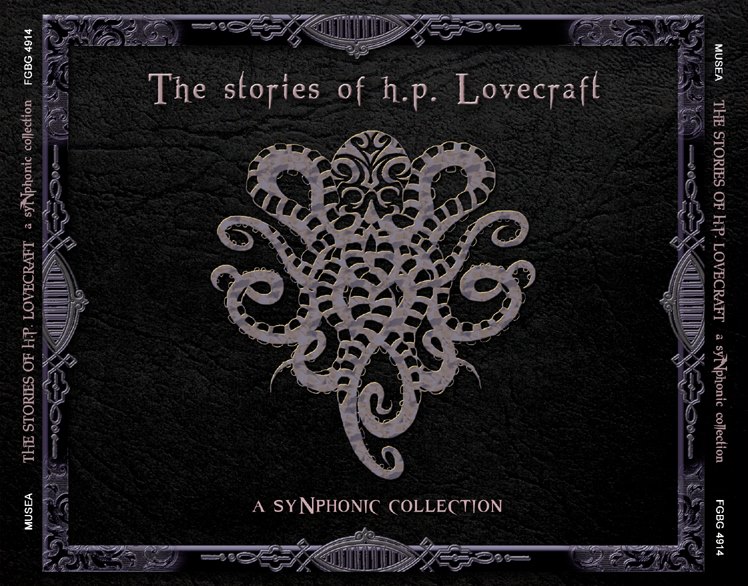
It’s their only contribution to a project exploring–through prog–the stories of H.P. Lovecraft. It’s cleverly subtitled “A Synphonic Collection.” Here’s the link at amazon.com:
Considering the typical Glass Hammer themes of nobility, whimsy (Steve and Fred can be hilarious), and struggle, the lyrics to “Cool Air” are a bit shocking. I can’t quite piece the whole story together, but I think it’s about a man who tries to use science (and some kind of gnostic magic) to preserve and extend his life. He, of course, fails, and the story of the song seems to take place 18 years after his death.
The horror, indeed.
The song has everything: brilliant Glass Hammer music; narration; and creepy lyrics.
I doubt if I’ll listen to the song over and over again, as I do with other Glass Hammer songs and albums, but only because I don’t think I want all of the lyrics running around my head or soul. Still, it is pretty great, if unusual.
One of our favorite English proggers, David Elliott, aka The Amazing Wilf, is enjoying a birthday today. He has not attained that really all-important half century mark, but he’s getting really, really close.
If you’re interested in checking out David’s views on prog (and you should!), please go to his renowned radio show/podcast, The European Perspective.
In the late spring of 1982, as I completed 8th grade, I met one of those kids who is always at the height of cool. But, it was a calm, somewhat cynical, real cool, not the show-off cool of the wealthy socialite kids. It was the Bohemian cool of the Beatnik not contrived cool of the Hippie or the Yuppie.
Ritchie.
Only a few of us belonged to his circle.
Except for moments of ecstatic outbursts about an idea here or there, he radiated coolness. He read the Great Books and knew lots of poetry, he worked out in his room (he had the whole upstairs of a late 19th century house to himself) and studied Japanese martial arts, he knew everything about men such as Bill Buckley and Jack Kerouac, he owned the best stereo system of anyone our age, and he possessed an amazing record collection. He was the youngest of a large family, and his parents were much older, pretty much leaving Ritchie to raise himself.
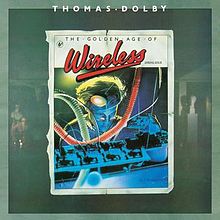
It was Ritchie who introduced so many of us–in a medium-sized town in the wheat belt of the Great Plains–to English New Wave. Growing up a progger–addicted from an early age to Yes, Genesis, and Kansas–New Wave was a bit eye opening for me. It seemed to hold much of the complexity of prog, but it did so with computers and keyboards, often one or two musicians, where prog might have included eight or nine. Ritchie introduced me to ABC, Kate Bush, The Smiths, Oingo Boingo, Tears For Fears, and, most importantly for me, Thomas Dolby.


 Recommendation: Highly Recommended