Modern Rock at Its Finest: English Electric Vol. 2

wk poole
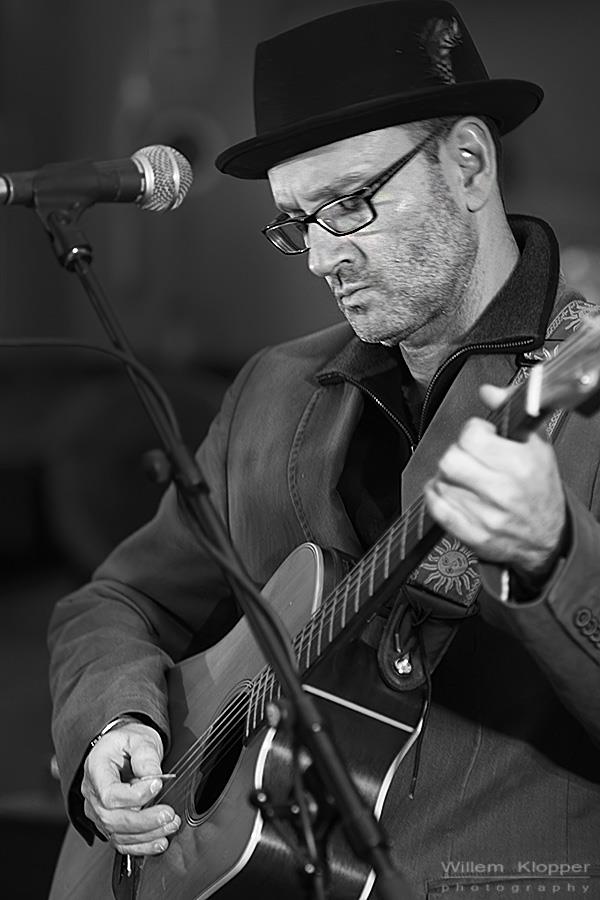
Photo of Andy Poole, co-founder of BBT, by the brilliant Willem Klopper. Used with his kind permission.

by Frank Urbaniak

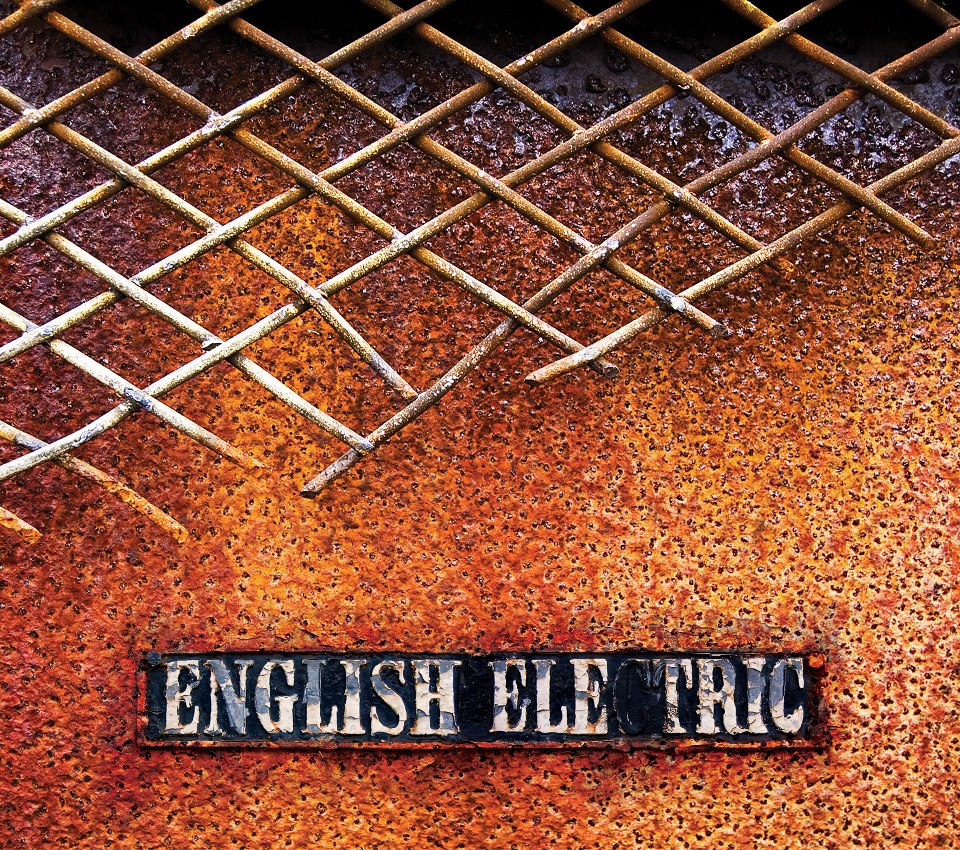
Reviewing Part Two of Big Big Train’s English Electric presents an interesting challenge-should this be considered as a Magnum Opus song cycle that just happened to be released in two sections, or should we consider EE2 as a separate and distinct release?

The good news is that EE Part Two stands on its own as a great collection of incredible compositions, interesting lyrics, and outstanding performances with more ‘space’ to develop the songs than on EE1.  The band is not afraid to wear its influences proudly on their sleeves-suggestions of Elbow, Genesis, PreFab Sprout, Radiohead and others appear and are gone in a flash, hinted at but never copied.  The instrumentation is again diverse but is not a repeat of EE1, and there is more room for Dave Gregory to stretch and embellish the song’s melodies, especially the sitar/guitar in Keeper of Abbeys playing counterpoint to the violin, Worked Out’s Tull feel, and the biting melancholy of The Permanent Way.  The production is impeccable and a delight through headphones, although there are moments I might wish for just a tad ‘less’ in the future.

EE Part Two continues to create a compelling argument for challenging the classification of BBT as ‘prog’.  The songs are so well composed and universal in themes that they could/should appeal to a wider listening audience.  On the other hand, the ‘proggers’ who summarily dismissed EE1, perhaps favoring metal/experimental or one of the other prog sub classifications (typically meaning heavier), will be hard pressed to embrace this one as well.  As an example, while Curator of the Butterflies is one of the finest ballads I have ever heard, the opening vocal ‘she likes to walk’ sound strangely like a Simon and Garfunkel tune, which won’t win over the gang who prefer their prog a bit heavier.

Continue reading “Modern Rock at Its Finest: English Electric Vol. 2”

The Permanent Way: The Music of Big Big Train

IMG_3725by Tad Wert

The long-awaited release of the second part of Big Big Train’s English Electric does not disappoint. It continues the band’s reverence and celebration of the unsung heroes of Great Britain’s past, beginning with the first track, the epic “East Coast Racer”. After a beautiful, elegiac opening featuring new member Danny Manners’ piano, the listener is suddenly hurtling down a railroad track on the exhilarating 1938 record-setting run of the famous Mallard steam locomotive. True to its subject, this 15+ minute song speeds by in no time, thanks to the propulsive drumming of Nick D’Virgilio. His stick-work evokes to an uncanny degree the clackety-clack rhythm of a train running full-bore across the countryside.

Another excellent song is “Worked Out”, a tribute to the millions of coal miners who labored underground to provide the fuel for the industrial revolution. It’s quite a rocker with a catchy sing-along chorus. David Longden’s “Leopards” is a nice change of pace, as the album turns inward to examine the conflicted emotions of two former lovers tentatively reconnecting. “Keeper of Abbeys” has one of the catchiest melodies ever written by the band, and it includes a hoedown featuring some delightful fiddle.

Continue reading “The Permanent Way: The Music of Big Big Train”

EEv2 Impressions

by Nick “Dr. Nick” Efford

If I’m honest, I was harbouring a secret wish for something rather different in tone from EE1: darker and more edgy, perhaps. Clearly, we don’t have that here – but it would be churlish to feel disappointment at getting more of the same, given the sublime nature of EE1. And there’s no doubt that Big Big Train have once again served up some wonderful music for us.

bbt ee2East Coast Racer is a suitably epic album opener that doesn’t quite gel for me yet. There are several parts to it that I really like but I’m struggling to find the thread linking them all together. It is growing on me with repeated listens but is giving up its secrets slowly!

No such issues with Swan Hunter, which is much simpler and more direct. The affection and nostalgia infusing this track makes it a natural companion piece to EE1’s Uncle Jack.  The obvious lyrical connection is that both Uncle Jack and Swan Hunter concern members of Dave Longdon’s family, but if you put to one side the lightness of the former and the more stately cadence of the latter then there are also some interesting melodic parallels to be found.  I’m not sure if this is deliberate or not, but it added something to the music for me.  All in all, a very pleasant piece, although not as memorable as the tracks that follow.

Worked Out is, I think, where this album truly sparks into life. The opening motif is pure pop and sounds like something Mike & The Mechanics might play, with Dave Longdon’s voice uncannily matching the timbre of Paul Carrack’s in places.  Then it switches into ‘prog wig-out’ mode, first with a flute-filled passage that would make Jethro Tull proud, then with a driving closing section featuring some brief but very welcome synth soloing. Absolutely splendid stuff.

Continue reading “EEv2 Impressions”

Pete Blum’s Open Letter to BBT

by Pete Blum

Dear BBT,

BBT EE2It feels as though it wants to be a “love letter” of a sort.  But it isn’t really there yet.  It’s not intensely passionate; it’s not yet full of those deep and personal codes that arise from having spent time as lovers or as the closest of friends.  It’s more like a very early and tentative venture, saying that I’ve been seeing and hearing you, I’ve been watching you and feeling the growth of some kind of friendship, but I wonder if it is (or could be) more.  I’m afraid, too.  Afraid of how you might respond, or even more afraid that you will not respond.  Afraid that if any blood flows into my words, you might miss it and find flattery alone, perhaps sprinkled with a spur here, a barb there, if that’s how you take some of it.  Do I dare ask for your patience when you don’t really know me?

Anyway, this is mainly about our third time “alone together,” as I truly tested that “together”:  It seems to have “tested positive” as the medical folk say.  I can’t refrain from this reaching out, from this speaking (though with a computer keyboard that may not be quite as clumsy as a voice).  It may be selfish on my part.  But isn’t it true that everything may be such, for all of us?

The Underfall Yard was where we first met, right after our mutual friend BB (no T) pointed you out to me with undisguised awe.  I heard, I believe, that at which his awe was aimed, or that which called to it.  Then the first installment of English Electric seemed to confirm it, in concert with some reaching back to earlier efforts.  You seemed so familiar, but also to move so easily and sensually beyond the familiar.  I was brought to an emotional dead halt by “A Boy in Darkness.”  I must confess, it had my attention locked in its cold embrace for days, haunting every other element of my everydayness.  I wrote a brief note about that before.

Continue reading “Pete Blum’s Open Letter to BBT”

So it Begins. . . Big Big Train, English Electric Vol. 2

[And so it begins. . . the reviews of the latest release from Big Big Train, English Electric Vol. 2.  You can pre-order now, as the official release date is March 4, 2013.  BBT is already shipping.  Our Progarchists will be reviewing the new release intensively and extensively between today and March 4, 2013.  Indeed, let us declare the four days of BBT an official holiday of leisure, truth, and beauty in our little Republic of Progarchy–Brad, ed.]

***

ee2“English Electric Pt 2 – Pictures at an Exhibition”

by Alison Henderson

I like to think that listening to English Electric Pt 2 is like visiting a rather exclusive sonic picture exhibition.  You walk into the gallery and you are instantly surrounded by seven exquisite works of art, each with its own character, telling a different story, but somehow all inextricably linked. As the album begins to play, you are drawn to each of them individually, especially the detail and care that has been taken into bringing them to life and you are filled with admiration for their creators, and with awe for the effect they have on you.

East Coast Racer is a tour de force of the collection, big and certainly epic enough to cover a whole wall because of the detail and precision that has gone into its making.  At its centre, you see this legendary steam locomotive the Mallard taking shape through Danny Manners’ intricate piano lines that start and end the piece, introducing us to its sleek lines and curves, before it bursts out of the canvas at breakneck speed, David Longdon’s voice soulfully expressing the pride and passion felt by the men who crafted and engineered this beautiful mechanical masterpiece. Ever changing, ever evolving, this work shifts up and down the gears several times, the attention to detail paid through the painstaking instrumentation, adding texture to the Turneresque picture evolving in the music.

Continue reading “So it Begins. . . Big Big Train, English Electric Vol. 2”

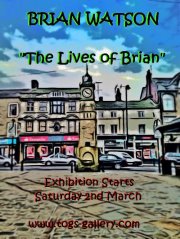
Brian Watson Exhibition: “The Lives of Brian”

373107_348071475308894_22985215_nDPRP.net prog reviewer extraordinaire, Brian Watson, will be exhibiting his art this Saturday, March 2, 2013, beginning at 10am.

The exhibition will be at The Old Grammar School Gallery in Otley (England).  If you live in the area, please support our friend and inspiration, Brian!

Gazpacho news

2008_gazpacho_6Gazpacho, one of my all-time favorite bands, posted this (below) today at FACEBOOK.  I assume they won’t mind me reposting it here at Progarchy–Brad, ed.

*****


Hi there and greeting from us lazybones. It has been a special year with happy and sad events as life thunders on. We can definitely confirm that we havent been.

However, being who we are, it has been very difficult to suspend the need to make more of our particular brand of music. Last album Mog was written in a frenzied weekend session where most of the original demos were kept and polished over the year it took to make the final album.

This time we set our standards much higher and as the months have gone by we have written about an hours worth of music which will be whittled down and added to over the year. We have committed to a concept album in the true meaning of the word and where our last four albums have been intended as films without pictures the new one feels a lot more like a novel. A novel written by a confused and crazy man but still a novel!

The ideas we are toying with are based around the concept of evil and its different shapes and incarnations. The malevolent force that mankind has dressed up as the will of God or the misdeeds of demons depending on the circumstance. Is it possible to catch the feel and the impact of this in music? Well we think so, and the demos are dark but strangely engaging.

Its still early days and as soon as we have a release date we’ll keep you posted.

Wish us luck!

Love
Gazpacho

The European Perspective #176–Cosmograf

Make sure to download David “Amazing Wilf” Elliott’s latest podcast, an interview with Master of Time and Chronometers, Robin Armstrong.  An excellent insight into the making of a truly stunning work of art, The Man Left in Space.

http://www.thedividingline.com/podcasts/european-perspective/

It’s an episode that I will probably revisit.

Self-Imposed Slavery: Riverside’s ‘Shrine of New Generation Slaves’

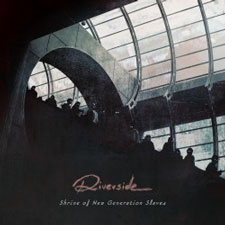
Image    Riverside’s recorded output began with three albums that are collectively known as the Reality Dream Trilogy (‘Out of Myself’, ‘Second Life Syndrome’, and ‘Rapid Eye Movement’).  These are all very good albums, although I wouldn’t call any of them great albums.  However, in 2009, Riverside took a big leap forward with ‘Anno Domini High Definition’ (ADHD).  The music took a noticeably different direction from its three predecessors, and reflected well on the album’s subject matter, i.e. the frenetic pace of modern life and accompanying dissatisfaction that sometimes goes with it.  After a two-and-a-half year wait (with the EP ‘Memories in My Head’ thrown in during the meantime), Riverside has returned with ‘Shrine of New Generation Slaves’ (SONGS).  And once again, they have taken a big – no, huge – leap forward.  Quite simply, this is Riverside’s best album to date.

Conceptually, the album relates to dissatisfaction with modern life, so much so that many people feel that they are slaves to something beyond their control.  Thematically, there are some common threads with various lyrics on SONGS predecessor, ADHD (in particular, the lyrics on the excellent ‘Driven to Destruction’).  Nevertheless, the lyrical (and thus conceptual) content extends beyond that to into areas such as stagnant relationships, the depravity of celebrity culture, surrender to nihilism, and ultimately, redemption.

Musically, the album is just fantastic.  In contrast to its predecessor, it does not feature a barrage of notes and thus gives the listener a little more space to contemplate the lyrics. That being said, I wouldn’t call it dimensionally sparse either, as there is plenty going on.  The music is probably the result of a different approach.  Bass player Mariusz Duda stated in a recent interview:

I had some problems before as I was a little bit tired of the formula that we had in the past and I didn’t want to do another album with complicated structures. I just wanted to finally focus more on the arrangements and the composition. To focus on some details, like a way for playing drums, a way of playing guitar. I really, really wanted to focus simply on songs. Simply songs, ambitious songs should be the foundation of this album. The metal parts I skip and replace them with hard rock elements.

Confident in the chops honed on previous albums, the band has taken more of a big picture approach to the music on this album – an approach that seems to have served them very well.

‘New Generation Slave’ opens up the album, featuring a heavy guitar riff interleaved with verses of Duda’s protagonist lamenting his life and dissatisfaction with it:

Ain’t nothing more to say

Your Honor

Don’t look at me like that

The truth is

I am a free man

But I can’t enjoy my life

The tempo then picks up, and keyboardist Michał Łapaj announces his presence in this piece by getting in touch with his inner Jon Lord (RIP), and repeats this a number of times throughout the album.  The opening track segues into ‘The Depth of Self Delusion’, which is less heavy and a bit slower, but no less good.  The use of acoustic guitar and atmospheric keyboards make their first appearance.  I don’t recall this much use of acoustic guitar on any previous Riverside release, and it’s great to hear them expand their sonic palette in this manner.  The song includes some interesting bass work in the latter half and closes with light acoustic guitar.  The band then blasts into ‘Celebrity Touch’ as Duda offers his critique of our Kardashian-ized culture and the pathological need some have for attention and approval from others:

I can’t afford to be silent

I can’t afford to lose my stand

What matters is to be in view

I am seen therefore I am

I can satisfy my hunger

I can satisfy my thirst

What about the feeling of importance

Now I’ve got my chance

In the center of attention

TV
Glossy magazines

My private life is public

I sell everything

Days are getting shorter

They’ll forget about me soon

So I jump on the bandwagon

With no taboos

The song includes a nice juxtaposition between a heavy riff that accompanies the above lyrics, to a less heavy, more reflective section:

But what if we start to talk

Not only say out loud

What if we sift the babble

From what really counts

What if we disappear

Go deeply underground

What if we hide away

From being stupefied

‘We Got Used to Us’ follows, and is yet another slower track that has somewhat of a Porcupine Tree-like vibe as our protagonist ponders a stagnant and dissatisfying relationship.  This one is pretty emotional.

Next up is the punchy ‘Feel Like Falling’, a song with crossover appeal having upbeat music that belies the lyrics, as our protagonist begins to realize the path he has chosen in life has led him astray and left him wanting to simply give up:

Had allowed that life to drift

For I’ve chosen a different trail

When light fades

I feel like falling into blank space

‘Deprived (Irretrievably Lost Imagination)’ is up next with music that is slower, mellower, and decidedly more melancholy than the previous track.  The music includes a nice, Floyd-ian interlude at about the halfway mark leading into a jazz-infused instrumental section in the latter half featuring some excellent sax playing.   Our protagonists dissatisfaction seems to be so intense at this point that they have gone beyond the mere desire to give up as in ‘Feel Like Falling’ – now we have a full fledged surrender to despair:

Curled up

Deprived
Curled up

Deprived
I shut away

Please don’t call my name

‘Escalator Shrine’ begins as another slower track, but picks up the pace after a few minutes.  Once again we hear the Hammond organ with the Leslie cabinet, some excellent bass playing, and some heavy (but not necessarily metal) guitar.  Like the previous track, it includes another Floyd-ian interlude at about the halfway mark.  Lyrically, ‘Escalator Shrine’ approaches the new generation slavery from more of an intellectual level than an emotional one, as our protagonist channels Albert Camus and the Myth of Sisyphus:

Dragging our feet

Tired and deceived

Slowly moving on

Bracing shaky legs

Against all those wasted years

We roll the boulders of sins

Up a hill of new days

‘Coda’ is the final track on the album, and maybe the most emotionally heavy, even though it is instrumentally the lightest – a single acoustic guitar.  Perhaps our protagonist has read some Epictetus, or maybe the serenity prayer, but it appears he has realized that his happiness and satisfaction with life is ultimately in his control and his own responsibility:

Night outside grows white

I lie faceup in my shell

Open my eyes

Don’t feel like falling into blank space

Indeed, for all of its darkness and all of its sadness, SONGS ends on an upbeat note, as our protagonist casts off his self-imposed chains:

I won’t collapse

I’m set to rise

It’s interesting to note that, although ‘Coda’ is the final track on the album, it is also numbered as Track 1, as is ‘New Generation Slave’.  Indeed, our protagonist has hit the reset button and is starting over.

I simply cannot say enough good about this album.  As thrilled as I was with ADHD, my response to SONGS is in a completely different realm.  Musically, the album has a perfect blend of heavy and light, of complex and simple, emotional and intellectual.  Nothing is overdone, nothing is incomplete.  The lyrics have a strong message, and as dark as the album’s atmosphere, it’s ultimately a message of hope for those that get it.  And if this album is an indication of what we can expect in the future from Riverside, then it’s another strong piece of anecdotal evidence that we are in the midst of a progressive rock golden age heretofore unseen.

Oh, and in case you didn’t get it, I strongly recommend this album 🙂