
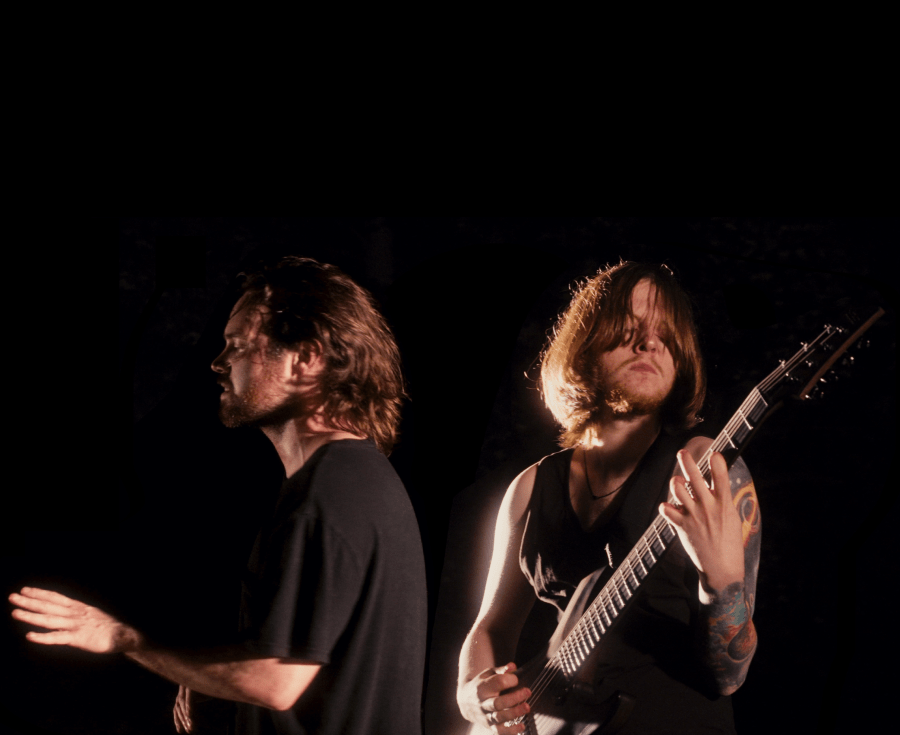
Flip a Coin is an international progressive metalcore duo, comprised of Czech guitarist and songwriter Tomáš Biza and American vocalist Heyden Smith. Despite the challenges of collaborating across a seven-hour time difference, the duo released their highly anticipated debut album Reunion in June 2024. Blending elements of melodic post-hardcore, deathcore, and progressive metal, Reunion showcases the band’s versatility and willingness to experiment with diverse sounds. In this interview, Tomáš and Heyden discuss their collaborative process, the creative evolution of Reunion, and how they navigate the unique challenges of being an international band.
How did Flip a Coin come together as an international duo, and what challenges have you faced working across a seven-hour time difference?
Tomáš: The distance between us brings forth challenges both in the creative and production side of things. Being able to sit in the same room and just vibe and bounce ideas one from each other in real-time is something I think we both long for. Production-wise, we both depend on just our own knowledge of how to actually record ourselves and use our gear in the best way possible, which can be a limiting factor sometimes.
Heyden: There’s limited amount of time in the day to talk about things in real time. Shout out Tômas for being willing to have midnight video calls in his time zone. I do feel like we’ve developed a pretty good process of collaborating over the past few years.
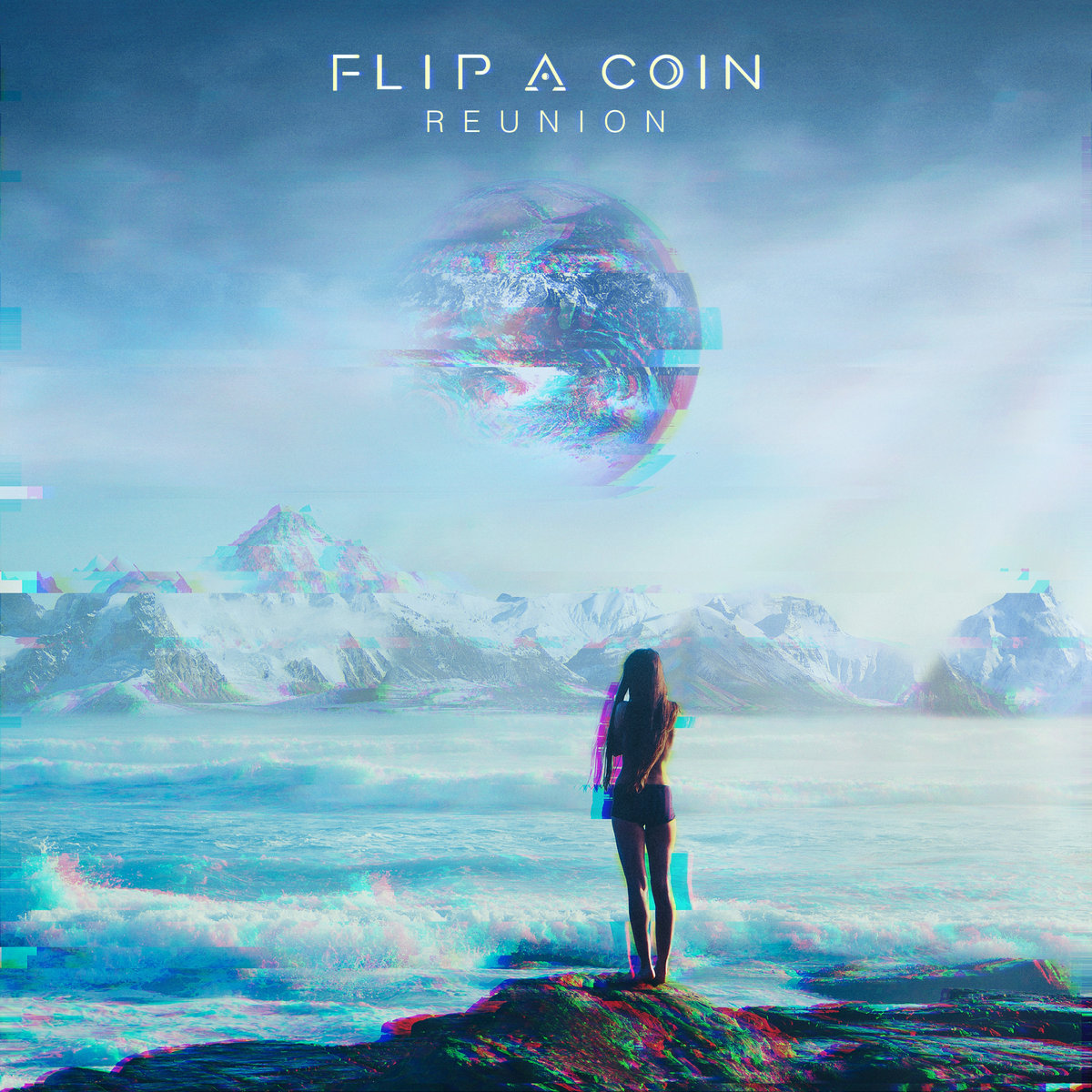
Your debut album “Reunion” represents four years of creative growth. How did the collaborative process evolve over those years, and what were some of the key milestones?
Tomáš: I think the most key moment came from before this album even happened, and that was the release of our first single called Haven four years ago. Once that was out, we knew like, yeah. We can actually do this. And that was super affirming. During the process of working on Reunion, though, I’d say fully finishing the longest song on that record, False Promises, felt like a real landmark.
Heyden: These songs weren’t recorded in one batch. There wasn’t really a demo process. We were kind of writing and recording them at the same time, and I think you can hear that across the different songs. “Lifestream” and “False Promises” were recorded close to a couple years apart, so I definitely think we brought some new tricks with us into that song.
The album spans multiple subgenres, from melodic post-hardcore to borderline deathcore and progressive metal. How did you decide to embrace such a diverse range of sounds on “Reunion”?
Tomáš: To be honest, that was not a completely conscious decision! My music taste leans towards albums where I feel like each song has it’s own identity, that every song does something a little bit different from the rest. And so that’s just where my songwriting takes me naturally.
Heyden: I’m a fan of bands that fall into all of those subgenres, and plenty of non-metal stuff too. I’m always excited to experiment with songs that are outside of what I’m used to performing. It’s a huge reason I joined Flip a Coin.
How do you manage to maintain a cohesive sound across the album when experimenting with so many different styles?
Tomáš: But do we really? Haha. I believe that is mostly Heyden’s work, he brings his own vocal style into each song and that sort of ties it all together and makes the differences less jarring. If it wasn’t for his singing the album would feel much more disjointed since the instrumentals are so vastly different.
While the songs are pretty different from each other, I think we both have our own style that we bring into every song. At this point I’ve jammed our demos enough to know a Tomâš riff when I hear one…and the riffs he’s cooking up are quite tasty.
“Reunion” feels like a very cinematic album. How do you approach writing music that feels as immersive and dynamic as your tracks on this record?
Tomáš: I’m so happy you used the words immersive and cinematic, because that is exactly what I was trying to achieve with the sound of this record! I did this with layering many different instruments – guitars, synth pads, strings – on top of each other; just when I thought it was enough I always tried to take it one step further. Then contrasting these parts with more raw sounding sections creates that sort of experience. Also lots of samples and special effects. I wanted each song to feel almost like a movie, sort to speak.
Heyden: That’s all Tomâš. I think this aspect of our music lent itself well to the lyrics that are more story-driven in “False Promises” and “Passengers”. My inner theatre kid definitely came out in my vocal delivery for those.
Tracks like “Lotus” and “Lifestream” have a strong melodic focus, while others like “Amaterasu” lean towards a heavier, deathcore sound. How do you balance melody and aggression in your songwriting?
Tomáš: It’s very much about where I’m at life during the time of writing, or what bands I’m currently listening to, or just the mood and feeling I’m trying to capture. I have a good image in my head of what kind of song I’m trying to write almost every time before I even pick up my guitar. Sometimes I’m going for a rather pretty and melodic sound, other times I want to write something dark and heavy. Songs like Lifestream or Passengers strike a good balance of both, I think.
Heyden: It all starts with what Tomáš brings to the table instrumentally, although I try to avoid predictability when I’m writing vocals. There’s kind of a tired trope of singing on melodic parts and screaming on heavy parts in a lot of modern metal, which I find boring. Ultimately though, I try to just embody the emotions the song makes me feel.
Heyden, as a vocalist, how do you approach matching the intensity and emotion of the different styles of music on “Reunion”?
Heyden: I think all music that makes you feel something has a good grasp on tension and release. I try to tell a story with each song where it has ups and downs and recurring themes. Bringing back certain parts in a new way kind of helps tie everything together. Other than that, it’s getting out of my head when I’m tracking my takes. Trying to worry less about hitting a note perfectly and trying to be “in the song”, for lack of a better term.
Tomáš, you not only wrote and played the music but also handled the production, mixing, and mastering. What were some of the biggest challenges of wearing so many hats on this album?
Tomáš: I’d say the biggest challenge for me is bridging the creative and production processes. Sometimes the parts I write end up sounding very different from what I heard in my head once they‘re recorded and fully fledged out. So failing to translate my ideas into the actual music can be frustrating. On the other hand, this can also make for some really cool, unexpected moments. Being in complete control over the entire process from start to finish is both a blessing and a curse.
The album features guest musicians like Michael McGinley on piano and Jake Maaka on vocals. How did these collaborations come about, and what did they bring to the project?
Tomáš: Jake was featured on a very heavy piece of music I was enjoying a lot a few years back, and when I wrote Amaterasu, I realized he’d be the perfect person to have a feature on it. The piano parts Michael wrote for Lifestream were the last piece of the puzzle that interlocked the different sections of the song. I still remember the moment when I heard what he wrote for the first time, I was honestly shocked by how well it hit the spot.
Heyden: Michael McGinley is my dear friend and bandmate in my other project Flora Nova. Check that out if you want to hear more of him shredding on the keys. I thought Jake brought a visceral kind of aggression to “Amaterasu” that fits so well, and his delivery on the chorus had similarities to Tommy from Between the Buried and Me who is one of my favorite vocalists. I liked filling in on backing vocals for that song and playing off of his melodies. I think both features brought influences to the album that we wouldn’t have otherwise.
“Amaterasu” is one of the heavier tracks on the album. Can you tell us more about how this song came together, and what inspired its powerful sound?
Tomáš: The first half of the song basically wrote itself over a span of a few days. At that time I already knew this one had to end up being a single because of the super straightforward structure and open chorus. I even think it’s the song with the earliest chorus on the album? However, then I hit a brick wall with the ending and it took me 2 years to come back to it. As far as inspiration goes, it’s a very Veil of Maya inspired song.
With “Reunion” being your debut album, how do you feel it sets the tone for Flip a Coin’s future? Are there any particular directions you’re excited to explore moving forward?
Tomáš: As you’ve mentioned, the album features a very wide sound palette, and I’m super happy about our debut album having this kind of character. That’s because it shows we can do it all, and it sort of leaves you wanting more while not knowing what to expect next at the same time!
Heyden: It’s good to have it out there! I’m excited to get more experimental with the next batch of songs and expand on the variety of sounds we were able to achieve on this album.
What are some of the major influences, both musical and non-musical, that shaped the sound and themes of “Reunion”?
Tomáš: I started writing this album right after I moved away from my family and entered college at 19. Now I’m 23, and I think I don’t have to explain how so many things happen in a person’s life during this period. It was a rollercoaster and all these experiences served as a fuel for writing and are reflected in the album. Sound-wise, I drew inspiration from many of my favorite records which came out during that time, most notably from bands like Periphery, ERRA and Counterparts.
Heyden: It probably comes as no surprise that I joined this band after seeing a post from Tomáš on the r/periphery subreddit. They’re definitely a huge influence for both of us. In the realm of prog and metal, Protest the Hero, The Contortionist, and Corelia have been pretty big influences on me. Both Tomâš and I are into sci-fi, so that’s where some of the more conceptual lyrics came from. The rest is inspired from both of our perspectives on past relationships, loss, mental health, and personal beliefs.
Given the album’s independent release, how have you approached getting your music out to the world and building a fanbase for Flip a Coin?
Tomáš: Making music is an outlet for both of us, and so that’s the most important aspect before anything else for the band. I personally really enjoy the visual aspects as well, so coming up with the artwork and music video ideas was lots of fun and I feel like it can help connect with our audience. For our guitar oriented fans, I’ve also recorded guitar playthroughs for some of our songs and tabbed them out, you can find that stuff on our YouTube and Bandcamp.
Heyden: We put out music videos for “Lifestream” and “The Algorithm” and a few more visualizers for “Lotus”, “Insomnia”, and “Amaterasu”. We’ve also pitched music to some playlist curators. It’s tough when you can’t promote by playing shows and finding a scene to be a part of. Ultimately though, we’ll write this music whether there’s a fanbase or not. It’s first and foremost a passion project and an outlet for creative expression.
Reunion is out now and is available from Bandcamp, Spotify and Apple Music. Follow Flip a Coin on Instagram, and like them on Facebook.

 This is where the band’s latest live release,
 Progarchy