The long-awaited release of the second part of Big Big Train’s English Electric does not disappoint. It continues the band’s reverence and celebration of the unsung heroes of Great Britain’s past, beginning with the first track, the epic “East Coast Racer”. After a beautiful, elegiac opening featuring new member Danny Manners’ piano, the listener is suddenly hurtling down a railroad track on the exhilarating 1938 record-setting run of the famous Mallard steam locomotive. True to its subject, this 15+ minute song speeds by in no time, thanks to the propulsive drumming of Nick D’Virgilio. His stick-work evokes to an uncanny degree the clackety-clack rhythm of a train running full-bore across the countryside.
Another excellent song is “Worked Out”, a tribute to the millions of coal miners who labored underground to provide the fuel for the industrial revolution. It’s quite a rocker with a catchy sing-along chorus. David Longden’s “Leopards” is a nice change of pace, as the album turns inward to examine the conflicted emotions of two former lovers tentatively reconnecting. “Keeper of Abbeys” has one of the catchiest melodies ever written by the band, and it includes a hoedown featuring some delightful fiddle.
N.B. AP is Andy Poole, DG is Dave Gregory, DM is Danny Manners, GS is Greg Spawton. Progarchy interview conducted by Brad.
***
Progarchy (BB):When you put EE1 and EE2 together, how do you expect the listeners to see the whole EE? Say, 20 years from now, few will have had the experience of getting one, then the other. It will most likely be just EE. Do you expect your listeners–me, for example, or anyone else–interpreting EE1 differently in light of EE2? In particular, I think about a track like Hedgerow. As you probably know, Greg, I consider this the single finest conclusion to any album. Ever. Period. Even better than Abbey Road, which had that position for me prior to hearing EE1. But, when I do get to hear EE2, I will now see Hedgerow as the middle song.
GS: You’ve put your finger on something that has caused us a fair bit of soul-searching Brad. At first, we had a fairly straightforward view on this which was simply: ‘it’s a double album, but we’ll split it into two separate releases’. Our reasoning was that 2 hours of music is a lot for the listener to get their head around which can initially cause under-appreciation of the double album in question. We were also aware that if you release so much music at one time, you get one round of publicity then the world moves on. If you split the release into two, the band is in the spotlight for a longer period of time. The only downside to this release strategy is that English Electric becomes seen as two separate pieces of work and so we always planned to release a special double edition bringing it all together. The thing is though, and as your question makes clear, it’s not as simple as we thought it would be. If you’re splitting an album into two you do have to try to make two satisfying separate halves, which is what we have tried to do. And that isn’t the same as sequencing a whole double album. So, the question we began to ask is: what do we do when we prepare the double Full Power edition? Do we simply stick Part One and Two together or do we start from scratch and re-sequence it as a double album? You mention Hedgerow as being a strong concluding track but we’ve also got Curator of Butterflies which is, we think, another strong end-piece. Which one of those takes precedence and gets to close the double album? And what happens with the three extra tracks we’re including? Where do they fit in? What we now think we’ll do is to start again from scratch and re-sequence Full Power as a double album without any reference to the orders on EE1 and EE2. It may be that we find some of the sequencing on EE1 and EE2 also works for EEFP and if it does, it does. Or it may be that the sequencing is completely different. In any case, the additional tracks will inevitably change the feel of things. The other question you raise is what happens when EEFP is released? Does that mean that EE1 and EE2 should go out of print? If not, will any new listeners buy them or will they go straight to EEFP? This is, I think, something we’ll have to keep under review. If EEFP turns out to feel like a very different listening experience to EE1 and EE2, then it makes sense to keep them all in print. Of course, the extra tracks will also be available on an EP and as downloads to make sure listeners don’t feel obligated to buy a double album just to hear three new songs. So, for many people their experience of English Electric will be as three separate releases.
Progarchy (BB):Tell me about the additional songs added to the full package? Will there be much new artwork?
GS: There are three strong new songs. They are not leftovers from the original sessions but have been recorded specifically for EE Full Power. One of them is a sort of bookend love song to go with Leopards. Another builds on the main album themes of working communities and the English landscape. And the final one is something very different for us.
AP: As regards the artwork, I’m working on a lavish design with a comprehensive booklet telling the stories behind the songs and behind the album.
Progarchy (BB):After EE2, you’ve announced plans to release Station Masters. Can you give us some details about this? Will it be reworked older tunes? Are there some new tunes?
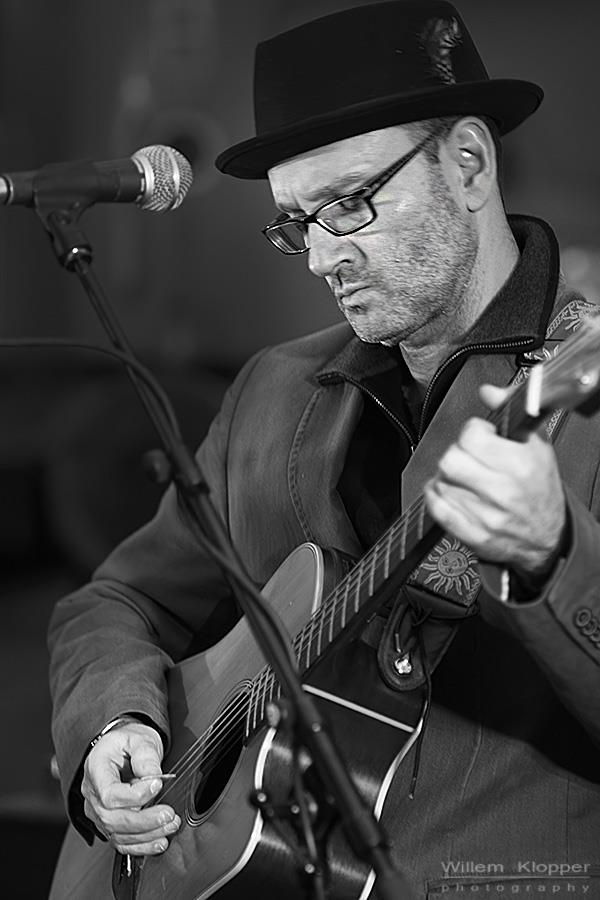
NDV by Willem Klopper.
GS: It’s a triple CD which aims to tell the story of the band. All recordings will be with the new line-up so songs from albums prior to The Underfall Yard will be entirely re-recorded. Some of these are radically re-worked, others are fairly close to the originals but with the strong performances that the current line-up is capable of. Even more recent material may be reworked to some extent. For example, I always wanted to feature violin in The Underfall Yard but we didn’t have a violinist at the time. Rachel Hall will feature on the updated version. Wherever we look back and think something could have been better, we’ll make it better.
Progarchy (BB):Will anything else come with the CDs? Any kind of BBT timeline or a poster? Concert DVD?
AP: There may be some video or other visual material. We haven’t made any final decisions on that yet.
Progarchy (BB):Where do you see BBT’s place the history of rock and the history of prog rock?
GS: I think it’s too early to make an assessment. There are many drafts of history. I hope we’ll find ourselves as more than just a footnote when later drafts are written. However, progressive rock is a fairly contained world and we’re a long way away from making any sort of breakthrough in the broader rock and pop worlds.
Progarchy (BB):You have an immensely large and loyal fanbase. How does this affect you or the band’s approach to music and the music world?
GS: We’re really lucky with our fanbase. They seem to us in all of our interactions to be a thoroughly decent and likeable bunch. The feedback we’ve had over the years has been really important. To hear that what we like to write about resonates with others and particularly that we’ve moved people with our music makes a huge difference.
Progarchy (BB):What is your view on packaging the material? You sell lots of downloads, and we live in a download world (for better and worse), but you also put a lot into the packaging of your CDs. Which I love. As you might remember, after I downloaded all of your albums up to The Underfall Yard, I contacted you because I wanted to purchase physical copies. And, it was worth the investment. Why do you consider it so important for BBT to have such beautiful packaging, especially in day and age? And, would you say such quality packaging should be important for all bands?
Andy Poole by Willem Klopper.
AP: The ideal package for us is a presentation of the words, music & images. The artwork is integral and we have been very fortunate over the years to have teamed-up with Michael Griffiths, Jim Trainer and Matthew Sefton who have each provided inspiring works that both complement & advance the sensory delivery of our albums.
Growing up with vinyl in the 70’s, you had an ingrained sense of interacting physically with an album … the touch, feel & smell of a new gatefold release was savored and an essential part of the experience … quite apart from placing a stylus in the groove and being aurally transformed to a progressive world of music where none of the old rules applied.
The initial advent of hurriedly released compact discs in their horrid plastic jewel cases and Lilliputian inserts amounted to instantly inferior packaging largely forgiven by consumers for the promise of digital sound.
We migrated to digipaks for the enhanced tactile experience, albeit in miniature compared to vinyl, and greater flexibility to represent the visual artists who collaborate with Big Big Train.
Although it is tempting to suggest and hope that other bands disregard the importance of physical product packaging to our advantage, I actually believe that it behooves us all to raise the quality bar up high and to the reasonable limits of affordability.
DG: It was certainly a very important factor with XTC. Andy Partridge claimed that every time he finished writing a song, he’d design a sleeve for it just in case it was chosen as a single! But then, he’s a very talented artist and can’t help himself. I’m certain sales of many of our releases were multiplied as a result of the packaging, as well as boosting the band’s ‘arty’ credentials.
Progarchy (BB):I’m always amazed at what a community BBT is. That is, it’s clear–from the music as well as things such as FB posts, etc.–that you each really like one another. There’s no sense of brilliant radical individuals working next to each other (such as in certain early Yes albums), but a true sense of group brilliance, an organic whole. What do you think accounts for this?
GS: From my point of view I come back to something I’ve said before – surround yourselves with talented people and things start to happen. There is something else as well though, and that is that the guys in the band are all thoroughly good chaps. We’ll all hold strong positions from time-to-time and we say what we think but good manners are important. Speaking of Manners, you’re the new boy, Danny, do you have any observations?
DM: Some of it is simply that there are no huge egos in the band, whether by luck or by conscious or unconscious choice. (Medium sized, maybe, but not huge!) However, one musical thing that strikes me is that the band members aren’t over-specialized – BBT doesn’t consist of “the singer”, “the drummer”, “the guitarist”, etc., all vying for the spotlight. Everyone is a multi-instrumentalist to at least some extent, and everyone also has writing and/or arranging experience, so there’s much more focus on making the music work as a whole.
DG: Don’t forget also that we’re grown men, not ambitious youngsters. We are focused on the music at all times, because we love it. Both Greg and David, as writers, are extremely accommodating in terms of accepting ideas and contributions from all of us; they have yet to display any serious proprietorial tendencies when it comes to protecting their original vision. Which is not to suggest that it’s an open free-for-all; we live with the songs for months, plenty of time to assimilate their essence, so we’re generally united in the common aim, ultimately.
Progarchy (BB):And, how do you see the role of Rob as engineer or any guest musicians you bring in? That is, how integral are they to a BBT sound, if such a particular thing exists.
The Seventh Train and Phill Brown of our age: Rob Aubrey. Photo by Amy Mumford.
GS: It’s an evolving sound and it will continue to develop. We have some really important collaborators at the moment and I envisage we will continue to work with many of them in the long-term. Certainly, Dave Desmond (who plays trombone and arranges the brass band) and violinist Rachel Hall will have significant input into Station Masters. As for Rob, he’s the seventh Train and our dear friend.
Progarchy (BB):Where do you see BBT after Station Masters?
GS: I’d like us to be playing some shows at some stage. It would be good to do something around the time of Station Masters and then something around each release after that. As mentioned earlier, we have another album well underway and have started recording it so that is likely to come out in 2015.
Progarchy (BB):Any final thoughts on the current and future state of rock?
GS: In Britain, the last of the high-street record stores has gone into administration. I guess there are similar issues in other countries. The supermarkets have stepped into the breach and will only really sell music in the pop charts, so the route through traditional music-distribution is closing down to most progressive bands. However, online, the choice is very broad and the issue there is getting noticed amongst all of the competition. Making a living out of music is going to get harder still but it’s been a labour of love for most folk and jazz musicians for years and I don’t see why it should be different for rock bands.
[Well, what does one say after such amazing interview, except—thank you. Thank you to BBT for giving us so much time for this interview. An even bigger thank you for making the world just a little bit brighter.—Ed.]
In the late spring of 1982, as I completed 8th grade, I met one of those kids who is always at the height of cool. But, it was a calm, somewhat cynical, real cool, not the show-off cool of the wealthy socialite kids. It was the Bohemian cool of the Beatnik not contrived cool of the Hippie or the Yuppie.
Ritchie.
Only a few of us belonged to his circle.
Except for moments of ecstatic outbursts about an idea here or there, he radiated coolness. He read the Great Books and knew lots of poetry, he worked out in his room (he had the whole upstairs of a late 19th century house to himself) and studied Japanese martial arts, he knew everything about men such as Bill Buckley and Jack Kerouac, he owned the best stereo system of anyone our age, and he possessed an amazing record collection. He was the youngest of a large family, and his parents were much older, pretty much leaving Ritchie to raise himself.
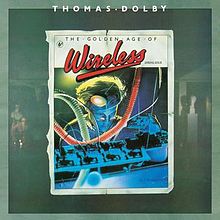
It was Ritchie who introduced so many of us–in a medium-sized town in the wheat belt of the Great Plains–to English New Wave. Growing up a progger–addicted from an early age to Yes, Genesis, and Kansas–New Wave was a bit eye opening for me. It seemed to hold much of the complexity of prog, but it did so with computers and keyboards, often one or two musicians, where prog might have included eight or nine. Ritchie introduced me to ABC, Kate Bush, The Smiths, Oingo Boingo, Tears For Fears, and, most importantly for me, Thomas Dolby.
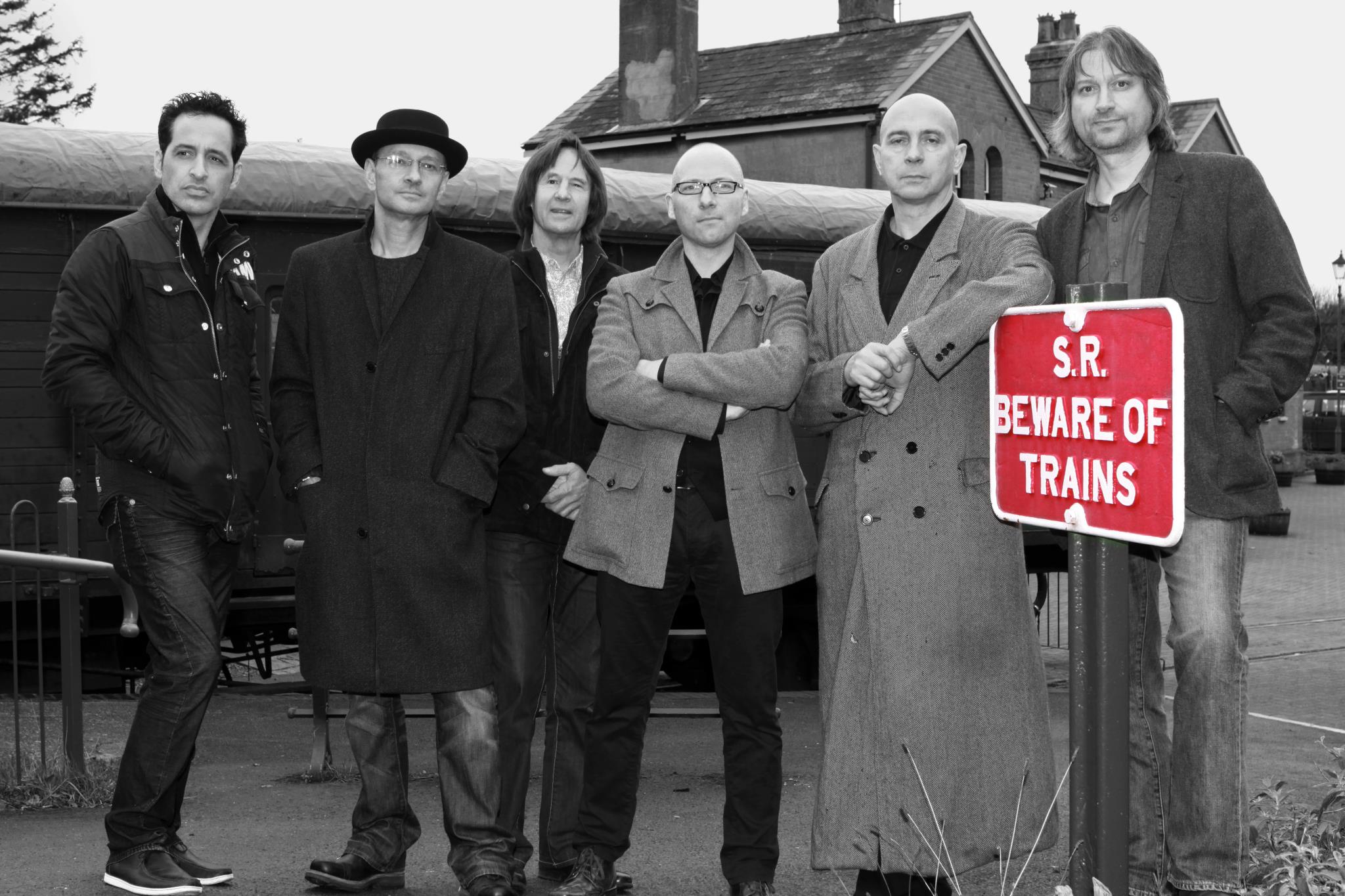
Nick, Andy, Dave, David, Danny, big red sign, Greg. Photo by Willem Klopper.
Great news today on Facebook from the station master himself, Greg Spawton of Big Big Train. Bassist and keyboardist Danny Manners has officially become a member of the band, joining Spawton, Andy Poole, David Longdon, Dave Gregory, and Nick D’Virgilio.
Spawton wrote:
We are pleased to announce that Danny Manners has joined Big Big Train as the band’s keyboard player. Danny made a significant contribution to English Electric Part One, playing keyboards and double bass and we are delighted that Danny has accepted our offer to join the band in time for the release of English Electric Part Two on March 4th. Danny’s past credits include Louis Philippe and Cathal Coughlan.
Manners’s training has been mostly in classical and jazz. He writes of himself at his website:
For those who have stumbled across me: I’m a double bassist, electric bassist, pianist, arranger and composer living in London, England. Starting with classical music as a child and teenager, I worked my way backwards through jazz and finally worked out how to play pop half-decently in my thirties. Along the way I’ve also been involved in improvised and “leftfield” musics. At the moment I’m lucky enough to be doing a little bit of all of these…
He also lists an impressive discography, having played extensively with Louis Phillippe, Louise Le May, Cathal Coughlan, Sandy Dillon, and Muse: http://www.dannymanners.co.uk/albums.html
I must admit, I’m (I–ed., Brad) thoroughly impressed with this addition. Over twenty years old, beginning with original members, Spawton and Poole, Big Big Train has never ceased to grow, take grand chances, and transform into what is arguably one of the greatest–if not THE greatest–rock band of our era. With their near collapse after the recording “Bard,” Spawton and Poole have developed the group tremendously with “Gathering Speed,” “The Difference Machine”, “The Underfall Yard”, and “Far Skies Deep Time”. Their 2012 release, “English Electric Part One”, has received rave reviews and has been labeled the single finest release of 2012 by a number of critics.
To this critic, “English Electric Part One” is not just the best of 2012, it’s the best rock release since Talk Talk’s 1988 magnum opus, “Spirit of Eden.” Before that, one would have to jump back to Yes’s “Close to the Edge” or Genesis’s “Selling England By the Pound” in the early 1970s or to Dave Brubeck’s “Time Out” to find comparable works of music in the last half century.
It should be noted as well that the engineer for Big Big Train, Rob Aubrey, is the Phill Brown of our era as well.
Finally, Manners has worked with David Longdon before, and–I assume–connected Big Big Train to the famous bassist and keyboardist.
The second part of English Electric will be released on March 4 of this year. American drummer, Nick D’Virgilio, a full-time member of the band, just finished recording the final drum parts for “English Electric Part Two.” Additionally, the band will be releasing a limited edition of the full “English Electric” in the fall and the re-imaging of previous tracks on “Station Masters” in 2014.
Though Progarchy is only two months old, I’m absolutely thrilled with its successes. A thanks, first, to all of you out in the world (it’s a blast to look at the google map of who checks us out daily) who read us. I hope you keep coming back to us.
Second, though, an immense thanks to all of the Progarchist writers. Everything written here is purely voluntary. We each have full-time jobs and families, but we do this because we love it.
We’re certainly not the biggest music website, but I believe that–in terms of sheer literary quality–no other website matches us. I would hold any one of our writers (individually or collectively) against any other group of writers in the blogosphere. If this sounds cocky, I apologize. But, as editor, I find it quite humbling. We really like each other, but we also believe that the importance of the music demands that we write and try to match with our utmost abilities. On this, I think we’ve succeeded.
Additionally, though the site is based in the western Great Lakes of North America, we also have writers from the U.K., Brazil, and New Zealand. We’re hoping to have someone from Antarctica soon—Penguin Prog?—but, it’s been more difficult than one might first imagine.
As 2012 comes to its necessary and inescapable end, each of the Progarchists has been asked—as time permits—to rank her or his favorite albums of the past year.
I’ll be ranking my top fifteen albums as well, and I’m sure my number one pick of the year, which I think is the best album of the last twenty-four years, will probably come as no surprise to anyone.
Progarchists, our friend and ally, Robin Armstrong, just announced a slight delay in the release of the new Cosmograf album, The Man Left in Space. The album will now be released at the end of January 2013, giving Robin a bit of cushion in the final production. Robin’s full post (complete with wonderful Rush references in the title) can be found here:
Of course, it should go with out stating that every Progarchist should own the first three Cosmograf albums as well as pre-order The Man Left in Space. Sadly, the first one is very difficult to find, but let’s hope Robin reissues it.
Comograf’s music can best be described–if a comparison is necessary–as a cross between Ayreon and Big Big Train–theatric, eclectic, and totally prog. Despite the comparison, Robin’s music is certainly original, and he is, no doubt, his own man and artist. The new album will feature other Progarchy favorites, Greg Spawton and Nick D’Virgilio of Big Big Train and Matt Stevens of The Fierce and the Dead. Additionally, our generation’s Phill Brown, Rob Aubrey, is helping with engineering. And (yes, I’m incredibly proud of this), I have a few spoken lines on the album. How cool is that? Very.
My apologies for the absence of posts yesterday, November 15. I’m in the middle of round two of grading freshmen papers and midterms, and life overtook me this week.
It’s late Friday afternoon as I type this in Michigan, but I still have one more academic event today. At six (in about 2 hours), I’m giving a lecture on The Killing Fields, the sublime 1984 movie about the holocaust in Cambodia, 1975-1978. As I think about watching that movie for the first time, I get chills. What horrors humanity creates for itself. But, that’s a different topic.
As the sun streams into my office window, I’m in the mood for much more pleasant things.
In particular, I’m thinking about the majesty and wonder that is Big Big Train. I saw a Twitter post two days ago from a friend who expressed shock at the intensity and greatness of BBT. In a way, I’m incredibly jealous those who have yet to experience BBT for the first time. So, for those who have not had the grand pleasure that is listening to BBT, here’s a guide.
And, just so I make myself as clear as possible: the new BBT album, EEP1, is the equal in greatness of Talk Talk’s 1988 “Spirit of Eden” and Genesis’s 1973, “Selling England By the Pound.” This is, without question, a must own for any lover of music, progressive or otherwise.
As many times as I’ve heard it, there are several tracks that still make me what to blaze a path toward social justice and there are several that just make me smile, for the opening note to the last.
But, certainly, nothing on this album is frivolous. Each track is fraught with meaning.
***
On September 3, 2012, Big Big Train released its latest best studio album, English Electric Part One. It is a thing of truth, beauty, and goodness in every way. Part Two arrives in March. From what I’ve seen on the web and through brief correspondence, it looks as though Part Two will be every bit as intense and glorious as Part One.
Thank to the good will of webeditors, Winston Elliott, Josh Mercer, and Carl Olson (the last, being a full fledged citizen of Progarchy), I’ve had the joy of writing about BBT a number of times.. Last summer, the band released an epic single dealing with the life of St. Edith. To see this, click here. http://www.catholicvote.org/discuss/index.php?p=19315
If you’re new to the genre of progressive rock, which its fans rightly consider every bit as good if not better than the best of jazz (equal in musicianship, but superior in inventiveness and, of course, lyrics, since jazz is generally without vocals), I’ve tried to explain and defend the genre to specialized audiences here: http://www.nationalreview.com/articles/299126/different-kind-progressive-bradley-j-birzer
On my personal blog, Stormfields (www.bradleybirzer.com), I’ve had the great pleasure of writing about some of my favorite bands: Big Big Train, Matt Stevens and his The Fierce and the Dead, Talk Talk, the Cure, Rush, The Reasoning, Arjen Lucassen, Tin Spirits, and XTC.
While I couldn’t even come close to calculating how many words I’ve employed in writing about progressive rock over the years, the same would be even more true regarding my favorite, Big Big Train.
The latest BBT release, English Electric Part One, is not only BBT at its best, it is art at its absolute best. Best described as pastoral, Georgian, and bucolic, the new album is also eccentric (without ever losing its center), intense, brooding, meandering, reflective, joyous, and deeply vernal. This is something new, as BBT has traditionally explored the more autumnal aspects of life.
It’s also simply hard not to love these guys on a personal level. I started corresponding with Greg Spawton several years ago, and he responded immediately and with what I quickly discovered was his characteristic wit and kindness. After all, who was I–just some goofy guy from the U.S. who happened to fall over myself explaining why I loved BBT. I once wrote something similar to Neal Peart. I got a nice postcard back two years later. But, from Greg, a friendship emerged. Now, my kids even color pictures for him and ask how my “English rock star friend” is doing. I have found that all of the members of this band are similar in this regard, and it’s very, very clear by their art that they love one another in a way only brothers can. Indeed, they face the world not as individual artists, each pulsating with radical individuality, but as a band, ready to leaven all that is good in the world.
A quick look at the wide-ranging debates on the BBT FB page shows how many wonderful and meaningful folks gravitate toward this band and remain to talk some more! Some of these people have also become good friends, though I’ve yet to meet a single one, face to face.
Greg Spawton and Andy Poole formed the band in the early 1990s, and they’ve since added some of the absolute finest musicians of our day: American drummer Nick D’Virgilio (rivaled in drumming only by Neal Peart of Rush and Mike Portnoy, formerly of Dream Theater), guitarist Dave Gregory (formerly of XTC and currently of Tin Spirits) and flautist and singer, David Longdon, a music professor and folklore and folk music expert. Augmented by a professional team, in particular engineer and producer, Rob Aubrey, BBT makes music that reflects not only the woes, sufferings, and glories of this world, but without timidity, of the next world. Imagine the three parts of The Divine Comedy come to life, and you’ll get a sense of what BBT is doing.
Spawton and Longdon, the two main writers of the lyrics, are clearly well read and articulate. Listening to a 2-hour interview with David “Wilf” Elliott (no relation to the famous Texan cultural critic, Winston Elliott) this past weekend reminded me once again how excellent true conversation among friends and professionals can be. I would give much for our loud talk show (Mike Church excepted, as always) and TV show hosts in this country to take notice of what educated and purposeful English gentlemen can do. To here the interview, go here: http://www.theeuropeanperspective.com/?p=1764. I would not be surprised if these five would’ve been welcomed in the Thursday evening discussion in the 1930s in C.S. Lewis’s rooms at Oxford.
It’s also worth calling Rob Aubrey, who engineered the album, a sixth member of the band. Aubrey is the Phill Brown of our generation.
To conclude this late Friday afternoon piece, let me encourage you to purchase a cd from Big Big Train. http://www.bigbigtrain.com/ This is a band that not only pursues, as mentioned above, the Good, the True, and Beautiful, but they are entrepreneurs, each trying to make his way in this rather fallen world. For over twenty years, they have chosen not to pursue the commercial path of pop culture sensations and corporate conformity. Every writer for and reader of Progarchy knows too well that the once successful system of patronage is long gone. We must be willing to support culture and art where it emerges. I promise you, the music of Spawton, Longdon, and Co. will not disappoint, and the band is well worth supporting.
Coralspin, “Honey and Lava,” (Altrospire, 2012). New on the prog scene, Coralspin hails from England. Much of the music on this excellent release has the feel of something Trevor Horn or Trevor Rabin might have produced around the time of Yes’s 1984 MTV masterpiece, “90125.” Certainly, Coralspin has its roots in the early to mid 1980s, especially with its big guitars and its big keyboards. Whether one likes the music of Horn or Rabin or not, no one could honestly dispute the audiophile proclivities of each man. The same can be written of Coralspin’s Blake McQueen. The production of this album is simply stunning–this hit me from the first moment I put it in my cd player, and it continues to impress me with each listening. It’s not just the keyboards and guitars that stand out , no matter how much they predominate on most of tracks. The bass and the drums are crisp, offering this album a much more punctuated and professional feel than some of its 80s ancestors. Indeed, I wish Horn and Rabin would’ve mixed Chris Squire’s bass at this level on 90125. Amazingly enough, almost all of Honey and Lava was recorded in McQueen’s home, and he later mixed and engineered it. He’s, simply put, a master audiophile, in the same league with Steven Wilson or Rob Aubrey. The lyrics on this album are wonderful as well–mythic, pointed, hard, soft. Everything has its place, and its place is very good. If I were forced to make a comparison (and, as far as I know, I’m doing this out of my own free will), I would compare Coralspin to The Reasoning. There’s the obvious fact that the lead singers of each are women, but the comparison between the two is much, much deeper than what some silly academic might have pronounced twenty years ago as worthy of revelation. The structures of the songs–as approached by Matt Cohen and Blake McQueen–have a definite similarity. Both love mythic lyrics as well, and each wisely uses the voice not only to convey the meaning of the lyrics but also to convey the meaning of the very music itself. For what it’s worth, I’m a very proud owner of Honey and Lava, and I eagerly await the follow up.


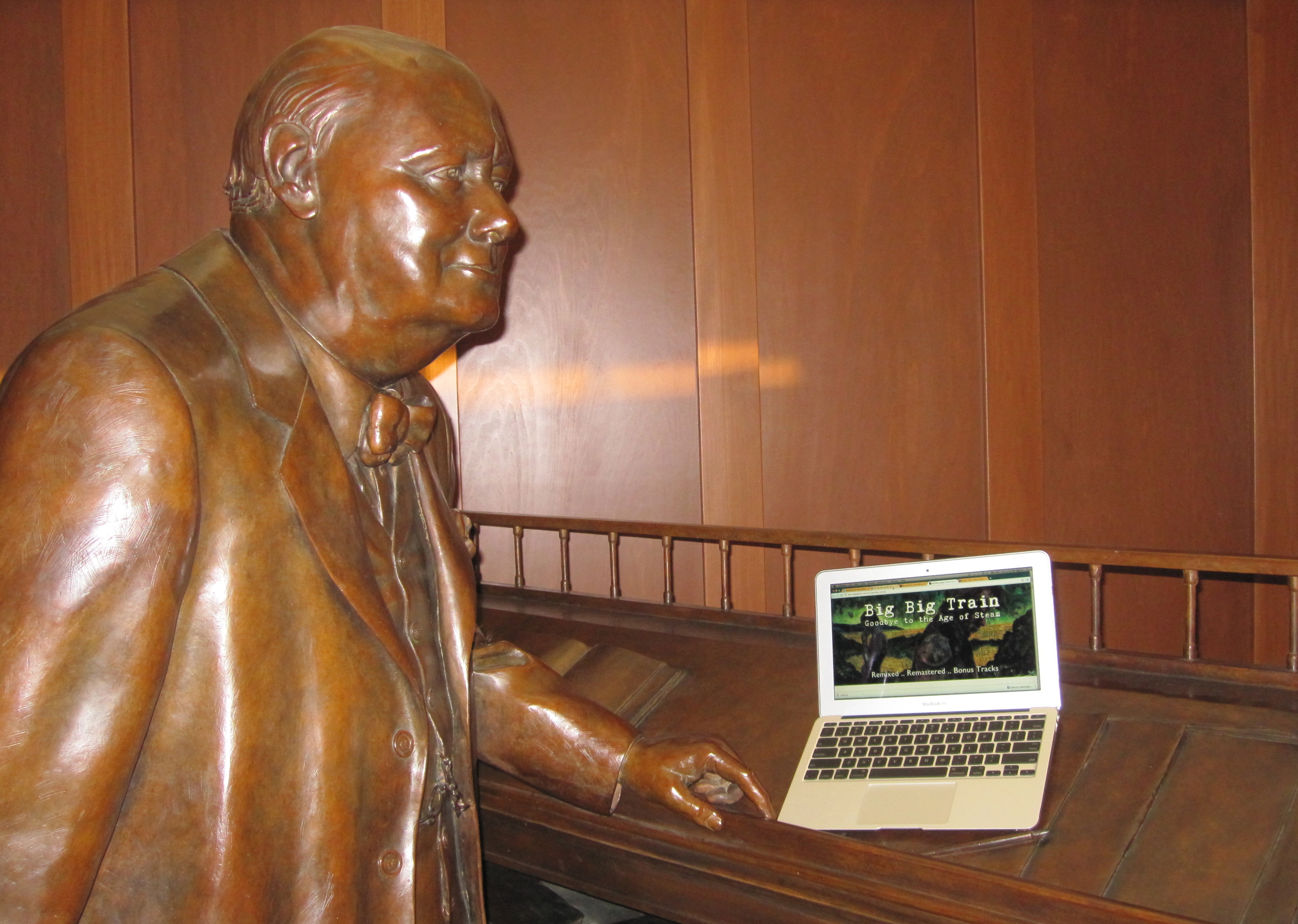 by Tad Wert




 Progarchy