What do Alex Lifeson, Geddy Lee, and the Portnoy Men Have in Common?

Why, this awesome picture of course!

CIR4mr0WsAIOe8f.jpg-large
Too much awesome in this picture! Alex Lifeson, Max Portnoy, Geddy Lee, and Mike Portnoy

This was taken last night at a Rush concert Mike Portnoy took his son to.  Apparently Mike signed autographs for fans sitting near him at the concert.  I can’t think of a better night than seeing Rush and meeting Mike Portnoy!  Maybe meeting Rush, seeing them play, and meeting Mike Portnoy could top that.

CIOI44EWEAAvgFu
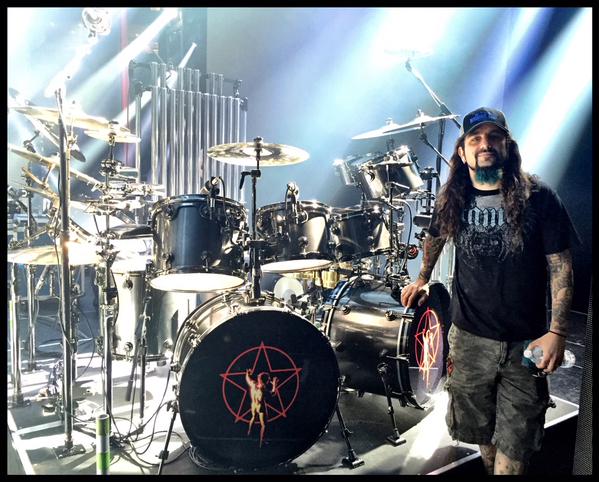
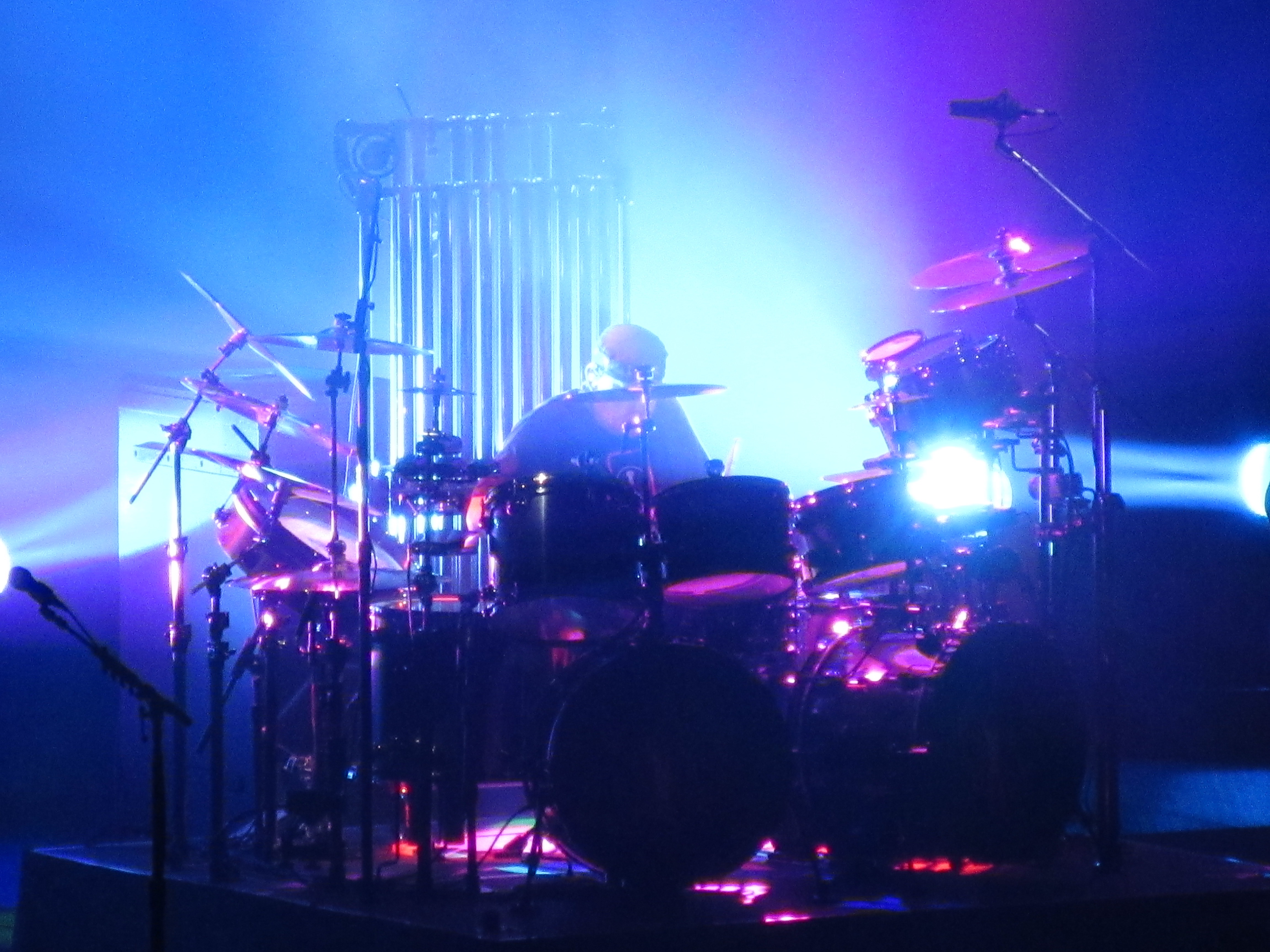
Mike Portnoy with Neal Peart’s drum kit

The Art of Rush, Hugh Syme: Serving a Life Sentence

Review of ART OF RUSH, HUGH SYME: SERVING A LIFE SENTENCE, written by Stephen Humphries (2112 Books, 2015), with a brief essay by Neil Peart.

The first book by Stephen Humphries.

In a week, my family and I move back to Michigan.  It’s been an incredible year in Colorado, and we’ll be very sad to leave this rather textured slice of heaven.  The year went by all too quickly.  As you can imagine, the house is in chaos, and, at many levels, so is my life.  Books here, cds there, my brain across the street, six kids and one cat feeling the “unsettlement” of the moment.

This is a long and convoluted way of writing. . . .

I should’ve reviewed THE ART OF RUSH a month ago.  It’s written by a truly gifted music journalist and critic, Stephen Humphries (a graduate of Hillsdale College in Michigan).  I have nothing but respect for Humphries, and the more I read him, the more I like him.  He’s opened my eyes to my own biases against certain artists, and he’s more than once made me rethink some dogma I’d already decided and locked away, presumably (at least at the moment of decision) forever.  THE ART OF RUSH, amazingly enough, is his first book, though he’s been publishing articles and reviews for almost two decades.

And, of course, it’s designed and illustrated by one of the most gifts men in the visual arts today, Hugh Syme.

I certainly don’t want to get into an us vs. them situation, but let’s say that where Roger Dean is beautiful, Syme is diverse and eclectic.  Dean has spent a lifetime exploring consistency in his art, while Syme has worked with and in every artistic endeavor and genre imaginable.  Dean is classic, and Syme is romantic.  Dean is a perfectionist, and Syme is an explorer.

Everyone recognizes a Roger Dean painting anywhere–whether it’s residing on a Yes album or stolen by a major Hollywood producer.  Probably only James Marsh (Talk Talk) is as distinctive as Dean, though Dean is better known.

THE ART OF RUSH shows exactly why Syme is not as distinctive as a Dean or a Marsh.  He’s too (damn!) interesting to be distinctive.  Whether it’s a font, an image, or an idea, Syme tries anything.  And, crazily enough, it always works!

As is well known, Syme’s first cover for Rush was 1975’s CARESS OF STEEL.  Peart liked and appreciated Syme so much, Syme has designed very album (inside and out) since.  This means he’s been a part of Rush only a year less than Peart himself.  And, the two men get along famously.  Syme possesses the wonderful and uncanny ability to make the ideas of Peart–a radical individualist, perfectionist, and explorer in his own right–visual and successfully so.

The book, produced by 2112 Books, comes in three versions: tall, grande, and venti.  Just joking–with apologies to Starbucks.  No, it did come in three versions when released in May, but the Rush Backstage website only lists the cheapest one now.  A $99/272 page hardback, coffee table style.  Believe me, it’s well worth the $99.

I could be wrong, but I think it’s ONLY available at the Rush Backstage website.  Amazon.com comes up with nothing when I searched for it there.

THE ART OF RUSH is as beautifully crafted (and as heavy!) as you’d expect from Syme.  The binding, the pages, the design. . . all perfect.  Peart provides a short but kind introduction, and Humphries provides all the words thereafter.

My version also came with an LP size card-stock poster celebrating forty years of Rush.  Whether this is normal or not, I’m not sure.  But, I am sure that the ART OF RUSH is a glorious thing to own and to linger over.  It is a piece of perfection, in and of itself.

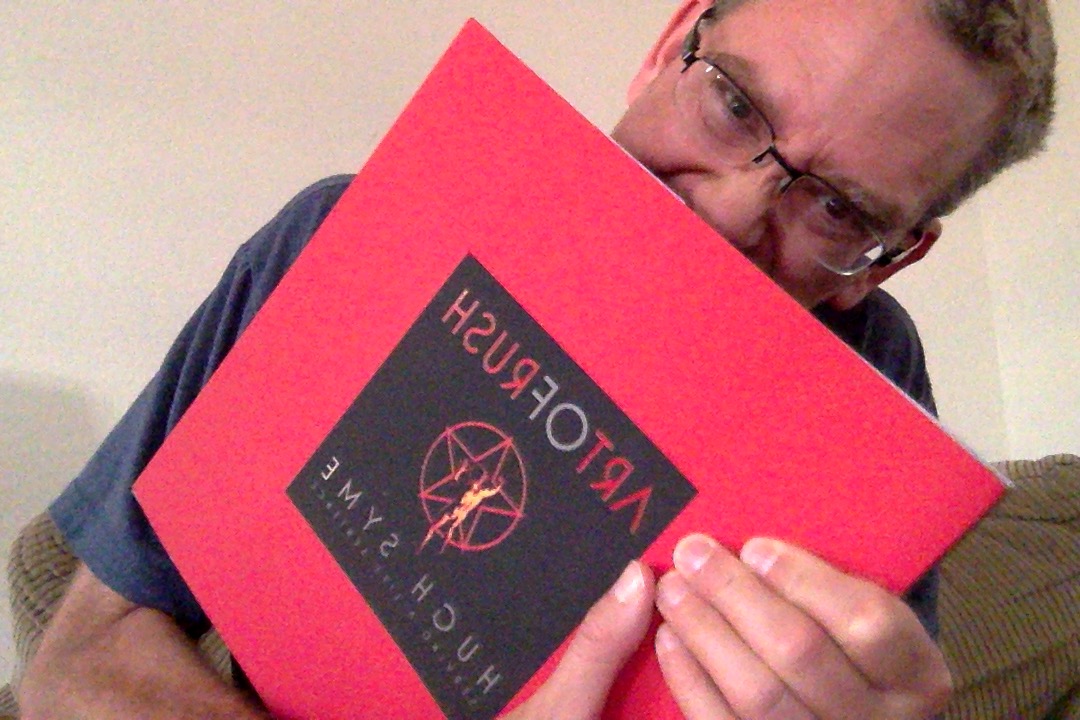
Me, struggling to lift this thing.  It must weigh the same as at least 4 MacBooks.
Me, struggling to lift this thing. It must weigh the same as at least 4 MacBooks.

All At Once, The Clouds Are Parted – Rush, Austin 360 Amphitheater, May 16, 2015

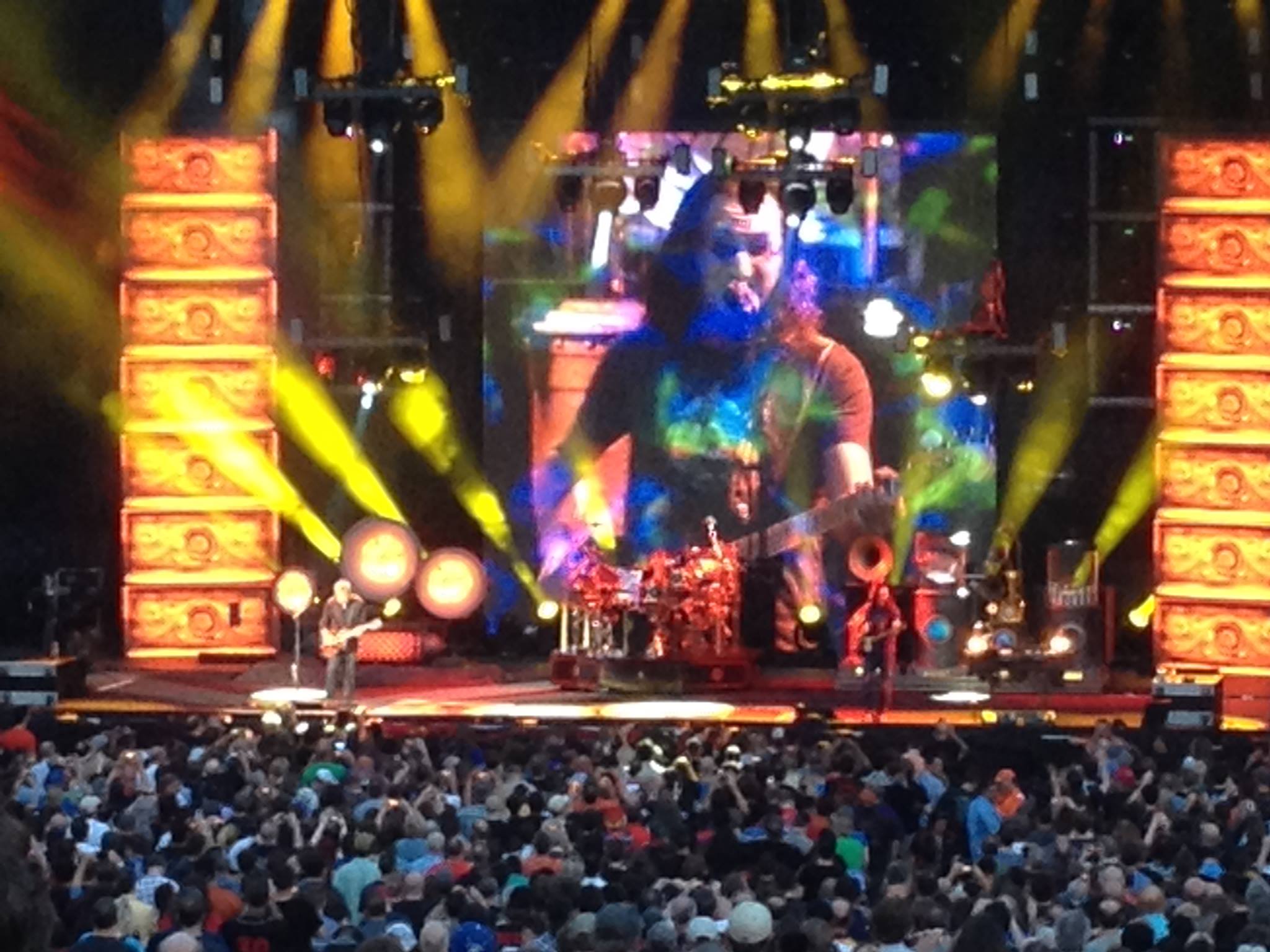
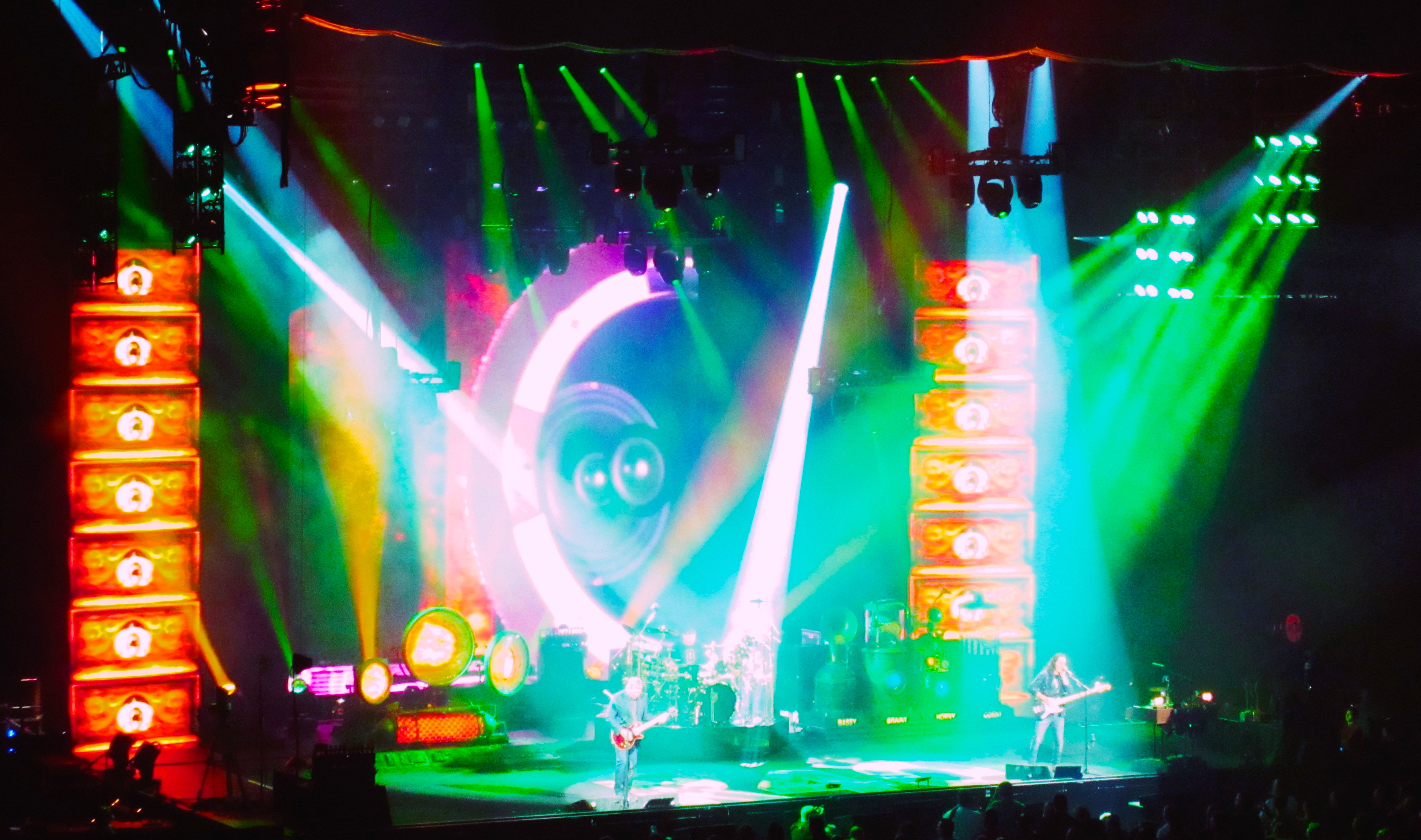
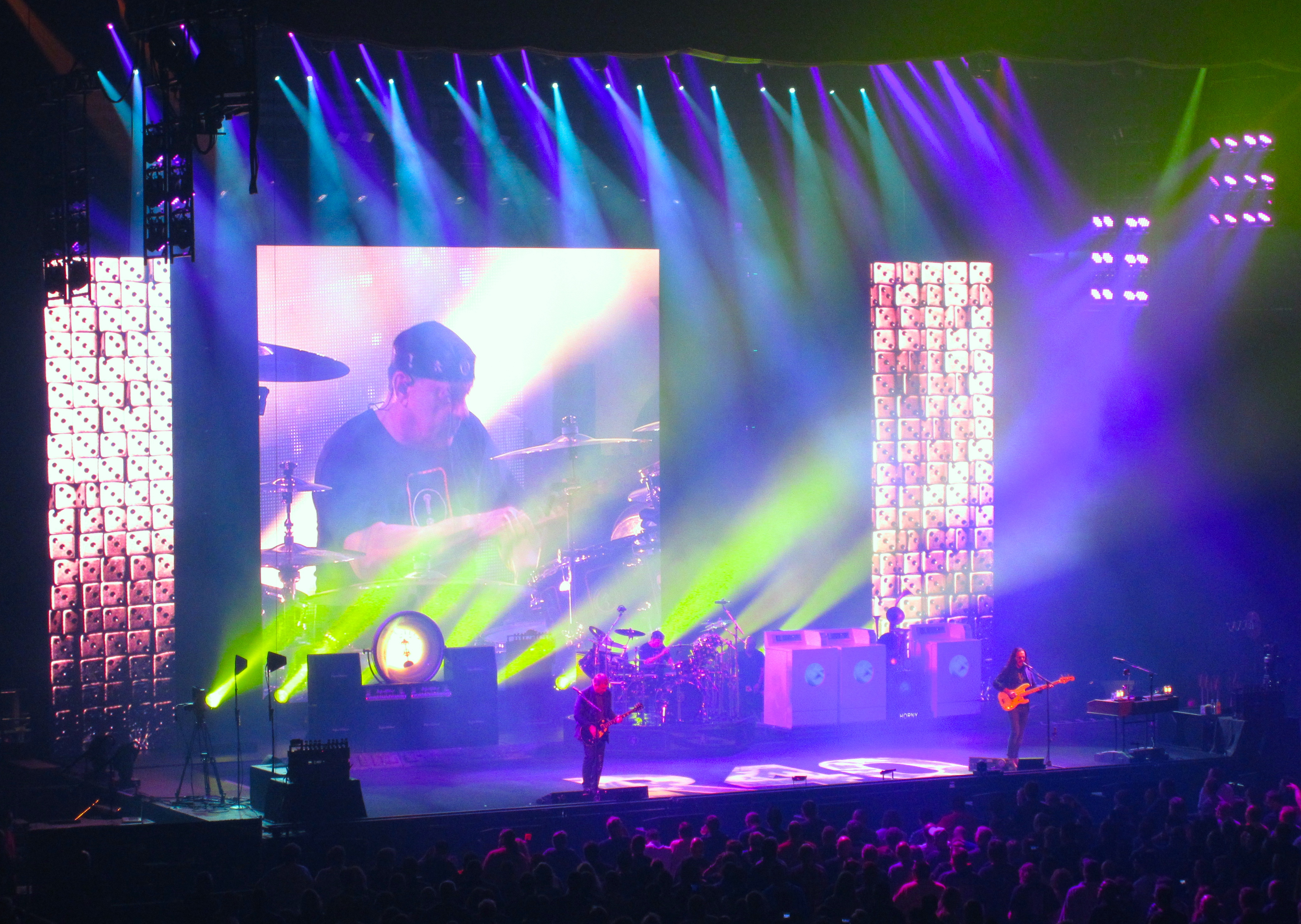
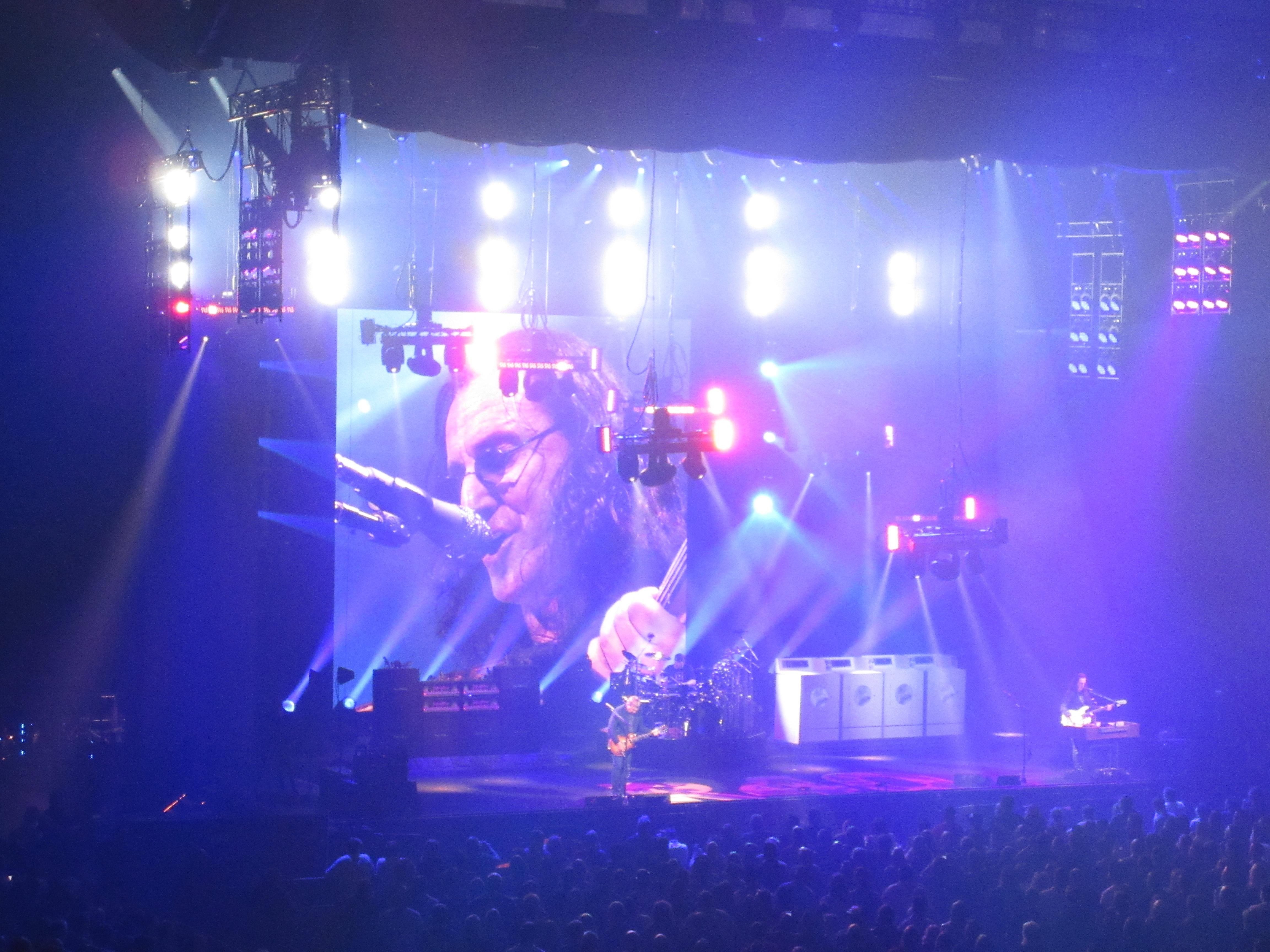
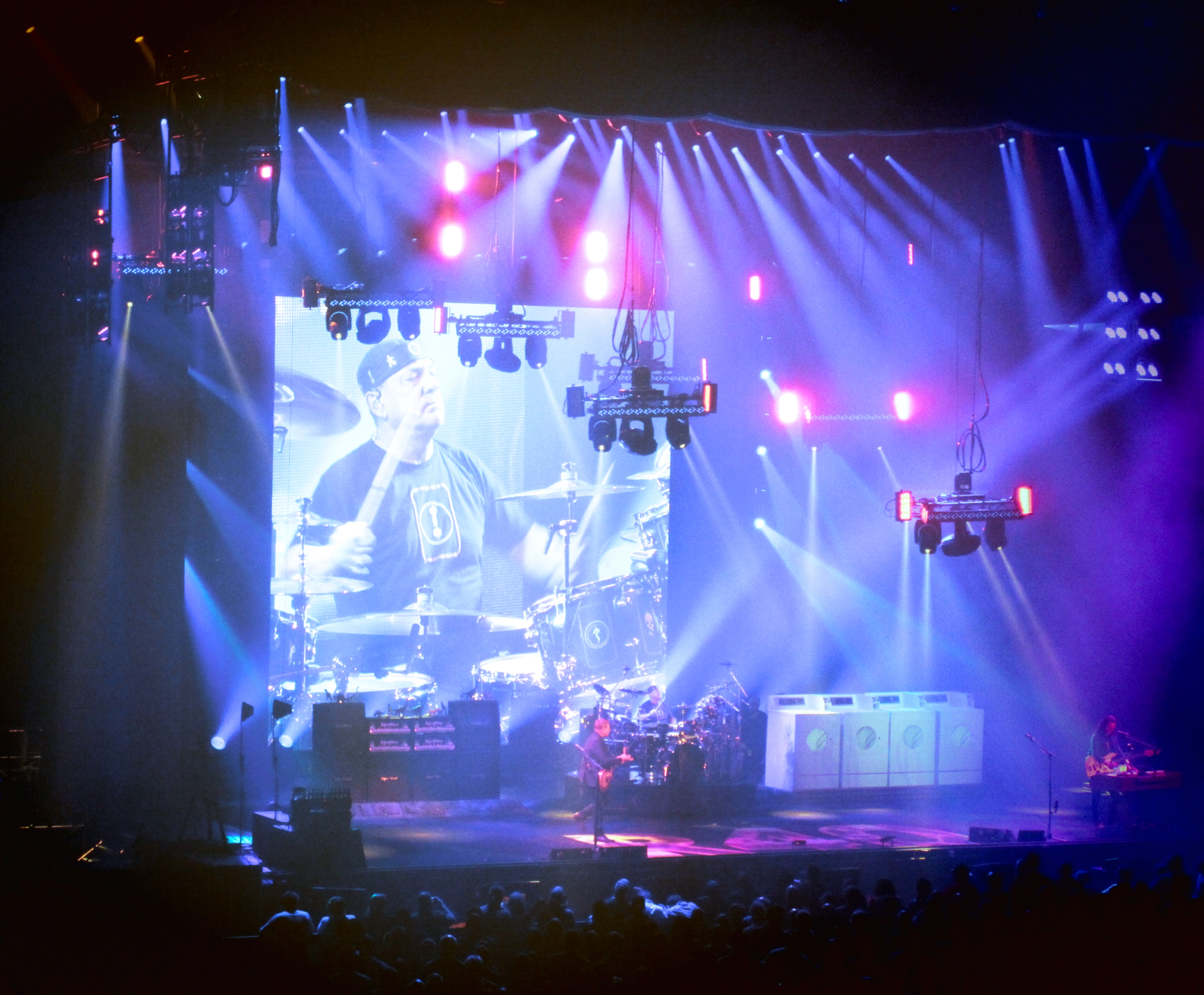
Rush from my iPhoneSpoiler Alert: If you are planning on attending an upcoming Rush concert on this tour and don’t want the setlist spoiled for you, then it’s advisable to not read this. But even if somehow the setlist does get spoiled for you? It won’t make any difference. It’s not the surprise of what they are playing on this tour that makes the show great – it’s that they are playing these songs. At that moment, you won’t be caring whether the surprise was spoiled or not, you’ll just be thrilled that you are there as a witness to greatness.

During the months from May through September, I usually welcome rain. Anyone who has endured the heat of a few central Texas summers (which start early and last a long time) will understand exactly what I’m talking about. But it’s important to remember the old saying about “be careful what you wish for”. We have received a much greater than normal amount of rain lately, including a torrential downpour the day before the show, and a good soaking rain on the morning after. But for May 16, the weather gods smiled upon us. The clouds did part, and legions of Rush fans were treated – and I do mean treated – to a concert for the ages in the relatively new outdoor venue of the Austin 360 Amphitheater.

In defiance of Albert Einstein, Rush started at the present and took the audience back in time, album by album, dusting off some long unplayed classics along the way. Of their 19 studio albums, 15 were represented in the setlist. Only Test for Echo, Presto, Hold Your Fire, and Power Windows were left unrepresented. Of course, that meant every album from their debut up to and through Grace Under Pressure had at least one song. It also meant that some classic albums, such as 1977’s A Farewell To Kings, had multiple entries in the set. And as the show closed, they even gave us a taste of a song that predates their first album.

Starting out with three songs from Clockwork Angels (The Anarchist, The Wreckers and Headlong Flight), the band then worked backward to Far Cry, The Main Monkey Business, How It Is, Animate, Roll The Bones (with some very entertaining video in the rap section), Between The Wheels, and closed out the first set with Subdivisions. It was a strong first half, and the inclusion of songs like Animate and Roll The Bones (which I had never seen performed live) and How It Is (never performed live before this tour) made it even better. The band was tight and yet having fun as well. But the best was yet to come.

The second half opened with Tom Sawyer (complete with the South Park introductory video), and things just got better from there. The first real stunner of the show came when the introductory synthesizers of The Camera Eye bubbled up from the background noise and led into another gem I had long wanted to see performed in a live setting. And man, did they deliver the goods. As the band played through the portion leading up to the first verse, fellow Progarchist Kevin McCormick turned to me and exclaimed on how “meaty” were the power chords of Alex Lifeson. Indeed, they were, meaty enough to throw on the grill and make a meal. The entire performance of the song was nothing short of scintillating.

Things just got better. After an obligatory (and excellent) rendition of The Spirit of Radio, we were treated to another rarely-performed-live gem: Jacob’s Ladder. After being threatened by the weatherman with real thunderstorms, this was the only one that actually occurred, and it was most welcome. By this point, my fellow concertgoers and I were beside ourselves with joy, showing our appreciation between songs with the same enthusiasm – and loudness – as we all must have at our respective first Rush concerts back in our teenage years.

The next one really threw me for a loop, as the band gave us a live performance of the first part of Hemispheres. Despite standing for the entire show, my jaw momentarily hit the ground when this one started. I was fortunate enough to see Hemisphere played in its entirety at my first Rush show in 1979, but I don’t believe they’ve played any of this epic since then. But on this night they did give us at least a piece of it, and the best part at that.

From there, they moved back to A Farewell To Kings, and gave us some instrumental sections of Hemisphere’s prelude, Cygnux X, Book I, with the song punctuated by a Neil Peart drum solo. Closer to the Heart followed, and after that, another highlight of the show for yours truly, Xanadu. Both Geddy Lee and Alex pulled out the double-neck axes for the performance of this piece, and had the donned their kimonos of the era, I would have sworn it was 1977 all over again. The irony was not lost on me that during a song about the inability to create Heaven on Earth, Rush seemed to do just that.

Following that, we were treated to Parts I, II, IV, and VII of their breakthrough classic, 2112. That led us to the end of the show proper, but there was no question that an encore was coming. As such, they closed out the show with Lakeside Park, Anthem, What You’re Doing, and Working Man – with a snippet of Garden Road thrown in for good measure. The show was over, but the euphoria was not. I cannot speak for the rest of my concert-going entourage, but despite being tired when I arrived home, it was only with great difficulty that I finally fell asleep. I was simply too wired from what I had witnessed – quite simply, the best Rush concert of the six I have been fortunate enough to attend, and one of the best (if not the best) concert of all those I have seen. There is some tough competition from a few Yes shows I have seen, but this one is definitely in the running for my best ever. And as much I have loved Yes for many years, there is no way at this stage that they could put on a show as incredibly fantastic as this.

The Last Man Standing

Of all the progressive rock bands that emerged in the 1970’s commercial heyday of that genre, Rush truly is the last man standing. Yes is still around, but in a diminished form (and I mean no disrespect to current vocalist Jon Davison, who is a great talent). With the split between Ian Anderson and Martin Barre, Jethro Tull is no more. King Crimson s touring under the Mk 7,396 lineup – or is it lineup Mk 7,395 (King Crimson being the one band that could make a current or former Yes member exclaim “damn, that band goes through a lot of personnel changes!). And Genesis is long gone from their glory days of the Gabriel/Hackett era. But last night, here was Rush, still in the same form as they were when “new guy” Peart joined prior to their first US tour, still touring big venues, still putting on not just a concert, but a spectacular multimedia presentation that is beyond the reach of virtually any other prog band currently in existence. This leads me to a few additional thoughts.

Much has been written here at Progarchy and elsewhere regarding the changing of the music business and the effect of the internet on the same. For those of us who love prog, this has mostly been a boon, an incredible boon at that. The current prog scene is alive and very vibrant, matching the glory days of the 1970’s in terms of quality while overwhelming that era in terms of quantity. Back then, one could keep up with the new releases. Nowadays, there are simply too many.

But while the music industry has changed in many ways for the better of us prog fans, one of the few laments I have is that I won’t likely ever get to see many of the current acts I like perform in a live setting. I most definitely will not get to see them put on a show like Rush still does, in a larger venue with the lights and big screen video that enhances the concert-going experience. But rather than dwell on that too much, instead I will choose to be thankful. Thankful that I did get to experience such a thing. Thankful that in a 35 year span within their 40 years plus career, I’ve been lucky enough to have seen Rush six times, and thankful that one of my favorite bands of my youth is still relevant, perhaps even more relevant.

This wasn’t lost on me as I thought about some of my fellow concert goers. The group with whom I attended ranged in age from 15 to 50 (with yours truly being the geezer of that bunch). The two youngest members of the group have not been alive long enough to experience many concerts of this magnitude, and with the change in the music industry, will probably not experience too many more, unless they want to see record company creations like Taylor Swift and Katy Perry. For them, they were fortunate enough that they were able to see this show, and in time, they will realize how lucky they were.

For the older members of the entourage, we are lucky that we have been able to follow Rush for decades, much longer than most bands ever last. We have seen them continue to stay relevant and make music of the highest excellence through shifting musical trends and technological and economic currents that have upended the music business, morphing it into something unimaginable when they first started. Consistency and excellence, fueled by integrity that allowed them to benefit from the old order without being swallowed by it. And for that, they were able to give us, the fans, a career retrospective that will not soon be forgotten, and one that they seemed to enjoy playing as much as we enjoyed witnessing. Just as Geddy thanked us fans before leaving the stage the final time, let me turn around and say Thank YOU, Geddy and Rush. While I don’t like to presumptuously speak for others, this is one time I’m confident I’m speaking for everybody who had the good fortune to be there last night.

2374447

Hat tip to Kevin McCormick for the original idea for the above meme 🙂

Jeff Korbelik’s Lincoln JOURNAL STAR Review of Rush. Very nice.

In interviews preceding Rush’s 40th anniversary tour, vocalist and bass player Geddy Lee hinted the tour may be the band’s last.

Say it isn’t so, Geddy.

The Canadians — Lee, guitarist Alex Lifeson and percussionist Neil Peart — proved again Sunday night at Pinnacle Bank Arena why they are three of the greatest rock musicians to ever grace a stage.

Rush, performing the tour’s second show, played nearly three hours, offering up two sets, with a brief intermission between them, and a four-song encore.

“We have all kinds of little goofy things for you this evening,” Lee told the audience after Rush opened with three songs from its “Clockwork Angels” album: “The Anarchist,” “The Wreckers” and “Headlong Flight.”

To keep reading this very well written and enthusiastic review, click here.

Rush R40 Lincoln

Following in the wake of an epic May snowstorm, high winds, flooding, and tornados, my two oldest kids—Nathaniel (16) and Gretchen (14)—and I began our nearly eight-hour journey across the Great Plains about 8:45 yesterday morning. We arrived in Lincoln around 5, checked into our hotel room, and I immediately had an hour-long radio interview with two wonderful women out of Denver.

Scrambling as Kronos devoured the minutes, we headed across town in search of our pilgrimage site, The Pinnacle Arena.

We found it, and we were in our seats by 7:10. The show was supposed to start at 7:30, but it ran about 15 minutes late.

A nearly packed arena revealed a far more gender-balanced Rush audience then I’d ever seen before. Almost certainly because of Beyond the Lighted Stage, wives and girlfriends (it was pretty obvious that most of them were newbies) made up a significant part of the crowd. I’m sure there were women there on their own as well, of course, but most packs I saw were men only. Still, probably ¼ to a 1/3 of the audience was female. Impressive, to be sure.

1970s classic prog from Kansas, ELP, Jethro Tull, and Yes blared from the speakers as we awaited the Canadians.

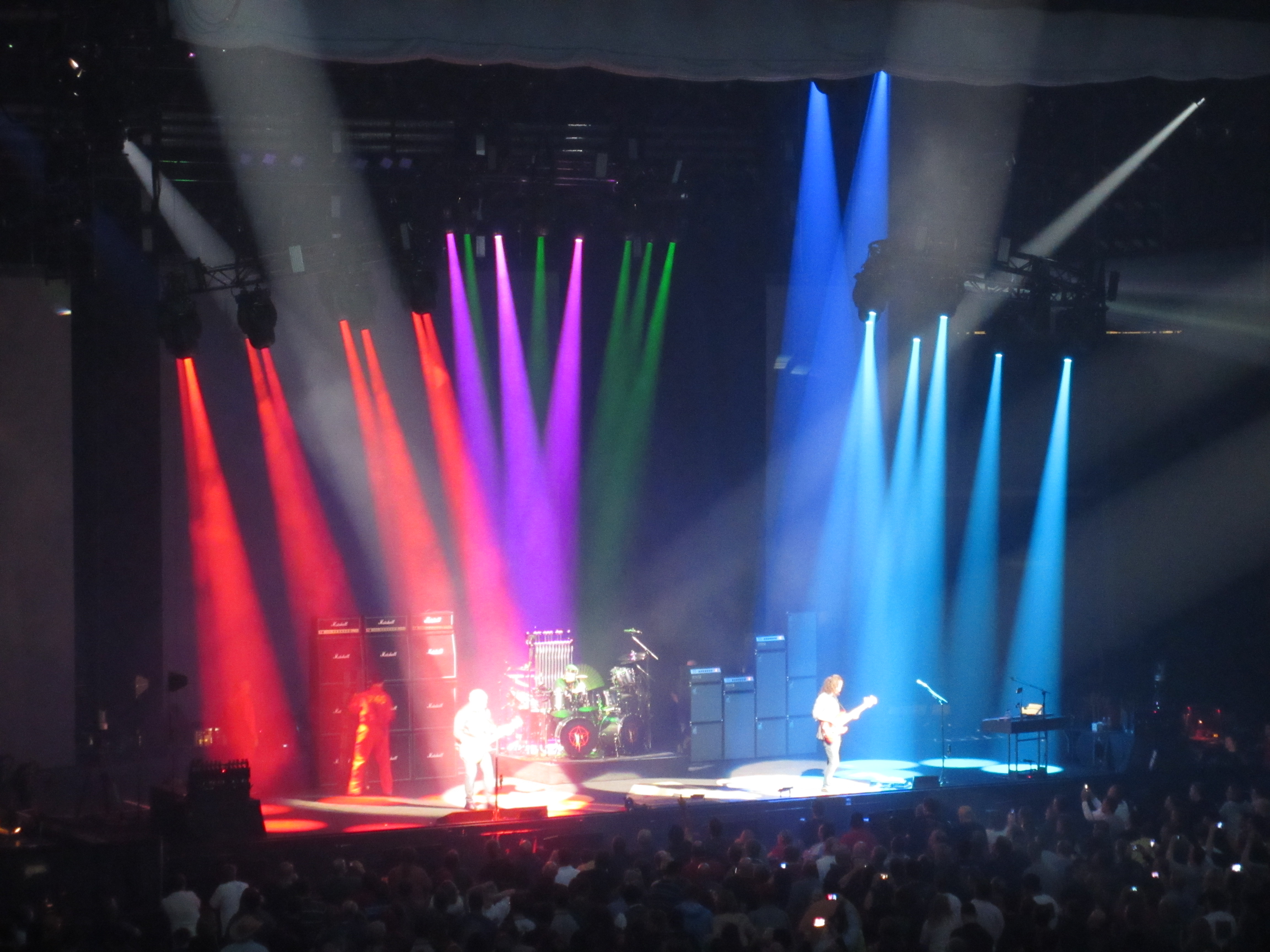
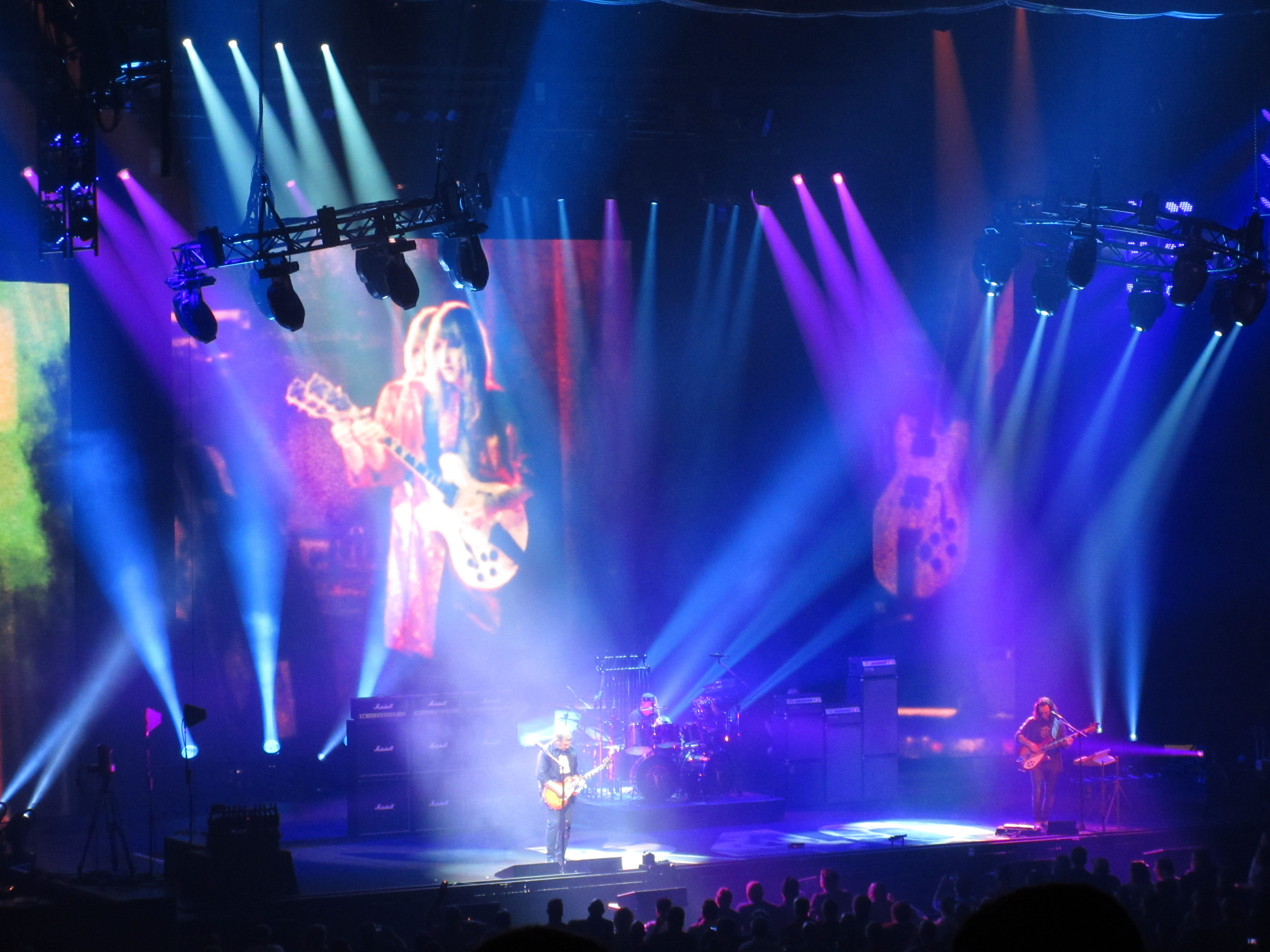
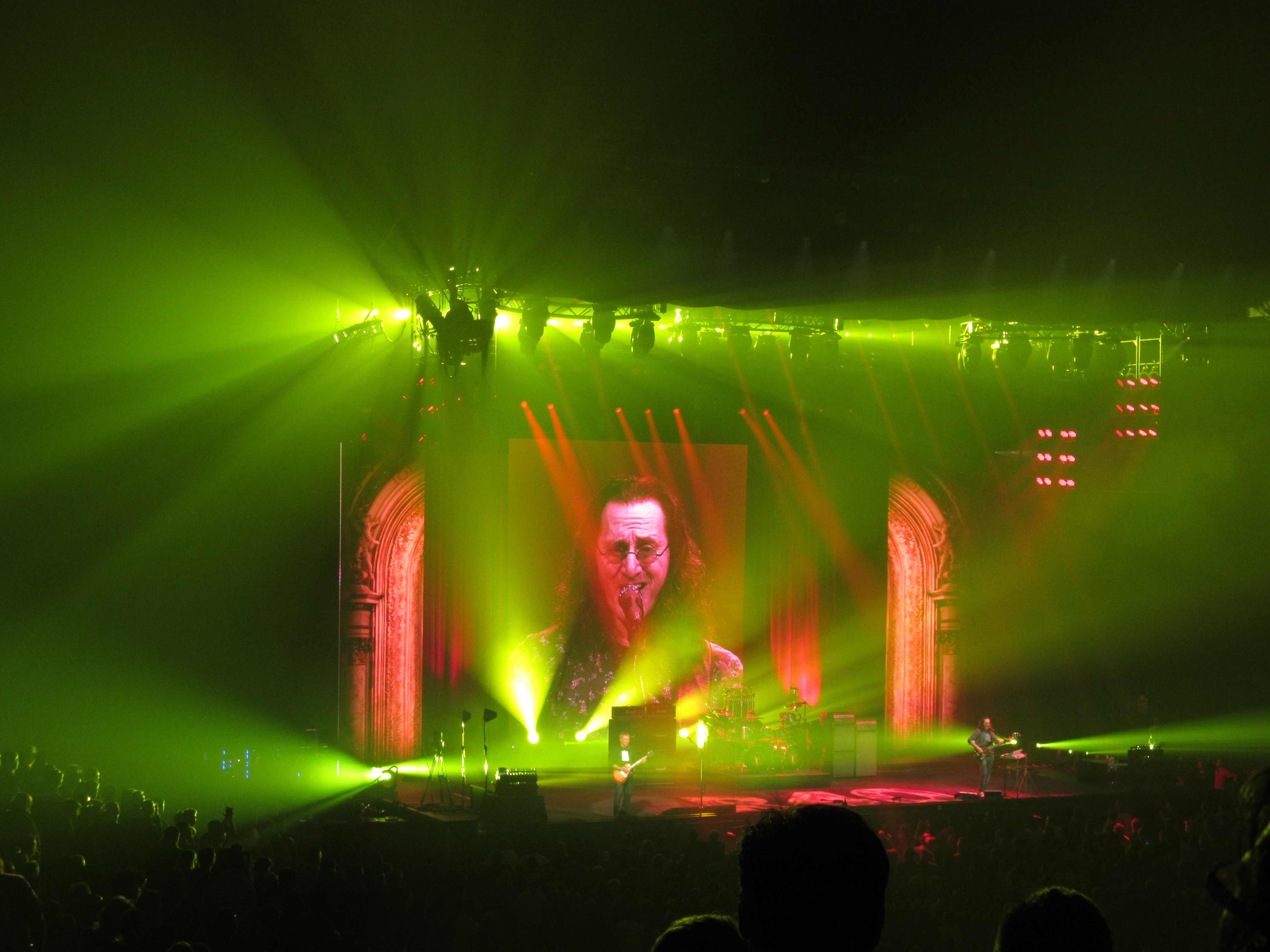
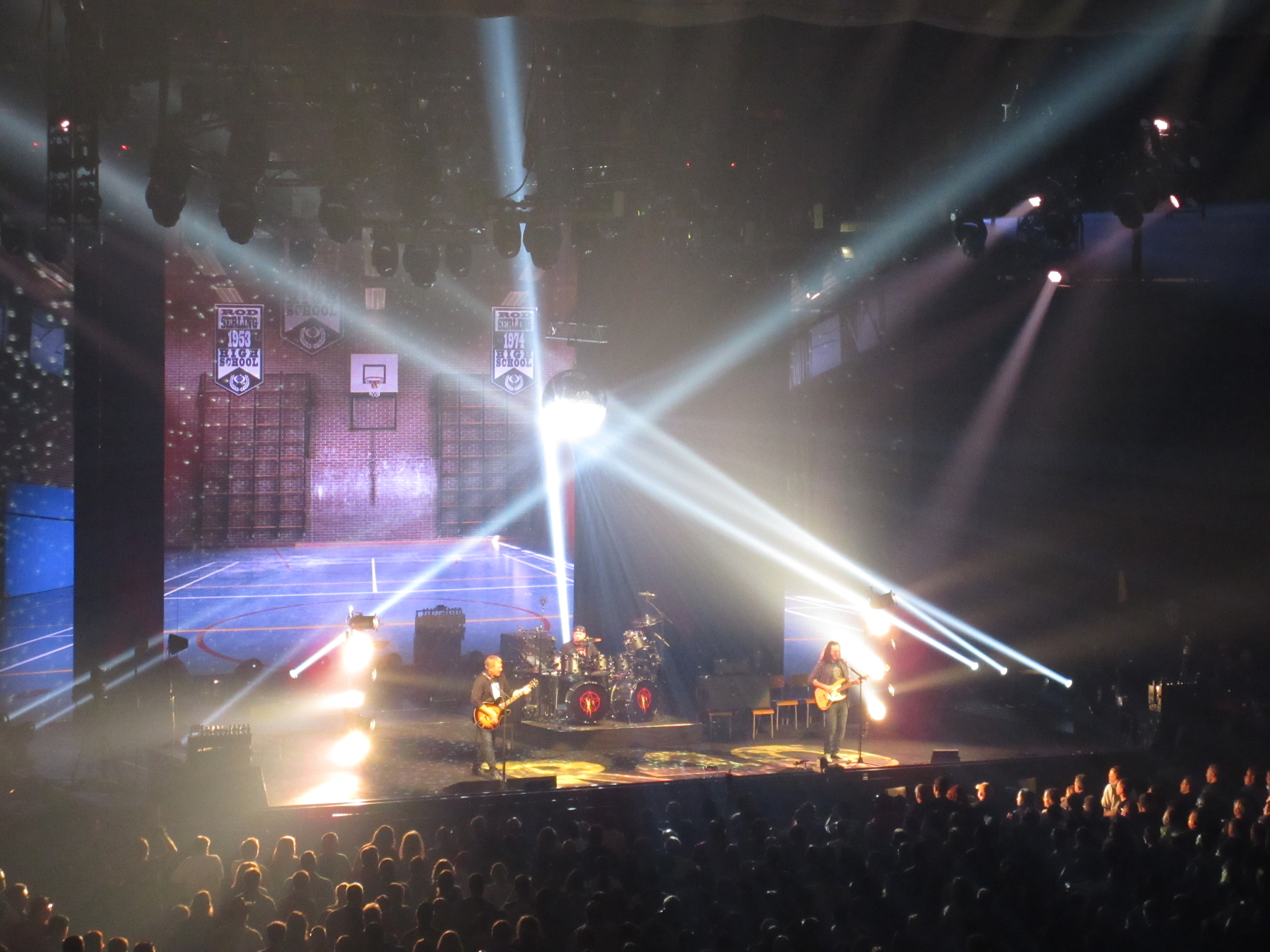
Rush, May 10, 2015, Lincoln, Nebraska.

A typically bizarre video introduced the band, detailing its journey from 1974 to the present, actually having Rush arrive in Lincoln, Nebraska. Alex even showed up on stage in a wheelchair, rather hilariously.

From the opening note to the last, three hours in all, Rush performed without flaws, as tight as ever, and as humorous as ever. I’ve never seen Neil smile so much. Throughout much of the evening, he kept making strange faces at Alex, Alex egging him on. Alex also said several things to the audience, but I couldn’t catch them all. The highlight of his hilarity, though, came toward the end of the evening, when he and Geddy traded places on stage, Alex mocking Geddy’s 1975 Zeppelin-esque screams.

I can honestly write: this was the single finest rock concert I’ve seen in my life. It was the absolute dream of a Rush fan and a prog fan. Everything, simply put, was perfect.

The music, the song selection, the videos, the lights, the lasers. . . . Every. Single. Thing.

Peart's second of two drum solos.  As my 14 year old daughter said to me after the concert: Peart was the best part.
Peart’s second of two drum solos. As my 14 year old daughter said to me after the concert: Peart was the best part.

***Here, there be spoilers!***

If you’re not interested in what the band plays, please stop reading here. There be spoilers below! You have been warned.

I made sure NOT to find out what Rush was playing. A close friend had posted the name of one song online, but, otherwise, I refrained from reading anything about the tour. I’m really glad I did. So, again, if you want to be stunned—and you will be—don’t read below.

Geddy.  From the Wizard of Oz.
Geddy. From the Wizard of Oz.

The entire show went exactly backwards. Rush started with three blistering songs from CLOCKWORK ANGELS and then progressively (regressively?) worked back to 1974. They played songs from every album except Test for Echo, Presto, Hold Your Fire, and Power Windows. Ten songs long, the first set included the three songs from CA, Far Cry, Main Monkey Business, How it Is, Animate, Roll the Bones, Between the Wheels, and Subdivisions. Amazingly enough, the Rush guys turned the rather geeky rap section from Roll the Bones into one of the best parts of the evening. Even I won’t spoil what they did, but it had all three Birzers in stitches.

As excellent as set one was, it was set two that floored me. Tom Sawyer; The Camera Eye; Spirit of Radio; Jacob’s Ladder; Cygnus X-1(!); Closer to the Heart; Xanadu; and the nearly-complete 2112 made up this glorious set. I actually cried during the middle of Xanadu I was so moved.

Rush departed the stage for probably less than a minute. For the encore, the band came back as though it were 1975, complete with a set from the gymnasium of Rod Serling High School. Geddy even introduced the band as though Caress of Steel had just come out. The encore: Lakeside Park; Anthem; What You’re Doing; and, of course, Working Man.

I’m getting chills just thinking about it all. . . .

I’ll post more photos later.  At the moment, I’m on a terribly slow connection.–BB

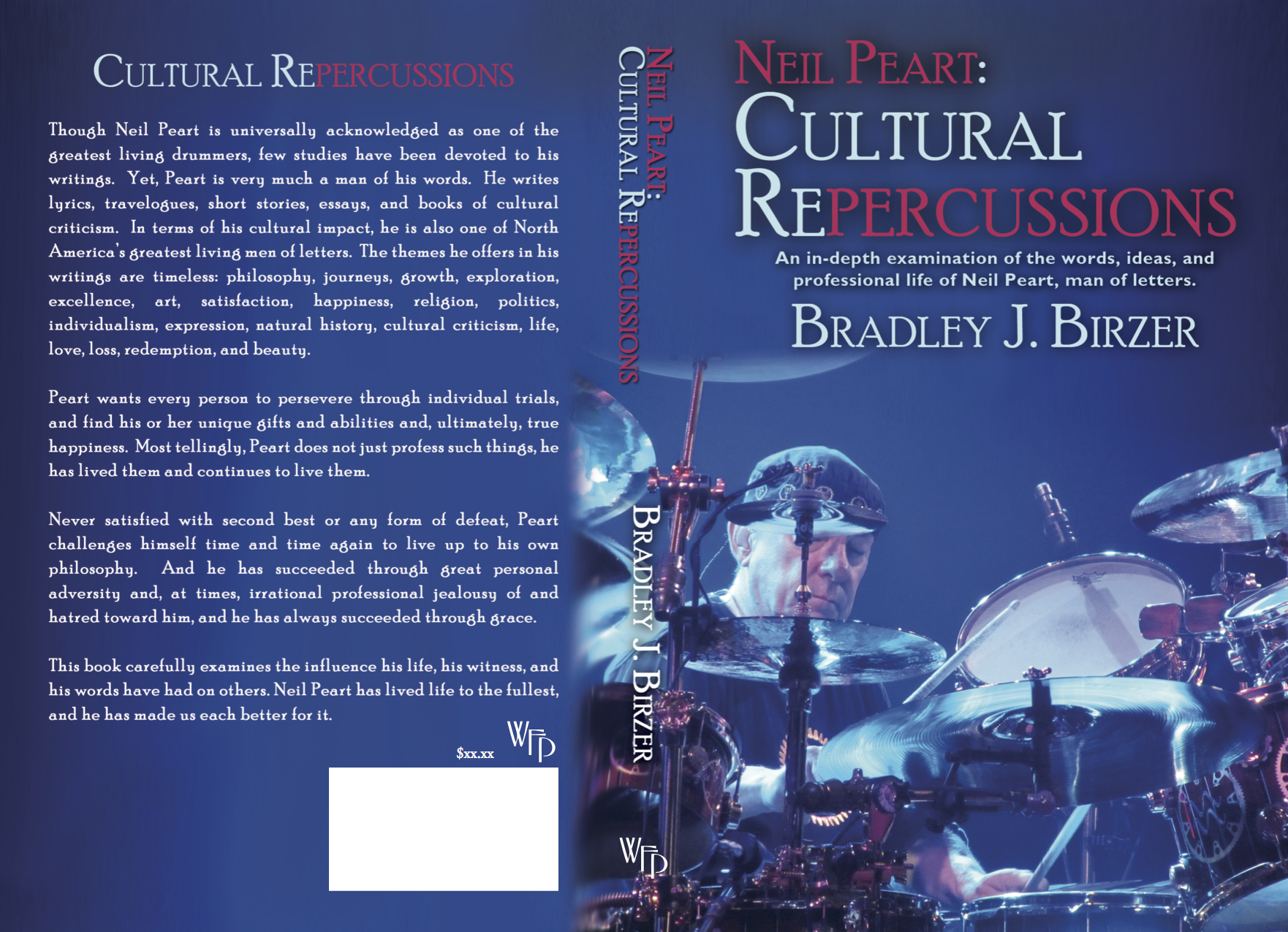
[Brad is one of the three founders of Progarchy.  He’s rather goofy, and he has a book, NEIL PEART: CULTURAL REPERCUSSIONS, coming out this fall from WordFire Press]

The Emergence of Dystopian Literature in the 20th Century

Over at The Imaginative Conservative, I had a chance to post (though the graces of the main editors, Winston and Steve) the second part of a multipart series I’ve written on dystopian literature.  My argument is that dystopia is the natural and most important genre of the twentieth century.

I realize this is not quite a music post, but there’s so much science fiction and so many dystopian themes in rock and, especially, in progressive rock, that this might be of interest to a number of you who might not visit The Imaginative Conservative on a regular basis (And, just FYI, our form of conservatism is artistic, not political).  Additionally, at one point in the series, I analyze Rush, the various projects of Arjen Lucassen, and the same of Andy Tillison.

Anyway, I hope you enjoy.  And, of course, feel free to leave any comments and/or reactions.  I’m hoping this series will serve as the basis of a book.

http://www.theimaginativeconservative.org/2015/04/imaginative-conservative-guide-dystopian-literature-3.html