Hugh Howey’s Wool

ImageI just finished my Christmas reading, Hugh Howey’s Wool Omnibus, having bought it on special for $1.99 (for my Kindle) based on one of those Amazon emails:  “CBreaden, here are books we think you might enjoy!”  Always a leap of faith, going with this kind of marketing, but in a heat-haze brought on by recently finishing Joe Abercrombie’s Heroes and having nothing at hand I wanted to read, I took that leap.

About halfway through the collection of five novellas, I realized I needed to alert the prog world to it, thus uncovering my not-so-hidden geek love (limited as it may be) for sci-fi and prog rock’s connection to it.  I think like a lot of us I first fell under this spell with Rush’s 2112, which I didn’t hear until several years after its release but, when I did, quickly turned to Ayn Rand’s Anthem for the text on which Neil Peart based some of his story.  Rand’s most succinct novel, and to me her most powerful, coupled with Rush’s record, raised a fairly high bar.  Alternate worlds are frequently the stuff of prog, but only on occasion are they expertly wrought in song.

Wool immediately struck me as one successor to Rand’s Anthem, but with a less severe political bent, characters more like the regular people you and I know, and little reliance on metaphor.  What it has in common is a lean narrative and concise style, although the five novellas collected together in the omnibus are far longer than Anthem.  The similarities don’t end there:  like Anthem, Wool has at its center a people being kept from the truth.  It tells the story from the perspective of several characters among a large population who have for hundreds of years inhabited an underground “silo,” which as readers we understand to be an enormously deep, hugely broad, completely self-sufficient bomb shelter.  The only connection to the world beyond the silo is a series of screens that project images of the outside.  These images are produced by cameras mounted to the exterior above-ground portion of the silo, the lenses of which need regular cleaning due to the howling nuclear-desolate wastewinds whipping the landscape.  This task is given to individuals who commit crimes in the silo, which include having dangerous ideas like wanting to know what the outside is like or how we came to be in this blasted silo anyhow.  Okay, so maybe there is some metaphor.

What strikes me about Wool and Anthem, and the reason I bring Wool to Progarchy with a big recommendation to read it, is the imagination of an alternate world, not just by the author, but by his characters.  What happened outside the silo? What are our origins? Is what we see on the screens real? (Plato, anyone?) Howey’s characters are not unsubtle, one-dimensional creatures.  They struggle with these questions with both trepidation and reluctance for committing a crime, and for the mind-bending possibility embedded in “what if?”  This also strikes me as core to the experimentation necessary to successful, progressive music.

– Craig Breaden, December 27, 2012

P.S. Howey has been writing like a madman.  Initially, he self-marketed Wool, beginning in late 2011, almost entirely as an e-book on Amazon.  He’s now been picked up by print publishers, but continues to offer his books online for cheap.  He’s already two volumes in to the prequel to Wool.  Check his site here: http://www.hughhowey.com/. Buy his books here: http://www.amazon.com/Hugh-Howey/e/B002RX4S5Q/ref=ntt_athr_dp_pel_1

Nick’s Best of 2012 (Part 3)

And finally, after my ‘Top 5 Contenders‘, we have (drum roll please!) my Top 5 of 2012:

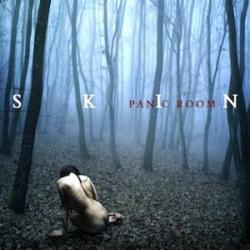
5. Panic Room – Skin
panicroom

A real surprise, this. I like Panic Room well enough; I admire their previous release, Satellite, both for its fine production values and for the two or three stand-out tracks on it. It is a good album, but not a great album. So I wasn’t expecting them to have raised their game quite so much with the follow-up. Production-wise, Skin sounds every bit as good as its predecessor, but the quality of the songwriting is higher and more consistent. The rockier tracks, Song For Tomorrow and Hiding The World, are as good as anything they have done, but it is the slower, quieter songs that really shine. There’s a wonderful mellow, chilled vibe to these quieter songs, and the liberal use of strings adds a degree of sophistication. Anne-Marie Helder’s voice is simply heavenly. This isn’t music that will challenge you, unlike some of the albums in my Best of 2012 list; rather, it is the sonic equivalent of a silk shirt or satin sheets: smooth, elegant and luxurious.

4. Kompendium – Beneath The Waves

kompendium

Another surprise entry. Being a fan of Magenta, I pre-ordered this purely on the strength of Rob Reed’s involvement and he hasn’t disappointed. Magenta’s distinctive take on prog pervades Beneath The Waves, but this is an altogether more epic piece than anything done by that band, bigger in scope and bigger in its production. A ‘cast of thousands’ has been involved over the album’s three-year gestation period: Steve Hackett, Francis Dunnery, John Mitchell, Nick Barrett and Jakko Jakszyk on guitar; Gavin Harrison and Nick Beggs providing the rhythm section; Mel Collins, Troy Donockley and Barry Kerr on sax, pipes and whistles; Dave Stewart and the London Session Orchestra; The English Chamber Choir; Tina Booth, Shan Cothi, Rhys Meirion, Angharad Brinn and Steve Balsamo providing solo vocals.

The result of all this labour is a lush and richly atmospheric album, successfully blending classic prog with symphonic and celtic/folk elements. At times, it sounds uncannily like something Mike Oldfield might have produced in his heyday – a most welcome resemblance to an Oldfield fan like me! In places, it has the feel of a film score, in others the drama and impact of musical theatre or opera – and the vocal and choral work is quite stunning. The packaging of the album, in a mini-gatefold sleeve with an 18-page colour booklet on the inside, also deserves praise.

3. Rush – Clockwork Angels

rush

I have to admit that I idolise this band, but if they had produced another Snakes & Arrows, they wouldn’t be featuring in my Top 5. Not that there’s anything particularly wrong with S&A; it is undoubtedly a good album, but there’s a certain ‘sameness’ to the tone and texture of the individual tracks. It feels densely-layered rather than loose and free-flowing, safe rather than adventurous. Clockwork Angels addresses these issues head-on. For starters, it’s a full concept album – their first, shockingly (the concept pieces on Caress Of Steel, 2112 and Hemispheres being one side of an LP only). And what a concept! The familiar dystopian themes beloved by Neil Peart, but set in a Steampunk universe, and tied into a novel by Kevin J Anderson and Peart.

The music is also a delight. The concept lends it a greater sense of urgency and purpose. The sound is a bit more stripped down than on S&A and there are subtle nods to classic 70s Rush – such as the Bastille Day bass riff that creeps into the opening of Headlong Flight. The latter is a beast of a track, one of several real rockers on this album – the title track and The Anarchist being the other prime examples. Changes in tone and pace come from a delightfully loose section of the title track featuring slide guitar and from a couple of slower, more reflective numbers: Halo Effect and The Garden. The latter ends the album in uncharacteristically emotive fashion. Could the subtext really be a farewell to fans? Let’s hope not, but if this is their last bow then they have taken it in fine style.

2. Marillion – Sounds That Can’t Be Made

marillion

Even the most hardened Marillion fan would probably admit that the band’s muse has proved elusive since they basked in well-deserved acclaim for 2004’s masterful Marbles. Sure, they have served up some memorable music for us in the eight years since then – musicians with their talent, dedication and integrity could hardly fail to do so – but somehow it hasn’t had quite the same spark or level of consistent brilliance found on Marbles. With Sounds That Can’t Be Made, however, I feel that the magic is back. STCBM doesn’t quite scale the heights achieved by Marbles – which may well prove to be their career-defining highlight – but it comes close.

Album opener Gaza is a brooding monster of a track that courts controversy with its position on the conflict between Israel and Palestine. Whether you agree with Hogarth’s take on the issue or not, you have to admire the band’s boldness here. The album’s other ‘epic’, Montreal, is less successful, feeling to me like a collection of music ideas that don’t quite gel. The quirky Invisible Ink is likewise not really my cup of tea, but everything else is wonderful: the synth pop and soaring Rothery solo of the title track, the cool sophistication of Pour My Love, the laid-back groove of Power, the painful honesty in the tale of relationship break-up that is The Sky Above The Rain. This is Marillion doing what they do best: always reinventing themselves but always finding that intellectual and emotional connection, making you think but also making you feel.

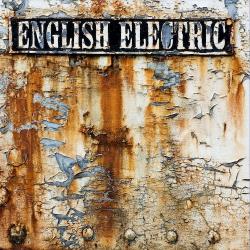
1. Big Big Train – English Electric Pt 1
bigbigtrain

Yes, another Progarchist with English Electric Part 1 as his No. 1 of 2012, I’m afraid! And the fact that a self-confessed Marillion and Rush fanboy like me has placed this ahead of great albums by those bands tells you just how good this is. I can’t do better than the erudite and rather beautiful analysis of EE1 by Progarchy’s very own Brad Birzer (which I urge you to read), so I’ll simply say that it stunned me from the very first listen. As you’d expect from Big Big Train, this is an album suffused with a love of the English landscape, its rich history and its industrial heritage. It is less classically proggy than its excellent predecessor The Underfall Yard, leaning instead towards pop and folk music influences – there’s more of XTC in here than there is of Yes. Don’t let that put you off (not that it should), because the result is utterly sublime.

It’s difficult to pick out highlights when so much of the music is exquisite, but at the moment I’m particularly fond of joyous opener The First Rebreather, the elegaic Summoned By Bells and the dramatic A Boy In Darkness. Judas Unrepentant is wonderfully uplifting as well. And Uncle Jack is just so lovely, light and summery… Damn it, it’s all brilliant! And the cover artwork is rather special too. Could Part 2 possibly match, or even exceed, this? We will know soon enough!

Small Fame (Best of 2012 — Part 7)

Another one of the albums in my Top Ten for 2012 is Bend Sinister’s Small Fame.

I was pleased to see that they also made Mike Portnoy‘s own personal top ten for this year.

Together with Rush and Leah, Bend Sinister joins the Canadian artists on my list this year. Like Leah, they are also local talent, located here in British Columbia. (Don’t miss their upcoming show, if you need a good idea for a Christmas vacation destination!)

The band takes its name from that book by Nabokov. (Ha! Reference to The Police there, for the quick-witted.)

I don’t want to put words into his mouth, but I think Carl‘s longstanding complaint with Rush is that their songwriting (not their musicianship) leaves something to be desired. (I assume he is talking about their most infamous four- and five-minute forays, not their prog masterpieces. Out of respect, I won’t name names here, but feel free to pile on in the comment box below with your own nominations. Rush does have some real stinkeroos, which are of course handily eclipsed by all their best and greatest.)

The great thing about Bend Sinister is that they are superb craftsmen of song. Above all, their talent at songcraft shines forth magnificently with this wonderful release, Small Fame.

For those would say that there is not enough prog here for their tastes, I would only point to “Quest for Love,” which proves that Bend Sinister could be as prog as they want to be, any time they would choose. But what I admire about them is how they always put their musical talents in the service of truly excellent songs. In other words, if someone wanted to complain, the complaint would have to be the opposite of Carl’s quarrel with Rush: be more prog!

Well, I will leave it to Bend Sinister to be just what they want to be. Because what they are is amazing. They could be full-on crazy prog, if they wanted to be. But arguably they are something much, much better than that.

Masters of the song.

Listen to 2112 at 21:12 on 21/12…

Be sure to listen to 2112 at 21:12 on 21/12…

2112

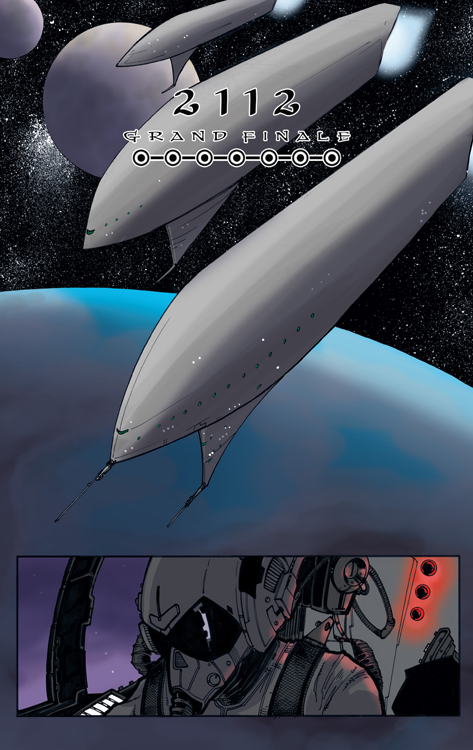
…and you can also read a free Rush comic book here.

1979, 2112, and the Making of a World View

This post has been floating around in my head for a while.  Being reminded that today, 21-12, is International Rush Day, what better day to go ahead and write it?

The year 1979 was a defining year for yours truly.  After my parents split up in 1978, my mother decided to pack up my sister and I and move us across the country.  Thus, as the clock turned over from 1978 to 1979, I was somewhere between my former home of Lewiston, Idaho, and my soon-to-be new home of Lexington, Kentucky.   On June 23rd of that same year, I became a life-long progressive rock fan at my first Yes concert (I would also see Rush on tour later that year).  Two other pivotal occurrences that year were my purchase of Rush’s seminal 2112, and a number of long discussions with my maternal grandmother.  My listening to 2112 and those discussions with my grandmother are related, and played a big part in forming part of my world view.

At this point, a little background on my mother’s family is in order.  My mother and her family hail from Germany – in fact, what was once known as East Germany.  My mother was born in Berlin during World War II, and when the shooting stopped, her family was in the part of Germany that became East Germany, which fell under the domination of a tyrannical government.  My grandfather, a literature professor, was occasionally outspoken – a quality that is fraught with danger in a country ruled by an oppressive government.  In 1953, he was warned by somebody (who I have never been able to find out) that he had better get the hell out of there.  He gathered his family, my mother and grandmother included, and boarded a train for West Berlin.  Had they been caught, my grandfather, and possibly his whole family, would have been shot by the authorities.  Luckily they made it to West Berlin, connected with others dedicated to helping those who wanted to escape the tyranny of East Germany, and were airlifted to West Germany.  They settled in Bonn, where they remained until coming to the U.S. in 1959.

Although the dormant prog gene wasn’t fully activated until that fateful night in June when I saw Yes, I had unknowingly during the spring of that year already purchased my first prog album, 2112.   I just thought it was a cool heavy metal/hard rock album by some guys that wanted to sing about something other than chicks, booze, drugs, and so on.  Certainly, the suite that gave the album its title got my attention, and not just the music but the lyrics.  More than a few times I sat in my room listening to side 1, album gatefold open so I could follow along with the lyrics, which told a fantastic story of a dystopian science fiction universe in which a guy had found a guitar, realized its beauty, and presented his discovery to the authorities only to be slapped down hard by them for deviating from “the plan.”  It seemed rather harsh and unfair to me.  Upon the first few listens, I did not realize that there was a deeper meaning to the story.

In addition to listening to 2112, I also had a number of discussions with my grandmother during the spring of 1979.  I hadn’t seen her for over 12 years prior to us moving to Lexington, and was only a toddler when we had initially moved out west.  There was a lot of catching up to do.  During our discussions, I asked my grandmother numerous questions about her previous life in Germany.  Her answers painted in my mind a picture of life under both the Nazis and later the Communists.  I learned of a society where certain books could not be read or published … a society where certain music could not be played … one in which certain ideas were not to be voiced publicly or written down.  Moreover, I learned that one could go to jail for reading or writing the wrong types of books, for listening to the wrong kind of music, and for expressing ideas that were not approved by the powers that be.  Freedom of movement was only a dream – you were told where you could and could not live.  And you certainly couldn’t leave the country any time you want.  Trying to do so without authorization could result in prison or death.  Having grown up in a mostly free country, I was stunned at the realization that countries like East Germany, the USSR, and others that restricted people in this way existed.  I knew of these countries and had a basic idea of their systems before that, but I had never fully realized how much the freedom of those that lived within them was restricted.  It wasn’t just on the big things, it was right down to a lot of very small things.

Interleaved with these discussions were my repeated listens to 2112.  At some point during this period, I started to make the connection between what was told to me by my grandmother and by the lyrics of 2112.  It began to dawn on my that 2112 wasn’t just a science fiction story set in some distant future, but was also an allegory for something that was very real in the present.  They may have had apparatchiks in politburos rather than priests in temples, but these distinctions were without difference.  Such tyranny and oppression that could prohibit an individual from doing something as seemingly innocent as playing a guitar could and did exist.  Governments that were threatened by the mere expression of certain ideas were the stuff of reality, not just lyrics for a side long rock suite set in a sci-fi future.  People that would oppress, enslave, and even kill others for merely refusing to go along with “the plan” were as much a part of the present day as they had been in the past and would certainly be in the future.  In effect, what Neal Peart was telling me through the lyrics of 2112 was the same thing that my grandmother was telling me during our discussions.

The impression that this album and the education from my grandmother left on me has never faded.  It informed my thinking during much of my time in the Navy, during the 1980’s as the Cold War reached its final phase.  I remember thinking about it again one night when I came home from work a year after leaving the Navy, turning on my TV set, and seeing that the Berlin Wall had come down.  And to this day the impression is as strong as it ever was.  Freedom is a precious thing, something never to be taken for granted and something that should be fought for at any and all costs.  Governments that oppress their citizens, that refuse to let them express themselves, be it with a musical instrument, ideas spoken or written, or their desire to move about, are pure evil and are not to be respected or tolerated.  Freedom, while often times hard, is a precious thing and something that should never be taken for granted.  It’s something for which free people should fight (metaphorically if able, literally if necessary), and oppressed people should fight to achieve or regain.  As for those who informed The Planets of the Solar Federation that they had “assumed control”, I hope they were the good guys, the forces of freedom.

This post is dedicated to those that enlightened me on such things, Rush, Neal Peart, and my grandmother, Ingeborg Stapf.  Rest in peace, Oma.

Some 2012 Thoughts

Tardis-in-Space-tardis-6289809-1600-1131Looking at some of the other ‘Best of 2012’ posts here, you have to wonder how some of the other Progarchists do it.  That is, how do they find the time to listen to and fully absorb that much music (and particularly prog)?  Not to be snobby or anything, but listening to prog is not a passive thing, it takes an active effort by the listener to fully “get it”.  And yet when I read through these posts, I can conclude that my fellow Progarchists are A) listening to a lot of prog, and B) “getting it.”  With the other obligations they have in their lives – families, careers, other hobbies, other blogs – it would seem like it would take a superhuman effort to fully absorb all of that music. And yet clearly they do just that.

Alas, I think I’ve figured out their secret – most, if not all of the other Prograrchists are in possession of an ERTEM – short for “Einsteinian Relativistic Time Expansion Machine.”  In short, the ERTEM is a machine about the size of a booth or a very small room.  A person may enter his ERTEM, shut the door, and emerge in what appears to be only a few minutes to an outside observer.  But aaaah, inside the ERTEM, time expands, and the occupant therein can spend several hours of “inside time.”  Thus, the Progarchist may receive a new CD or a new album in digital format, step inside his ERTEM, and indulge in hours of listening pleasure, until they fully “grok” (apologies to Robert Heinlein) their most recent prog purchase.  They may even be smuggling their laptops in their to write some of their long, detailed, and typically excellent reviews – the type that usually send me lurching toward my computer to make yet another purchase.  Continue reading “Some 2012 Thoughts”

Rush 2112: Hold the red star proudly high in hand?

Who is organizing the marketing of this new version of Rush’s 2112? The Priests of the Temples of Syrinx?!?

Here are a few reasons why you definitely won’t be able to hold the red star proudly high in hand for this release:

1. If you want just the 40-page comic book version of 2112, you can’t buy it separately.

2. OK, you can buy it separately, but only as an iBook; but then, you first need to buy an iPad to read it. (Thanks, Priests; obviously you want your great computers to fill our hallowed halls as well.)

2112

3. The hard copy version of the comic book is only available if you buy the CD in combination with the Blu-Ray. Only that counts as “Super Deluxe.” So, if you want to buy a DVD with the 5.1 mix for your DVD player, you won’t get the comic book along with it; i.e., the only way to get the print version of the comic book is to add the purchase of the “Super Deluxe” CD + Blu-Ray combo to your purchase of the “Deluxe” version.

Note that the electronic version of the comic book has more features than the printed version. In other words, I guess in order to be counted as a Rush fan worth being taken into consideration, you are required to own both an iPad and a Blu-Ray player. (Thanks, Priests.)

By the way, I don’t think I can get too excited about the 3 unreleased bonus live tracks added to the digitally remastered 2112 CD:
– Overture (Northland Coliseum, Edmonton, AB – June 25, 1981)
– The Temples of Syrinx (Northland Coliseum, Edmonton, AB – June 25, 1981)
– A Passage To Bangkok (Manchester Apollo, Manchester, England – June 17, 1980)

What?!? Is the rest of the June 25, 1981 live version of “2112” so bad that it couldn’t be included in its entirety? Who wants to listen to just part of the complete epic?!?

This is such crappy marketing, indifferent to consumer wishes, that I am happy to refuse to submit to the tyranny.

A final note: The new album cover by Hugh Syme is a hideous piece of font-driven garbage. Does it look any cooler than the original cover? No way. Not at all. You could find fan-created art that looks infinitely better! This new cover is so lazy and unimaginative, it is insulting to fans who have held the red star logo in such high esteem for so long. Why on earth would you remove the red star from the cover?!? They should have used the classic iconic logo on the new release, I say; perhaps that alone could be considered an improvement on the original cover.

Attention, Rush: Last year’s three “Sectors” box sets were bad enough. But thanks to your submission to the cold-hearted, corporate merchandising machine—because you have allowed it to assume control—you are now officially out-of-touch.

Will we remember induction into the Hall of Fame as the epochal marker of this change?

Then again, maybe I’m out of touch… because I’d rather have an acoustic guitar than a Blu-Ray or an iPad.

2112

A Different Kind of Truth (Best of 2012 — Part 6)

Van Halen

Mike Portnoy, in an interview with iDrum magazine, made an interesting remark about all the guys in the supergroup Flying Colors; namely, their running joke during the writing process:

We almost felt like the Village People! I’m the metal guy, Neil Morse the prog guy, Casey McPherson the pop guy, [Steve] Morse the country guy and Dave LaRue the funky guy!

I feel the same way about the supergroup team here at Progarchy. In addition to our shared loves, we also have our distinctive tastes. Me, I’m the metal guy; Brad Birzer is the prog guy; Carl Olson is the jazz guy; Kevin McCormick is the classical guy…

Continue reading “A Different Kind of Truth (Best of 2012 — Part 6)”