From Rush’s transitional Permanent Waves, “Jacob’s Ladder” is a psychedelic march, carrying up its spiral staircase Neil Peart’s cosmic Coleridge musings. It thunders across the eastern deserts evoked by its title, a biblical steampunk, all dust and whirlwind and prophetic dreams set against Rush’s tightening musical clockwork. The song’s three sections flow together, distinct but seamless, no verses or choruses, only a gradual rising heavenward. Early on Alex Lifeson blasts an economical, freakout solo across a moorish scale, heavy as an elephant swaying across a mountain pass, and from that point forward commands cycling chord changes and arpeggiated stutters, underpinned by a bolero rhythm favored by the band around this time. Geddy Lee’s bass and keyboard work hits a balance that Rush would capitalize on with Moving Pictures, while Peart’s drumming, as usual, defies adequate description (although “badass” will do), ever shifting, restless and precise. It is a descendant of their epic “Xanadu” and a forebear of “YYZ,”andwhile stoner-era Rush was cobwebbing at this point, “Jacob’s Ladder” made a case for the band’s continued long-form potency and its ability to take heavy music to places no one else, not anyone, was going.
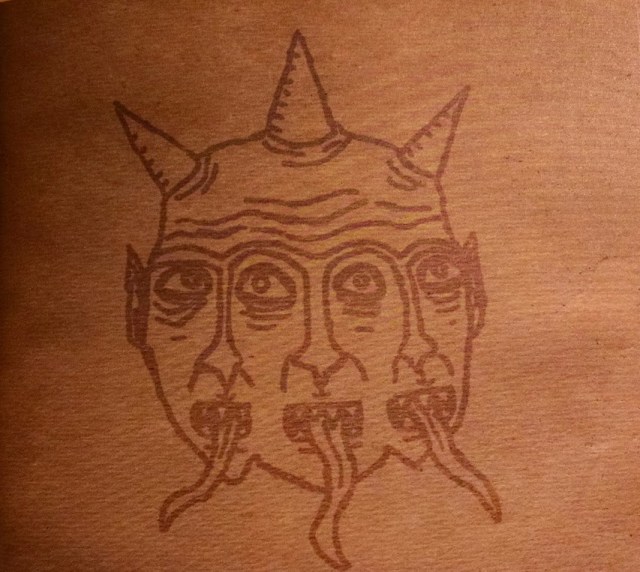
In 2014, Gazpacho’s Demon was to progressive rock what, in that same year, Hozier was to pop and Sturgill Simpson was to country — voices that raised the bar, made others take notice and take stock. Demon was Gazpacho’s eighth album, and many would argue they’d been producing classic, 5-star records since 2007’s Night. This is true, but the organic, earthy power in Demon marked a new high. Possessed of one of the most articulate, disciplined songwriting teams I can think of, Gazpacho’s fantasies are psychological, unsettling, symbolic, while their musical fire is in the restraint of their performances and a deep melodic sensibility that is immediately recognizable. There are no baroque runs here, or an interest in shredding. Everything is in service to the song. I never get the sense Gazpacho is attempting to make PROGRESSIVE ROCK; they’re just trying to create the coolest music they can think of, and to share it with sympathetic audiences, much as prog’s first generation did. And so Demon for me reads more like a folk opera, like Procol Harum’s A Salty Dog or Jethro Tull’s Aqualung, and like those records too the production is simple, naturally spacious, working dynamics as if all the instruments were acoustic and the songs traditional, even when the electrically crashing guitar/organ power chords could be straight outta Deep Purple. In “I’ve Been Walking (part 2)” the best of Gazpacho is on view: Jan Henrik Ohme’s voice floats as a second melodic center over Thomas Alexander Andersen’s piano, and as the first part of the song blossoms with the added rhythm and violin, the texture and mix of the instruments convey the message as much as the lyrics. There is a reflective reprise of the first track of the album before a segue into one of the more beautifully heavy, baffling songs I’ve heard this side of Fragile-era Jon Anderson, building its arpeggios into mellotrons and a stormfront of guitars. And then it’s over, and even at 12-plus minutes, this song ends too soon.
Say what you will about pop radio, you nostalgists and prognosticators of musical doom. I will laugh and scoff with you, because there is, as there always has been, portents of conformity in the monochrome sameness of the popular. But your arguments against are blind to the tail-chasing beast: it’s as often in pop as not that the true revolutions happen, where the work is done, before in creeps mimicry and gold diggery. In the case of Hozier, the revolution is subversion by honoring the blues and soul music his native Ireland so loves. In 2014 into 2015 he produced a bona fide pop radio hit in “Take Me To Church,” which got played on all the I Heart Radio stations in the U.S. In true pop radio fashion it was catchy, easy on the ears, anthem-y. But unusual too — it wasn’t hard to hear beneath the compressed radio waves a rock band sweating it out behind a gifted singer, songwriter, and guitarist. It almost seemed like it was a mistake, because how long has it been since you heard an actual band pumping out the rock on a pop station? The song was from Hozier’s full length, self-titled debut, which, while not a perfect record, isn’t far from it. With lyrics that investigate sexuality, religion, and drugs without robbing any of them of their dark poetry, the album maintains a soulful bounce that only occasionally loses its chug. Them-period Van Morrison would be proud. “To Be Alone,” which Hozier put together, or so I understand because the internet on this point mostly fails me, as a tribute to Junior Kimbrough (who gets a writing credit), does not bear the stamp of Kimbrough’s rough electric blues — although perhaps captures the feel — suggesting instead Peter Green during his brief time as the leader of Fleetwood Mac, it’s lead riff echoing the B riff of Green’s”Oh Well.” The production, too, has that dank, rainy reverb that Green loved, and deals in the dark depths of green manalishis and black magic women. Knowing nothing of the man but his music, I can say that he’s gotten at least that bit right, and while it would be a stretch to say his is the future of pop music, that he found his way into pop’s armored compound is a righteous thing.
“Outlaw country” is an ironic descriptor at best, applied to a music that, without the modifier, began as a lucrative embarrassment to the phonograph salesmen of the 1920s, their newly-minted “hillbilly” record catalogs doing surprisingly well next to the more respectable stacks of whatever maudlin tenor was the operatic toast of the day. Country music’s cornpone reputation grew as its burgeoning industry began to trade on an image based in white southern poverty; but if the marketing suggested the music was as impoverished as its people (a patent falsehood), this achieved for the proponents of such thinking a comfortable outsider-ism, a romantic us-versus-them rewind and replay of Reconstruction that survives in other place in the South as well, through for instance a protracted and continuing — and, unfortunately, necessary — civil rights movement, to this day. So then, what’s this Outlaw business? The term attached to Willie Nelson, Waylon Jennings, and a handful of other country writers and singers who, starting in the late 1960s, were drawn away from the industrial strength, smooth country music produced by “Nashville,” that Tennessee town’s small oligarchy of producers and record labels who held sway over any music distributed under the category of country, and pointedly avoided shifting their audience’s gaze towards the rockier issues or musical themes of the times. Jennings, like Nelson, bucked at this, knew what it meant for their art, and went back to Texas; he turned up the rock’n’roll rhythms he’d played with Buddy Holly, sang what he wanted, and called Nashville out on its phony conservatism. In so doing, Waylon and the country outlaws — and the new southern bands like the Allman Brothers and Lynyrd Skynyrd — found a younger, national country audience, and also reminded rockers that their favorite music was as much country as blues.
Fast forward a half century and the same tension exists in country music, with a handful of artists living outside the airbrush Nashville continues to apply to its version of bro’ country American culture. Trying to live real. Living the dream, as Sturgill Simpson might say, though the song he wrote by this name is nothing if not double-edged, and carries a lot more weight in its few words than most anthems I can think of. Forced to defend the song’s lyrics at one point, he wrote:
Ironically, the song is actually a metaphor comparing the soothing yet completely addictive and damaging effects of hard narcotic opiates to the negative sociological impact of organized religion and blind faith when forced upon society and used as a political tool by self-righteous, thinly-veiled bigots to control and manipulate the masses and enhance the suffering of impoverished, lower class citizens. Also, since I’m self-funding/self-releasing my art instead of shooting for ACM [Academy of Country Music] awards and taking it up the ass from the music row man, I have the right to write and sing and say whatever I choose just as you have the right to not buy or listen to my music and stay away from my page if you don’t like it.
That Simpson had to write this at all is a farce, but that he did is valuable, and continues the tradition of outlaw country and what country music was at its roots. Like the other songs on 2014’s Metamodern Sounds in Country Music, “Living the Dream” is a primer in the lean, rock and roll approach to country, its guitars drawing from the full history of its pioneering players while marking out its own ground. From its languid beginning to its keening wail of a finish, this song is from the wellspring itself.
In 1979, while in New York City and around the time he was adding guitar overdubs to Steely Dan’s Gaucho, Mark Knopfler took note of the city’s brazen street skaters, who had spilled out of the roller discos and taken to weaving among traffic. The next year Knopfler added the song “Skateaway” to Dire Straits third LP, Making Movies, romancing the free spirit of “queen rollerball” and the ecstatic, transporting power of rock and roll. A simple notion, an observation of joy, made into song, and then fully realized on record. The imagery of the rollergirl, “making movies on location” as she listens to the radio through her headphones and places herself in the center of the music, was strong enough that Dire Straits named the LP after the lyric. Knopfler’s Dylan-ish, everyman talking blues delivery and beautifully rendered, melodic guitar lines — an alchemical force really, that feels reminiscent of a wicked brew of Peter Frampton, Richard Thompson, and Jerry Donahue (and, Knopfler would undoubtedly add, Chet Atkins) — lead the song with a slippery momentum, which makes me, like the rollergirl, want to step into it, be a part of it. E Street keyboardist Roy Bittan adds cinematic grandeur in the chorus, while Jimmy Iovine’s production adds the kind of rock-and-roll epic vibe he brought to Born to Run: Knopfler in 1980 was proving himself to be Springsteen’s equal in character study, and the texture added by Iovine and Bittan, to the core group of Knopfler, bassist John Illsley and drummer Pick Withers, complements Knopfler’s songwriting without cluttering it or making it seem derivative. “Skateaway” rolls in motion, like film coming off a reel, and, even for a band who had a decade of creating many, many fine images in song, is Dire Straits’ perfect movie moment.
And the music make her wanna be the story And the story was whatever was the song, what it was
Put a couple of decades on the protagonist of “Lush Life,” put him on the West Coast with some other wicked habits, and you’d come up with something like “Babylon Sisters,” from Steely Dan’s final masterpiece, Gaucho. A commercial success but critical dud at the time of its release, Gaucho has grown in stature, but still it lingers in the shadow of its forebear, Aja. Gaucho, though, is the perfect extension of Aja, a further distillation of Steely Dan’s trajectory towards its God-in-the-details hybrid of jazz and rock. Its slow, studied strut, coupled with a bell-clear production, supports the record’s stories of 70s California decadence, delivered in Donald Fagen’s most pronounced ironic drawl. Drug use and sketchy sexual adventure are linked to characters who are too old, too rich, too emotionally distant, and even so the oily discomfort they evoke is dispelled by the deeply funky, freewheeling grooves — courtesy of such players as Bernard Purdie, Mark Knopfler, Chuck Rainey, Joe Sample, Rick Derringer, the Brecker brothers, Don Grolnick, Larry Carlton, and on and on — and the sense that this is sharp character study and cool observation. “Babylon Sisters,” the album’s opener, cycles through first, second, and third person, appearing on its face to be an old dude telling the story of his hookup with (perhaps more than one) much younger woman, with veiled references to cocaine or meth use, but other voices intrude, those of the women and also those of his friends, the latter warning him away from a life that he himself recognizes is beyond him. As in many of Steely Dan’s songs, narrative clarity isn’t the point as much as the delivery of the words with the music, an impressionistic approach which brings a dark tonality, towards sadness, to the characters in “Babylon Sisters” and to Gaucho as a whole. It’s less Hotel California and that album’s obvious metaphors, and more the tricky psych-scape of film noir L.A., set even more ominously to music that is bright and sunny and colorful, with a distinct slither. Classic Rock’s Less Than Zero.
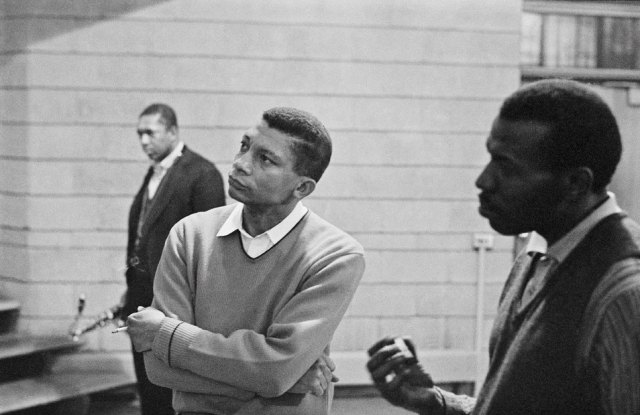
If love is one of the most common themes in song, love songs that stretch beyond simple declarations, admitting a type of defeat in the face of defining such an emotion, are remarkably rare. In the past weeks soundstreamsunday has featured Nick Drake and Lal Waterson, who each spun their songs about love from a point of deep uncertainty. So, on then, this week, to disappointment and devastation. It would be hard to name a song as beautifully crushing as John Coltrane’s and Johnny Hartman’s reading of Billy Strayhorn’s “Lush Life,” an ode to unrequited love amidst a wash of “jazz and cocktails,” from the only album the duo made. Recorded in 1963, during Coltrane’s legendary run at Impulse! Records, John Coltrane and Johnny Hartman is a one-off, remarkable in the careers of both men, one a premier saxophone player of his time and the other a largely unknown but extraordinary vocalist and interpreter of jazz standards. In itself the concept was business-as-usual: a large part of twentieth-century jazz music up to this time consisted of runs through the “American Songbook” of Gershwin, Rodgers and Hammerstein, Porter, Berlin, et al. This pairing, however, stood out. Coltrane was moving fast at this point in his career, and Impulse! gave him the leeway to pursue concept records in a jazz recording industry that was still entrenched in the robber baron tactics that enriched all but the actual musicians (even the greatest players rarely got more than a day or two in the studio to produce an album’s worth of material). For his part, Hartman’s smooth baritone gave the sessions a focus on the lyric, and while Coltrane’s horn gave Hartman’s almost-lounge vocalizing a distinct edge, Hartman balanced the soloist’s tendency to go long (in 1958, Coltrane recorded another classic, but 14-minute version, of “Lush Life”), while his voice filled a gap you otherwise wouldn’t think about when listening to Coltrane’s other work. The result was six songs on an album clocking in at an economical 31 minutes. Every one of the songs is generous, and the musicians (also including Elvin Jones, McCoy Tyner, and Jimmy Garrison, all from Coltrane’s band and all legends in their own right) support a mood, literally set forth in the last song on the record, “Autumn Serenade,” of turning leaves, fading light, a cold snap. “Lush Life” is the album’s peak, a drinker’s guide to lost love, it’s final statement “Romance is mush, stifling those who strive, I’ll live a lush life, in some small dive, And there I’ll be while I rot with the rest, Of those whose lives are lonely too,” rendered, knowingly but without a hint of irony, as smooth jazz. Way ahead of its time.
*Photo above by Joe Alper: John Coltrane, Johnny Hartman, and Elvin Jones, 1963.
One of the few individuals who could lay any real claim to being essential to the British folk revival, Elaine “Lal” Waterson lent her unique voice — absolutely beautiful and instantly recognizable — to the records she and her brother Mike and sister Norma made as The Watersons, defining the passion and respect necessary to performing traditional material while opening up the freedom and possibility such songs allowed. Although a tremendous songwriter in her own right, she wrote sparingly, and before her death in 1998 created only a handful of records. “Midnight Feast” is from 1996’s Once in a Blue Moon, a collaboration with her son, guitarist and producer Oliver Knight. It is an unusual record; Knight’s inventiveness as an electric guitarist gives the album a consistently full and yet uncluttered sound, supporting his mother’s poetry and voice, highlighting her artful, at times jazz-like, delivery. Indeed, in tone and mood there is nothing so much like this album as Abbey Lincoln’s 1959 landmark Abbey is Blue, in its grooves an acknowledgement of the fullness of life, with its travails and its joys. A profound wisdom at work, speaking of the deeper mysteries.
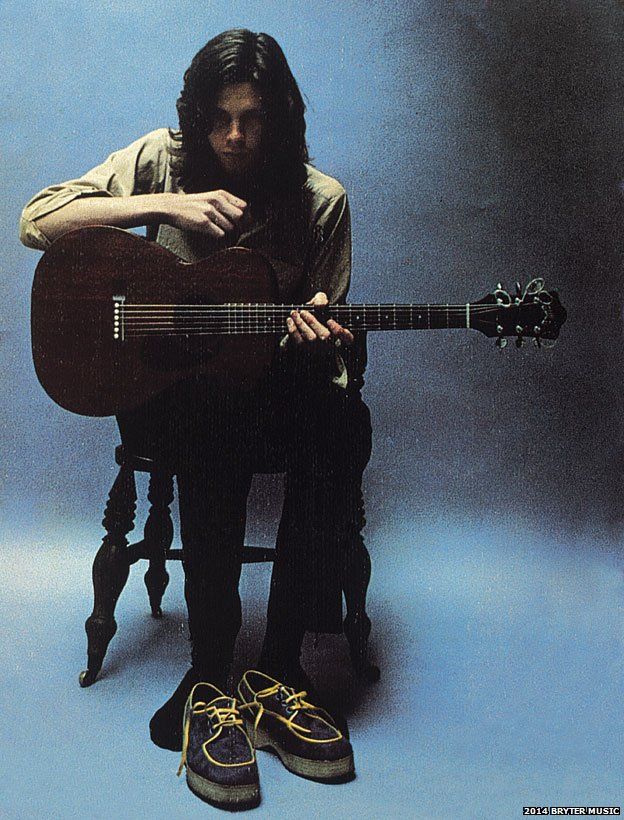
Across three years and three albums, Nick Drake produced singular, autumnal music that in its vision and genius defies era and genre. An extraordinary guitarist, lyricist, and gifted writer of melody, Drake was a lone wolf, debilitatingly shy, and thus his records were midwifed, by producer Joe Boyd — to this day Drake’s champion — and arranger Robert Kirby, along with various luminaries from the British folk rock/jazz scene. Richard Thompson, one of the players, estimates Drake probably sold only 5,000 albums in total when they first appeared, and it would take a VW ad a generation after his death to bring his music to a wider audience, but Nick Drake’s discography carries a timeless beauty, the light of late fall, and I hear in it the expressiveness — pain, humor, love — of Van Morrison and the soft, breathy sway of Joao Gilberto. “Northern Sky” from Bryter Layter is to my mind a perfect song of deep love and yearning, informed by the sensitive playing of John Cale, Dave Pegg, and Mike Kowalski. It wasn’t the breakthrough Drake expected (Island Records declined to release it as a single), and, perhaps disillusioned by his own overt attempt at and ultimate failure to make a commercial record, it’s believed to be one of the reasons he stripped down his sound for Pink Moon. And yet “Northern Sky’s” shimmering, jazz-inflected pronouncement, “I never felt magic crazy as this,” and its bell-like arrangement, is as fitting and whole a description of Nick Drake’s music as any I can imagine.
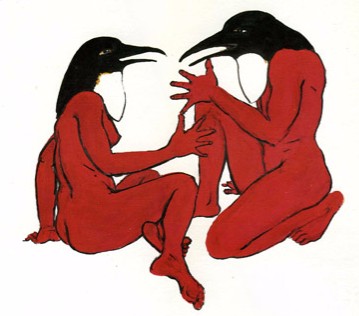
One of the great tragedies in twentieth-century music was the death of Simon Jeffes, age 48, in 1997. As leader for 23 years of the classically-pedigreed Penguin Cafe Orchestra, his music was sly, mostly wordless, and while greedily snapped up by advertising firms and public radio stations looking to set a mood fast, in long form the melodic and meditative qualities of PCO’s songs ensure their enduring presence. As one of Brian Eno’s first production projects following his exit from Roxy Music, PCO has a certain historical cachet, of being associated with the emergence of ambient music, although in many ways Jeffes’ compositions owe much more to the organic performances of his musicians than to the electronic manipulation of sounds that characterizes much of ambient. It’s a kind of extended minimalism, but with a smile (sardonic as it might sometimes be). “Isle of View (Music for Helicopter Pilots)” is from PCO’s third album, Broadcasting From Home (EG, 1984), a record that also featured the popular and much loved “Music for a Found Harmonium.” The song captures a not atypical approach, a melodic loop of bass and guitars and ukeleles, that morphs slowly and underpins a sympathetic line, often just a simple sustained note, on the cello. Occasionally, as here, percussion adds untold dramatic effect. It is comfort music that is genre challenging, for “New” music should not be this accessible, and pop music should not feel this free.


 From Rush’s transitional Permanent Waves, “Jacob’s Ladder” is a psychedelic march, carrying up its spiral staircase Neil Peart’s cosmic Coleridge musings. It thunders across the eastern deserts evoked by its title, a biblical steampunk, all dust and whirlwind and prophetic dreams set against Rush’s tightening musical clockwork. The song’s three sections flow together, distinct but seamless, no verses or choruses, only a gradual rising heavenward. Early on Alex Lifeson blasts an economical, freakout solo across a moorish scale, heavy as an elephant swaying across a mountain pass, and from that point forward commands cycling chord changes and arpeggiated stutters, underpinned by a bolero rhythm favored by the band around this time. Geddy Lee’s bass and keyboard work hits a balance that Rush would capitalize on with Moving Pictures, while Peart’s drumming, as usual, defies adequate description (although “badass” will do), ever shifting, restless and precise. It is a descendant of their epic “Xanadu” and a forebear of “YYZ,” and while stoner-era Rush was cobwebbing at this point, “Jacob’s Ladder” made a case for the band’s continued long-form potency and its ability to take heavy music to places no one else, not anyone, was going.
 In 2014,
  Say what you will about pop radio, you nostalgists and prognosticators of musical doom. I will laugh and scoff with you, because there is, as there always has been, portents of conformity in the monochrome sameness of the popular. But your arguments against are blind to the tail-chasing beast: it’s as often in pop as not that the true revolutions happen, where the work is done, before in creeps mimicry and gold diggery. In the case of Hozier, the revolution is subversion by honoring the blues and soul music his native Ireland so loves. In 2014 into 2015 he produced a bona fide pop radio hit in “Take Me To Church,” which got played on all the I Heart Radio stations in the U.S. In true pop radio fashion it was catchy, easy on the ears, anthem-y. But unusual too — it wasn’t hard to hear beneath the compressed radio waves a rock band sweating it out behind a gifted singer, songwriter, and guitarist. It almost seemed like it was a mistake, because how long has it been since you heard an actual band pumping out the rock on a pop station? The song was from Hozier’s full length, self-titled debut, which, while not a perfect record, isn’t far from it. With lyrics that investigate sexuality, religion, and drugs without robbing any of them of their dark poetry, the album maintains a soulful bounce that only occasionally loses its chug. Them-period Van Morrison would be proud. “To Be Alone,” which Hozier put together, or so I understand because the internet on this point mostly fails me, as a tribute to Junior Kimbrough (who gets a writing credit), does not bear the stamp of Kimbrough’s rough electric blues — although perhaps captures the feel — suggesting instead Peter Green during his brief time as the leader of Fleetwood Mac, it’s lead riff echoing the B riff of Green’s”Oh Well.” The production, too, has that dank, rainy reverb that Green loved, and deals in the dark depths of green manalishis and black magic women. Knowing nothing of the man but his music, I can say that he’s gotten at least that bit right, and while it would be a stretch to say his is the future of pop music, that he found his way into pop’s armored compound is a righteous thing.
 “Outlaw country” is an ironic descriptor at best, applied to a music that, without the modifier, began as a lucrative embarrassment to the phonograph salesmen of the 1920s, their newly-minted “hillbilly” record catalogs doing surprisingly well next to the more respectable stacks of whatever maudlin tenor was the operatic toast of the day. Country music’s cornpone reputation grew as its burgeoning industry began to trade on an image based in white southern poverty; but if the marketing suggested the music was as impoverished as its people (a patent falsehood), this achieved for the proponents of such thinking a comfortable outsider-ism, a romantic us-versus-them rewind and replay of Reconstruction that survives in other place in the South as well, through for instance a protracted and continuing — and, unfortunately, necessary — civil rights movement, to this day. So then, what’s this Outlaw business? The term attached to Willie Nelson, Waylon Jennings, and a handful of other country writers and singers who, starting in the late 1960s, were drawn away from the industrial strength, smooth country music produced by “Nashville,” that Tennessee town’s small oligarchy of producers and record labels who held sway over any music distributed under the category of country, and pointedly avoided shifting their audience’s gaze towards the rockier issues or musical themes of the times. Jennings, like Nelson, bucked at this, knew what it meant for their art, and went back to Texas; he turned up the rock’n’roll rhythms he’d played with Buddy Holly, sang what he wanted, and called Nashville out on its phony conservatism. In so doing, Waylon and the country outlaws — and the new southern bands like the Allman Brothers and Lynyrd Skynyrd — found a younger, national country audience, and also reminded rockers that their favorite music was as much country as blues.
 In 1979, while in New York City and around the time he was adding guitar overdubs to
  Put a couple of decades on the protagonist of
  If love is one of the most common themes in song, love songs that stretch beyond simple declarations, admitting a type of defeat in the face of defining such an emotion, are remarkably rare. In the past weeks soundstreamsunday has featured
  One of the few individuals who could lay any real claim to being essential to the British folk revival, Elaine “Lal” Waterson lent her unique voice — absolutely beautiful and instantly recognizable — to the records she and her brother Mike and sister Norma made as The Watersons, defining the passion and respect necessary to performing traditional material while opening up the freedom and possibility such songs allowed. Although a tremendous songwriter in her own right, she wrote sparingly, and before her death in 1998 created only a handful of records. “Midnight Feast” is from 1996’s Once in a Blue Moon, a collaboration with her son, guitarist and producer Oliver Knight. It is an unusual record; Knight’s inventiveness as an electric guitarist gives the album a consistently full and yet uncluttered sound, supporting his mother’s poetry and voice, highlighting her artful, at times jazz-like, delivery. Indeed, in tone and mood there is nothing so much like this album as Abbey Lincoln’s 1959 landmark Abbey is Blue, in its grooves an acknowledgement of the fullness of life, with its travails and its joys. A profound wisdom at work, speaking of the deeper mysteries.
 Across three years and three albums, Nick Drake produced singular, autumnal music that in its vision and genius defies era and genre. An extraordinary guitarist, lyricist, and gifted writer of melody, Drake was a lone wolf, debilitatingly shy, and thus his records were midwifed, by producer Joe Boyd — to this day Drake’s champion — and arranger Robert Kirby, along with various luminaries from the British folk rock/jazz scene. Richard Thompson, one of the players, estimates Drake probably sold only 5,000 albums in total when they first appeared, and it would take a VW ad a generation after his death to bring his music to a wider audience, but Nick Drake’s discography carries a timeless beauty, the light of late fall, and I hear in it the expressiveness — pain, humor, love — of Van Morrison and the soft, breathy sway of Joao Gilberto. “Northern Sky” from Bryter Layter is to my mind a perfect song of deep love and yearning, informed by the sensitive playing of John Cale, Dave Pegg, and Mike Kowalski. It wasn’t the breakthrough Drake expected (Island Records declined to release it as a single), and, perhaps disillusioned by his own overt attempt at and ultimate failure to make a commercial record, it’s believed to be one of the reasons he stripped down his sound for Pink Moon. And yet “Northern Sky’s” shimmering, jazz-inflected pronouncement, “I never felt magic crazy as this,” and its bell-like arrangement, is as fitting and whole a description of Nick Drake’s music as any I can imagine.
 One of the great tragedies in twentieth-century music was the death of Simon Jeffes, age 48, in 1997. As leader for 23 years of the classically-pedigreed
  Progarchy