Mini-review: Porcupine Tree’s “Octane Twisted”


Porcupine Tree’s new live album, “Octane Twisted” arrived in the mail today. It comes in several configurations – the one I ordered is a 2-cd and single dvd set of their April 30, 2010 concert in Chicago.

The first disc is a complete presentation of their 2010 album, “The Incident”. It’s an excellent performance, with the highlights being the Animals-era Floydian song “Time Flies”, and the album closer, “I Drive the Hearse”.

Because they perform the entire album without breaks, the audience is pretty much taken out of the picture. While watching the dvd of the show, it’s clear there is incredible chemistry between the band members, but I didn’t get much sense of rapport with the crowd. Gavin Harrison once more demonstrates he is one of the greats of prog percussion. He deserves to be mentioned in the same breath with Neil Peart and Nick D’Virgilio. Richard Barbieri is a master at creating evocative atmospherics, and Colin Edwin makes playing complicated bass runs look effortless. Once again, John Wesley joins the core PT members to play guitar and vocals.

Steven Wilson is the main attraction, and he doesn’t disappoint – playing both electric and acoustic guitar, and some piano. He pulls off some excellent solos in “The Incident”, “Time Flies”, and “Octane Twisted”. And, of course, he’s barefoot throughout the concert!

Disc 2 contains the rest of the Chicago concert, as well as three songs from an October 14 London show. The other Chicago songs are “Hatesong” (probably my least favorite PT song), “Russia On Ice/The Pills I’m Taking” (“Russia On Ice” drags, but “The Pills I’m Taking” picks up the pace nicely), “Stars Die” (from the early days!), and “Bonnie the Cat” from The Incident (odd choice for a concert closer). The London songs are “Even Less” (a perennial favorite, but this performance is a little lackluster), “Dislocated Day”, and “Arriving Somewhere But Not Here” (a really good rendition of a beautiful song).

Overall, this a fine performance, and you get a lot of music for your money. “The Incident” is not one of my favorite Porcupine Tree albums, though, so unless you like it a lot, you could probably give this one a pass. I was very disappointed that the dvd is just the basics: no special features, and it only offers 2.1 audio, not a 5.1 mix. Also, the editing was much too jumpy for my tastes; the camera rarely stayed on one angle for more than 3 seconds, and I would have preferred to have longer shots of the entire band playing.

If you are trying to decide which dvd of Porcupine Tree to buy, I highly recommend “Anesthetize”. It’s an incredibly energetic performance of an excellent album, “Fear of a Blank Planet”. “Arriving Somewhere” is also very, very good, and features music primarily from “Deadwing” and “In Absentia”.

Storm Corrosion – Review

Review – Storm Corrosion (Roadrunner Records, 2012)

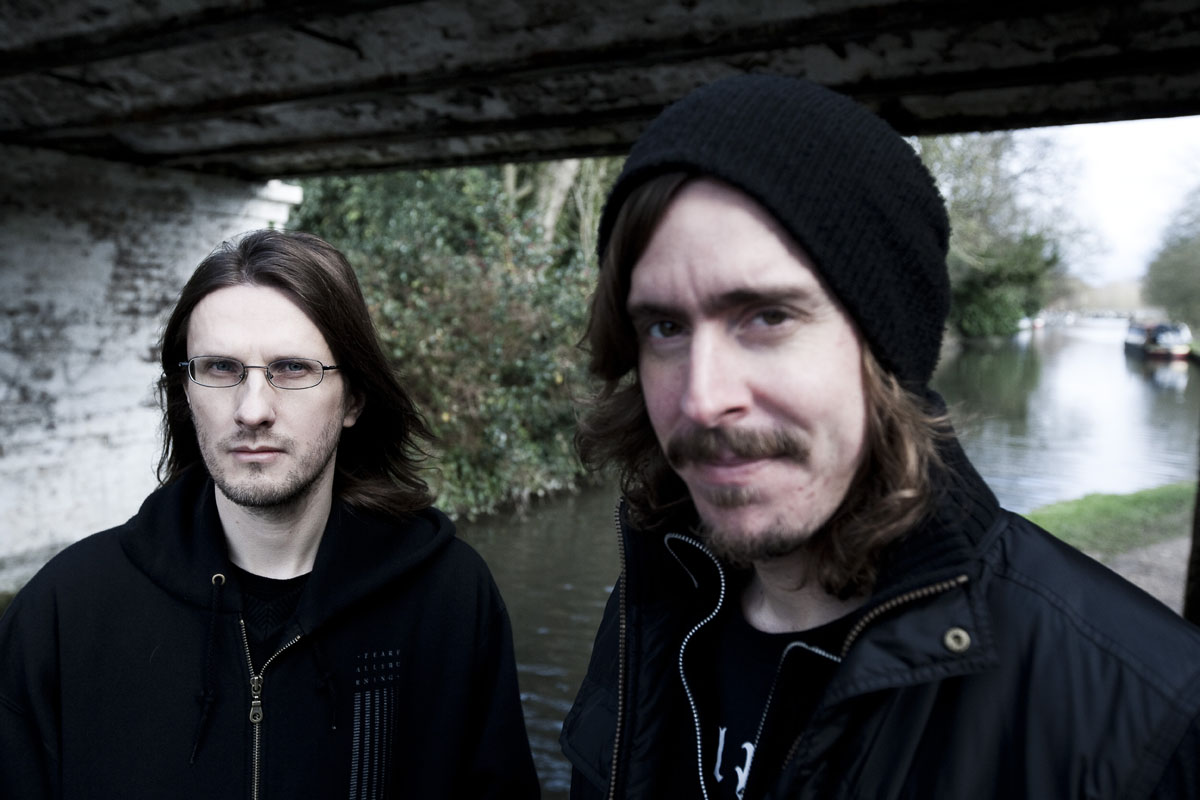
Mikael Akerfeldt is right, with a few qualifications.  On the website for the new Storm Corrosion album, a collaboration between Opeth frontman Akerfeldt and psych/prog stalwart Steven Wilson, Akerfeldt says, “It’s a demanding record. If you’re doing other shit as you listen to it, it’s going to pass by like elevator muzak. You really have to sit down and pay attention! If you allow it to sink in, it could be a life companion.”  Any fan of Opeth or Wilson (No-Man, Porcupine Tree) will be looking for reasons to like this album, but also hoping that it achieves a distinctiveness apart from previous projects.  And this is problematic, because Akerfeldt and Wilson have been collaborating since 2001, when Wilson produced Opeth’s fifth album, the landmark Blackwater Park, a layered, dense, progressive version of death metal (or death metal version of progressive rock).  Take a moment (okay, 9+ minutes — nothing about any of this music is succinct, nor, really, should it be) and check out Bleak from Blackwater Park:

http://www.youtube.com/watch?v=p8atiEPs0bQ

Wilson and Opeth, which around this time Akerfeldt began to make his own (at least from a fan’s perspective), really hit their stride with the dual albums Damnation and Deliverance.  Where Deliverance followed up on the electric, distorted heaviness of Blackwater Park, and utilized to great effect Akerfeldt’s signature take on the growled vocal delivery common in death and black metal, Damnation was the mindblower, indebted I think fairly heavily to the work Wilson was doing with No-Man.  It was a heavy album where the acoustic and electric guitars (Akerfeldt and fellow Opeth guitarist Peter Lindgren used Paul Reed Smith electrics, an important aesthetic and tonal detail that set them apart in their genre) are stripped of their distorted treatments, Akerfeldt’s beautiful straight-ahead vocal delivery is featured across the album, and the songs are minor-key, droney, melancholic, but melodic and dynamically arranged.  It’s heaviness comes from its complete approach, rather than its sonics alone, and for this it’s an incredible achievement.  To get the full effect of this record (and its companion Deliverance), you really need to check out the marvelous Lamentations DVD, which captures Opeth at Shepherd’s Bush Empire in 2003 (and, bonus, shows them working in the studio with Wilson). Here’s an amped version of Closure, originally on the Damnation album, from Lamentations:

http://www.youtube.com/watch?v=hodPV0XglVg

It is Damnation, and perhaps No-Man’s Returning Jesus (with its Talk Talk influences, something Storm Corrosion’s creators have also explicitly mentioned), that Storm Corrosion most closely resembles in character, it’s low-key, meditational approach standing outside the typical Opeth or Porcupine Tree record, but demonstrating the restlessness that underlies both Akerfeldt’s and Wilson’s work.  The record begins with “Drag Ropes,” which sets the tone:  fingerpicked guitars, minor-key arpeggios, strings and woodwinds, and cinematic snippets of lyric in service to the tune.

(The video for “Drag Ropes” is a darkly gothic theme — not unexpected, given the death metal connections I suppose — leavened and made creepier by animator Jess Cope, whose take on the song’s stripped-down lyrics is a story in itself, and is nothing like what my mind conjures as I hear the song.  See her take on it here: http://jesscopeanimation.tumblr.com/dragropes.  I like this because these songs are of a type best finished by the listener.)

I am reminded of Deep Purple’s lofty Concerto for Group and Orchestra, which I always rather liked (and I think Akerfeldt must have too, as the cover art of that record was duped for Opeth’s In Live Concert at the Royal Albert Hall).  The orchestra/group approach has come full flower here, but with far greater and personal effect, and the album’s title track is also redolent of that particular period of British rock’s embrace of the orchestra, this time a fair and beautiful reminder of Ray Thomas’s flute work for prime era Moody Blues.  The flute is replaced in the second half of the song by a vocal line that speaks to the vox-ness of this record.  Both Wilson and Akerfeldt are capable of affecting, fragile vocalizations, sometimes bordering on too delicate, an irony given Akerfeldt’s former Opethian growlings.  “Hag,” the third track, demonstrates the necessity of the softer vocal timbres in this record, while also reminding me most of Damnation, with its dramatic drum breaks and dynamic shifts.  These drums gave me a breathless pause.  They are low-fi, almost seemingly intentionally so.  Nothing these cats do is low-fi, and I searched my brain for a WHY until it lit upon a purchase:  it transported me to the drumming on Popol Vuh’s Letzte Tage Letzte Nachte.  Mikael Akerfeldt has claimed Popol Vuh as a major influence before, and explicitly in an interview regarding Storm Corrosion.  Not to stretch the point, but a good bit of this record has a Popol Vuh/krautrock thing happening, particularly the closing song, “Ljudet Innan,” a grand, drifting piece that opens with a jazz-ish vocal from Akerfeldt before some major drift that would be right at home on PV’s Affenstunde or Aguirre.  Getting there, we’re also treated to an instrumental piece, “Lock Howl,” that energizes us before the finale and reminds me why pacing is so important to an album, an LP relic often forgotten in the MP3 era.

I like this record and wish more like it were made today.  If Wilson and Akerfeldt were jazz musicians (which, from a musicianly point-of-view, they are), they would have just made this record 15 years ago, no big thing, then guested as leaders on each of their respective groups’ albums and collaborated every other year until they were 80.  That they’re associated with rock means they have to carry the weight of “supergroup” to any sort of collaboration like Storm Corrosion, which is something of a pity.  I don’t feel like this record is loaded with trying to live up to expectations, or an ego trip or anything else associated with supergroupness.  Beyond the whys and influences and connections this album has, if it were released anonymously, and I had no context to hang my thoughts on, I think I’d have the same reaction to it.  Yes, there is aural history here, a moogish mellotronish flutes’n’strings thing, but these are not derivative of 70s prog: they are necessary to the songs.  Storm Corrosion is a worthy achievement from two artists who have a significant history creating groundbreaking music, together and apart.  While the record has many touchstones, it is not the sum or product of a record collection, but an original and expressive statement of two consummate musician-composers who are rewarded by their ongoing collaboration.

Craig Breaden, November 2012

Label Spotlight: Kscope Music

One of my favorite labels in the current prog scene is Kscope Music. Its first release was The Pineapple Thief’s Tightly Unwound in 2008, and it has rapidly become a force to be reckoned with. Steven Wilson has released all of his solo work on Kscope, as well as Porcupine Tree’s The Incident, and several PT reissues.

Everything Kscope does is top-notch, both musically and visually. They favor quality over quantity, and as a result, prog fans eagerly anticipate their releases. Their site is one of the most informative on the web, incorporating minisites for new and upcoming releases, music videos, artist’s tour dates, Soundcloud samples, Twitter feeds, desktop and mobile wallpapers, and a monthly podcast.

They have put together an impressive stable of artists, promoting what they call “post-progressive” music. Here’s a quick rundown of my favorites (in alphabetical order):

Anathema began as a very dark and heavy metal band, but now they are full of light and beauty. Their songs grapple with issues of life, mortality, and spirituality. Here’s a sample from their latest album, Weather Systems:

Engineers are what would happen if Pink Floyd and Crosby, Stills, & Nash decided to team up with My Bloody Valentine. Lush vocal harmonies on a bed of multilayered guitars. Gorgeous stuff, in my opinion. Here’s a link to an audio stream of their album In Praise Of More.

Gazpacho are from Norway, and, like Anathema, they aren’t afraid to tackle serious topics in their music. Here’s the video to “What Did I Do”, a song about P.G. Wodehouse’s being accused of treason after he made some naïve German radio broadcasts during WWII:

Lunatic Soul is essentially a solo project of Mariusz Duda, bassist for the excellent Polish prog-metal band Riverside. Their two albums tell the story of a soul in limbo who is given a choice of returning as a reincarnated person with no memory of his past life and loves, or keeping his memories and remaining a shade (at least that’s what I think it’s about!). There is a third Lunatic Soul album consisting of instrumental tracks based on the first two albums’ songs. Duda’s music is mostly acoustic, very melodic, and has a world music feel. Here’s a sampler:

North Atlantic Oscillation is a duo from Scotland. Their latest album, Fog Electric, is one of my top 5 albums of 2012. Imagine Beach Boys mashed up with shoegazers. Here’s a montage from the album:

As I mentioned earlier, both Porcupine Tree and Steven Wilson’s solo music are now on Kscope. I love his work, and if you’re reading this blog, I probably can’t add anything to what you already about him!

Finally, we have The Pineapple Thief. Bruce Soord has been making wonderful music for more than ten years. As I wrote in a review of their album Variations on A Dream, “Depending on your listening temperament, his songs can either be maddeningly long and repetitious or seductively beautiful. I fall into the latter camp, and it might be because I enjoy the music of Philip Glass, Arvo Part, and Steve Reich – minimalist composers who write tonal pieces that rely upon a lot of repetition.”

Here’s “Last Man Standing” from their recently released album All The Wars:

Kscope is a label that is creating its own distinctive style, like ECM and Blue Note did with jazz, and 4AD did with, well, whatever you want to call 4AD’s music in the ’80s. By taking full advantage of social media, Kscope is spreading the word about post-progressive music worldwide.

Coralspin’s Honey and Lava (2012)

Coralspin, “Honey and Lava,” (Altrospire, 2012).  New on the prog scene, Coralspin hails from England.  Much of the music on this excellent release has the feel of something Trevor Horn or Trevor Rabin might have produced around the time of Yes’s 1984 MTV masterpiece, “90125.”  Certainly, Coralspin has its roots in the early to mid 1980s, especially with its big guitars and its big keyboards.  Whether one likes the music of Horn or Rabin or not, no one could honestly dispute the audiophile proclivities of each man.  The same can be written of Coralspin’s Blake McQueen.  The production of this album is simply stunning–this hit me from the first moment I put it in my cd player, and it continues to impress me with each listening.  It’s not just the keyboards and guitars that stand out , no matter how much they predominate on most of tracks.  The bass and the drums are crisp, offering this album a much more punctuated and professional feel than some of its 80s ancestors.  Indeed, I wish Horn and Rabin would’ve mixed Chris Squire’s bass at this level on 90125.  Amazingly enough, almost all of Honey and Lava was recorded in McQueen’s home, and he later mixed and engineered it.  He’s, simply put, a master audiophile, in the same league with Steven Wilson or Rob Aubrey.  The lyrics on this album are wonderful as well–mythic, pointed, hard, soft.  Everything has its place, and its place is very good.  If I were forced to make a comparison (and, as far as I know, I’m doing this out of my own free will), I would compare Coralspin to The Reasoning.  There’s the obvious fact that the lead singers of each are women, but the comparison between the two is much, much deeper than what some silly academic might have pronounced twenty years ago as worthy of revelation.  The structures of the songs–as approached by Matt Cohen and Blake McQueen–have a definite similarity.   Both love mythic lyrics as well, and each wisely uses the voice not only to convey the meaning of the lyrics but also to convey the meaning of the very music itself.  For what it’s worth, I’m a very proud owner of Honey and Lava, and I eagerly await the follow up.