Further Celebration: Kevin McCormick’s 1993 Masterpiece

And, progarchy continues its examination of a missed masterpiece, Kevin McCormick’s With the Coming of Evening.  This review comes from our own progarchist master of all things mathematical and stained, Tad Wert.
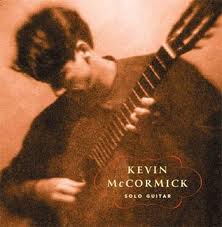
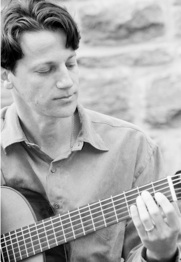
kevin solo guitar

Tad Wert: Kevin McCormick’s 1993 album, With the Coming of Evening, is a wonderful work that I missed when it was released. Fortunately, in this digital age nothing is lost, and hopefully this album will reach the wider audience it deserves.

The first track, Uncovered, sets the mood for the entire work, with acoustic guitar and McCormick’s tremulous vocals. At first listen, I was struck by the obvious late-period Talk Talk influence (Spirit of Eden), but there’s a lot more going on here than mere imitation. For example, there’s a lively middle section in Uncovered where a shuffling drum beat, jazzy organ and bass join in as McCormick sings the impressionistic verses,  “As the grain is wound and wound, it rings a new scar each year/Branches brace a part of me/And suns and rains, and suns and rains survive, the past completed./Few can graft the limb to soul and wind it all down to the core to cure the last, to cure the last./Waiting to be bound, waiting to be bound, ….” (I’m not sure about the exact words, since I don’t have a lyric sheet, but that’s what I’m hearing). So right off the bat, there is a very nice use of a tree’s growth rings to symbolize life’s tribulations.

Next up is an instrumental tune, Annual Ring (there’s that metaphor again!), that seamlessly links Uncovered to the third track, Summoned. While less than two minutes long, this is one of my favorite songs of the album. An insistent Eno-esque atmosphere swells up while an undercurrent of vibes and Eastern-styled percussion weave in and out. Before you know it, you’re well into Summoned, which is another Spirit of Eden-style song. However, this time around McCormick adds some nicely angular electric guitar that adds tension to the primarily acoustic mix.

Sho Song is another instrumental featuring a nice Japanese feel with flutes and arco bass. Imagine a peaceful Zen garden in the late afternoon, and this would be your soundtrack.

Ransomed is a more straight-ahead rock composition featuring electric guitar mixed up front with simple bass and drums accompaniment. It steadily builds in intensity, as McCormick delivers the evocative words, “Can’t see, but I feel, and I feel./That’s what he said up on a tree, when he ransomed me.” It’s a terrific song, and its abrupt ending lends it impressive power.

Rokudan is another linking instrumental with treated piano and an ominous underpinning of deep bass that slowly resolves into a beautiful motif that is repeated and slowly improvised upon. Think Harold Budd/Brian Eno here.

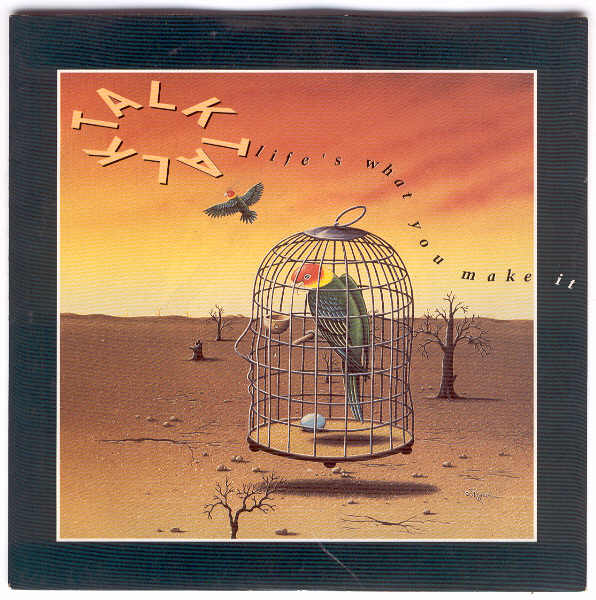
Without Breathing features an opening riff that is Talk Talk’s “Life’s What You Make It” turned inside out. There’s a feeling of barely controlled chaos in this song, as the riff asserts itself over an energetic guitar solo.

Under the Meniscus is another nice instrumental that leads into the straight-ahead blues of Looks Like Rain.

Glimpses begins with some classically-styled acoustic guitar, which is soon joined by double bass and cello. Some tasteful electric guitar joins in as McCormick sings, “You’ve held back so long /Now is the time /In silence the pledge was taken /Relentless static is fulfilled /From the forest that I entered /To the desert where I ended /My feet have calloused /My heels are tuned in, turned on /And I hear you in great frequency.” To my ears, this is the centerpiece of the entire work, as musically it alternates between foreboding and dread to joyful anticipation.

KMPhoto1The Setting Sun is a nice little jam that recalls Traffic’s Low Spark of High Heeled Boys.

The album closes with the beautiful and measured Elegy for the Empty Orchestra. Featuring a gorgeous melody played on acoustic instruments, this is the perfect closer.

With the Coming of Evening proudly wears its influences on its sleeve: a liberal amount of Talk Talk, a dash of Astral Weeks-era Van Morrison, sprinkle in some tasteful Brian Eno atmospherics and Japanese modes, and you have sense of who and what McCormick admires. Add to the mix his excellent classically-tinged acoustic guitar work, his evocative lyrics, and impeccable pacing, and you end up with a very mature and moving work. This is music to employ when you desire space for contemplation. This is music that unfolds to repeated and close listening. Like the best literature, this is music that rewards the listener with new and deeper insights whenever it is revisited.
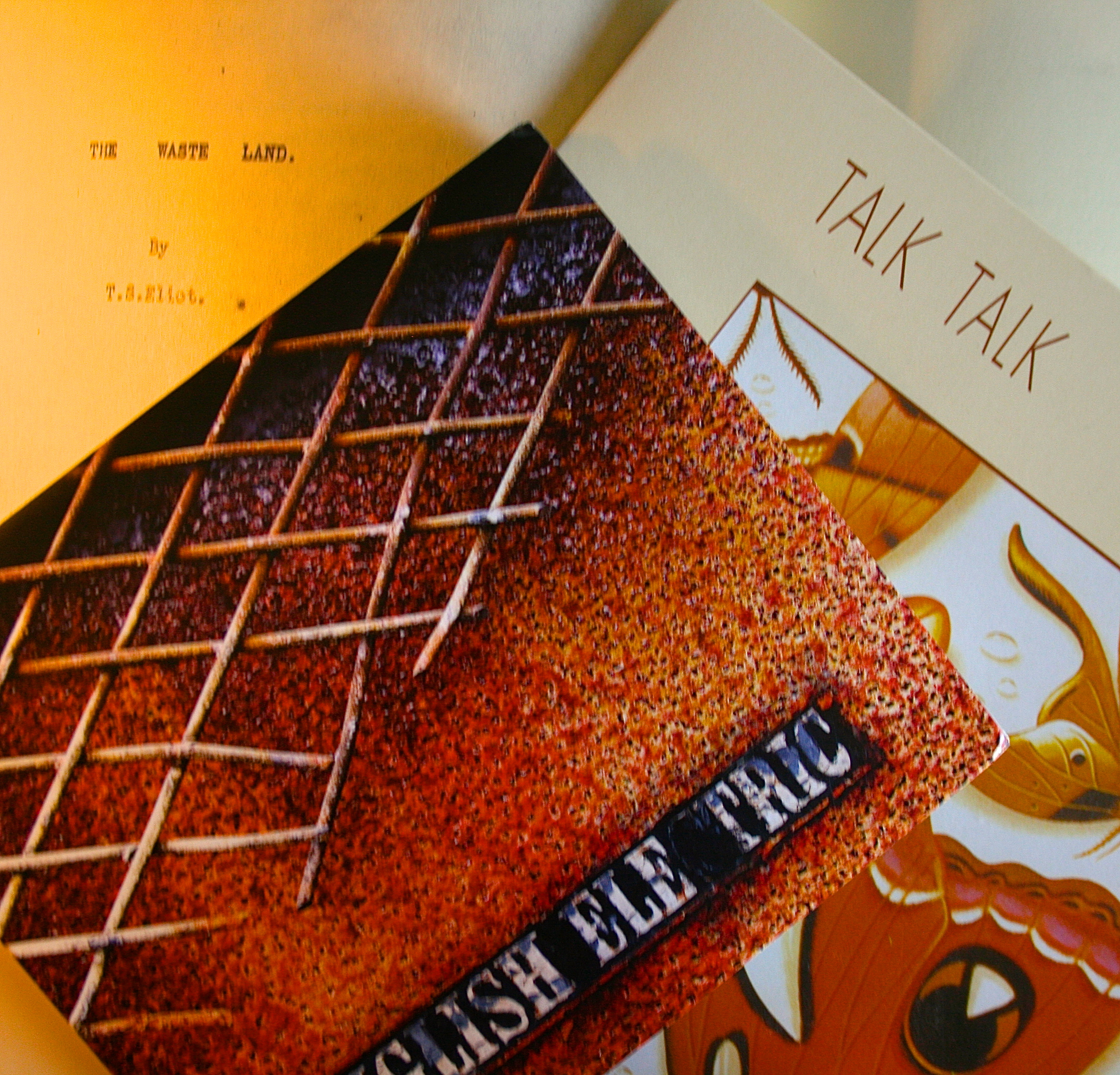
Interview with Tim Friese-Greene (2006)

Wallace references this interview with Talk Talk’s Tim Friese-Greene.  Very good and worth reading.

http://www.pennyblackmusic.co.uk/MagSitePages/Article.aspx?id=3930

Talk Talk’s Laughing Stock, 20 years on

I’ve become quite enamored of Wyndham Wallace’s writings over the past several days.  Here’s a wonderfully insightful piece he wrote on the 20th anniversary of the release of Talk Talk’s Laughing Stock.  Enjoy.

There are many remarkable aspects to the story of Talk Talk’s fifth and final album, Laughing Stock. It took a year to make, and most of what was put to tape ended up on the scrapheap. In London’s Wessex Studios, where it was recorded, windows were blacked out, clocks removed, and light sources limited to oil projectors and strobe lights. Around fifty musicians contributed to its making, but only eighteen ended up on the finished album. It was a commercial failure, critically reviled as much as it was praised, and was impossible to perform live. Then the band broke up, forcing fans to wait seven years before its central protagonist released any new music, something followed by almost complete silence. Laughing Stock is also shrouded in mystery: apart from limited comments made during brief bursts of promotional activity to promote their own even more limited work since, the three authors of the record – Mark Hollis (songwriter and founder), Tim Friese-Greene (producer and co-songwriter since their third album, The Colour Of Spring) and Lee Harris (drums, and the only other remaining member of the band’s original line up by the time of Laughing Stock) – have refused to discuss it for years. But the music remains, its reputation growing with each passing year since its release two decades ago: stark, bold, indefinable and the greatest testament to the band. . . .

To keep reading the article at The Quietus, click here.

Here She Comes, Laughter Upon Her Lips: Talk Talk’s 1986 Masterpiece

IMG_1425Years ago–maybe as many as 25 years ago–fellow Progarchist and classical musician Kevin McCormick and I vowed to listen to Talk Talk’s The Colour of Spring every April 5th, in honor of what is arguably the first post-rock track ever released, entitled, appropriately enough, “April 5.”  I’ve tried to live up to this agreement every year since, and I don’t think I’ve missed an April 5th listening yet.

Last year, before Progarchy even existed, I wrote a piece asking Mark Hollis to call his legitimate successor, Greg Spawton, and the members of Big Big Train.  I mean really.  Imagine Mark Hollis working with Spawton, Poole, NDV, Longdon, Manners, Gregory, and Aubrey.  What a match made in heaven.  After teasing Greg about this a few times, he admitted that if he ever runs into Hollis, he’ll invite him to join BBT.

Amen, Greg, amen.

But, back to Talk Talk.

Though I’d seen Talk Talk’s earlier pop songs/videos on MTV in the early to mid 1980s, I wasn’t taken with the group until I came across 1986’s “The Colour of Spring,” an album that, without much exaggeration, not only opened my eyes to artistic possibilities but also caused me to claim my second music obsession: first, Rush; second, Talk Talk and Mark Hollis.

Everything else I treasured at the time such as early Yes and early Genesis paled next to The Colour of Spring.  Please don’t get me wrong.  I still adored Yes and Genesis, and I always have and probably always will.  But, The Colour of Spring was something beyond.  Beyond rock.  Beyond prog.  I heard lots of Traffic and Spooky Tooth in it, but I also heard a lot of experimental jazz from the 1950s and 1960s.

This album, frankly, seemed like the best prog album since 1977’s Going For the One, but still bettering anything that had come before it.

I studied the art work of James Marsh–those brightly colored moths forming some kind of order as they hovered around droplets of water.  I listened repeatedly to the music.  Too many times over the past twenty-six years to count now.  And, I have dwelt lovingly over the lyrics, which have, in their own way, brought me so much comfort during the good and bad of my life as to rival my love of the words of T.S. Eliot and of St. John the Beloved.  When I first purchased the American version of The Colour of Spring, no lyrics came with it.  Part of Hollis’s charm is his ability to muffle his words in a mysterious but artistic fashion.  I had all kinds of ideas about what Hollis was singing, but I later found I was mostly wrong in my interpretation and translation of those words into song lyrics.

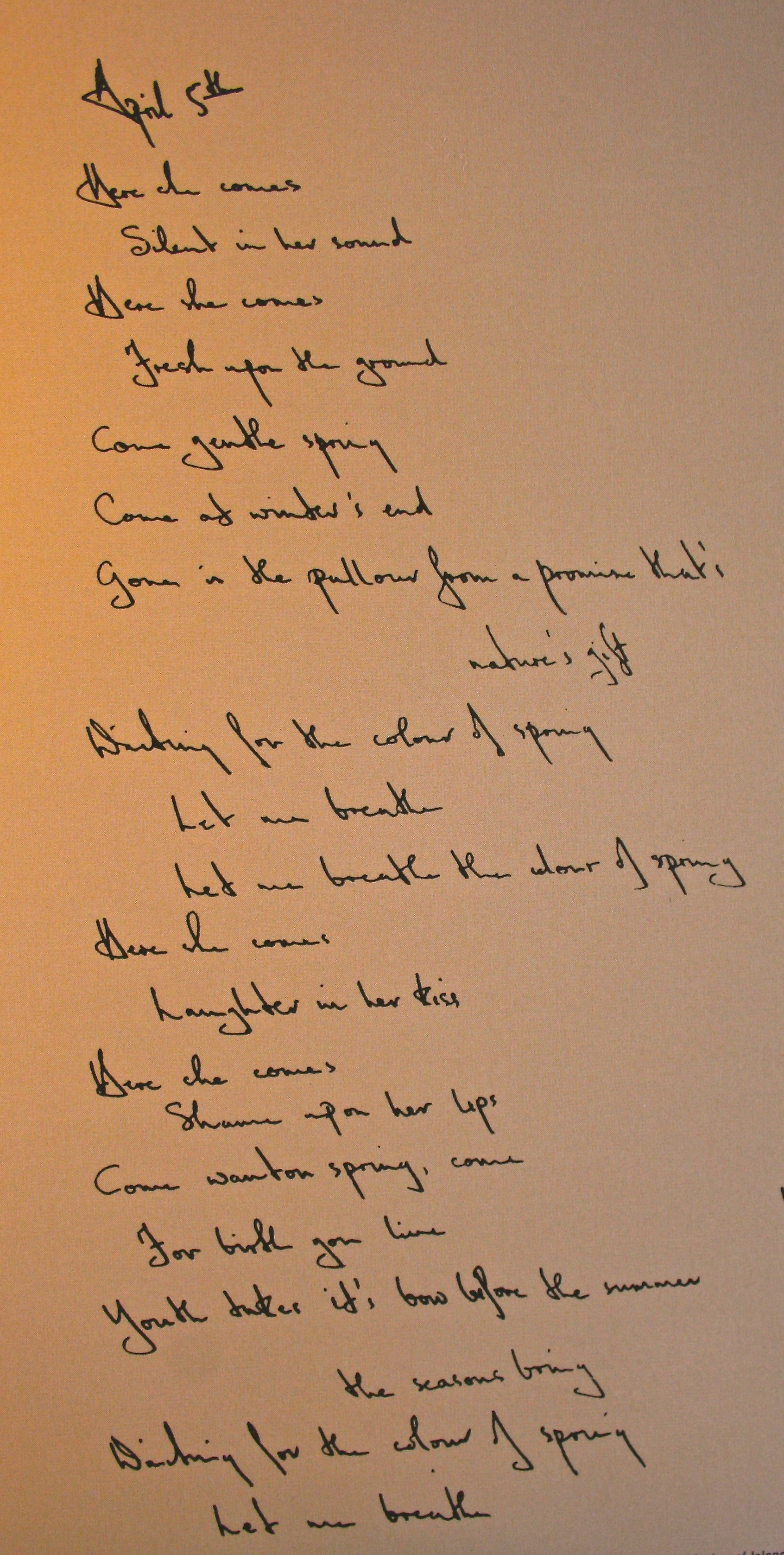
In March 1988, Kevin and I found a copy of the British release of the album in a London music shop.  There, on a brilliant spring day–I can still remember the sun streaming through the windows into that rather dark shop–I read the lyrics as Hollis had written them (even printed in his handwriting) for the first time.

I was, needless to write, emotionally overcome as my mouth dropped open and my eyes teared up.

The lyrics were far better than I’d imagined, in meaning and in form.  I shouldn’t have been in the least surprised.  Though, every listening from that point forward has meant more to me than each and any previous listening.  Only a few other albums in my life have stuck with me as long as has The Colour of Spring.  It has remained my gold standard, surpassed only by its immediate successor, The Spirit of Eden, and (finally–twenty-five years later) by Big Big Train’s English Electric vols. 1 and 2.

In every aspect of The Colour of Spring, Mark Hollis offered not only his genius, but his very being.  That is, he was the music, and music reflected him.  But, really, it did far more than reflect him.  Without trying to become too metaphysical, I must state, the music seems to be coming from somewhere beyond anything known in this world, with Hollis merely reflecting the Divine itself, but putting his own personality on what was given to him.  This is much like the way Tolkien claimed to have written his mythology–not as a creator, but as a discoverer and as a recorder.

Hollis expressed so much love of the world (its physical nature) and a profound respect for religion in interviews–along with his despising of the corporate media culture of the 1980s–that one can easily envision him in Rivendell, the Last Homely House, recording his work among the greatest artists of Middle-earth, lost somewhere in a timeless realm.  Or, more classically, Hollis’s love of the created order makes me wonder if he somehow heard (or felt) the revolving of the Platonic spheres.

Back in 1986, Hollis admitted in interviews that the concept behind the album and the theme were quite simple: religion is wonderful, and war is horrific.  An alliance of the two, however, makes for the worst of all possible worlds.  Ultimately, Hollis claimed, the lyrics reflect the ideals of “life and morality.”

Prog fans, take pride: The Colour of Spring was a concept, to be sure.

The aim of ‘The Colour of Spring,’ he explains ‘is to present great variety in terms of mood and arrangement, treating the whole thing as a concept.  An album shouldn’t be something from which a single is pulled, leaving the rest filled up with rubbish. [New Music Express, Feb. 22, 1986]

The theme, however, must be the only thing that was simple about the album.  Certainly not the actual lyrics, or its song structure, or its production, or, even, its reception.

The album took Hollis exactly one year and two days to write and record.  Having made an enormous sum of money with the first two Talk Talk albums, The Party’s Over (1982) and Life’s What You Make It (1984),  Hollis fulfilled his dreams of moving everything toward the real and organic, away from the synths of the previous albums, there only because he couldn’t afford to hire a rock ensemble.  Now, with The Colour of Spring, he could.

Interestingly enough, Hollis considered “It’s Getting Late in the Evening” to be the core of the album.  For those of you who know The Colour of Spring, you’re probably scratching your head, as this song didn’t make it onto the final cut, and appeared at the time only as a b-side.  Haunting to the extreme, “It’s Getting Late in the Evening,” presents an impressionistic look at American slaves discovering their freedom following the American Civil War.

The tide shall turn to shelter us from storm/The seas of charity shall overflow and bathe us all.

IMG_1428Today, though, we at Progarchy remember the last track of side one, “April 5,” perhaps the first post-rock, post-prog track ever released.  At only 5 minutes and 52 seconds, it is a masterpiece of meandering brevity, a creative breath of freedom and beauty, a reaching and striving as well as a reflection.

Thank you for everything, Mr. Hollis.  If you read this, I only request of you the same thing I requested of you a year ago.  Please call Mr. Spawton.  If you need his number or email, just let me know.

***


I dedicate this post to the genius and friendship of Greg Spawton.

Sources: Talk Talk, The Colour of Spring (EMI, 1986); “A Chin Wag with Talk Talk,” Number One (Feb. 8, 1986); “Talk Talk,” Record Mirror (Feb. 1, 1986); “Communication Breakdown,” New Music Express (Feb. 22, 1986); Rachael Demadeo, “Mark Hollis Interview,” Britannia Hotel in Manchester, May 5, 1986, posted at Within Without.

Nice Piece on Talk Talk’s THE COLOUR OF SPRING

It was, in retrospect, what people call a “pivotal album.” The Colour of Spring, Talk Talk’s third full-length release, appeared initially to be a straightforward development from the band’s previous recordings – artfully crafted pop delivering global hits – and yet pointed bravely towards something unexpected, something decidedly un-pop. One could see the footprints the band had left along the trail from their 1982 debut single, “Mirror Man”, to the 1986 release of this, their biggest selling record, but there were also signs they were heading into new, uncharted territory. Life’s What You Make It was the calling card, a bold burst of vibrant, optimistic acceptance, driven by a rolling piano line and drums inspired by Kate Bush’s Running Up That Hill, and Living in Another World stood proudly beside it, distinguished by Traffic’s Steve Winwood’s exuberant organ cameo. But April 5th and Chameleon Day were intimate, lingering slices of abstract sound that were as baffling as they were haunting.

To keep reading this excellent article by Wyndham Wallace, click here.

Nascent, Nascent: The Natural Order of Talk Talk

I’ve offered my “Talk Talk” testimony so many times, it’s probably getting a bit ridiculous.  To sum up, I really, really, really, really, really (well you get the idea) like Talk Talk, and I have since the spring of 1987, when I first encountered them by chance.  Further, I would have to rank “Spirit of Eden” as one of my two or three rock albums of all time.

Phew.

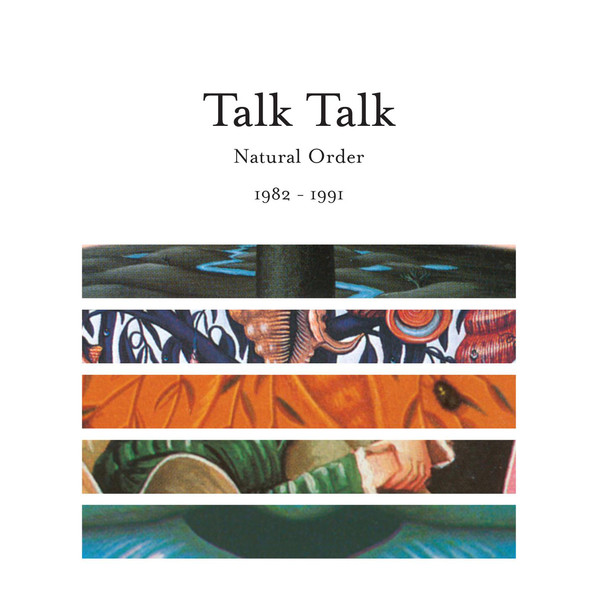
Talk-Talk-Natural-Order-1982-1991So, much to my surprise the other day, I saw that Mark Hollis had emerged from his seemingly J.D. Salinger like-life (may Salinger rest in peace) to release, under his official direction, a Talk Talk compilation.  It’s entitled “Natural Order,” and it just arrived.

Most of the others, frankly, from “Natural History” to the remixes to . . . . Well, let’s face it, Talk Talk just can’t be broken into parts.  The albums come as a whole.  I don’t just plop “Colour of Spring” or “Spirit of Eden” or “Laughing Stock” into the CD player when dropping the kids off at school or running to the supermarket to get milk.  No, these last three albums require attention and love.  Listening to them casually would like roller skating through the Field Museum in Chicago or jogging through the Nelson Museum of Art in Kansas City. Continue reading “Nascent, Nascent: The Natural Order of Talk Talk”

10-minute James Marsh Video Tribute to Talk Talk

If you have 10 extra minutes today or tomorrow or any day from here until the end of times, make sure you check out this stunning video tribute to the music of Talk Talk.  James Marsh, master artist of all things Talk Talk, made the video.  I’m finding the entire thing quite inspiring.

Here’s the link (sorry, I still don’t know how to embed videos):

http://www.youtube.com/watch?feature=player_embedded&v=kSwgHxMLX_c#!

Art by James Marsh.
Art by James Marsh.

The information below the video at Youtube reads:

Published on 19 Jan 2013

Animation promo for the album ‘Spirit of Talk Talk’, available from Fierce panda Records.
All net profits going to the ‘Rare Bird Club’ of ‘BirdLife International’ for Conservation, UK Reg. Charity.
Sample tracks include music by – Nils Frahm, Jack Northover, Zero 7, Sean Carey, Lone Wolf, King Creosote, The Lovetones, Turin Brakes and more…

As some readers of Progarchy might know, I consider Talk Talk one of the greatest musical acts of all time with The Spirit of Eden ranking as one of the best–if not THE best–post-classical albums of all time.

Danny Manners Boards Big Big Train

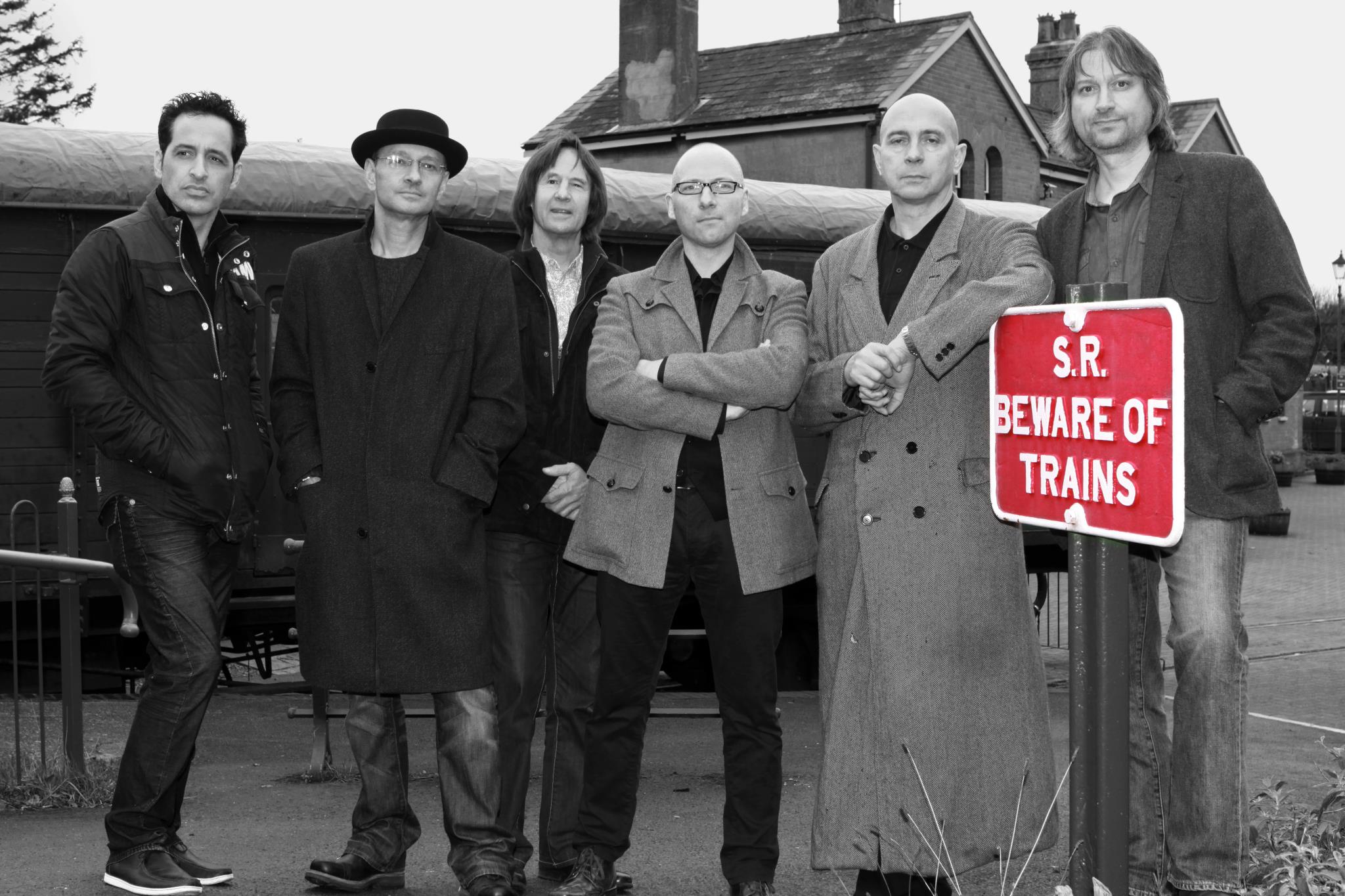
Nick, Andy, Dave, David, Danny, Greg.  Photo by Willem Klopper.
Nick, Andy, Dave, David, Danny, big red sign, Greg.
Photo by Willem Klopper.

Great news today on Facebook from the station master himself, Greg Spawton of Big Big Train.  Bassist and keyboardist Danny Manners has officially become a member of the band, joining Spawton, Andy Poole, David Longdon, Dave Gregory, and Nick D’Virgilio.

Spawton wrote:

We are pleased to announce that Danny Manners has joined Big Big Train as the band’s keyboard player. Danny made a significant contribution to English Electric Part One, playing keyboards and double bass and we are delighted that Danny has accepted our offer to join the band in time for the release of English Electric Part Two on March 4th. Danny’s past credits include Louis Philippe and Cathal Coughlan.

Manners’s training has been mostly in classical and jazz.  He writes of himself at his website:

For those who have stumbled across me: I’m a double bassist, electric bassist, pianist, arranger and composer living in London, England. Starting with classical music as a child and teenager, I worked my way backwards through jazz and finally worked out how to play pop half-decently in my thirties. Along the way I’ve also been involved in improvised and “leftfield” musics. At the moment I’m lucky enough to be doing a little bit of all of these…

He also lists an impressive discography, having played extensively with Louis Phillippe, Louise Le May, Cathal Coughlan, Sandy Dillon, and Muse: http://www.dannymanners.co.uk/albums.html

I must admit, I’m (I–ed., Brad) thoroughly impressed with this addition.  Over twenty years old, beginning with original members, Spawton and Poole, Big Big Train has never ceased to grow, take grand chances, and transform into what is arguably one of the greatest–if not THE greatest–rock band of our era.  With their near collapse after the recording “Bard,” Spawton and Poole have developed the group tremendously with “Gathering Speed,” “The Difference Machine”, “The Underfall Yard”, and “Far Skies Deep Time”.  Their 2012 release, “English Electric Part One”, has received rave reviews and has been labeled the single finest release of 2012 by a number of critics.

To this critic, “English Electric Part One” is not just the best of 2012, it’s the best rock release since Talk Talk’s 1988 magnum opus, “Spirit of Eden.”  Before that, one would have to jump back to Yes’s “Close to the Edge” or Genesis’s “Selling England By the Pound” in the early 1970s or to Dave Brubeck’s “Time Out” to find comparable works of music in the last half century.

It should be noted as well that the engineer for Big Big Train, Rob Aubrey, is the Phill Brown of our era as well.

Finally, Manners has worked with David Longdon before, and–I assume–connected Big Big Train to the famous bassist and keyboardist.

The second part of English Electric will be released on March 4 of this year.  American drummer, Nick D’Virgilio, a full-time member of the band, just finished recording the final drum parts for “English Electric Part Two.”  Additionally, the band will be releasing a limited edition of the full “English Electric” in the fall and the re-imaging of previous tracks on “Station Masters” in 2014.

Kevin McCormick’s Squall (1999)

kcmccKevin McCormick, Squall (1999).  To my mind, this is some of the best rock music ever written—but tempered with very serious classical sensibilities and lacking the over-the-top bombast present in even some the best of 1970s progressive rock.

If one had to label his music, it would most likely be a post-prog, post-rock, or, simply put post-Talk Talk.  In the current realm of music, one might think of a mixture of Matt Stevens, Gazpacho, and Nosound.

McCormick incorporates his profound poetry as lyrics.  Each word—and the way Kevin sings it—seems utterly filled with grace and conviction.  This is part two of a rock/post-rock trilogy (he’s currently working on number three).  And, it’s hard to listen to Squall without listening to its equally fine predecessor, With the Coming of Evening (1993).  Kevin really has it all: a great voice, the ability to write poetry as lyrics, and the training of a classical guitarist.

Before I write any more, let me admit my bias.  Kevin is one of my closest friends, and he has been since we first met in the fall of 1986 as freshman at the University of Notre Dame.  We still talk and correspond frequently.  Kevin is the godfather of my oldest son, and I of his second daughter.

We bonded immediately on matters of music back in 1986.

Kevin and his two brothers had a well-known Texas band in the mid 1980s, and Kevin formed the finest band at Notre Dame, St. Paul and the Martyrs, during our years there.  Toward the end of our senior year, St. Paul and the Martyrs opened for the-then unknown progressive jam band, Phish.

During our years in college, Kevin and I traveled throughout the U.S. and England together (making sure to visit Trident studios as well as EMI (hoping to catch a glimpse of Mark Hollis) while journeying through the mother land of prog and New Wave), co-produced a “Dark Side of the Moon” charity show, complete with an angsty-movie backing a full performance of the album by the Marytrs, talked music and lyrics until late into the nights, and even co-hosted a prog rock radio show on Friday nights.

Not surprisingly, one of my greatest memories of Kevin in college was listening to the entirety of Talk Talk’s Spirit of Eden in 1988.  We remained completely silent for a very long time after its completion, stunned by the immensity of its beauty.

Kevin is extremely talented in a number of ways.  Not only is he the father of our beautiful daughters, but he has won national poetry as well as classical guitar composition awards.  In addition to the two post-prog albums (With the Coming of Evening and Squall) already mentioned, Kevin has also released several albums of solo classical guitar as well as an album of Americana, all recorded on an 1840s Martin.

His music has been praised publicly by many (see, for example, his entry at Allmusic) and privately by such luminaries as Phill Brown and Greg Spawton.

As of this afternoon, Kevin has finished mixing a Christmas CD, recorded with his oldest daughter on vocals, to be released next Christmas season.  And, as mentioned above, he is currently working on the completion of his post-rock trilogy.

Here’s Kevin’s music at CD Baby:  http://www.cdbaby.com/Artist/KevinMcCormick

Here’s Kevin’s official site: http://www.kevin-mccormick.com/KM/index.html

I know we at Progarchy have offered lots and lots of suggestions for worthwhile purchases over the last three months.  But, as we begin this near year, I can state unequivocally that it’s worth supporting Kevin, especially as he prepares to record his new post-prog album.  I’ve only heard bits and pieces, but Kevin is a man of absolute integrity.  He is, like so many of us who either play prog or simply listen to prog, a perfectionist.  He also possesses one of the finest senses of beauty I’ve ever encountered in another.  So, while 2013 will probably NOT be the year of Kevin McCormick in the prog world, 2014 almost certainly will be.

Certainly, Kevin’s album should be one of the most anticipated releases of the next two years.  It’s worth beginning to anticipate today, January 1, 2013.


***


Some video links:

http://www.youtube.com/watch?v=umMMJ4B-D6k

http://www.youtube.com/watch?v=Kewac1nhue8

http://www.youtube.com/watch?v=fqsAcTs8KN0

The Best 15 Albums of 2012, The Greatest Year in Prog. Ever.

IMG_3725by Brad Birzer, Progarchy editor

One of my greatest pleasures of 2012–and there have been many–has been listening to massive quantities of progressive rock, mostly for pleasure.

Being a literary and humanities guy, I’d contemplated rejecting the entire numerical ranking scheme.  Rather, I thought about labeling each of my best albums with various qualities of myth.  These albums achieved the level of Virgil; these of Dante; these of Tolkien, etc.  But, I finally decided this was way too pretentious . . . even for me.

Below are my rankings for the year.  Anyone who knows me will not be surprised by any of these choices.  I’m not exactly subtle in what I like and dislike.  Before listing them, though, I must state three things.

First, I loved all of these albums, or I wouldn’t be listing them here.  That is, once you’ve made it to Valhalla or Olympus, why bother with too many distinctions.  The differences between my appreciation of number 8 and number 2, for example, are marginal at best.

Second, I am intentionally leaving a couple of releases out of the rankings: releases from Echolyn, The Enid, Minstrel’s Ghost, Galahad, and Kompendium, in particular, as I simply did not have time to digest them.  Though, from what I’ve heard, I like each very much.

Third, I think that 2012 has proven to be the single greatest year in prog history.  DPRP’s Brian Watson has argued that we’re in the “third wave of prog.”  He might very well be right.  But, I don’t think we’ve ever surpassed the sheer quality of albums released this year.  This is not to belittle anything that has come before.  Quite the contrary.  I am, after all, a historian by profession and training.  The past is always prologue.  Close to the Edge, Selling England by the Pound, and  Spirit of Eden will always be the great markers of the past.

Ok, be quiet, Brad.  On with the rankings.

Continue reading “The Best 15 Albums of 2012, The Greatest Year in Prog. Ever.”