


Tag: The Tangent

A must-read interview with Andy Tillison (external)
I really, really like this guy. Thank you, Andy.
“Bollocks”. I mean there ARE people who will say that kind of thing. Quite why the Brits are so frightened of a member of their number being ambitious, creative and inspired eludes me. But hey, I’m used to it and its water off a duck’s back to me. You can call it elitist because I did something I could do, I pushed myself, I went further than I had to. If that’s elitism then I’m guilty of it and so are the people who listen to it. But I am a musically uneducated person who started off in a punk band and got better and more varied in what I do. I wanted more, music itself led me there. I was not in any kind of “elite” when I started, and becoming part of one has never been the goal, so really it’s just the old 70’s and 80s journos whose over use of words like “pretentious”, “elitist” and “pompous” were simply expostulations of not knowing how to review “Tales” when they got the job to write reviews of “Keep On Runnin'”.
You can’t level the “Dinosaur” band accusation at me. The Tangent has had a hard life of little comfort, very, very little financial reward, no mainstream media support. We took on a musical form that is possibly the most difficult to do well, most difficult to market, most difficult to play live and even most difficult to explain to others.
I speak with a broad Yorkshire accent. I’m a Scargillite lefty and advocate of sensible anarchy, totally down to earth in nearly every way apart from believing that music is more than 2 minute romps of pop, punk or thrash. I’m naive, fragile and irritable and I’m a struggling artist not a failed Rock Star. There’s a huge difference.
To read the interview in its entirety, click here. It will be well worth your time.
To pre-order the album (and you should), click here.
[Additional, added June 18, 2013. With apologies, I should have mentioned that Eric Perry conducted the interview. Excellent job, Eric!]
Le Sacre Du Travail: Ruminations On The Rat Race
Put the kettle on, it’s time to relax…
It’s been a turbulent year for Andy Tillison and for fans of The Tangent. Back in October 2012 he dismayed us by dissolving the latest line-up of the band for financial and logistical reasons, only to placate us just a month later with the announcement of a new album in the pipeline. Since then, anticipation has grown steadily as the identity of each new collaborator has been revealed: Jakko Jakszyk, Theo Travis, Dave Longdon, Gavin Harrison and Jonas Reingold – a veritable who’s who of prog’s great and good, three of whom worked with Andy on 2008’s Not As Good As The Book.
The new album, Le Sacre Du Travail (“The Rite Of Work”), is finally here, and it’s a monster, clocking in at over 63 minutes. And that’s without the 10 minutes of bonus tracks!

Fans will find many familiar reference points in this new material, along with intriguing new elements. For me, The Tangent are the Steely Dan of prog, capable of a cool and effortless groove much like that legendary band. Jazz is never far from the surface in their music, but Le Sacre adds classical influences and orchestral texture to an already varied palette, drawing inspiration from Stravinsky’s Rite Of Spring. In less skilled hands, the result could have been a mess – but it works brilliantly here.
That orchestral feel is most evident in the opening overture Coming Up On The Hour and in the penultimate track of the suite A Voyage Through Rush Hour, the two shortest tracks on the album if you ignore the bonus content. Sandwiched between them are two lengthy pieces, Morning Journey & Arrival (22:55) and Afternoon Malaise (19:21), which reprise the orchestral themes but otherwise place us squarely in the territory of other epics in The Tangent’s oeuvre, offering us different movements, changes of mood and pace, not to mention solos aplenty to showcase the incredible talents of the players – all the good stuff that any devotee of prog craves, in other words.
To round off the suite we have Evening TV, a twelve-minute slice of classic anthemic prog that surges into life with a soaring synth melody and Reingold’s driving bass. I particularly like how this piece brings us full circle with a quiet ending featuring the ticking clock and beeping alarm that began the suite. It fits perfectly with the theme of the album.
And what of that theme? When it comes to concepts and lyrics, Tillison has always steered clear of prog clichés. You won’t find fantasy, philosophy or eastern mysticism here, no oblique references, no Priests of Syrinx, no Watchmakers nor any other allegorical devices. Tillison’s style is much more direct than that, and his subject matter is something we can all relate to: the mundanity of the daily grind, a near-unbreakable cycle of commute-work-eat-tv-sleep.

In Morning Journey, he invites us to take a Google-eye view of the frenetic commute to work and barks “We are ants!” Things aren’t much better when we’ve finally fought our way to the “business parks, call centres and retail outlet nodes”. What kind of deal have we struck? What have we sacrificed for such an existence?
All the time that we give to companies who call themselves our friends
All the time that we live with their aims at heart, their intent
And then they tell us that we’re important or
We’re ‘all part of the whole’
I don’t believe them, not ’til I see it
Until I put my finger in the holes
Afternoon Malaise continues the analysis:
When are you you?
Just who is it in there?
Behind the stingy plastic staff pass and slightly maintained hair
You play the Bullshit Bingo but the pain inside you smarts

A rather funky later section entitled Steve Wright In The Afternoon has particular significance for those of us from the UK but will resonate with anyone who has had to endure those endless waves of bland music and meaningless chit-chat emanating from the office radio while “waiting for the wallclock to set you free”:
We’re only here ‘cos there’s nothing else we can do
And Steve knows – he’s under no illusions
So he gives us a factoid or something to make the time go by
It ain’t gonna be “Yours Is No Disgrace”
But he has a good try
This is incisive social commentary, full of the wit so evident in Tillison’s lyrics from earlier albums (Tech Support Guy and Bat Out Of Basildon spring to mind as good examples) and with a dose of world-weary cynicism that may not be to everyone’s taste. But this is more a plea than a whinge, imploring us to remember there is more to life than the rat race.
I suspect most fans would agree that the yardsticks by which we should measure any new work from The Tangent are Not As Good As The Book and its 2006 predecessor A Place In The Queue. In my view, this album eclipses both, offering us something altogether more coherent and polished. If I were to nitpick, I’d say that Dave Longdon has been underused bearing in mind his calibre as a vocalist, but that is a minor point regarding what is undeniably a magnificent accomplishment, a work of great depth and maturity, a clear contender for album of year.
Put simply, Le Sacre Du Travail is a masterpiece: the best-sounding, most consistent and most compelling release by The Tangent to date.
The Genius Rages: The Tangent’s Le Sacre Du Travail (2013)
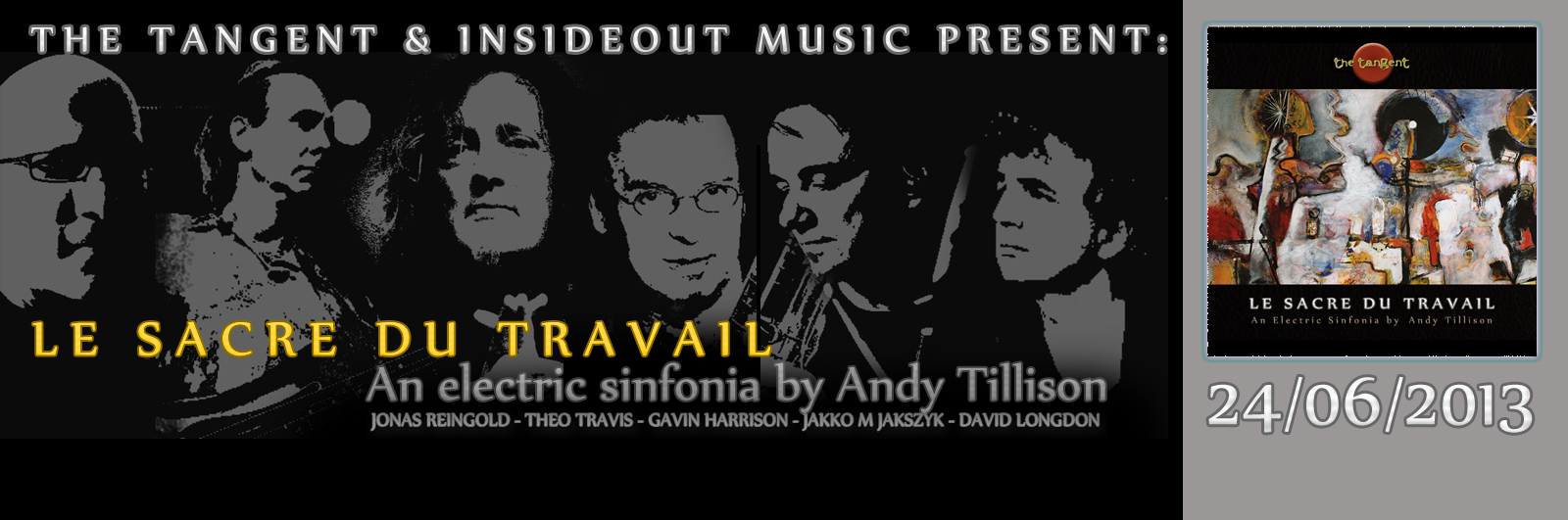
Genius
Andy Tillison is a genius. It must stated as bluntly as possible. Tillison is a genius. He’s a musical genius and a lyrical genius, but he’s also just a genius genius. Actually, this might seem redundant, but it’s not. Only genius could properly modify genius when it comes to Tillison’s art.
As I mentioned in a previous post on our beloved site, Progarchy, anything Tillison releases is not just an event, but a moment. A real moment, not a fleeting one. A moment of seriousness and reflection.
From the first I listened to The Tangent’s The Music That Died Alone, a full decade ago, I knew there was something special going on. Not only did the cover art entrance me, but the very depth and seriousness of the music captured my then 35-year old imagination. I felt as though Tillison was speaking directly to me, asking me to remember the greatness of the musicians who came before 2003, but also inviting me–in a very meaningful fashion–to move forward with him.
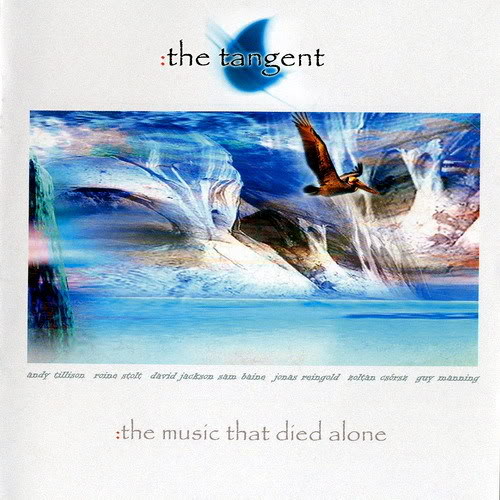 The Music That Died Alone really serves as a powerful nexus between past and present, present and future, up and down, and every which way. Only the evocative power of the lyrics match the classiness and free flow (though, we all know what makes something seem free is often a highly disciplined mind and soul) of the music.
At the time I first heard them, I mentally labeled The Tangent a “neo-Canterbury band,” but I was too limited in my imagination, and I would discover this very quickly. Indeed, each subsequent The Tangent album offers new pleasures and paths for adventure, but always with that power of that Tillison nexus, connecting the past and the future with beauty.
Tillison makes this connection literal in his very fine novella, “Not as Good as the Book: A Midlife Crisis in a Minor.” The dedication lists close to 100 names, including numerous members (first names only) of the members of various bands from Yes to ELP to The Flower Kings to Spock’s Beard to XTC and to authors such as Arthur C. Clarke and J.R.R. Tolkien. None of this is contrived. Just pure Tillison expressions of gratitude.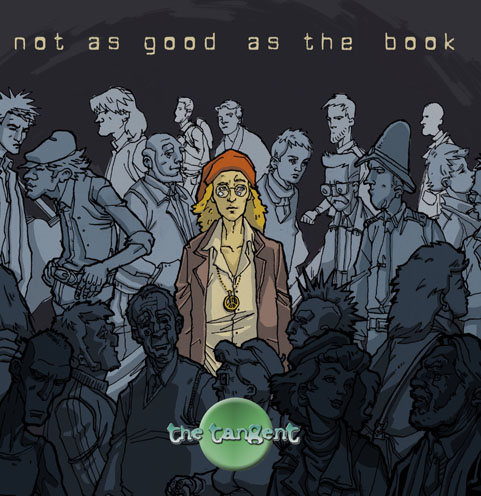
Privileged (well, blessed, frankly, if you’ll pardon a blatant religious term) to receive a review copy of the new album, Le Sacre Du Travail (Out officially June 24, 2013 from InsideOut Music), I dove right into the music. Full immersion. With every album, Tillison has only improved. Each album has bettered the already previous excellent album with even more classiness, more intensity, and more meaning. Not an easy feat in this modern world of chaos and consumerist fetishes.
With this album, though, Tillison has moved forward the equivalent of several The Tangent albums. Again, to be blunt, the album is mind-boggingly good.
Easy listening? No. Of course not. It’s Tillison, it’s prog, and it’s excellent. What part of those three things suggests easy. No excellent thing is easy. Can’t be. It wouldn’t and couldn’t be excellent if easy.
Satisfying listening? Oh, yes. A thousand times, yes.
For one thing, Tillison has brought together some of the finest artists in the business. I was convinced of the potential greatness of this new album when I first heard David Longdon (in my not so humble opinion, the finest voice in rock today) would appear on the album. But, add a number of others in: Jonas Reingold (The Flower Kings), Jakko Jakszyk (Level 42), Theo Travis (Soft Machine), and Gavin Harrison (Porcupine Tree). And, it doesn’t stop here. Add Brian Watson (DPRP.net)’s spectacular art work and the cool dj voice of Geoff Banks (Prog Dog show). Ok, this is one very, very solid lineup of the best of the best.
1913
Ten years ago, Tillison released the first The Tangent album. 100 years ago, Igor Stravinsky released what was arguably his masterpiece and certainly one of the finest pieces of music of the twentieth-century, The Rite of Spring. While The Rite of Spring hasn’t pervaded our culture in the way the fourth movement of Beethoven’s 9th Symphony has, it’s a close second. Every person, an appreciator of music or not, knows at least part of The Rite of Spring.
Imagine for a moment 1913. It was, by almost every standard, the last great year of the optimism of western civilization. Technology upon technology had produced innumerable advancements, almost everyone in the western world believed in unlimited progress, and even devout Christian artists (such as Stravinsky) had no problems embracing the greatest elements of paganism and folk culture.
In almost every way, Stravinsky explored not only the folk traditions of his era, but he embraced and, really, transcended the modernist movement in music. He bested it. His Rite is full of tensions and dissonance, but each of these is overruled and corrected by harmony and emergent joy. The Rite, no matter how pagan, also has deep roots in the Judeo-Christian and Greco-Roman traditions. The Rite–the ritual, the liturgy–has been a part of western civilization since the pre-Socratics debated about the origins of the cycles of the world and history: earth, water, air, or fire.
 2013
2013
Imagine for a moment 2013. Well, ok, just look around. Technology remains exponential in its growth, but few would praise the development of the Atomic Bomb, the gas chamber, or the aerial bomber. But, then, there’s the iPod. And, unless you’re Steven Wilson, you probably think your iPod is ok. Certainly better than an Atomic Bomb.
Optimism? No. I don’t need to go into detail, but, suffice it state, T.S. Eliot might very well have been correct when in the late 1940s he claimed the western world in an advancing stage of darkness:
the tower overthrown, the bells upturned, what have we to do
But stand with empty hands and palms turned upwards
In an age which advances progressively backwards?
The U.S. and the U.K. are currently waging numerous wars, and there seems to be no end in sight.
The Rite of Work
As with the Stravinsky of 1913, the Tillison of 2013 surveys the cultural landscape. Unlike his Russian counterpart, the Yorkshire man finds little to celebrate in this whirligig of modernity.
The “good guy anarchist,” as he described himself in a recent interview (and, not to be too political, but more than one progarchist would be in great sympathy with Tillison on this point), Tillison observes not the Rite of Spring, but the liturgy of work. We get up, we commute, we sit in our cubicle, we commute again, we eat, we drink, we have sex, we watch a little t.v., and we sleep. The cycle beings again every Monday, Tuesday, Wednesday, Thursday, and Friday. Who made this deal, Tillison wisely asks.
Throughout it all–pure prog interspersed with very modernist musical elements from time to time–Tillison references much in our modern folk and popular culture, including The Sound of Music and Rush (2112):
In a Rush T-shirt, pony tail, 2112 tatooed on his hands
He’s a star through thick & thin
But he still gets that data in
A modern day warrior, today’s Tom Sawyer is a clerk
He’s a meta for disillusion
He’s a metaphor for life
But, interestingly enough, Tillison does all of this as a modern-day St. Thomas the Doubter.
But I don’t believe them, not ’til I see it
Until I put my finger in the holes
In every word, the lyrics rage against the conformity demanded in 2013–demanded by our corporations, our neighbors, and our governments. What have we become. . . mere ants, living in a world of bird dung. Certainly, whatever humanity remains has been given over to some institution radiating power.
And, yet, still somewhat in the persona of St. Thomas, Tillison asks us to reconsider our day-to-day rituals and liturgies. Is it worth it that we squander what little time we have in the name of the mindless and soulless cycles of modern life? By far the most powerful moment of an album of immense power (power in the good sense; not in the domineering sense):
‘Cos you can’t take it with you
There’s no luggage allowed
No you can’t take it with you
No matter how rich or proud
Your kids will sell it off on Ebay
For god’s sake don’t waste their time
‘Cos you can’t take it with you
You can leave just a little bit behind.
Summa
Well, what an album. What an artist. What a group of artists. If any one ever again complains about the superficiality of rock music, consider handing them a copy of this CD. No superficiality here. Only beautiful–if at times gut wrenching–meaning.
Keep raging, Mr. Diskdrive. Rage on.
To order the album (and you should, several times!), go here: http://www.thetangent.org/
The Tangent News
As most readers of Progarchy well know, Andy Tillison will be releasing the new The Tangent album at the end of this month. Any Tillison release is as much an event as it is a momentous moment. As he’s proven time and again over the last decade with The Tangent releases, Tillison is a true believer in the roots and the origins of prog as well as in the future and innovation of prog. He’s a seeker of all things excellent and beautiful.
Bringing in David Longdon for the new album is a touch of genius. But, Longdon is not alone. Bassist Jonas Reingold and guitarist Jakko M. Jakszyk join as well.
In case you’re interested, and I assume we all are, there are two pieces on the internet well worth checking out today:
A newspaper interview with Tillison here:
And, the first review of the new The Tangent album here:
http://ytsejam.com/music-review/the-tangent-le-sacre-du-travail-the-rite-of-work/
You can order the album here:
Enjoy!
New Tangent Ready for Pre-Order
As the Tangent posted this morning on Facebook:
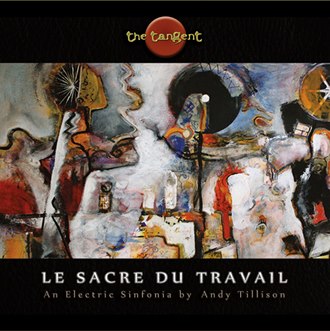 STATEMENT FROM INSIDEOUT/CENTURY MEDIA TUE 7/5/13
On the 24th June 2013, InsideOut Music is set to release the seventh studio album by The Tangent entitled Le Sacre Du Travail (The Rite Of Work). The album is the group’s first fully blown “concept album” but band-leader Andy Tillison is keen to point out that this concept is something that involves all of us now rather than a rambling fiction.
Formed from a single hour long piece of music in 5 movements and referred to by the band as “An Electric Sinfonia” based around a working day of a typical Western-world citizen, the album has a very personal feel. It’s highly orchestral and 20th century classical in tone, very much inspired by Stravinsky’s The Rite Of Spring. Described by INSIDEOUT CEO Thomas Waber as “A very mature album” with “Stellar Musicianship” – this album sees the lineup of The Tangent revert to an earlier formation, Andy Tillison (composer/keyboards/singer) again bringing on board Jonas Reingold on bass (The Flower Kings, Karmakanic), Jakko M Jakszyk on guitar & vocals (King Crimson, Level 42), Theo Travis on wind instruments (Soft Machine, Steve Wilson Band) with the new additions of Gavin Harrison on drums (Porcupine Tree) & David Longdon on vocal harmonies (Big Big Train). In addition there are cameo appearances by Rikard Sjoblom (Beardfish) and Guy Manning amongst others.
The Tangent add to the statement:
The artwork for the outside cover you see here, is by a remarkable gentleman named Martin Stephen. The interior artwork will be announced & featured extensively later.
Much more info on the Tangent Website updated today (please allow for bizarreness)www.thetangent.org And of course regular Pre-Ordering begins today!
Look out for more information on the album in the coming weeks!
COMM, The Tangent
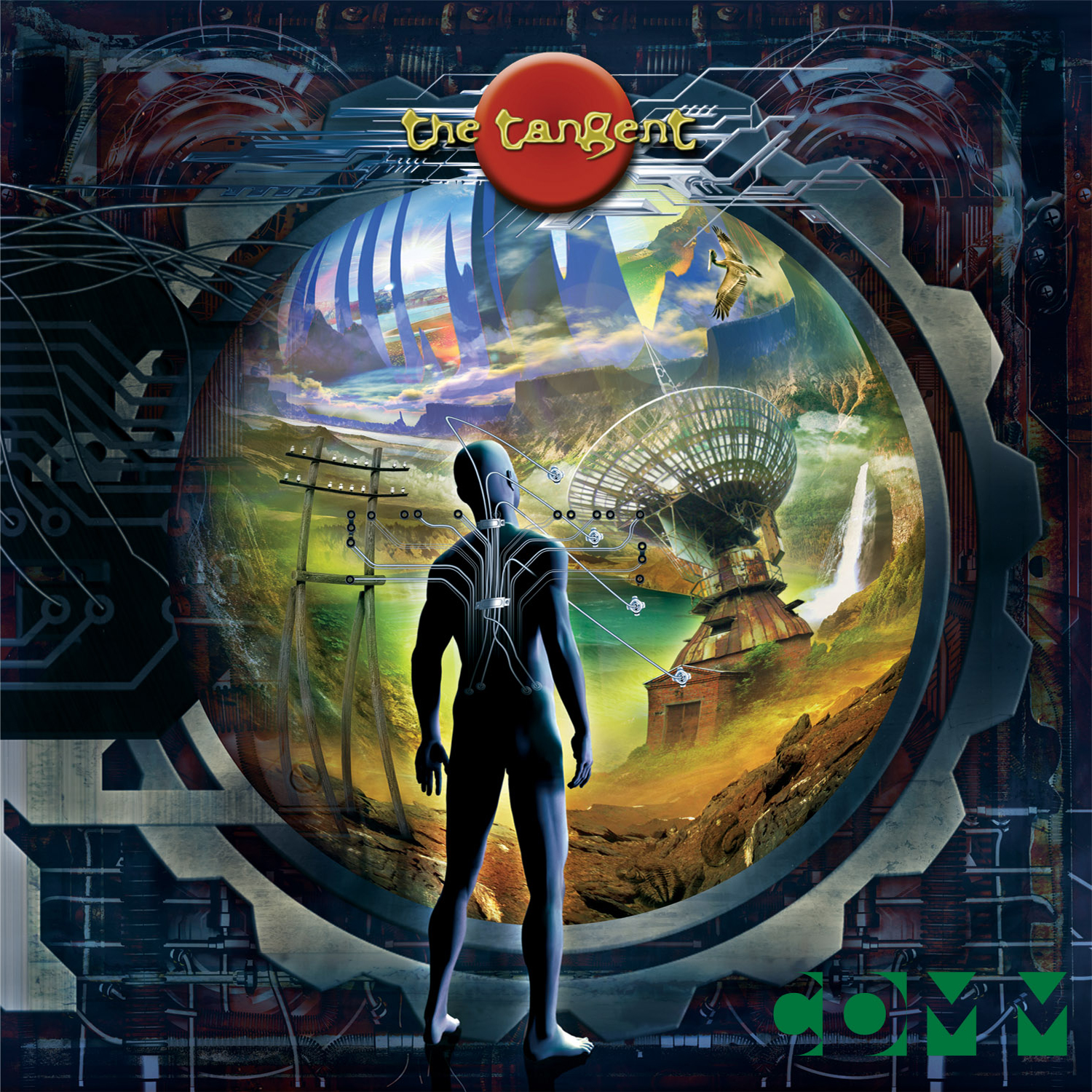
The impact of technology on society seems to be a recurring theme in progressive rock releases of recent times. Already in this young year, King Bathmat has released ‘The Truth Button’, reviewed by Ian below, which deals with some of the darker aspects of our technological world. In 2012, Arjen Anthony Luccassen released ‘Lost In The New Real, reviewed earlier by Brad, which follows a protagonist awakened in a distant future as he navigates the reality of a world he does not recognize – while also inviting us to imagine what our world would look like to someone from the past. And preceding those two, is The Tangent’s COMM from 2011, which explores aspects related to the communications enabled by our digital world.
COMM opens with sounds that now seems ancient – the squawking of two modems making a connection over a phone line, perhaps for someone’s dialup internet connection or perhaps somebody preparing to send a fax. This provides the opening for the 20-minute epic ‘The Wiki Man’, which explores both our dependence on the internet and some of the various ways we use it. Full of witty and biting observations, the piece also includes some incredible keyboards, including a nice, jazzy piano interlude that starts at about the 7:00 minute mark.
The next two tracks, ‘The Mind’s Eye’ and ‘Shoot Them Down’ are not part of the concept proper, according to this interview with Andy Tillison. ‘The Minds Eye’ refers to how we see and think of ourselves, and I find this piece more interesting lyrically than musically. With respect to ‘Shoot Them Down’, it’s the opposite, as it relates to internal British political matters with which I am not familiar, but it does have some excellent guitar work.
‘Tech Support Guy’ returns us to the theme of the album, chronicling a very bad day for the tech support guy Adam. Adam, it seems, is to be blamed for everything that goes wrong with his company’s network, never mind the fact that he didn’t build the servers, or write the software while the source of the problem is an ocean away. The lyrics illustrate one of the darker effects of all of the instantaneous communications technology that surrounds us today, mainly the virtual loss of even minimal patience when something goes wrong (as it most certainly will sooner or later) and the impulse to blame someone for the problem with out thinking things through. ‘Tech Support Guy’ will leave you sympathetic for the thankless tasks performed by all of Adam’s real life counterparts – and might also leave you hoping that the marketing manager’s boss walks into his office during the early moments of the system outage (you’ll understand the reference after you read the lyrics).
It’s in ‘Titanic Calls Carpathia’ that the concept of this album is really driven home. Clocking in at a bit over sixteen minutes, ‘Titanic Calls Carpathia’ is divided into six sections. The first two sections deal with two of history’s most famous distress calls, the first being referenced by the title of the piece, the second being Jim Lovell’s call to Houston during the ill-fated Apollo 13. These two sections lyrically set the theme for ‘Titanic Calls Carpathia’, which can be interpreted as a distress call to our modern culture and society, many members of which who become obsessed with their gadgets and gizmos without realizing or stopping to think that what that obsession is doing to them.
And now we can all talk across oceans
If we get things sussed we don’t even have to pay!
We get “FREE iTunes songs” when we return an empty bottle
But there’s so much around
That we throw the damn thing away
…
Beyond the rusting pylons, beyond the looted homes
People scrabble around for batteries to get more talk time for their phones
We want so much without paying, we forget someone has to make
The things we want for ourselves so we just eat each other’s cake
I’ll leave it to the reader to interpret the meaning of those lyrics for themselves, and indeed they could have different meanings to different people. Needless to say, that in ‘COMM’, Tillison chooses to look at the dark side of technological advance on everyday lives, focusing on our trivial uses thereof, our loss of perspective resulting from its use, and in general, and how much we have let it spoil us.
I’m not a technophobe, far from it – I’m very pro-technology. But the message here is nevertheless something worth pondering. Technology is a tool, and as such is neither good nor bad. The various uses and abuses of technology is what makes it one or the other. It’s great that we can all communicate with one another through avenues such as this blog, Facebook, email, and so on. And it is certainly incredible that we have access to so much information almost instantaneously. At the same time, it’s not so good when the use of technology becomes the preoccupation of one’s life to the exclusion of almost everything else. I guess the real message here is one that applies to much more than just the realms of technology – everything in moderation.
Andy Tillison and Geoff Banks
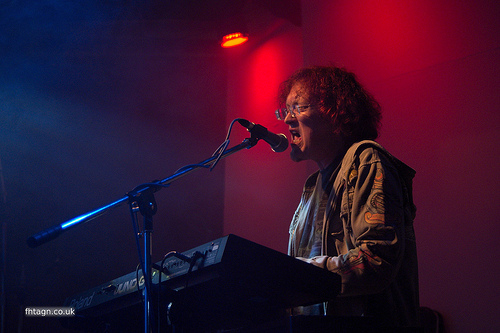 If you’re free for the next 45 minutes, it’s definitely work checking into the Prog Dog Radio Show.
http://myradiostream.com/progdog
Geoff Banks is an excellent radio host, and Andy Tillison is an equally interesting guest. Banks and Tillison are talking about the nature of progressive rock as well as engaging one another on a variety of topics. On the nature of Prog: Geoff is arguing that prog is ”music that will stand the test of time.” It is the classical music of our day. Andy’s response: Progressive rock is “serious electric music.”
Andy, sounding very much like Owen Barfield or J.R.R. Tolkien of the Inklings stated that his brainchild, The Tangent, is much bigger than himself or a supergroup. He hopes it will keep going long after he’s retired.
The chat room is especially interesting: Alison Henderson, Blake Carpenter (Minstrel’s Ghost), Sally Collyer, and Matt Stevens are all contributing.
Drinking From the Firehose – Some Quick Reviews

Like many of you, I “suffer” from the common “problem” that afflicts those of us who are prog fans in this, the Second Golden Age of Prog – mainly, that there is just so much good prog out there that nobody could possibly listen to it all. In short, it’s like trying to drink from a firehouse.
Happily, this “problem” has been exacerbated for me since joining this site, as I have had the good fortune to be able to borrow a number of albums I had yet to hear. As such, I’m going to write a few quick reviews (which are more like first impressions). Please pardon the lack of detail, but do remember these reviews are worth every penny you paid me to write them ;).
The Flower Kings, Banks of Eden: This is my second foray into Flower Kings territory, the first being ‘Space Revolver’ some time ago. I thought the latter album was quite good, and ‘Banks of Eden’ only reinforced my good impression of these guys. Even if there were no other good songs on the album, the hippy-dippy-trippy epic ‘Numbers’ that opens the show makes the price of admission worth it. Luckily, there are other good songs, and thus I would definitely give this album a thumbs up.
Continue reading “Drinking From the Firehose – Some Quick Reviews”
 Progarchy