
 Due to be released on July 15, you can pre-order the album now at http://www.levinminnemannrudess.com. This should be a great album from three of prog’s finest.


Due to be released on July 15, you can pre-order the album now at http://www.levinminnemannrudess.com. This should be a great album from three of prog’s finest.

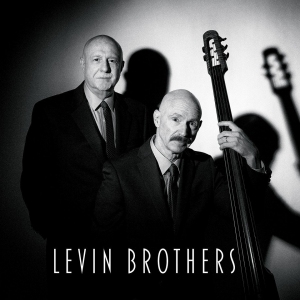
On September 9, renowned musicians (and brothers) Tony and Pete Levin released their first album together. Although Tony is primarily a rocker and Pete primarily a jazz musician who has played with some rock bands, this album is strictly classic jazz. Both brothers (and their supporting musicians) shine on this album, as Tony yet again amazes with his bass work and Pete does a wonderful job on piano and keys. And what more would you expect from two classy Boston guys? My first impression after listening was how I wished I could be in a nightclub chatting with some pals enjoying music like this. The album just has that kind of atmosphere. While listening, you’ll probably be tempted to tap your feet and say, “Play it again, fellas.” I highly recommend this album for anyone who is interested in jazz, especially the classic jazz scene of the 1950s. There is a great mix of slow paced, relaxing piano driven songs and up tempo, sax and percussion driven pieces that will make you want to swing. Here are some of my favorites:
Bassics: the first song features the acclaimed drummer Steve Gadd, and this is primarily a bass and percussion driven track anchored by Gadd’s steady rhythms and Tony’s melodic bass
Brothers: a faster paced piece featuring excellent keyboard work from Pete and the usual fine bass work from Tony
Havana: played with some Spanish flair and even features some scat singing
Gimme Some Scratch: saxophone (played with dexterity by Erik Lawrence), one of my favorite instruments, really shines on this song
If you’re searching for some classic jazz music from a classy group of guys (who also happen to be extraordinary musicians), then this is an album certainly worth adding to your collection. You can support the Levin Brothers by visiting their website: http://thelevinbrothers.com
Interview conducted via e-mail and reproduced below.
1. First of all, we at Progarchy would like to thank you for this opportunity. Many of us are big fans of King Crimson, Peter Gabriel, Pink Floyd, etc. We know you have a busy schedule, so I’ll keep the questions to a minimum. The 1950s was obviously a huge decade for jazz, featuring the talents of Miles Davis, Buddy Rich, and others of the cool jazz movement. What first attracted you to the jazz scene and do you have a preferred “style”?
It’s an interesting combination, me and Pete, because I’m primarily a rock player, who also plays jazz – while he’s a jazz player, who has played a lot of rock. So, Pete’s played in lots of jazz styles, on tons of records and tours. For me, I’m usually called in to a jazz album when they want it to be more like rock(!) But this time it’s us calling the shots, and we wanted to go back to the style we loved when we were kids just starting to play… the ‘cool jazz’ then may or may not have been ‘cool’, but it had melodic songs, and the solos weren’t as long winded as some other styles. In general it seemed less designed for the players, and more about having good writing, played well. So that’s what we aimed at with this album, hopefully giving the listener songs that’ll keep running thru their heads, and hopefully it’s music that has a classic element, and will sound as good 10 years from now as it does today.
2. What was the music scene like growing up in the 1950s Boston area and how much of an influence did it have on the you and your brother’s playing style?
When I was living in Boston I was only into Classical. There were great opportunities, and the Greater Boston Youth Symphony Orchestra took me to Carnegie Hall and the White House. But it was after I left to go to school in Rochester that I started playing jazz and rock — so I wasn’t much influenced by what was going on at home.
3. This is your first time releasing an album with your brother Pete, an accomplished musician in his own right. Why so long a wait? What was the experience like?
We did release a single track way back years ago, and it was a comedy piece! Otherwise, we’ve played on each others albums and projects many times, but really this is the first time we sat down and said, let’s make this album together. Surprising it took us that many years to do it. (And hopefully it’s worth the wait!)
4. Listening to the audio sample on Youtube, I was impressed by the quality musicianship, but it was certainly unlike anything most of your fans have heard before. Most listeners are familiar with your work with Peter Gabriel and King Crimson. What can they expect from the Levin Brothers album?
Oh this is different for sure. What it’s about is; nice jazz songs, played well, with unusual instrumentation (a lot of my cello playing the lead, as well as Pete’s piano and organ, and Erik’s sax). The solos are short and each guy does his best playing, then moves on for somebody else.
Oh, there is one King Crimson song, Matte Kudasai, that we included so that folks might have one song they already know.
5. I also noticed from the Levin Brothers site that Steve Gadd, one of the world’s most renowned drummers, is featured as a guest on two songs. However, a few other musicians, perhaps not as well known, appear on the album. Could you briefly discuss the talents of Jeff Siegel, David Spinozza, and Erik Lawrence?
Jeff and Erik are great players that Pete has gigged with a lot though the years. Guitarist David Spinozza has been in a jazz band with me, called L’Image, for … well, ever since I can remember — we don’t do much touring or recording, but there’s a good musical comraderie, so he seemed the right guy to bring in. You’re right about Steve Gadd being renowned, and it was important to me to have him on the track “Bassics”, because he was instrumental in making me a jazz player, back in the 60’s when we were in music school together. So it just seemed right to have him on that piece, which is mostly bass playing the lead, with drums sharing the spotlight.
6. This album is a dramatic shift from your typical role in a progressive rock band. As you continue to play for prog rockers such as King Crimson and Peter Gabriel, do you see yourself continuing to work on more jazz related projects in the future?
I never have much idea what the future will bring, but my plan is to continue with Crimson and Gabriel, but Pete and I will not only continue to do the local gigging we’ve always done – we will certainly take the band from the album out on tour sometime in the next year.
7. How did the songwriting process go? I noticed all but one song (Matte Kudasai) is an original composition. Whose specific influence (if any) can we hear on this album?
Pete and I both wrote songs for it – once the style was set (and I was very focussed on the albums of Julius Watkins and Oscar Pettiford) it was fun coming up with songs. We wrote more than we needed for the album, but also we kept the tracks short, on both the CD and LP, so we could fit many more songs on than is usual.
Incidentally, it was a longtime wish of mine to release a real vinyl album, and this was surely the right time for it – so we’re loving having the big artwork and vintage back cover on the vinyl version. Of course, as is standard nowadays, it comes with a download card for digital versions of all the songs.
8. Finally, do you plan on doing any touring once the album is released. I understand King Crimson is about to go on tour again, but will fans be treated to any live performances by the Levin Brothers in the near future?
Yes, as I mentioned before, I’ve got some Crimson and Gabriel tours to do this Fall, but next year we’ll also do some Levin Brothers jazz club dates for sure.
Best of luck on this album Tony and Pete. And one more question, if you don’t mind. A few of my fellow Progarchists (myself included) were wondering: where and when did you pick up the Chapman Stick? 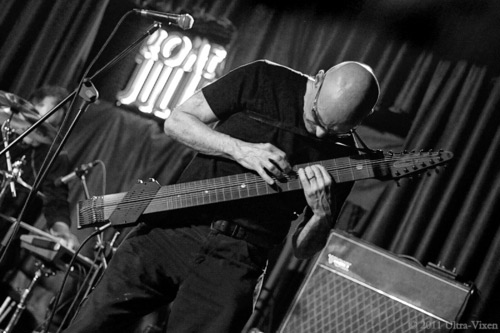
Thanks, Connor. The Chapman Stick appealed to me as soon as I heard it, as a way to play my bass parts in a different way than normal. In prog music, I’m usually looking for those subtle things that move my playing forward. I never imagined, in my first years with the instrument, that I’d eventually play the guitar strings on it too, and form a group (“Stick Men”) that I now tour with more than any other group. It’s been a really rewarding experience for me.
For more information regarding the album:
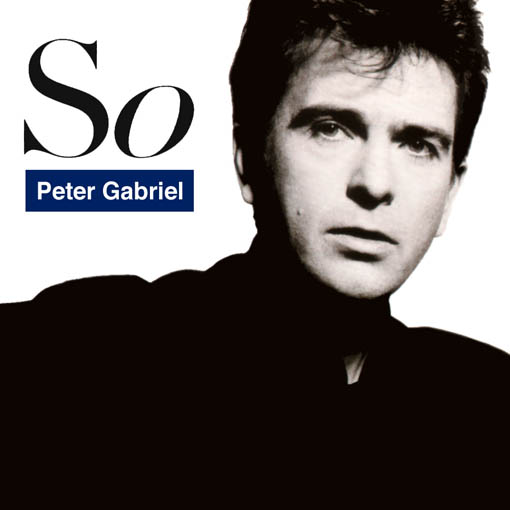
Whilst traveling the Pennsylvania countryside last month, I listened to Peter Gabriel’s So album for the first time in years. That is not to say I had neglected the album (I’ve always enjoyed the upbeat tunes Sledgehammer and Big Time, as well as the haunting Mercy Street), but I had not listened to the entire album in quite some time. As a matter of fact, So, Gabriel’s most successful album to date, opened the door to the world of prog for me when I was about 12 years old, and I’ve never closed it. 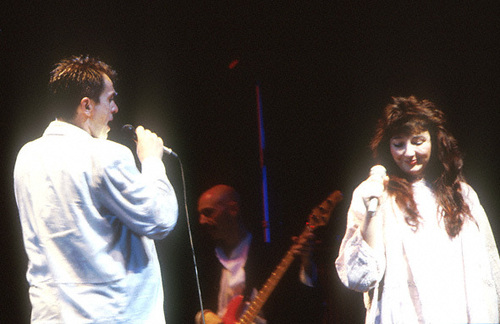
I often wonder what my taste in music would be like had I never entered the wonderful world of progressive rock music. Something tells me I would have stumbled upon it at one point or another, considering I have never truly enjoyed what passes for “pop” these days. Or perhaps I would have been content listening to what I call “standard” rock (i.e., Fleetwood Mac, Bruce Springsteen, Billy Joel, etc.). It’s not that I don’t like standard rock, but it is generally missing the idiosyncrasy and complexity that progressive rock espouses. Thankfully, my dad has a rather broad taste in music, and while searching through his vast collection of CDs years ago, I came across So. I had heard In Your Eyes on the radio before, and I figured I should listen to the album in its entirety. It was my personal first great awakening in regards to music. Up until this point, music had always been pleasant melodies coming out of the radio and nothing more. As I sat in my room that day, however, a lanky, bespectacled, and (self-professed) nerdy 12-year-old boy fell in love with progressive rock for the first time. Music was now an entire world of its own. It had life, rhythm, beauty, truth, and goodness. I don’t mean to sound dramatic, but it was quite an epiphany for me. But I digress. Back to the music itself. The opener, Red Rain, drew me in instantly, and I listened to the rest of the album with great enthusiasm. Sledgehammer, with its opening salvo of horns, was by far the most enjoyable song I had listened to up to that point. Don’t Give Up showcased the work of uber-talented bassist Tony Levin (who I would truly come to appreciate when I discovered King Crimson) and the beautiful voice of Kate Bush (who I may have had a crush on after the first listen). The next two songs, That Voice Again and In Your Eyes, were FM radio staples in my area that I had heard before and continue to enjoy today. The haunting but graceful Mercy Street was next, followed by the upbeat Big Time. The final two songs, We Do What We’re Told (a reference to Stanley Milgram’s sociological experiment on obedience to authority figures) and This Is The Picture, are two of the more “distinctive” pieces on the album, but I suppose prog rock musicians have a reputation for originality, do they not? 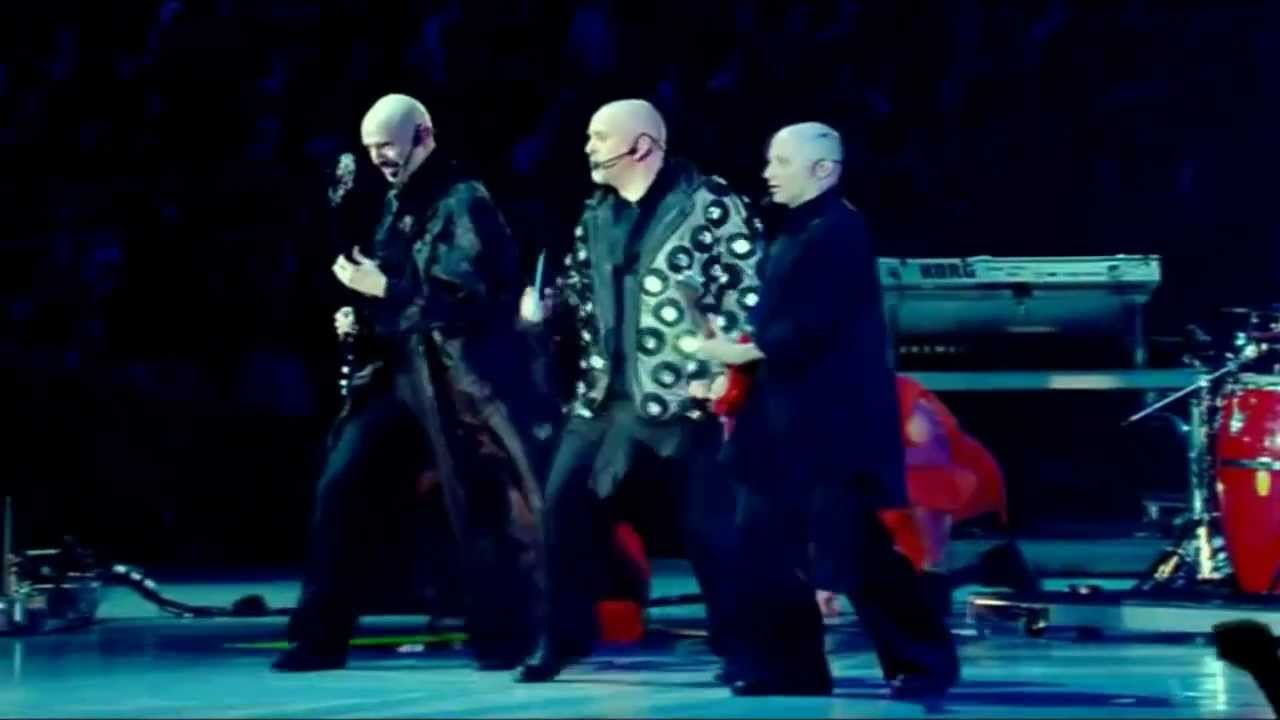
After about 8 years of listening to an untold amount of progressive rock, I do not believe So is the greatest album of all time. It is more “pop” like in nature than I prefer, yet I still enjoy it from time to time. Gabriel’s first four albums are superior in regards to musicianship and originality, but I cannot stress the impact So had on me enough. I became enamored with the thought of listening to more music in the vein of So, and that is how I eventually stumbled upon Gabriel-era Genesis and, eventually, the golden era of prog (I’ll save my top ten prog albums of all time for a later post). And although Gabriel is no longer even my favorite musician, I cannot thank him enough for unwittingly opening the door to an entire new world for me.
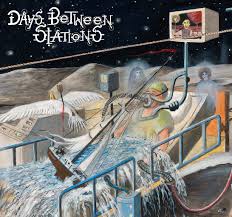
2013 has already shaped up to be one of the most bountiful years ever for prog. Consider a few of the outstanding albums that have already been released: Big Big Train’s English Electric 2, Cosmograf’s The Man Left In Space, Bruce Soord/Jonas Renkse’s The Wisdom Of Crowds, KingBathmat’s Overcoming the Monster, Sanguine Hum’s The Weight of the World, Sound of Contact’s Dimensionaut. Add to that list Days Between Stations’ In Extremis, which has taken up permanent residence in my home CD player and my iPod.
Days Between Stations, based in Los Angeles, is Oscar Fuentes Bills (keyboards) and Sepand Samzadeh (guitars). In Extremis is only their second release, but it possesses the maturity and excellence of a far more experienced group. Their 2007 self-titled debut consists of five extended instrumentals with some wordless vocals (plus two “intermissions” of sampled conversations), and is top-notch prog in its own right. The opening track, Requiem for the Living, begins with a beautiful yet mournful theme on synths and piano, which eventually develops into a slide guitar workout that would do David Gilmour proud. According to Samzadeh, it was inspired by Gorecki’s Third Symphony, also known as his Symphony of Sorrowful Songs. The album concludes with the epic Laudanum, which never loses focus or power over the course of its 22 minutes. It includes ambient textures, jazz fusion, and, of course, lots of prog guitar!
While Bills and Samzadeh were ably assisted on their first album by Jeremy Castillo (guitars), Jon Mattox (drums), and Vivi Rama (bass), for In Extremis, they have taken things to an entirely new level. Billy Sherwood (Yes) is sharing production duties with Bills and Samzadeh, Tony Levin (King Crimson, Peter Gabriel, and many others) is on Stick and bass, Colin Moulding (XTC) lends his voice to a song, and Rick Wakeman (Yes, etc.) contributes some mellotron and minimoog. In a fitting way, the late Peter Banks (Yes, guitar) adds his magic to several songs. As a matter of fact, these are Banks’ last recorded performances.
In Extremis begins with a massive fanfare featuring the Angel City Orchestra that becomes the overture for the album. The most obvious difference with this set of songs is that we now have vocalists singing lyrics! Billy Sherwood sings in the Floydian Visionary, Eggshell Man, and the title track. Thematically, the lyrics convey the loss and regret of someone near the end of his life:
There’s no replacing what’s been left behind
There’s no returning to that place and time
In sight were all the distant horizons
In flight were all the dreams alive
(From Visionary)
A high point is Colin Moulding’s marvelous vocals on the wry pop of The Man Who Died Two Times. Set to an irresistible, bouncy ’80s vibe, Moulding sings of
All the angels cried
For the man who died two times
And they wiped away tears of laughter
And helped him survive
Going station to station
Always ready to revive
Next up is a touching string quartet piece dedicated to Peter Banks, which is followed by the crowning glory of the entire album, Eggshell Man. It features a delicate accoustic guitar intro with gorgeous vocals by Sherwood and a mellotron flute solo by Wakeman. It soon picks up speed and intensity, including a section with some Middle Eastern flair. The tempo ebbs and flows over the course of twelve minutes, Wakeman has a terrific minimoog solo, Levin is rock-solid on bass, and Sherwood sings of “best laid plans” and empires returning to dust. It’s one of the finest songs released this year.
Believe it or not, there is still the title track to come, and it’s a monster, clocking in at 21:37. In Extremis is a requiem for a man (the Eggshell Man?) who realizes too late the brevity and preciousness of life:
Images upon the screen
Recanting all the memories
From the first breath
To the last goodbye
Dust dancing on beams of light
Most groups would give anything to achieve a track like In Extremis. Days Between Stations pulls it off with ease, and manages to precede it with seven other tracks that are its equal.
There have been some extraordinary releases in prog music this year, and Days Between Stations’ In Extremis is near the top of the heap. This is an album not to be missed.
Here’s the official trailer:
 Progarchy